Remnant #2 – It’s Just Not Cricket

Another piece from the hard drive that was intended to become part of a novel set partly in India and partly in the UK in the nineteenth century. Although an entirely fabricated event, all the cricketers here of both teams were actual cricketers of this time. The England team is made up of players from South East England counties, and the Indian team with players from the first Indian tours to England in 1886 and 1888. This match, though, is entirely fictional.
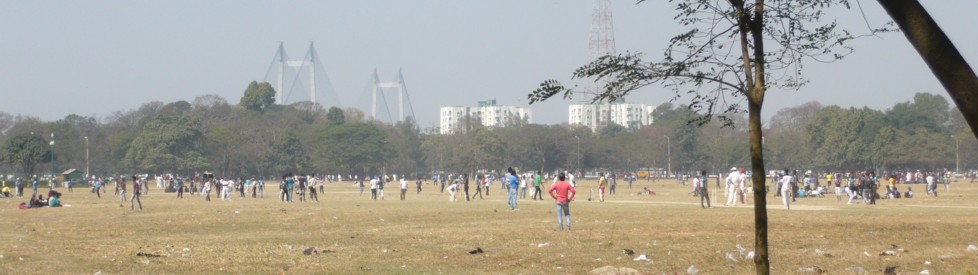
Image: cricket matches in progress on the Maidan, Kolkata.

It was the 13th August 1887, and a cricket match was in progress on the Higher Ground at Tunbridge Wells. It had begun two days previously, with a forecast of fine weather for the whole of its three-day duration and the visiting team, on losing the toss, had been asked to bat first. So far, the match had gone perfectly according to script. The touring Indian team had been bowled out for 117 under sunny skies, the United England XI, under The Honourable G R C Harris, the Kent County Captain, had scored 293 in reply, Harris himself top scoring with a magnificent 109, then the Indians had rallied to 236 in their second innings, a lead of exactly 60. The watching citizens of Tunbridge Wells had applauded politely and dutifully, expecting the openers to knock off the required runs before tea.

It was then that the weather changed.

As the United England openers walked out to bat, the skies suddenly darkened and a few drops of rain began to fall. The umpires looked up, Square Leg umpire wandered across to consult with his colleague, then the rain ceased. The clouds, although fat and dark, refused to release any more rain, so Square Leg umpire wandered back to his mark and the opening batsman took his guard. As he marked out his crease, a light wind whisked away the dust from his scratching bat and the crowd immediately noticed that they had begun to sweat. It was a warm, humid wind, blowing from left to right across the square from the opening bowler’s perspective. The old India hands amongst the spectators looked around in an unconscious, puzzled recognition.

M D Kanga, opening bowler for the touring Indian team, was not particularly fast, but he possessed the ability to swing the ball into the right hander. As he ran in to bowl the first ball of the innings, the wind strengthened slightly. He reached the crease, banged down into his delivery stride and released the ball, which started towards the batsman’s off stump, then curved through the muggy air and struck the batsman on the pad dead in front of leg stump. The batsman, back in his crease and looking to play to cover, was clearly LBW. Kanga and the rest of the Indian team went up in unison to appeal and the umpire, sheepishly, had no choice but to give the Honourable G R C Harris out, first ball. There was a scattered applause from the spectators, which was followed by an appalled silence as Arthur Shrewsbury, England Captain, was clean bowled by Kanga’s second delivery. The England IX were 0 for 2 and Kanga was on a hat trick.

To the relief of the spectators, the Sussex batsman and fast bowler J B Hide kept out the hat trick ball, blocked the next two deliveries, and then opened the scoring with a beautifully struck four back past the bowler. Tunbridge Wells heaved a collective sigh of relief and the world jerked back into motion.

Alec Hearne, Kent opening bat, had watched this carnage from the other end, and played the first ball of the next over carefully back to the bowler. Dhunjishaw Patel, the Indian Captain, bowled old-fashioned, fast underarm – surprisingly difficult to bat against, with its variations in pace, line and length, and with pitches still often fairly uneven. His second and third balls, too, were defended back, until a looser delivery popped up in front of the batsman, asking to be put away. Gratefully he walloped it towards the boundary and called Hide through for a couple of runs. A misfield handed them a third run, however, and the fifth ball was faced by Hide, who also defended carefully. A single off the last ball meant that Hide had kept the strike for the next over. 8 for 2.

Kanga’s next ball went for four, while the second was blocked. As the score went into double figures and the batsmen carefully pushed the score on towards the sixty-one needed for victory, the crowd began to smile again around the boundary edge. 12 for 2 became 14 for 2 and as Kanga came in to bowl the last ball of the over, Hide raised his bat in anticipation and began the pace forward towards the pitch of the ball. As he did so, and exactly at the point at which the bowler released the ball, a small boy in the crowd jumped up directly behind the bowler’s arm. There was no time to call a halt and as Hide quickly tried to refocus his attention on the ball and adjust the stroke, the ball took the edge of the bat and dropped into the waiting hands of first slip. 14 for 3.

Hide stamped off furiously, to be replaced by the number five, W A Humphreys of Sussex. The steady procession of returning batsmen continued then as Hearne decided to take the fight to the Indians, aiming a huge hit at the first ball of Patel’s next over, only to pick out the man at deep mid off. 14 for 4. Henderson, in at number six, survived the rest of Patel’s over, leaving Humphreys to face his first ball from Kanga; straight and fast, kept out. The second swung in sharply – blocked. The third on off stump and edged through slips for two. The fourth blocked. The fifth swung out, again taking the edge but this time taken at second slip. One ball left and the new batsman, Ford of Middlesex, was able to leave one that was too wide. 16 for 5.

The next six overs saw a recovery that saw the score climb to 36 for 5 when, off the last ball of the over, Ford mistimed a drive and was bowled off his legs. 36 for 6.

F Hearne, brother of Alec, usually opened the batting for Kent and was down at number eight for this match, as he had been used as the opening bowler. With only twenty-five needed to win, he decided to swing the bat after taking a couple of balls to get his eye in. The first went for four, the second took the edge and the wicket keeper took a fine catch diving away to his right. 40 for 7.

Pentecost, the English wicket keeper, often batted down the bottom of the order for Kent. In fact, between himself, W Hearne (another brother) and A B Hide of Sussex, there was fierce competition for the number eleven spot. The crowd had begun to get nervous again. He survived the last two balls of Patel’s over, then for the next over Patel took off Kanga and brought on Shaparjee Bhedwar. Bhedwar began by sending down a bit of a loosener which Henderson, playing completely down the wrong line, allowed to cannon into his pads for another LBW decision. W Hearne kept out the next ball, but played all around the third and looked back to see middle and off stump knocked back. A B Hide came in last, to a deafening silence, and kept Bhedwar at bay for the rest of the over. 40 for 9.

All at sea against Patel, Pentecost attempted to block the first ball of the next over, only to see it miss off stump by a whisker and his bat by a country mile. He therefore slogged at the next one, which shot away through cover enabling them to run two. The next one clipped his off stump, the bails came off and it was all over. United England IX second innings all out for forty-two and the Indian tourists had won by eighteen runs. There was a little polite clapping around the ground, but the general feeling was one of anger. The reporter from the local paper sat writing and then crossing out lines in his notebook, his mouth a thin line. The spectators were leaving faster than was usual, but in the refreshment marquee there were heated voices raised.

Seville 2

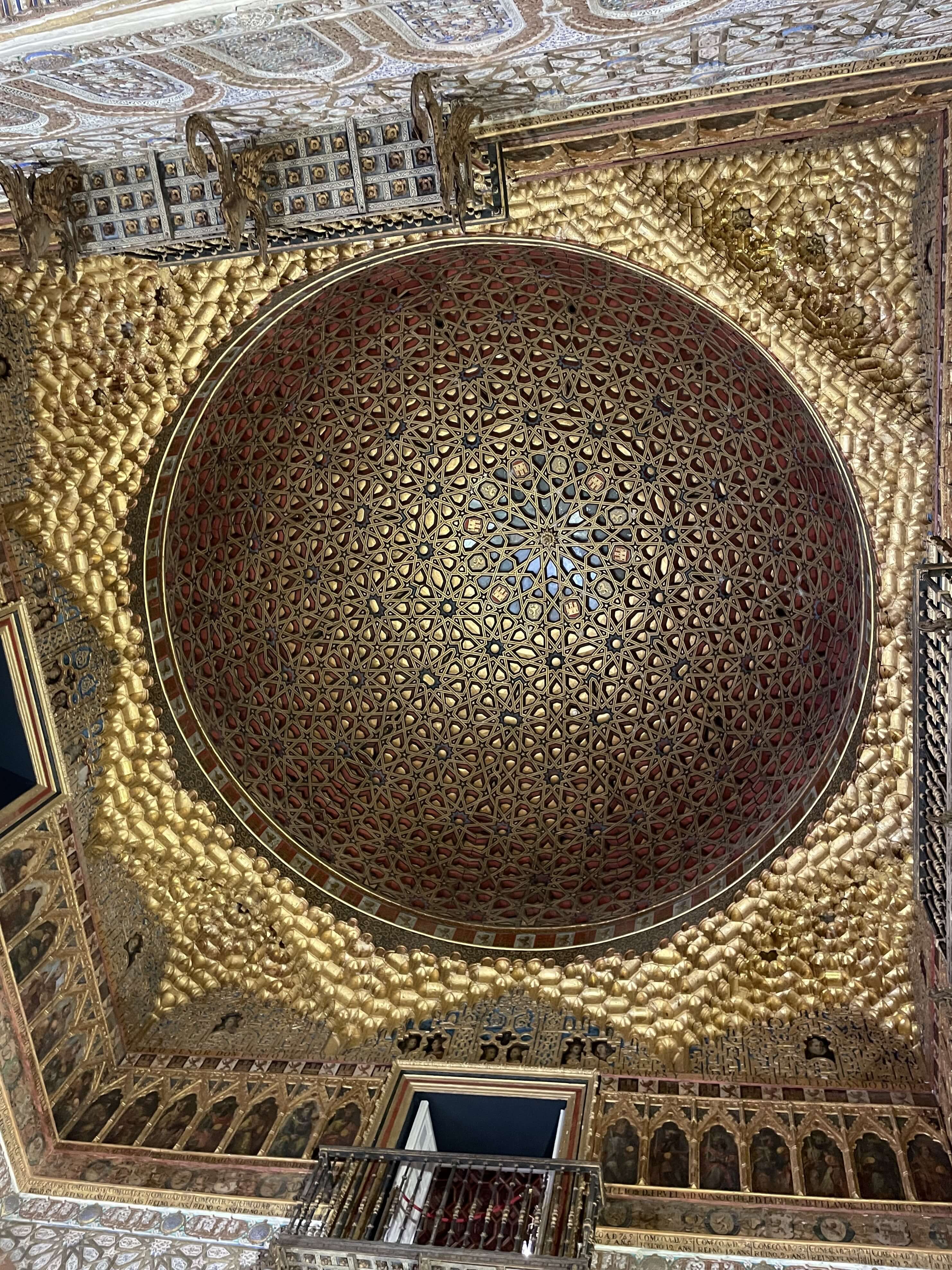
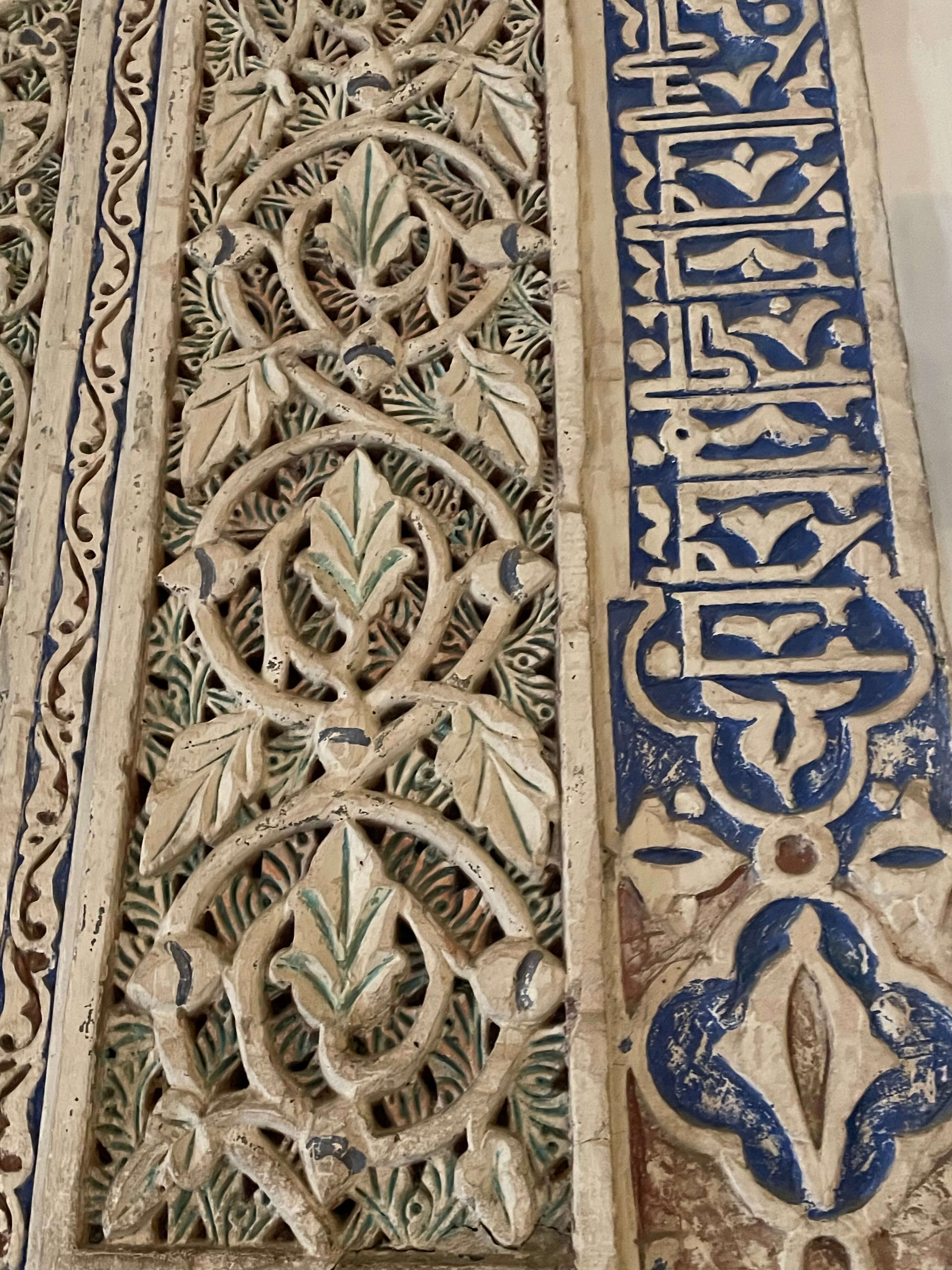
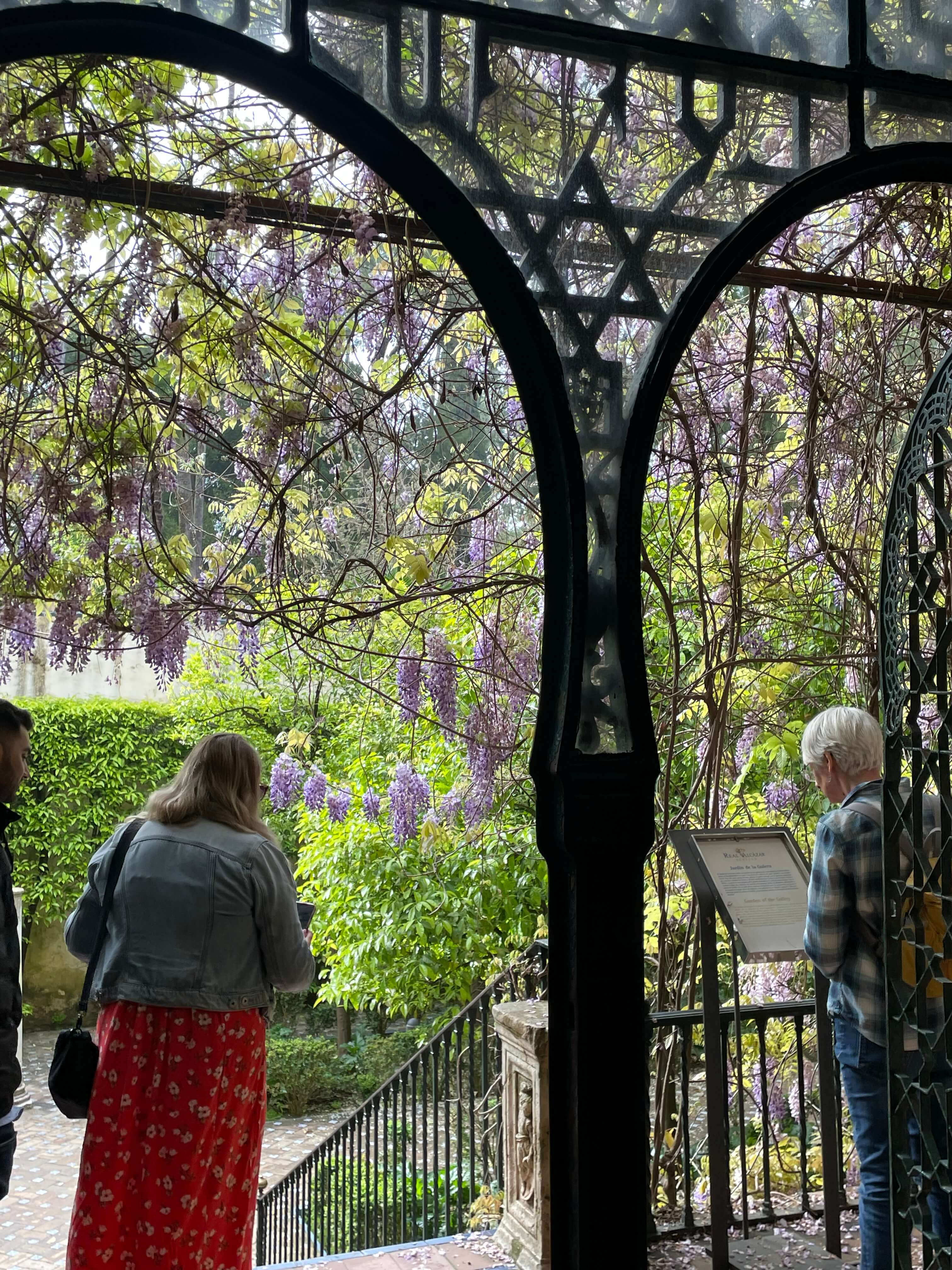
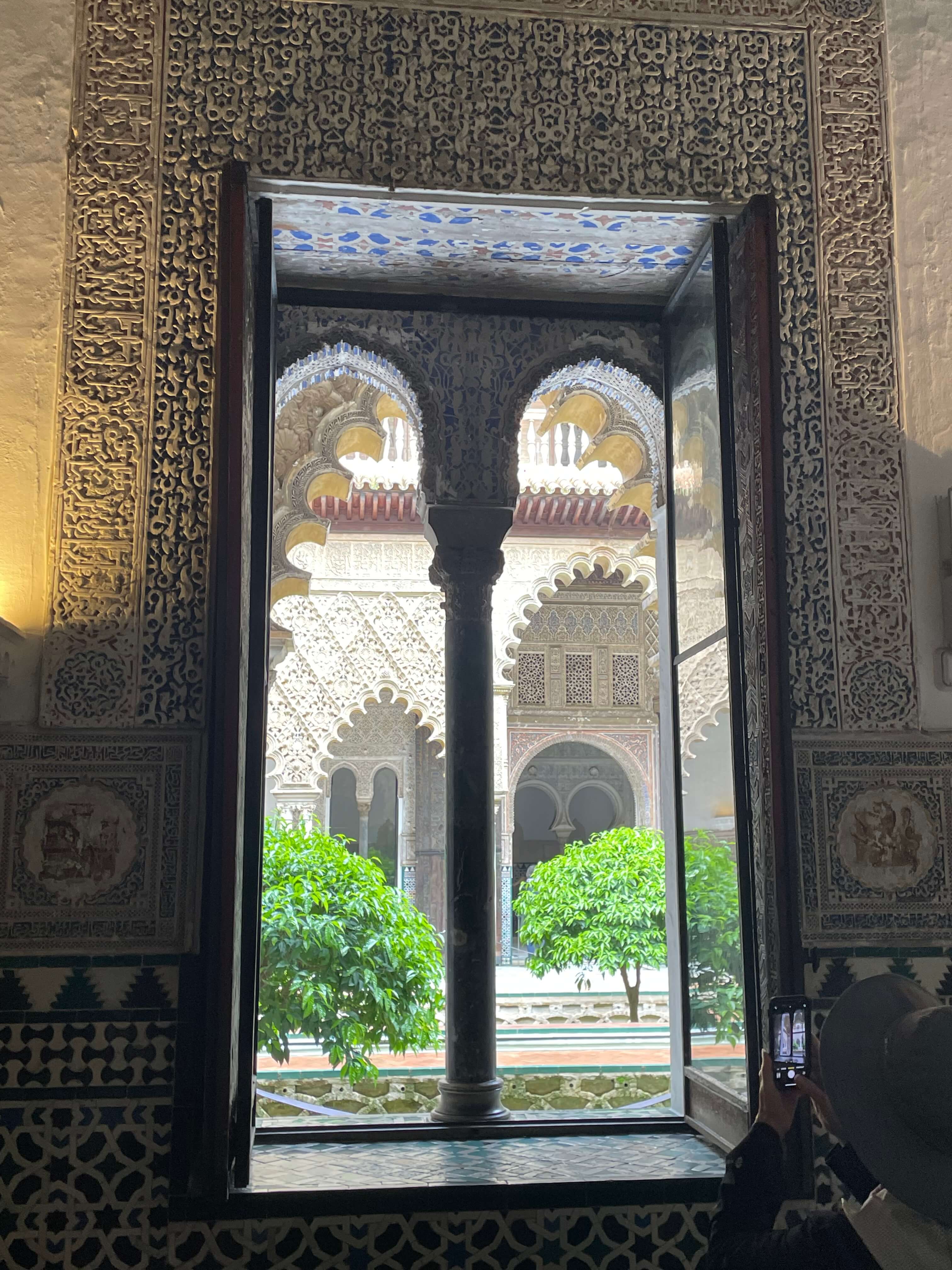
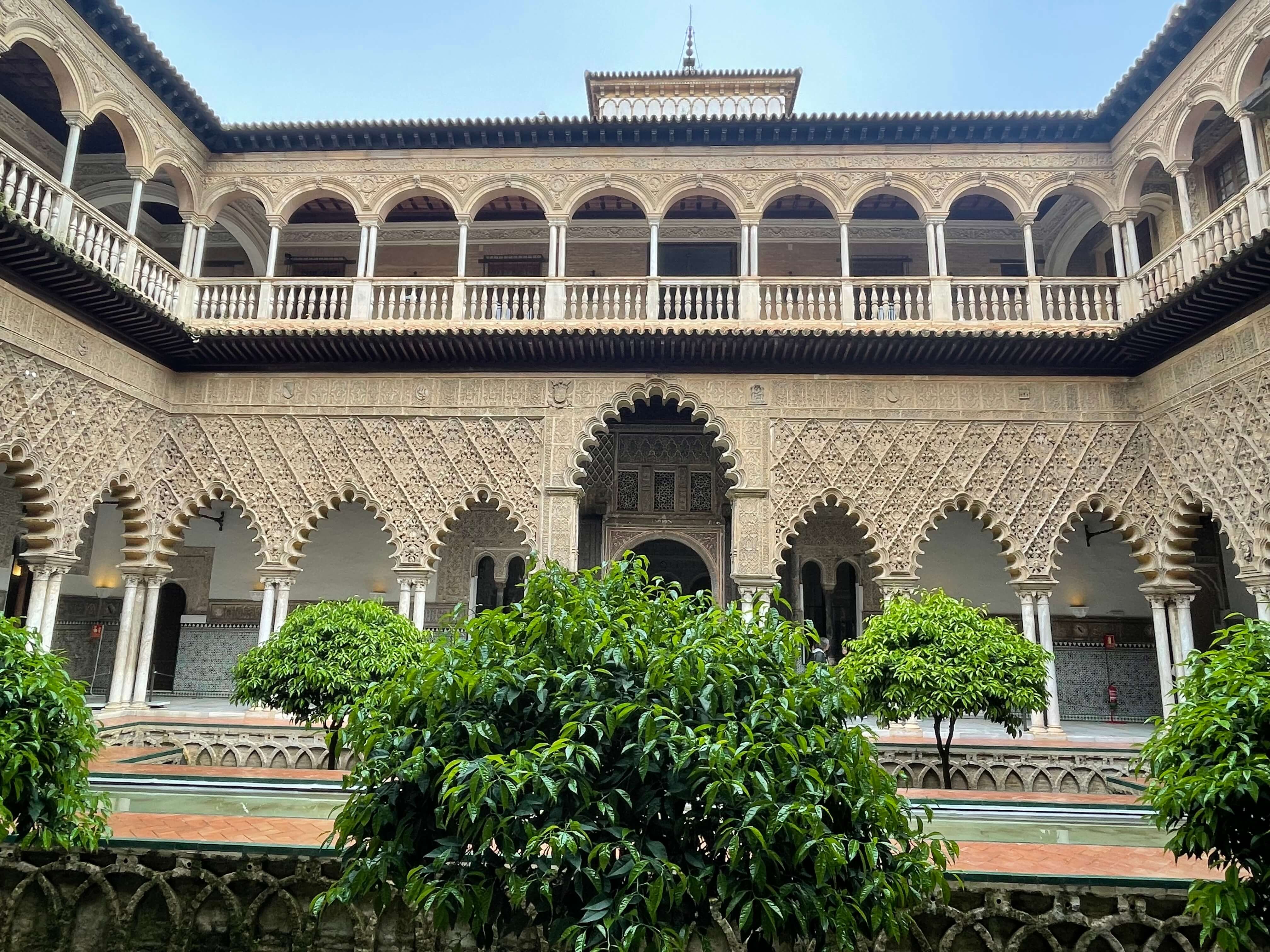
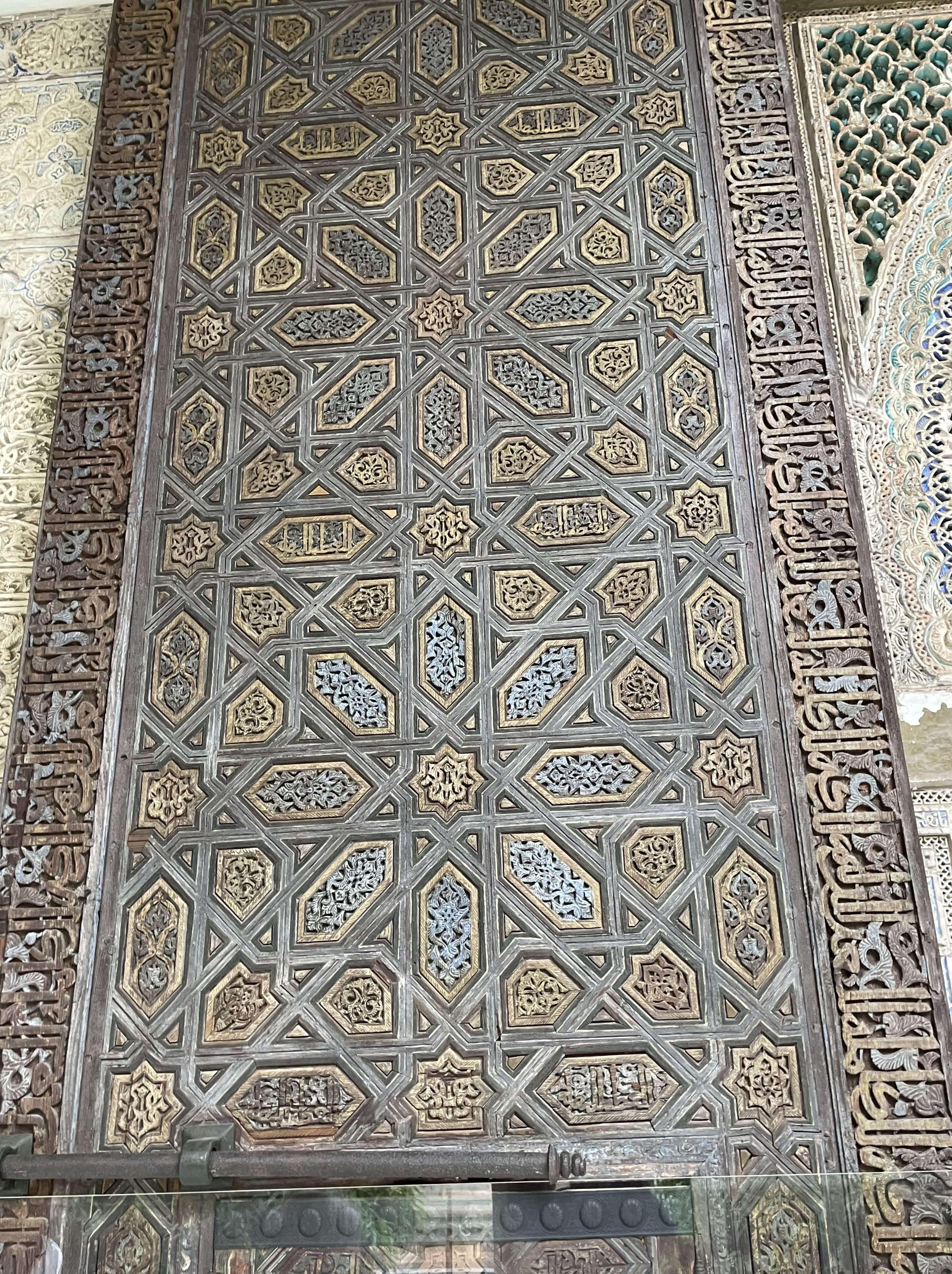
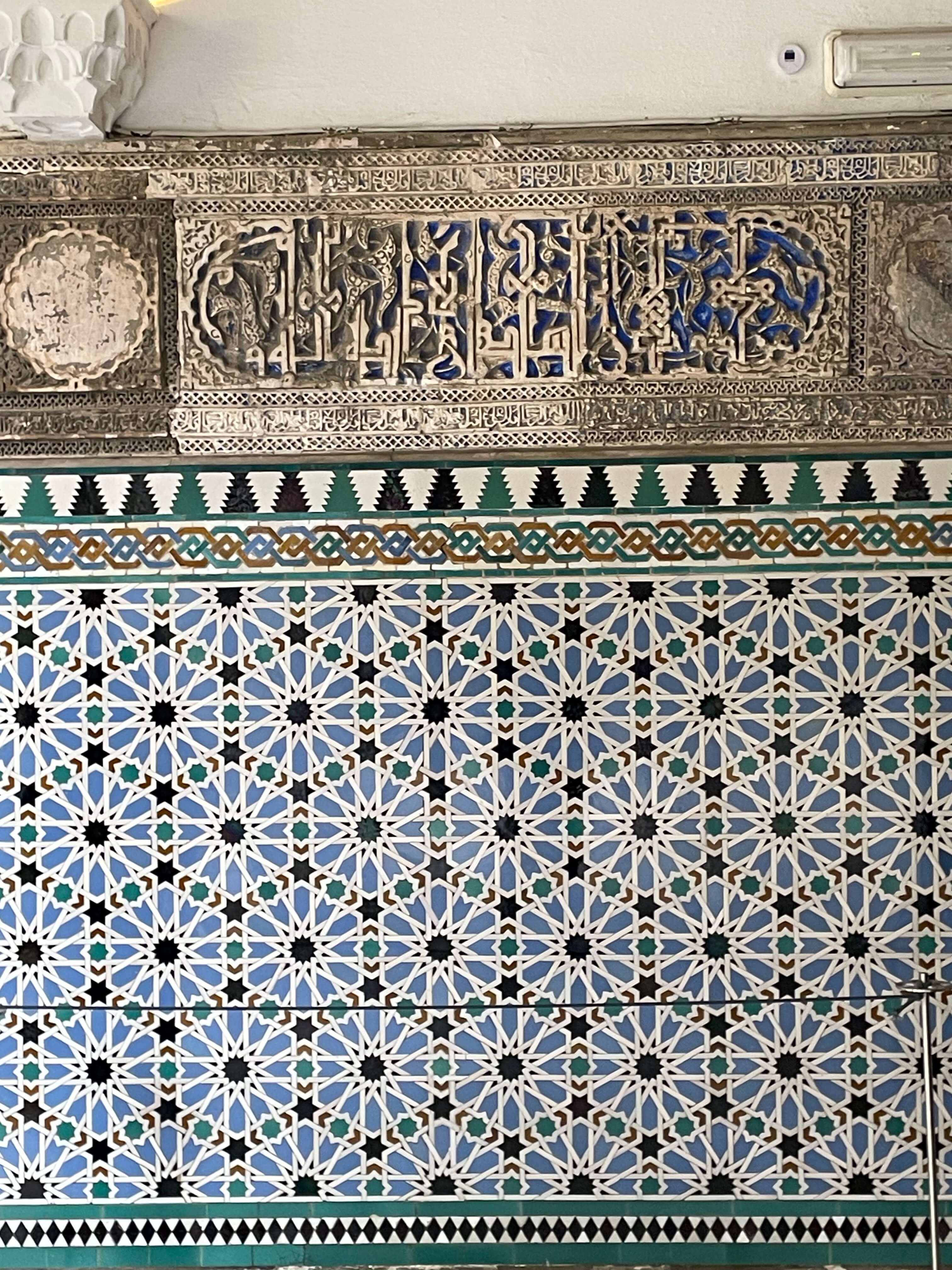
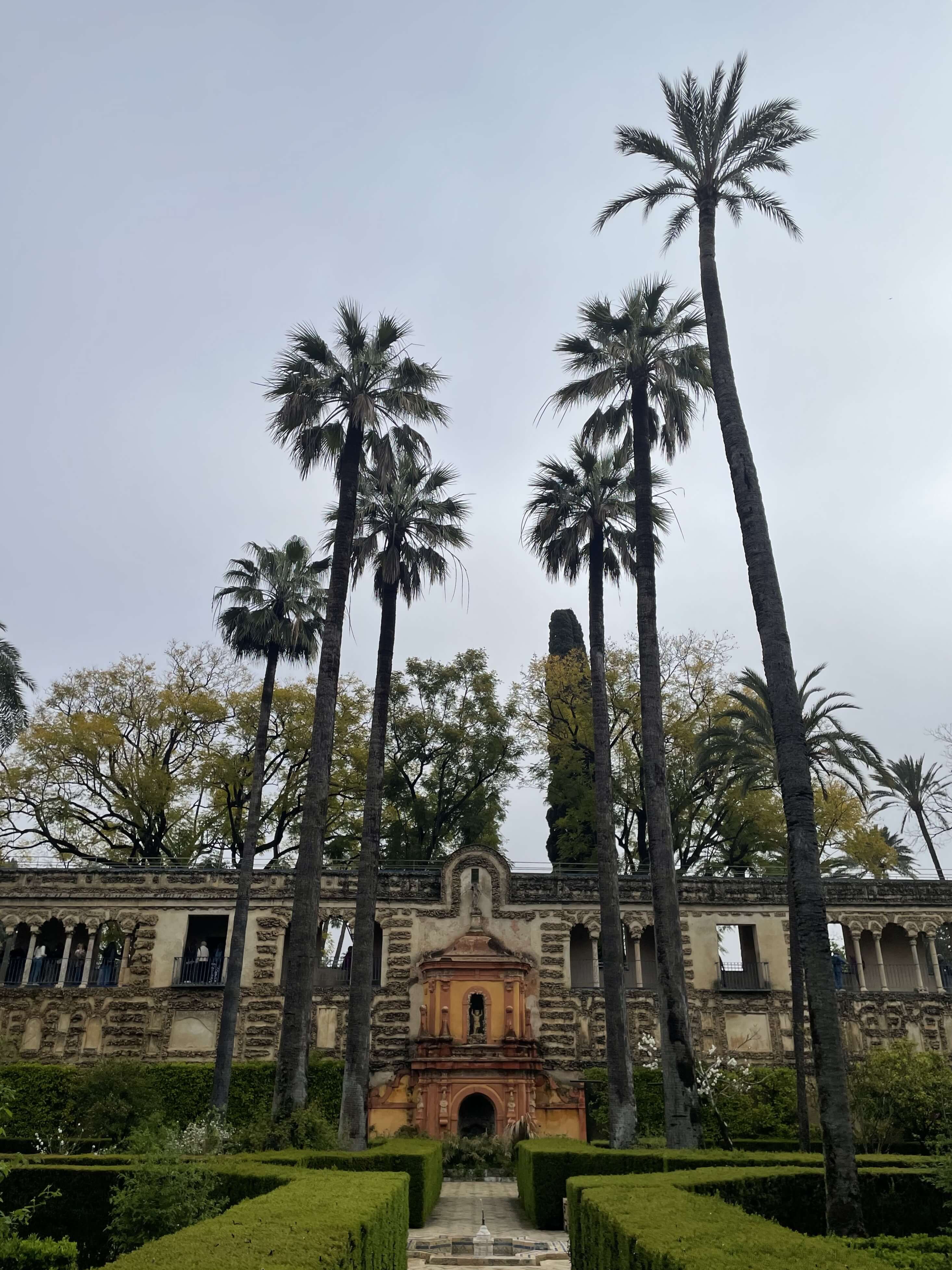
All of these shots are from the Alcazar. The Alcazar – which means palace or fortress of Muslim origin – was built in the eleventh century by the Umayyad dynasty who ruled Seville in the early Middle Ages. Much of the decoration is what is described as Mudejar – a mixture of Islamic and Gothic styles which was prevalent between the twelfth and sixteenth centuries.

The Hall of Ambassadors (Salon de Embajadores),

The dome in the Hall of Ambassadors).

Decoration in the Patio de las Munecas (Courtyard of the Dolls).

Just a glimpse of the extensive and beautiful gardens.

The Patio de las Doncellas (Courtyard of the Maidens).

Remnant #1 – The Indian Mutiny

I recently did a deep dive into the burrows of my hard drive. I’m not sure whether I will write another novel at the moment, but whether I do or not there are several part completed ones that will not actually be completed because I ran out of steam…

One such was a set of preliminary drafts for a story set during the so-called Indian Mutiny of 1857. This piece is part of a chapter setting out the background to what happened. It hasn’t been vigorously checked, but I think the facts are all correct. It’s obviously incomplete, but I think it does stand alone.

And should I post a few more of these remnants occasionally?

9th May 1857, and a dreadful heat sits on the Northern Indian plain like breathless death. The air is full of dust and the land is parched, cracked and waterless, eight months or so since the last rains came, yet the suffocating debilitation of the temperature, well over a hundred degrees Fahrenheit for most of the day and a goodly portion of the night, is made more unbearable still by the effects of the high humidity. One felt that one could almost wring water out of the surrounding air, yet the only moisture visible was the sweat covering anyone foolish enough to attempt to move around in this climate.

In Meerut, less than forty miles northeast of Delhi, eighty-five sepoys have just been sentenced by Court Martial to ten years imprisonment. Muslim and Hindu, they are imprisoned for refusing to bite cartridges that have been smeared both with cow fat that was sacred to some and pig fat which defiled them all. In a move of breath-taking stupidity, the British have decided that this concoction is a suitable one for their native troops to have smeared onto cartridges that work by having the top bitten off, before pouring and ramming the contents down the barrel of the new Lee Enfield rifle. To be fair, after the mistake was realised, moves were made to ensure that the grease was made from different ingredients, but the damage by then was done. The belief was widespread that the grease was still composed of these taboo ingredients and, worse still, that it was a deliberate attempt by the British to contaminate and weaken their religions. The crassly insensitive handling of the issue did nothing to improve matters.

Nor is this an entirely new development. For maybe a quarter of a century things have been going rapidly downhill. There have been a number of ‘minor’ mutinies in the past, but these seem to be on the increase. For High Caste Hindus, ‘crossing the black water’ is prohibited, so attempts to force serving soldiers to sail abroad have been invariably interpreted as caste breaking and resulted both in mutinies and draconian punishments. Both this and the foolishness with the new cartridges have acquired added importance, though, due to the increased activity of Christian missionaries in India. It is possible that the British never fully realised quite how important religion was to the Indians. There never had been an Indian nation. India’s history was one of various states, Hindu and Moslem, shifting empires, conquests and absorptions. The idea of Indian nationhood had not yet arisen. Nor did there exist a universal shared culture. As well as the beliefs and traditions surrounding the different religions – Sikh, Parsi and tribal as well as the predominant two – the massive size of India had meant that most regions knew little about the others, even of their existence.

What mattered most to the average Indian, other than the struggle to survive, was his religion. It was what defined his life. And by 1857 it must have appeared to many that the British were determined to defile and break these religions, and then to impose their own. This was hardly helped by the general change in attitude exhibited by the British towards their subjects.

Much had altered over this time. In the late 1700’s, many of the British who came out to India acquired a huge respect, and frequently love, for the country and its people. Scholars such as James Princep and William Jones immersed themselves in the study of the languages and history of India, carrying out research and making huge discoveries. They treated the educated Indians in their circle as equals, treated others with respect and frequently married Indian wives. More than a few also converted to Islam. All this gradually changed in the 1800’s, however. A major factor in this was a steady increase in the number of women who came out to India from Britain. Debutants became aware of the existence of a pool of marriageable young men who were supposedly earning large sums of money and living in style with servants at their beck and call. They only lacked wives to make their lives complete. What could be more natural than to go to their assistance? Thus the ‘Fishing Fleet’ came into existence.

The impact that this had upon the British way of life in India was dramatic. As more of the British men married within their own, the growing community rapidly came to look down with disgust and contempt on those that cohabited with Indian women. And it was a short step from that to frowning upon those who changed their religion, wore native clothes, or even fraternised with the ‘natives’. Attitudes, too, were changing back in Britain. An increase of Christian evangelical zeal coincided with more information finding its way back from India about the country the British were ransacking, most shockingly that the majority were heathens who worshipped idols.

Within the army itself, the Indian troops noticed a change in their officer’s attitudes. Previously, British officers would happily mix with their men, socially as well as on duty and spoke their languages well. They were now more reluctant to learn these languages, found it irksome to talk for long to their men and no longer went hunting or to social events with them. This, the troops tended to put down to the influence of the church – the ‘Padre Sahibs’.  

The British have always referred to the uprising that exploded in 1857 as The Indian Mutiny. The Indians prefer to give it the title of the First War of Independence, yet there had already been a number of mutinies throughout the time that the British had been in India, even within the Bengal army. In 1765, on the eve of the Battle of Baksar, Company sepoys had rebelled and been executed. Then in 1806 an attempt was made to force sepoys in Tamil Nadu to wear a leather badge, anathema to Hindus, which had resulted in rebellion. And throughout the eighteenth and nineteenth centuries there had regularly been mutinies when the British had forced sepoys to serve ‘abroad’, often prohibited by their caste, which was frequently viewed as a deliberate attempt to weaken said castes. And viewed as a prelude to attempting to convert them to Christianity.

There were, of course, many other factors contributing to this outbreak of violence. Over the previous twenty five years or so, the British had steadily been displaying a greater intolerance towards all facets of Indian society than they had done before. The respect that they had previously shown towards India’s long and rich history had all but disappeared, to be replaced by an attitude that they were governing ‘ignorant savages’ who were ripe for conversion to Christianity. And indeed, the company encouraged further Evangelical and Unitarian missionary activity; frequently this consisted simply of setting up schools and medical facilities for the poorer Indians, but this did nothing to allay Indian suspicions. In another insensitive gesture, English also replaced Persian as the official language of both government and education.

So, simmering just beneath the surface of all walks of Indian society was this fear, this suspicion, that the English were determined to break the native religions and to force Christianity upon India. And it only needed a spark like the Meerut incident to ignite a conflagration that would rapidly sweep across Northern India.

Move forward twenty-four hours and dreadful deeds have been done in the Indian heat. In the morning, the remainder of the Indian regiment at Meerut rose up to free their comrades, broke into the armoury, and then began to systematically slaughter the European community.

Even then, it was possible that the revolt might have petered out, if the sepoys had not decided to ride through the night to Delhi, to seek out the aged Mughal Emperor Bahadur Shah Zafar, who ‘ruled’ as no more than a puppet of the English, and to declare themselves as his army of liberation. As they rode, they gathered supporters from the disaffected population and, around dawn, poured into Delhi.

It was the middle of Ramadan, so most of Delhi had been awake for some while, since for all Muslims it is forbidden to eat or drink during the daylight hours of Ramadan, and so across the city meals had been prepared, cooked and eaten before sunrise. At this time of year, too, because of the intense heat, much of the other activity of the city happened around dawn and dusk, whence it was a little cooler. And so, the streets were busy with worshippers making their way to and from mosques and temples, traders and shoppers busy at markets, beggars and hawkers, businessmen and palanquin bearers, soldiers and magistrates, all out and about in the labyrinth of streets and alleys that criss-crossed Delhi between the city gates.

Rumours of rebellion had been abroad for some months before, and so much of the native population of Delhi was in a state of keen anticipation. The rebels immediately found that they had sympathisers who rose in revolt as soon as they entered the city, especially many of the native soldiers stationed there. The British soldiers were mainly barracked outside the city walls and although a few Europeans quickly realised the severity of the situation, in the main events unfolded faster than could be dealt with and the city was largely overrun before the army could effectively intervene.

By nightfall the majority of the European population of Delhi – men, women and children – had either fled the city or been hacked to pieces. The only ones spared during the initial massacre were those few that had converted to Islam.

The next four months saw much bitter fighting across the north, as the rebels tried desperately to widen the rebellion and hold onto areas they had taken, while the British, with any hope of reinforcements many long weeks away, attempted, equally desperately, to break sieges and retake towns and garrisons that had fallen to the rebels. On both sides, tremendous cruelties and massacres were carried out, few more infamous than that at Cawnpore…