In Another Lifetime I Could Have Been…(3)

…a tramp.

My wife often says I’m in touch with my inner vagabond. I’m taking that to mean that I enjoy walking, unless she’s referring to something else. My dress sense, for example. But yes, I love walking, especially long distance walking, but most of all I like to simply wander. There is a tremendous pleasure to be had by just setting off for a long walk without any particular destination in mind. Taking the more interesting-looking path as we go.
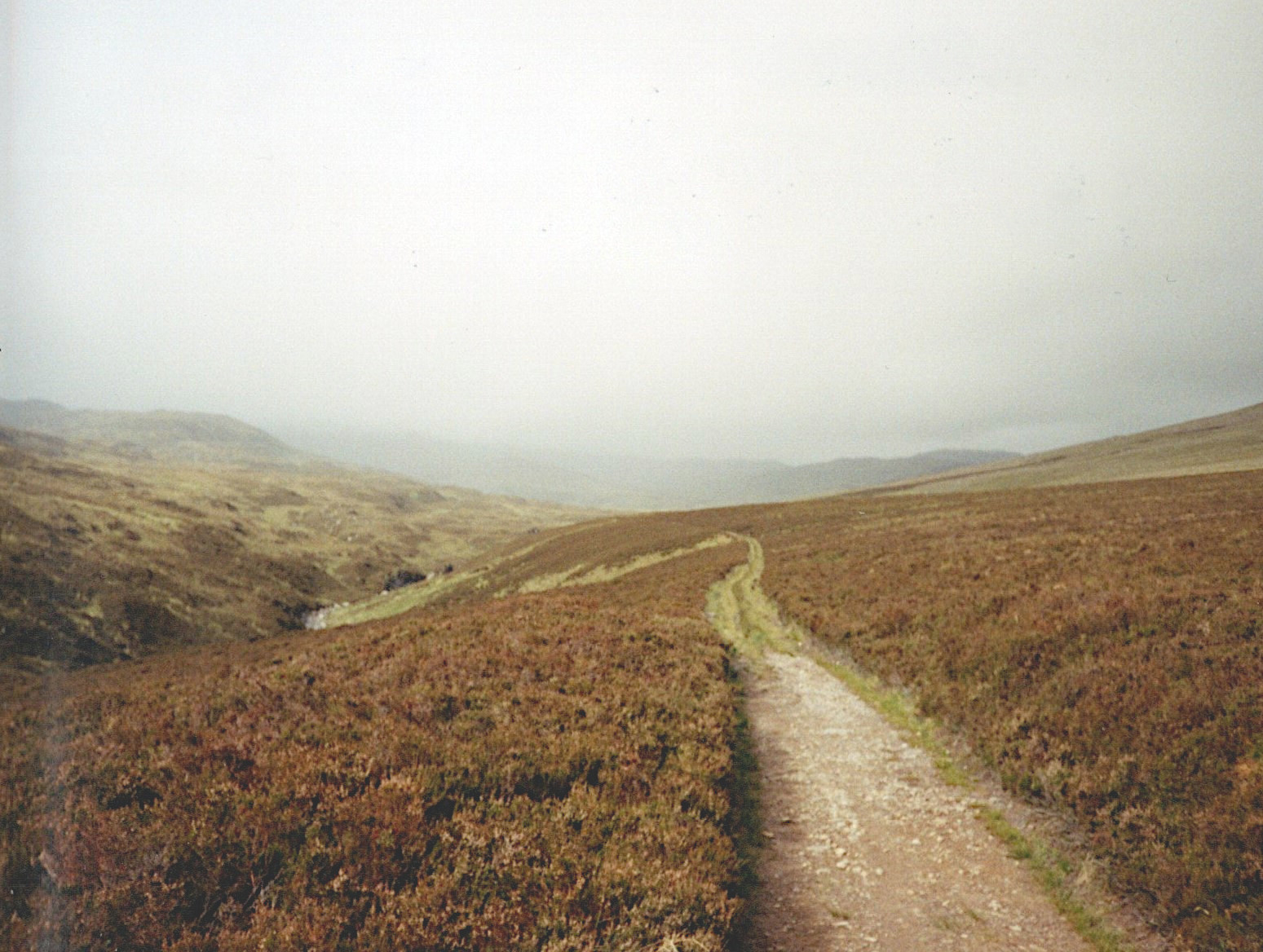
Of course, it’s not always possible to travel this way. We need to have some sort of destination in mind unless we’re prepared to just settle down to sleep wherever we find ourselves at nightfall. Usually we don’t have the time and the freedom to travel like this. Some people may also find it unnerving not to have board and lodging all planned in advance.

I’ve only done it occasionally, I must admit, but found it remarkably liberating when I did. There was no pressure to reach a particular destination by nightfall, I just had the freedom to wander along at my own pace until I felt I’d had enough for the day.

Even then, of course, some planning had to be done. Would I carry food or rely on reaching somewhere I could get a meal of some sorts? Would I carry shelter? Extra clothes?

But that is not exactly tramping, of course. It is just an exercise to be enjoyed (or otherwise) for a short period. It’s not a permanent lifestyle.

I’m sure that very few folk have deliberately chosen tramping as a lifestyle, but I’m aware there are some who have. This leads to the obvious question – why? I suppose all of us, at some time, wonder what is really important in life? Riches and property are, indeed, a burden in many ways, as well as conferring the obvious advantages in life. Some people just didn’t want that lifestyle. Some didn’t want the responsibilities of a settled life, with or without a family. There were always some folk who could just never settle anywhere for long. Most, though, would have ended up tramping through loss of employment and / or home.

Certainly I understand the difficulties of the tramping life, especially when one is no longer young. And I certainly wouldn’t want to be trying to survive as a homeless person in a city – rightly or wrongly, I think of tramping as a rural phenomenon. The whole point of it was to be on the move, rather than staying in one place. I doubt it would be possible today, with so many laws against that kind of lifestyle. There were, of course, laws against it in the past, too, but almost certainly much harder to enforce. I think, too, society is just ordered differently today. We think differently to how we did fifty or a hundred years ago. A tramp turning up at a farm today looking for a couple of hours work in return for a meal would get short shrift, and I can’t imagine any householder regarding one with anything other than hostility.

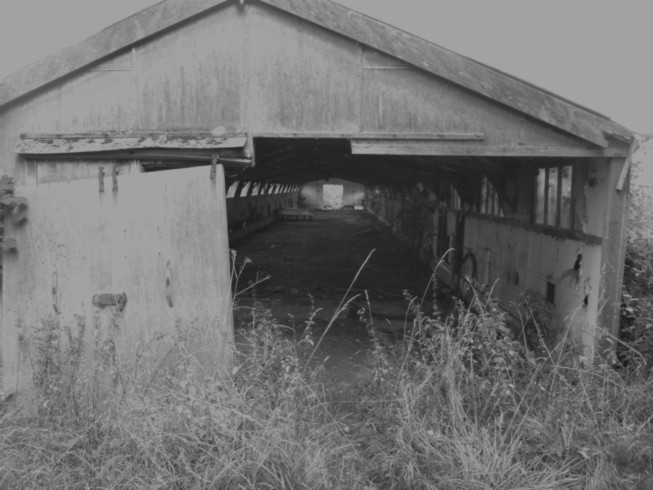
Again, I can’t imagine anyone choosing that lifestyle through the winter. But tramps used to learn of places they could settle for the winter, often carrying out odd jobs in return for permission to sleep in a shed or a barn and the odd meal. In this post I’m talking specifically about Britain, but I suspect it applies equally to hobos in America, swagmen in Australia, and possibly others I’m not aware of elsewhere.
And it would be unlikely to be a long life. But there were always some who chose it as a way of life rather than being forced into it by circumstances, and in another time I might possibly have been one of those.

Review of The New Asylum by Frank Prem

48274258._SY475_

This is Australian poet Frank’s third collection of poems, and in a way this is a return to the narrative arc of his first collection; Small Town Kid, after the heartbreak of his second collection, Devil in the Wind, which dealt with the horrors of the bush fires in Australia on what became known as Black Saturday in February 2009

Not only is this a personal, time-ordered narrative like Small Town Kid, but it takes up Frank’s life where that collection left off, with his taking a job at the institution in his home town housing people with mental health problems. At that time (around forty years ago), these institutions were generally known as ‘mental asylums’ although that name, as well as a lot of the attitudes that coloured people’s ideas of them, have supposedly been consigned to history.

These poems take us on Frank’s journey from his visits to the institution where both his parents worked, then as naive and wide-eyed Trainee Psychiatric Nurse through to today, introducing us to a wonderful collection of colourful, sad, genial, well-meaning and, yes sometimes, mad characters, both staff and residents of the institution and, latterly, the hostel that acts as a ‘half-way house’ between incarceration and release.

All these characters are realistically and sympathetically drawn, and I suspect that not a few readers will be surprised at the humour (occasionally black) and warmth that comes through from the average day in their lives. Frank does not shy away from showing the attitudes prevalent in those earlier days, when patients were severely regimented and often treated less than sympathetically, although I suspect there is much he does not reveal. But where he is at his best, I feel, is in depicting the almost unutterable sadness of many of the inmates. In ‘Huntington’s Marionette’ it is for the young victim of this, one of the cruellest of all diseases, In ‘Lost: One Cockerel’ it is for another youngster, this time a young man with his mind destroyed by illicit drugs. Then there are the families of these victims, often victims themselves in so many ways – dealing with loss or aggression, blame, or just the horror of watching a loved one disintegrate before their eyes.

And the institution is frequently under-staffed and the staff are over-worked, a situation all too familiar to anyone working in public health today as well as then. The final poem  ‘Still its Creature’ is the book’s epilogue, and it is worth quoting the first few lines..

in aftermath

it seems so clear

there are few mental-health

happy endings

and there are no

simple cures

I give this five stars out of five.

Review of Devil in the Wind by Frank Prem

44440062

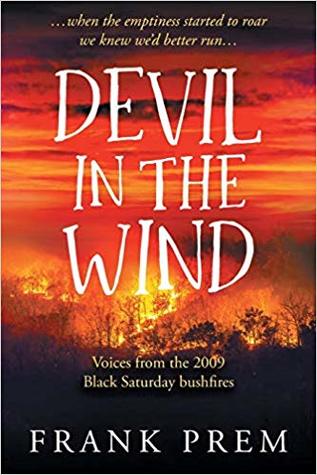
Like Frank’s previous book, Small Town Kid, this collection of poems tells a story of rural and small town Australia. But the similarities between the two books end there.

Whereas the previous collection was a celebration of boyhood in Frank’s hometown, this is an account of the dreadful bushfires of February 2009 that swept through parts of Southern Australia, the area that is home to the author, killing 173 people and leaving a huge area a fire-blackened moonscape.

The poems are a mixture of first-hand accounts, from those who ran desperately from the flames, saving what they could and suddenly terrified at the unbelievable size of the fire and the terrible speed the flames moved at, from firefighters who fought the flames like small companies of soldiers attempting to halt the progress of an overwhelmingly large army, until they literally dropped from exhaustion, from the fire-spotters, and from the frightened friends and relatives trying to raise loved ones down unresponsive phonelines.

In many ways, this is a very difficult book to read, although it is important to do so, especially for those of us fortunate enough to have never had to live through events as terrifying as those described in its poems. It is full of raw emotion and naked detail, traumatised victims and quiet heroes.

At times, I found it essential to look away and take a breather, much as the firefighters had to do, as the emotion became just too much for me.

Poetry is an immensely personal art form. Even when the subject is neither the poet nor the reader, intense emotions come through. Presented in this form, these accounts are shocking. I cannot tell whether they would have felt as shocking had they been prose, but the sparse brevity of the language confronts you almost aggressively, defying you to ignore what they say. Each one seems to scream ‘Listen to me! Don’t you dare turn away until I have finished!’

It is extremely rarely that I would suggest a book should be required reading, but I genuinely think Devil in the Wind should be and is unquestionably a five star read.

Review of Small Town Kid by Frank Prem

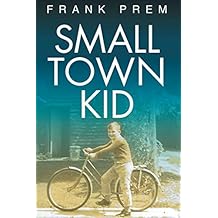
Small Town Kid (Frank Prem Memoir Book 1)

I have enjoyed Frank’s poetry ever since I discovered it a couple of years ago.

Small Town Kid is a book of poems about growing up in a small town in Australia during the 1960’s and 1970’s. The town is provincial, the way that small towns invariably are, where everyone knows everyone else, and everyone else’s business.

In those days, a small town was very different to a small town today, now the internet and social media have changed even the slow-paced life of these places forever. And so those of a certain age will recognise many of the situations and much of subject matter of these poems, while to those much younger they may well seem almost alien.

Rich in emotions, as well as in visual detail, we listen to Frank describe experiences such as hunting rabbits, letting off fireworks, and going on picnics, turning his nose up at his mother’s cooking and enjoying his grandmother’s cakes, suffering school and returning home at the end of the day. We find ourselves both observing and participating in the day to day life of his town.

This could be any small town, and any child. If you could extract the peculiarly Australian nuances and replace them with others, the poems might be about a small town anywhere and any child who grew up in it.

The poems are presented in an order showing the boy growing up from his earliest years through to reaching young adulthood, taking the reader on a journey alongside him.

And they have that power, that they transport you there.

Frank writes sparingly, knowing like an artist when to stop. But everything is there, and the writing invariably has beauty no matter what its subject matter.

Unhesitatingly, I give this book five stars.

You can find more of Frank’s poetry on his blogsites:

Welcome

About and Welcome