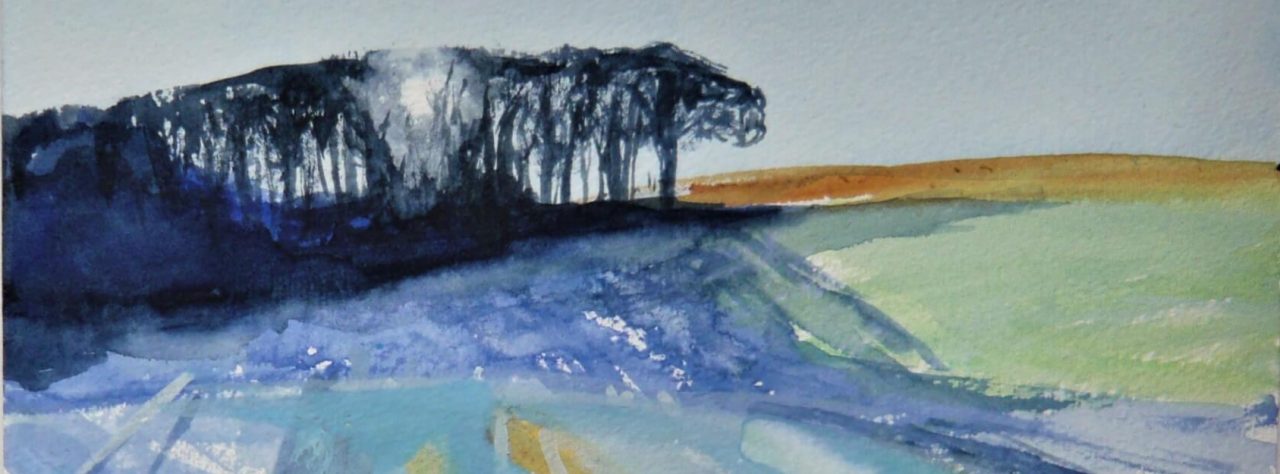
In Another Lifetime I Could Have Been…(3)

…a tramp.

My wife often says I’m in touch with my inner vagabond. I’m taking that to mean that I enjoy walking, unless she’s referring to something else. My dress sense, for example. But yes, I love walking, especially long distance walking, but most of all I like to simply wander. There is a tremendous pleasure to be had by just setting off for a long walk without any particular destination in mind. Taking the more interesting-looking path as we go.
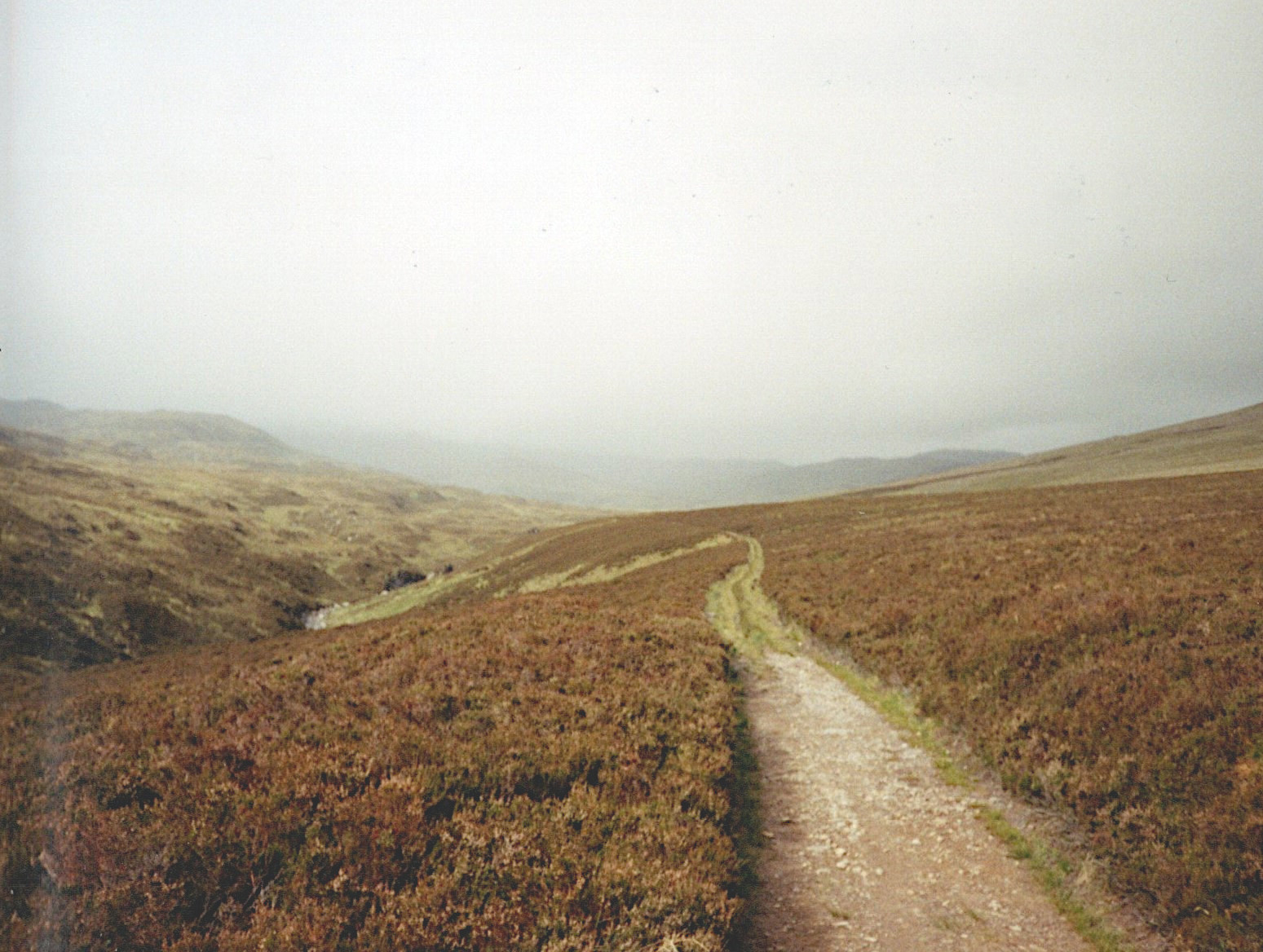
Of course, it’s not always possible to travel this way. We need to have some sort of destination in mind unless we’re prepared to just settle down to sleep wherever we find ourselves at nightfall. Usually we don’t have the time and the freedom to travel like this. Some people may also find it unnerving not to have board and lodging all planned in advance.

I’ve only done it occasionally, I must admit, but found it remarkably liberating when I did. There was no pressure to reach a particular destination by nightfall, I just had the freedom to wander along at my own pace until I felt I’d had enough for the day.

Even then, of course, some planning had to be done. Would I carry food or rely on reaching somewhere I could get a meal of some sorts? Would I carry shelter? Extra clothes?

But that is not exactly tramping, of course. It is just an exercise to be enjoyed (or otherwise) for a short period. It’s not a permanent lifestyle.

I’m sure that very few folk have deliberately chosen tramping as a lifestyle, but I’m aware there are some who have. This leads to the obvious question – why? I suppose all of us, at some time, wonder what is really important in life? Riches and property are, indeed, a burden in many ways, as well as conferring the obvious advantages in life. Some people just didn’t want that lifestyle. Some didn’t want the responsibilities of a settled life, with or without a family. There were always some folk who could just never settle anywhere for long. Most, though, would have ended up tramping through loss of employment and / or home.

Certainly I understand the difficulties of the tramping life, especially when one is no longer young. And I certainly wouldn’t want to be trying to survive as a homeless person in a city – rightly or wrongly, I think of tramping as a rural phenomenon. The whole point of it was to be on the move, rather than staying in one place. I doubt it would be possible today, with so many laws against that kind of lifestyle. There were, of course, laws against it in the past, too, but almost certainly much harder to enforce. I think, too, society is just ordered differently today. We think differently to how we did fifty or a hundred years ago. A tramp turning up at a farm today looking for a couple of hours work in return for a meal would get short shrift, and I can’t imagine any householder regarding one with anything other than hostility.

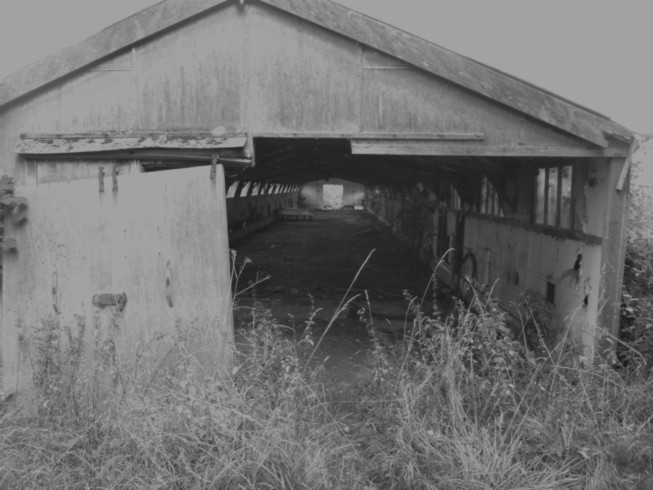
Again, I can’t imagine anyone choosing that lifestyle through the winter. But tramps used to learn of places they could settle for the winter, often carrying out odd jobs in return for permission to sleep in a shed or a barn and the odd meal. In this post I’m talking specifically about Britain, but I suspect it applies equally to hobos in America, swagmen in Australia, and possibly others I’m not aware of elsewhere.
And it would be unlikely to be a long life. But there were always some who chose it as a way of life rather than being forced into it by circumstances, and in another time I might possibly have been one of those.

Smallpox, Vaccinations, and my Ancestors in Essex

One branch of my family came from Essex. In the eighteen hundreds they lived in the Ashen area, in Ashen, Ovington, Clare, and, I expect, other nearby villages. Extended families all living within a few minutes walk of each other as was the way then, both in urban and rural areas. They were all farm labourers making more or less of a living and I would imagine they found life quite a struggle. Most did.

Yesterday I made a systematic search through the parish records for the Ashen area, looking at every page between 1800-odd and 1890-odd. The pages up to approximately 1815 are water-stained and virtually indecipherable, and they finish around 1890. This branch of the family were named Hickford and I decided to extract every entry of that name to help me piece together the relationships. These records are of Births and burials and, before 1837, marriages. After this date the marriage records were held in London.

I don’t propose to bore you with any details of the family, but I was particularly struck by the following entry:

Mary Hickford was only thirty five when she died on June 16th, 1839. What is interesting is the note appended to her burial record by the rector. And it was the only such record I noticed, although I might have overlooked one for another family. It reads:

She died of the small-pox between 3 and 4 o’clock on Sunday the 16th and buried a little after midnight. I read the burial service over her grave at 10 o’clock this same morning. L Squire, Rector of Ashen.

So much haste! No sooner is she dead than she is buried – in the small hours of the morning, no less. The gravediggers must have started work almost as soon as she had breathed her last. It illustrates how terrified people would have been of catching the disease.

We have forgotten how virulent and frightening smallpox was, since it was finally eradicated by vaccination in 1979. Up until the 1800’s it killed thousands of people, and disfigured many more than that. Attempts to protect people from it by vaccination go back much further than Edmund Jenner famously inoculating a boy with ‘cow pox’, essential a milder form of the same virus, to produce antibodies that would protect against smallpox. He had learned that country folk had noticed that milkmaids who worked with cattle all the time might develop cowpox, but rarely caught smallpox, and would occasionally inoculate themselves with cowpox to ward of smallpox.

A thousand years ago in China, healthy people inhaled a powder made from smallpox scabs which provided some protection against the disease. Another method was to scratch the surface of the skin and introduce the powder into the body that way. Versions of this circulated around Asia and Africa until stories reached the west in the 1700’s.

Since the disease killed so many, especially children, parents were keen to have their children inoculated. But naturally there were scare stories. There was an anti-vaccine movement ridiculed in this well-known cartoon by the then prominent cartoonist Gilray, in which patients are seen developing cow-like pustules as soon as they are innoculated.

These, of course, were the nineteenth century version of today’s anti-vaxxers protesting with no proof whatsoever that the vaccine is a way of inserting microchips to monitor and control the population, of ignorance rejecting science. And just as true.

The Old Way 3

Number three in a series of poems.

Untitled-Grayscale-01


The Old Way 3


If in some distant future

Our roads are haunted

By the ghosts of countless travellers,

I wonder if,

Instead of ghostly horses and their riders,

Our descendants will be terrified

By the spectres of lorry drivers,

And motor cyclists.


But the Old Way

Has already seen ten times

Ten thousand travellers,

And all that over the course of

Many times a thousand years.


For all that time

It has linked cottage and farm.

For thousands of years

It has linked town and hamlet,

Village and encampment.


All that time.


And if ghosts there be,

Travelling the way,

It must surely be crowded.