Remnant #1 – The Indian Mutiny

I recently did a deep dive into the burrows of my hard drive. I’m not sure whether I will write another novel at the moment, but whether I do or not there are several part completed ones that will not actually be completed because I ran out of steam…

One such was a set of preliminary drafts for a story set during the so-called Indian Mutiny of 1857. This piece is part of a chapter setting out the background to what happened. It hasn’t been vigorously checked, but I think the facts are all correct. It’s obviously incomplete, but I think it does stand alone.

And should I post a few more of these remnants occasionally?

9th May 1857, and a dreadful heat sits on the Northern Indian plain like breathless death. The air is full of dust and the land is parched, cracked and waterless, eight months or so since the last rains came, yet the suffocating debilitation of the temperature, well over a hundred degrees Fahrenheit for most of the day and a goodly portion of the night, is made more unbearable still by the effects of the high humidity. One felt that one could almost wring water out of the surrounding air, yet the only moisture visible was the sweat covering anyone foolish enough to attempt to move around in this climate.

In Meerut, less than forty miles northeast of Delhi, eighty-five sepoys have just been sentenced by Court Martial to ten years imprisonment. Muslim and Hindu, they are imprisoned for refusing to bite cartridges that have been smeared both with cow fat that was sacred to some and pig fat which defiled them all. In a move of breath-taking stupidity, the British have decided that this concoction is a suitable one for their native troops to have smeared onto cartridges that work by having the top bitten off, before pouring and ramming the contents down the barrel of the new Lee Enfield rifle. To be fair, after the mistake was realised, moves were made to ensure that the grease was made from different ingredients, but the damage by then was done. The belief was widespread that the grease was still composed of these taboo ingredients and, worse still, that it was a deliberate attempt by the British to contaminate and weaken their religions. The crassly insensitive handling of the issue did nothing to improve matters.

Nor is this an entirely new development. For maybe a quarter of a century things have been going rapidly downhill. There have been a number of ‘minor’ mutinies in the past, but these seem to be on the increase. For High Caste Hindus, ‘crossing the black water’ is prohibited, so attempts to force serving soldiers to sail abroad have been invariably interpreted as caste breaking and resulted both in mutinies and draconian punishments. Both this and the foolishness with the new cartridges have acquired added importance, though, due to the increased activity of Christian missionaries in India. It is possible that the British never fully realised quite how important religion was to the Indians. There never had been an Indian nation. India’s history was one of various states, Hindu and Moslem, shifting empires, conquests and absorptions. The idea of Indian nationhood had not yet arisen. Nor did there exist a universal shared culture. As well as the beliefs and traditions surrounding the different religions – Sikh, Parsi and tribal as well as the predominant two – the massive size of India had meant that most regions knew little about the others, even of their existence.

What mattered most to the average Indian, other than the struggle to survive, was his religion. It was what defined his life. And by 1857 it must have appeared to many that the British were determined to defile and break these religions, and then to impose their own. This was hardly helped by the general change in attitude exhibited by the British towards their subjects.

Much had altered over this time. In the late 1700’s, many of the British who came out to India acquired a huge respect, and frequently love, for the country and its people. Scholars such as James Princep and William Jones immersed themselves in the study of the languages and history of India, carrying out research and making huge discoveries. They treated the educated Indians in their circle as equals, treated others with respect and frequently married Indian wives. More than a few also converted to Islam. All this gradually changed in the 1800’s, however. A major factor in this was a steady increase in the number of women who came out to India from Britain. Debutants became aware of the existence of a pool of marriageable young men who were supposedly earning large sums of money and living in style with servants at their beck and call. They only lacked wives to make their lives complete. What could be more natural than to go to their assistance? Thus the ‘Fishing Fleet’ came into existence.

The impact that this had upon the British way of life in India was dramatic. As more of the British men married within their own, the growing community rapidly came to look down with disgust and contempt on those that cohabited with Indian women. And it was a short step from that to frowning upon those who changed their religion, wore native clothes, or even fraternised with the ‘natives’. Attitudes, too, were changing back in Britain. An increase of Christian evangelical zeal coincided with more information finding its way back from India about the country the British were ransacking, most shockingly that the majority were heathens who worshipped idols.

Within the army itself, the Indian troops noticed a change in their officer’s attitudes. Previously, British officers would happily mix with their men, socially as well as on duty and spoke their languages well. They were now more reluctant to learn these languages, found it irksome to talk for long to their men and no longer went hunting or to social events with them. This, the troops tended to put down to the influence of the church – the ‘Padre Sahibs’.  

The British have always referred to the uprising that exploded in 1857 as The Indian Mutiny. The Indians prefer to give it the title of the First War of Independence, yet there had already been a number of mutinies throughout the time that the British had been in India, even within the Bengal army. In 1765, on the eve of the Battle of Baksar, Company sepoys had rebelled and been executed. Then in 1806 an attempt was made to force sepoys in Tamil Nadu to wear a leather badge, anathema to Hindus, which had resulted in rebellion. And throughout the eighteenth and nineteenth centuries there had regularly been mutinies when the British had forced sepoys to serve ‘abroad’, often prohibited by their caste, which was frequently viewed as a deliberate attempt to weaken said castes. And viewed as a prelude to attempting to convert them to Christianity.

There were, of course, many other factors contributing to this outbreak of violence. Over the previous twenty five years or so, the British had steadily been displaying a greater intolerance towards all facets of Indian society than they had done before. The respect that they had previously shown towards India’s long and rich history had all but disappeared, to be replaced by an attitude that they were governing ‘ignorant savages’ who were ripe for conversion to Christianity. And indeed, the company encouraged further Evangelical and Unitarian missionary activity; frequently this consisted simply of setting up schools and medical facilities for the poorer Indians, but this did nothing to allay Indian suspicions. In another insensitive gesture, English also replaced Persian as the official language of both government and education.

So, simmering just beneath the surface of all walks of Indian society was this fear, this suspicion, that the English were determined to break the native religions and to force Christianity upon India. And it only needed a spark like the Meerut incident to ignite a conflagration that would rapidly sweep across Northern India.

Move forward twenty-four hours and dreadful deeds have been done in the Indian heat. In the morning, the remainder of the Indian regiment at Meerut rose up to free their comrades, broke into the armoury, and then began to systematically slaughter the European community.

Even then, it was possible that the revolt might have petered out, if the sepoys had not decided to ride through the night to Delhi, to seek out the aged Mughal Emperor Bahadur Shah Zafar, who ‘ruled’ as no more than a puppet of the English, and to declare themselves as his army of liberation. As they rode, they gathered supporters from the disaffected population and, around dawn, poured into Delhi.

It was the middle of Ramadan, so most of Delhi had been awake for some while, since for all Muslims it is forbidden to eat or drink during the daylight hours of Ramadan, and so across the city meals had been prepared, cooked and eaten before sunrise. At this time of year, too, because of the intense heat, much of the other activity of the city happened around dawn and dusk, whence it was a little cooler. And so, the streets were busy with worshippers making their way to and from mosques and temples, traders and shoppers busy at markets, beggars and hawkers, businessmen and palanquin bearers, soldiers and magistrates, all out and about in the labyrinth of streets and alleys that criss-crossed Delhi between the city gates.

Rumours of rebellion had been abroad for some months before, and so much of the native population of Delhi was in a state of keen anticipation. The rebels immediately found that they had sympathisers who rose in revolt as soon as they entered the city, especially many of the native soldiers stationed there. The British soldiers were mainly barracked outside the city walls and although a few Europeans quickly realised the severity of the situation, in the main events unfolded faster than could be dealt with and the city was largely overrun before the army could effectively intervene.

By nightfall the majority of the European population of Delhi – men, women and children – had either fled the city or been hacked to pieces. The only ones spared during the initial massacre were those few that had converted to Islam.

The next four months saw much bitter fighting across the north, as the rebels tried desperately to widen the rebellion and hold onto areas they had taken, while the British, with any hope of reinforcements many long weeks away, attempted, equally desperately, to break sieges and retake towns and garrisons that had fallen to the rebels. On both sides, tremendous cruelties and massacres were carried out, few more infamous than that at Cawnpore…

Qutb Minar

Two or three weeks ago I read Rama Arya’s blog on Qutb Minar and I remarked then that Qutb Minar is probably my favourite place in Delhi and decided I ought to put up a couple of my own pictures, too. It seems to have taken me rather longer to get around to it than I had intended, but here ’tis.

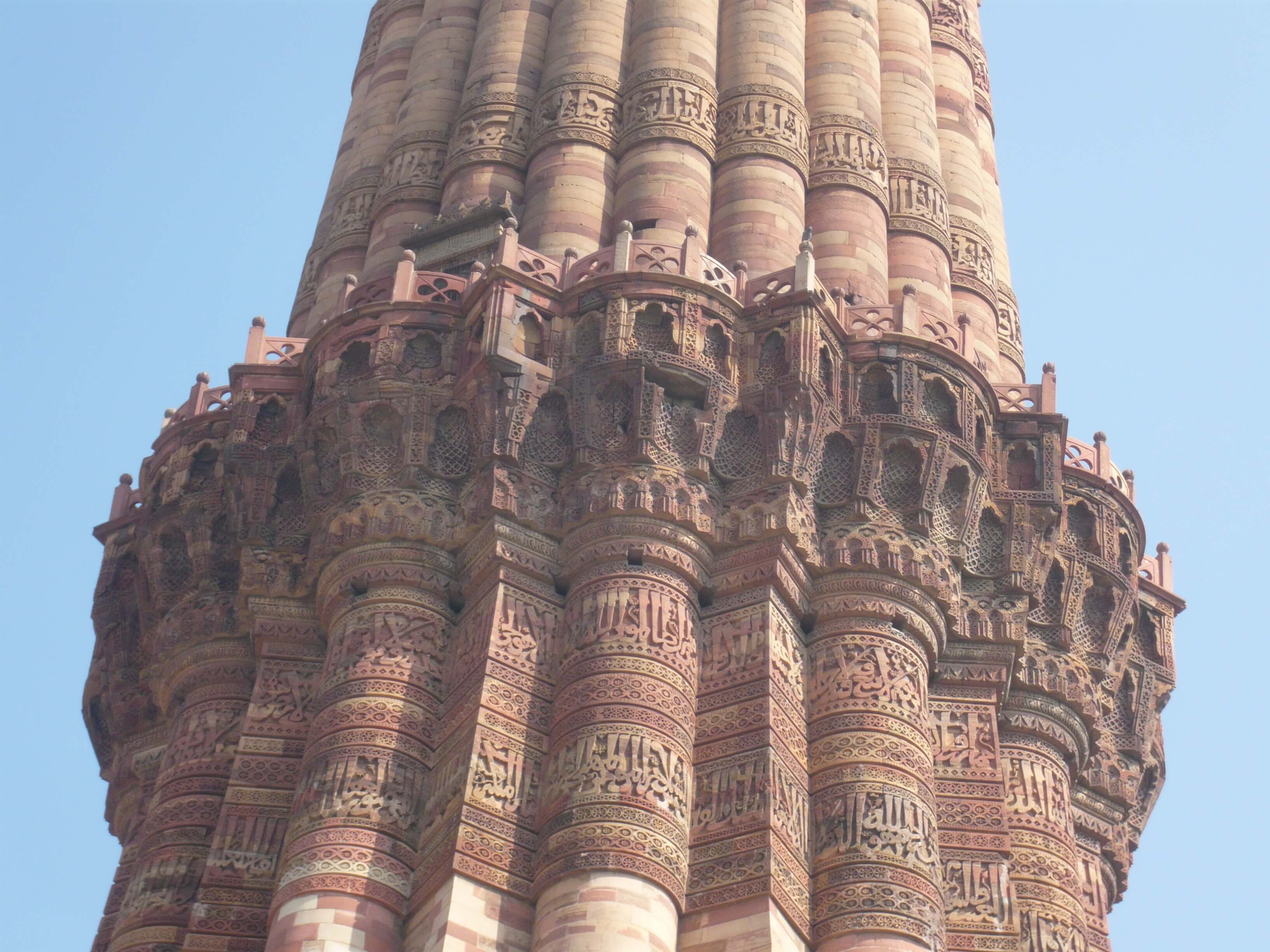
Qutb refers to the whole of the complex, including the tower and several other important buildings. The Qutb Minar itself is a red and orange sandstone tower 72.5m tall. It has a diameter of just over 14m at its base, and just under 3m at the top, and is the tallest tower in India.

A little context: The first of the Moslem invasions of India was by Muhammed, Sultan of Ghur in what is now Afghanistan, in 1192. Is that not wondrous? I’d love to live in a place called Grrr. Having overrun a large part of the Northern Indian plains, he returned to Ghur, leaving his new territory in the hands of his army commander and favourite slave, Qutbuddin Aibak. Qutbuddin decided to leave a monument to his religion that was designed to overawe his new subjects and inspire his own people, and set about building a mosque with a massive tower nearby.

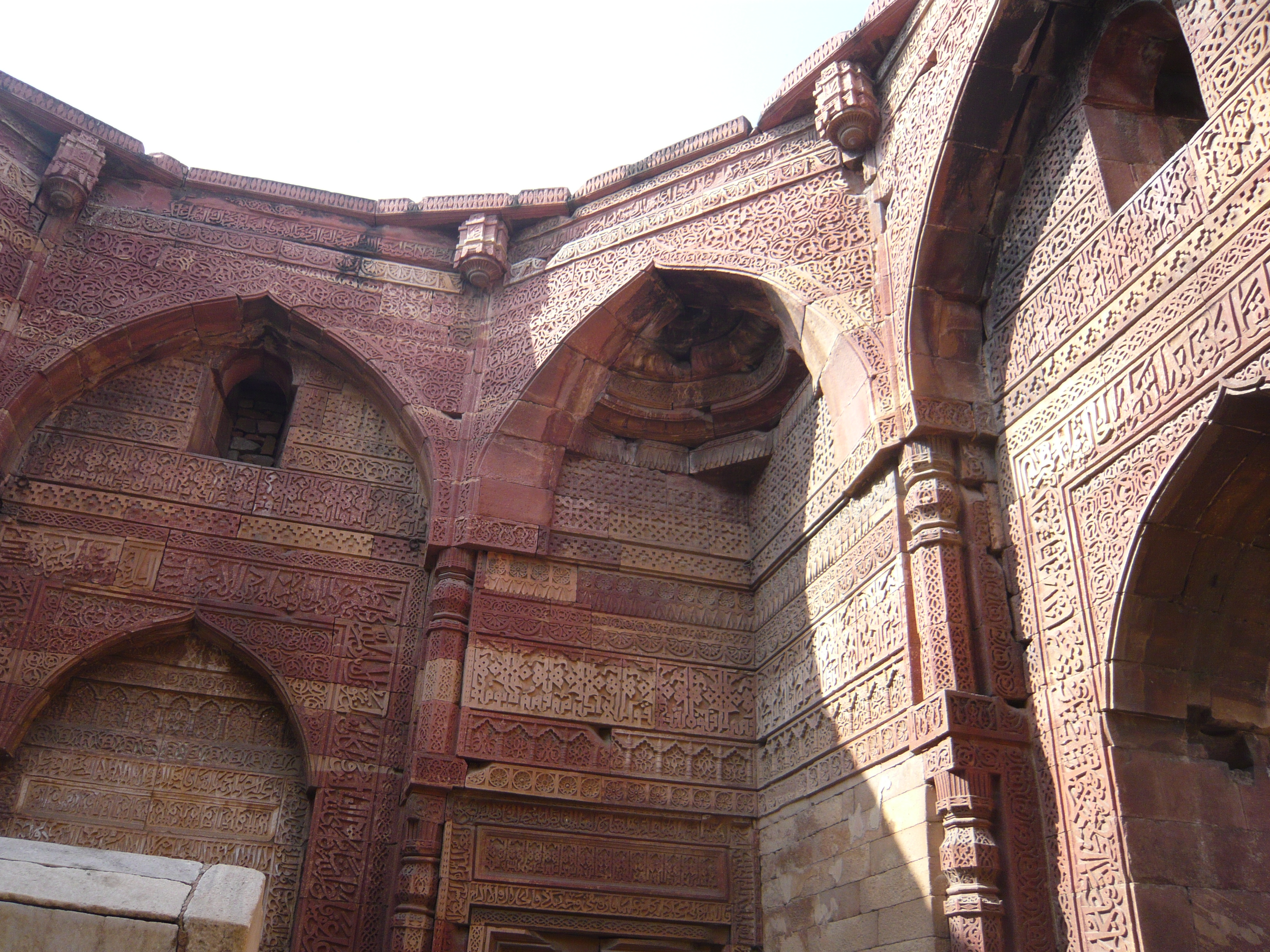
And this is a squinch in Iltutmish’s Tomb. Is not a squinch a wondrous thing also, both in its construct and its name? A squinch is a ‘bridging’ structure, used here to support a dome (now gone). Iltutmish was Shamsuddin Iltutmish (ruled 1211-1236), 3rd ruler of Delhi (after Qutbuddin and Aram).

This is the famous ‘non-rusting’ iron pillar. This stands in the courtyard of the mosque and was here long before the mosque was built. It was made in the reign of Chandragupta II (AD 375-413), is composed of almost pure iron (99.72%) and shows only the slightest sign of rusting. A sanskrit inscription on the pillar indicates that it probably stood originally outside a Vishnu temple, possibly in Bihar, and was moved later to this site. It would probably have had a garuda, the vehicle of Vishna, on the top. 

A close-up of the inscription.

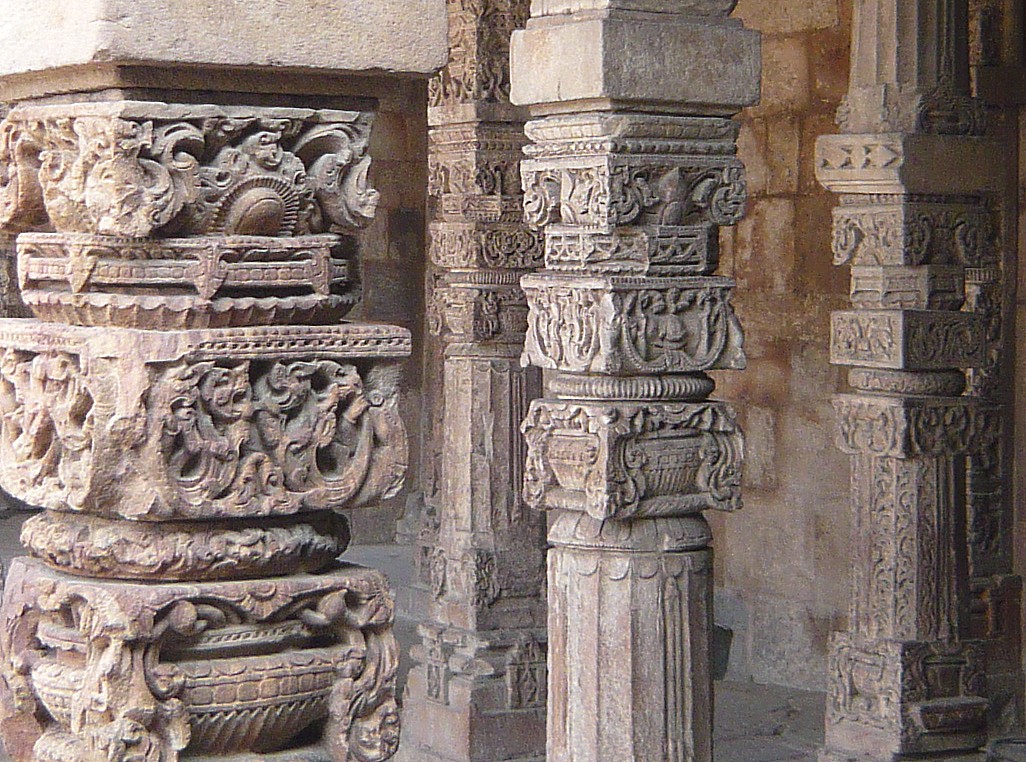
Decorative details of the stonework. Most artistic decoration is, as usual with Islamic craftwork, patterned work and verses from the Koran. At Qutb Minar, there are also plentiful stylised, and sometimes surprisingly realistic, depictions of plants with flowers and buds and long, winding stems and tendrils. To construct the mosque, artisans used stone from Hindu and Jain temples and many stones and panels still depict the original carvings, frequently defaced but still recognisable.

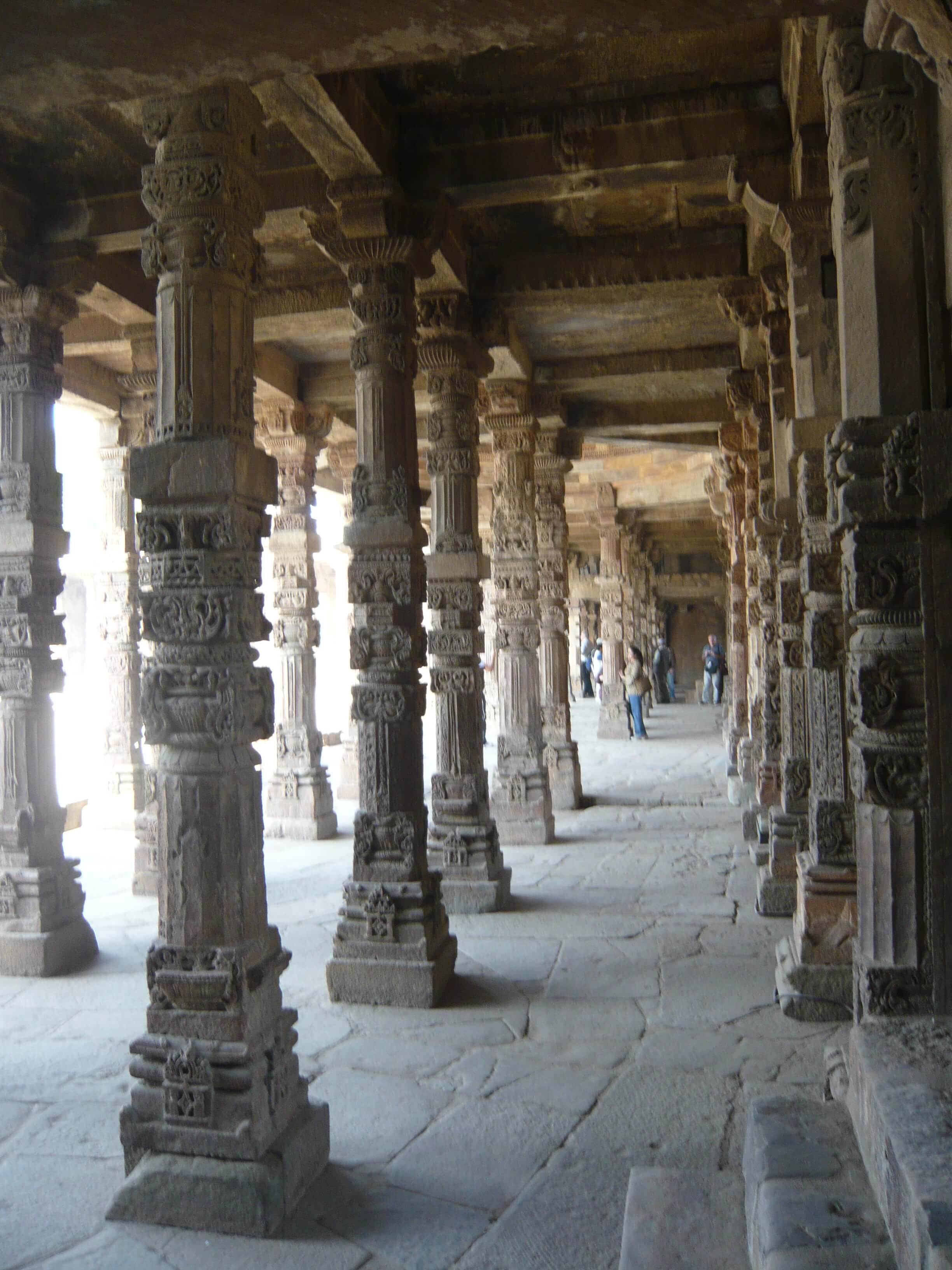
Brahminical motifs on the columns of the Quwwat-ul-Islam Mosque. These pillars were originally part of the Hindu and Jain temples destroyed in the area when Qutbuddin built his capital. It is recorded that twenty seven temples were destroyed. They would have been reassembled by Hindu craftsmen, Qutbuddin using local labour.

Another view of the columns on one of the cloisters surrounding the Quwwat-ul-Islam Mosque.

NOTE: My faithful follower might recognise some of these notes and photos, as this is a rehash of part of a post I wrote on Delhi several years ago. I think it’s worth revisiting, since it’s such a wonderful place.

Southern India (3)

It’s been a busy week again. I don’t seem to have managed to write anything, take any photographs, or even think about drawing or painting.

The news? I try to avoid it.

And to top it all, I have a cold and I feel bleurgh.

It’s at times like this I usually travel somewhere exotic in my head.

So, a few more photographs from Southern India, then.

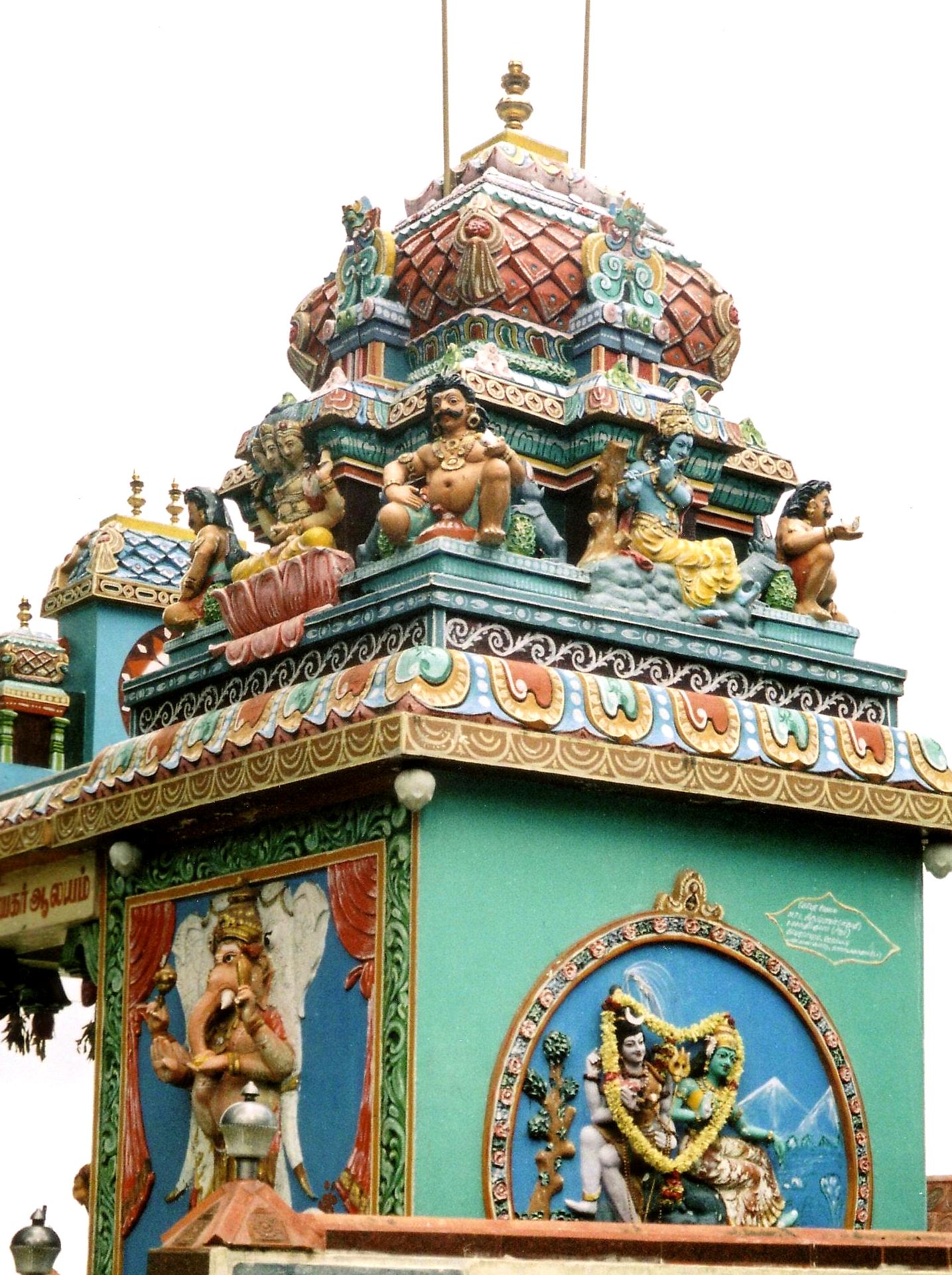
ganesh shrine kodai

Ganesh Temple, Kodaikanal. Ganesh, the elephant-headed god of prosperity, is one of the most popular gods in the Hindu pantheon and worshipped widely throughout India. This shrine is by the lake in Kodaikanal, a hill-station in the Palani Hills northwest of Madurai.

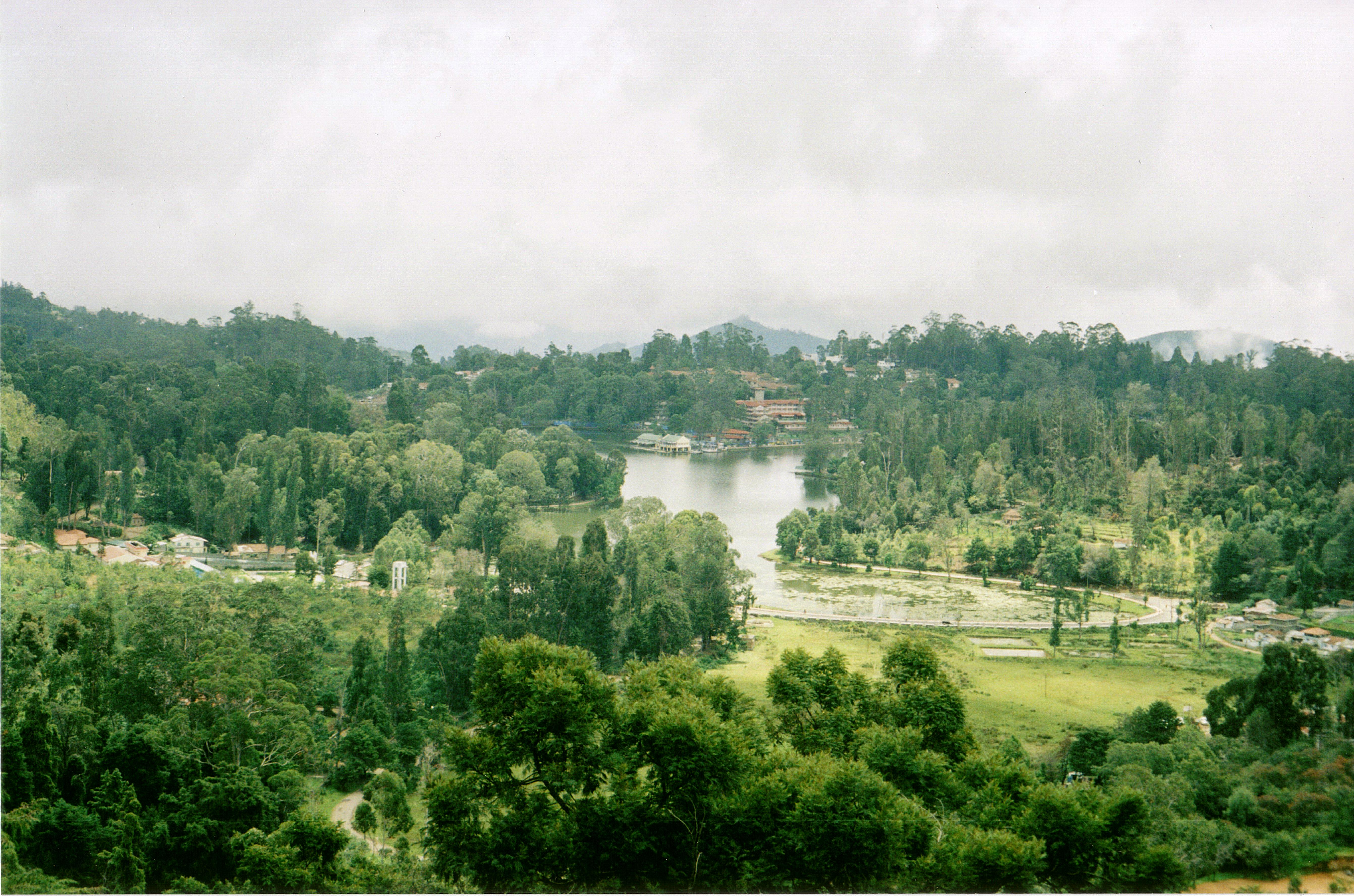
kodai lake

View of the lake at Kodaikanal. Besides the better known hill stations of Northern India, there are quite a number further south, of which Kodaikanal is just one example, although unique in having been originally started by American missionaries in the 1840’s.

bungalows

Raj-era bungalows in Kodaikanal. These are on a ‘prime-site’ location overlooking the lake.

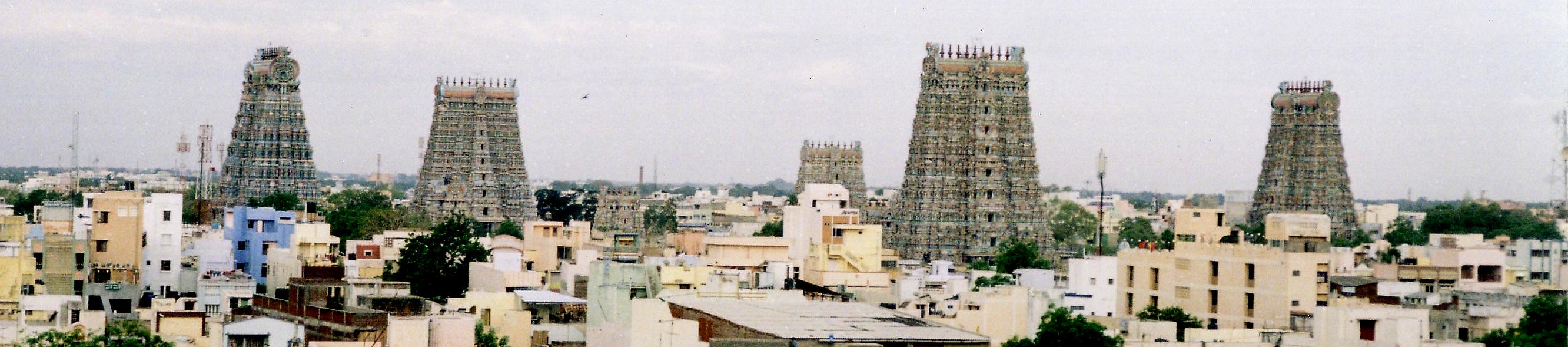
madurai skyline crop

Madurai skyline. The Sri Meenakshi Temple complex, dedicated to Shiva and his wife, Sati, dominates the skyline of the old city. Often called ‘The Heart of Tamil Country’, Madurai attracts up to 10,000 pildrims and tourists on any one day. This picture was taken from the Rooftop Restaurant Terrace at the Hotel Supreme, where we sat with a beer and watched a long procession of tourists wander across the roof to take the same shot.

madurai 1

Entrance to the Sri Meenakshi Temple complex, Madurai. 12 huge gopuram towers, each between 45 and 50 metres in height, are carved in highly elaborate designs featuring gods, people, animals and mythical creatures which are then brightly painted. The whole effect is more like an enormous and eccentricly iced cake, or at least plaster-work. The whole of the temple seethes with pilgrims, tourists, trinket sellers and guides. And touts, who basically cover the last two categories.

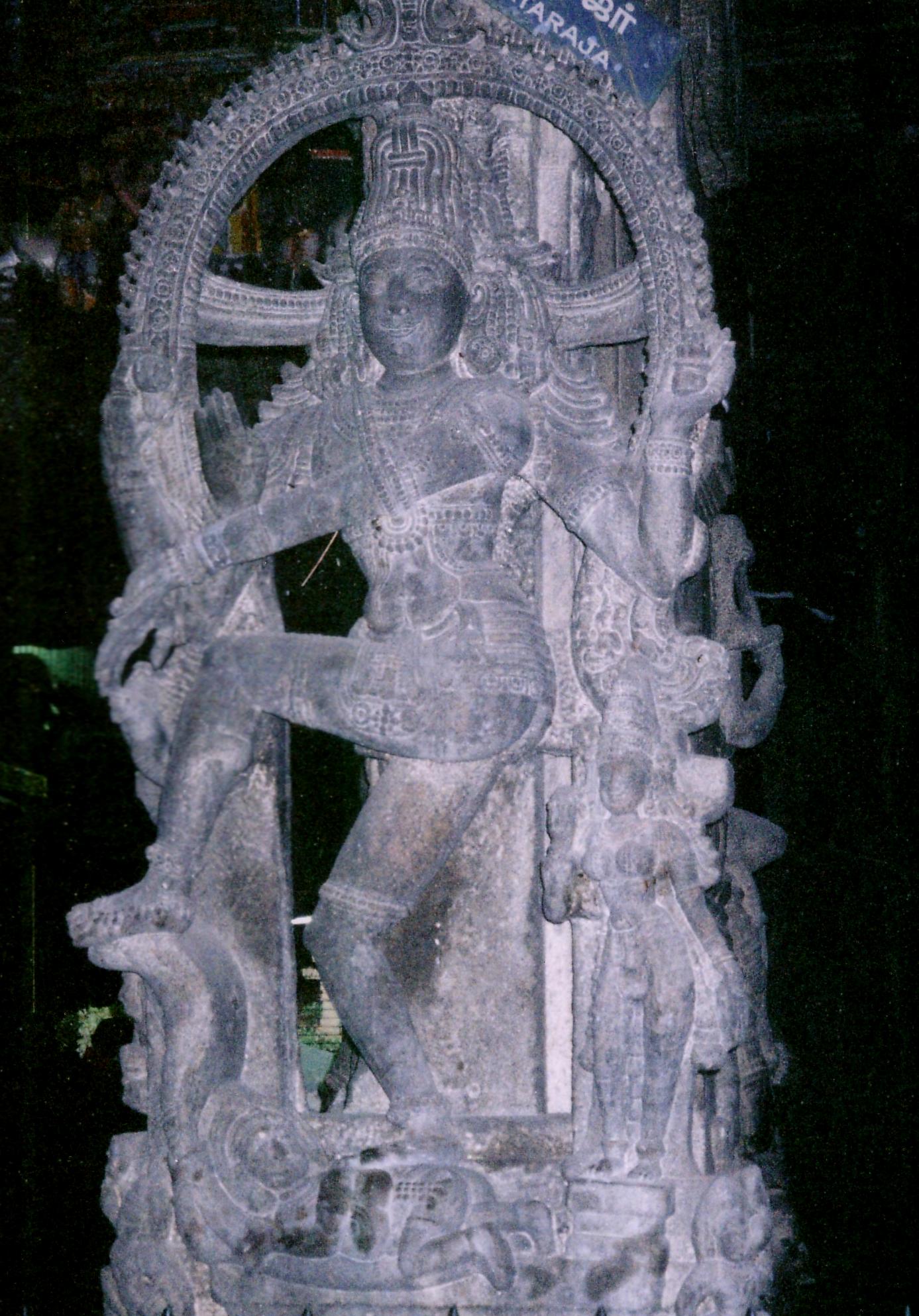
nataraja madurai

Carved statue of Nataraja, Madurai Temple complex. I am unfamiliar with this particular god, but I like the carving!

Southern India (1)

Southern India differs from the north in several respects. The first difference that the visitor tends to notice, once they have got away from the typical Indian maelstrom of airport, traffic, city centre, etc, is that with the less densely concentrated population comes a somewhat more laid-back atmosphere and attitude than in the north. The hassles and pressures, the touts, are still there, but seem somehow less intense.

The second real difference is in the culture. Southern India was never really assimilated into the Mogul empire, and only ever partly conquered, so there is a huge wealth of Hindu architecture and a proportional lack of Islamic, with next to no Buddhist remains and no continuing tradition of Buddhism at all. At times, it seems as though the visitor has entered a different country, but India has a way of reasserting itself on the senses…

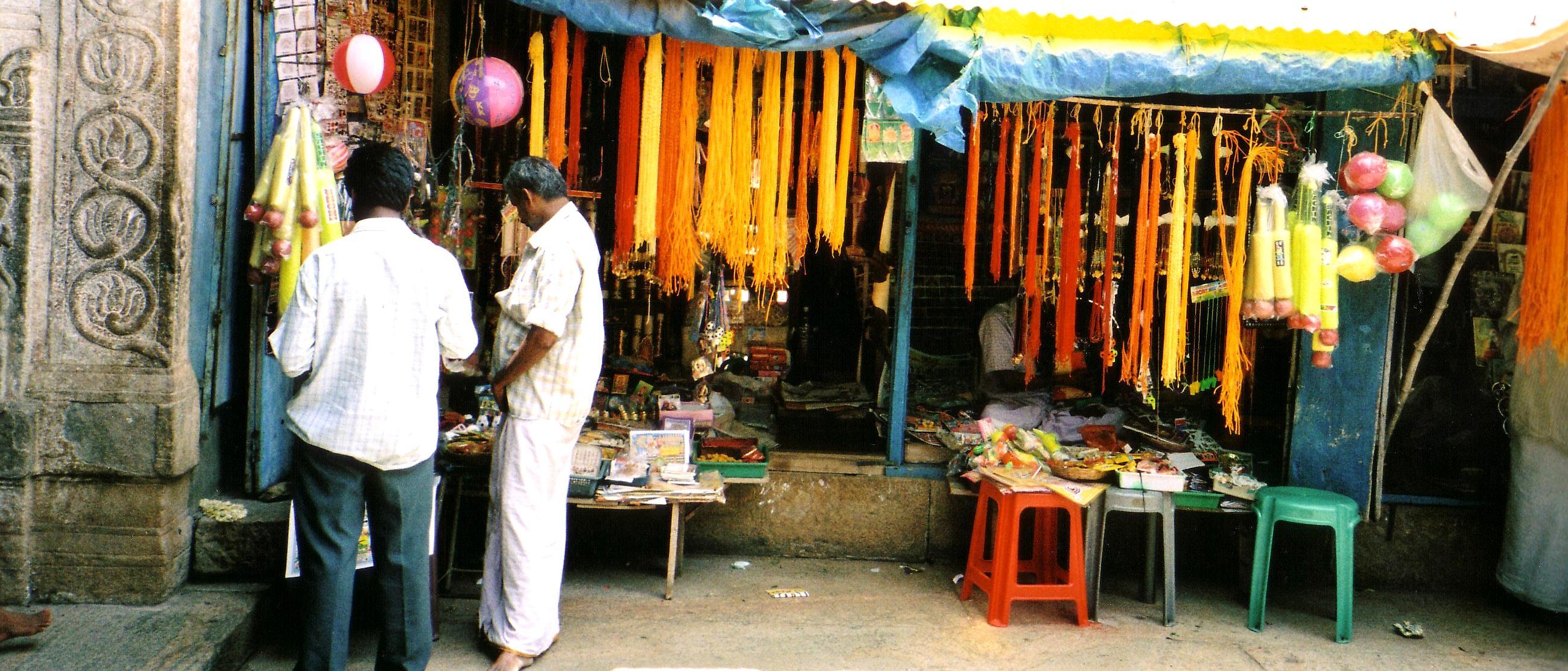
trichy stall

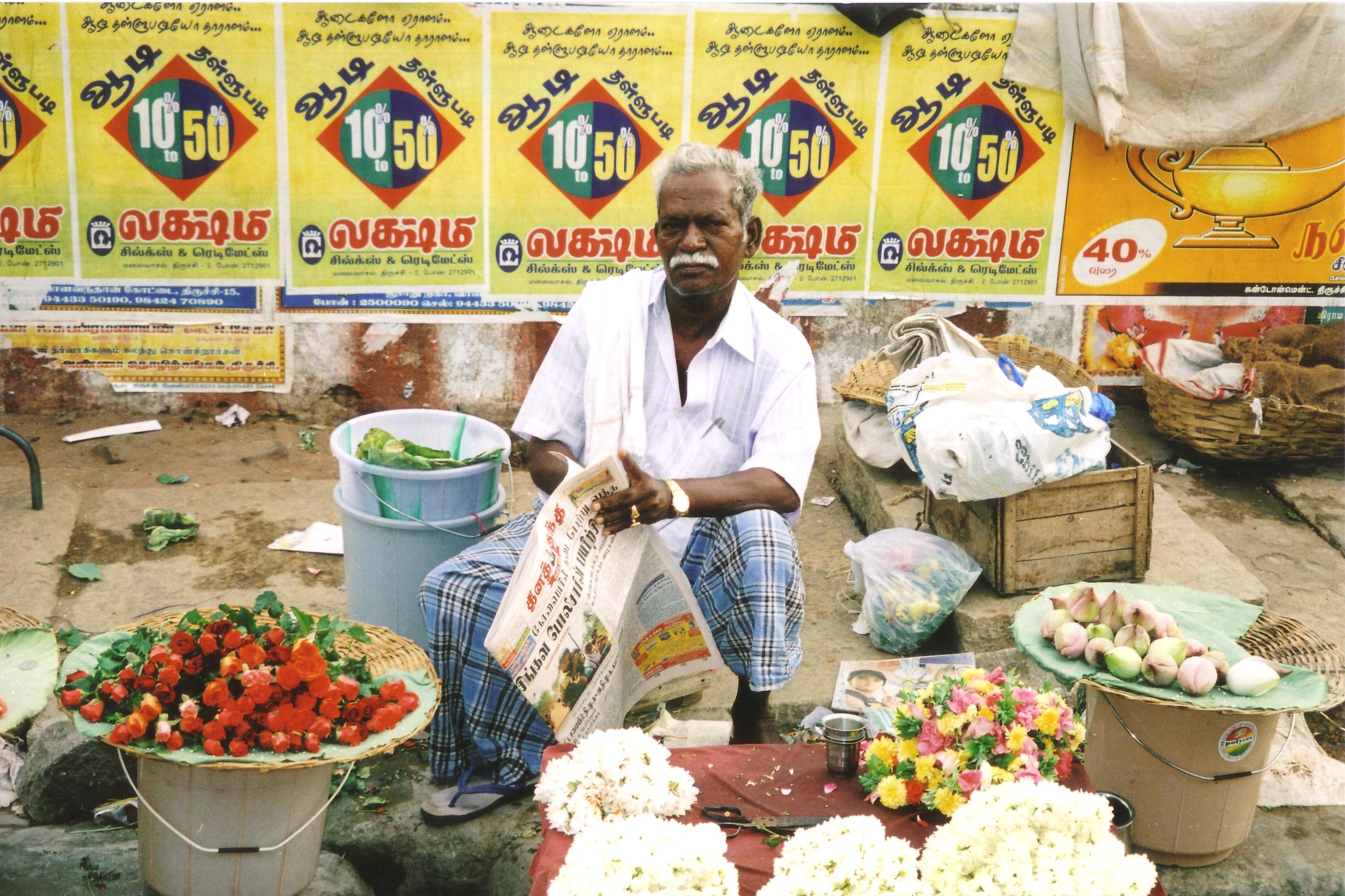
Stall outside Sri Ranganathaswamy Temple, Tiruchirappalli (Trichy), Tamil Nadu State. All over India, amongst the heat, dust and drabness that pervades the majority of the population’s day to day life, one finds colour.

trichy garland seller

Garland seller outside Rock Fort Temple complex, Trichy. The garlands will be used to decorate statues of gods during pujas (ceremonies) conducted in the Temples.

rock fort temple

Rock Fort temple, Trichy.  A view of the main temple from the pathway that leads to the tiny temple at the top of the rock. Non Hindus are not allowed into the main temple, dedicated to Shiva, or the temple at the top dedicated to Ganesh…although for a small donation, the priest is willing to waive this rule…

From my journal:

‘The trip is not particularly uncomfortable. It is a typical five hour trip through India – dust, buffaloes, half a dozen schoolchildren stuffed into an autorickshaw, wait-till-the-other-guy-blinks over-taking, temples large, medium and small, huge dry river beds, The Cauvery full of water, trees, strange crops, broken down trucks, train lines stretching arrow-straight into the distance, rows and rows of stalls with neat piles of fruit and vegetables, rows of hanging water bottles from the roof, biscuits, samozas, cigarettes and crisps, a child squatting in the dirt, mum feeding the family beneath the tree, Tiffin Ready signs, smart petrol stations, mud huts, cement buildings, palm shacks, huge residences surrounded by high walls – all concrete, police traffic blocks (ignored), it all blurs into one.’

trichy temple 2

Part of Sri Ranganathaswamy Temple complex. This is the largest of all temple complexes in India, covering a staggering 60 hectares, and is dedicated to Vishnu. The Gopuram (tower) on the left is painted white, as a symbol of purity, and is one of the buildings that non-hindus are not permitted to enter.

white goporam trichy

The White gopuram, in all its glory.

trichy puja 2

Pillar in Sri Ranganathaswamy Temple, liberally decorated with coloured powders and with offerings of incense, rice and flowers. Devotees of the god concerned will conduct their own personal pujas to ensure health and prosperity, or perhaps for some more specific purpose, such as to request the birth of a son or success in a particular undertaking. Although this temple is dedicated to Vishnu, other gods are represented there and prayed to.

trichy puja 1

Another, nearby, pillar in the same temple. Although in the same temple and close to the pillar in the previous picture, this shrine will be to another, different, god. Its use, however, will be the same.

The Kashmir Issue

I posted a little while back that I had prepared a rather contentious post.

This is it.

Of course, I realise I risk being shot down in flames over this post. An Englishman blogging on what he thinks might be the solution to an incredibly difficult problem in the Sub-continent. So I will put on my tin hat, duck behind the sandbags, and press ‘Publish’.

As always, I welcome your comments. In fact, it is probably pointless my posting this unless there is a conversation. But, please, keep it polite.

Obviously, I am not the only person to have thought of this idea. Indeed, I read about it a long time ago, when these various options were being discussed to the backdrop of bombs and bullets.

Plus ca change.

twenty eight

I fear there is only one solution that is practical in the long term, but I strongly doubt that the governments of India or Pakistan would have the courage to implement it. For the whole of Kashmir to remain in Indian hands will mean a continuation of the devastating armed conflict in progress at present, with no prospect of it ever ending, plus the ever-present prospect of it escalating into something much more serious. But for it to pass entirely into Pakistani hands would be considered out of the question by the huge majority of the Indian population, and certainly by the whole of the political class.

No, the only prospect of peace that I see is for the state of Kashmir to be partitioned in much the same way as India herself was in 1947. The areas of Muslim majority such as the Vale of Kashmir would need to be ceded to Pakistan, and the remaining ones would remain part of India. Pakistan and the insurgents would need to agree to give up all claims to these areas. This would need to be achieved by negotiation in good faith with goodwill on both sides, both conscious of the risks and the monumental steps they are taking to finally establish permanent peace, and to restore prosperity to a troubled part of the sub-continent. And upon resolution, all parties would need to declare very publicly that this was a solution agreeable to all, and give it their blessing.

It is not as though there is no precedent to that arrangement. After all, both the Punjab and Bengal were divided this way at independence, and although it was strongly resented by some, it was also generally viewed as the only practical solution. And it is what should have happened to Kashmir, then.

If the difficulties in the way of this solution are huge, then so too are the incentives for success. It goes without saying that the loss of life and the devastation caused by the troubles are highly undesirable in the first place, and then there is the massive drain in resources to both sides by keeping huge forces established on either side of the border. With the prospect of peace, then agriculture, industry and tourism could return to normal with major benefits for everyone involved. Lastly, with the removal of the ‘Kashmir Issue’ as a friction between them, it is possible that both sides might finally come to the sort of mutual respect, collaboration, and friendship envisioned back in 1947. Even if the attempt were to end in failure, then the goodwill generated by the attempt could be a positive that might spill over into other areas of India / Pakistan relations.

The alternative solution, sometimes mooted, of an independent Kashmir under UN jurisdiction, appears an unworkable ideal. The state itself is too divided for this to work, and both Indian and Pakistani players would still covert the whole country. It is unlikely that conflict would cease under these conditions; it would be more likely to simply escalate. The small state would forever be reliant on the UN for security, leading to a constant financial drain on the organisation. The peacekeepers, too, would inevitably become military targets raising the risk of  new frictions arising.

I believe that the option of doing nothing is one that must be finally put aside. At present the situation is one where a resented and hated military presence governs within its own borders through fear and the threat of violence, That is not a situation that is likely to ever change to trust. The population are never going to learn to love their rulers that way. The only option in that situation is the eternal continuation of the status quo.

But it lies within the power of the regional players to solve this crisis once and for all, and it is essential that the attempt is made.