Belief Systems and Rain

I had a conversation with a blogging friend a few days ago, in the course of which she asked me if I knew why it was that so many Westerners seemed drawn to Eastern beliefs, especially the more ‘esoteric’ ones.

I briefly mentioned the fascination the East has held for Westerners throughout history, and the fact that many in the West have drawn away from traditional religion – specifically Christianity – in the last fifty or sixty years especially, and that leaves a void: when you have been brought up within a belief system, that needs to be replaced by something. The Beatles nudged a whole generation in that direction by visiting the Maharishi in Rishikesh in the 1960’s / 1970’s, and there followed a whole slew of books on the subject, many seeming to want to outdo the others in sheer weirdness. But even before that there had been a lot of interest in both Buddhism and Hinduism from the late Victorian period onward, with a number of popular books available.
I can’t claim to be immune to this, either. I also rejected Christianity long ago, but felt I needed something to take its place despite deciding the concept of gods had no place in my life. The world is a wonderful and incredibly beautiful and fascinating place, all of which is explained perfectly well by science. But I do need something to satisfy the spiritual part of me – a part that, surely, all of us have?

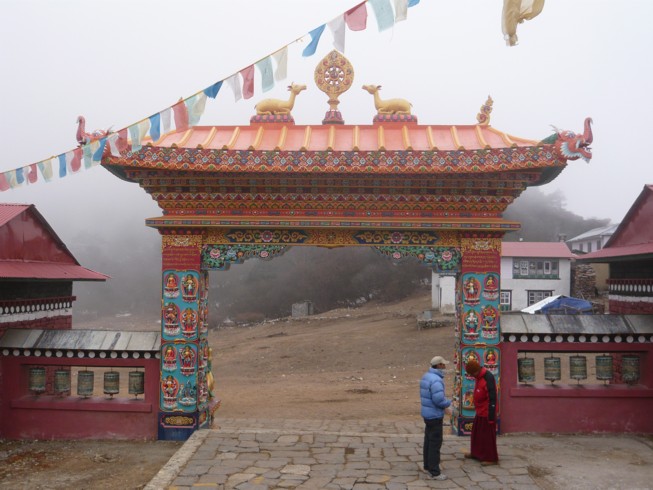
I have read a lot about Buddhism, and for a long while thought of myself as a Buddhist. In a way, I still do, although I can’t entirely buy into the belief sets of any of the three major schools of Buddhism. But I did read Buddhism Without Beliefs by Stephen Batchelor. I can’t remember the details of the book, but that is unimportant, it’s the message of the title in this case. I like Buddhism. I like its core message, which pared down to basics is simply to be kind to everyone and everything. It is the only religion I know that has no need for gods. Oh, sure, they’re there if you want them, but no one is ordering you to have one.

This doesn’t have to be ‘esoteric’ or ‘eastern’, either. It can apply just as well here in the west. And it doesn’t require sacred writings or rituals, I find poetry or a walk in the woods does just as well for me.

I’m listening to the heavy rain as I write this – which is something that seems to happen a lot at the moment, but is something I find particularly soothing. I wonder at the origins of this; is it something primeval, hidden deep in my DNA from the times we lived in caves or rough shelters and we could take comfort from the fact we were snug, and perhaps large sharp-toothed beasts were taking a similar break somewhere and not out looking for early humans to eat? Or is it perhaps just a forgotten memory of a very calming experience I once had, which my subconscious has decided to hang onto for my benefit, but without telling me why? I am aware of a few of the times I’ve experienced it, such as lying in a tent at night hearing the pounding of the rain on the canvas, with a wonderful feeling of warmth and snugness. Then there was another time in the mountains of Spain, coming across an abandoned cottage just as a rainstorm hit and spending the next half an hour or so just sitting on a bench and leaning against the wall, listening to the rain and thinking. I’m sure there must be many more.
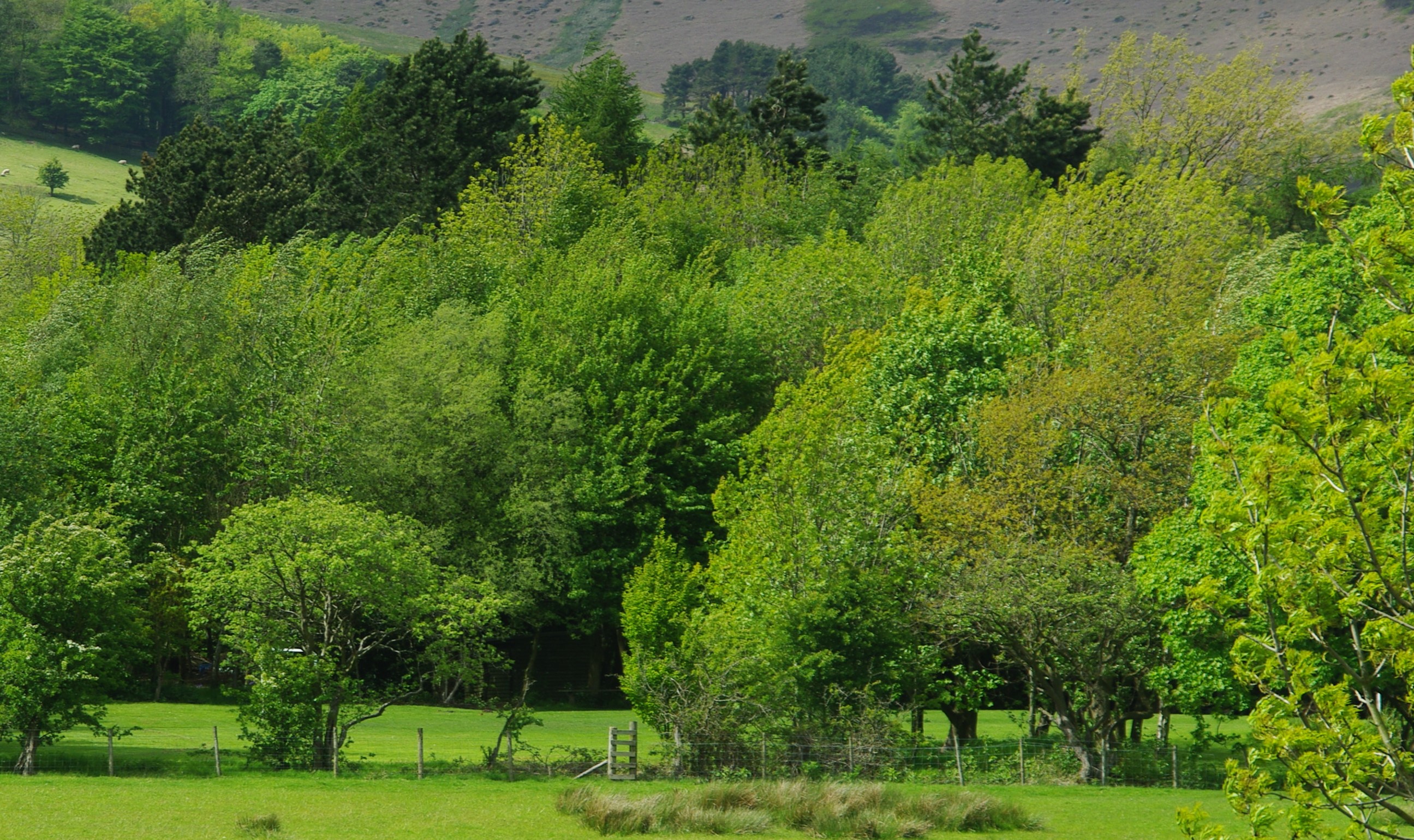
In these rainstorms, I feel as though I’m immersed in nature – something that always makes me feel calm and relaxed, and which is but a step from what the Japanese call Forest Bathing. Forest Bathing is essentially taking a walk in woodland, using all your senses to connect with that environment. This reminds me strongly of meditation, especially meditation as I learned it in a Buddhist environment, which is where I’m going with all this rambling. If I have an actual religion now, it has to be nature. A belief in nature as something important, beneficial and precious. I wouldn’t ‘worship’ nature – ‘worship’, for me, has connotations of supplicants on bended knees with hands clasped together intoning religious dogma and praying, but I do have strong feelings of respect and admiration for nature, which I suppose you could call the same thing.

It just seems a pity that more people don’t seem able to accord it the same respect.
The Conquering Hero Comes!

This is another day when I feel frustrated because I’d like to be out travelling, although I did get to have a great long walk on the South Downs on Saturday. But rather than post about that at the moment, I have a fancy to re-post this piece I wrote a few years ago:

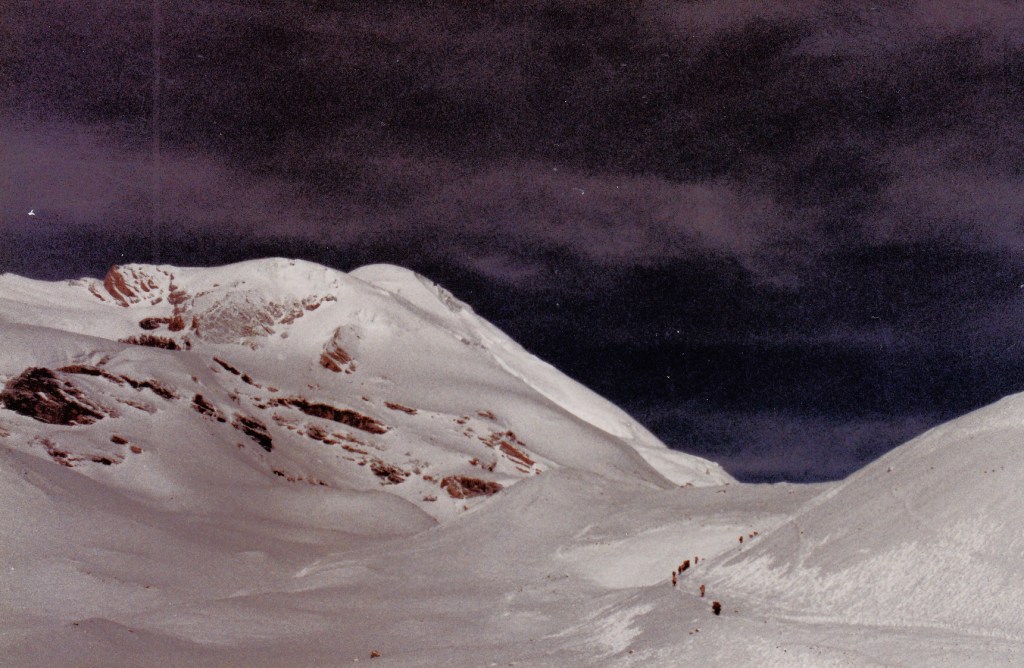
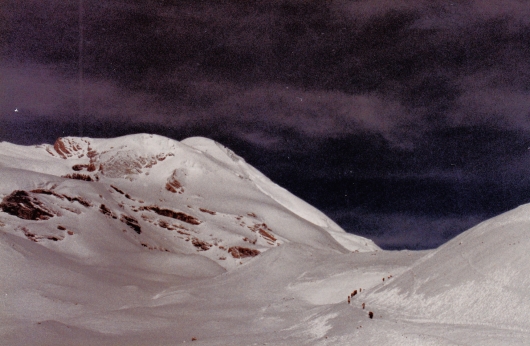
I’ve never wanted to ‘conquer’ mountains.

img_0010

Or any other parts of the world, really.

I’ve always felt this was the wrong way to think of a journey. It was ridiculous to think I could impose my will upon a mountain, or on a desert, or indeed upon any part of my route. That I could, perhaps, somehow bend it to my will.

I feel it is more a case of preparing as best as possible, including mentally, and then perhaps said mountain will tolerate my presence; will allow me passage.

‘Conquering’ also carries the implication of invasion, of fighting, of strife. That is not the sort of relationship I want with mountains, or with any other place I choose to travel.

Certainly, in the past I have travelled at least partly with that mindset at times.

IMG_0005

Some of you may recall I wrote about an extremely foolish journey I took in Oman when I lived there over thirty years ago (Mr. Stupid Goes For a Walk). Although I was running low on water, I pushed myself to the limit to reach the final ridge of hills on the route I had decided I was going to achieve one day, nearly killing my stupid self in the process. And although I achieved my aim, I didn’t feel victorious.

Only a bit stupid.

I prefer instead to think of myself as a visitor. And as a visitor, I need to have some manners. You do not expect to find the visitors pushing through your house and demanding to see this or to be given that, so I don’t.

I am not out to break records, nor to prove how tough I am.

This does not imply a lack of ambition, nor a lack of determination. Indeed, I have both – it’s just that the mindset is a little different. In particular, I give myself different priorities. I want to reach my goal but if I don’t, it does not matter. I think I’m more attuned to my own safety, and perhaps that of others. I hope I can be receptive to the feelings of others, too.

A good example in the climbing world is that of the mountains in Nepal that climbers are forbidden to reach the summit of, due to the belief that they are the abode of gods. Theoretically, a climber will stop some 10 meters or so short of the summit. Opinion is naturally divided over whether a climber would, or wouldn’t, in the absence of any witnesses, respect that ban.

I would respect it every time.

The mountains, of course, are inanimate. They do not wish me harm or otherwise. Neither do deserts or oceans. Even the most inhospitable of landscapes is neutral. It does not care whether I succeed in my aim to reach or traverse a particular part of it, and it will not hinder or help me in the attempt.

154

My feelings about a landscape are just my reactions to it, and if I should choose to give this landscape a kindly or vindictive character, I am only projecting my own feelings onto it.

This may give me comfort, or otherwise, but will make no material difference.

Maybe I am simply suggesting it’s good to travel with humility.

I have touched upon that before!

All Hail The Conquering Hero!

I’ve never wanted to ‘conquer’ mountains.

img_0010

Or any other parts of the world, really.

I’ve always felt this was the wrong way to think of a journey. It was ridiculous to think I could impose my will upon a mountain, or on a desert, or indeed upon any part of my route. That I could, perhaps, somehow bend it to my will.

I feel it is more a case of preparing as best as possible, including mentally, and then perhaps said mountain will tolerate my presence; will allow me passage.

‘Conquering’ also carries the implication of invasion, of fighting, of strife. That is not the sort of relationship I want with mountains, or with any other place I choose to travel.

Certainly, in the past I have travelled at least partly with that mindset at times.

IMG_0005

Some of you may recall I wrote about an extremely foolish journey I took in Oman when I lived there almost 30 years ago (Mr. Stupid Goes For a Walk). Although I was running low on water, I pushed myself to the limit to reach the final ridge of hills on the route I had decided I was going to achieve one day, nearly killing my stupid self in the process. And although I achieved my aim, I didn’t feel victorious.

Only a bit stupid.

I prefer instead to think of myself as a visitor. And as a visitor, I need to have some manners. You do not expect to find the visitors pushing through your house and demanding to see this or to be given that, so I don’t.

I am not out to break records, nor to prove how tough I am.

This does not imply a lack of ambition, nor a lack of determination. Indeed, I have both – it’s just that the mindset is a little different. In particular, I give myself different priorities. I want to reach my goal, but if I don’t it does not matter. I think I’m more attuned to my own safety, and perhaps that of others. I hope I can be receptive to the feelings of others, too.

A good example in the climbing world is that of the mountains in Nepal that climbers are forbidden to reach the summit of, due to the belief that they are the abode of gods. Theoretically, a climber will stop some 10 meters or so short of the summit. Opinion is naturally divided over whether a climber would, or wouldn’t, in the absence of any witnesses, respect that ban.

I would respect it every time.

The mountains, of course, are inanimate. They do not wish me harm or otherwise. Neither do deserts or oceans. Even the most inhospitable of landscapes is neutral. It does not care whether I succeed in my aim to reach or traverse a particular part of it, and it will not hinder or help me in the attempt.

154

My feelings about a landscape are just my reactions to it, and if I should choose to give this landscape a kindly or vindictive character, I am only projecting my own feelings onto it.

This may give me comfort, or otherwise, but will make no material difference.

Maybe I am simply suggesting it’s good to travel with humility.

I have touched upon that before!

Going Green

On the morning of the 26th August, 2019, every single person on earth woke up to find that their skin had turned green.

For a few hours, there were an awful lot of people trying to find a way to change it back again, to try to dye it, rub the colour off, swallow lots of strange potions, try magic spells, see doctors, priests, scientists, mystics, druids, and all sorts of other experts and so-called experts, all of whom claimed they could cure the problem.

But all of whom had green skin as well, so they didn’t come across as very convincing.

Finally, someone thought to bellow up to God ‘Oi, God! What on earth have you done?’

There was a rumble of ethereal chuckling, and then God replied: ‘I am just so totally pissed off, like, with your saying how some of you are better than the others, like, just because of the colour of the skin I gave you. It’s all pretty random, after all. So now you’re all the same, and you might as well just stop it.’

‘Yeah…but…green?’

‘Yes, green. If I make you all white, then the ones that were already white will make out that was because they were superior in the first place. Same with all the other skin colours. So…green. None of you were green before.’

‘But…’

‘Plus,’ and here God gave a little Godly snigger, ‘you all equate green skin with aliens. So now you’re all aliens. And, even if I say so myself, that’s a good one.’

002a

Nothing’s ever simple, though, is it? Within a couple of weeks, once everyone had realised there was no mileage in everyone claiming to be a Green Supremacist, all the major religions started working overtime to fire up extra feuds and wars and to persecute anyone within reach who thought differently to the ways they did, anyone they considered heretical, those who some thought might be a slightly different shade of green, or cut their sandwiches in a non-prescribed way.

And then the sound of the loudest ever irritated sigh filled the skies and echoed around every valley and mountain and city on earth. It rumbled across the plains and seas and everyone stopped what they were doing and muttered ‘Oh, crikey. Now what?’

And God roared out ‘I thought I was angry before, but now I’m really pissed off! What on earth makes you think you can speak for me? This is all, quite frankly, rather insulting! I made this lovely planet, and put you on it so you could enjoy it and look after it and be nice to each other! How dare you presume to say that I hate people who you disagree with? How dare you say you have authority to kill in my name? And, while you’re at it, you can stop all the servile bowing and scraping, too. I mean, what sort of an image do you have of me?

‘Oh, and I almost forgot (‘cos I’ve got a lot of gripes with you lot!). Men are not superior to women in any way whatsoever. So you men can stop paying them less, treating them differently, forcing them to hide themselves, denying them education, declaring them inferior or evil, or discriminating against them in any other way at all, or else I’m jolly well going to visit a few plagues on you that will really make your blood run cold!

‘Now, start to look after my bloody planet, treat women with respect, and stop trying to find more cowardly ways to exterminate anyone you think different to yourselves!’

Blimey. Better do as She says.

The Kashmir Issue

I posted a little while back that I had prepared a rather contentious post.

This is it.

Of course, I realise I risk being shot down in flames over this post. An Englishman blogging on what he thinks might be the solution to an incredibly difficult problem in the Sub-continent. So I will put on my tin hat, duck behind the sandbags, and press ‘Publish’.

As always, I welcome your comments. In fact, it is probably pointless my posting this unless there is a conversation. But, please, keep it polite.

Obviously, I am not the only person to have thought of this idea. Indeed, I read about it a long time ago, when these various options were being discussed to the backdrop of bombs and bullets.

Plus ca change.

twenty eight

I fear there is only one solution that is practical in the long term, but I strongly doubt that the governments of India or Pakistan would have the courage to implement it. For the whole of Kashmir to remain in Indian hands will mean a continuation of the devastating armed conflict in progress at present, with no prospect of it ever ending, plus the ever-present prospect of it escalating into something much more serious. But for it to pass entirely into Pakistani hands would be considered out of the question by the huge majority of the Indian population, and certainly by the whole of the political class.

No, the only prospect of peace that I see is for the state of Kashmir to be partitioned in much the same way as India herself was in 1947. The areas of Muslim majority such as the Vale of Kashmir would need to be ceded to Pakistan, and the remaining ones would remain part of India. Pakistan and the insurgents would need to agree to give up all claims to these areas. This would need to be achieved by negotiation in good faith with goodwill on both sides, both conscious of the risks and the monumental steps they are taking to finally establish permanent peace, and to restore prosperity to a troubled part of the sub-continent. And upon resolution, all parties would need to declare very publicly that this was a solution agreeable to all, and give it their blessing.

It is not as though there is no precedent to that arrangement. After all, both the Punjab and Bengal were divided this way at independence, and although it was strongly resented by some, it was also generally viewed as the only practical solution. And it is what should have happened to Kashmir, then.

If the difficulties in the way of this solution are huge, then so too are the incentives for success. It goes without saying that the loss of life and the devastation caused by the troubles are highly undesirable in the first place, and then there is the massive drain in resources to both sides by keeping huge forces established on either side of the border. With the prospect of peace, then agriculture, industry and tourism could return to normal with major benefits for everyone involved. Lastly, with the removal of the ‘Kashmir Issue’ as a friction between them, it is possible that both sides might finally come to the sort of mutual respect, collaboration, and friendship envisioned back in 1947. Even if the attempt were to end in failure, then the goodwill generated by the attempt could be a positive that might spill over into other areas of India / Pakistan relations.

The alternative solution, sometimes mooted, of an independent Kashmir under UN jurisdiction, appears an unworkable ideal. The state itself is too divided for this to work, and both Indian and Pakistani players would still covert the whole country. It is unlikely that conflict would cease under these conditions; it would be more likely to simply escalate. The small state would forever be reliant on the UN for security, leading to a constant financial drain on the organisation. The peacekeepers, too, would inevitably become military targets raising the risk of  new frictions arising.

I believe that the option of doing nothing is one that must be finally put aside. At present the situation is one where a resented and hated military presence governs within its own borders through fear and the threat of violence, That is not a situation that is likely to ever change to trust. The population are never going to learn to love their rulers that way. The only option in that situation is the eternal continuation of the status quo.

But it lies within the power of the regional players to solve this crisis once and for all, and it is essential that the attempt is made.

An Alien Culture?

More people travel for leisure purposes today than have ever done so in the past. And many work abroad on short- or long-term contracts, often with a certain amount of leisure time available to experience the culture that surrounds them there.

And this will result in these travellers meeting the people that make up the indigenous society where, for a while, they find themselves. Will there then be a meeting of minds?

Having lived in an ex-pat society, as I have referred to on here before, I am familiar with the laager mentality that often pervades it. I won’t go into all the permutations, but there is frequently a combination of arrogance and fear that leads to a strong feeling of ‘us and them’.

Many travel with the firm conviction that their own society is superior to any other, and are unwilling to see any good at all in any others. Some who go away to work resent being uprooted, and arrive with that resentment packed in their baggage. Some find the experience to be fearful, if they do not understand the language being spoken around them or assume that this alien society has values that somehow threaten them.

And they can either lock themselves away and peer over the barricades, or they can embrace the experience and learn from it.

137 (2)

Travel broadens the mind, it is said, but sometimes it seems to just cement prejudices more firmly in place.

And how easy it is to travel around just looking for things to justify prejudices!

One of the more infuriating things that I come across occasionally is a bigoted and ignorant letter or article in a local newspaper (it often tends to be the local ones) where someone’s idiot views are justified by the phrase ‘I know; I was there’. I imagine them living their entire time in a foreign country in a compound that they rarely leave, yet thinking that they now know exactly how the society functions beyond their walls.

I’ve met one or two of them, over the years.

I spent three years in Oman, working, and I’ve travelled fairly extensively in India, but I do not imagine or pretend that I really have much more than a superficial experience of these places. I knew little of the local culture in Oman beyond what I could see in the streets and villages and markets that I visited. I didn’t know anyone well enough to spend time at their homes or in their social circles. I went with groups of other westerners to places of interest. I did spend a lot of time exploring the desert and the nearby towns on my own, but I was effectively still inside my own little bubble. It is a huge regret that I never got deeper under the surface.

I have, perhaps, managed to learn a little more about the real India, especially through spending time on a project in a village, although I cannot pretend, even to myself, that I really have any idea of what it is like to actually live in an Indian village.

During the later days of the British Raj, the rulers took the approach that their civilisation was naturally superior, and that there was nothing in Indian civilisation worthy of their consideration. The irony of this is that around the end of the eighteenth century, and the first years of the nineteenth, many of the British in India had taken a keen interest in Indian history and culture, themselves doing a tremendous amount to unearth much of the history that had been lost and forgotten. For that comparatively brief period, it would seem that many of the British treated Indians and their culture with a deep respect.

The reasons that this changed are probably deeper than my understanding, but two things stand out. Firstly, that from the beginning of the nineteenth century, many British women came to India in search of husbands, bringing with them what we tend to think of as Victorian attitudes, and secondly, there was an upsurge of evangelism in Britain, which translated itself in India as a movement to convert the ‘heathens’ to Christianity. These combined as a new feeling of superiority, and contempt for a society that was now seen as inferior, especially when much of it resisted their overtures.

With this, the British as a whole seemed to become more intolerant and arrogant, and less respectful of sensibilities. This culminated in the horrors of 1857, which could be said to be caused directly by these attitudes.

To return to the present day, it seems that many travellers have attitudes no better than their Victorian predecessors’. I wrote a post a few months back that mentioned a number of westerners I came across in a Himalayan hill resort, https://mickcanning.co/2015/10/25/the-mad-woman-of-the-hill-station/  should you wish to view it, whose behaviour and attitudes were just downright arrogant and disrespectful. They were doing no more than confirming their prejudices as they travelled, and at the same time I daresay they were confirming many people’s views of western travellers.

Yet there are many people who travel with open ears, open eyes and an open mind, and their rewards are far greater than those of the blinkered traveller. They have the wonderful opportunity to experience and learn about different cultures at first hand, speak to people who hold different beliefs and ideals to them, and perhaps learn a little of what drives them. In return, they have an opportunity to enlighten others, perhaps, to things in their own society that might not be understood by those others. In a small way, each and every one of them can choose to contribute either to different societies coming to understand and become more tolerant, or to the further spread of tensions, mistrust, and misunderstandings.

And all of these little interactions, added together, are as important and influential as the contacts between politicians and diplomats.