Southern India (3)

It’s been a busy week again. I don’t seem to have managed to write anything, take any photographs, or even think about drawing or painting.

The news? I try to avoid it.

And to top it all, I have a cold and I feel bleurgh.

It’s at times like this I usually travel somewhere exotic in my head.

So, a few more photographs from Southern India, then.

ganesh shrine kodai

Ganesh Temple, Kodaikanal. Ganesh, the elephant-headed god of prosperity, is one of the most popular gods in the Hindu pantheon and worshipped widely throughout India. This shrine is by the lake in Kodaikanal, a hill-station in the Palani Hills northwest of Madurai.
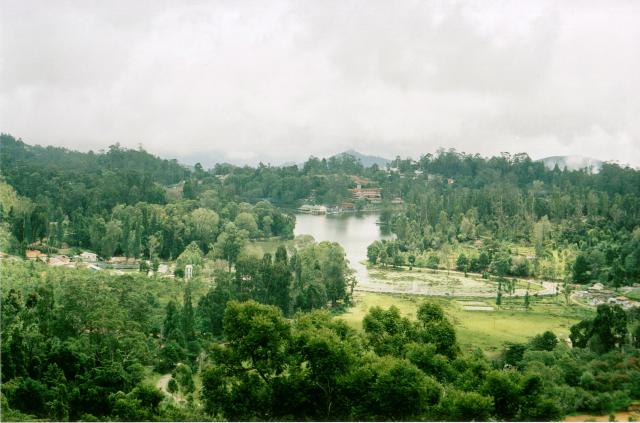
kodai lake

View of the lake at Kodaikanal. Besides the better known hill stations of Northern India, there are quite a number further south, of which Kodaikanal is just one example, although unique in having been originally started by American missionaries in the 1840’s.

bungalows

Raj-era bungalows in Kodaikanal. These are on a ‘prime-site’ location overlooking the lake.

madurai skyline crop

Madurai skyline. The Sri Meenakshi Temple complex, dedicated to Shiva and his wife, Sati, dominates the skyline of the old city. Often called ‘The Heart of Tamil Country’, Madurai attracts up to 10,000 pildrims and tourists on any one day. This picture was taken from the Rooftop Restaurant Terrace at the Hotel Supreme, where we sat with a beer and watched a long procession of tourists wander across the roof to take the same shot.

madurai 1

Entrance to the Sri Meenakshi Temple complex, Madurai. 12 huge gopuram towers, each between 45 and 50 metres in height, are carved in highly elaborate designs featuring gods, people, animals and mythical creatures which are then brightly painted. The whole effect is more like an enormous and eccentricly iced cake, or at least plaster-work. The whole of the temple seethes with pilgrims, tourists, trinket sellers and guides. And touts, who basically cover the last two categories.

nataraja madurai

Carved statue of Nataraja, Madurai Temple complex. I am unfamiliar with this particular god, but I like the carving!

Bodhgaya (2) – A Special Place

About six months ago, I put up a post on Bodhgaya (which you can find here if you wish to read it again), and promised I would find a few more photos to post another time.

This is another time.

img_0018

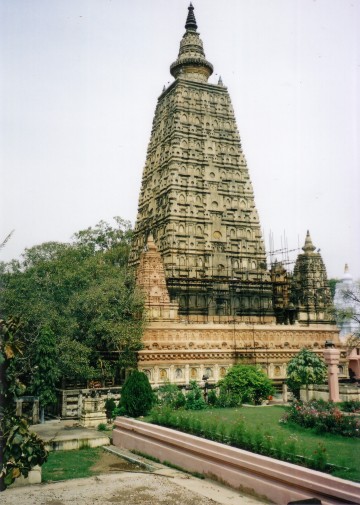
My first picture is of the entrance to the Mahabodhi Temple, which is built on the site where the Buddha achieved enlightenment. The first temple was built by Emperor Ashoka, in the third century BC, and the present one was erected in the fifth or sixth century AD. Visitors remove their shoes (or face a one hundred rupee fine) and descend the steps from the garden that surrounds the temple.

img_0020

Just before reaching the entrance itself, they will pass this small chorten – one of dozens surrounding the temple – garlanded with marigolds.

img_0019

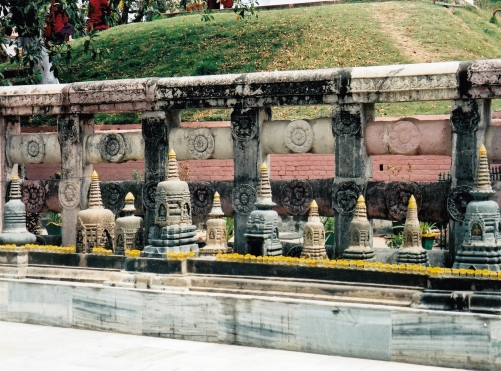
Many more chortens surround the temple and can be found around the gardens themselves, these ones beside a carved sandstone balustrade.

img_0024

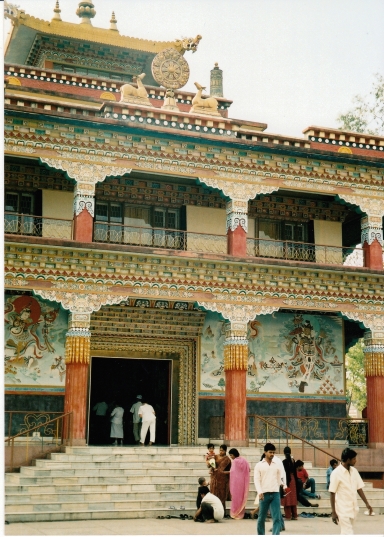
But the Mahabodhi Temple is by no means the only Buddhist temple in Bodhgaya. As the place where the Buddha attained enlightenment, it has naturally been the focus for many Buddhists from around the world, and there are many other temples built by those from the various different branches of Buddhism. This one is one of two Tibetan temples.

img_0017

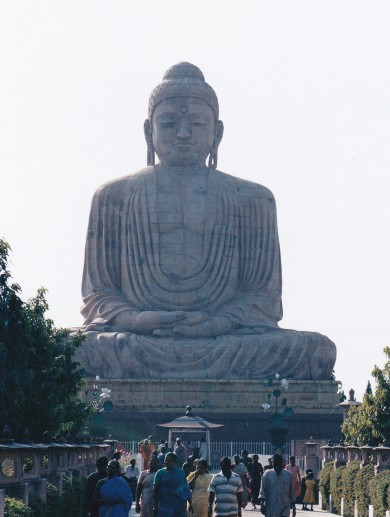
On the edge of Bodhgaya, this twenty five metre tall statue of the Buddha was erected in the grounds of the Japanese Daijokyo temple in 1989.

But Bodhgaya, naturally, is more than simply its temples. Although it is quite naturally a major tourist attraction, it is also home to many people, and daily life is not much different from other towns in Northern India.

img_0023

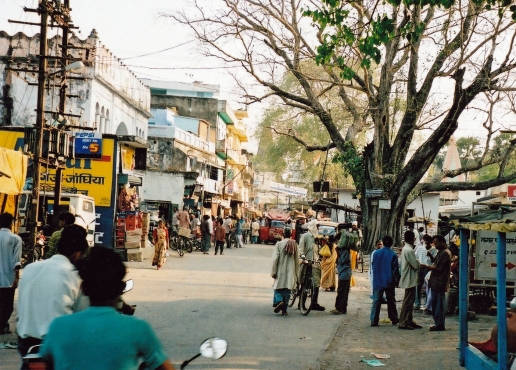
As you approach the temple areas from the northern side of the town, this is a fairly typical scene. In the distance, the share auto that plies between Bodhgaya and Gaya is filling up with passengers, and men and women shop for essentials.

img_0021

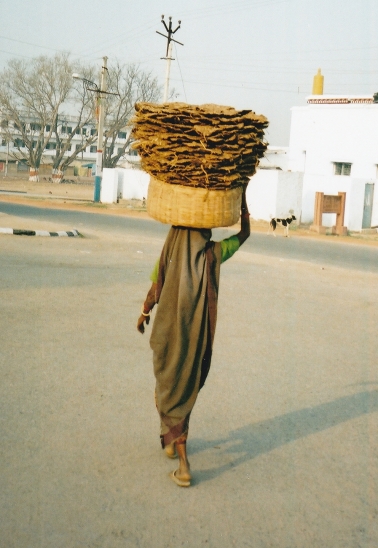
A woman carries a basket of dried cattle dung, which will be used to fuel the cooking fire.

img_0022

And on the edge of the town, the scene quickly becomes rural once again.

From Thursday I shall be away for a few days, but will catch up with comments and other blog posts once I am back.

Bodhgaya (1)

I spent a total of 2 months in Bodhgaya, Bihar, but I seemed to end up with surprisingly few photographs of the town and surrounding countryside. Here are a selection of them, though, and I may put a few more up sometime soon. Hence the somewhat tentative ‘part one’ in the title.

mahabodhi temple


 Bodhgaya is a world heritage site, because the Mahabodhi Temple was built at the site where the Buddha is supposed to have achieved enlightenment, some 2500 years ago. The original temple was built by the emperor Ashoka in the 3rd century BC. The current temple dates from the 11th century AD, and was restored in 1882 by the Burmese. Surrounded by the usual frenetic Northern Indian crowds, and visited by a huge number of pilgrims and visitors, the temple and grounds still manage to somehow achieve an unbelievably peaceful ambience.


IMG_0002

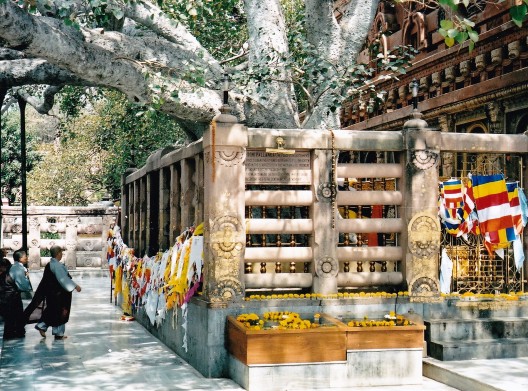
The Bhodi tree at the Mahabodhi Temple. It is a third generation descendant of the tree under which the Buddha is supposed to have achieved enlightenment.


img_0025

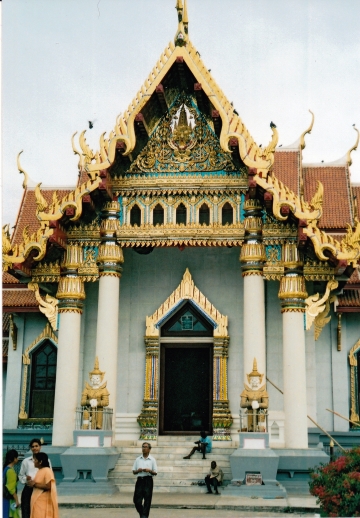
Thai temple, Bodhgaya. As well as the Mahabodhi Temple, Bodhgaya also has temples built by virtually every country with a sizeable Buddhist population. As befits the place where the Buddha originally achieved enlightenment, it is an active Buddhist centre with many charitable projects set up and running.


dawn-panorama
Dawn over Sujata Village, Bodhgaya. This was often the view that greeted me when I walked across the dry bed of the River Phalgu from Bodhgaya to the village of Sujata, in the cool of the morning. A rich reward for getting up early!


hindu-temples-panorama

Hindu temples on the edge of Sujata Village.

IMG

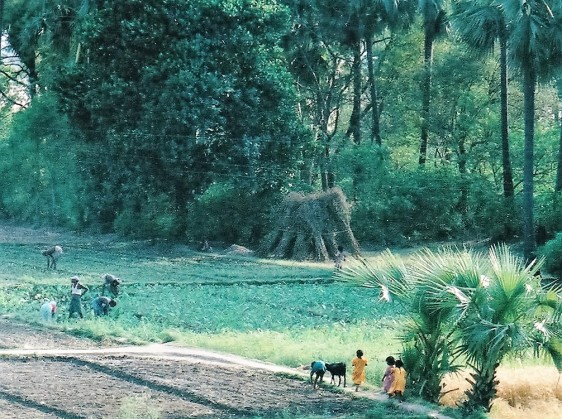
Fields in Sujata Village. In the vast majority of Indian villages, fields are still worked by hand or with animal labour. here is no exception.

IMG_0016.jpg

Farms at the edge of Bodhgaya. Although Bihar is the most corrupt, poverty-ridden state in India, sitting at the bottom of the table in almost any set of statistics that you may care to consult, the land appears lush and fertile, supporting a strong agriculture.

img_0026

And whilst we’re on a rural theme…a street corner in Bodhgaya.


IMG_0012.jpg

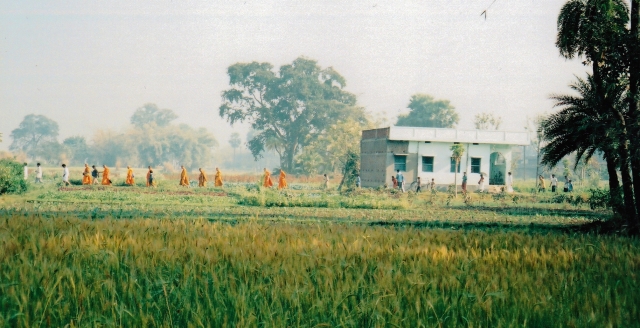
Monks heading for morning puja (ceremony) in Sujata.

temple door bodhgaya.jpg

Temple door in Bodhgaya.

img_0027

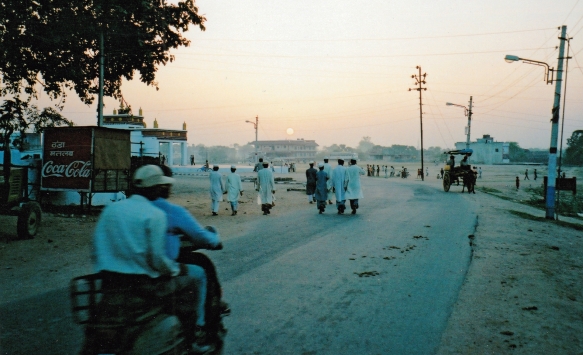
Dawn in Bodhgaya. The moslems are heading for the mosque, whilst most of the others are heading for work, for puja at Hindu or Buddhist temples, or to find breakfast.

I was after breakfast.