Belief Systems and Rain

I had a conversation with a blogging friend a few days ago, in the course of which she asked me if I knew why it was that so many Westerners seemed drawn to Eastern beliefs, especially the more ‘esoteric’ ones.

I briefly mentioned the fascination the East has held for Westerners throughout history, and the fact that many in the West have drawn away from traditional religion – specifically Christianity – in the last fifty or sixty years especially, and that leaves a void: when you have been brought up within a belief system, that needs to be replaced by something. The Beatles nudged a whole generation in that direction by visiting the Maharishi in Rishikesh in the 1960’s / 1970’s, and there followed a whole slew of books on the subject, many seeming to want to outdo the others in sheer weirdness. But even before that there had been a lot of interest in both Buddhism and Hinduism from the late Victorian period onward, with a number of popular books available.
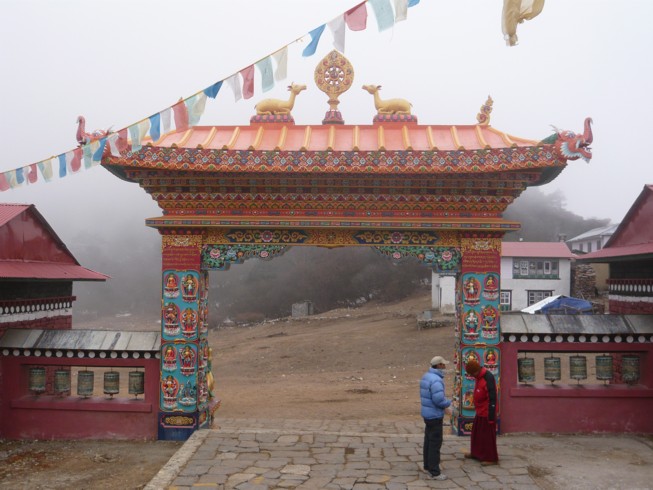
I can’t claim to be immune to this, either. I also rejected Christianity long ago, but felt I needed something to take its place despite deciding the concept of gods had no place in my life. The world is a wonderful and incredibly beautiful and fascinating place, all of which is explained perfectly well by science. But I do need something to satisfy the spiritual part of me – a part that, surely, all of us have?

I have read a lot about Buddhism, and for a long while thought of myself as a Buddhist. In a way, I still do, although I can’t entirely buy into the belief sets of any of the three major schools of Buddhism. But I did read Buddhism Without Beliefs by Stephen Batchelor. I can’t remember the details of the book, but that is unimportant, it’s the message of the title in this case. I like Buddhism. I like its core message, which pared down to basics is simply to be kind to everyone and everything. It is the only religion I know that has no need for gods. Oh, sure, they’re there if you want them, but no one is ordering you to have one.

This doesn’t have to be ‘esoteric’ or ‘eastern’, either. It can apply just as well here in the west. And it doesn’t require sacred writings or rituals, I find poetry or a walk in the woods does just as well for me.

I’m listening to the heavy rain as I write this – which is something that seems to happen a lot at the moment, but is something I find particularly soothing. I wonder at the origins of this; is it something primeval, hidden deep in my DNA from the times we lived in caves or rough shelters and we could take comfort from the fact we were snug, and perhaps large sharp-toothed beasts were taking a similar break somewhere and not out looking for early humans to eat? Or is it perhaps just a forgotten memory of a very calming experience I once had, which my subconscious has decided to hang onto for my benefit, but without telling me why? I am aware of a few of the times I’ve experienced it, such as lying in a tent at night hearing the pounding of the rain on the canvas, with a wonderful feeling of warmth and snugness. Then there was another time in the mountains of Spain, coming across an abandoned cottage just as a rainstorm hit and spending the next half an hour or so just sitting on a bench and leaning against the wall, listening to the rain and thinking. I’m sure there must be many more.
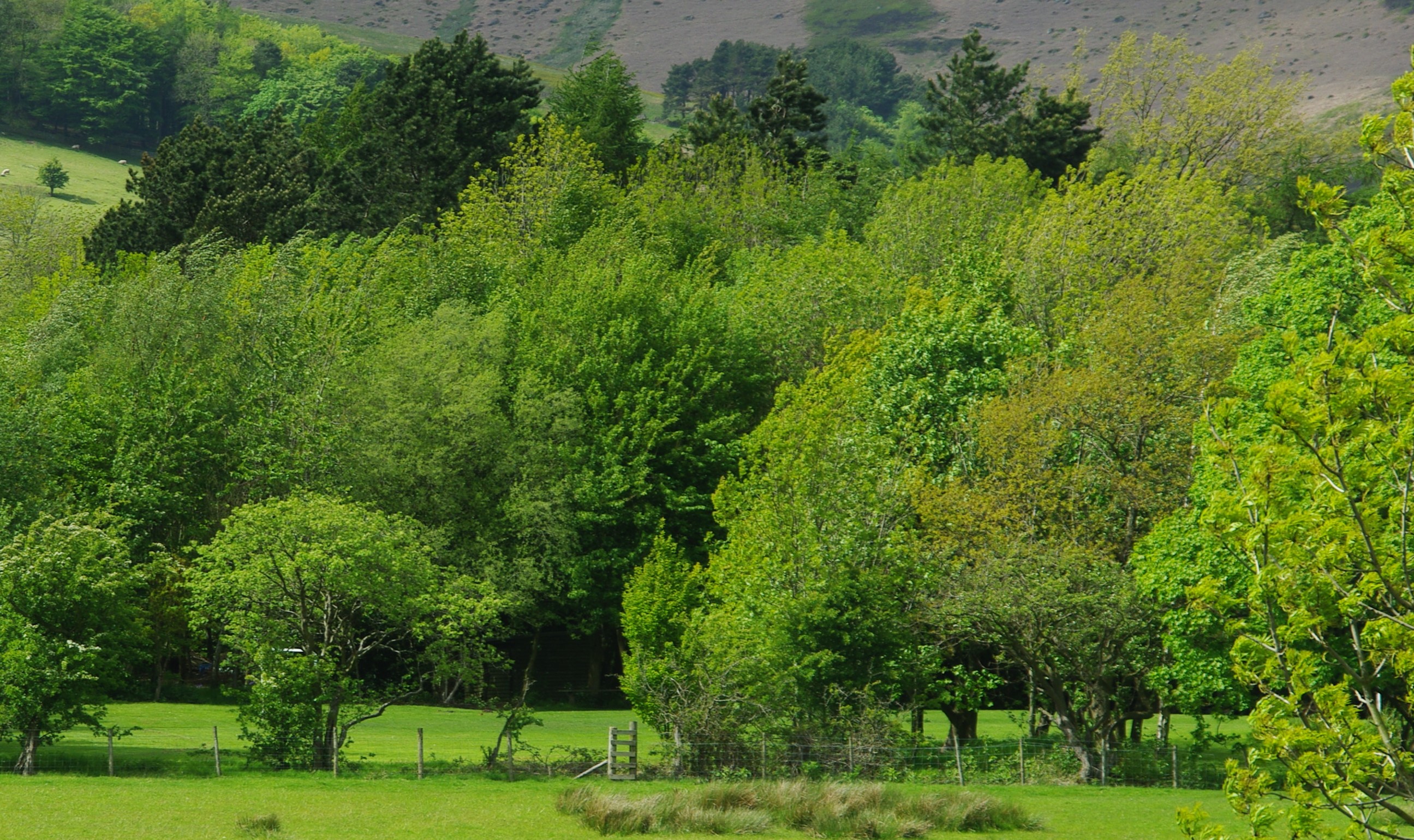
In these rainstorms, I feel as though I’m immersed in nature – something that always makes me feel calm and relaxed, and which is but a step from what the Japanese call Forest Bathing. Forest Bathing is essentially taking a walk in woodland, using all your senses to connect with that environment. This reminds me strongly of meditation, especially meditation as I learned it in a Buddhist environment, which is where I’m going with all this rambling. If I have an actual religion now, it has to be nature. A belief in nature as something important, beneficial and precious. I wouldn’t ‘worship’ nature – ‘worship’, for me, has connotations of supplicants on bended knees with hands clasped together intoning religious dogma and praying, but I do have strong feelings of respect and admiration for nature, which I suppose you could call the same thing.

It just seems a pity that more people don’t seem able to accord it the same respect.

Stereotypes and Misunderstandings

In countries such as India, there is frequently an impression that Western visitors and therefore, by extension, all Westerners, own vast wealth and have massive amounts of leisure time at their disposal.

After all, they arrive on holiday, perhaps for a month or more, and they go around staying in places that are far beyond the means of the average Indian, spend the equivalent of several month’s wages on souvenirs, often hop on an aircraft to take a journey that would be one hundredth of the price by rail, flaunting expensive cameras and watches and phones and designer clothes. So who wouldn’t think that?

011a

This is not helped by the impressions given by many Western films and programs, where work seldom seems to get in the way of whatever action the film is depicting.

This often affects how local people interact with visitors, and their feelings about them.

I suspect it even drives a certain amount of international migration, too.

And so I think it very important to highlight a few facts;

Basically, the differences in exchange rates of different currencies give the impression of great wealth which is not, in fact, true.

A few numbers:

The average annual wage in the UK is currently £28,000, or $34,400. This sounds a lot (even to me!) but that hides a huge variation, of course.

It is quite hard to find figures that agree about the average annual Indian wage, with estimates varying from around $600, up to around $3500, although this may well reflect the massive difference between the rural worker and a worker in, for example, the IT industry. For sake of argument, I’m going to use the figure of $2000, which could still be slightly on the high side, looking at some of the sites I’ve gone to.

This would give the average UK worker a wage 17 times higher than the Indian. Sounds good for us, but the average cost of a house in the UK is now some £300,000 – that’s $369,000, and it is now almost impossible for young people to buy their own house unless they are helped by well-off parents, and they have very well-paid jobs. The average rent, otherwise, is around $12,300 per year. About a third of the average wage.

To find an average cost to rent in India is also difficult (for me!). I scoured a lot of sites, and seemed to come up with a figure of somewhere around $1,200 a year, although there were massive variations, both between cities and within them. If I have got these figures correct, that is around a half of the average wage.

The prices of basic commodities such as foodstuffs or power vary a lot between India and UK, too. Whereas I have bought street food in India for a rupee or two, making a lunch for perhaps 15 or 20 cents, it would cost me at least $2.50 to $3 in UK for the equivalent.

This isn’t to draw up an accurate comparison between the two – it would be quite a study to do that – but to try to make the point that the average person in the UK is better off (materially) than the average person in India, but not by nearly as much as many might think.

India has more of a problem with poverty, but the West has quite a bit, too. And whilst the poor in the West are emphatically not as badly off as their cousins in India, they still endure considerable hardship. Even with the existence of the supposed safety net of Social Security. There is homelessness. There is malnourishment.

Incidentally, and I pose this as a question to my Indian friends, I frequently read articles that focus on aid and development in poor (especially rural) areas of India, highlighting the fact that a large percentage of the population have to survive on around two dollars a day.

In the light of the above, I wonder whether this isn’t a little disingenuous, since that figure may not be as far below the average wage as many in the West believe, and wonder what you think?

I think it matters, because I believe this might distract attention from where work is needed more, such as improving sanitation, work conditions and medical care.

The Mad Woman of the Hill Station

A few years ago I was staying in a town in the Indian Himalaya; one of those towns that would have been described as a ‘hill station’ in the days of the British Raj, where the climate is tolerably similar to that found in Britain, and the Colonial masters were able to retreat for that half of the year that the temperatures on the plains became just too hot for them to endure. When that happened, they would load up themselves and their possessions, even down to plants in plant pots, so that native servants could drive them or carry them for weeks on end, on the long journey up into the hills. Nothing would be too much bother…for the servants and ‘coolies’, that is. At that time, the Westerners considered themselves to be utterly superior to the ‘native peoples.’

       coolie 1

Of course, that kind of attitude has been consigned to history, now, hasn’t it?

Anyway, it is a lovely town, this town that I am referring to, full of historical buildings associated not only with the British, but also with Indians (of course), Nepalese, Tibetans, and several other races. For this reason, amongst others, it attracts a goodly number of tourists, Western and otherwise.

hill station 2

One day I sat eating breakfast in a restaurant there, when a group of five other Westerners entered and sat down at a table nearby. Within about half a minute, they had begun to complain bitterly to each other about their travels. They appeared to think that the whole world was a freak show, put on for their benefit as they travelled around viewing it, but everyone that they met in these backward places (‘I don’t miss Western civilisation at all.’ Remarked one of them, whilst playing with his i-phone) were either out to fleece them, or to thwart their plans in some way or another by pretending not to have what they were asking for, or by taking ages to do what was demanded of them.

However, I was distracted from listening to their conversation and wondering how best I could kill them all without being arrested, by the arrival of another Western lady, aged, I would think, about sixty, dressed in a slightly odd mix of Indian and Western dress. She had appeared the previous morning in the restaurant, and had a shouting match with the same group of Westerners, although I had been on the other side of the restaurant that morning and could not understand what it was about.

Today, she popped her bag down on the table next to mine, disappeared for a while, and then returned, with a loaf of sliced bread that she had obviously gone out especially to buy. She took out four slices, turned to me and said ‘Try these; they are much nicer. Are you a priest?’

‘Thank you.’ I replied (I was in t-shirt and trousers, nothing particularly priestly). ‘No, I’m not.’ Our conversation continued for about ten minutes. She was a Plantagenet royal, brought to 2013 by a time machine, which the CIA discovered in 2000. That is why so many people are unhappy; they have been sent away from their proper times. She apologised for not being able to hear very well, although I could see no problem in that respect, but she had been hypnotised. Then she wished me goodbye and went out again.

What a splendid woman. She was a breath of fresh air, and unknowingly saved the lives of five other Westerners that day just by being there.

Unfortunately for me, though, that same evening I chose to eat in a restaurant that was empty when I arrived, so that when a couple of girls came in and sat down two tables away from me, I could hear every word that they said, whether I wanted to or not. There was a Swiss girl, whose role in the conversation was to say ‘yes’ and ‘no’ and very little else, whilst the other girl, who was British, just spouted on and on and on…

It appeared that she was travelling around the world. If I was a relative, I would have given her the money and said ‘go off for a few years. Enjoy yourself.’ And then moved house. She had been to Marrakesh. To Cairo. Thailand, Cambodia, Australia…I forget where else. Almost everywhere, she hated the food. It generally made her sick. She hated the people. They were horrible. Rude. She was excited because someone was shot in a bar in Cambodia whilst she was in the bar. It seemed to have been the highlight of her travels so far. ‘Was he killed?’ ‘Of course!’ she said, excitedly. And on and on and on…

Perhaps we should all be made to stay at home.