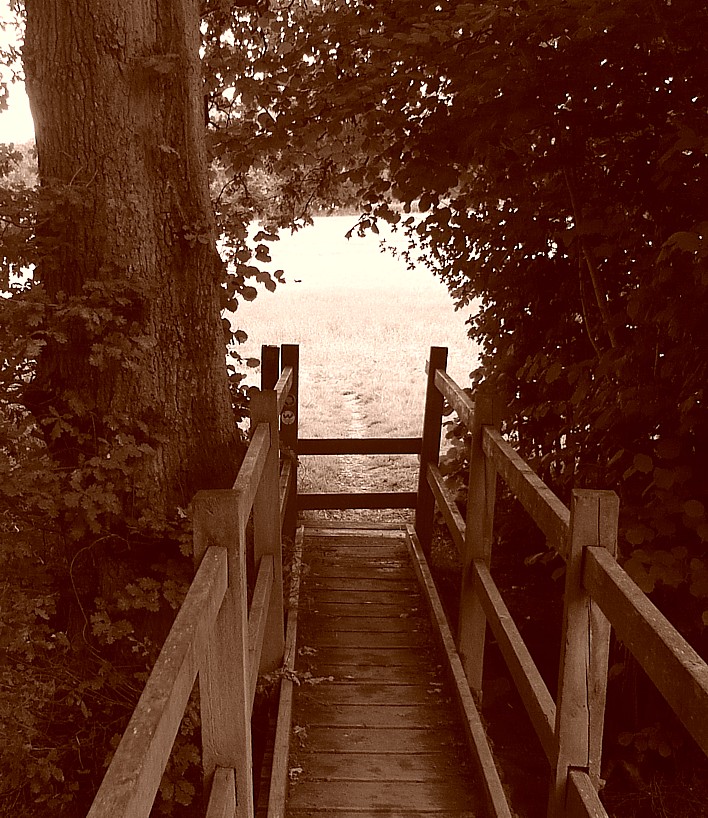
…a tramp.
My wife often says I’m in touch with my inner vagabond. I’m taking that to mean that I enjoy walking, unless she’s referring to something else. My dress sense, for example. But yes, I love walking, especially long distance walking, but most of all I like to simply wander. There is a tremendous pleasure to be had by just setting off for a long walk without any particular destination in mind. Taking the more interesting-looking path as we go.
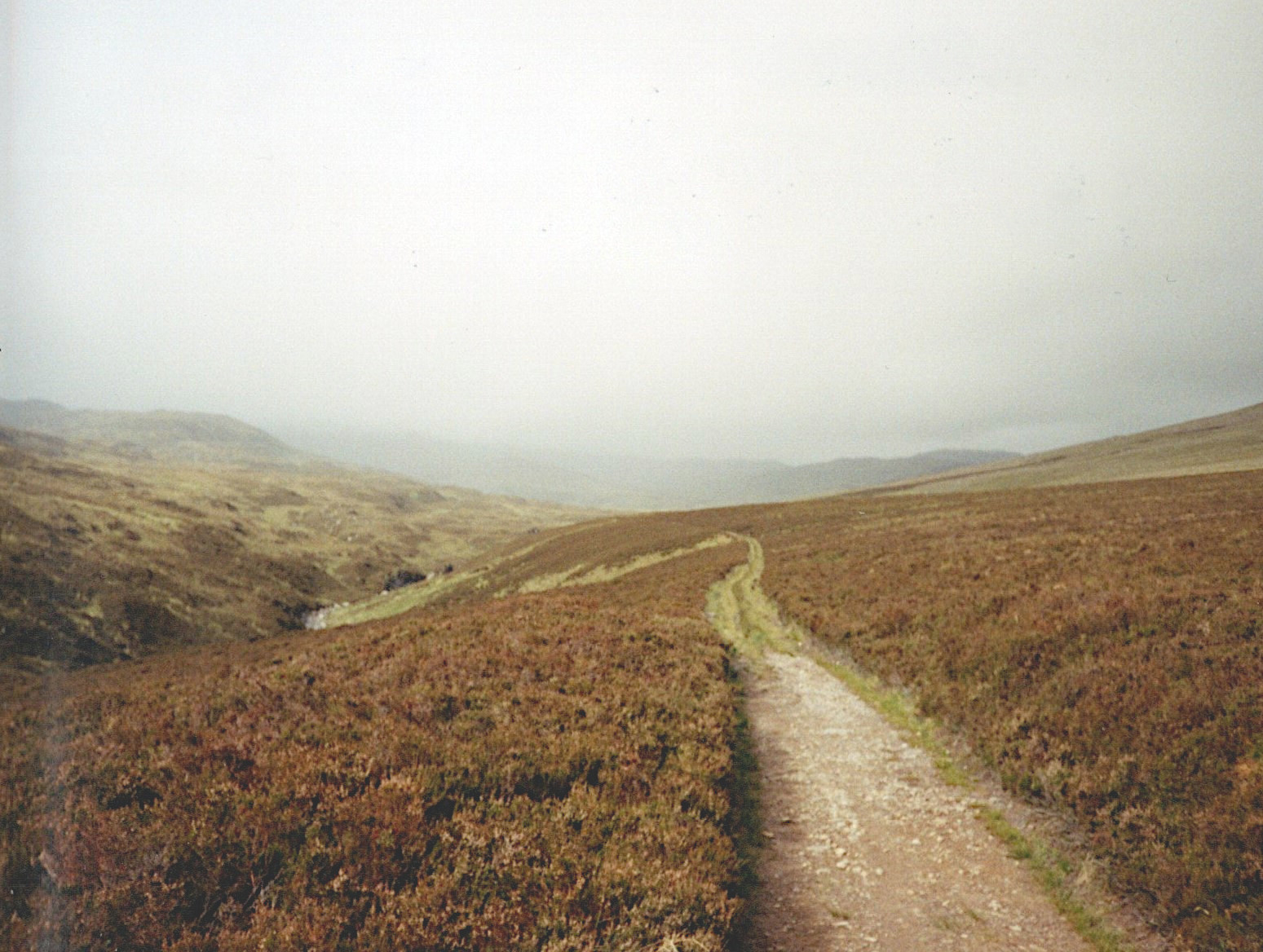
Of course, it’s not always possible to travel this way. We need to have some sort of destination in mind unless we’re prepared to just settle down to sleep wherever we find ourselves at nightfall. Usually we don’t have the time and the freedom to travel like this. Some people may also find it unnerving not to have board and lodging all planned in advance.
I’ve only done it occasionally, I must admit, but found it remarkably liberating when I did. There was no pressure to reach a particular destination by nightfall, I just had the freedom to wander along at my own pace until I felt I’d had enough for the day.
Even then, of course, some planning had to be done. Would I carry food or rely on reaching somewhere I could get a meal of some sorts? Would I carry shelter? Extra clothes?
But that is not exactly tramping, of course. It is just an exercise to be enjoyed (or otherwise) for a short period. It’s not a permanent lifestyle.
I’m sure that very few folk have deliberately chosen tramping as a lifestyle, but I’m aware there are some who have. This leads to the obvious question – why? I suppose all of us, at some time, wonder what is really important in life? Riches and property are, indeed, a burden in many ways, as well as conferring the obvious advantages in life. Some people just didn’t want that lifestyle. Some didn’t want the responsibilities of a settled life, with or without a family. There were always some folk who could just never settle anywhere for long. Most, though, would have ended up tramping through loss of employment and / or home.

Certainly I understand the difficulties of the tramping life, especially when one is no longer young. And I certainly wouldn’t want to be trying to survive as a homeless person in a city – rightly or wrongly, I think of tramping as a rural phenomenon. The whole point of it was to be on the move, rather than staying in one place. I doubt it would be possible today, with so many laws against that kind of lifestyle. There were, of course, laws against it in the past, too, but almost certainly much harder to enforce. I think, too, society is just ordered differently today. We think differently to how we did fifty or a hundred years ago. A tramp turning up at a farm today looking for a couple of hours work in return for a meal would get short shrift, and I can’t imagine any householder regarding one with anything other than hostility.
Again, I can’t imagine anyone choosing that lifestyle through the winter. But tramps used to learn of places they could settle for the winter, often carrying out odd jobs in return for permission to sleep in a shed or a barn and the odd meal. In this post I’m talking specifically about Britain, but I suspect it applies equally to hobos in America, swagmen in Australia, and possibly others I’m not aware of elsewhere.
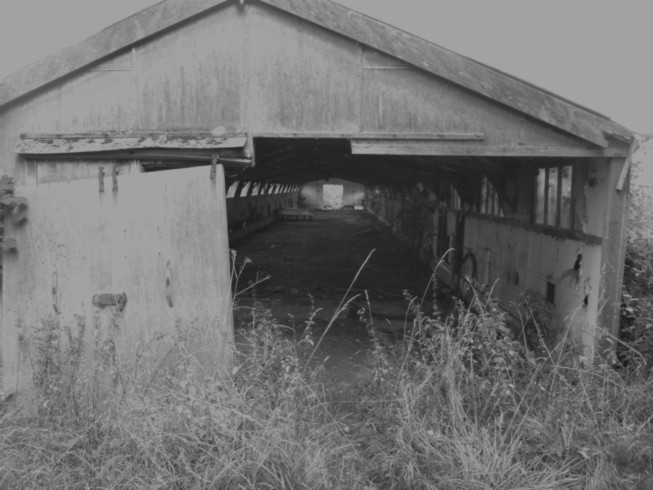
And it would be unlikely to be a long life. But there were always some who chose it as a way of life rather than being forced into it by circumstances, and in another time I might possibly have been one of those.


Hi Mick, based on books I’ve read, The Invisible Man by HG Wells springs to mind, tramping was a way of life in the past. People in developed countries have few personal freedoms now. These were bartered for social welfare.
LikeLiked by 1 person
I don’t remember the plot of The Invisible Man, but doesn’t the eponymous hero of the History of Mr Polly go off and tramp? (It’s been a long time since I’ve read those).
I’m not sure about freedom being bartered for social welfare, although I understand what you mean about a safety net, I think it’s more a case of the tramp now being seen as lazy and feckless and unwilling to contribute to society, hence someone to be reviled.
LikeLiked by 2 people
Well, from a distance it seems that first world societies with social welfare (Australia, Canada, and Britain) are very regulated and so many things are illegal or restricted. It’s not necessarily a bad thing. But it can limit lifestyle choices in some ways. My observations are from what I read though so I could be wrong.
LikeLiked by 1 person
They’re certainly very regulated, but whether that’s partly a by-product of social welfare I couldn’t say, although it certainly provides an excuse to clamp down on activities that could be regarded as tramping.
LikeLike
Did a bit when I was younger. Worth seeking out the books of Jim Phelan, who I’m re-reading at the moment.
LikeLiked by 1 person
Thanks, John. I haven’t come across him before, but I’ve now just read a short biography of him online. I might well look out something of his.
LikeLiked by 1 person
We Follow the Roads and Tramping the Toby are good ones to start with. I’m planning to do a blog on him soon.
LikeLiked by 1 person
I’ll look out for it. It was only a short biography I read on him, but he looks to have been a rather…complex…character.
LikeLiked by 1 person
He was. But happy in his Tramping,
LikeLiked by 1 person
With regard to the title, I think you are 😉
LikeLiked by 1 person
Mick, I think travelers in the past (think of Fa Hien or Faxian) would travel on foot for days and months to arrive in another city, state or country. This was before the modern means of transport were invented. So I believe we all have that trait in us but it is suppressed with modern ideas and concepts. I imagine if the whole bubble (isn’t it a bubble?) was to burst, I’m sure we will go back to the old ways. Imagine, life without fuel and electricity. It is just that some are aware of these traits we carry, like you. Others, prefer to go with the flow. I think the capitalism and consumerism has changed us so much. That is why I call it a bubble.
LikeLiked by 1 person
Yes, if that bubble burst (when it bursts?) we’d all be back to travel on foot or cart or horseback. I suspect most people would just stay put, under those circumstances, just as it used to be.
Now, Fa Hien. He really WAS a traveller!
LikeLiked by 1 person
I agree a lot of people will stay put. I’m sure many more will start walking because they have no other option. But that is a remote possibility. Human history is all about evolution. We find new ways. I just hope we don’t find more monstrous means and methods.
LikeLiked by 1 person
If that did happen, things would be different to the past, yes. Even if there was some catastrophe we wouldn’t really go back to some particular time in the past; it would a mixture of the distant past and the recent.
LikeLiked by 1 person
well said, Mick
LikeLike
I love hiking, never had the opportunity to just set out with no particular goal in mind other than to enjoy nature, but I would have liked to! But in another life, I would have been a wolf, and then would have had the opportunity to tramp about with no maps, no deadlines. Heck, maybe in my next lifetime!
LikeLiked by 1 person
Hey, who says wolves don’t have deadlines and don’t use maps?
LikeLiked by 1 person
That would take all the fun out of being a wolf, now wouldn’t it? Nope … wolves are free spirits, free to roam. Only one thing might be a problem if I come back as a wolf in my next life … I couldn’t bring myself to kill another animal for food … so I’d be a lone wolf, for the pack would likely throw me out when they discovered that! 🐺
LikeLiked by 1 person
You’d be a veggie wolf then, I guess. Hunting down herds of tofu.
LikeLiked by 1 person
Ewwww … no tofu!!! I’d live in the forest on berries, nuts, and other fruits, and occasionally go dig up some potatoes or carrots from a farmer’s fields!
LikeLiked by 1 person
Even though I travel by car over longer distances, and not by foot, I do it rather as you describe. I rarely make reservations for lodging ahead of time, for example. Why would I? That would mean that I’d have to stick to the planned road, rather than heading off this way or that, if it seemed interesting. Of course, I’m one of the ones who doesn’t use (or even possess) things like GPS. A paper map and a sense of sun-time and direction does quite well.
All the way through, I was thinking, ‘hobo.’ And sure enough, the word finally appeared near the end. They’re still quite active here, although hidden. And many (most?) of them ride the rails rather than following country paths. In fact, one of my favorite people I’ve never met is named Abby: a spoon-player who over time achieved some stability through her talent, but who still busks, and who still rides the rails. I’ll add another video of her playing in a separate comment so it doesn’t get thrown into moderation or whatever.
LikeLiked by 1 person
I’ve played spoons a time or two, but not like this!</a.
LikeLiked by 1 person
Ha, she’s good! They both are!
LikeLiked by 1 person
I’d no idea it was still possible to ride the rails. I suppose I thought everywhere would have CCTV and guards, now. I’m rather pleased it is still happening, though.
Do you find it harder to find lodging now if you don’t book ahead? It seems everywhere now requires you to book in advance and nowhere has signs outside their places advertising ‘vacancies’ unless they’re actually hotels or larger guest houses.
LikeLiked by 1 person
What works in my favor is that I prefer areas most people consider ‘boring’ or without attractions worth visiting. And I’ve often found that the proprietors of smaller, less ‘fancy’ bed and breakfasts are part of local networks; if one can’t accomodate me, they’re more than willing to make a call. If there’s a big festival going on in an area I do call ahead, but at worst I’ve had to book in a town an hour away from where I wanted to go. That happened last spring, when a crawfish festival interferred with my desire to visit a wildflower laden cemetery. There were rooms available, but who’s going to pay US$400 for a night in a chain motel? Not me!
LikeLiked by 1 person
No, I’d certainly avoid the big chains if at all possible. The best places I’ve stayed recently have been small Airbnb places, although you do really take pot luck with them. That said, we’ve largely had good experiences of them.
LikeLiked by 1 person
I think the closest I ever came to that life was back in 1980, when I spent a couple months hosteling across Western Europe. It’s still the only time I’ve seen your fair country. These days it seems like places fill up so fast it’s a chancier way to go.
LikeLiked by 1 person
I used to do that too, Dave. Mainly in UK but a little bit in Europe. I have used hostels in the last few years, but they did seem to be a little fuller. I did find if they were full, though, they’d frequently let you camp in the grounds (assuming you had a tent or bivvibag and sleeping bag) and use the facilities inside for a small fee.
LikeLiked by 1 person
Pingback: In Another Lifetime I Could Have Been…(4) – Mick Canning