Wednesday December 27th

It is windy this morning and the forecast is for rain and high winds later in the day. Consequently, I go out for a walk straight after breakfast, heading for the woods beside the common where I know I will be sheltered from the worst of it, should the winds get up soon. Above, the clouds are thick and dark and what light does make it through the mirk is thin and silvery, glittering coldly on leaves and puddles, the latter wrinkled with tiny wavelets scurrying in bursts across their surfaces.

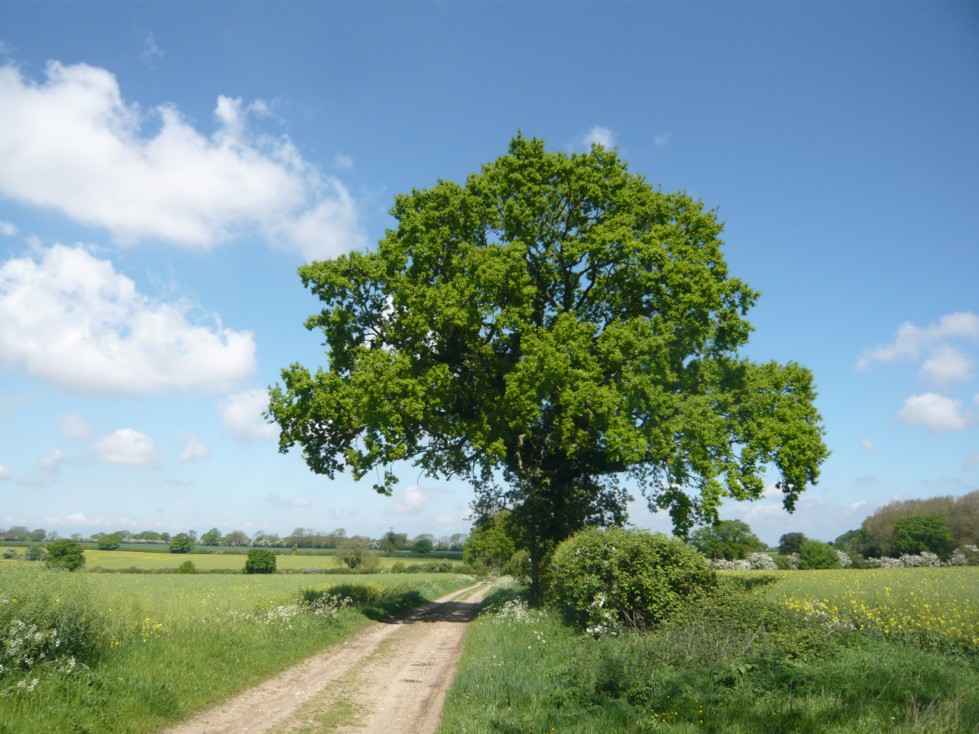
A couple of rooks are calling irritably overhead, buffeted by the breeze, as I reach the edge of the wood. A few paces in, I pass along the edge of a shallow, long-disused sandstone quarry, its banks perforated with badger holes, and with other entrances deeper into the woods. The whole of the sett appears to occupy upwards of a fifth of an acre, although there may well be entrances I have not yet found.

Moving on, I find I am walking to the rhythm of a tune in my head, something that happens to me frequently. This time, it is a track from an album by Stick in the Wheel, a kind of punk-folk group, the track being the Abbots Bromley Horn Dance. Stick in the Wheel are a group I have only recently discovered, and the only album I have of theirs (so far!) gets played rather a lot. This particular tune has a very pronounced beat and I wonder, as I often do, whether the tune has come into my head as the beat matches my pace, or whether I have unconsciously altered my pace to fit the tune.

I also decide it doesn’t matter which it is.

It is still early enough in the day for there to be very few other people about. In about an hour’s time the air will be filled with barking and shouting as the regular dog walkers invade, but for now I have the place almost to myself.
I have just begun to re-read Robert MacFarlane’s The Old Ways, and in this he tells us that at the time of writing (2012) he reckoned he had walked perhaps 7,000 or 8,000 miles along footpaths in his lifetime. Does this mean each mile is a unique mile, in that he means he has walked this distance all along different routes, or does it include the day to day walks along local routes, routes such as the one I repeat day after day? He doesn’t make that clear, and I would guess it includes all repetitions. He then goes on to quote De Quincy saying that Wordsworth walked a total of 175,000 – 180,000 miles in his lifetime (although how did he know?), which would clearly include his repeated local walks, if true. I wonder how many I have done and make a vague stab at guessing a figure. At various times I have worked out I tend to walk an average of 20 miles a week, allowing for good and bad periods of walking, of which probably one half would be on footpaths. There were times when I did much less, and times when I did much more, but it seems a reasonable estimate. That would give me a figure of between 25,000 and 27,000 miles in my adult life so far, which is probably wildly out but is quite similar to Robert Macfarlane’s.

I’ve no idea what to conclude from that.

But I know I would probably walk quite a bit further if I didn’t tend to stop so frequently just to stand and stare at my surroundings. I do it often enough to sometimes irritate those I walk with, although they’re usually kind enough to say nothing about it. But there are also those who just get their heads down and walk, walk, walk, seemingly on some mission to cover as many miles as possible in the shortest possible time, barely able to glance around them as they go. What is that about, unless it’s some sort of charity event and they’re raising money by the mile? Where is the pleasure?

The Welsh poet W H Davies wrote ‘What is this life if, full of care, we have no time to stand and stare?’

What indeed?

I’ve been doing it quite a lot again this morning. It seems so important. Surely everyone must do it to a degree?
Belief Systems and Rain

I had a conversation with a blogging friend a few days ago, in the course of which she asked me if I knew why it was that so many Westerners seemed drawn to Eastern beliefs, especially the more ‘esoteric’ ones.

I briefly mentioned the fascination the East has held for Westerners throughout history, and the fact that many in the West have drawn away from traditional religion – specifically Christianity – in the last fifty or sixty years especially, and that leaves a void: when you have been brought up within a belief system, that needs to be replaced by something. The Beatles nudged a whole generation in that direction by visiting the Maharishi in Rishikesh in the 1960’s / 1970’s, and there followed a whole slew of books on the subject, many seeming to want to outdo the others in sheer weirdness. But even before that there had been a lot of interest in both Buddhism and Hinduism from the late Victorian period onward, with a number of popular books available.

I can’t claim to be immune to this, either. I also rejected Christianity long ago, but felt I needed something to take its place despite deciding the concept of gods had no place in my life. The world is a wonderful and incredibly beautiful and fascinating place, all of which is explained perfectly well by science. But I do need something to satisfy the spiritual part of me – a part that, surely, all of us have?

I have read a lot about Buddhism, and for a long while thought of myself as a Buddhist. In a way, I still do, although I can’t entirely buy into the belief sets of any of the three major schools of Buddhism. But I did read Buddhism Without Beliefs by Stephen Batchelor. I can’t remember the details of the book, but that is unimportant, it’s the message of the title in this case. I like Buddhism. I like its core message, which pared down to basics is simply to be kind to everyone and everything. It is the only religion I know that has no need for gods. Oh, sure, they’re there if you want them, but no one is ordering you to have one.

This doesn’t have to be ‘esoteric’ or ‘eastern’, either. It can apply just as well here in the west. And it doesn’t require sacred writings or rituals, I find poetry or a walk in the woods does just as well for me.

I’m listening to the heavy rain as I write this – which is something that seems to happen a lot at the moment, but is something I find particularly soothing. I wonder at the origins of this; is it something primeval, hidden deep in my DNA from the times we lived in caves or rough shelters and we could take comfort from the fact we were snug, and perhaps large sharp-toothed beasts were taking a similar break somewhere and not out looking for early humans to eat? Or is it perhaps just a forgotten memory of a very calming experience I once had, which my subconscious has decided to hang onto for my benefit, but without telling me why? I am aware of a few of the times I’ve experienced it, such as lying in a tent at night hearing the pounding of the rain on the canvas, with a wonderful feeling of warmth and snugness. Then there was another time in the mountains of Spain, coming across an abandoned cottage just as a rainstorm hit and spending the next half an hour or so just sitting on a bench and leaning against the wall, listening to the rain and thinking. I’m sure there must be many more.

In these rainstorms, I feel as though I’m immersed in nature – something that always makes me feel calm and relaxed, and which is but a step from what the Japanese call Forest Bathing. Forest Bathing is essentially taking a walk in woodland, using all your senses to connect with that environment. This reminds me strongly of meditation, especially meditation as I learned it in a Buddhist environment, which is where I’m going with all this rambling. If I have an actual religion now, it has to be nature. A belief in nature as something important, beneficial and precious. I wouldn’t ‘worship’ nature – ‘worship’, for me, has connotations of supplicants on bended knees with hands clasped together intoning religious dogma and praying, but I do have strong feelings of respect and admiration for nature, which I suppose you could call the same thing.

It just seems a pity that more people don’t seem able to accord it the same respect.

The Thick Month

June is the Thick Month. Trees and bushes and stands of wildflowers have acquired a lush density by now, branches and stems encased in full-sized leaves, rich and vividly green. Leaves massed and packed in swaying light-blocking swathes. Nothing has yet faded, although there is a gradual falling away of birdsong now mating is over and broods are being raised, although this is compensated for by what seems to be an increase in insect noise, especially bee hum – certainly in our garden. The flowers are beset by mason, carder and bumblebees, and large numbers of solitary bees which provide a delightful oxymoron for this recorder, at least.

Going out and about through the woods a mile from my home, I feel I could almost be walking indoors, such is the density of the tree canopy above me, and when it begins to rain I do indeed remain dry, other than from the occasional drip finding its way through. But it is muddy underfoot in places, the sheltering swathes also keeping the sun from drying out the ground. The thick wet dark humus-rich soil smells sweet and clean, reminding me of a ‘plum-pudding smell,’ as Kenneth Grahame described the river-bank in The Wind in the Willows.

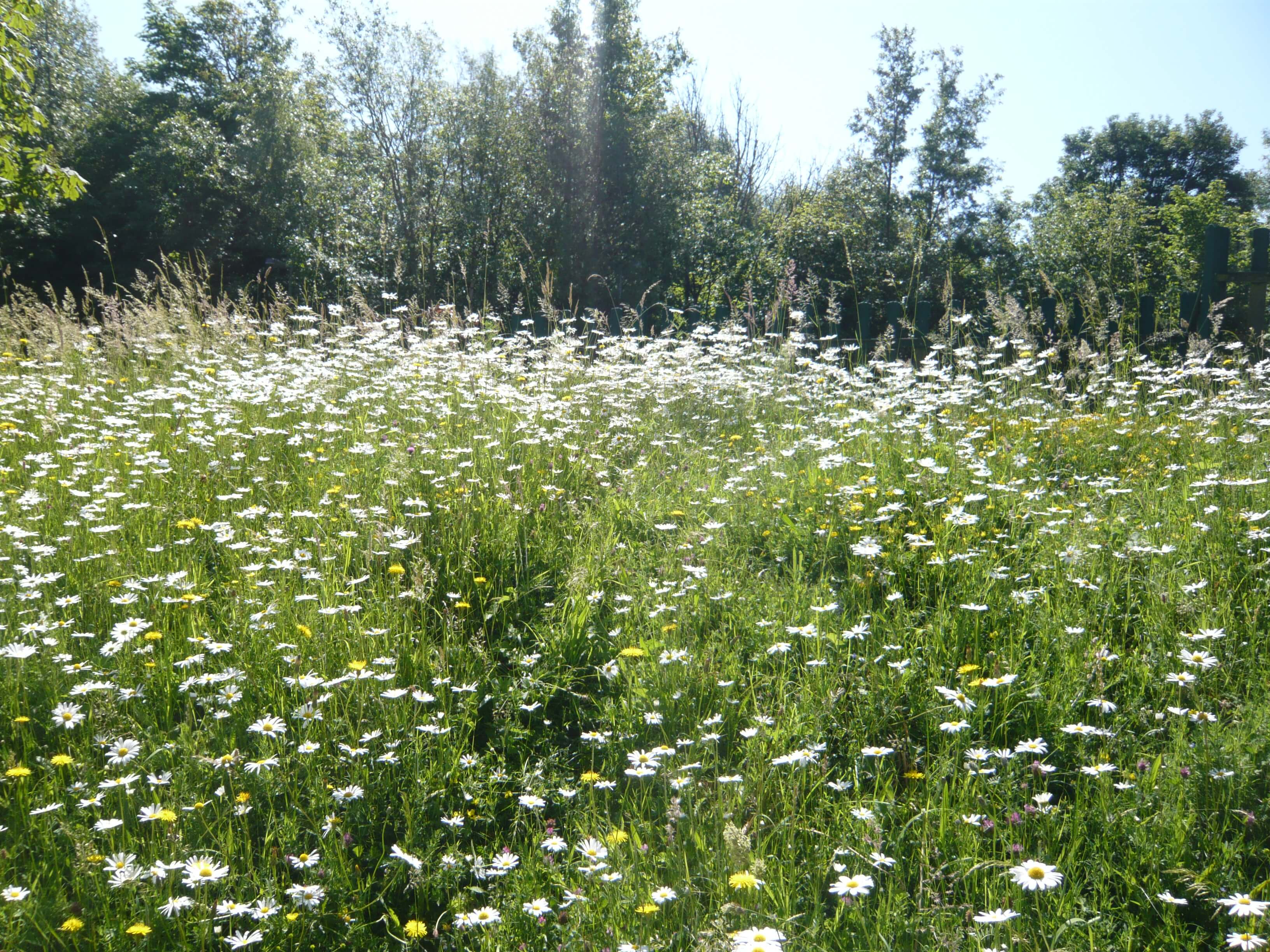
The fields, too, are thick with wildflowers and grass, as are roadside borders where councils have refrained from scalping them. As much as I rejoice to find the occasional rarer species amongst them, I think my greatest pleasure is just to see masses of the commoner species; buttercups or ox eye daisies, vetches or speedwells.

I generally see nothing rare when I am walking my patch, but I could never think of any of this as ‘ordinary’.

Flights of Fancy (Birds of a Feather)

I always enjoy listening to the dawn chorus. The cheerful, uplifting sounds of birdsong greeting the new day always put me in a good mood.

And I was delighted to take delivery yesterday of a whole raft of new computer programs – voice recognition software, a language pattern analyser, and an ornithological behavioural speech identifier to name just three. So I loaded them all up and recorded a few minutes of the dawn chorus in the garden this morning. I think you’ll find it illuminating:

zzz

‘Oi, what you staring at, big beak? You want some, eh?’

‘Who, me? Well, if you think you’re so hard, come over here and say that! If you dare stick your foot in my territory, that is.’

‘Your territory is it now? Since when? Don’t remember you being so beaky during mating season!’

‘No? Didn’t need to be. Well, I wouldn’t be after yours, anyway. I’m not that desperate. You should ask her where she’s been! She’d mate with anything in feathers, yours would! Wanna know why that scruffy feral pigeon’s been hanging around here, eh?

‘What are you suggesting?’

‘What do you think I’m suggesting? Weren’t you just the teeniest little bit suspicious at the colour of the eggs? We blackbirds are supposed to lay sort of bluey greeny eggs, not white ones!’

‘The colours vary, mate. You should know that. Diet and climate and all that stuff.’

‘Not that much, they don’t. Those eggs were a dead spit for…well, for pigeon eggs, basically. And what about your fledglings? Rather on the large side, your kids. Lot bigger than you are, already. Walk a bit funny, too…

‘I…oh, for goodness sake! Oi, shut it Red Tits! Can’t hear myself tweet around here!’

‘Here, you don’t want to antagonise that robin!’

‘He don’t scare me.’

‘He should. You know what they’re like – vicious little buggers! I saw that one take out a song thrush a couple of days ago.’

‘No!’

‘Yes. Straight up. Blood and feathers everywhere! I tell you, that thrush’ll be on soft food for a while after that.’

‘That’s mostly what they eat, anyway.’

‘Yeah, but they like their seeds as much as the next bird, too. That one won’t be back at the bird table for a while. Bit of minced earthworm and over-ripe blackcurrant is about all it’s got to look forward to at the moment.’

‘Poor bugger.’

‘Yeah. Um…I’m getting a bit bored with all this, now. I know. See that cat down there?’

‘What about it?’

‘Bet you I can crap on its head!’

‘Bet you can’t!.’

‘Can!’

‘Can’t!’

‘Right, watch this…er…left a bit…there! Mwaah ha ha ha!’

‘Okay, yeah. Good one. Hah! That’s one pissed off cat, that is!’

‘Love it when that happens.’

‘Yeah.’

‘Right.’

‘Mmm.’

‘Okay, that’s it, then. Sun’s up, now. I’m off to go and forage some brekky. Same time tomorrow, then?’

‘Nah, not tomorrow.’

‘No? Why ever not? Here, you having that problem with Avian Pox, again?’

‘No, no. It’s not that. Shh! Don’t let the whole neighbourhood know! No, to tell the truth, it’s just that I’m a bit fed up with all these early starts.’

‘But that’s what we freaking do! Why do you think it’s called the freaking dawn chorus?’

‘I know, I know. It’s just that sometimes I think I wouldn’t mind changing it to the slightly-later-preferably-just-after-coffee-chorus.’

‘We’re birds, you pillock! We don’t drink coffee!’

”Yeah, obviously. Of course not. Course we don’t. I’m just making a point. You know what I mean.’

‘Will you two shut up! Dawn chorus has finished!’

‘Who said that?’

‘That gull up there.’

‘What’s it to do with him? They don’t take part. And anyway, they never stop making a racket themselves. Nasty, loud, shouty buggers!’

‘Yeah. They’re called common gulls for a reason!’

‘Too right!’

‘How would they like it if we went and sat on their cliffs and shouted at them?’

‘Right! They’d hate it! Um…what’s a cliff?’

‘Eh? Er, I dunno. What they sit on, apparently.’

What, like a twig?’

‘Yeah, I expect that’s it. Some sort of a twig.’

‘Can’t think why they don’t call it a twig, then.’

‘Common and thick, then.’

‘Yeah.’

‘Anyway, this isn’t getting breakfast eaten. I’m off to that feeder with the coconut shell and the fat balls.’

‘Fat balls? Is that some sort of crude joke?’

‘I’ve no idea. You coming?’

‘Yeah, okay.’

The Wood Wide Web and a Bill of Rights

012a

Today, the Guardian’s Review section carries a piece by Robert Macfarlane about a growing movement to grant rights to parts of the landscape, seen by some as one way to protect and preserve them. It opens by describing how in December 2018 the Ohio city of Toledo passed a ‘Bill of Rights’ for Lake Erie, which for years had been heavily polluted and reached a crisis point in 2014 when for three days, during the hottest part of the year, it had been impossible to extract drinkable water from the lake.

The piece goes on to discuss the pros and cons of these laws, especially the potential problems of recognising, say, a river or a forest as a ‘person’ in law, and how that might play out in legal disputes.

At the heart of the Extinction Crisis we are currently suffering, in what is now recognised as the Anthropocene – the period during which human activity has been the dominant influence on climate and the environment. – is the way that we, as a society, view the world we live in and those we share it with. And this has powerful consequences at a time when we are directly causing the extinction of so many plant and animal species, and thence the wholesale destruction of ecosystems and the consequent changes to the climate this triggers.

I have always thought of the Earth as consisting of two distinct layers; a rocky planet – a core – wrapped in a mantle of life, a mantle whole and made up of countless billions of organisms all influencing and influenced by each other; a true web of life that we are all part of, but no longer seem to recognise. And by the same token when we think of somewhere as a ‘place’, we commonly imagine it in isolation, as though it existed somehow despite its myriad neighbours. For example, if I ask you to imagine ‘London’ you may have an image of Central London with its familiar landmarks, filled with hurrying people and buses and cars. Or it might be the Docklands area, the West End – any one of thousands of parts of the city. But would you have an image of a city connected to the counties around it by roads, by streams and rivers, by areas of woodland and fields, the flight paths of birds, the daily migration of commuters or the dominant weather patterns, and then this greater area connected even further to the rest of the country, and then this country connected by seas filled with life to other countries and continents?

And this same lack of imagination frequently makes us see everything around us with the blinkered eyes of our own vested interests. Some will view a landscape as something to be exploited purely for financial gain, be it to extract oil, perhaps, or to maximise the yield of farmland by destroying woodland and hedgerow, infilling ponds and killing wildlife. Some may feel it imperative to build more and bigger roads, covering dozens more square kilometres with concrete and asphalt, as though it were so necessary that we should always be able to travel faster than we do already.

It is still quite controversial, but botanists are just beginning to understand the extent to which trees communicate with each other and the remarkable way their roots are all connected through networks of fungal threads – the Wood Wide Web, as it is sometimes called. It is supposed that trees communicate to each other through these threads about things such as insect attacks, which may trigger defence mechanisms in individuals before they are actually under attack. In that way alone, it is appropriate to think of a forest as a single living entity.

To return to the laws that might protect the natural world, what we really need are laws that recognise the importance of this mantle, and how every part of it relates to every other. And this includes our own part in this relationship, since we are very much part of it, and in the end we depend upon it for our own lives.

Of Caterpillars And Philosophy

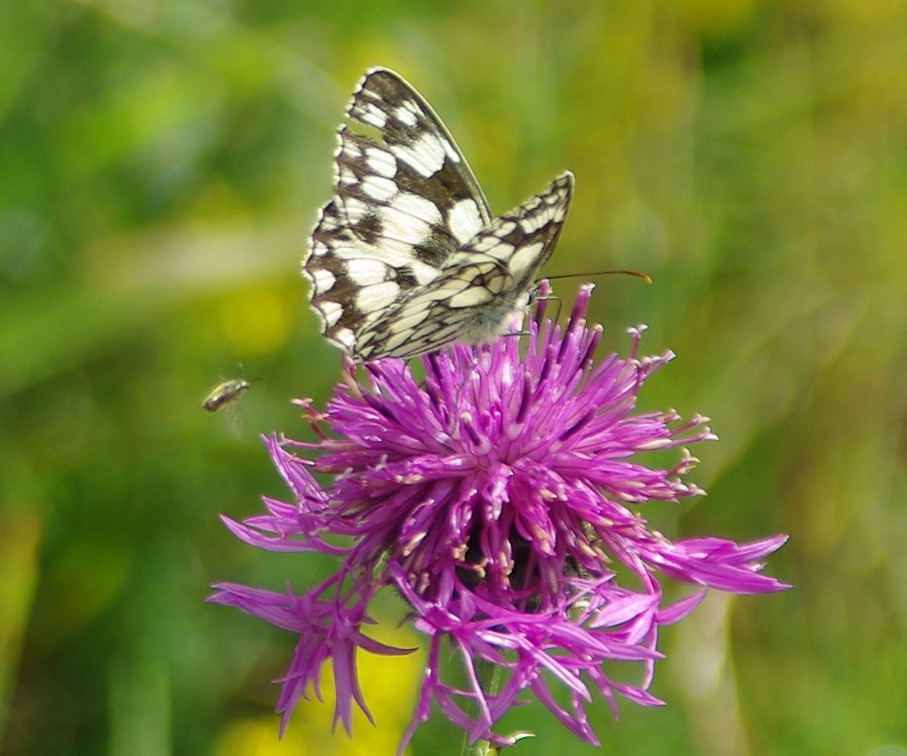
The life cycles of butterflies and moths really are an example of how utterly bizarre life can be.

As a child, I was always outdoors playing in the woods and fields and keenly interested in wildlife. I had an especial interest in butterflies for a long while, and I’m quite confident that as a ten year old I could have named every single British species, and told you a reasonable amount about their life cycles. I knew, for example, that every butterfly or moth started out as an egg, hatched into a caterpillar which ate like there was no tomorrow, and then turned into a chrysalis.

And as that child, I assumed that inside this chrysalis the caterpillar just grew a pair of wings, lengthened its legs, and made a couple of other adjustments too minor for me to worry about and then hatched out into whatever butterfly or moth it happened to be.

It is not quite like that, of course.

When it turns into that chrysalis, the caterpillar essentially ingests itself, so that its insides turn into a kind of organic soup (which makes me think of the so-called ‘Primeval Soup’ of amino acids out of which life supposedly first arose on Earth about two billion years ago, which is actually not a bad analogy). From this soup a completely new creature forms.

So, let me now introduce you all to Trevor.

016a

Trevor has been living in our back garden for the last few weeks. He is the caterpillar stage of an Elephant Hawk Moth (probably – some of the hawk moth caterpillars not only resemble each other fairly closely, but may also have variations within the species). In that time he has been doing his best to eat a small tree.

You’ll excuse him if he doesn’t say hello, I’m sure, as he is much too busy eating at the moment. It’s what he does. It’s pretty well all he does.

Eventually, he will reach a stage when he stops eating, finds a handy spot to attach himself, and then turn into a chrysalis (or pupa) and will eventually hatch out into a moth – an Elephant hawk Moth, if I’ve identified him correctly, although I’m sure he won’t care in the slightest what I think.

You may be familiar with the Zen koan (essential a riddle that cannot be solved by pure logic) that asks ‘if you light one candle from the flame of another candle, is the new flame the same as the old one, or an entirely new one?’

Which brings me, rather neatly if I might say so, to today’s riddle. Bearing in mind all of the above, is the newly hatched butterfly or moth the same creature as the caterpillar that preceded it, or a new being entirely?

I think we should be told.

The Great Disconnect

There is a huge disconnect between the human race and the natural world. This is nothing new, of course, it is something that has gradually been developing ever since man first discovered farming and began to live in settled communities rather than living a nomadic existence. But it has accelerated rapidly since the onset of the Industrial Revolution, until we passed the point where for the first time there were more people living in urban areas than in rural ones. That may seem an obvious fact to many in the Western World, but that statistic is a worldwide one. 55% of the population today is urban, but the spread is very uneven. In North America, for example, 82% of the population today are urban, whereas across Africa as a whole it is only 43%.

This creeping urbanisation has had many obvious consequences, such as the growth of villages into towns, and thence into cities and finally into super-sized metropolises covering hundreds of square kilometres with hardly a tree or a bird to be found in some parts. Such as whole villages being abandoned as the population move to towns to find work, partly due to the growing mechanisation of farming and the demise of traditional rural industries. Such as a rapidly shrinking amount of land that can be thought of as wilderness. Even those areas that are not now covered with an urban sprawl may well be covered with farmlands or plantations, or large areas devoted to leisure activities such as golf courses which as far as wildlife and plant diversity are concerned, are little better than deserts.

And such as a growing and deepening disconnect between humans and the natural world.

037a

In small part, this is natural and necessary; it is a process that is inevitable as we evolve from a species indistinguishable from the other great apes in behaviour and purpose, into a species able to pursue activities unrelated to simple survival.

Of course, we have also become a species capable of wiping out our species and all other species, too.

But this trend seems to have accelerated at an alarming rate over the last thirty to fifty years. Of course, urbanisation continues to be a growing trend, the growth of technology continues to feed into areas such as farming, where we now have huge farms that can be operated by a couple of people alone, which might have required a labour force of maybe a hundred once, and we have social media and computers and gaming and thousands of on-demand TV stations.

050a

This last phenomenon I think is mainly the cause of what appears to be an especially severe disconnect between the natural world and the younger generations.

Now before everyone rushes to tell me of wonderful younger folk who love the natural world and who actively fight to protect it citing, perhaps, the incredible people who make up Extinction Rebellion, obviously there are many exceptions to this. But it is a trend. Before I retired, my job was teaching outdoor activities such as climbing or navigating, and I worked with many children and young adults. The environment in which I worked, of course, was the natural world. And although many of the youngsters who came along lived in towns or cities, there were also many who lived nearby, in a more rural environment. And what shocked me, was that so many of them had no better understanding of that environment than those that lived in inner cities.

034a

I met country children that couldn’t recognise an oak tree or knew what an acorn was. Country children who couldn’t recognise a kestrel. Country children who had no idea what wild garlic was.

As a kid, I lived on the edge of London. I don’t think I was in any way exceptional, but I would spend as much time as I could playing with friends in the woods and fields I could walk to or get to on my bike. We splashed around in streams and climbed trees, learned what different butterflies looked like, 037bfound stag beetles and slow-worms, caught minnows and sticklebacks, and absorbed a lot of knowledge about trees and birds and insects and mammals from books and TV programs and just being out in the country.
I assumed it was what all kids did.

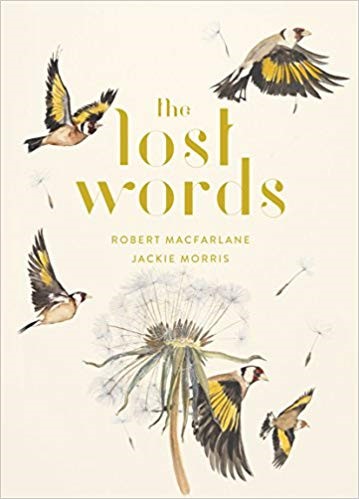
But this seems to be no longer the case. I have already written about The Lost Words (here), the book written by Robert Macfarlane and Jackie Morris as a response to learning that supposedly common words such as conkerlost words and kingfisher and acorn are words that the majority of children today are unfamiliar with – something that would once have been unthinkable. And this disconnect seems to me the saddest thing. So much of our very rich heritage has a rural background, be it music or literature, architecture, leisure activities, or traditional crafts. And the same is naturally true for most countries and societies.

But to return to the reasons for this, I feel the rise of social media and on-demand electronic entertainment has been the largest single influence on the younger generation, especially, to the point where to the majority of them, pretty well all their leisure time is taken up with these things and there is no desire to explore the natural world at all.

Sometimes I think the electronic world is more real to many of them than the real world is, anyway.

057

Sigh. I’m off to check the vegetable garden.