Wednesday December 27th

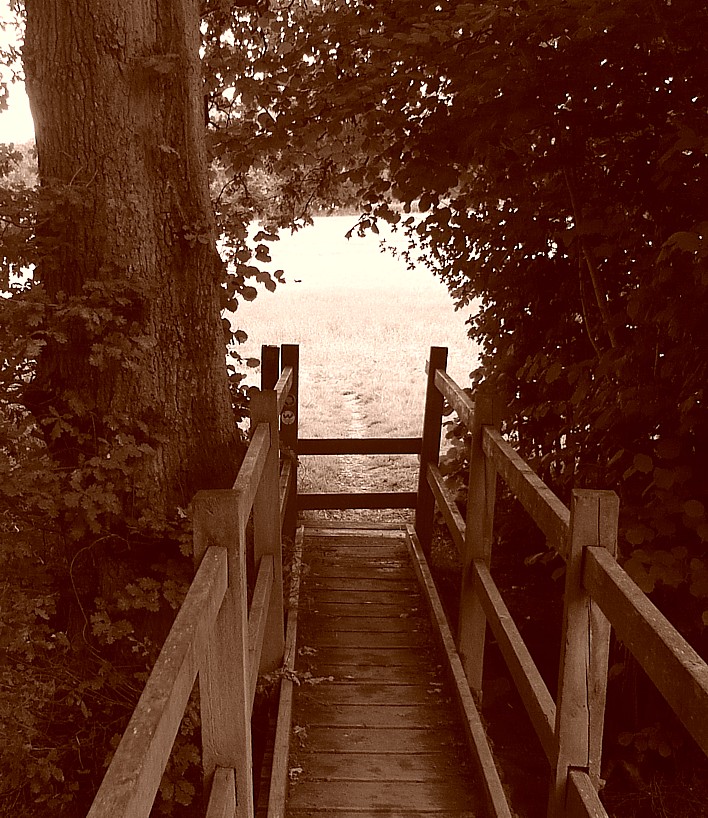
It is windy this morning and the forecast is for rain and high winds later in the day. Consequently, I go out for a walk straight after breakfast, heading for the woods beside the common where I know I will be sheltered from the worst of it, should the winds get up soon. Above, the clouds are thick and dark and what light does make it through the mirk is thin and silvery, glittering coldly on leaves and puddles, the latter wrinkled with tiny wavelets scurrying in bursts across their surfaces.

A couple of rooks are calling irritably overhead, buffeted by the breeze, as I reach the edge of the wood. A few paces in, I pass along the edge of a shallow, long-disused sandstone quarry, its banks perforated with badger holes, and with other entrances deeper into the woods. The whole of the sett appears to occupy upwards of a fifth of an acre, although there may well be entrances I have not yet found.

Moving on, I find I am walking to the rhythm of a tune in my head, something that happens to me frequently. This time, it is a track from an album by Stick in the Wheel, a kind of punk-folk group, the track being the Abbots Bromley Horn Dance. Stick in the Wheel are a group I have only recently discovered, and the only album I have of theirs (so far!) gets played rather a lot. This particular tune has a very pronounced beat and I wonder, as I often do, whether the tune has come into my head as the beat matches my pace, or whether I have unconsciously altered my pace to fit the tune.

I also decide it doesn’t matter which it is.

It is still early enough in the day for there to be very few other people about. In about an hour’s time the air will be filled with barking and shouting as the regular dog walkers invade, but for now I have the place almost to myself.
I have just begun to re-read Robert MacFarlane’s The Old Ways, and in this he tells us that at the time of writing (2012) he reckoned he had walked perhaps 7,000 or 8,000 miles along footpaths in his lifetime. Does this mean each mile is a unique mile, in that he means he has walked this distance all along different routes, or does it include the day to day walks along local routes, routes such as the one I repeat day after day? He doesn’t make that clear, and I would guess it includes all repetitions. He then goes on to quote De Quincy saying that Wordsworth walked a total of 175,000 – 180,000 miles in his lifetime (although how did he know?), which would clearly include his repeated local walks, if true. I wonder how many I have done and make a vague stab at guessing a figure. At various times I have worked out I tend to walk an average of 20 miles a week, allowing for good and bad periods of walking, of which probably one half would be on footpaths. There were times when I did much less, and times when I did much more, but it seems a reasonable estimate. That would give me a figure of between 25,000 and 27,000 miles in my adult life so far, which is probably wildly out but is quite similar to Robert Macfarlane’s.

I’ve no idea what to conclude from that.

But I know I would probably walk quite a bit further if I didn’t tend to stop so frequently just to stand and stare at my surroundings. I do it often enough to sometimes irritate those I walk with, although they’re usually kind enough to say nothing about it. But there are also those who just get their heads down and walk, walk, walk, seemingly on some mission to cover as many miles as possible in the shortest possible time, barely able to glance around them as they go. What is that about, unless it’s some sort of charity event and they’re raising money by the mile? Where is the pleasure?

The Welsh poet W H Davies wrote ‘What is this life if, full of care, we have no time to stand and stare?’

What indeed?

I’ve been doing it quite a lot again this morning. It seems so important. Surely everyone must do it to a degree?
26th August 2023

I tested one of the few apples on our tree in the middle of the month to see how ripe it was, and it came away from the branch easily. We shouldn’t be picking apples in mid-August, surely? But it’s a poor year, too. There are barely a dozen apples on the tree, whereas last year we must have had at least five times as many. And our crab apple, usually weighed down with fruit which we leave in situ for the birds over winter, is almost equally bare. Our neighbour’s Rowan tree looks beautiful, although Rowan trees always do, but it definitely has fewer berries on it than usual. Our Hazel tree also seems to have far fewer nuts than last year.

And in the wild?

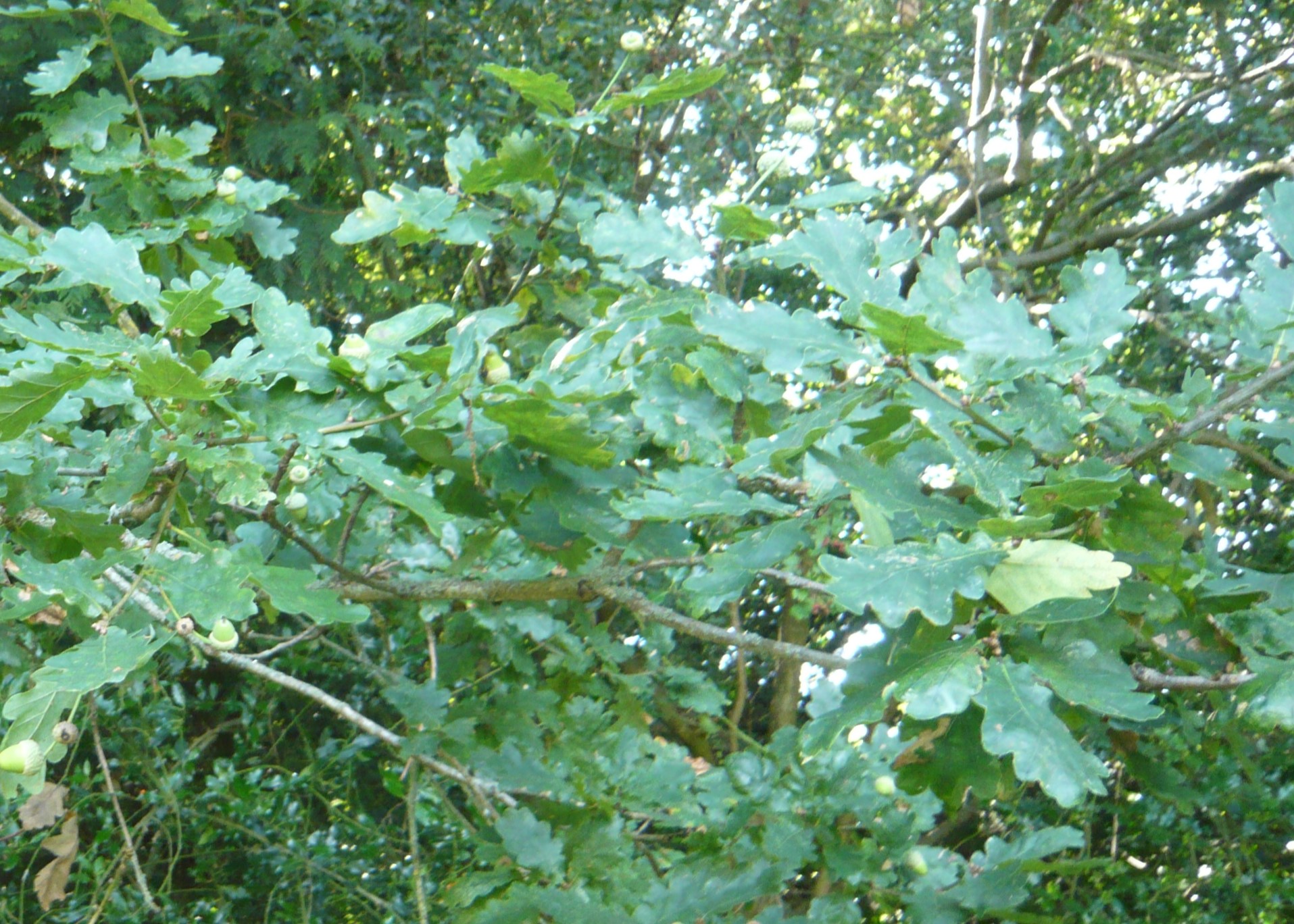
Bit of a mixed bag, really. Some of the hazel trees near us are fairly heaving with nuts, while others have very few. The oaks have a good crop of acorns, but nothing on last year when the woodland floor was covered an inch or two deep. But last year was a spectacularly good mast year. This year the hawthorns have a decent amount of berries but nothing special, much like the elders, while the hollies seem to be loading up with a whole mass of them. That, at least, is the picture in my little corner of South East England. Last winter was quite mild. But even should we have a harsh winter this year, the outlook for wildlife seems not too bad from the nuts and berries perspective.

These things do often seem to follow a cycle of alternate years, although I don’t know why that should be. I had thought the apple blossom was a little late this year, but I really don’t know whether that’s just my imagination.

On Tuesday evening I went for a short walk. It had been a hot day and earlier I had seen three tiger moths, which was rather a treat. By the time I left the house, though, a little before eight, the air was cool, the birdsong seemed a little louder than usual, and there was a magical light in the sky as the sun disappeared below the horizon. The church clock struck eight as it did so. In the woods, there were now patches of sudden night where the trees grew close together, through which the path could be seen like a pale wisp of misty light. By the time the church clock chimed the quarter hour it was quite dark, although patches of daylight still showed in the clearings. Soon there was so little light I headed out of the woods and homeward.

A few minutes before half past, a mixed flock of jackdaws and rooks flew over, the jackdaws chuckling and gossiping noisily as usual as they headed east towards their gathering place on the edge of the town. There, they will be joined by other flocks and once all are there, just before dark, they will all fly off together to their night’s roost.

Although it is still August, the air already seems to have an autumnal feel to it.

Autumn Equinox

Often, it still feels like summer at this time of year, but I feel autumn has truly arrived now. This morning I walked a path I haven’t walked for a week or more to find the sun was that much lower than it had been and I was constantly having to shade my eyes. It’s all about colours, now. Colours and the cooling of the world. Russet. Browns. Fading drab greens. Yellows and orange. Autumn can be beautiful, although it can also be dull and dreary and occasionally fierce. But mornings often arrive with an added sparkle, with heavy dews on cobwebs and leaves glinting in the low sun, hedgerows of thistledown, rosehips, and hawthorn. There is usually a freshness in the air, especially in the mornings, which has been absent for most of the summer, that invariably lifts my spirits.

I like summer, of course I do, but the arrival of autumn reminds me in some ways of the arrival of spring. In spring we have the stirring of life after a long period of hibernation, whereas the beginning of autumn always feels to me like the start of a new, second, outburst of life. Many plants have a sudden growth spurt, fruits and nuts and berries swell and glow and are plundered by birds and beasts. It is still warm, warm enough to bask in the sun and to feel hot walking up even quite gentle hills.

The Equinox occurs on Friday (at 2.03am in the UK, to be precise) and after this the hours of darkness outnumber the hours of daylight until the end of next March (counting dusk and pre-dawn as night time). After this, the year always feels to me quite different, even if the weather from the one day to the next is much the same. I can already feel myself slipping into a different place; the logs for the burner have arrived and have been stacked ready for use. The apples have been picked, shortly to be wrapped and stored away. Much in the garden is in the process of being cut back for winter. When the days are short and the nights are long, there will be many books to read, lots of music to listen to, a few beers to drink, and many long conversations to be had.

But also many long walks as well, I hope. I love winter too.