Wednesday December 27th

It is windy this morning and the forecast is for rain and high winds later in the day. Consequently, I go out for a walk straight after breakfast, heading for the woods beside the common where I know I will be sheltered from the worst of it, should the winds get up soon. Above, the clouds are thick and dark and what light does make it through the mirk is thin and silvery, glittering coldly on leaves and puddles, the latter wrinkled with tiny wavelets scurrying in bursts across their surfaces.

A couple of rooks are calling irritably overhead, buffeted by the breeze, as I reach the edge of the wood. A few paces in, I pass along the edge of a shallow, long-disused sandstone quarry, its banks perforated with badger holes, and with other entrances deeper into the woods. The whole of the sett appears to occupy upwards of a fifth of an acre, although there may well be entrances I have not yet found.

Moving on, I find I am walking to the rhythm of a tune in my head, something that happens to me frequently. This time, it is a track from an album by Stick in the Wheel, a kind of punk-folk group, the track being the Abbots Bromley Horn Dance. Stick in the Wheel are a group I have only recently discovered, and the only album I have of theirs (so far!) gets played rather a lot. This particular tune has a very pronounced beat and I wonder, as I often do, whether the tune has come into my head as the beat matches my pace, or whether I have unconsciously altered my pace to fit the tune.

I also decide it doesn’t matter which it is.

It is still early enough in the day for there to be very few other people about. In about an hour’s time the air will be filled with barking and shouting as the regular dog walkers invade, but for now I have the place almost to myself.
I have just begun to re-read Robert MacFarlane’s The Old Ways, and in this he tells us that at the time of writing (2012) he reckoned he had walked perhaps 7,000 or 8,000 miles along footpaths in his lifetime. Does this mean each mile is a unique mile, in that he means he has walked this distance all along different routes, or does it include the day to day walks along local routes, routes such as the one I repeat day after day? He doesn’t make that clear, and I would guess it includes all repetitions. He then goes on to quote De Quincy saying that Wordsworth walked a total of 175,000 – 180,000 miles in his lifetime (although how did he know?), which would clearly include his repeated local walks, if true. I wonder how many I have done and make a vague stab at guessing a figure. At various times I have worked out I tend to walk an average of 20 miles a week, allowing for good and bad periods of walking, of which probably one half would be on footpaths. There were times when I did much less, and times when I did much more, but it seems a reasonable estimate. That would give me a figure of between 25,000 and 27,000 miles in my adult life so far, which is probably wildly out but is quite similar to Robert Macfarlane’s.

I’ve no idea what to conclude from that.

But I know I would probably walk quite a bit further if I didn’t tend to stop so frequently just to stand and stare at my surroundings. I do it often enough to sometimes irritate those I walk with, although they’re usually kind enough to say nothing about it. But there are also those who just get their heads down and walk, walk, walk, seemingly on some mission to cover as many miles as possible in the shortest possible time, barely able to glance around them as they go. What is that about, unless it’s some sort of charity event and they’re raising money by the mile? Where is the pleasure?

The Welsh poet W H Davies wrote ‘What is this life if, full of care, we have no time to stand and stare?’

What indeed?

I’ve been doing it quite a lot again this morning. It seems so important. Surely everyone must do it to a degree?

The Thick Month

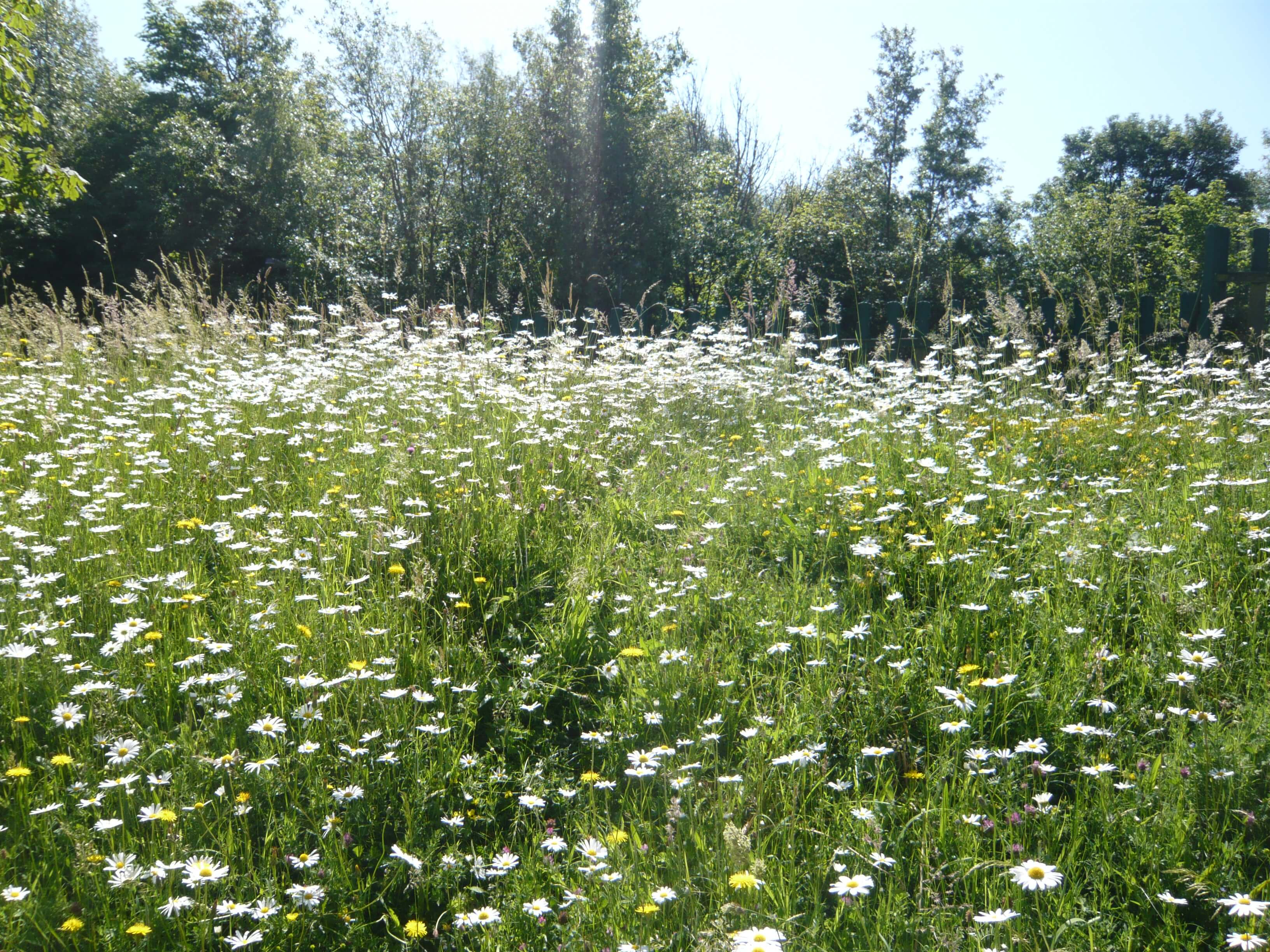
June is the Thick Month. Trees and bushes and stands of wildflowers have acquired a lush density by now, branches and stems encased in full-sized leaves, rich and vividly green. Leaves massed and packed in swaying light-blocking swathes. Nothing has yet faded, although there is a gradual falling away of birdsong now mating is over and broods are being raised, although this is compensated for by what seems to be an increase in insect noise, especially bee hum – certainly in our garden. The flowers are beset by mason, carder and bumblebees, and large numbers of solitary bees which provide a delightful oxymoron for this recorder, at least.

Going out and about through the woods a mile from my home, I feel I could almost be walking indoors, such is the density of the tree canopy above me, and when it begins to rain I do indeed remain dry, other than from the occasional drip finding its way through. But it is muddy underfoot in places, the sheltering swathes also keeping the sun from drying out the ground. The thick wet dark humus-rich soil smells sweet and clean, reminding me of a ‘plum-pudding smell,’ as Kenneth Grahame described the river-bank in The Wind in the Willows.

The fields, too, are thick with wildflowers and grass, as are roadside borders where councils have refrained from scalping them. As much as I rejoice to find the occasional rarer species amongst them, I think my greatest pleasure is just to see masses of the commoner species; buttercups or ox eye daisies, vetches or speedwells.

I generally see nothing rare when I am walking my patch, but I could never think of any of this as ‘ordinary’.

Of Caterpillars And Philosophy

The life cycles of butterflies and moths really are an example of how utterly bizarre life can be.

As a child, I was always outdoors playing in the woods and fields and keenly interested in wildlife. I had an especial interest in butterflies for a long while, and I’m quite confident that as a ten year old I could have named every single British species, and told you a reasonable amount about their life cycles. I knew, for example, that every butterfly or moth started out as an egg, hatched into a caterpillar which ate like there was no tomorrow, and then turned into a chrysalis.

And as that child, I assumed that inside this chrysalis the caterpillar just grew a pair of wings, lengthened its legs, and made a couple of other adjustments too minor for me to worry about and then hatched out into whatever butterfly or moth it happened to be.

It is not quite like that, of course.

When it turns into that chrysalis, the caterpillar essentially ingests itself, so that its insides turn into a kind of organic soup (which makes me think of the so-called ‘Primeval Soup’ of amino acids out of which life supposedly first arose on Earth about two billion years ago, which is actually not a bad analogy). From this soup a completely new creature forms.

So, let me now introduce you all to Trevor.

016a

Trevor has been living in our back garden for the last few weeks. He is the caterpillar stage of an Elephant Hawk Moth (probably – some of the hawk moth caterpillars not only resemble each other fairly closely, but may also have variations within the species). In that time he has been doing his best to eat a small tree.

You’ll excuse him if he doesn’t say hello, I’m sure, as he is much too busy eating at the moment. It’s what he does. It’s pretty well all he does.

Eventually, he will reach a stage when he stops eating, finds a handy spot to attach himself, and then turn into a chrysalis (or pupa) and will eventually hatch out into a moth – an Elephant hawk Moth, if I’ve identified him correctly, although I’m sure he won’t care in the slightest what I think.

You may be familiar with the Zen koan (essential a riddle that cannot be solved by pure logic) that asks ‘if you light one candle from the flame of another candle, is the new flame the same as the old one, or an entirely new one?’

Which brings me, rather neatly if I might say so, to today’s riddle. Bearing in mind all of the above, is the newly hatched butterfly or moth the same creature as the caterpillar that preceded it, or a new being entirely?

I think we should be told.