In All Weathers

We’ve been on the South Downs again.

That’s why you haven’t heard from me for a while. Here’re a few pictures.

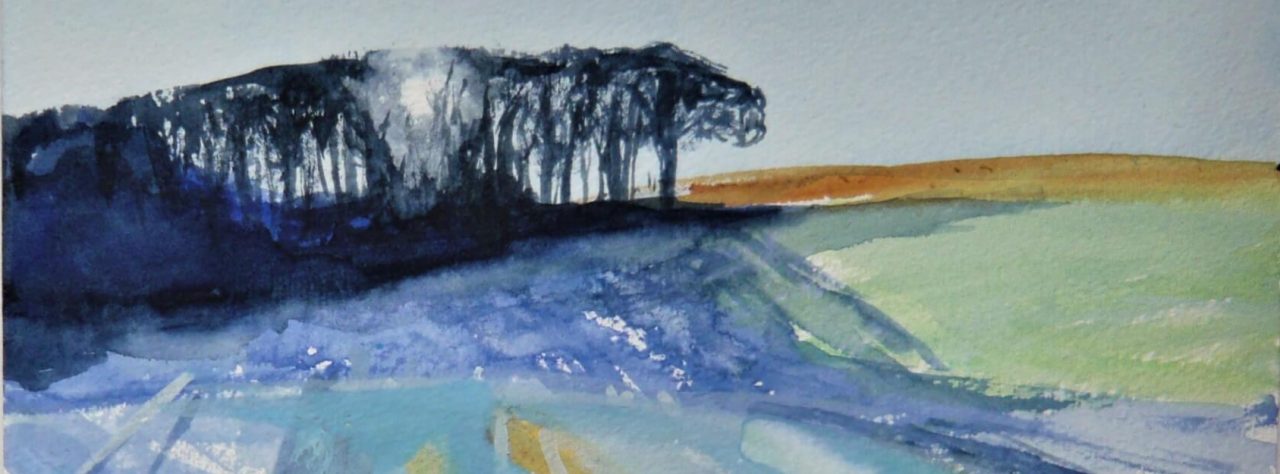
We began walking from Amberley this time, and on the first day the weather was pretty meh. It was either raining or starting to rain or just deciding when to rain. But, as always, the Downs looked fantastic. This view reminded me of a Roland Hilder painting:

But it got steadily wetter throughout the day. We took a very welcome break in the Frankland Arms in Washington and if I was writing a pub review it would get five stars – especially as it served Harvey’s Old Ale. But I only allowed myself one of those, as we still had some serious mileage to do. And it was, as noted, getting wetter. We approached Chanctonbury Ring:

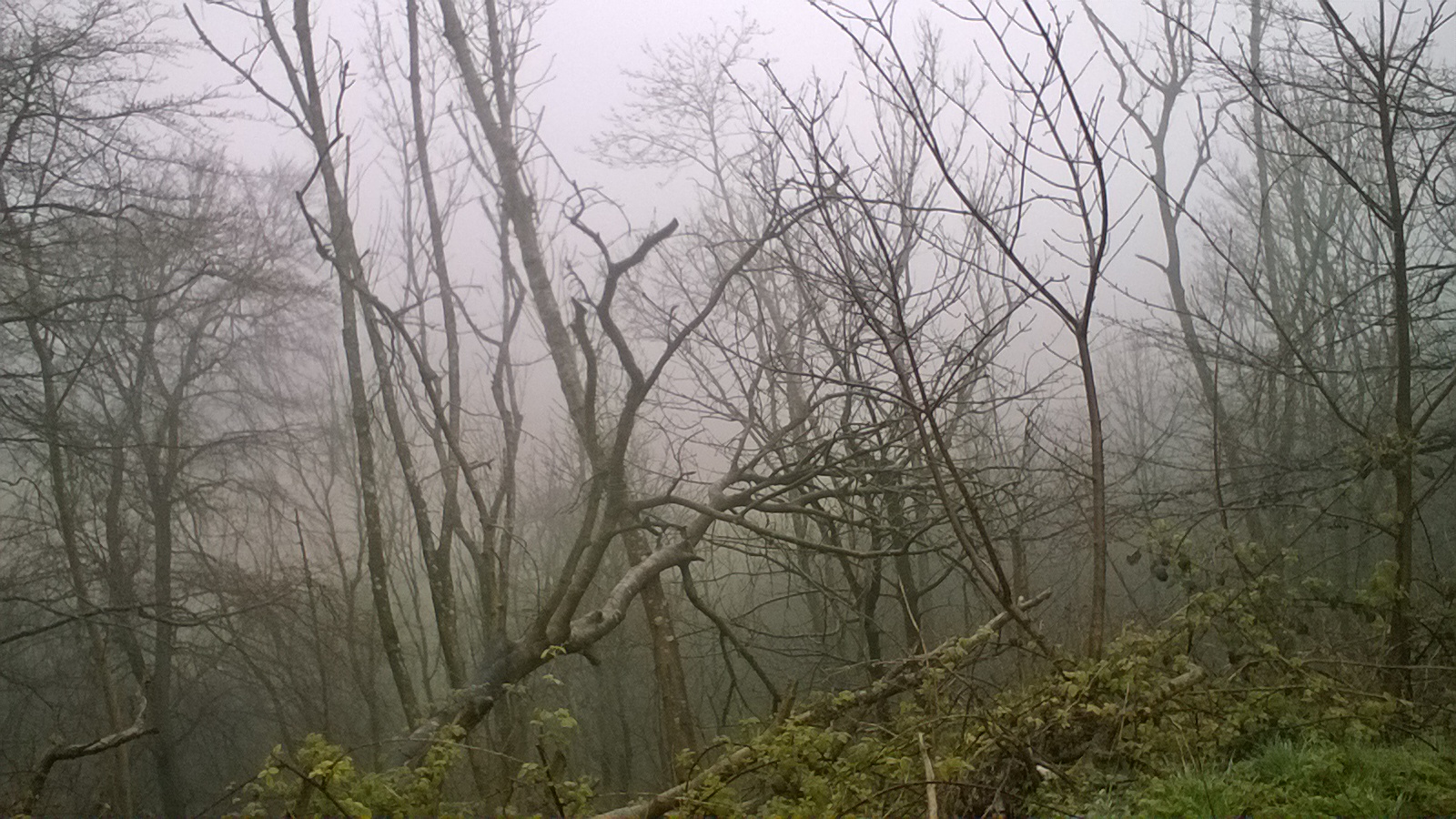
And as we began the descent from the top, the saddest part of the journey. We walked among a large number of ash trees, all of which were dead or dying from Ash Dieback disease. It looked like a picture of the Somme.
The next day was dull, but at least it was dry. We walked past the Devil’s Dyke which I never seem to be able to get a good picture of, no matter which angle I take it at. The Devil’s Dyke is so-called because for some reason the Devil wanted to destroy Sussex, and got talking to Saint Dunstan and asked him the best way to do it. Why he did that I can’t imagine. Never ask a saint for advice if you’re the Devil. It won’t end well. Anyway, Saint D suggested he dig a channel through the South Downs and flood it. Right, thought Old Nick, and set to work. Saint D let him toil away for a few hours and then caused all the cocks in Sussex to crow. Thinking it was morning, Old Nick threw down his shovel, twirled his moustaches and hissed ‘Curses, foiled again!’

Alternatively, it might have been caused by melt-water during the ice age, but why spoil a good legend?

And the best weather? During our rest day in Lewes. And, oh look! There’s the Harvey’s Brewery! What a good rest day.
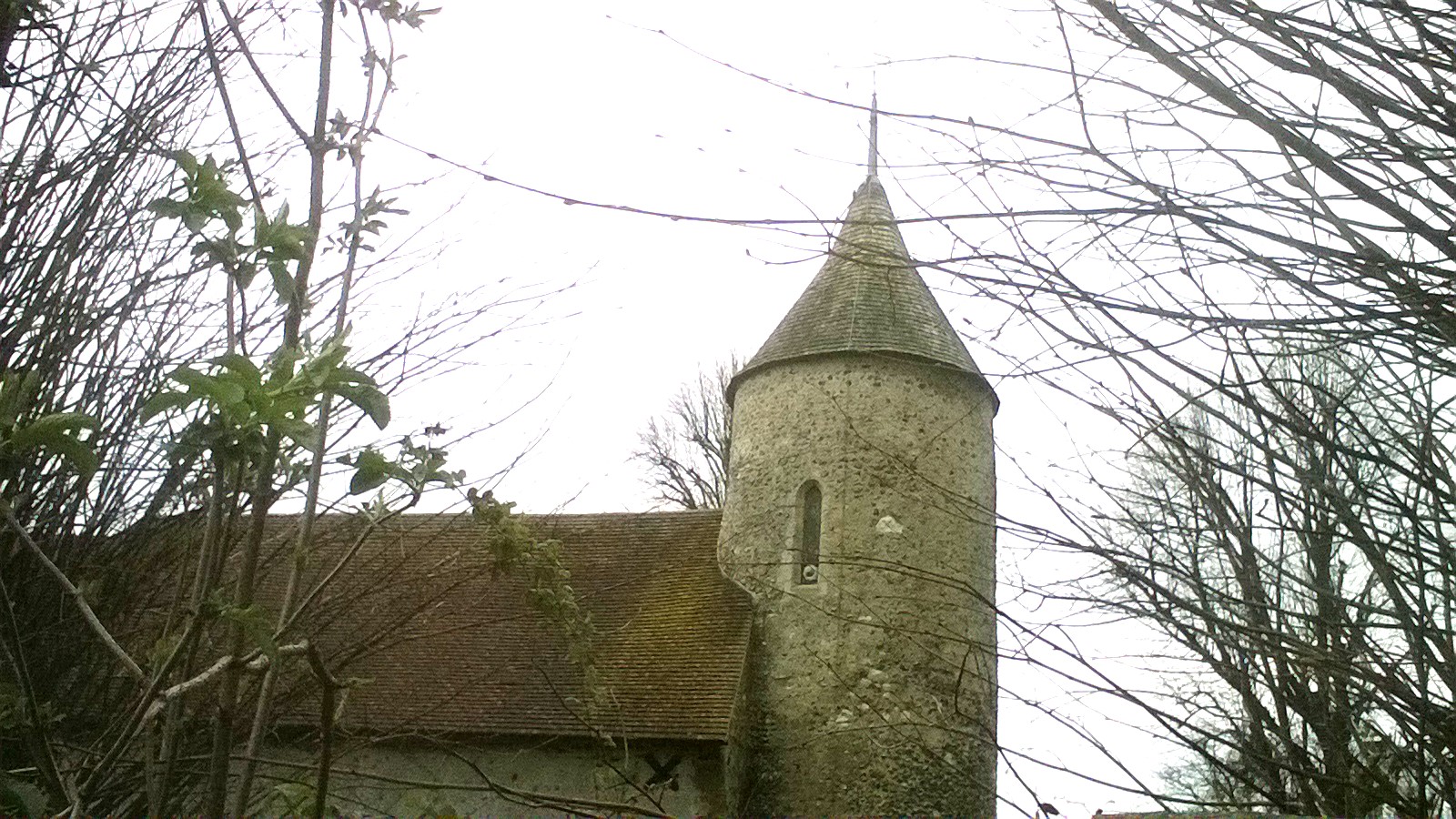
The following day was dull again as we left Lewes, and by now quite a sharp wind was blowing – into our faces too, unfortunately. But we had a pretty decent day and passed this church in Southease, one of only two (I think) in England with a round tower outside of Norfolk. The other is in nearby Lewes.

The final day began sunny but again with a sharp and unkind wind. We left Alfriston with its church on the edge of the village by the river and headed towards the coast. On the South Downs away to our right we passed a white horse carved into the chalk.
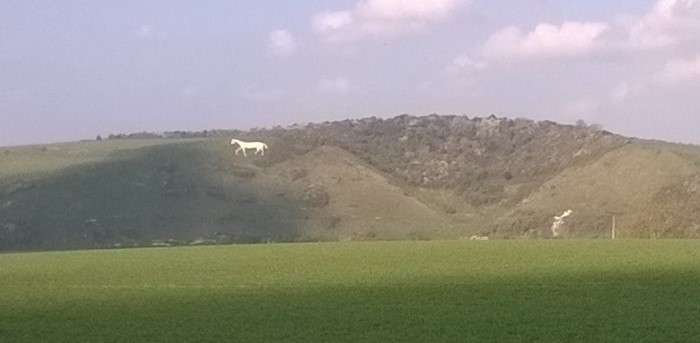
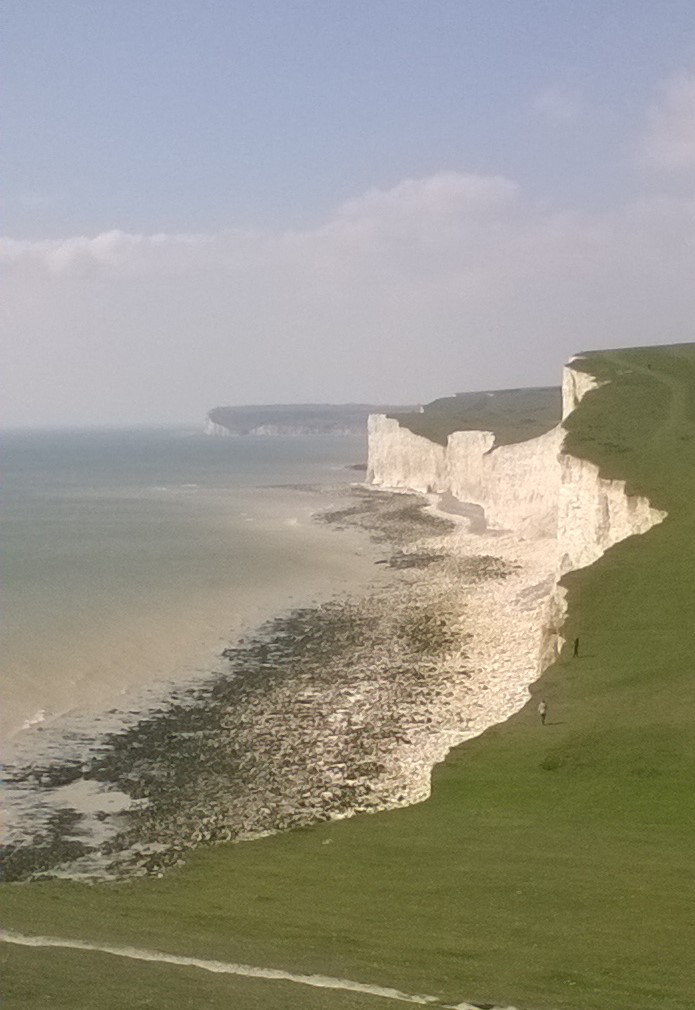
Soon we were up onto the Downs again, for the final walk into Eastbourne over the Seven Sisters and Beachy Head. I tend to forget how tiring this leg can be, going continually uphill then downhill for the best part of six miles. For some reason, although we could see the Belle Tout lighthouse in the distance, it never seemed to get any nearer. Once I could do this leg of the walk easily, but…getting a little older…

An always fantastic view, though. Here we’re looking back across the Seven Sisters towards Seaford Head.
After all that, we could do with a holiday.
Wind And Wandering

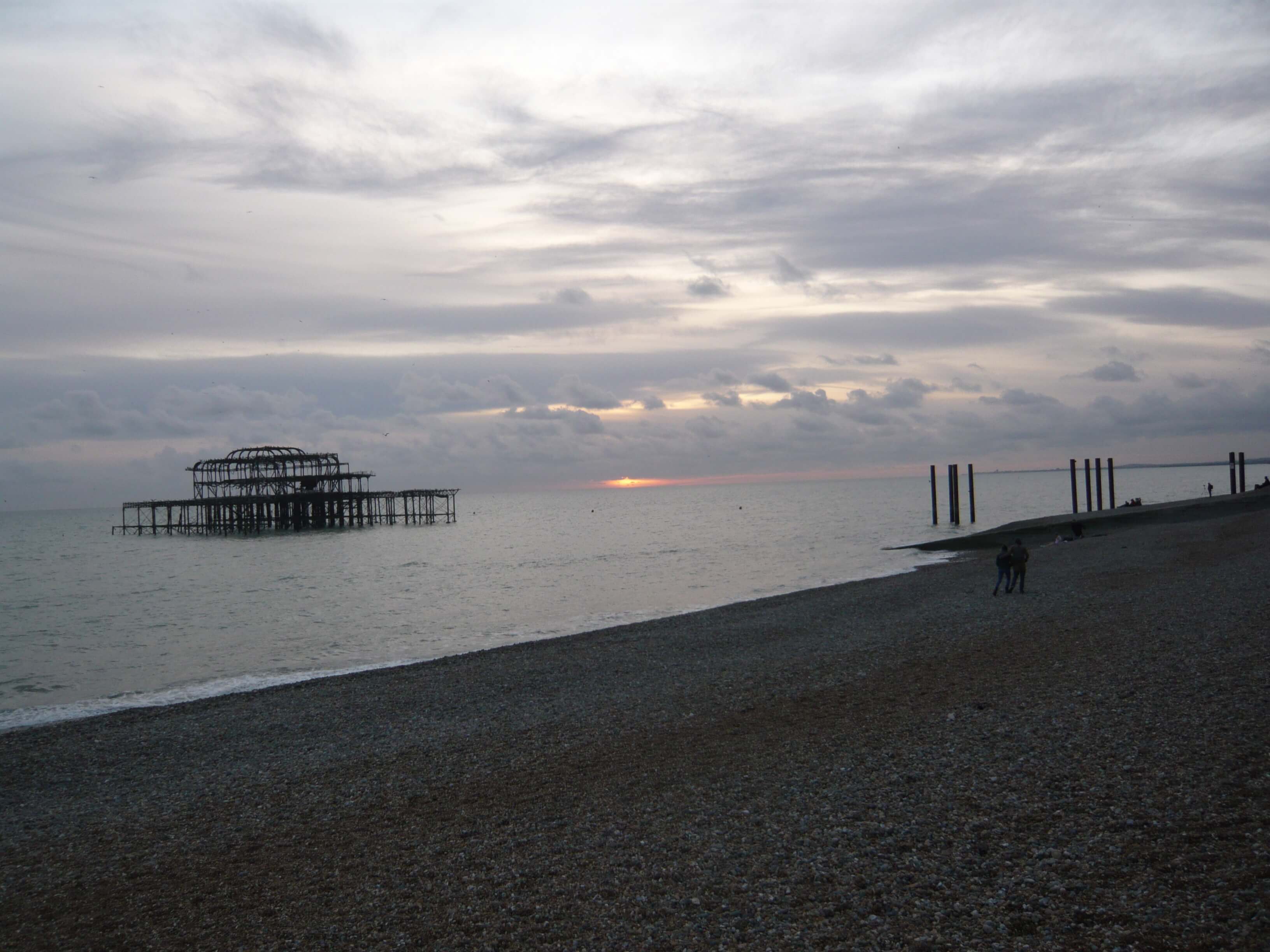
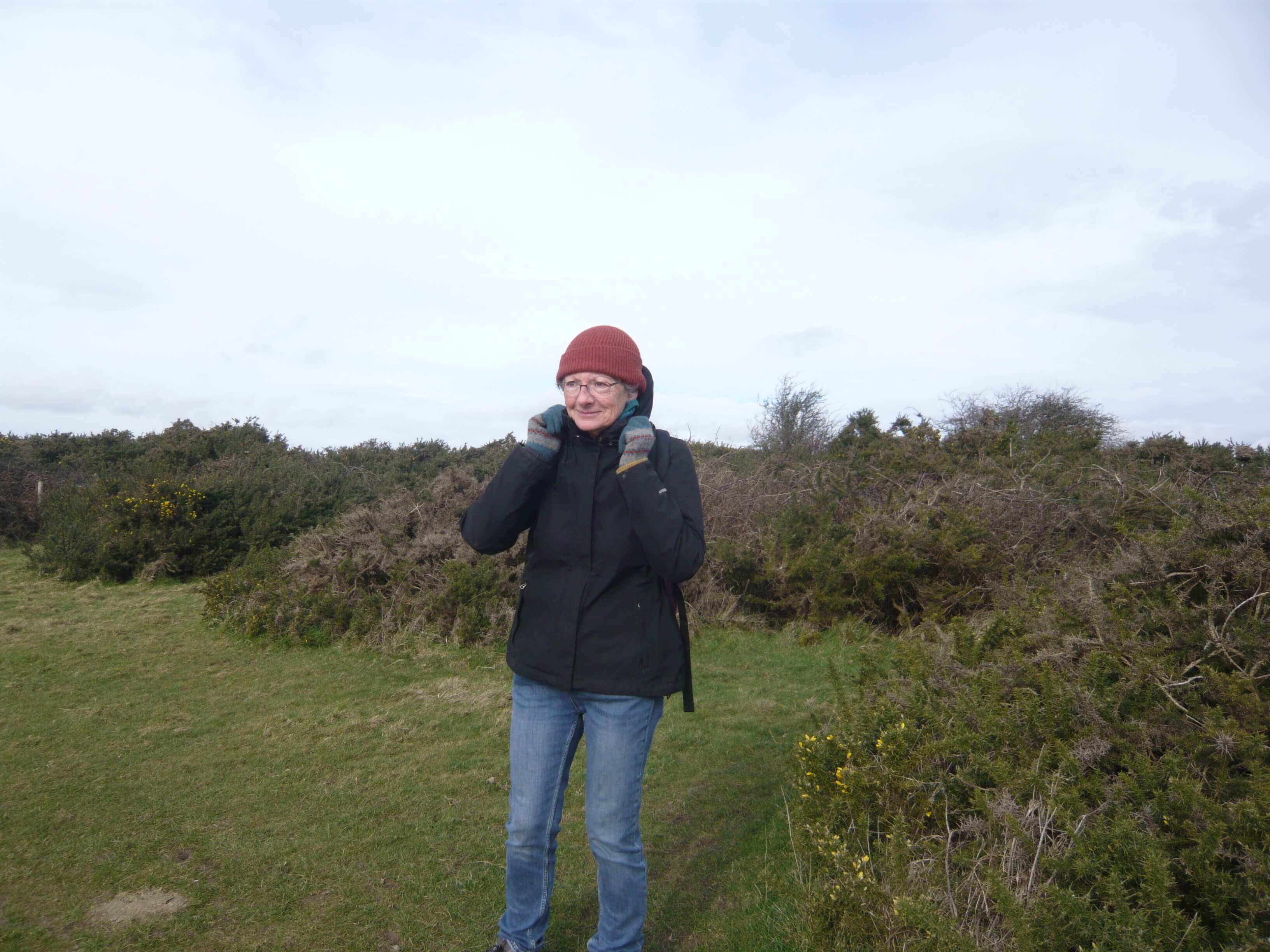
We went down to Brighton for the weekend. Staying two nights there gave us a chance to watch the starling murmurations that regularly put on amazing displays around the old pier. It also gave us the chance to get up onto the South Downs for a good walk.

On the first evening we walked down to the seafront to await the starlings. It was a lovely sky, but with an extremely keen wind blowing in off the sea. After about half an hour our wait was rewarded with a brief but great display as the starlings whirled and dipped and soared in formation around the Old Pier. But guess who’s camera decided to stop working because of the cold? So, no murmuration photos, I’m afraid.

Next morning we caught the bus up to Ditchling Beacon. We were to walk from there to Devil’s Dyke, then catch another bus back down to Brighton. It was very cold and windy in Brighton, and all the way up gusts of wind buffeted the bus. Not a good omen. Anyway, the bus arrived at the top of the Downs and stopped. We got off the bus.

My God, it was bloody cold!

It was extremely tempting to turn around and get straight back on the bus again, but we (just) resisted it.

No, really, it’s lovely. Quite refreshing. Why do you ask?’

When we last passed this dew pond four or five years ago, the weather was deteriorating and a few wavelets wrinkled the surface, while the sky was largely blue but with a few clouds rolling in. Today the sky was greyer and waves were careering wildly across the water. Does it look cold? It was bloody cold! I may have mentioned that already.

After an hour or so, we dropped down to the village of Pyecombe and had a quick look around the lovely old church. Then the long, slow walk back up onto the Downs on the other side of the valley. At this point on our previous walk the rain had been pouring down and the clouds getting lower and lower. This time, despite the cold (I have mentioned that, haven’t I?) it was clear and sunny. And by this time, thankfully, we had warmed up somewhat.

Our route took us down a lovely sheltered holloway to another valley, where we began the final walk up to Devil’s Dyke.

By now it was sunny and despite the wind it was lovely. We felt we could have stood there and just looked at it all day. However, we had a pub with hot soup and cold beer to get to before our bus trip back down to Brighton, so we hurried on.

South Downs Way 1 – Eastbourne to Steyning

Once upon a time, or five or six years ago, if you prefer, I thought I would start up my own outdoor adventure company. It never happened in the end, largely due to the cost of insurance. However, if I had gone through with it I have to admit it would have been largely so I could go on long distance trails both in the UK and overseas without having to pay for it.

Oh, well. It was a nice idea.

The South Downs Way is a long distance footpath of one hundred miles in length, running from Eastbourne to Winchester, or Winchester to Eastbourne, if you must, along the top of the South Downs.

Hence the name.

We walked it in May.

It is usual, when writing about a journey – especially a long distance walk – to write in some detail about the scenery and the route, in sequential order. I don’t think I’ll do that this time. Instead I’ll probably jump about all over the place writing about odd things we found particularly interesting.  And post one or two photos of the stunning scenery…

039a

Such as this one.

So, a few points of interest.

This, then, is a dew pond:

043a

Chalk is a porous rock, allowing any rainfall to rapidly soak away, so the only way of providing water on the top of the downs is by artificial means. Dew ponds have been made up there for hundreds of years; a hollow is dug and lined with clay, which then fills naturally when the rain falls. Dew is probably not a significant contributor, despite the name. The downside to this simple system is should the pond dry out, then the clay, too, will dry out. When this happens, it will shrink and crack, and subsequent rainfall will leak out.

And while on the subject of rainfall, we didn’t have glorious weather all the way:

053a

We were forced to seek refuge in a convenient pub at the Devil’s Dyke for a couple of hours, but we made the best of it. This was clearly A Good Move because although it was still pouring with rain when we eventually left the pub, it began to clear up in about an hour and then we had sunshine for the rest of the day.

008a

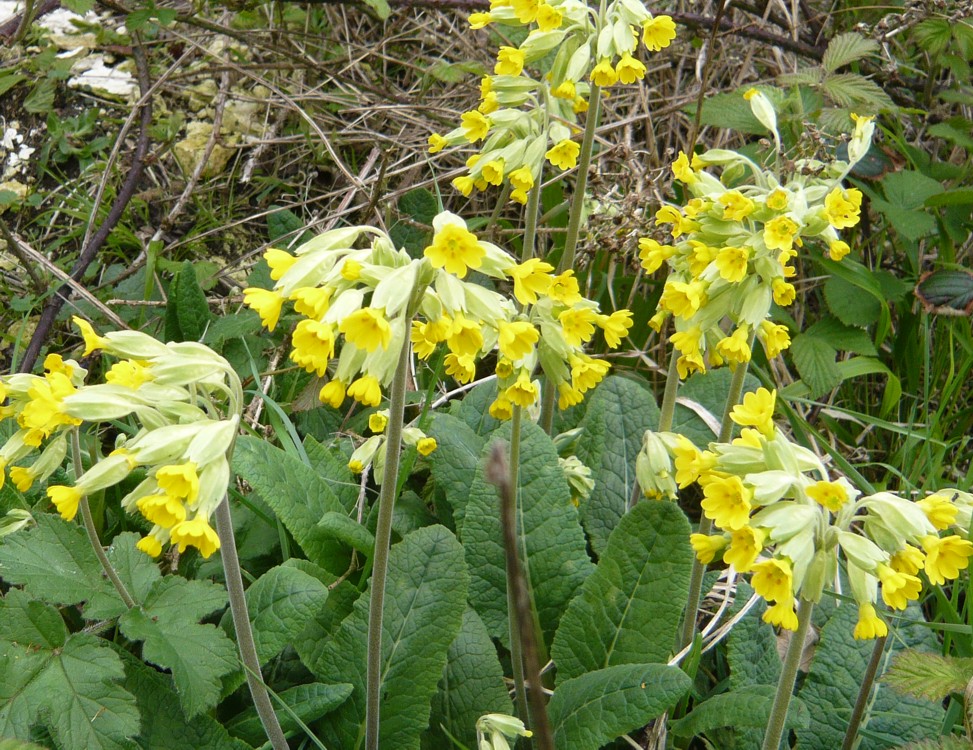
These are cowslips. The word comes from the Old English cuslyppe, which means cow dung, because, yes, that’s where they like to grow, apparently. Years ago, before the coming of intensive farming practices and industrial weedkillers, our fields were full of cowslips, but they seem to be met with now primarily in the more open landscapes – like downland. For the first few days of our walk, especially, we saw lots of cowslips.

We had a rest day at Steyning, although we stayed at nearby Bramber.

050a

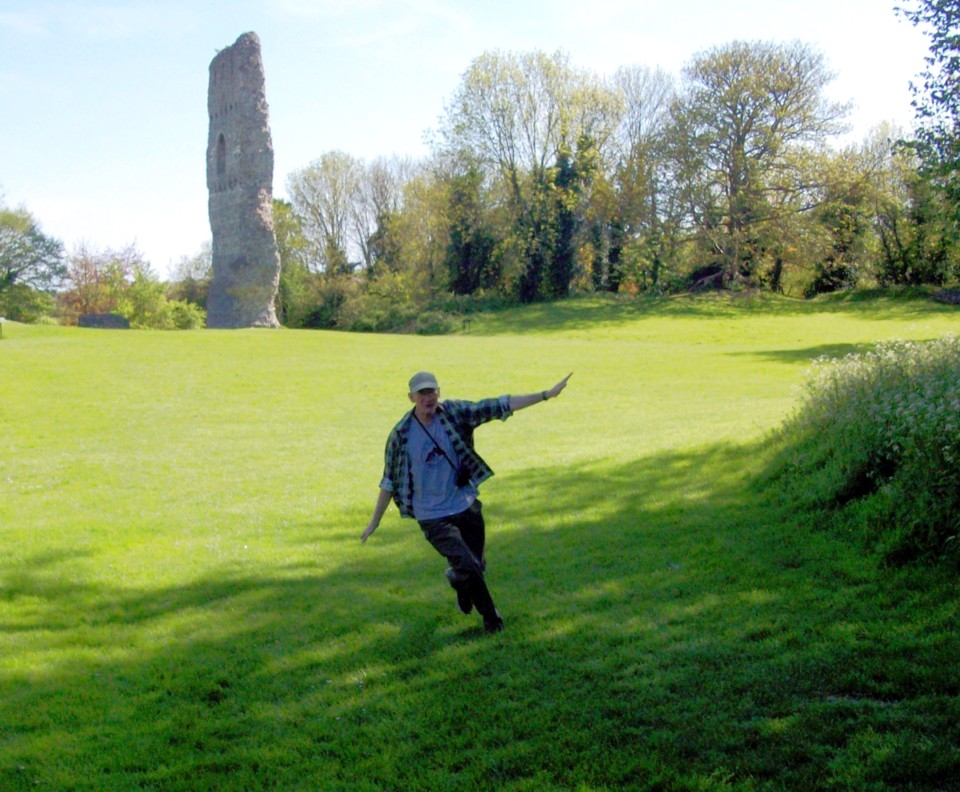
Bramber Castle is a strange and mysterious place, which magically energises the over sixties and causes them to revert to their childhood.

Although not for long, sadly.