26th August 2023

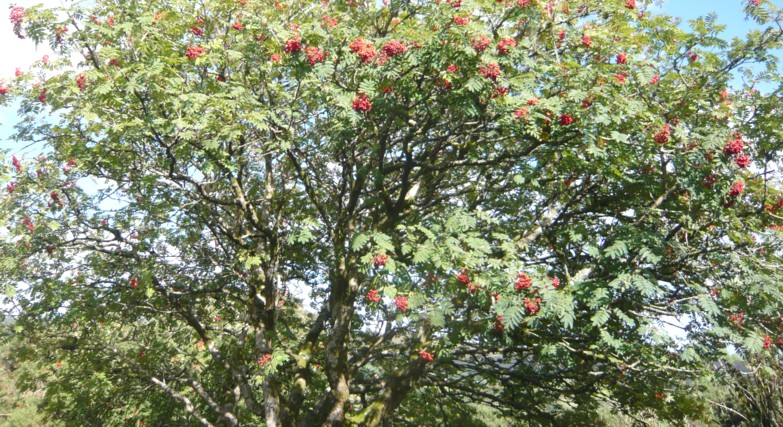
I tested one of the few apples on our tree in the middle of the month to see how ripe it was, and it came away from the branch easily. We shouldn’t be picking apples in mid-August, surely? But it’s a poor year, too. There are barely a dozen apples on the tree, whereas last year we must have had at least five times as many. And our crab apple, usually weighed down with fruit which we leave in situ for the birds over winter, is almost equally bare. Our neighbour’s Rowan tree looks beautiful, although Rowan trees always do, but it definitely has fewer berries on it than usual. Our Hazel tree also seems to have far fewer nuts than last year.

And in the wild?
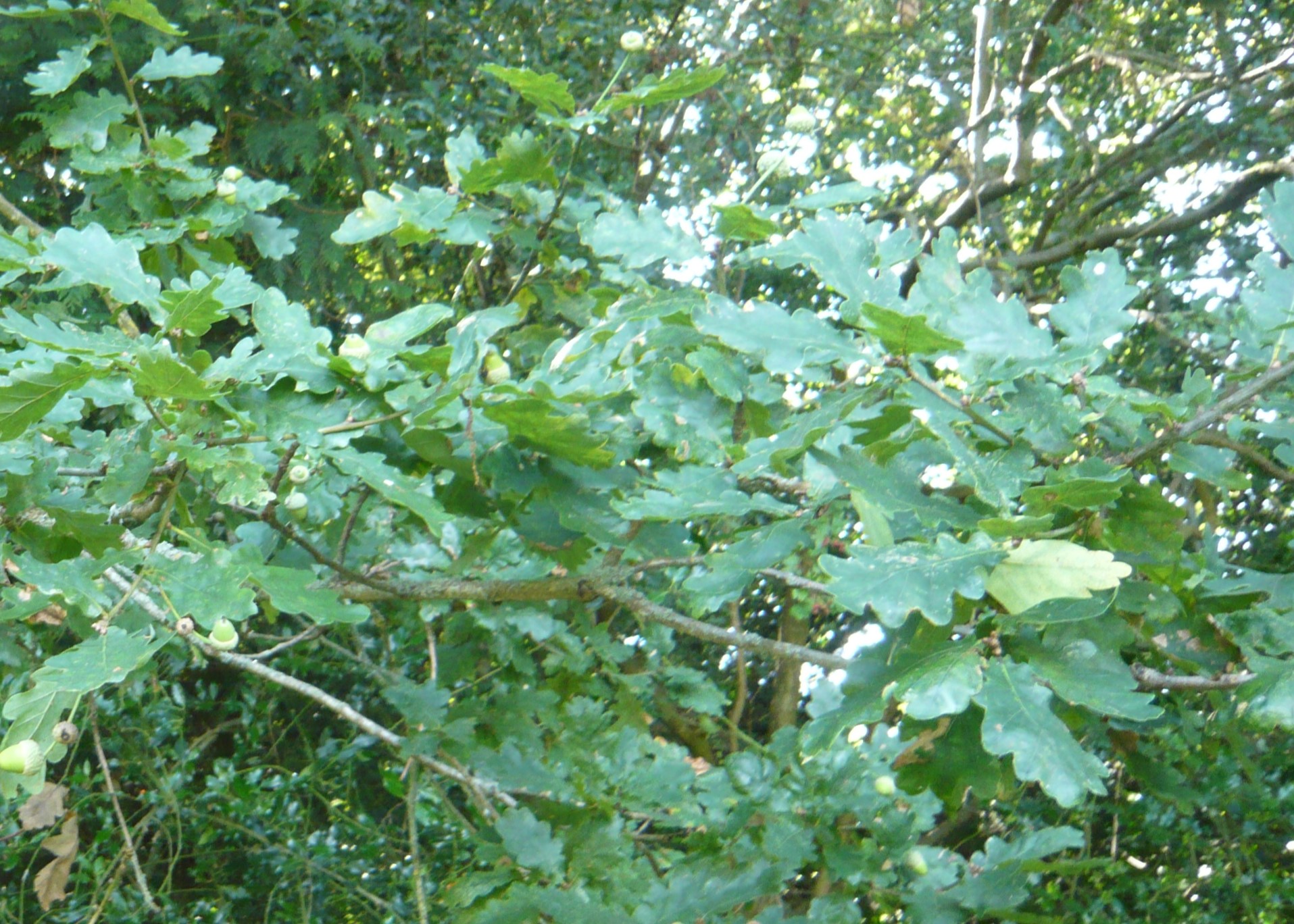
Bit of a mixed bag, really. Some of the hazel trees near us are fairly heaving with nuts, while others have very few. The oaks have a good crop of acorns, but nothing on last year when the woodland floor was covered an inch or two deep. But last year was a spectacularly good mast year. This year the hawthorns have a decent amount of berries but nothing special, much like the elders, while the hollies seem to be loading up with a whole mass of them. That, at least, is the picture in my little corner of South East England. Last winter was quite mild. But even should we have a harsh winter this year, the outlook for wildlife seems not too bad from the nuts and berries perspective.

These things do often seem to follow a cycle of alternate years, although I don’t know why that should be. I had thought the apple blossom was a little late this year, but I really don’t know whether that’s just my imagination.

On Tuesday evening I went for a short walk. It had been a hot day and earlier I had seen three tiger moths, which was rather a treat. By the time I left the house, though, a little before eight, the air was cool, the birdsong seemed a little louder than usual, and there was a magical light in the sky as the sun disappeared below the horizon. The church clock struck eight as it did so. In the woods, there were now patches of sudden night where the trees grew close together, through which the path could be seen like a pale wisp of misty light. By the time the church clock chimed the quarter hour it was quite dark, although patches of daylight still showed in the clearings. Soon there was so little light I headed out of the woods and homeward.

A few minutes before half past, a mixed flock of jackdaws and rooks flew over, the jackdaws chuckling and gossiping noisily as usual as they headed east towards their gathering place on the edge of the town. There, they will be joined by other flocks and once all are there, just before dark, they will all fly off together to their night’s roost.

Although it is still August, the air already seems to have an autumnal feel to it.

R. I. P. Winter

It’s beginning to feel both as though autumn has been with us forever, and that it is especially reluctant to leave us, this year.

This year has been a mast year; the trees and bushes have been laden with prodigious quantities of nuts and berries. The hawthorns, especially, seem to be weighed down with berries, and we have gathered large quantities of nuts from the hazel in our garden. There are so many acorns beneath the oaks nearby that there is a thick, continuous, crunchy, carpet of them underfoot. Traditionally, this has been said to indicate a harsh winter ahead, although how the trees and bushes are meant to work this out when we have no idea what the weather will be then, heaven only knows.

What it really indicates, of course, is that the climatic conditions have been such throughout the year that these trees and bushes have successfully produced their large crops. Nothing to do with what will come along later.

On the other hand, the leaves have held onto their greens for longer than usual and only turned late, and still seem most reluctant to fall. It has taken the determined efforts of a few strong winds just to remove about half of them. Certainly, around my part of Britain, anyway.

It is not cold. There are no signs of a proper winter chill approaching, with the long-range weather forecast contenting itself with predictions of the occasional cold spell in the next month, which takes us through to mid-December. In the garden the grass and many of our other plants are still engaged in that crazy autumn growth spurt.

Of course, it was never unusual for November to be wet and mild, and we may yet have a biting cold winter, although I wouldn’t bet on it. It is a long, long time since we have had a winter like that in these parts. In my lifetime, only the winters of 1963 and 1978/79 really stand out as being extremely harsh, although a few others have had shorter periods of cold and snow. The expectation for winter around here now is that it will just be chilly and wet. I think only once in the last six or seven years have we had more than just the odd flurry of snow; that was from the so-called ‘Beast from the East’ a couple of years ago, and even that only lasted a few days.

We seem to have lost winter somewhere along the way, which sounds very careless of us.

In fact, that is quite a good way of describing it.

You don’t need me to tell you we have been careless in the way we have interacted with nature, the result being our world is heating up dangerously. And in our part of the world, this has led to hotter, drier, summers and milder, wetter, winters. There has been a notable increase in destructive flooding events. Downpours are frequently very heavy and long-lasting. Rather than being spread out through the month, we may get an entire month’s worth of rain in less than a day. Summers, conversely, have become very dry.

This is absolutely nothing to the extreme climate conditions suffered by millions of others in other parts of the world, but it helps to bring it home to us that the Climate Emergency is real, and it is happening. With everything else happening in the world at the moment, this seems to have been conveniently ignored by the mainstream media for the last six months.

R. I. P. Winter.

In Praise Of Trees

It has been mind-buggeringly hot and humid for most of the last week, breaking records for mind-buggeringly hot heat here in the UK. But now, with heavy rain and gloom and a delicious green light filling the kitchen from the trees and bushes outside in the garden, it not only feels refreshingly cooler but looks it, too.

During this last week, almost the only way I could bear to be outside at all, was sitting on our lawn in the shade of the gorgeous hazel tree that dominates the garden.

005a

In so many countries, trees are planted to provide shade whether it be for travellers, or for residents in towns and villages or city squares.

They understand the value of the shade the trees provide in hotter climates, but in the UK we, and by that I mean governments and entrepreneurs and business people, we seem to be obsessed with cutting down trees, almost for the sake of it.

012a

Yet we can no longer pretend we have no idea how vital trees are; for us, for the ecosystem, for the planet. We need them to remove the carbon from the air and to replenish oxygen. They are habitats for huge numbers of wildlife. Their roots help bind and provide stability to the soil, preventing erosion, landslides, and the spread of deserts. Where they exist in sufficiently large numbers the water vapour they give off helps to bring down local temperatures and increase rainfall.

067a

They are sources of food for animals and for people, and for thousands of years their wood has been used for building dwellings, making furniture and utensils, fencing, tools, boats and wagons, and as a beautiful raw material for artworks.

And they soothe the soul!

Used intelligently and sustainably, they will continue to perform this role for as long as we wish.

001a

Yet despite all we now know, we continue to cut down trees at a ridiculous rate. In Brazil, we are losing rainforest now the size of three football fields per minute! The rainforest in Indonesia is also being cut down at a rapid rate. The HS2 rail link planned for the UK will cost a stupid amount of money and destroy massive amounts of woodland, just to take a little time off rail journeys that already happen.

IMG_0018a

Yet there are many smaller – petty – instances of trees being cut down that amount to official vandalism, no less. I feel particularly strongly that in many towns in the UK it has long been the policy that when trees planted along streets have become larger than the council thinks appropriate, they cut them down but rarely if ever replace them with new, younger, ones.

The call to re-wild areas of the UK is growing, and I feel we should now be devoting as much land as possible to the creation of new woodland, as well as re-planting hedgerows to replace fences, and individual trees in gardens and parks and along roads.

And stop cutting them down!