In All Weathers

We’ve been on the South Downs again.

That’s why you haven’t heard from me for a while. Here’re a few pictures.

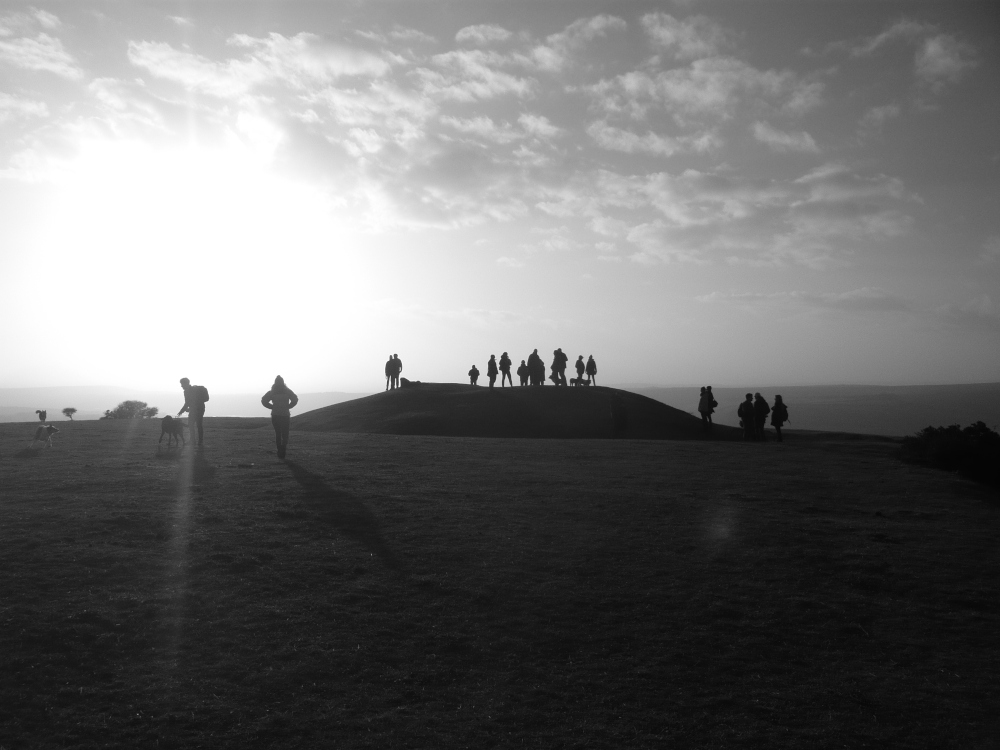
We began walking from Amberley this time, and on the first day the weather was pretty meh. It was either raining or starting to rain or just deciding when to rain. But, as always, the Downs looked fantastic. This view reminded me of a Roland Hilder painting:

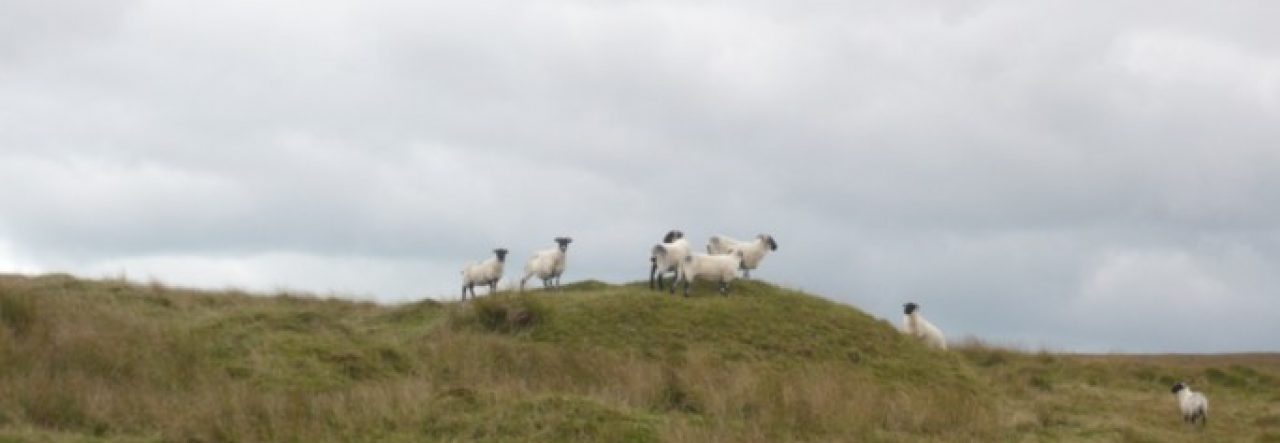
But it got steadily wetter throughout the day. We took a very welcome break in the Frankland Arms in Washington and if I was writing a pub review it would get five stars – especially as it served Harvey’s Old Ale. But I only allowed myself one of those, as we still had some serious mileage to do. And it was, as noted, getting wetter. We approached Chanctonbury Ring:

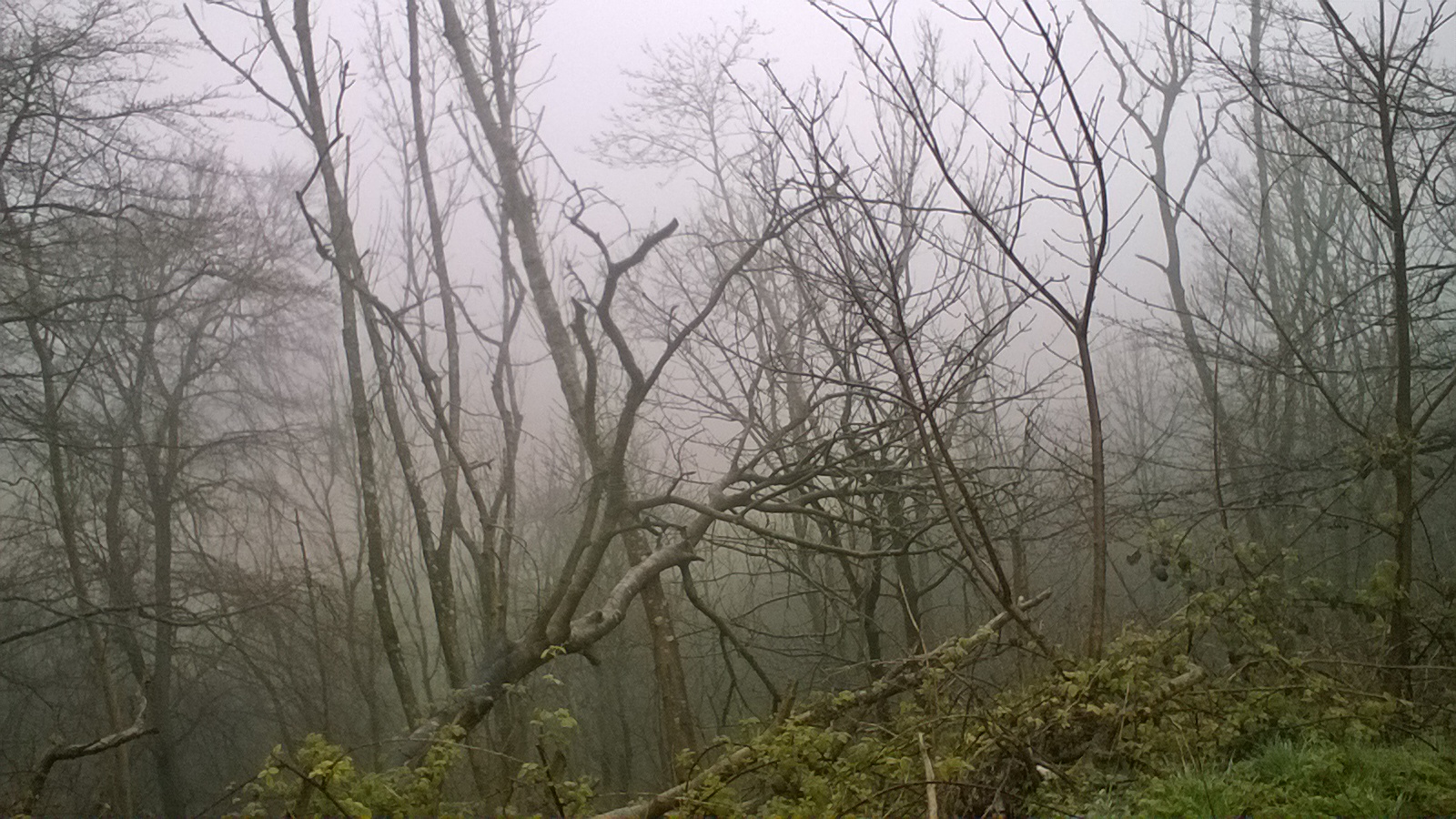
And as we began the descent from the top, the saddest part of the journey. We walked among a large number of ash trees, all of which were dead or dying from Ash Dieback disease. It looked like a picture of the Somme.
The next day was dull, but at least it was dry. We walked past the Devil’s Dyke which I never seem to be able to get a good picture of, no matter which angle I take it at. The Devil’s Dyke is so-called because for some reason the Devil wanted to destroy Sussex, and got talking to Saint Dunstan and asked him the best way to do it. Why he did that I can’t imagine. Never ask a saint for advice if you’re the Devil. It won’t end well. Anyway, Saint D suggested he dig a channel through the South Downs and flood it. Right, thought Old Nick, and set to work. Saint D let him toil away for a few hours and then caused all the cocks in Sussex to crow. Thinking it was morning, Old Nick threw down his shovel, twirled his moustaches and hissed ‘Curses, foiled again!’

Alternatively, it might have been caused by melt-water during the ice age, but why spoil a good legend?

And the best weather? During our rest day in Lewes. And, oh look! There’s the Harvey’s Brewery! What a good rest day.
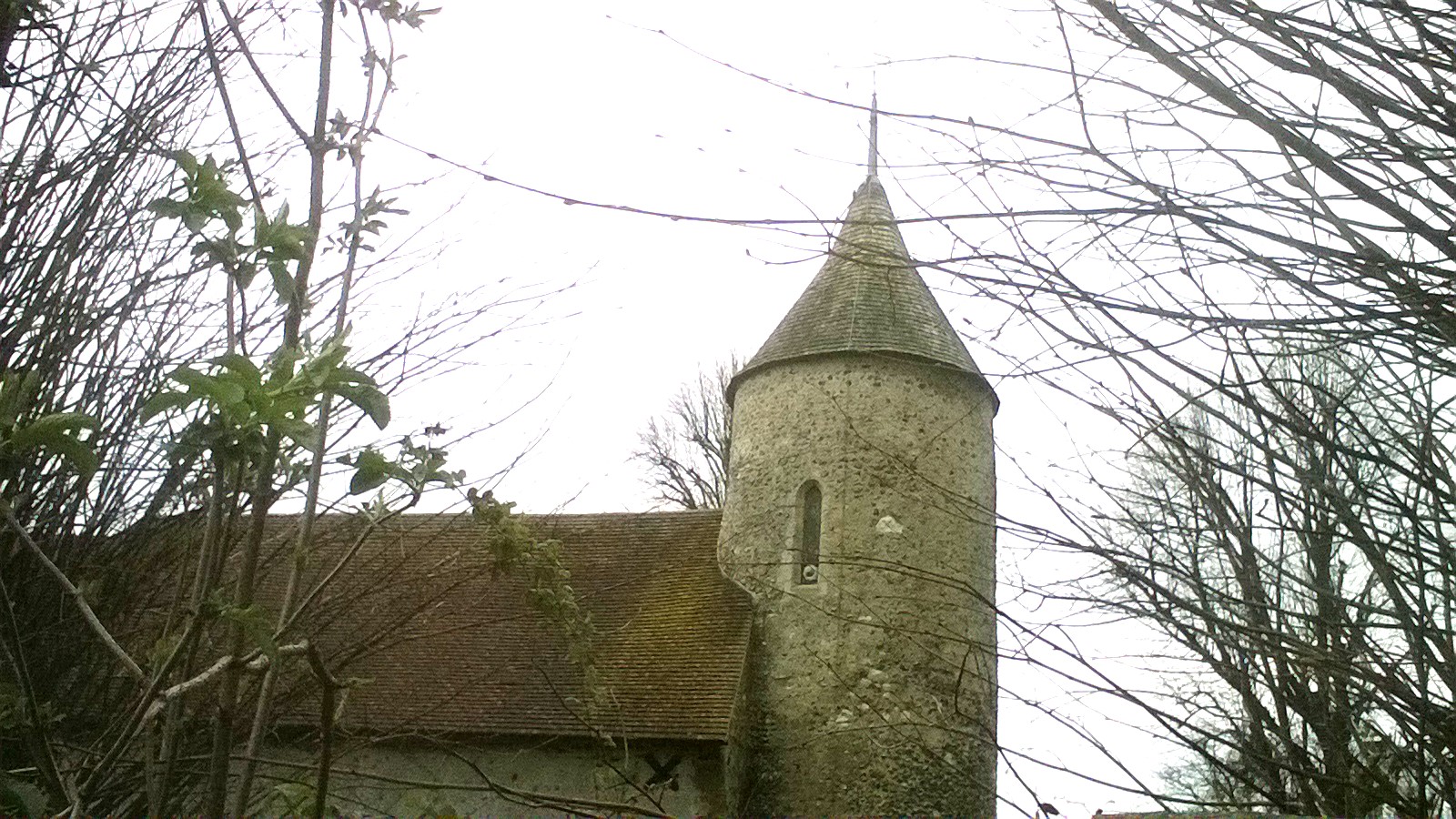
The following day was dull again as we left Lewes, and by now quite a sharp wind was blowing – into our faces too, unfortunately. But we had a pretty decent day and passed this church in Southease, one of only two (I think) in England with a round tower outside of Norfolk. The other is in nearby Lewes.

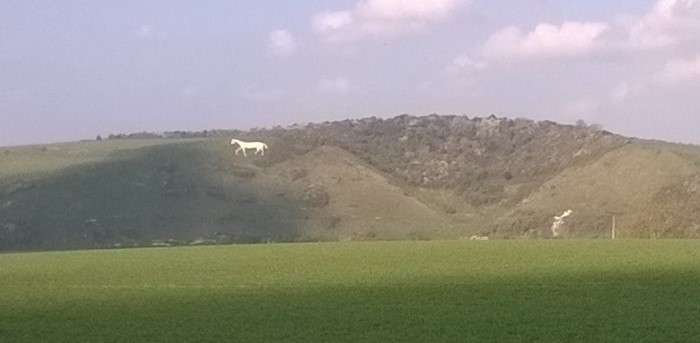
The final day began sunny but again with a sharp and unkind wind. We left Alfriston with its church on the edge of the village by the river and headed towards the coast. On the South Downs away to our right we passed a white horse carved into the chalk.
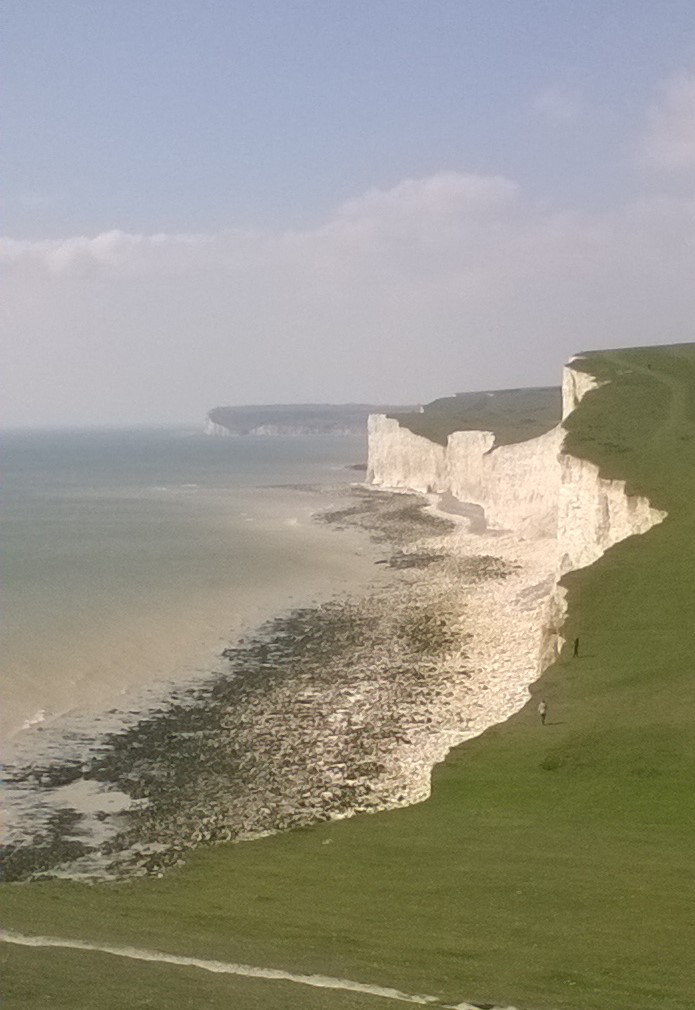
Soon we were up onto the Downs again, for the final walk into Eastbourne over the Seven Sisters and Beachy Head. I tend to forget how tiring this leg can be, going continually uphill then downhill for the best part of six miles. For some reason, although we could see the Belle Tout lighthouse in the distance, it never seemed to get any nearer. Once I could do this leg of the walk easily, but…getting a little older…

An always fantastic view, though. Here we’re looking back across the Seven Sisters towards Seaford Head.
After all that, we could do with a holiday.
On Windover Hill and The Oddness of Time

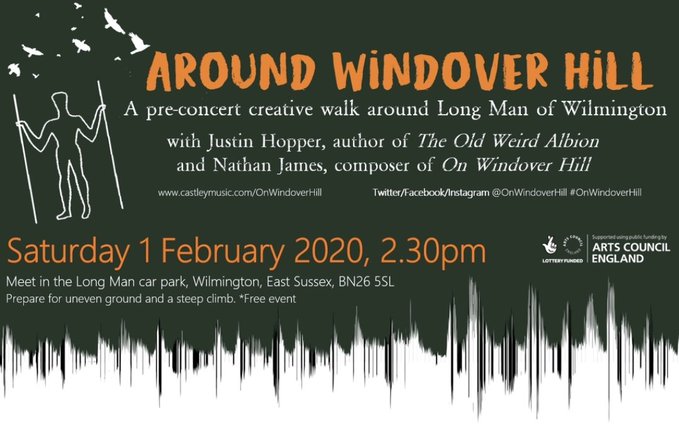
Yesterday, we joined a walk to the Long Man of Wilmington, on the South Downs in Sussex. The walk was led by composer Nathan James, and Justin Hopper, the author of The Old Weird Albion.

EPrcQenWoAQWbeb

The Long Man is a chalk figure etched through the grass into the hillside, below the summit of Windover Hill, revealing the chalk that lies beneath. When and why it was first cut is the subject of myth and speculation – and that brings us neatly to Nathan’s new composition.

P1060405a

On 7th March, Nathan will premier his fantastic new choral work On Windover Hill at Boxgrove Priory, Chichester, Sussex. This has been inspired by the Long Man, its mythology, and the art that has arisen around it, as well as the written history and the geography of the surrounding land. It has a very English feel to it, in the tradition of Vaughan Williams or Holst.

Full details of the work and the performance can be found here. Tickets can also be bought by clicking ‘The Premier’ link in the sidebar there. We have ours, and it would be great to see it sold out!

This walk was by way of a taster for the concert, with a mixture of history and mythology imparted along the way, a poem from Peter Martin, read by himself, and extracts from stories read out by Justin, all of which referenced the Long Man. Also  Anna Tabbush sang two folk songs, one of which was the only song known about the Long Man, appropriately enough called The Long Man and written by the late Maria Cunningham.

P1060395a

I’m not sure How many people I expected to see, but we were around forty, with a surprisingly large number being artists of one sort or another.

The weather was so much better than we had a right to expect – the forecast had been for clouds and rain, but the clouds cleared during the morning, and we had plenty of sunshine as we ascended, although it rather lived up to its name at the top, with more than enough wind for everyone.

P1060404a

Here, the remains of prehistoric burial mounds sit overlooking the Long Man, and the rest of the surrounding countryside.

P1060403a

Some landscapes seem to muck around with your perception of time, and Downland seems especially prone to this. I’m not entirely sure why this should be, but suspect it is a combination of factors.

It is a very open landscape, and other than the contours of the land and a few trees, frequently the only features that stand out are prehistoric ones, such as barrows and chalk figures. Due to the uncertainty around their origins, these have a timelessness about them, a fluidity when it comes to grasping their history. We see the long view, which perhaps works on our sense of time as well as space. The more recent additions to the landscape are usually in the form of fences, which can easily seem invisible as we look around for something less ephemeral than the open sky to fix our eyes on.

The Downs are an ancient landscape, in any case. When human beings recolonised what is now Britain after the last Ice Age, at first they kept to the higher ground which gave less impediment to travel and settlement than the marshy and thickly wooded lowlands. Most standing stones and burial mounds from the Neolithic or earlier are found on these higher areas.

I do not get these feelings in more recent landscapes. At a medieval castle or manor house, it is easy to imagine the inhabitants baking bread or sweeping corridors; activities as natural to us today as they were then. I feel a comfortable mixture of the old and the new, a recognisable timeline connecting the past with me.

But barrows, standing stones and hillside figures have a purpose alien and unknown to us. Step on the ground near these remains and you can feel the presence of the unknown. No wonder the belief in the past in faeries and elves who inhabited the underground, and who lived essentially out of time.

They offend our carefully erected sense of order and belonging and, perhaps, still pose a barely acknowledged threat to us today.

I might be imagining it, of course, but listening to the extracts from On Windover Hill on the website, I think I recognise that feeling in places, an unexpected musical response to my own feelings. And then Nathan’s description of his creative process on the website echoes some of this too.

I’m hooked!