A Justification of Theft

Clickbait? Perhaps, but I have a point to make.

There is a blog I follow which regularly posts about good people. People who make a difference to their world. Kindness. They change lives. And it makes for a refreshing read in a world which often appears to be so full of shit we could be drowning in the stuff. I also see now on social media – at least on Facebook, which is the only one I follow other than Instagram – AI generated posts on good people. I know they’re AI generated, because the signs are all there. I don’t intend to list the signs, as most people are aware of them already. These AI generated posts seem to fall into the same few categories. There is the rough biker with the heart of gold adopting a defenceless little girl. The retiree who’s lost his wife and finds meaning in life through spreading love through his community. There’re one or two others, but they all seem to fall into a few predictable categories. And you read these long tear-jerkers and reach the end and you go ‘Ah, isn’t that lovely.’ Or you’re meant to, anyway. But they are AI generated, the people don’t exist (although the original ones may have been based on real people), and these things did not really happen. But does this matter?

I think it does, for several reasons. AI invents stuff. If this is not the intention of the user, these are known as ‘AI Hallucinations’. If it can’t find what it’s been asked to find, it will sometimes make something up instead. Equally, it may draw data from untrustworthy sources. Then there are AI programs which are designed to make up stuff. If we understand that, then when we read something we understand is AI generated, we don’t necessarily believe it. And since we don’t believe the characters or the narrative, then the message it is designed to deliver is rejected. We all know that kindness is a good thing, but being told that by a computer program that has clearly fabricated the vehicle of delivery diminishes the message.

It is the exact opposite of ‘Don’t shoot the messenger’, because in this case the message is rejected because the messenger is flawed.

And the more we read these posts, knowing they are AI generated but if we’re still happy to take them completely at face value, the more we help to normalise the things. The more we accept AI into our lives and accept these fabrications.

So there are more than one type of AI program. Many of those that are really good at inventing stuff, and there are quite a few, are designed specifically to write books. They advertise themselves as producing books ‘in minutes, not months’. A few clicks on the button and hey presto! I’ve written a book! I’ll get back to this at some point, but are these people authors? No. They’re not. They’re frauds. But this brings me back to those original posts, which someone has created using an AI program similar to the book writer programs to deliberately invent the contents.

And to the more important point, the point where both the hallucinations, but even more importantly the deliberately fabricated material, really matter.

AI is, as we’ve seen, designed to invent stuff. Okay, that’s a simplification, but the point is that it’s designed to give the user exactly what they ask for. If someone requests it to write a piece justifying theft, or infanticide, for example, (not to ask it if it can be justified, but telling it to actually do so) it will do that, citing either nasty stuff it’s dug up from some remote hole on the internet, or, more likely, completely inventing stuff because the real justifications don’t exist. And it will look reasonably believable, perhaps writing something along the lines of ‘the Cornel University experiments of 1983 – 1984 by Taylor and Whickham et al demonstrate that…’ etc etc. And the casual reader will think ‘oh, I never realised that. So perhaps there’s something in it after all.’ But these citations will be made up.

And to go slightly off topic for a moment, there are the illustrations. AI generated photos are still usually recognisable as such, but they’re getting much better. Ones that have been subtly manipulated are now very hard to detect. The implications there should be obvious, can we now believe anything we see or are told?

This is not to suggest AI is an unmitigated evil. Its champions will point out advances in, for example, medicine and material sciences, which are very real and extremely important. But the issues of misinformation and, as frequently cited, intellectual property theft, to say nothing of the potential to completely destroy careers in the literary and artistic worlds, are also very real.

So how do we fight this? I’m afraid I’ve no idea. The genie is out of the bottle and I see no way it’s going back in again. Other than burning down the internet we are stuck with it and over the next year or so (or less – who knows?) it’s going to get harder and harder to tell truth from complete (and possibly dangerous) crap. While the programs are becoming better at presenting the genuine data they are requested to present, the ones inventing stuff are getting better at making this appear real. All we can do is be aware of this, be cautious and critical. And perhaps we could go back to getting our facts from books which, although not infallible, are far more likely to be accurate. Publishers are still the gatekeepers there, and they tend to do a pretty good job. Research stuff properly. Rather than accepting important medical information, for example, from Joe Bloggs on Facebook, look it up on a respectable site, like the NHS (in UK).

Maybe just stay off the internet more.

Which is probably a good idea anyway.
The Enduring Lie of a Golden Age – Part 2…This is Personal

Two weeks ago I wrote of the idea so many people have that somewhere in the past there was a ‘Golden Age’ when everything was so much better than today.

I am now going to post what might seem a bit of a contradiction to what I wrote then.

121a

More and more, we are losing our connection with the natural world.

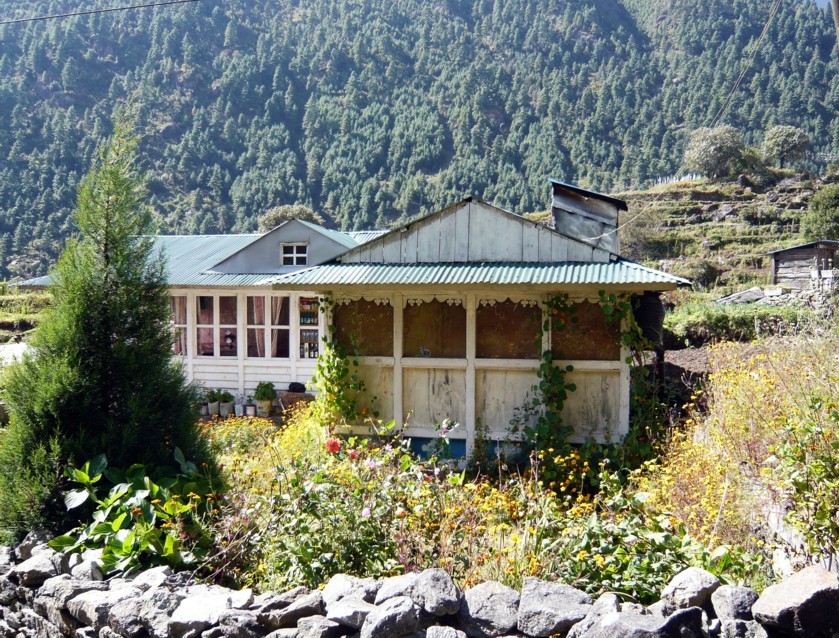
Everyone would have a different opinion on what is meant by the phrase ‘quality of life’, but for me if I am surrounded by concrete structures, with a lack of trees and flowers and birds, animals and insects, if the building I am in consists of electronic devices, plastic, steel, and artificial floor coverings, if my engagement with the day to day tasks of this building consists of pressing buttons, then I feel my own quality of life is much diminished.

A common post appearing on Facebook is of a picture of a cabin or cottage in the wilderness somewhere, with the caption ‘Could you live here for a month without TV or phone signal or internet for $25,000?’

Could I do it? I’d bite your hand off for the chance to do it. And I wouldn’t even need the money as an incentive.

No press-the-button entertainment. Setting and lighting a log fire instead of switching on the heating. No dishwasher. No constant barrage of emails, texts and phone calls. No street lights – or streets.

I’d bite yer hand off.

Whether I am at home, working, or walking in the country, always there seems to be the sound of aircraft passing overhead. Day and night. Constantly.

And unless you’re in the middle of a national park, there always seems to be traffic noise. Even when I’m walking in the midst of woodland, or through fields, it’s always present as a background noise.

And anywhere near a road or street, it is just constant. And I find that extremely stressful.

This is one reason why I love being amongst mountains. Usually, they are remote enough that the traffic noise is finally silenced. Frequently, they are away from air routes. And, of course, there are far fewer people around. And those that are there don’t usually seem to be glued to mobile phones or playing music.

And I’m nostalgic. Well, I’m in my sixties now, I’m allowed to be. And that brings us back to the post about a supposed golden age. Nostalgia is a yearning for the past, with the inference that it was better than the present day. There are, of course, many things about today that are much less than perfect – I’ve called out a few of the things I don’t like earlier in this post – but only a fool would deny that huge medical advances have improved all our lives for the better, social security has largely alleviated the horrors of abject poverty and, at least in the affluent west, our lives are not subject to the whims of despots.

But although I can expect to live to a greater age than my forebears – at least in theory – I would be willing to trade some of that for a time when life was less complicated, a life where I didn’t feel constantly bombarded by social media and advertising. A life that was lived more slowly.

Not a Golden Age, certainly, but one I would happily live in.

The Enduring Lie of A Golden Age

It seems that huge numbers of people have an impression that there was a ‘Golden Age’ at some previous point of their, or some other, society.

They may not define it in those words, or even acknowledge it as such, but it seems to be very common for people to yearn for another time. Sometimes, this is nostalgia – for the days of their youth – but frequently it is for some far-off time that they feel to be somehow better than the time they live in.

Untitled-Grayscale-01

Fantasy books frequently encourage this sort of thinking. Regardless of the actual storyline, the heroes and villains and cast of other odd characters tend to run around and fight and go on quests and sit around in quaint thatched inns quaffing head-splitting alcoholic drinks and everyone is jolly and no one ever dies of dysentery or bubonic plague in misery and agony and squalor.

The Lord of the Rings is a fine example of this. It is a favourite of mine, but it is very noticeable how no one dies of disease, but mostly lives to an exceedingly old age unless chopped into pieces by Orcs.

Hollywood, too, plays its part in this. To take a film at (almost) random, an old version of ‘Robin Hood’ (set in medieval England, remember) depicts a group of merry men dressed in very strange attire living in the depths of a forest and merrily ambushing the Bad King’s men, merrily dining at long tables out beneath the spreading branches of merry oak trees under starry skies and everyone looks clean and clean shaven and everyone is merry, and it never rains.

Pah!

This is meant to be medieval England. Life expectancy at the time was around 30 years. Huge numbers of people died of dysentery, mainly because there was no concept of hygiene. Occasional plagues carried off massive numbers of people, emptying entire towns and villages. There were no antibiotics or anaesthetics. Disease was sent by God and the only way to cure it was considered to be prayer. Or witchcraft. Women routinely died in childbirth, in great pain. The majority of children never reached their teens. Every peasant in every village was effectively a slave under the command of the local lord, who held the power of life and death over them, and might exercise this on a whim at any moment. The threat of famine was ever present.

Pain and misery was a given.

The majority of people lived, too, in a very real terror of the Devil and the threat of eternal damnation.

The list of horrors is almost endless. The phrase ‘life was nasty, brutish and short’ is an apt description of those times. Certainly, I would not wish to live under those conditions.

There are plenty of other ‘Golden Ages’, of course. Almost any time in history can exercise a fascination on us, if certain aspects of it appeal to us and there are things we dislike about the society we live in. And it is natural to yearn for something better; something more than we have.

And this is not to suggest that every age was a living hell for everyone in that society, but that life in most of these times was reasonably decent for the very few on top of the pile, and pretty miserable for the rest. In fact, the measure of how ‘Golden’ an age was, tends to be the conditions of the upper echelons of that society, and perhaps those of a middle class, if such existed.

There is much wrong with our world today. But the huge advances seen over the last hundred years or so, especially in medicine, have meant that our lives have been improved out of all recognition. No longer does surgery equate to filling the patient with a quart of whisky and then sawing off a leg or an arm. No longer do those patients routinely die of infections after surgery, thanks to antibiotics. High blood pressure is controlled, rather than routinely killing. Children usually survive all the diseases of childhood, rather than being most likely to die. Women rarely die in childbirth, and the pain can be somewhat controlled.

Women and children are no longer the legal chattels of men.

Work conditions are hugely improved. Children do not go down mines or work at dangerous looms 14 hours a day. Instead, most receive a proper education. Adults, too, work fewer hours and under far better conditions than previously. When they are too old or frail to work, the state provides a certain amount of dignified support. People do not as a rule die these days of starvation. We do not execute children for stealing sixpence, or poaching rabbits on the Lord’s estate.

In most cases, for most people, today is the Golden Age.

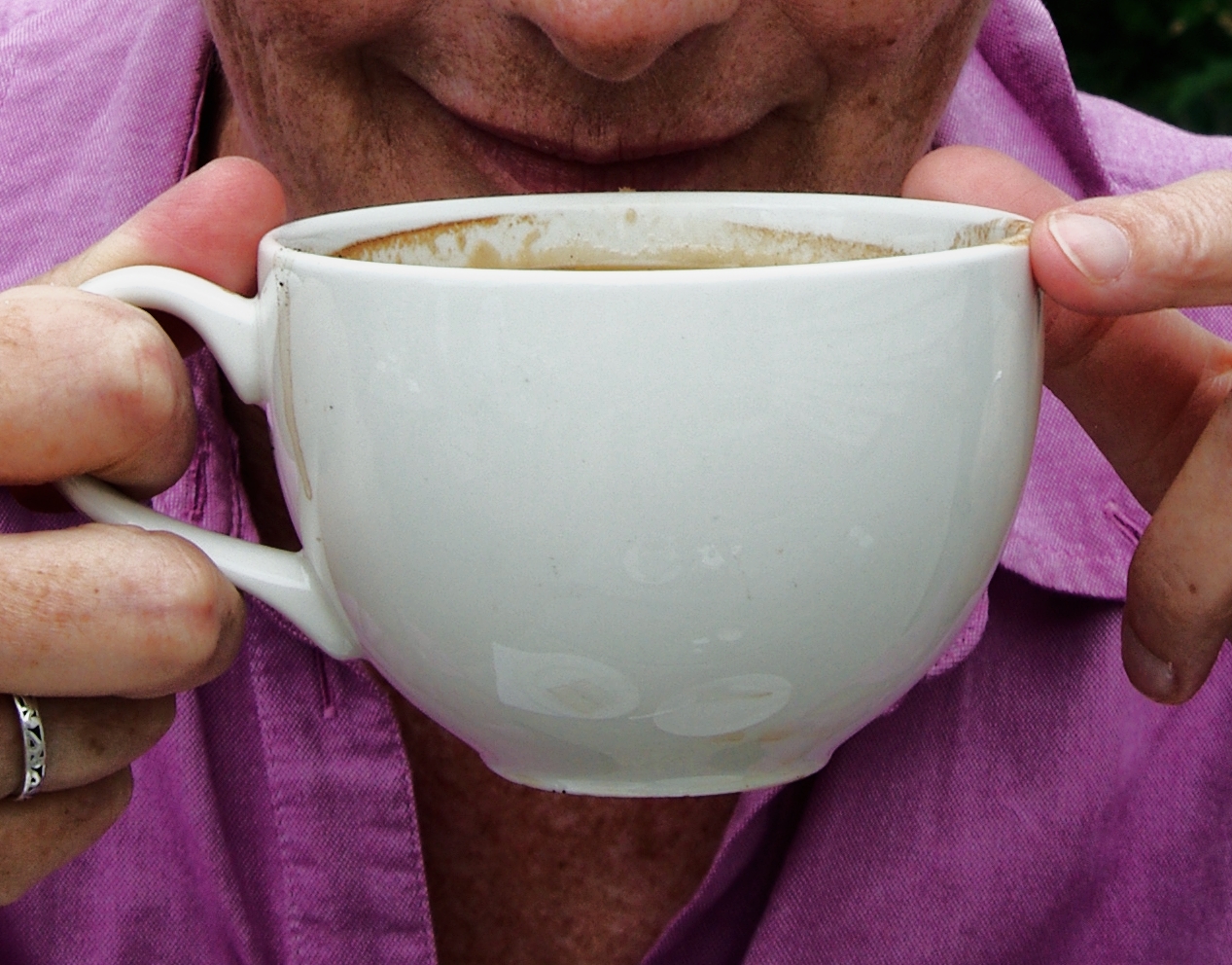
Coffee; my drug of choice!

At least, the first thing in the morning, it is.

061a

I just don’t understand why it is that having a perfectly average 7 or 8 hours of sleep each night should turn me from a (relatively) normal and functioning human being, into an extra from ‘Return of the Neanderthal’ – and a non-speaking extra at that, other than the occasional ‘ug’ or snarl.

Of course, if I get less than 7 or 8 hours, then I resemble something that hasn’t even made it as far up the evolutionary ladder as the Neanderthals; some sort of fairly large and irritable beast with too many pointed teeth and a lamentable lack of patience, perhaps.

Just left to my own devices, this would not auger well for my marriage, my blood pressure, or even for the local society and environment.

But if modern medicine can work wonders in curing all sorts of previously fatal diseases, then caffeine of just the right dose seems to be the medicinal panacea for morning.

And being just a layman when it comes to the world of caffeine, I have a childlike wonder at its effects.

I am especially impressed by the strength of the espresso that you get served in cafes in Spain or France, and hence at its effectiveness. The customer crawls in and somehow climbs up onto a bar stool, using their final reserves of energy, croaks out a request for ‘espresso!’, then uses the last of their strength to lift the tiny cup to their lips…they drink…and Bingo! They leap suddenly into the air as if energised by a bolt of electricity, and then rush out of the cafe, singing lustily, to do a 16 hour day’s work.

And proper Turkish coffee, an extremely effective if much tastier substitute for asphalt, just has me in awe. Are there really people who are able to drink this each day? Every day?

Superhuman.

I doff my cap to them.

I take mine a little weaker than that, I admit, but I do like it relatively strong, and without milk or sugar – exactly the way that nature intended it.

Naturally, instant coffee just does not cut it, although I do admit than it can be effective at combating fatigue; many years ago when I worked in the Middle East, I noticed that one or two of the men who worked shifts at our company would eat the occasional mouthful of instant coffee powder when they were tired, presumably to help them get through the following few hours.

But despite that, I just have not found an instant coffee that seems drinkable. Nothing can match the real thing, for me.

And lest you fear that I am doing myself irreparable damage by flooding my system with strong coffee throughout the day, let me just say here that for me it is an early morning ritual only, and after that I drink tea (a good Darjeeling, naturally!).

But now it is lunchtime. I have got through another morning.

Thank you, coffee. Thank you.

Where’s that damned kettle?