Unhalfbricking

I’ve never written an album review on here before, although I have reviewed a couple of concerts I’ve been to, so this is a first.

And if you have absolutely no interest in folk or folk-rock feel free to give this post a miss.

So, probably just one of you left. Let’s go.

Actually, now I’ve written the thing, it’s not really a review at all. It’s a bit of musical history, if anything. That wasn’t exactly what I’d planned.

Oh well…

Unhalfbricking is not my favourite Fairport Convention album, but it is an extremely important one. Which is not to say I don’t like it, because I do. It was released in 1969 and is their third album.

It is the following album, though, Liege and lief, which is rightly regarded as their most important, and an album that has had a huge influence on the direction folk and folk rock music has taken since its release, but Liege and lief came about as a result both of a tragedy and a new direction partly forced on the band by musical events way over the other side of the Atlantic. After the release of Unhalfbricking, most of the band were involved in a serious road accident (singer Sandy Denny was in a separate vehicle) which led to the hospitalisation of some members and, sadly, the death of both drummer Martin Lamble and the girlfriend of guitarist Richard Thompson.

After discussing whether they would continue as a group or just disband, the decision was made to continue and they hired a new drummer, the amazingly talented Dave Mattacks, and persuaded fiddle player Dave Swarbrick, who had guested on Unhalfbricking, to join the band on a permanent basis. And the decision was also made to change musical direction. Much of the material on their previous albums had been either American in origin – there were Three Bob Dylan covers on Unhalfbricking alone, for example – or country-tinged.

There is one track in particular on Unhalfbricking that helped to lead the band into their new direction, the traditional song A Sailor’s Life, which breaks new musical ground in this recording. What makes the track most memorable is that it is the first time a drumkit had ever been used on a traditional English folk song. It was also the first time Dave Swarbrick had used electric amplification, coming from a background with traditional folk groups. And then the whole track was apparently improvised on the first take, the first time the band had played it together, and listening to it, it is remarkable how you can hear them growing in confidence throughout the performance. And it is a long track, which I suspect has more than a little to do with the musicians getting the feel of working together and seeing what could be done with the material. Experimenting as they go along. Nothing like it had been released before.

Over in America, The Band, who had supported Bob Dylan on tour, had recorded Music from Big Pink in what has been called a reconnection with rural Americana, and listening to this there was a realisation both that by covering American standards Fairport would never be more than just one more wannabe Byrds cover band, but also that they wanted to take a similar direction with traditional British music. Bass player Ashley Hutchings had become deeply interested in the genre and Swarbrick came from a folk heritage. Thus A Sailor’s Life became a bit of a template for what was to come.

Finally, here’s a link to the song on YouTube.

Sigh

Poem number five in my Poem-A-Day-For-A-Week-Or-So series. Snow outside, test cricket on the TV, beer in the cupboard. That’s my day sorted, then.

The sea sighs for you tonight.

It sucks at the shingle

And smears your footprints

Like a wet thumb rubbed across writing.

Where once you walked and left your

Prints, it gently wipes the land clean.

Lovingly it lays its cheek to the ground

And nuzzles your memory.

.

We are more than specks

In the infinity of time and space

Yet somehow we need to

Make sense of our lives.

Rock endures

But so does the wind and the rain.

More so, in fact, since in the end

Mountains are levelled

And the wind and rain remain.

.

In the end the passage of many feet

May be more durable than

Dwellings of stone.

South Downs Way 1 – Eastbourne to Steyning

Once upon a time, or five or six years ago, if you prefer, I thought I would start up my own outdoor adventure company. It never happened in the end, largely due to the cost of insurance. However, if I had gone through with it I have to admit it would have been largely so I could go on long distance trails both in the UK and overseas without having to pay for it.

Oh, well. It was a nice idea.

The South Downs Way is a long distance footpath of one hundred miles in length, running from Eastbourne to Winchester, or Winchester to Eastbourne, if you must, along the top of the South Downs.

Hence the name.

We walked it in May.

It is usual, when writing about a journey – especially a long distance walk – to write in some detail about the scenery and the route, in sequential order. I don’t think I’ll do that this time. Instead I’ll probably jump about all over the place writing about odd things we found particularly interesting.  And post one or two photos of the stunning scenery…

039a

Such as this one.

So, a few points of interest.

This, then, is a dew pond:

043a

Chalk is a porous rock, allowing any rainfall to rapidly soak away, so the only way of providing water on the top of the downs is by artificial means. Dew ponds have been made up there for hundreds of years; a hollow is dug and lined with clay, which then fills naturally when the rain falls. Dew is probably not a significant contributor, despite the name. The downside to this simple system is should the pond dry out, then the clay, too, will dry out. When this happens, it will shrink and crack, and subsequent rainfall will leak out.

And while on the subject of rainfall, we didn’t have glorious weather all the way:

053a

We were forced to seek refuge in a convenient pub at the Devil’s Dyke for a couple of hours, but we made the best of it. This was clearly A Good Move because although it was still pouring with rain when we eventually left the pub, it began to clear up in about an hour and then we had sunshine for the rest of the day.

008a

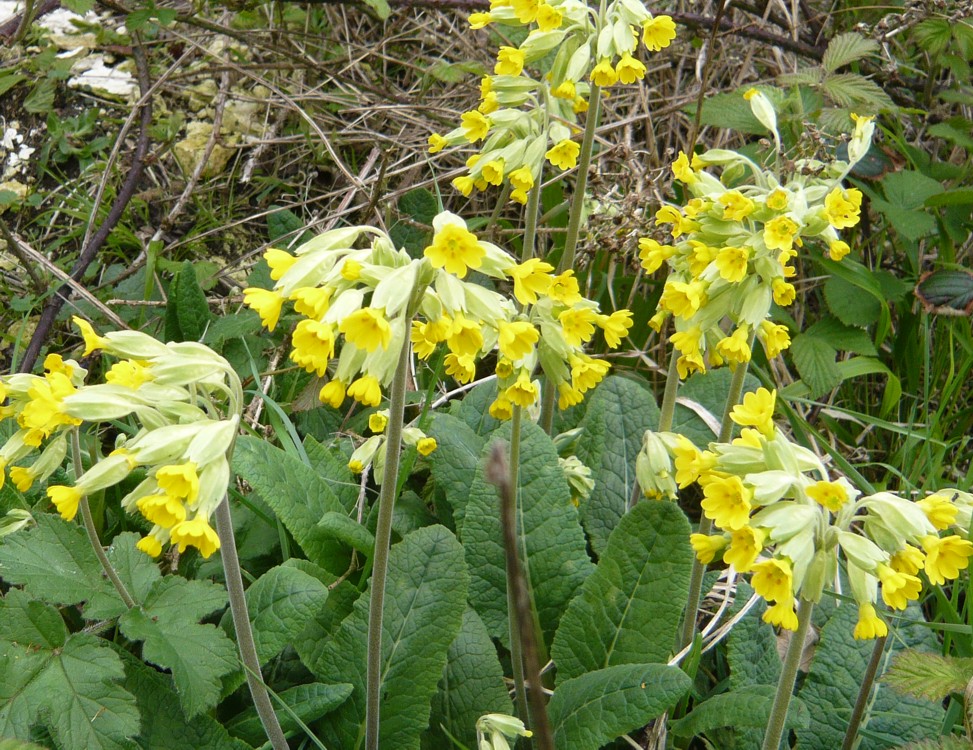
These are cowslips. The word comes from the Old English cuslyppe, which means cow dung, because, yes, that’s where they like to grow, apparently. Years ago, before the coming of intensive farming practices and industrial weedkillers, our fields were full of cowslips, but they seem to be met with now primarily in the more open landscapes – like downland. For the first few days of our walk, especially, we saw lots of cowslips.

We had a rest day at Steyning, although we stayed at nearby Bramber.

050a

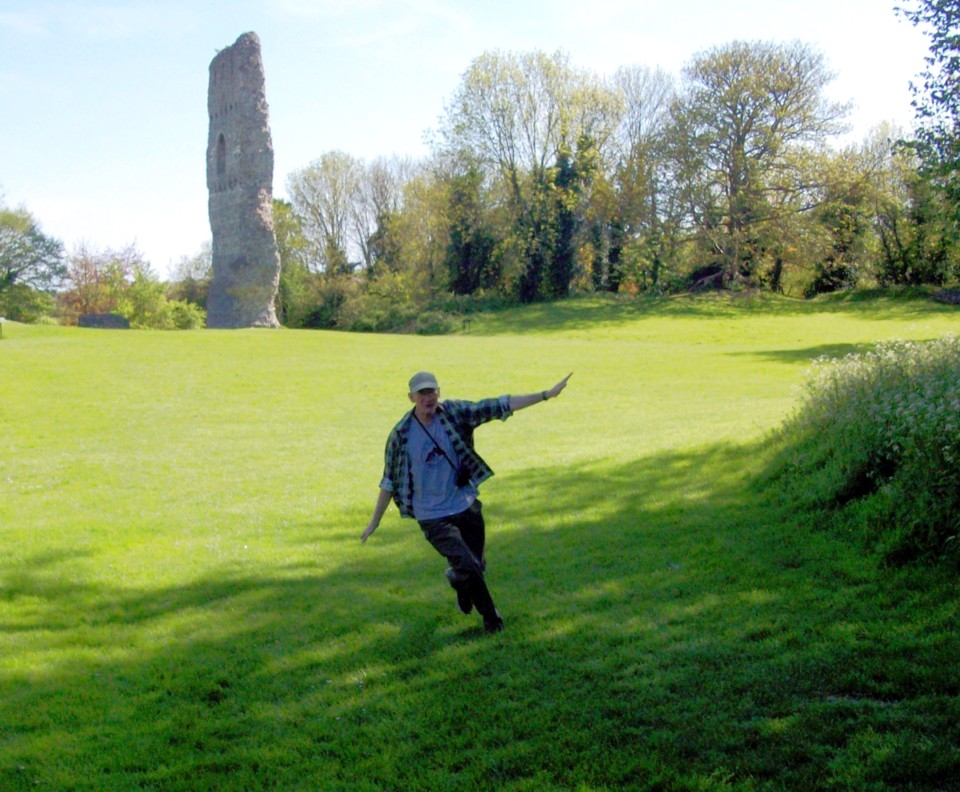
Bramber Castle is a strange and mysterious place, which magically energises the over sixties and causes them to revert to their childhood.

Although not for long, sadly.

Southern India (2)

trichy skyline 2

Another shot of the skyline of Sri Ranganathaswamy Temple in Trichy.

trichy temple door

Decorated door in the Sri Ranganathaswamy Temple.The scorch marks at the foot of the door are from candles and incense sticks, which have been lit and offered to the god in pujas.

shore temple

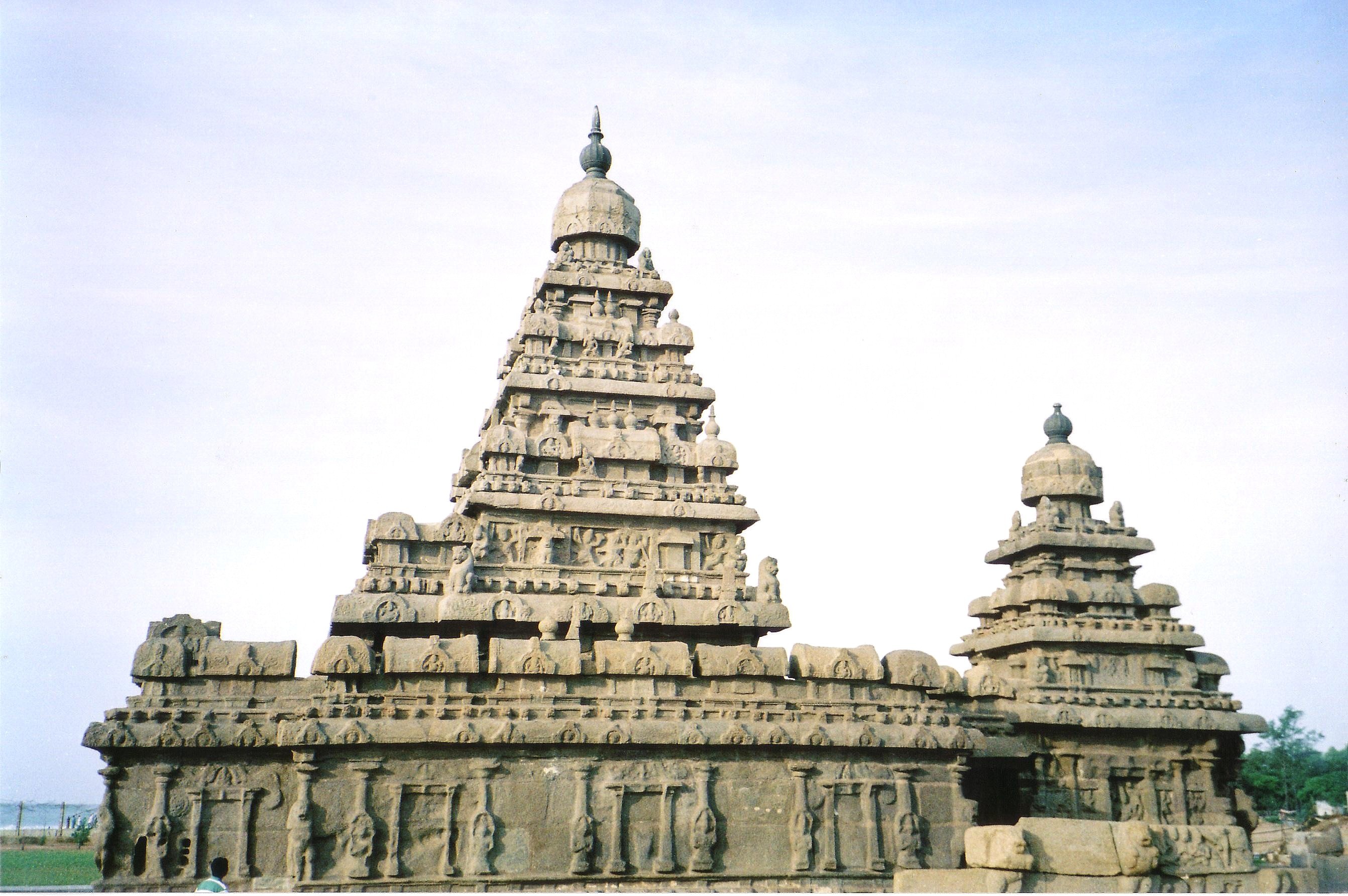
Shore Temple, Mamallapuram. Mamallapuram is a short way South of Chennai (Madras) and is a large village which is home to hundreds of stone sculptors. The village itself has a wealth of old temples and sculptures in the form of friezes and ‘Rathas’ – literally chariots, carved out of solid rock. The Shore Temple shown here has been extensively weathered by wind and sea, but has a remarkable amount of detail still preserved.

5 rathas elephant

Carved Elephant at the 5 Rathas, Mamallapuram. An incredible complex of rock-cut temples from the Pallavan Period, 300m from the shore. They were buried under the sand until rediscovered and excavated by the British some 200 years ago.

side street

Sometimes it seems that there is a temple down every side-street. This one is in a village near the town of Dindigul, Tamil Nadu.

roof shrine

This roof shrine is nearby.

salt-workers

Salt workers pose for a photograph at the salt pans near Marakkanam, just north of Pondicherry (now renamed Puducherry, its original name before the French arrived). The sea is allowed to flow into ‘pans’ (not unlike paddy fields!) and then evaporates over several days under the hot sun, leaving behind a layer of salt which is gathered by hand. Salt has been gathered this way in India from time immemorial, but when the British in India imposed a salt tax, this eventually led to the ‘Salt March’ led by Gandhi, where he symbolically gathered salt at the coast after a 200km march, an action that contributed to the loosening of the hold that the British Raj held on India.