Two or three weeks ago I read Rama Arya’s blog on Qutb Minar and I remarked then that Qutb Minar is probably my favourite place in Delhi and decided I ought to put up a couple of my own pictures, too. It seems to have taken me rather longer to get around to it than I had intended, but here ’tis.

Qutb refers to the whole of the complex, including the tower and several other important buildings. The Qutb Minar itself is a red and orange sandstone tower 72.5m tall. It has a diameter of just over 14m at its base, and just under 3m at the top, and is the tallest tower in India.
A little context: The first of the Moslem invasions of India was by Muhammed, Sultan of Ghur in what is now Afghanistan, in 1192. Is that not wondrous? I’d love to live in a place called Grrr. Having overrun a large part of the Northern Indian plains, he returned to Ghur, leaving his new territory in the hands of his army commander and favourite slave, Qutbuddin Aibak. Qutbuddin decided to leave a monument to his religion that was designed to overawe his new subjects and inspire his own people, and set about building a mosque with a massive tower nearby.
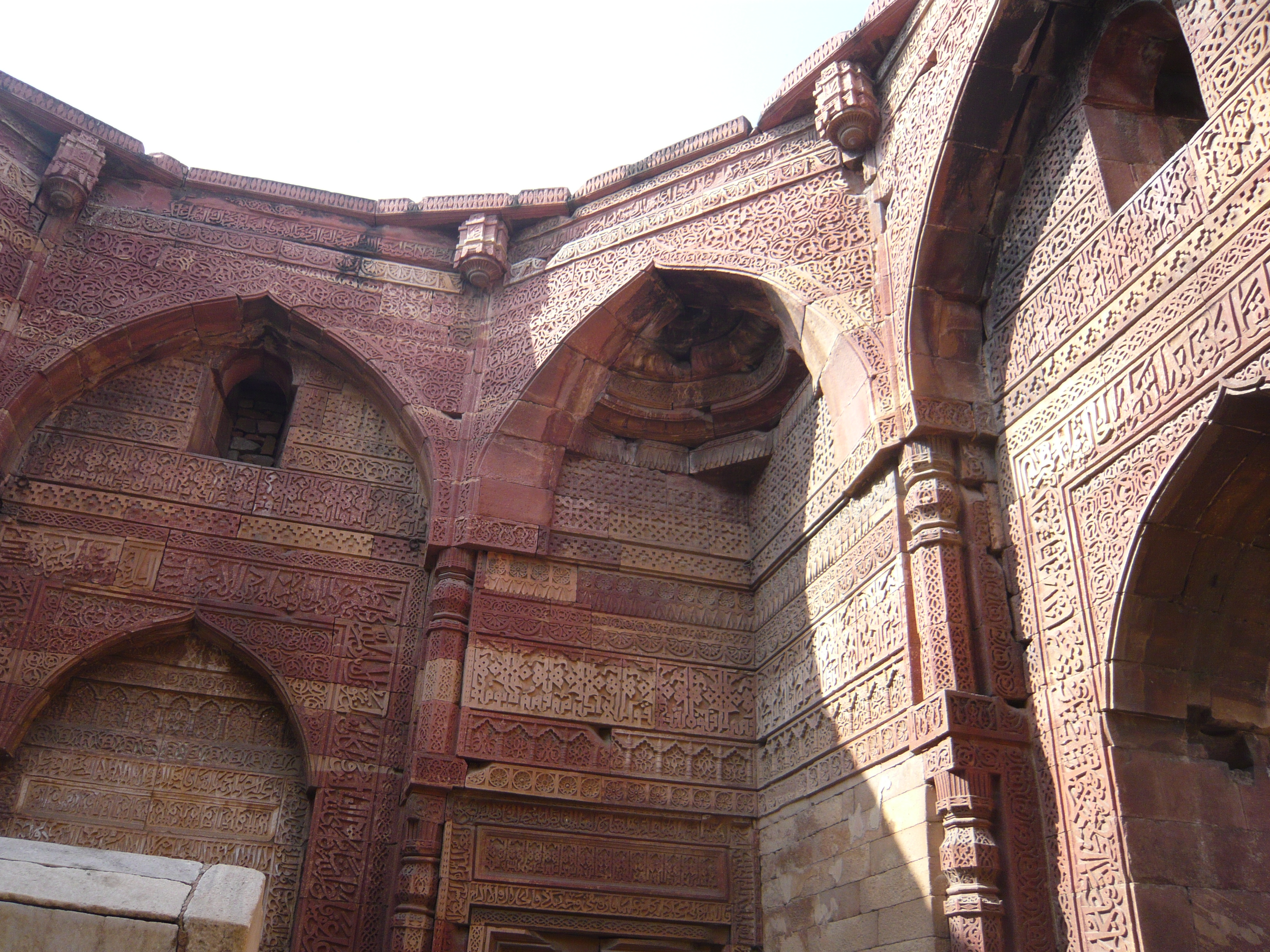
And this is a squinch in Iltutmish’s Tomb. Is not a squinch a wondrous thing also, both in its construct and its name? A squinch is a ‘bridging’ structure, used here to support a dome (now gone). Iltutmish was Shamsuddin Iltutmish (ruled 1211-1236), 3rd ruler of Delhi (after Qutbuddin and Aram).

This is the famous ‘non-rusting’ iron pillar. This stands in the courtyard of the mosque and was here long before the mosque was built. It was made in the reign of Chandragupta II (AD 375-413), is composed of almost pure iron (99.72%) and shows only the slightest sign of rusting. A sanskrit inscription on the pillar indicates that it probably stood originally outside a Vishnu temple, possibly in Bihar, and was moved later to this site. It would probably have had a garuda, the vehicle of Vishna, on the top.

A close-up of the inscription.
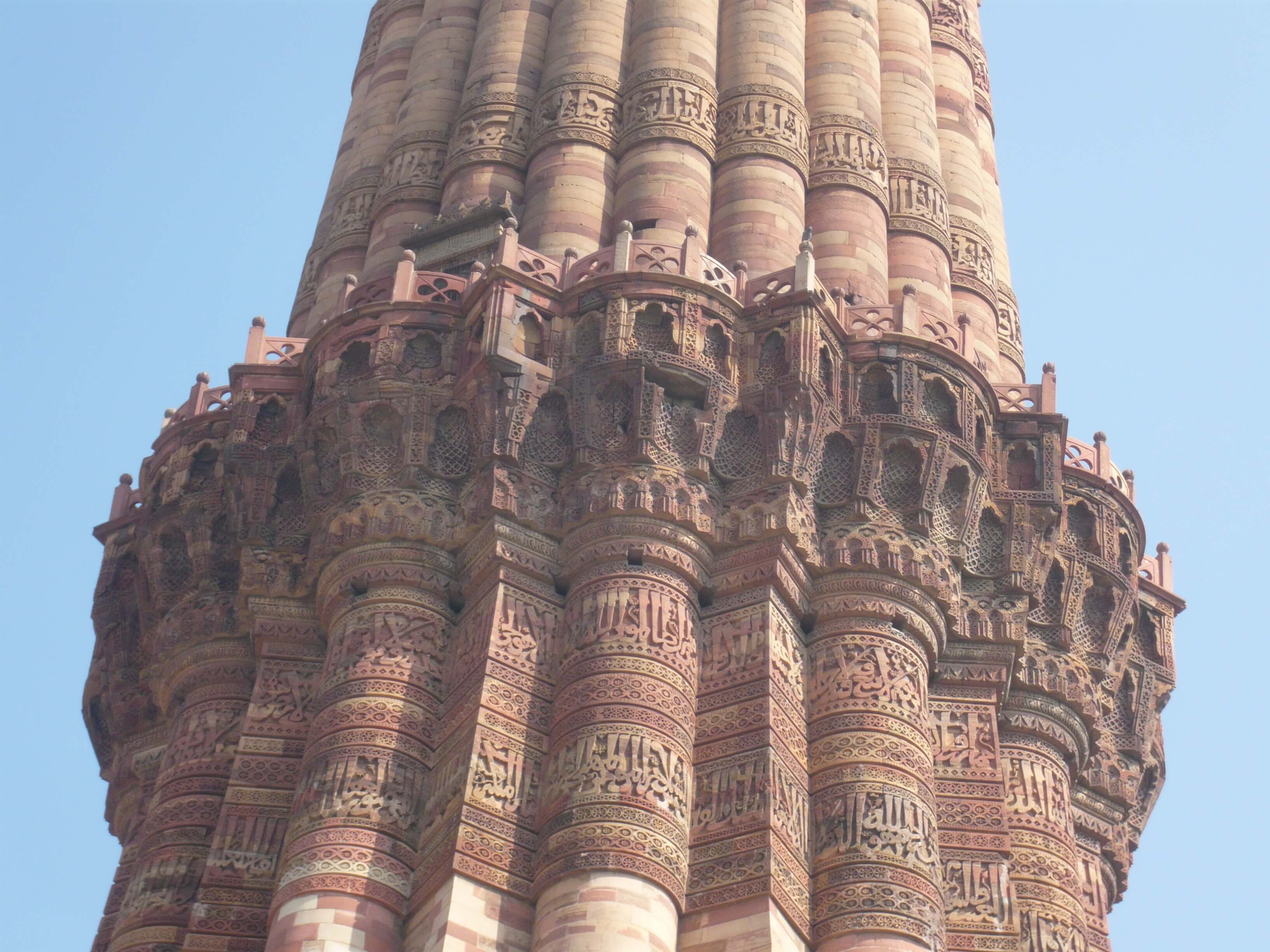

Decorative details of the stonework. Most artistic decoration is, as usual with Islamic craftwork, patterned work and verses from the Koran. At Qutb Minar, there are also plentiful stylised, and sometimes surprisingly realistic, depictions of plants with flowers and buds and long, winding stems and tendrils. To construct the mosque, artisans used stone from Hindu and Jain temples and many stones and panels still depict the original carvings, frequently defaced but still recognisable.
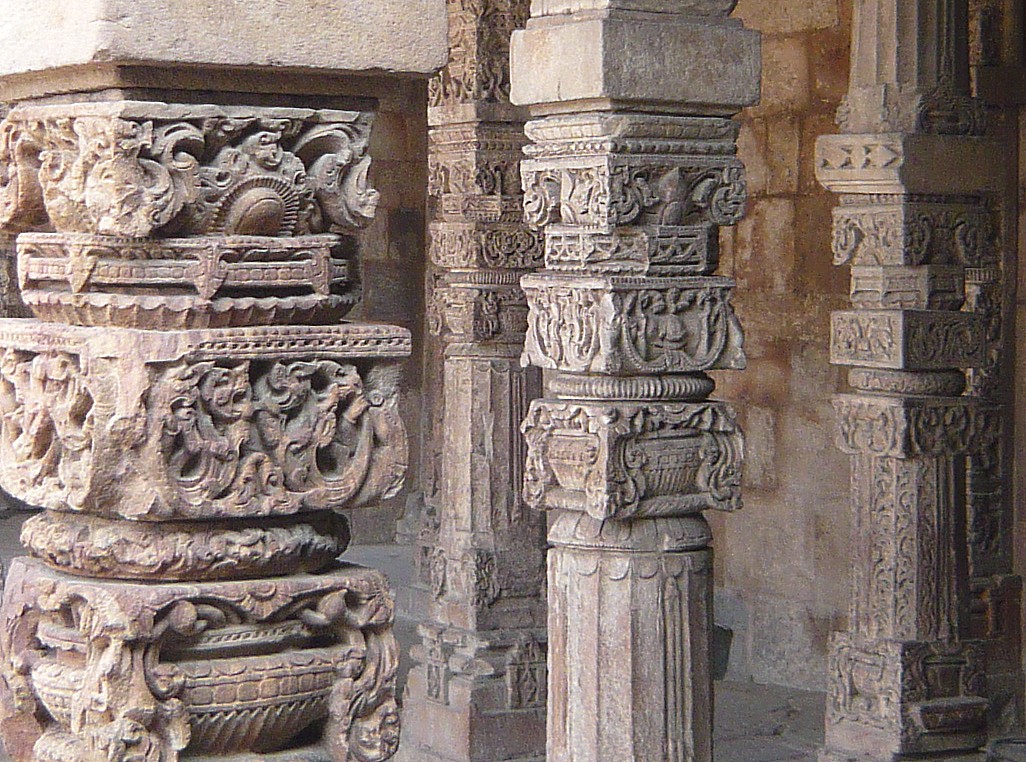
Brahminical motifs on the columns of the Quwwat-ul-Islam Mosque. These pillars were originally part of the Hindu and Jain temples destroyed in the area when Qutbuddin built his capital. It is recorded that twenty seven temples were destroyed. They would have been reassembled by Hindu craftsmen, Qutbuddin using local labour.
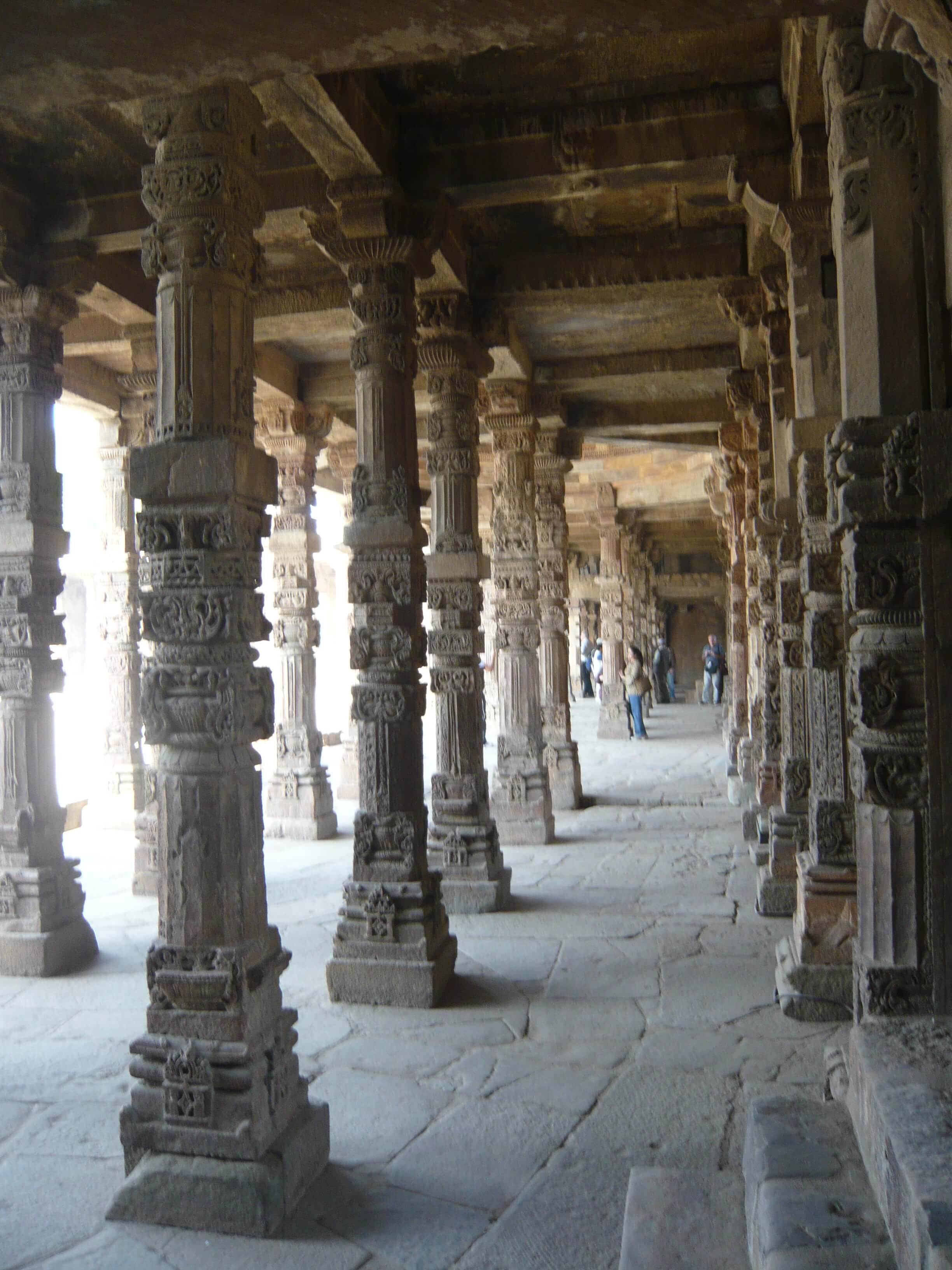
Another view of the columns on one of the cloisters surrounding the Quwwat-ul-Islam Mosque.
NOTE: My faithful follower might recognise some of these notes and photos, as this is a rehash of part of a post I wrote on Delhi several years ago. I think it’s worth revisiting, since it’s such a wonderful place.

 Mick Canning