Religion or Philosophy?

Now, here’s a thing.

It is rather a fashion nowadays to declare that religions are all wrong and should be banned, because science and reason have somehow proved that there is no god (they haven’t).

But I would like to consider every religion in the world as a school of philosophy, and consider what I might take from each that would be useful to my life and my development.

Whether there might actually be a god or not then becomes unimportant.

Most Buddhists, for example, would seem a little unsure of whether there is a god or not, but if asked, the majority of them would reply that it does not matter. The argument being that it is impossible to prove either way, and therefore it is impossible to know either way. So why not just live your life as well as you can?

SR312thumb

Traditionally, religions have provided society with a set of moral rules. It may be that these rules were the first imperatives that human beings treat other with decency. Since none of us were around in the long years when our race was evolving speech and higher thought, and learning how to co-operate with fellow members of the tribe and – who knows – perhaps their neighbours, this must of necessity be pure speculation. Yet I find it highly likely these moral codes were the first suggestions that human beings might treat an enemy, for example, with mercy, rather than simply killing them, which might otherwise be the obvious course of action. Morality over expediency, if you like.

Some examples:

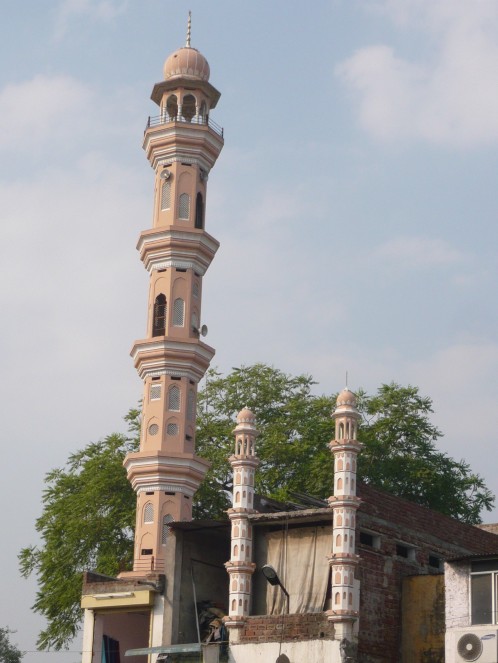
Islam forbids charging interest on loans. How many who have fallen victim to the money-grubbing lowlife that run these ‘payday’ loan companies charging astronomical rates of interest might have sympathy with this view? It teaches also that it is a moral duty to give alms; to help those in need.

112 (2)

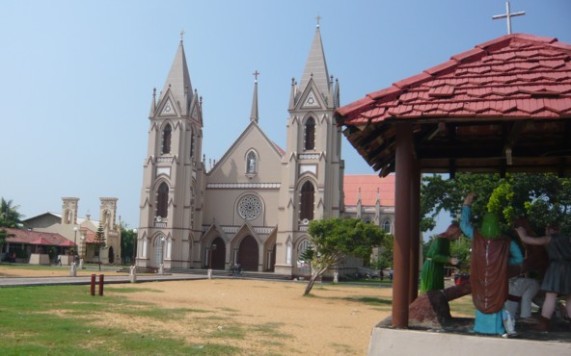
Christianity is big on love and mercy; at least in the New Testament. It teaches tolerance and forgiveness.

Buddhism teaches that to want things is to become enslaved to those desires that can never be satisfied. How much better to live simply and to be content with what we have? It teaches also compassion for all living beings.

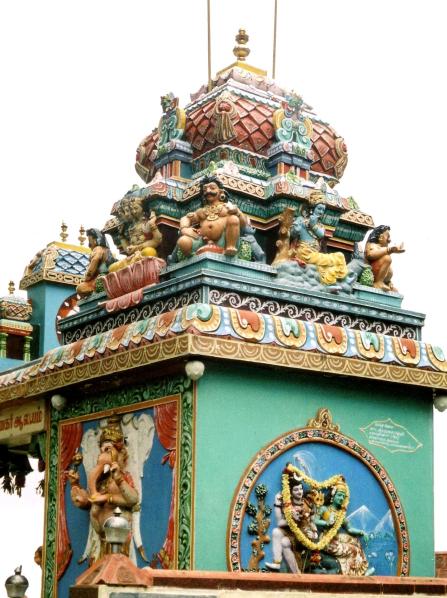
Hinduism teaches that all life is sacred, and that we should all refrain from injuring others.

ganesh shrine kodai

These are only the main four faiths in the world today, but every other religion that I have read about also teaches a code of moral imperatives.

And in a world run by huge multi-national companies with no moral compass whatsoever and politicians who only look after their own, where we are continually and aggressively informed that we must worship money and consume more and more pointless trash, and that it does not matter if we destroy the environment just as long as companies make bigger profits, anything that can make us pause to consider what is actually important in life should be encouraged rather than denigrated.

343

It would therefore be ridiculous to simply dismiss out of hand entire canons of work, solely on the grounds that the writers of these philosophies believed in a god whom the reader might not (or does not want to) believe in. Everybody has a spiritual side, whether or not they believe in some sort of god. The spiritual side of a person champions beauty over money, generosity over selfishness, kindness over cruelty. These are values that most of us still claim to value today.

Rich Beyond my Wildest Dreams

The other day, a friend of mine jokingly asked me whether I would be moving into a big mansion and getting a chauffeur driven car, once my novel is published and I have made a fortune.

For a few minutes we invented a whole new life for me; where my riches enabled me to buy whatever I desired and to do whatever I wished. Then we got tired of that, and the conversation moved on to more mundane things.

But let us say this came to pass, because, you know, things happen. Unexpectedly. What would I want?

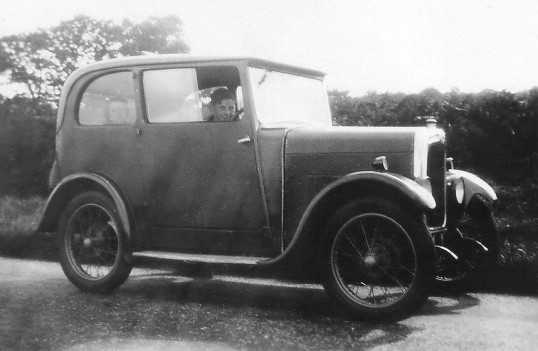
old car one (2)

I can only listen to one piece of music at a time, no matter how much I may love music.

I can only read one book at a time and, God knows, I have a pile as high as, ooh, this to get through already. I continually try not to buy any more books when I go out. And I continually fail.

I don’t want a flash car. I don’t actually want a car at all, as it happens. I’m stuck with one at the moment, because the work that actually provides me with a tenuous living requires it. If I no longer did that work, I would probably get rid of the car.

A bigger house? No, not really. Perhaps one further out of town, though.

There is travel, of course. More trips to India and Nepal, for a start. But again, time is not infinite, and there would be a limit to how many different places I could go. Would I stay in luxury hotels, then? No. I have no desire to do that. Fly first class? That is probably the one thing I would do. I am tall, and the leg-room on most flights is a little mean even for children. And then my back causes me so much pain at the best of times that any long-haul flight is extremely uncomfortable.

We all use language carelessly at times. What do I mean by rich? Well, possibly something different to what you would mean, then again, possibly not. For some people, the idea of being rich means having virtually unlimited money so that they can buy every conceivable luxury. For others, it simply means not having to worry about whether they can make ends meet in day to day life, and that is the category that I fall into.

I have known people who earn heady amounts of money yet do not consider themselves rich, because they find it too easy to spend it almost as fast as they earn it. I have known others who would consider themselves rich if they came into a very modest windfall.

Today, in the affluent western world at least, the vast majority of us are rich, although we don’t recognise it. Why? Modern advertising is insidious and relentless and companies spend billions of pounds each year persuading us all that we cannot live without their products, that we all have a right to them and that we want (and deserve) them.

And that we want them now.

This has meant that luxury fripperies have come to be seen as necessities.

Audiences watching TV programs, or walking down their high streets, or opening magazines, are constantly bombarded with an unending stream of images of luxury goods that they are told are rightfully theirs, and which are paraded by their football or ‘reality’ TV heroes.

What these advertisers don’t want us to see is that the trash they are pushing is unnecessary and does nothing to enrich our lives.

Now, where was I?

Oh yes, I just have to nip out for a loaf of bread.

Of course, it has to be an artisan-crafted Estonian cob loaf made with organic Bulgar wheat flour milled under a full moon and leavened with yeasts descended from the very yeasts used by the court baker of Peter the Great of Russia and baked for thirty seven and a quarter minutes in a bread oven fired with birch logs and scented with juniper and a teaspoonful of fuller’s earth.

It will be damned expensive, but I DESERVE IT AND I WANT IT NOW.

Oman (1)

Prior to 1970, Oman was, in many ways, still a medieval country. There were no more than 3 miles of tarmac road in the whole country, the gates of the capital, Muscat, were still closed between the hours of sunset and sunrise, and it’s exports were largely confined to dates, limes and frankincense. Oil had first been discovered as far back as 1956, and then in commercial quantities in 1962. Production began in 1964 and led irrevocably to massive changes, although these would not come about until 1970.

boat

This launch (Omanis never use the word Dhow) was on the shore at Yiti, just east of Muscat. It would most likely have been used for trading and was probably still seaworthy when I took this photo.

Mindful of these changes that had happened virtually overnight to other Middle Eastern states when oil had been discovered, the then Sultan, Said, was determined that Oman would not go the same way. Unfortunately for everyone concerned, his solution was to stash the proceeds in the royal coffers, whilst the country and its people remained poor. It was a situation that could not last for long, and in 1970 his son, Qaboos, overthrew the old Sultan.

Baushar Fort

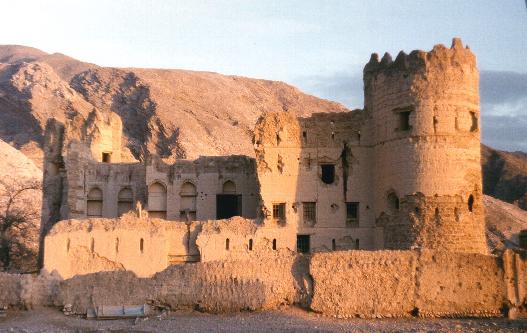
Old fort at the village of Baushar, near Muscat.
baushar door
Carved wooden door in Baushar Fort

I lived there between 1985 and 1988, during which time the country was making large strides towards being a modern state, although many parts of the country still felt as though they belonged in another century. Around Muscat and along the Northern coast, there were new towns springing up, modern shops and hotels, main roads, and much of the development that might be expected. There did appear to be an emphasis on the building of facilities such as schools and hospitals, however, along with a good deal of restraint, which was a refreshing change from the way that many other states used their oil wealth.

pottery kiln 1

Pottery kiln at Bahla.

Bahla has good quality clay and produces large numbers of pots, which are thrown on simple foot-operated slow wheels and fired in large mud-brick kilns, which are fueled with brushwood.

Pots at bala

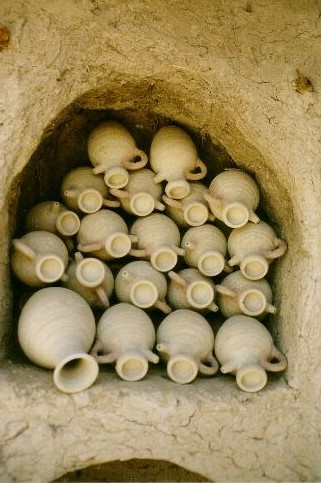
Newly-fired pots

Away from the towns, to visit most of the villages was like stepping back in time. Buildings were often still mud brick and palm thatch, and many of the traditional cottage industries were still followed.

falaj

Falaj.

The Falaj system of irrigation originated in Persia and was spread throughout the Arab world. I have even seen examples in Spain. The system consists of a series of underwater channels bringing water from where it arises, usually in the mountains, to where it is needed, where it is distributed by overground channels. These channels, both underground and overground, have been built on a very gentle gradient and show astounding technical skill, being built only with primitive tools, often very deep underground. Many of the Omani Falajes are reckoned to have been built by 500 BC.

dates

Dates spread out to dry near the town of Quriyat.

Dates are an important crop in Oman and were the main export until the discovery of oil there. They are still dried in the traditional way – in the sun.

shark boy crop

Boy on a donkey with sharks. The sea has also traditionally been a major source of food for Omanis. I passed this boy just outside Quriyat.

deserty desert

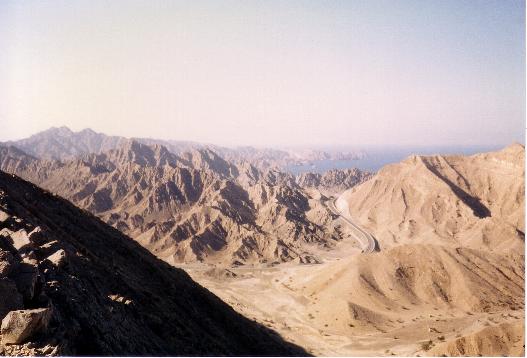
Coastal mountains, SE of Muscat.

For a long time after I finally left Oman, I harboured a strong wish to go back there. But recently I watched several videos on YouTube, which have cured me. Many of the places that I knew as small settlements with dirt roads and small houses, have become places of great wealth with wide boulevards, modern houses and cars, and tourist hotels. It is, no doubt, a development that is welcomed by the majority of the population, but it is not the Oman that I knew.

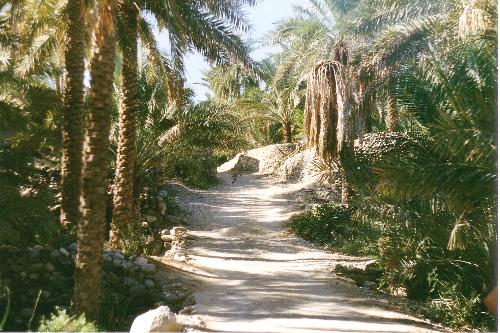
Oasis

There you go. A picture of an oasis.

Pitfalls for Writers – 4) Language; a bit of a follow-up

Back somewhere deep in the mists of time, I published ‘Pitfalls for Writers 1’. In this, I discussed some of the potential problems of language in a novel.

If I am to write a story of medieval Persia, for example, I will write it in English. No one who reads it is going to be fooled into thinking that my characters were really speaking in English. But this on its own is not enough. There must be something in the language I use that reminds the reader that the story setting really is medieval Persia.

P1050055

And so I suggested using a flavour of the speech. I might sprinkle the conversation with words such as ‘dirham’ (a unit of currency), or ‘djinns’ (genies). The characters might smoke a ‘qalyan’, which is how they would have referred to what we generally call a hookah. A greeting might be ‘Salām ʿalaykom’.

In the comment stream that followed, I concluded that I might employ a glossary, but certainly not footnotes.

This has now become most relevant to me.

About a month ago, I finished reading Anuradha Roy’s ‘The Folded Earth’. It is a novel that is set in India, written by an Indian writer, yet it uses a glossary, although she is presumably writing in the first instance for an Indian audience. This glossary explains a few words and phrases that many western readers would be unfamiliar with, although I would expect the majority of Indian readers to know them all.

My own novel is being read now by generous beta readers, and some of the discussion is over the use of the appropriate Hindi / Urdu words in the text.

And so, with ‘The Folded Earth’ as an example, I shall definitely use a glossary.

Next, it is important to employ the correct voice.

Speech:

Clearly, if the protagonists of a story are sitting down to a meal, they might complain about the amount of fat on the meat, but they would be most unlikely to refer to it as ‘adipose tissue’. Unless one or both were, for example, surgeons.

Very few people would be likely to refer to two items as being ‘in casual juxtaposition’. They would be far more likely to say something along the lines of ‘oh, they look a bit odd next to each other.’ As tempting as it might be for the author to show off their vocabulary, it is something that should be used most carefully.

Narrator:

If the story actually has a narrator, then this becomes even more important. The country bumpkin relating an everyday tale of rustic shenanigans should not be employing sophisticated and subtle wordplay. He or she should only be employing language that they would naturally use.

Author’s voice:

Even if there is no actual narrator, it remains important to use only language that would be natural to the situation. For example, it sounds plain wrong to describe a group of Vikings ‘computing’ an answer to a problem, even if it is only the author describing it that way.

Generally, of course, and I know that some will disagree with this, it is usually better to avoid all flowery and showy language in novels, and use simple language well.

Finally, a jarring note found in a few modern novels set in older times, is that the characters often think like modern folk. Reading these books as against books written, perhaps, 150 years ago, it is not just the style and language of the writing that are different, but also the prejudices. The hero of a novel set in 1840 is going to have casual prejudices against, perhaps, people of another race, women, etc etc. We tend to be reluctant to set these down in print, nowadays, perhaps as if by doing so we are almost admitting to having these prejudices ourselves.

However, if we want to depict our characters realistically, we need to do so ‘warts and all’. And if the writer is going to depict them otherwise, then he or she needs to have a good reason why they do.


Chinese New Year

Well, a couple of days late, but that is just typical me, I’m afraid. So, Gong Xi Fa Cai, everyone!

Of course, It’s a good excuse for me to show off a couple more of my paintings.

chinese new year 1

Chinese New Year #1

Chinese New Year 2

Chinese New Year #2

Both paintings are 24 inches by 18 inches, and are acrylic on board.

The last time that I took part in Chinese New Year celebrations, was when I was staying in Kolkata in 2013. Until then, I had not realised that there was such a large Chinese population there. I was staying in a small guest house some way away from the main streets, and heard the sounds of drumming from outside. When I went to investigate, I found a group of almost 100 young Chinese, all dressed in red T-shirts with their names on the back, a number of dragon and lion costumes, and a good supply of cabbages and coins. I wandered around with them for about an hour or so, as they went from house to house, dispensing good luck.

I think it is fair to say that it was an unexpected treat.

India – My First Time (2)

A few more photographs from 1989 (my apologies for the quality of some of them – all I had with me was a very cheap camera):

After a few days in Delhi, I went to Srinagar, in Kashmir. I took the bus that went through Jammu, and 24 hours after leaving I was deposited in Srinagar.

On the way, I did one of the most stupid things I have ever done in India.

The bus was packed. I think that I was the only westerner on the bus, but I liked it that way. On a 24 hour bus trip, it is pretty well impossible to ignore your neighbours for the entire journey, and so I spent much of the time chatting with the chap sitting next to me, and the ones across the aisle. When the bus halted to allow us to get some food, we sat at the side of the road together munching on the samosas, pakoras and newspaper twists full of nuts that we had bought.

When it started up again, we chatted long into the night before falling asleep.

And at the first stop just after dawn, at another cluster of roadside stalls for breakfast, I joined them at the broken water pipe beside the road where we all brushed our teeth.

Maybe if I had spent longer than just a few days in India by then, the consequences would not have been so violent. But as it was, my stomach had clearly not yet adjusted to Indian bacteria.

And maybe if I had spent longer in India I would have realised that it was not a clever thing to do in the first place.

IMG

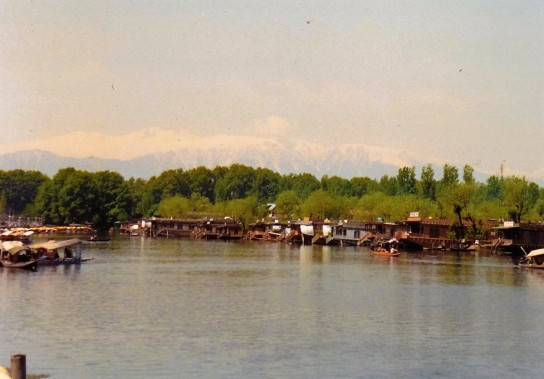
In Srinagar, I stayed on a houseboat on Lake Dal. I no longer remember what it was called, but I was the only guest, and I had the place to myself. These wonderful floating mini-palaces are a relic of the days of British India, when the local Prince refused to allow the British to purchase land to build houses. They got around this by causing the construction of houseboats to stay on, instead. Made from wood, beautifully carved, and furnished opulently throughout, they seemed to me to be unspeakable luxury after my 24 hour bus journey.

The rapidly multiplying bacteria in my stomach, though, were clearly in a hurry to join all of their friends in the Lake. But for someone feeling poorly and reluctant to stray too far from a bathroom for a few days, the houseboat could not have been better. I had my meals cooked for me, and any little treats I fancied I could buy from one of the many shikaras that continually paddled up to the houseboat. These little boats, which also acted as water taxis, sold chocolate, flowers, fruit and vegetables, cigarettes, snacks, flowers, newspapers and yet more flowers.

I passed much of that time on the deck or on the roof reading, or chatting with the folks around me on the nearby boats or on the shikaras.

After a few days I recovered enough to explore the area a little. I walked many of the paths around the lake, which is a more complex shape than the visitor first realises. I would frequently find myself on causeways or small spurs of land sticking far out into the lake. I wandered around the Shalimar and Nishat gardens, and I walked up the long, winding path to the Shankaracharya Temple, on the hill of the same name.

This was March, 1989, and even someone as unobservant as me could not fail to spot the signs of unrest. Once or twice in the evenings I heard what might be shots or small explosions in the distance, which my host casually dismissed as ‘bandits’. On one occasion, walking through Srinagar I found the road blocked outside a mosque, where there was lots of shouting and a large police presence; although on reflection, I have seen much the same thing outside the rail ticket reservation office in Kolkata, and perhaps I should not make too much of it as an incident.

It was only a few short weeks later, however, that the insurgency began in earnest. For a long time there would be very few further visitors to the lovely Vale of Kashmir.

After a week, I returned to Delhi and then headed immediately to Agra, to see the Taj Mahal. I chartered a car and driver, because I wanted to also visit Fatehpur Sikri on the way.

IMG_0002

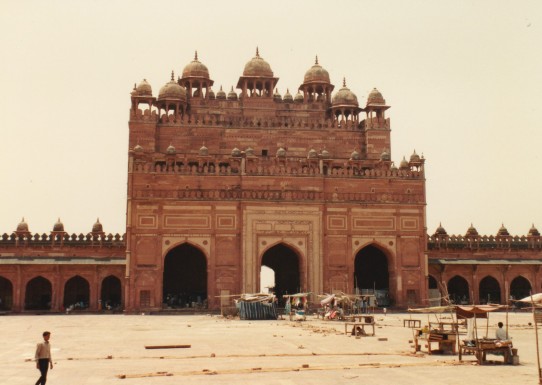
Fatehpur Sikri was built by the emperor Akbar in the sixteenth century. His intention was to create a new capital city that honoured a Sufi Saint whose blessing the emperor believed had given him a male heir. This site was chosen, as it was close to the dwelling of the saint. Unfortunately, the area suffered from water shortages, and the city was abandoned shortly after the emperor died, after only 13 years occupation.

There remains the magnificent, well preserved, fortified city that I wanted to wander around for a few hours. Inside, there were a few stalls selling souvenirs and drinks, and a number of other visitors looking around, but generally there was an impression of peace and emptiness. I have not been back since, but I believe that it is now far more crowded, and that there are far more touts and hawkers on the site.

IMG_0003 (2)

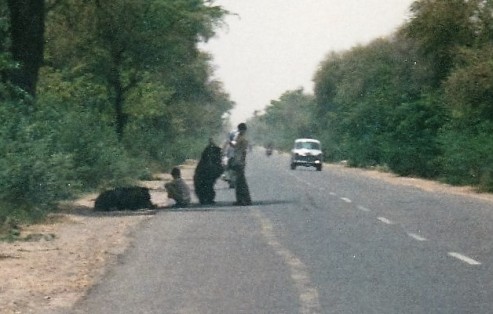
Performing bears at the side of the road. The cruel practice of dancing bears was made illegal in India in 1972, but was certainly still common in 1989. These ones were at the side of the road not far from Fatehpur Sikri, on my way to Agra.

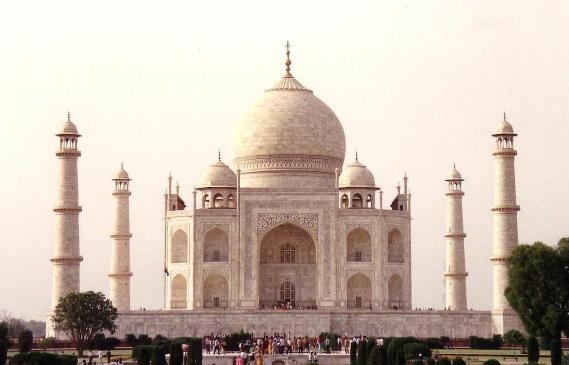
In Agra itself, I visited the Taj Mahal.

the_classic

There are plenty of people who will tell you that it is over-hyped, and that there are many greater buildings in the world. It is possible, also, that some of these people have actually been to Agra.

It may be that there are some buildings that are more impressive, but how can you measure such things?

My first sight of it, as I walked through the gateway, made me catch my breath and stop still. For a moment, I could not believe how lovely it was. I then spent a long time wandering around the site, and I still think it one of the most beautiful and magnificent buildings that I have ever seen. I watched the afternoon light fade and die, and the sun go down, and the building seemed to glow and shimmer and almost float before me.

I left when they threw us all out at dusk, knowing that I had just seen something very special.

By Popular Demand

A few weeks ago I put up a couple of pictures of paintings that I had made of Indian subjects, and a number of readers were kind enough to say that I should put up some more.

Today, then, a couple more.

ladakhi door 1

Ladakhi Door #1

Doors are a favourite subject of mine, and this one is from a monastery in Ladakh, Northern India. Ladakh is sometimes known as ‘Little Tibet’, and in some ways, now, it could be said to be more Tibetan than Tibet. Historically, it has been a part of Tibet, and I have an old book of a journey that was taken in 1904, ‘Through Western Tibet’, by Jane Duncan, a doughty traveller, which places Leh in Western Tibet, although I am not certain of exactly where the border lay then.

mosque

Mosque

There was quite a bit of artistic license employed in the making of this painting. It is based on a mosque in Bopal, but I have never been there, instead relying on photographs. I have made no attempt to depict it accurately, but instead I interpreted it to create a totally new aspect.

Both of these paintings are in acrylic, on canvas, and measure 24 inches by 36 inches.

The Expedition Report

As promised in my last post, I attach here a report of my expedition.

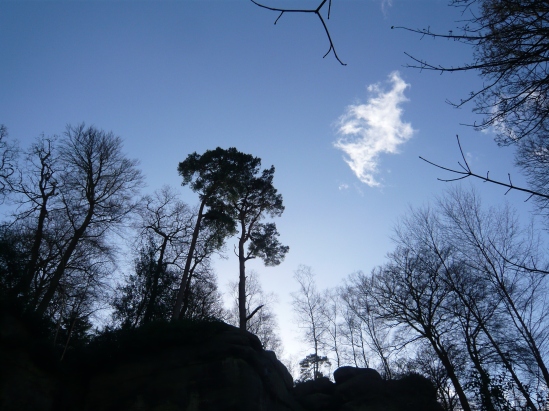
On Saturday 30th January 2016, the morning sky cleared and the sun came out. It would be a good walking day.
P1050080

I had thought long and hard over the various logistical challenges of this expedition, and decided eventually, albeit reluctantly, that it would be wise not to attempt it alone. As much as I was loathe to share the glory of this journey, the sensible traveller realises his or her own limitations, and assesses the difficulties and dangers that they are likely to meet. And so I decided that I would take a companion; not only to make the journey more amenable, but also to help with the navigating, act as a safety back-up, and who could act in need as a porter.

We decided to split the tasks. ‘You’re leader,’ my companion Bob said, ‘so you take the big pack with the emergency stuff, and I’ll navigate. It will make life easier for both of us.’ Somehow, that wasn’t quite what I’d planned.

We picked up our packs, said our goodbyes, and set off down the path to the road. ‘We go left here.’ Bob said, turning right. I hesitated. ‘What are you waiting for?’ He asked irritably, turning round.

‘You said left.’

‘Yes. Are you going to stand there all day?’ I shrugged, and then followed him. The first part of our journey presented few difficulties. We turned left at the next junction (‘I said right!’) and followed the road until we had left the town far behind and were surrounded by a sparsely inhabited landscape. Now we needed to find our way down the hill on the other side of the road.

‘It’s not safe to cross here.’ opined Bob.

‘There’s hardly any traffic!’

‘It comes round the corner really quickly. Let’s go on a bit further and find somewhere better.’

‘The corner’s half a mile away! I’m crossing here!’

‘You cross then.’ He sounded sulky. ‘I’ll catch you up.’ He turned away and stomped slowly along the pavement.

I crossed the road, found a bench, and settled down to wait. Minutes passed, and I took out a chocolate bar and ate it. I had a drink of water. I pulled out the guidebook and went over our route again, and then got side tracked and began reading about the dreadful earthquake of 1734 that destroyed so much of Tunbridge Wells. I had another drink of water. I found a newspaper in the side pocket of my pack and did the crossword. As I finished, I looked up, and my companion arrived.

‘Where have you been?’ He looked sheepish.

‘I turned left by accident. Never mind that, I’m here now.’ He sat down beside me. ‘Sorry, I need a drink.’ He took out a flask and poured a little of the contents into the cup.

‘What’s that?’

‘Oh, just a drop of whisky.’

‘That was meant to be for emergencies only!’

‘This is an emergency!’

When we set off again, we were fortunate to find a track that seemed to be going in the right direction. It was no more than twenty foot wide in places, surfaced with a smooth, black layer, and showing occasional white markings roughly in the middle, as if left to guide travellers. Following this, we worked our way down from the ridge and found ourselves in a fairly steep-sided valley. The road bent around to the right and ran along the bottom the valley, following a stream on one side of the road, and an old railway track on the other. There was a signpost beside us, a pub on the left, and a farm on the right. In front of us a church tower showed clearly above the trees.

Bob took out the map and compass, handed me the map and then carefully lined up the edge of the compass with the side of the map. For a moment or two his eyes flickered between the map and route ahead of us, and then he clicked his tongue irritably.

‘I think we’re lost.’

‘Er, the compass needle isn’t pointing north.’

‘Eh? What…’ he fiddled with the compass for a moment. ‘Oh, you had the map upside down, you fool. No wonder!’ He snatched it from my hands, looked at it suspiciously, glanced up at the signpost quickly when he thought I wasn’t looking, and then handed the map back to me. ‘This way. Come on!’

Half a mile along the road, a track turned off to the left and ran under the railway and into a little wood.

‘This way,’ I said.

‘Are you sure?’

‘Yes.’ I went under the bridge and into the woods, to find that the path was a morass of mud. This area is renowned for enjoying (or otherwise) what can be regarded as fiercely localised weather. Even though it was pouring with rain today in the Lake District and in Southern Hungary, the sun stubbornly shone throughout the afternoon on our little expedition. But it seemed as though that hadn’t always been the case recently. This part of our journey should only have taken us about ten minutes, but it was almost half an hour before we crossed the stile in the fence that marked the boundary between where we were at the time and somewhere else.

The next section of the trail took us down a steep and uncertain track, ankle deep in autumn leaves and with little sections of mud here and there underfoot. It proved necessary to watch our footing carefully, and now and again we had no choice but to hold onto the guard rail for a moment. After a minute or two, however, we reached the foot of the slope safely and paused to catch our breath and have a snack.

We checked the map, noticing that we would have to navigate the next section very carefully.

‘I’ll lead this.’ Bob said, starting to take the map from my hands. I slapped him.

‘No, you won’t.’

We passed under the old railway bridge, which incorporates parts of a still older construction. All that remains now is one end of a medieval banqueting hall, complete with shields. In places it is still possible to glimpse traces of what appear to be the original wall paintings. Judging by what remains of the inscriptions, they possibly depict Saint Darren, patron saint of nearby Tonbridge.

P1050081

It is a glorious place in the spring, when the wild marsupial trees are in blossom, but now it was a gloomy place. But still it was with reluctance that we dragged ourselves away from this important historical site, and tramped onwards through the woods.

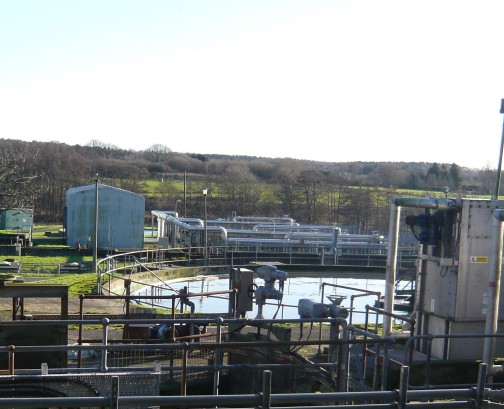
For the next leg of our journey, the path took a great, sweeping loop around a mysterious and secretive area of pipes and tanks and low buildings. The trees creaked ominously overhead. Was it just the wind? Yes, of course it was. It has always had an evil reputation, though. In medieval times, it was a place of alchemy, and rumours still persist that it was in some dark chamber beneath the ground, at this exact location, that an evil sorcerer discovered a magical substance that turned real beer into lager, or false beer as it is properly called, threatening to plunge the whole kingdom into a new dark age.

And at times the traveller of today can almost fancy that a whiff of sulphur or some such odour still overhangs this dreadful place. Several years ago someone tripped over a protruding tree root nearby and hurt themselves, and the rooks call their depressing calls overhead in the gloomy trees.

We were glad indeed to get away from such a terrible place.
P1050085 (2)

Now, on almost the last leg of our journey, our path ran along south-facing hillsides, through one of the small tea gardens that produce our famous Sussex tea, and then dropped down lower to meet the overgrown and largely clogged up remnants of the Bristol to Tunbridge Wells canal. It was still being used to transport coal and gin from Bristol to Tunbridge Wells, with a return cargo of young slaves, as recently as sixty years ago, after which it fell into disrepair as demand for these products fell off.

P1050087 (2)

Care has to be taken along this stretch, as the old towpath along the edge of the canal is quite obvious, but on the other side lies the Great Groombridge Swamp, which has been known to swallow up unwary travellers. Bob was leading at this point, and we were both keen to reach the end, now. I noticed him straying slightly towards the swamp so I called out ‘Just go right, a bit.’

Oops.

A quarter of an hour later I was enjoying a pint of Black Cat Ale, before catching the bus back home to write up my notes and then make a tricky phone call to Bob’s wife.

Still, all expeditions, like life itself, throw up challenges that have to be faced up to.

Disclaimer:

Please note that an expedition of this nature is not one to be undertaken lightly. Should you wish to follow in my footsteps, you are strongly advised to ensure that you have adequate training and suitable equipment for the journey.