
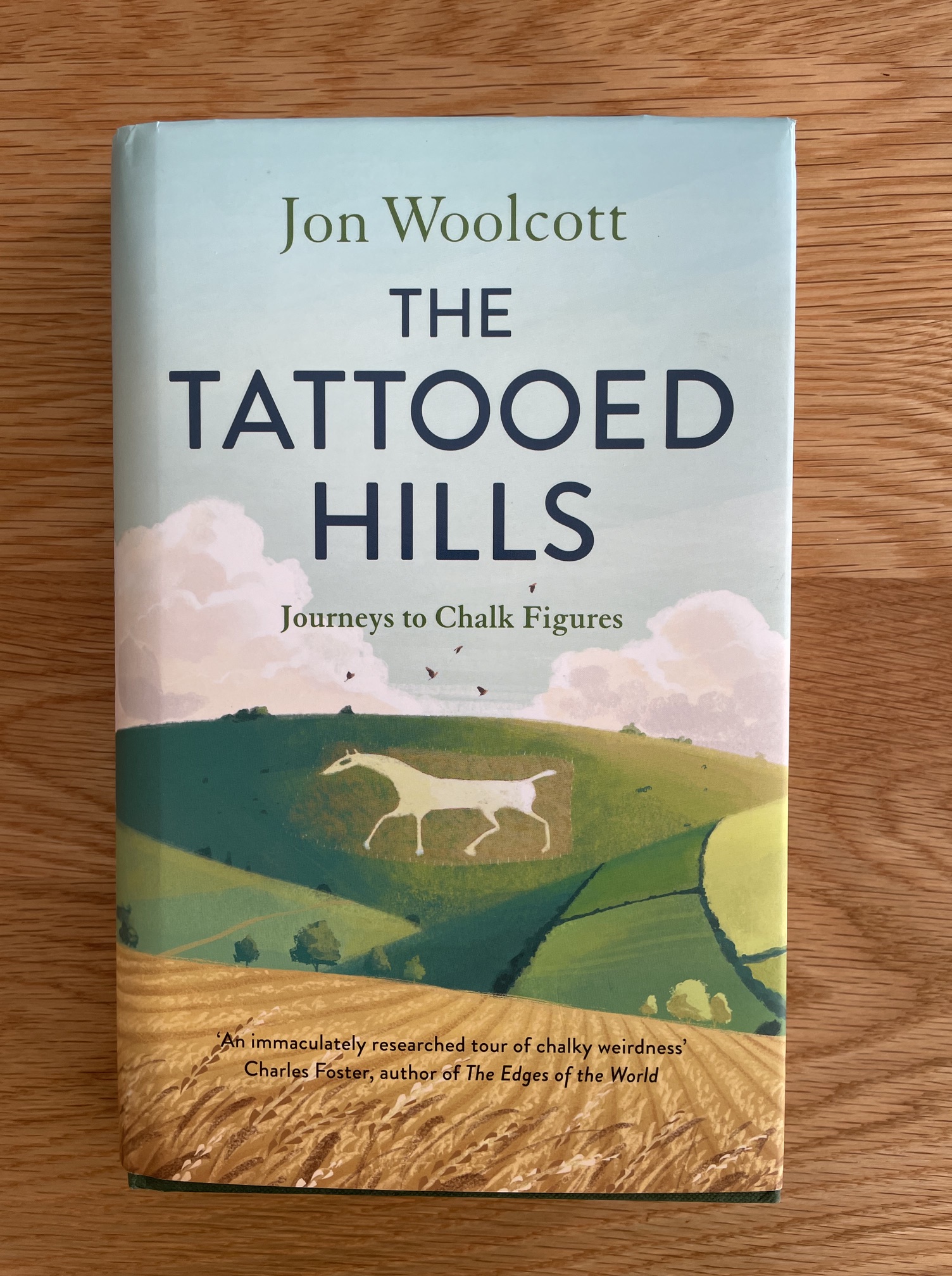
If you like hillside chalk figures – and, come on, who doesn’t? – this book is certainly worth your time. And you could not ask for a better guide than Jon Woolcott. This is a detailed exploration of Britain’s hill figures, the majority (but not all) of which have been carved on hillsides of chalk which naturally lends itself to the creation of figures which stand out and can be clearly seen at long distance.
I think we tend to think of hill figures as ancient, the creation of our distant ancestors, and many of them certainly are, yet this is often far from the case. Although some of them, such as regimental badges from the first or second world wars, or the mysterious panda’s head that appeared overnight in 1969 on the outskirts of Salisbury, are obviously of more modern creation, other more mysterious and intriguing figures also have origins that prove to be more recent than the casual observer might expect. There are, for instance, two giants carved in the chalklands of southern England, the famous priapic Cerne Abbas giant of Dorset and the less well-known Long Man of Wilmington on the South Downs. How old are they? Well, Jon gives us a few surprises.
And if their origins are mysterious, then so too, certainly for the older ones, are the reasons for their creation. For some their origins might be in religion, or to commemorate a conquest, or perhaps even for fun? Jon disentangles the theories for each as much as is possible after such long passages of time. In many cases this means exploring the latest archaeology, since any written records of these figures frequently crop up only when they were already older than memory.
And their preservation owes everything to community. Only a regular scouring keeps the figures legible. Left unattended for a few years, they become overgrown and eventually lost. Such was the fate of the Red Horse of Tysoe in Warwickshire, recorded at times from the sixteenth through to the nineteenth century, which Jon goes in search of. And after this, he looks at a number of other figures which have been lost to us. But the reader wonders, quite naturally, if these figures can be lost so easily, then how many others might there once have been? In this, it reminds me of the puzzle of how many standing stones and stone circles we might have lost over time, a puzzle closely bound up with that of the carved figures in many ways.
But this book is more than just a cataloguing and interrogation of these figures, bound up in these stories are British eccentrics from down the years, from T.C.Lethbridge to Julian Cope, interviews with many folk who lovingly care for these figures today, and, naturally, the archaeologists who continue the cataloguing and interrogation today. It even name-checks a couple of my favourite bands with connections in their music to chalk figures.
Finally, then, there are the druids, neo-pagans and others who like to hold ceremonies at these figures, supposedly ceremonies such as our ancestors would have held, although nobody actually knows what those ceremonies would have involved. In a way, a most fitting end to the book.

