A Jolly Wassail and the Howlers (and not forgetting the Hoodeners!)

Yesterday, we went Wassailing.

If you care to Google (other search engines are available) Wassailing, you will learn it traditionally takes place on the Twelfth Night (after Christmas), i.e. 5th January, and is a British custom. You will also discover that wassailing involves groups (traditionally men) visiting apple orchards, usually after dark, and to encourage the trees to be especially fruitful the following year songs are sung, trees might be beaten with sticks to wake them up, and offerings of bread soaked cider left in the branches of certain trees. Perhaps one particular tree would be selected to represent the whole orchard.

A Dictionary of the Sussex Dialect published in 1875 has something to say on the subject. It defines howlers as ‘boys who in former times went round wassailing the orchards. A custom now nearly obsolete. The custom of wassailing used to be observed on the eve of the Epiphany, when the howlers went to the orchards, and there encircling one of the best bearing trees, drank the following toast,-

‘Here’s a health to thee, old apple tree,

May’st thou bud, may’st thou blow,

May’st thou bear apples enow!

Hats full! Caps full!

Bushel, bushel, sacks full!

And my pockets full, too! Huzza!

The wassailers derived their name from the Anglo-Saxon salutation on pledging one to drink, which was waes hael, be of health; to which the person pledged replied drinc hael, I drink your health.

Epiphany occurs usually on 6th January, or on the first Sunday falling between 2nd and 8th January, which tends to tie in roughly with Twelfth Night, at least as far as 6th January goes.

Groups of wassailers might also take the opportunity to go from door to door singing wassailing songs (like the one above and plentiful variations) to earn a penny or two. It is possible that the tradition of Christmas carolling derived from this. A wassail bowl was often also taken around, which would hold spicy mulled cider. This might perhaps also be offered at houses visited, although my copy of the 1849 Chambers Dictionary suggests a wassail bowl was used to drink in the New Year and does not mention anything about wassailing itself. I suppose this might represent a sort of official disapproval of the tradition. But it does confirm that drinking was involved, and I’ve no doubt the revellers enjoyed their share.

Howlers would appear to be a Sussex tradition, the name deriving from the boys ‘howling’ the orchard.

Away from the south of England, wassailing appears to have been more widespread, in the sense that not just apple orchards, but also bees might be wassailed, to encourage them to be productive, and it might also happen at other times of the year.

It being 6th January, we took a bus and a couple of trains and made our way to the village of Worth, just outside Sandwich, in East Kent, to not only join in with wassailing apple orchards but also watch some Hooden Horse antics. Hooden Horses you shriek in confusion? Look no further than this post, which even explains why we chose to go to East Kent.

Anyway, ale was drunk in the pub where we began the afternoon, with the Hooden Horse company performing their version of the traditional play – this particular company have recently revived the custom in this area – before we set off (horse and all) to wassail a nearby orchard on our way into Sandwich. In this case, the wassailing consisted of making plenty of noise as we passed the orchard – many a shout of waes hael and drinc hael, ringing of hand bells, and clashing of sticks. Personally, I am convinced there will be a bountiful harvest there next autumn. Then on to Sandwich for further Hooden Horse Hi-jinks (and further ale) in a welcoming taproom, before we made our way back home (since we had quite a long journey), although hardier folk than us went on for further malarky elsewhere in town.

Warning! Do not let this ‘doctor’ anywhere near your loved ones!

Gathering in the pub car park before the Wassailing walk

In the taproom, Sandwich

  • several of these photos courtesy of Sabina

We’ll just have to look out for another malarky opportunity soon, I guess.
Red Herrings

I had a couple of conversations the other day on detective novels, in which red herrings were mentioned, and it reminded me of something I had been reading a few days before, as well as one verse of an old nursery rhyme, the words recorded in the 1800’s, which goes thus:

The man in the wilderness asked of me
How many strawberries grew in the sea.
I answered him, as I thought good,
As many as red herrings grew in the wood.

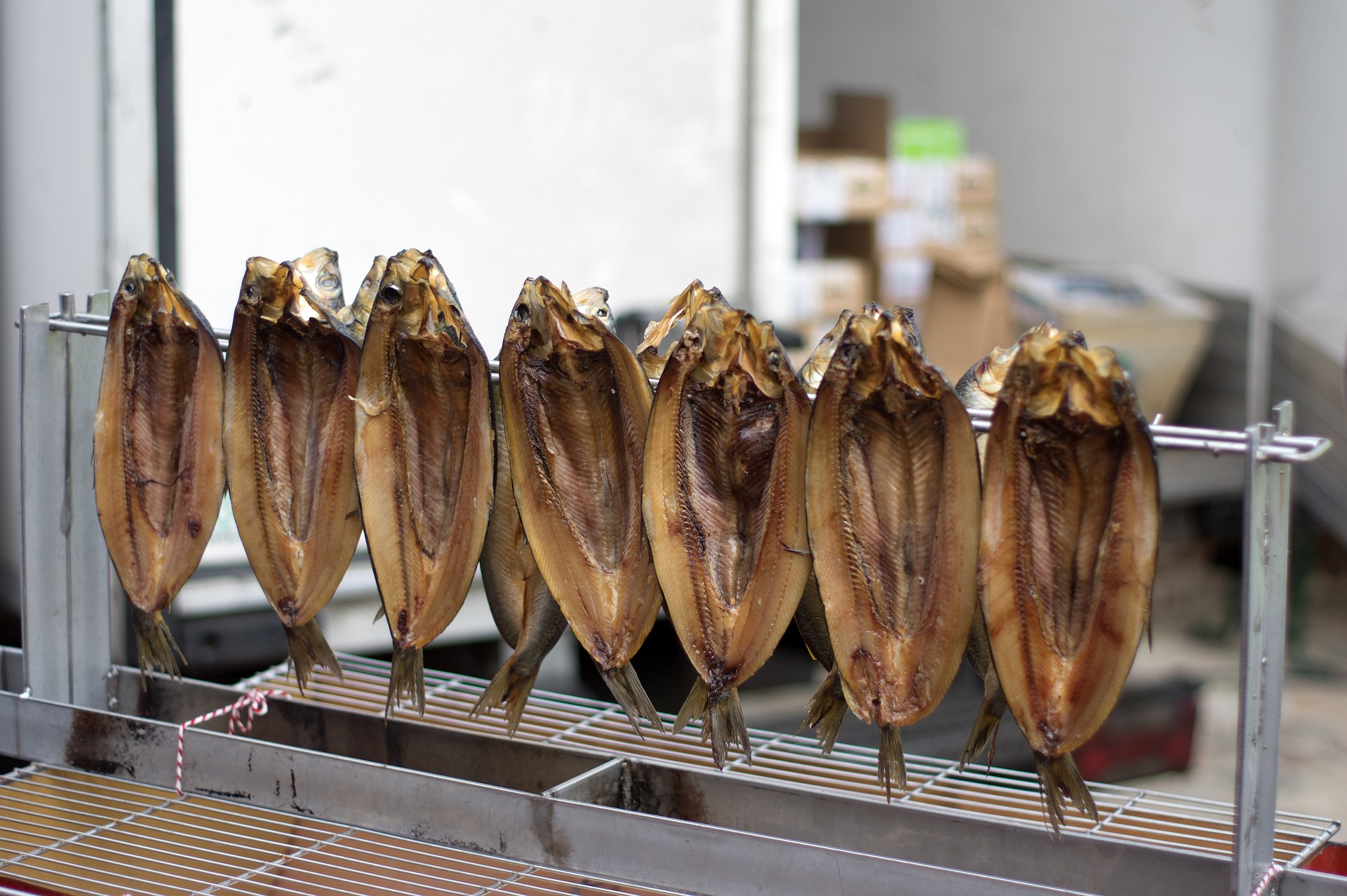
Pixabay image

It is supposedly one of the lesser-known nursery rhymes, but I came across it in one of the books my children had when they were small. Possibly, the Tale of Squirrel Nutkin. Again, there is an old song occurring along the English east coast called the Red Herring, of which these are the first two verses:

1
What shall we do with the red herring’s head?
Oh, we’ll make that into feather beds, and all such things,
We’ve red herrings and heads and feather beds, and all such things.

Chorus
Of all the fish that swim in the sea, red herring it is the fish for me,
And all such things.

2
What shall we do with the red herring’s eyes?
Oh, we’ll make ’em into puddings and pies, and all such things,
We’ve red herrings and eyes and puddings and pies,
Red herrings and heads and feather beds, and all such things.

There seem to be many versions of this, one of which was collected by Cecil Sharp, well-known as one of the first people to travel around England in the early 1900’s collecting and writing down folk songs, afraid they would become lost as, in a rapidly modernising world, fewer and fewer people now sang them.

Unusually (because I never trust it as a source) I looked at Wikipedia which merely defined a red herring as a distraction, or something misleading. It suggests the term came from a strong smelling smoked kipper which could be dragged across a track to put hounds off of a scent.

And what it reminded me of was that a dictionary of the Sussex Dialect, published in 1875 does not have a particular entry for red herring, yet under ‘White-Herring’ is found the definition: A fresh herring, as distinguished from a dried one, which is called a red-herring. Delving a little deeper, we find references to dried, smoked, herrings – named red herrings – in use to mask the scent of trails both literally and figuratively, in a story published by William Cobbett in 1807 and also a couple of references from the 1780’s. There is apparently a bit of disagreement over where the phrase was used first in that context, but that doesn’t seem relevant here, it’s just interesting to find out that red herrings actually exist, and how they came to assume the role they have in literature and everyday conversation.

The Hooden Horse

In the town I used to live in, there was once a pub called the Hooden Horse, sadly now renamed to something much less interesting. I was reminded of this at an exhibition at Maidstone museum on Hooden Horses. Hooden Horses? Well, briefly…

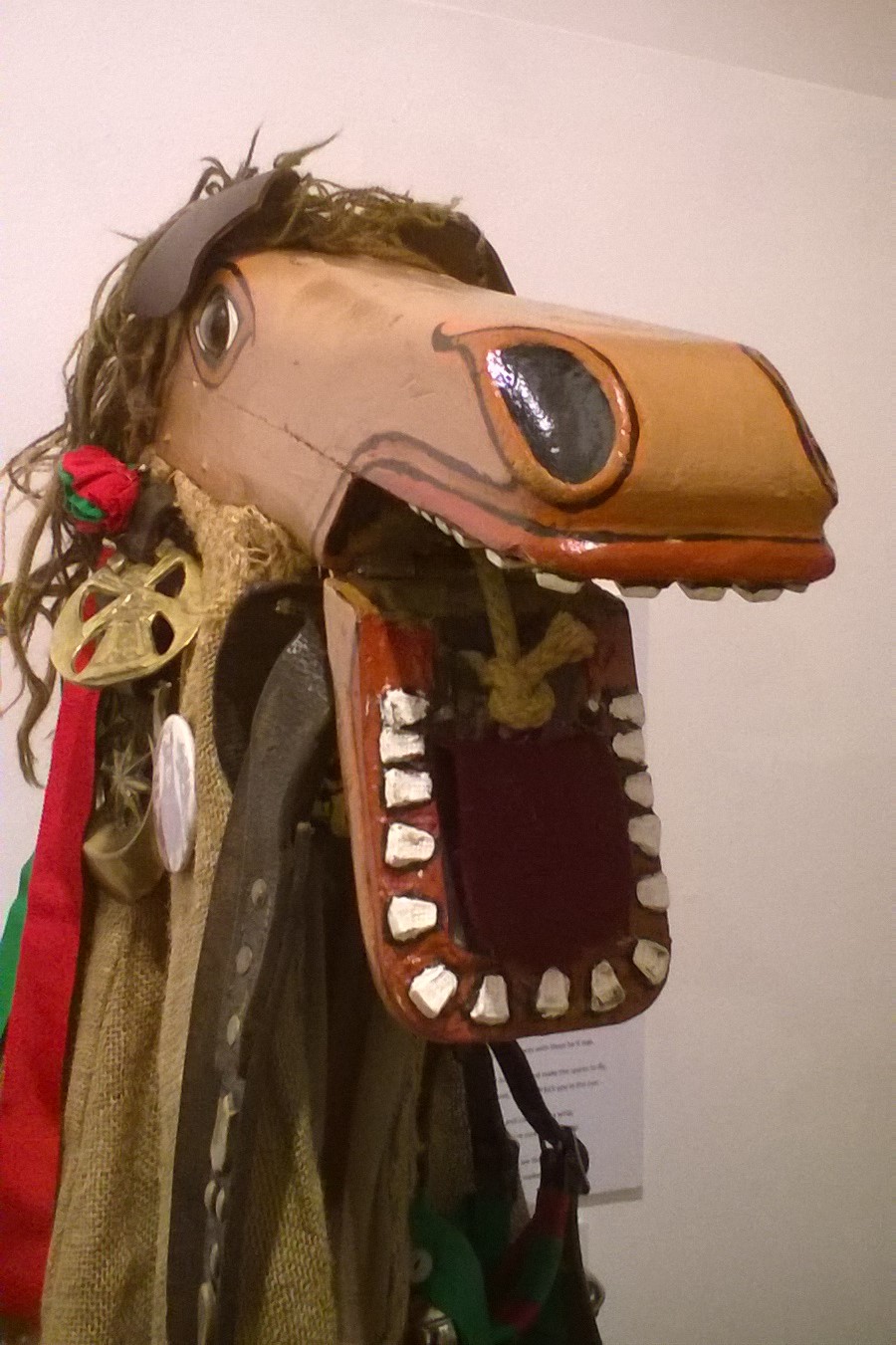
Hoodening is a rural folk tradition unique to East Kent, England. Going back a few hundred years, in the week or so running up to Christmas, groups of farm labourers would dress up as various characters and go from door to door requesting money, cake and beer. One of the characters would be the Hooden Horse, which was an artificial horse’s head made of wood, with a jaw operated by string, on a wooden pole, held by one of the performers with his body covered in cloth – usually sacking. A sort of play was then performed in rhyme, a mixture of plot and satire, usually featuring a few local characters who would be well known to the watchers and might be the butt of jokes and scorn, as well as stock characters such as Molly, a waggoner, and the Mayor. And of course the horse (him)self, invariably called Dobbin. There would also be music performed on whatever might be available – accordions, fiddles, drums or whistles.

The relationship to Morris dancing and Mummers is hard to avoid and, like these traditions, has been revived in modern times by enthusiastic traditionalists.

A photo from the early twentieth century

A modern Hooden Horse

Another early twentieth century photo.

There are many other traditions in Britain involving what is known as ‘animal guising’, where men or women take the guise of an animal, the Padstow ‘obby ‘oss being perhaps the best known of these. The performance on May Day in Padstow, Cornwall, invariably draws large crowds.

On the left, a Hooden horse, and on the right a Mari Lwyd, the ‘skull horse’ of Welsh tradition. Although unconnected (as far as I know) the Welsh had a similar tradition, also taking place around Christmas and New Year. Skull horses are to be found in other parts of England, however, including Yorkshire.

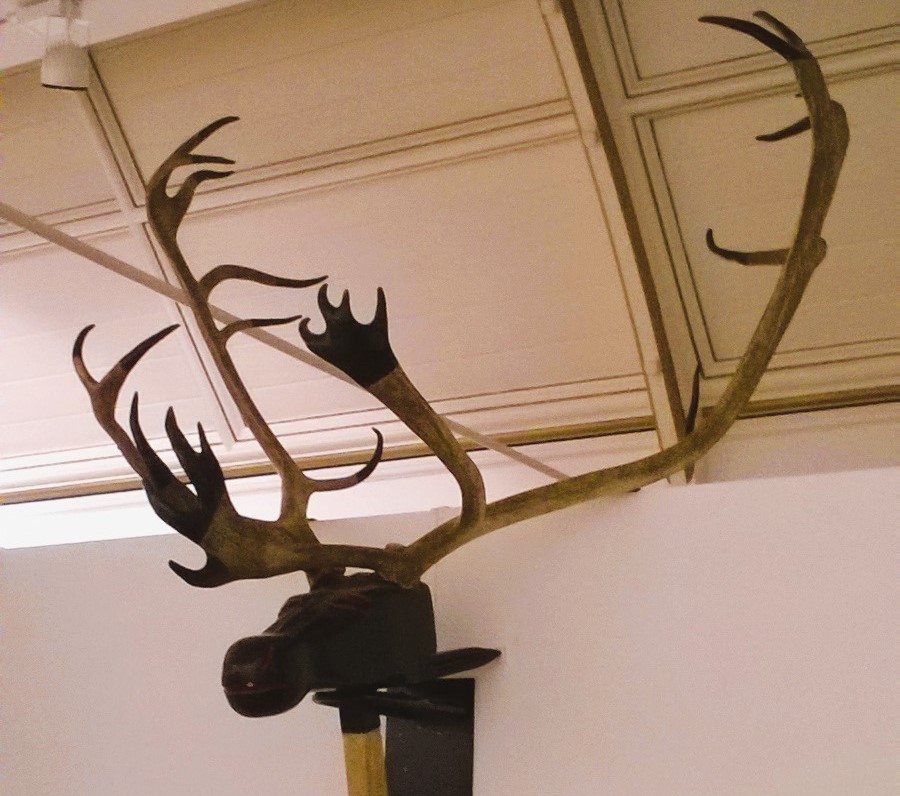
Stag guising is another old tradition – possibly older than horse guising. It was certainly in existence during medieval times and survives today in the form of the Abbots Bromley Horn dancers, Staffordshire, who perform carrying reindeer antlers on poles on the Monday following ‘Wakes Sunday’ in September. Wakes Week became a tradition in industrial Northern England when factories and mills closed down for a week for maintenance giving the workers a holiday. This began in the early nineteenth century, but before this the ritual presumably took place at a different time of year.

The exhibition is on until 17th July 2023 and there is a link to their site here.