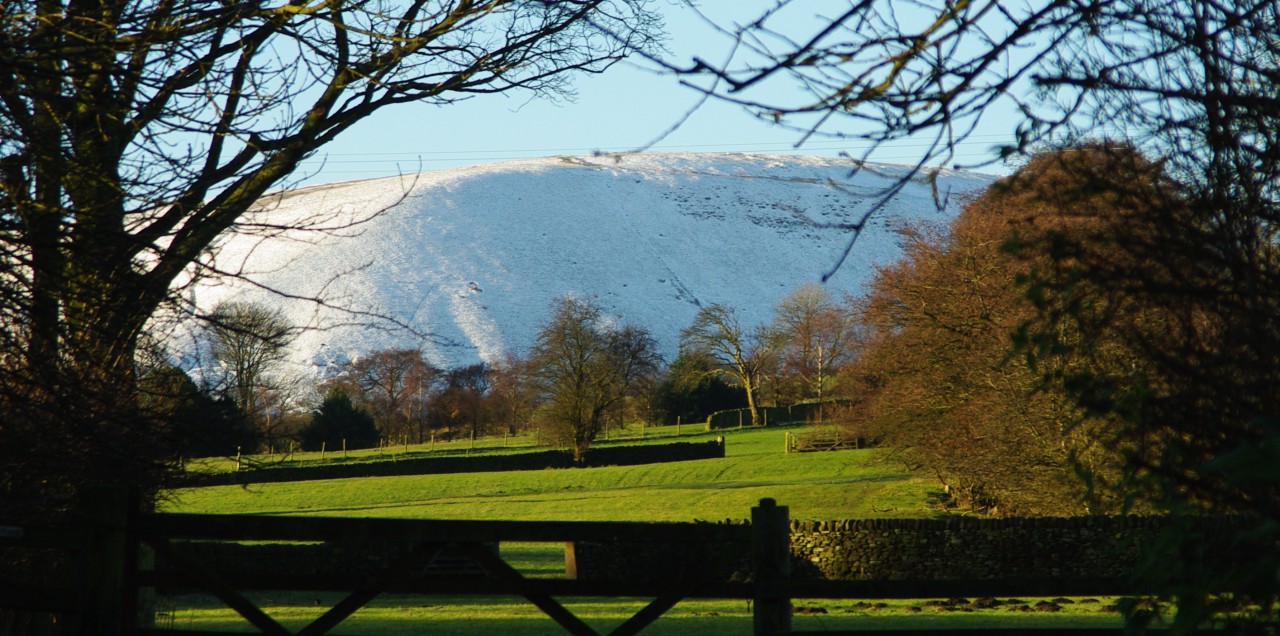
Nepal – Annapurna Region (Reblog)

In 1988 I went to Nepal for the first time, travelling by bus from Delhi to Kathmandu. Although the trip took almost 2 days, and the bus was particularly uncomfortable, it was one of the most spectacular journeys I have ever taken, and a most remarkable experience.

And then I trekked the Annapurna circuit, still considered by many to be one of the 10 classic treks of the world. It took 24 days to complete, and from the time we left Ghorka, until the day we walked down into Pokhara, we were travelling entirely on footpaths and saw no vehicles of any description.

Part of the walk is now over a new road, and whilst this is surely welcome to the inhabitants of the region, I suspect that it takes away a little of the magic of the trek.

village_1.jpg

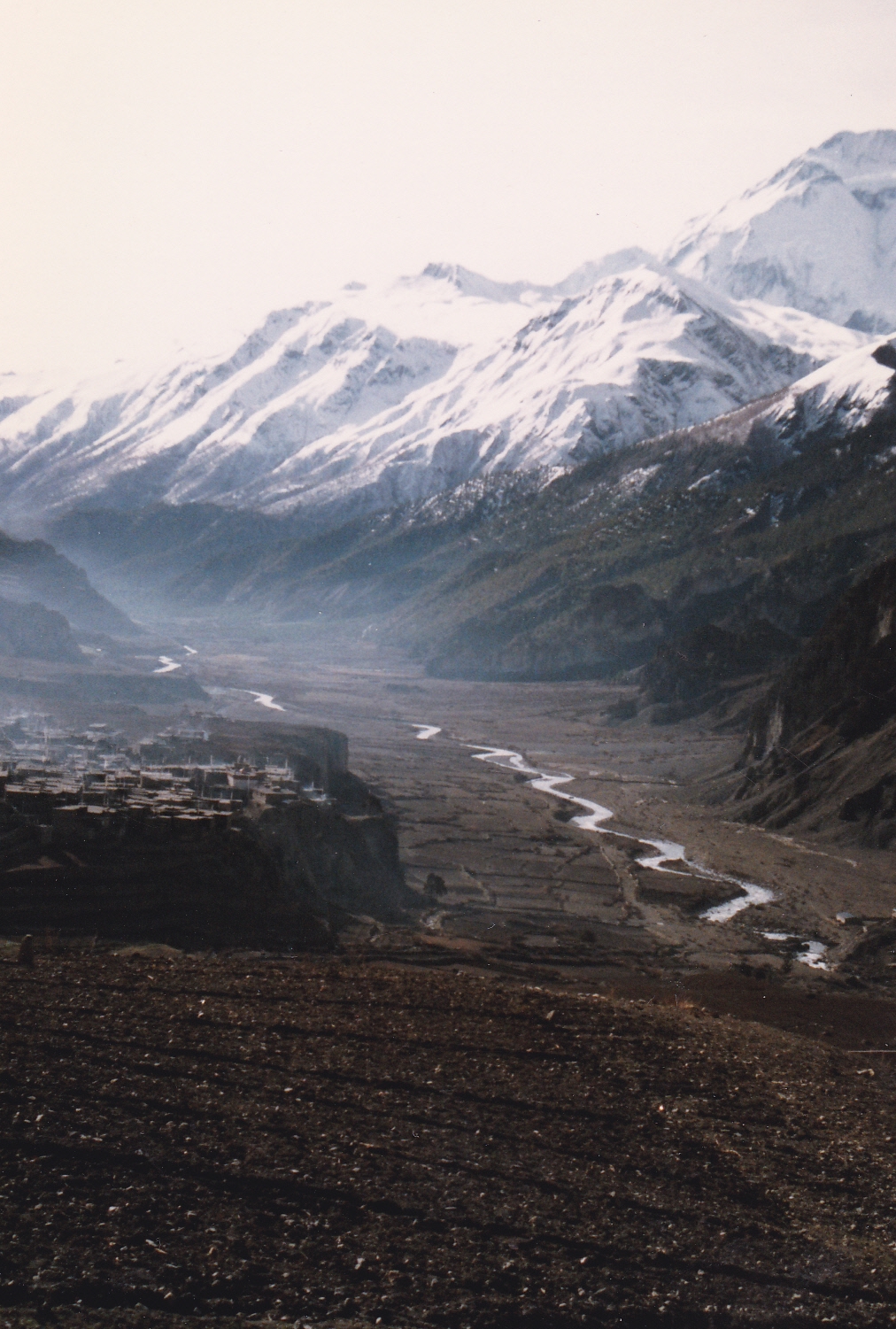
Village near Manang (posibly Mungji), on the Marsyandi River, close to the Annapurnas. In many ways, a typical Nepalese mountain village, it is built on man-made terraces, up steeply sloping mountainside, to avoid using any of the precious farmland available in the valley.
IMG_0001.jpg

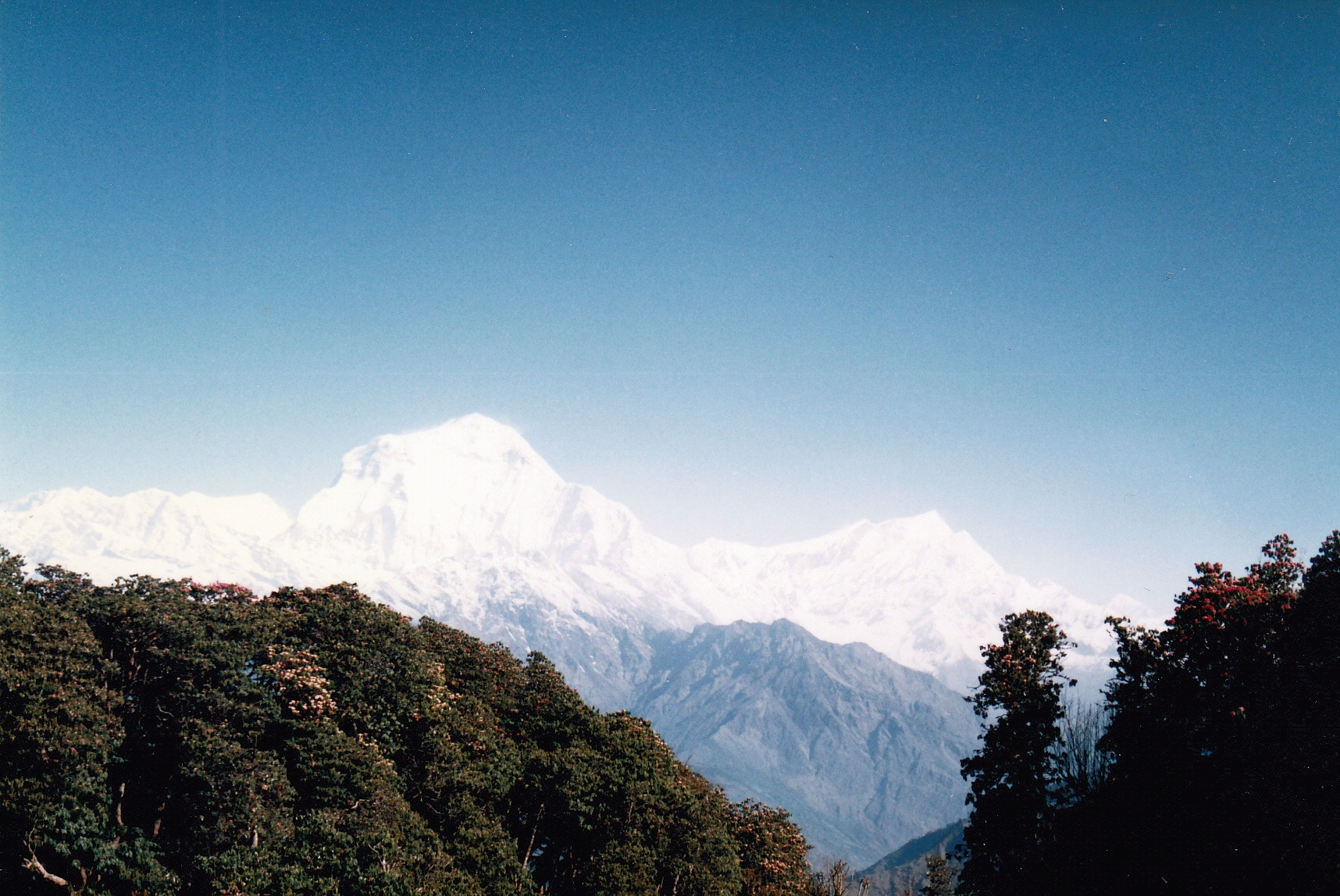
View from Poon Hill. Poon Hill lies a little to the west of Ghorapani on the river Ghora (pani being water), west of the Annapurnas. Sunrise there consequently occurs behind the Annapurna peaks, including the spectacular Machhapuchhare, or ‘fishtail’ peaks. That said, this shot was taken towards the west, looking across the Kali Gandaki valley.

IMG_0002.jpg

This is dawn, though. Machhapuchhare and its double peak are shown clearly on the left.
IMG_0003.jpg

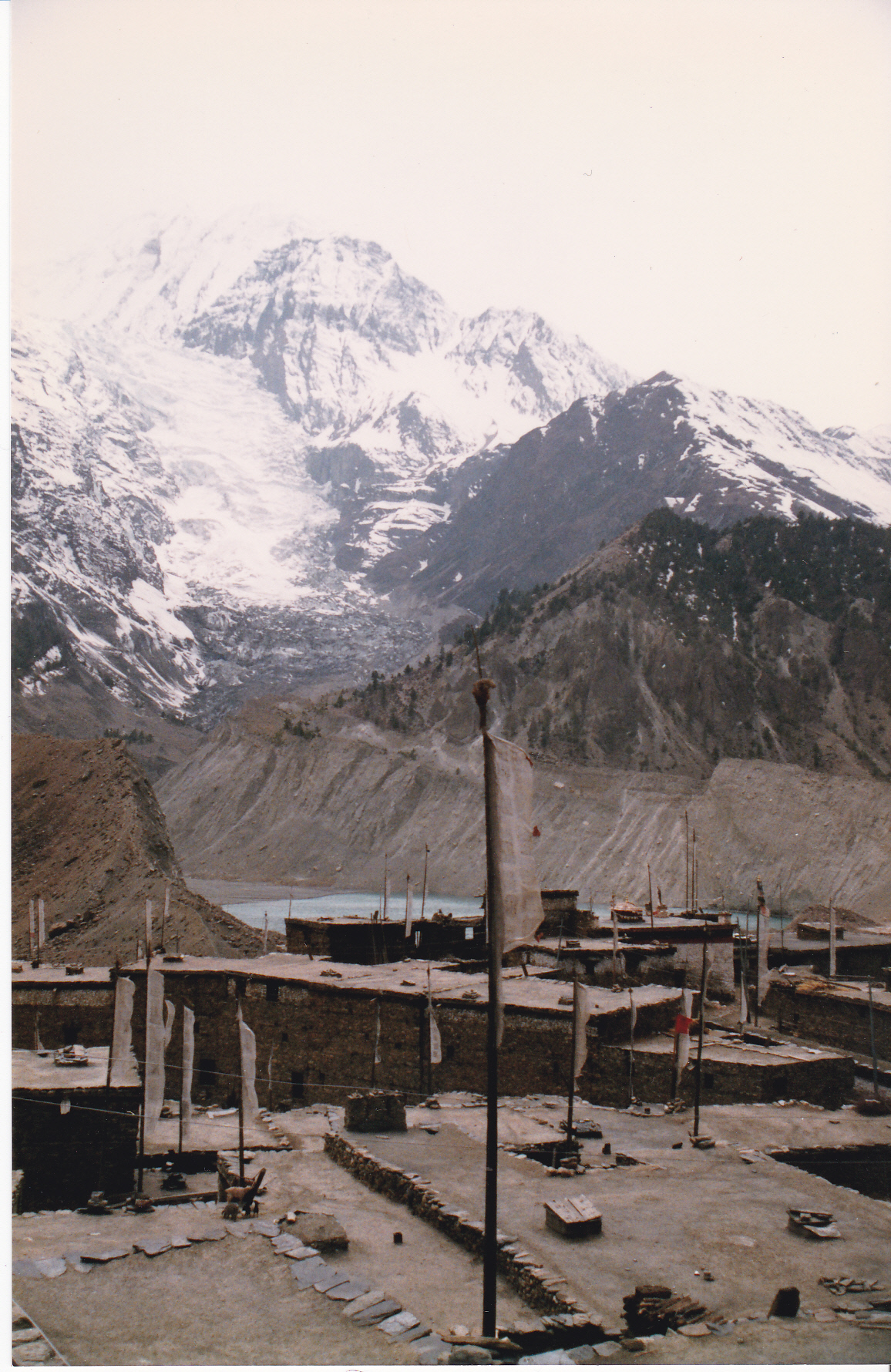
Mountains and glacial lake from the village of Manang.
img_0004

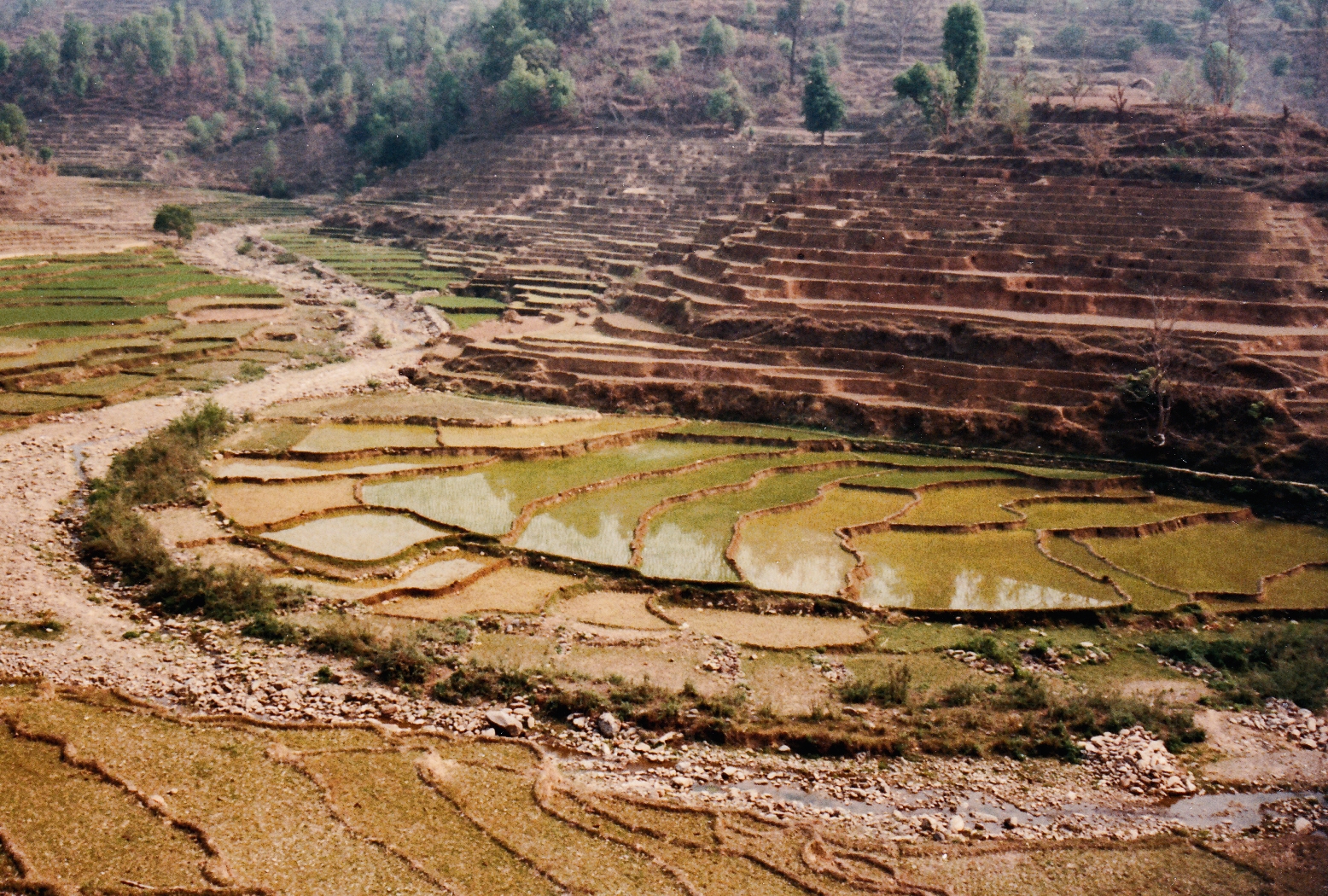
Lower down, the land is heavily terraced, fertile land being at such a premium that every available bit is used. These rice paddies are near the village of Chepe Ghat, on the Marsayandi River.

chorten_2.jpg

Chorten. Chortens, or stupas as they are also commonly known, usually contain relics of saints or priests. The original stupas held relics of the Buddha, such as at the Temple of the Tooth, at Kandy, Sri Lanka.

IMG_0005.jpg

Mountains near the village of Muktinath. In the rain-shadow, here, the landscape is that of a high altitude desert.

IMG_0006.jpg

Mani stones on the Annapurna trail. Mani stones may be carved, painted or both, and serve a similar function to prayer flags, in that they either have a prayer or mantra carved on them (typically ‘Om Mani Padme Hum’ – from which the name ‘Mani Stone’ comes from – meaning ‘Hail to the jewel in the heart of the lotus’ i.e. The Buddha) or they may have a picture of the Buddha himself. Although they may be encountered singly or in small numbers by shrines or at Gompas, at times they make up huge walls containing many hundreds of stones, some of which may have been there for hundreds of years. These walls, like shrines or any other Buddhist relics encountered here, are passed on the left.

IMG_0007.jpg

Houses at Manang.

IMG_0008.jpg

The Upper reaches of the Marsayandi, looking down to Manang.

IMG_0009.jpg

Snowed in below Thorung La. Not an unusual occurrence. Thorung La is at 5415m (17,700ft). We arrived at our campsite early afternoon with the ground clear of snow and the sun out. This was the scene a couple of hours later, delaying our crossing the pass (‘La’ is Tibetan for ‘Pass’) by 24 hours.

IMG_0010.jpg

Crossing Thorung La. On the day we crossed the pass, we left camp just after 4 in the morning, and were down the other side by late afternoon.

IMG_0011.jpg

Looking west (and down!) from Thorung La). On this side of the pass there is far less precipitation and the land is noticeably drier. This is looking towards Muktinath.

Sarnath

It’s mid February 2008, and I am in Sarnath.

Formerly a deer park, Sarnath lies 10km outside Varanasi and is the place where the Buddha came after his enlightenment at Bodhgaya, to seek out his former companions who were living there in huts and give his first sermon, on the turning of the Wheel of Dharma. This comprises the Buddha’s path to Enlightenment: the Four Noble Truths, the Eightfold path and the Middle Way.

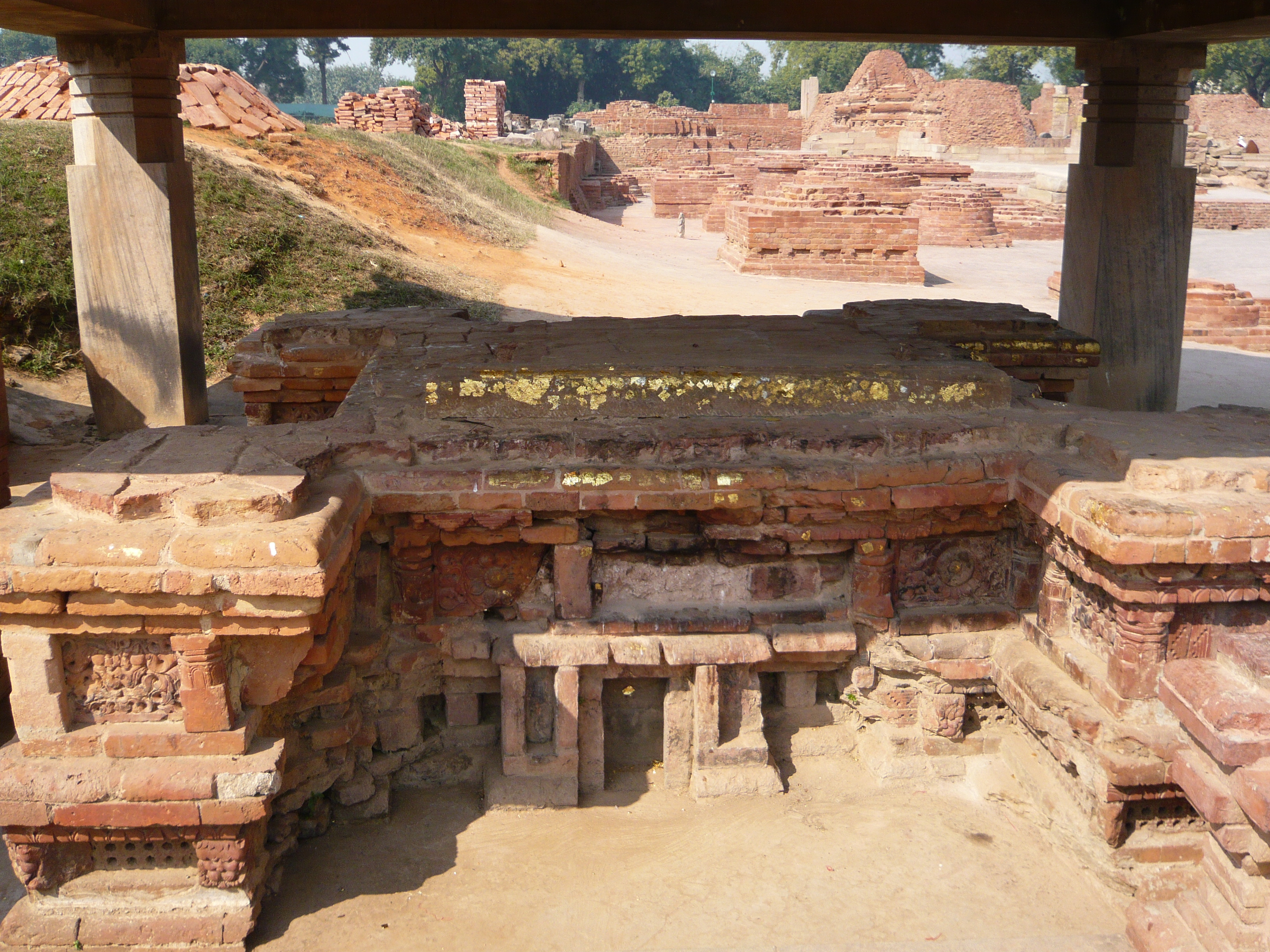
This altar is still used by pilgrims for pujas – not just Buddhists, but also Jains, for whom Sarnath is also sacred.

A monastic tradition flourished at Sarnath for over 1500 years after the Buddha. Many monasteries and two great stupas were built, which survived until the end of the 12th century when they were destroyed during the Muslim invasions and not rediscovered until 1834 by a British archaeological team. Amongst these ruins were a stone column 15.25m high with four lions as its capital, erected by the emperor Ashoka, a convert to Buddhism after witnessing the terrible carnage of a war he had unleashed in the 3rd century BC. This capital was adopted as the symbol of the modern Indian republic.

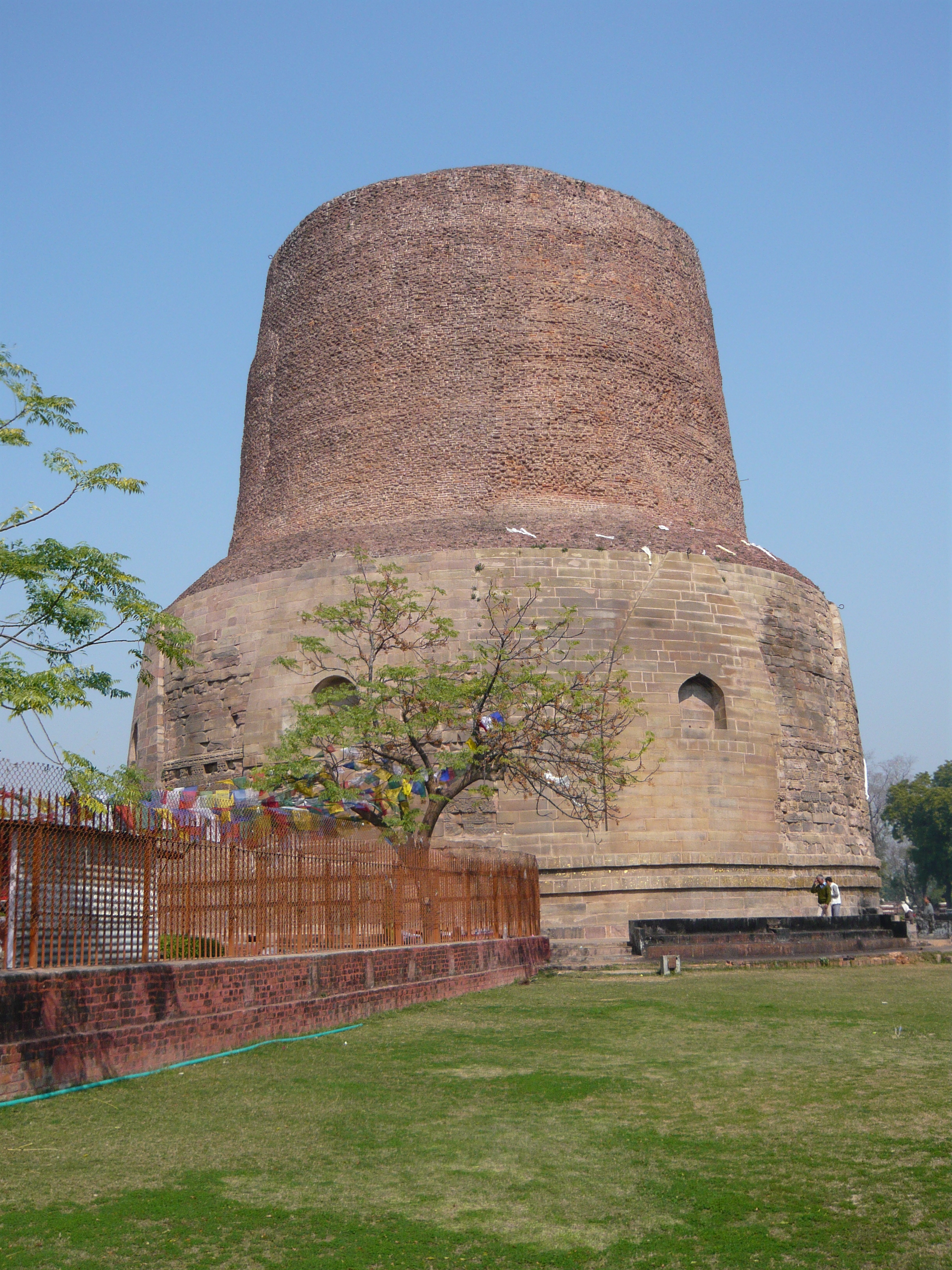
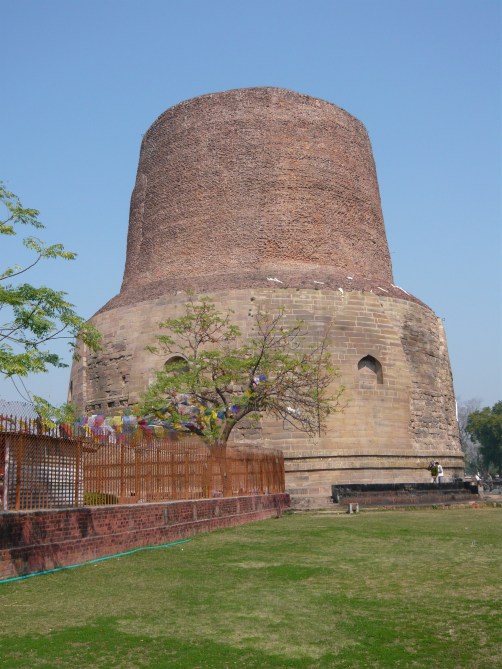
The Dhamekh Stupa. Built in the sixth century, this solid cylindrical tower, 33m high, consists of a stone base with the upper part made of brick, and was virtually the only building to survive the Islamic destruction, perhaps because of its sheer size and bulk. It marks the spot where the Buddha supposedly gave his first sermon. The five former companions, who became his first disciples on hearing him speak, had deserted him when he gave up his ascetic vows. On achieving enlightenment, he determined to follow the ‘Middle Way’, avoiding both luxuries and asceticism. This is the basis of its appeal to me personally – nothing to do with religion, but a sensible lifestyle avoiding extremes, with kindness at its heart. A philosophy of life.

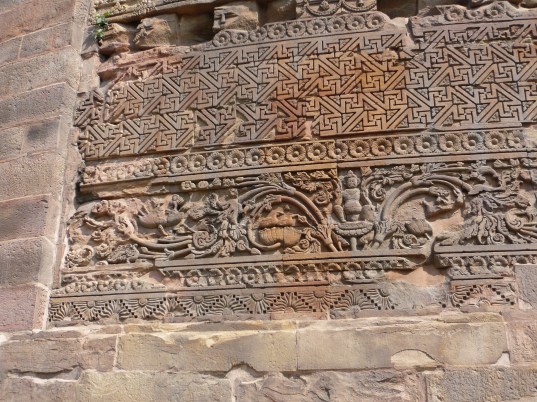
Delicate carvings on the base of the Damekh Stupa.

Just outside the Deer park, there are a number of modern Buddhist monasteries, attracted to the site because of its history. This particular spot was a beautiful peaceful place, but I can’t remember exactly where it was! I think it was outside the Japanese Temple…

Inside the Dharmachakra Japanese monastery

Mulagandhakuti Vihara built by the Mahabodhi Society in 1931

Bodhgaya (2) – A Special Place

About six months ago, I put up a post on Bodhgaya (which you can find here if you wish to read it again), and promised I would find a few more photos to post another time.

This is another time.

img_0018

My first picture is of the entrance to the Mahabodhi Temple, which is built on the site where the Buddha achieved enlightenment. The first temple was built by Emperor Ashoka, in the third century BC, and the present one was erected in the fifth or sixth century AD. Visitors remove their shoes (or face a one hundred rupee fine) and descend the steps from the garden that surrounds the temple.

img_0020

Just before reaching the entrance itself, they will pass this small chorten – one of dozens surrounding the temple – garlanded with marigolds.

img_0019

Many more chortens surround the temple and can be found around the gardens themselves, these ones beside a carved sandstone balustrade.

img_0024

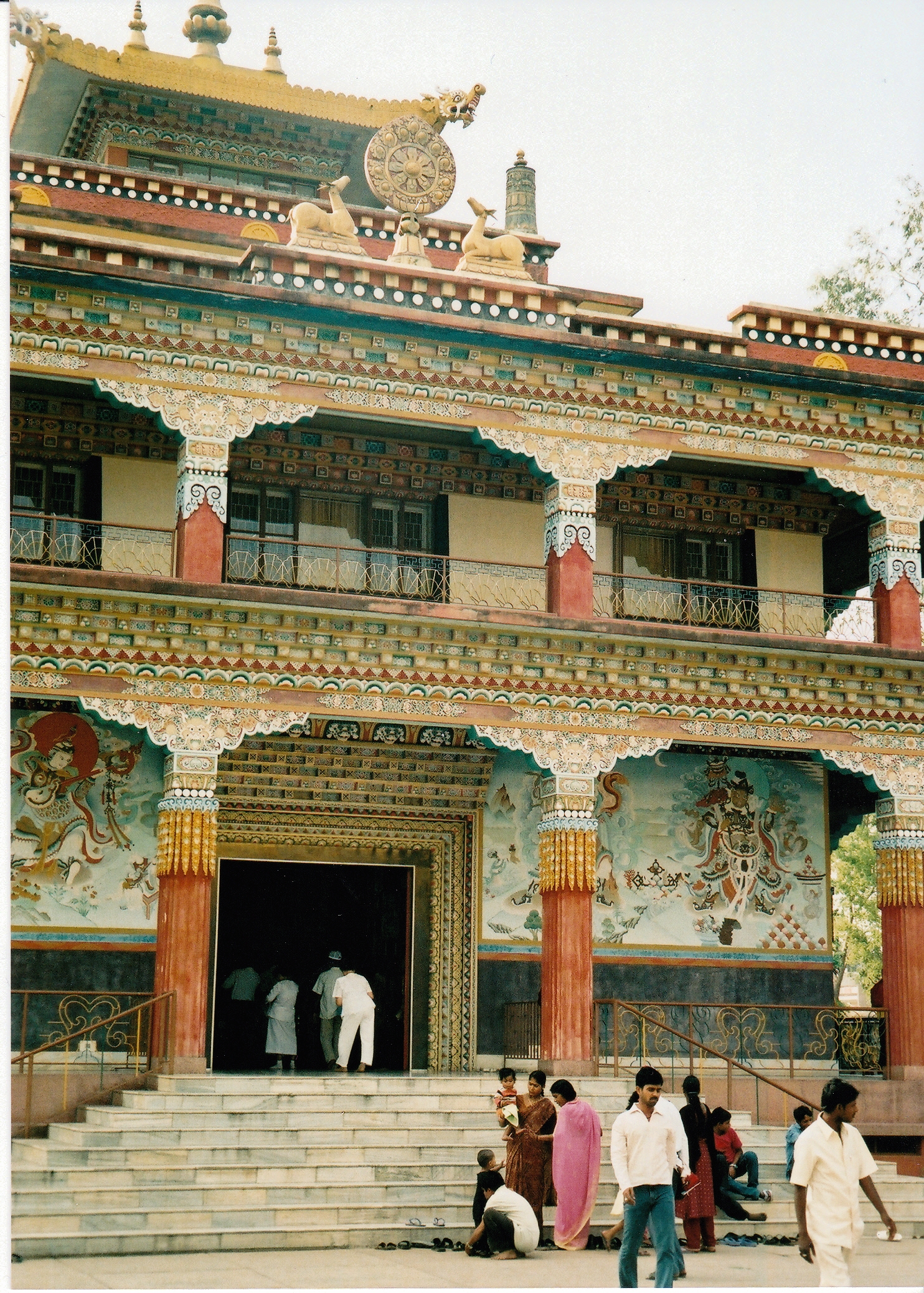
But the Mahabodhi Temple is by no means the only Buddhist temple in Bodhgaya. As the place where the Buddha attained enlightenment, it has naturally been the focus for many Buddhists from around the world, and there are many other temples built by those from the various different branches of Buddhism. This one is one of two Tibetan temples.

img_0017

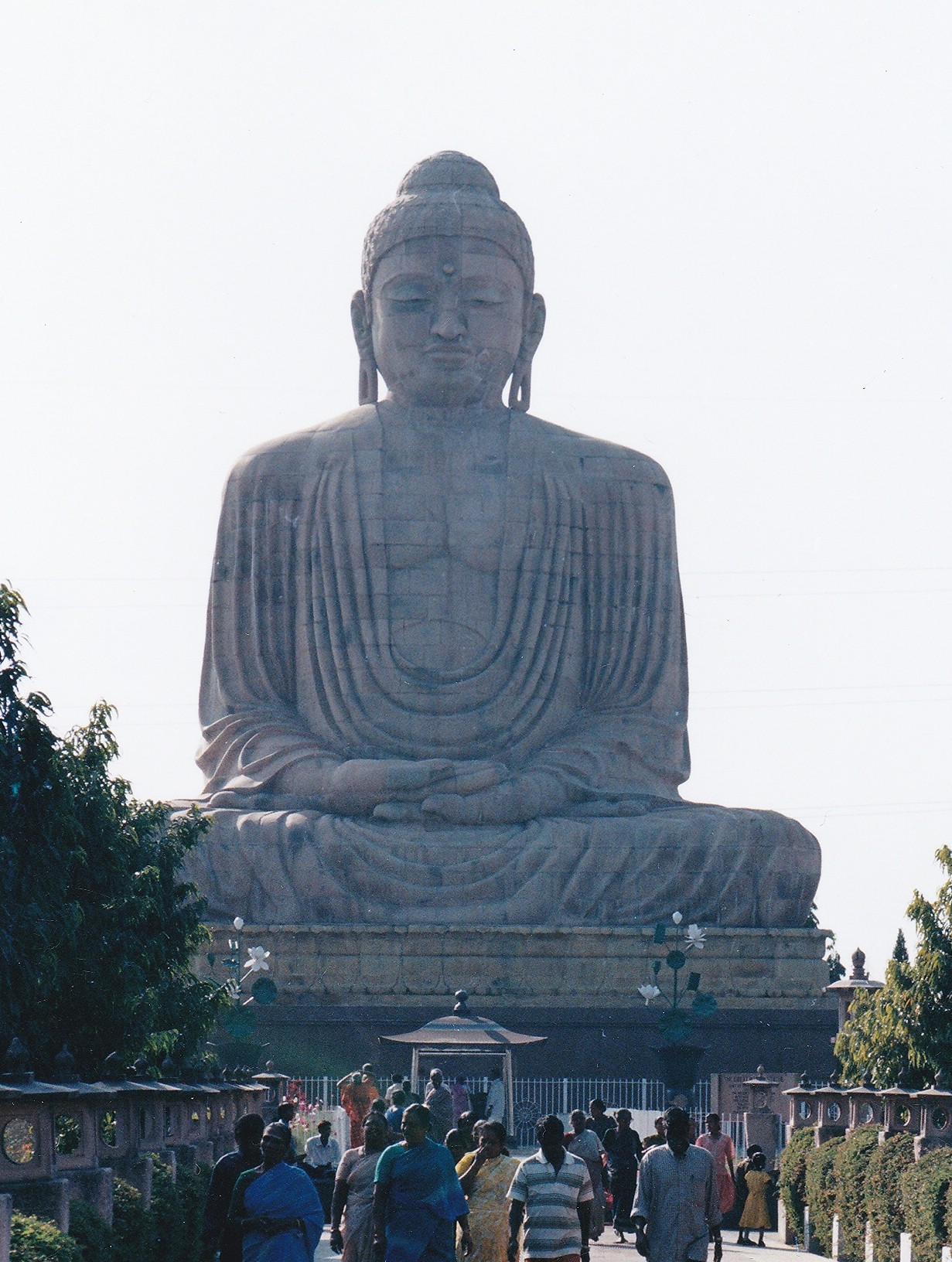
On the edge of Bodhgaya, this twenty five metre tall statue of the Buddha was erected in the grounds of the Japanese Daijokyo temple in 1989.

But Bodhgaya, naturally, is more than simply its temples. Although it is quite naturally a major tourist attraction, it is also home to many people, and daily life is not much different from other towns in Northern India.

img_0023

As you approach the temple areas from the northern side of the town, this is a fairly typical scene. In the distance, the share auto that plies between Bodhgaya and Gaya is filling up with passengers, and men and women shop for essentials.

img_0021

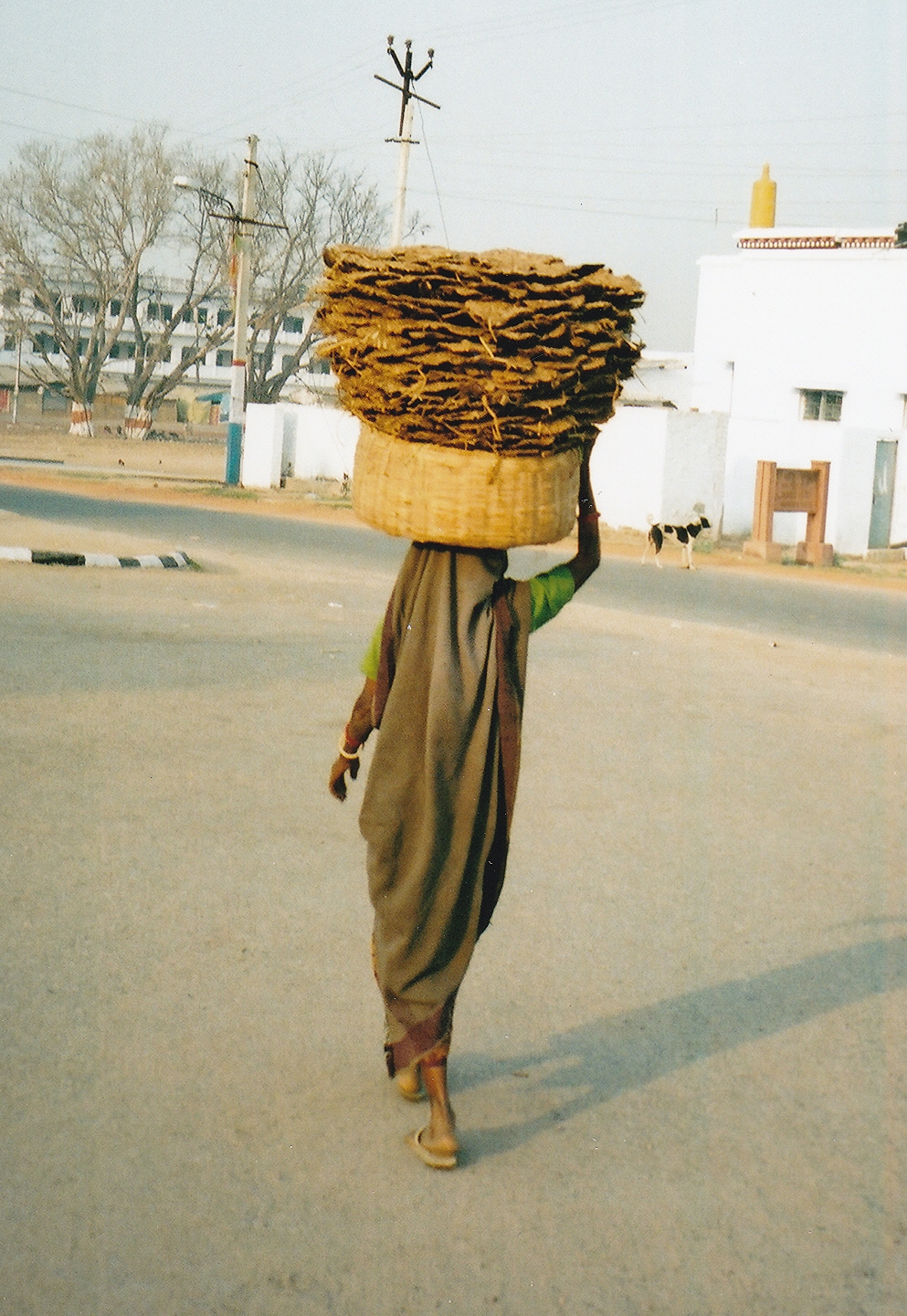
A woman carries a basket of dried cattle dung, which will be used to fuel the cooking fire.

img_0022

And on the edge of the town, the scene quickly becomes rural once again.

From Thursday I shall be away for a few days, but will catch up with comments and other blog posts once I am back.

Nepal – Annapurna Region

In 1988 I went to Nepal for the first time, travelling by bus from Delhi to Kathmandu. Although the trip took almost 2 days, and the bus was remarkably uncomfortable, it was one of the most spectacular journeys I have ever taken, and a most remarkable experience.

And then I trekked the Annapurna circuit, still considered by many to be one of the 10 classic treks of the world. It took 24 days to complete, and from the time we left Ghorka, until the day we walked down into Pokhara, we were travelling entirely on footpaths and saw no vehicles of any description.

Part of the walk is now over a new road, and whilst this is surely welcome to the inhabitants of the region, I suspect that it takes away a little of the magic of the trek.

village_1.jpg

Village near Manang (posibly Mungji), on the Marsyandi River, close to the Annapurnas. In many ways, a typical Nepalese mountain village, it is built on man-made terraces, up steeply sloping mountainside, to avoid using any of the precious farmland available in the valley.

IMG_0001.jpg

View from Poon Hill. Poon Hill lies a little to the west of Ghorapani on the river Ghora (pani being water), west of the Annapurnas. Sunrise there consequently occurs behind the Annapurna peaks, including the spectacular Machhapuchhare, or ‘fishtail’ peaks. That said, this shot was taken towards the west, looking across the Kali Gandaki valley.

IMG_0002.jpg

This is dawn, though. Machhapuchhare and its double peak are shown clearly on the left.

IMG_0003.jpg

Mountains and glacial lake from the village of Manang.

img_0004

Lower down, the land is heavily terraced, fertile land being at such a premium that every available bit is used. These rice paddies are near the village of Chepe Ghat, on the Marsayandi River.

chorten_2.jpg

Chorten. Chortens, or stupas as they are also commonly known, usually contain relics of saints or priests. The original stupas held relics of the Buddha, such as at the Temple of the Tooth, at Kandy, Sri Lanka.

IMG_0005.jpg

Mountains near the village of Muktinath. In the rain-shadow, here, the landscape is that of a high altitude desert.


IMG_0006.jpg

Mani stones on the Annapurna trail. Mani stones may be carved, painted or both, and serve a similar function to prayer flags, in that they either have a prayer or mantra carved on them (typically ‘Om Mani Padme Hum’ – from which the name ‘Mani Stone’ comes from – meaning ‘Hail to the jewel in the heart of the lotus’ i.e. The Buddha) or they may have a picture of the Buddha himself. Although they may be encountered singly or in small numbers by shrines or at Gompas, at times they make up huge walls containing many hundreds of stones, some of which may have been there for hundreds of years. These walls, like shrines or any other Buddhist relics encountered here, are passed on the left.

IMG_0007.jpg

Houses at Manang.

IMG_0008.jpg

The Upper reaches of the Marsayandi, looking down to Manang.

IMG_0009.jpg

Snowed in below Thorung La. Not an unusual occurrence. Thorung La is at 5415m (17,700ft). We arrived at our campsite early afternoon with the ground clear of snow and the sun out. This was the scene a couple of hours later, delaying our crossing the pass (‘La’ is Tibetan for ‘Pass’) by 24 hours.

IMG_0010.jpg

Crossing Thorung La. On the day we crossed the pass, we left camp just after 4 in the morning, and were down the other side by late afternoon.

IMG_0011.jpg

Looking west (and down!) from Thorung La). On this side of the pass there is far less precipitation and the land is noticeably drier. This is looking towards Muktinath.
Varanasi and Sarnath

The city of Varanasi is probably the most important place in India to Hindus, whilst the ruins of Sarnath, some 10km away, mark the remains of a site of great importance to Buddhists. I stayed there for three days, some 8 years ago.
039
Dasaswamedh Ghat, Varanasi. Taken from the top of the steps (ghats). The River Ganges is the holiest river to Hindus, and Varanasi is the one of the holiest cities. Previously named Benares (and often so still called) and Kashi (City of Life), it is visited by Hindus in their millions who come to bathe in the Ganges to purify their souls. In a final journey, many are cremated here and their ashes cast into the river, believing that this will help to achieve liberation from rebirth.

040

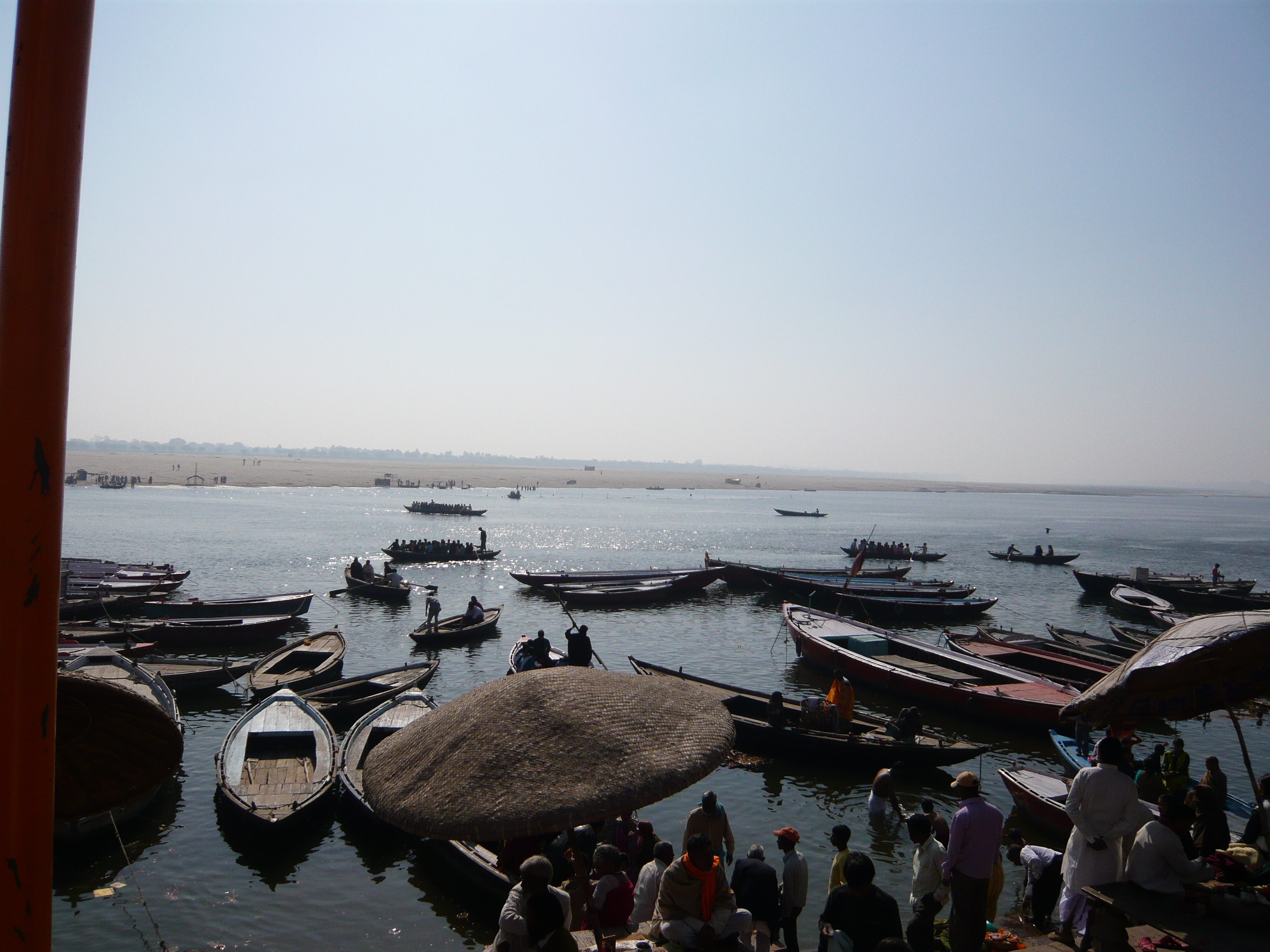
The river Ganges from Dasaswamedh Ghat, Varanasi.

038

Stalls on the ghats at Varanasi. Varanasi never seems less than vibrant and colourful.

055

And another stall near the ghats.

049

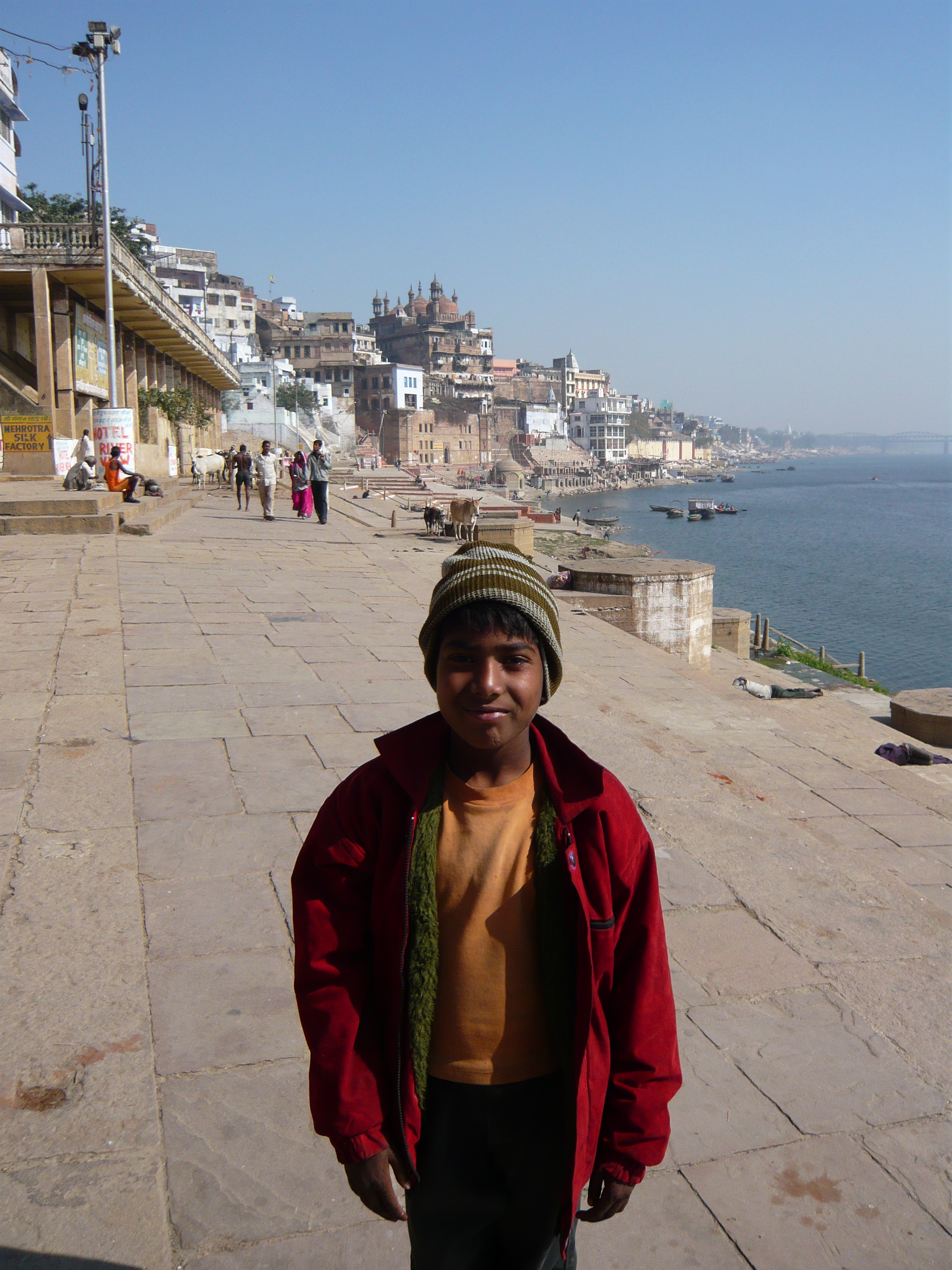
Down at the ghats I was trailed by this cheerful young rogue demanding money to have his photo taken or to show me the sights or sell me souvenirs or lead me to stalls where I could purchase to my heart’s content or…whatever.

037

Street scene in Varanasi. The church in the middle distance is Saint Thomas’. This was taken quite early in the morning when I was on my way to the ghats. Early afternoon as I was returning, it was packed solid, traffic completely unable to move.

004

10km outside Varanasi lie the ruins of Sarnath. After the Buddha had achieved enlightenment at Bodhgaya, he came to Sarnarth – a walk of some 250kms or so, through what would have been highly dangerous country then – to seek out his former companions and in the Deer Park there he gave his first sermon, on the turning of the wheel of law. This comprises the Buddha’s path to Enlightenment: the Four Noble Truths, the Eightfold path and the Middle Way. In the 3rd century BC, the emperor Ashoka, a convert to Buddhism after witnessing the terrible carnage of a war he had unleashed, built stupas and monasteries here as well as an engraved pillar. These survived until the end of the 12th century when they were destroyed during the Muslim invasions and not rediscovered until 1834 by a British archaeological team.

008


This altar stone in the ruins of Sarnath) is still being used by pilgrims for pujas.

013.JPG

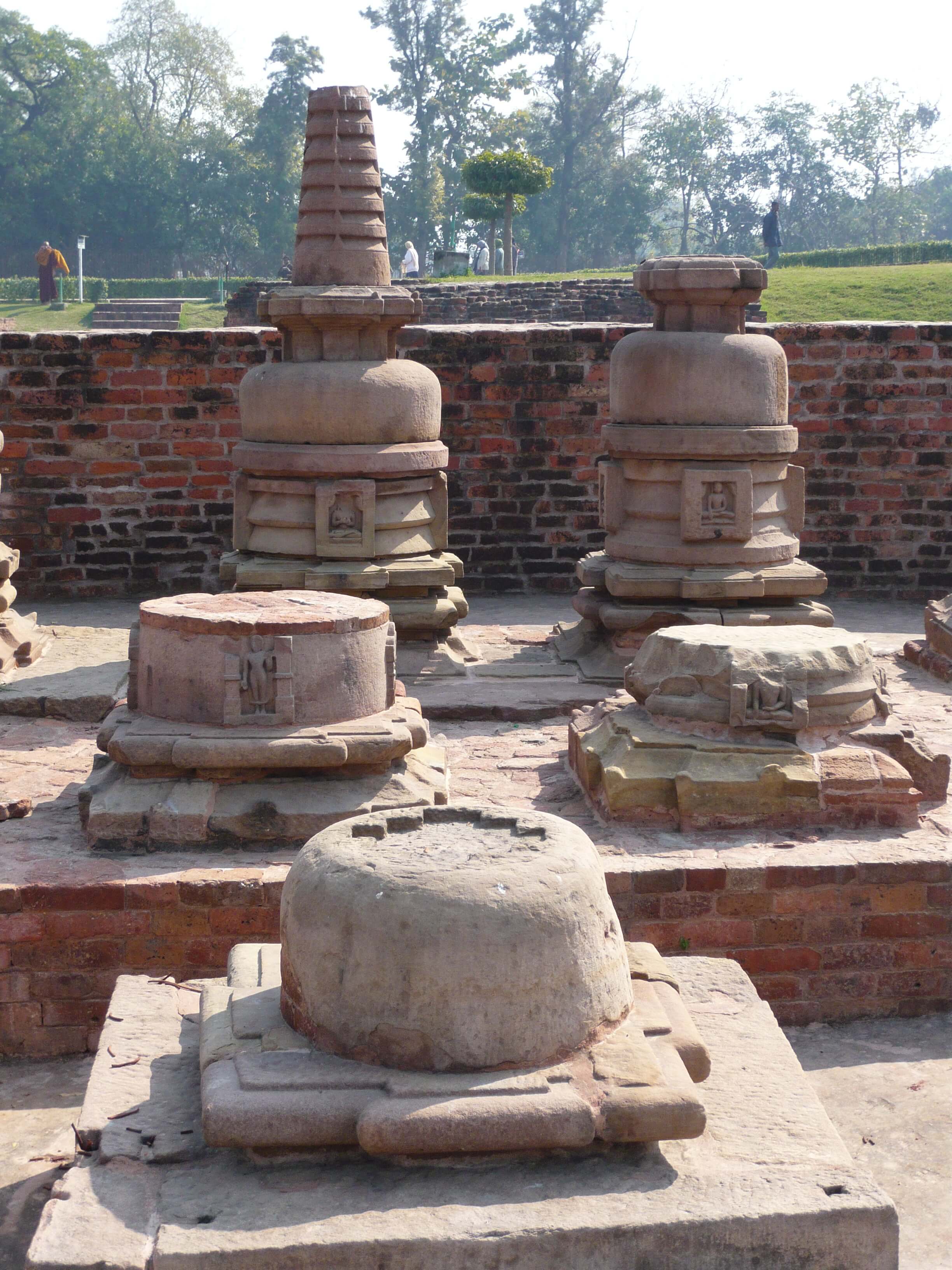
Dhamekh Stupa at Sarnath . This solid cylindrical tower, 33m in height, supposedly marks the place where the Buddha gave his first sermon. The base is stone, covered in delicate carvings, and the upper part brick.

016.JPG

Carvings adorning the base of the Dhamekh Stupa.

Bodhgaya (1)

I spent a total of 2 months in Bodhgaya, Bihar, but I seemed to end up with surprisingly few photographs of the town and surrounding countryside. Here are a selection of them, though, and I may put a few more up sometime soon. Hence the somewhat tentative ‘part one’ in the title.

mahabodhi temple


 Bodhgaya is a world heritage site, because the Mahabodhi Temple was built at the site where the Buddha is supposed to have achieved enlightenment, some 2500 years ago. The original temple was built by the emperor Ashoka in the 3rd century BC. The current temple dates from the 11th century AD, and was restored in 1882 by the Burmese. Surrounded by the usual frenetic Northern Indian crowds, and visited by a huge number of pilgrims and visitors, the temple and grounds still manage to somehow achieve an unbelievably peaceful ambience.


IMG_0002

The Bhodi tree at the Mahabodhi Temple. It is a third generation descendant of the tree under which the Buddha is supposed to have achieved enlightenment.


img_0025

Thai temple, Bodhgaya. As well as the Mahabodhi Temple, Bodhgaya also has temples built by virtually every country with a sizeable Buddhist population. As befits the place where the Buddha originally achieved enlightenment, it is an active Buddhist centre with many charitable projects set up and running.


dawn-panorama
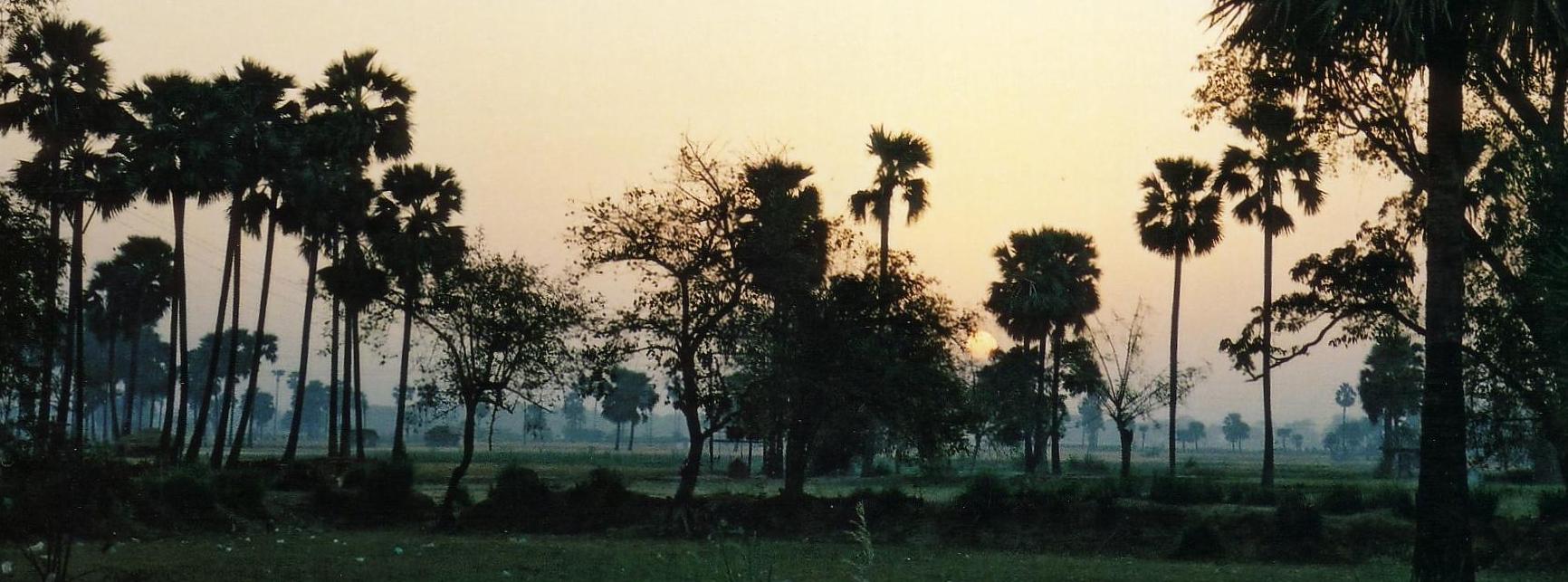
Dawn over Sujata Village, Bodhgaya. This was often the view that greeted me when I walked across the dry bed of the River Phalgu from Bodhgaya to the village of Sujata, in the cool of the morning. A rich reward for getting up early!


hindu-temples-panorama

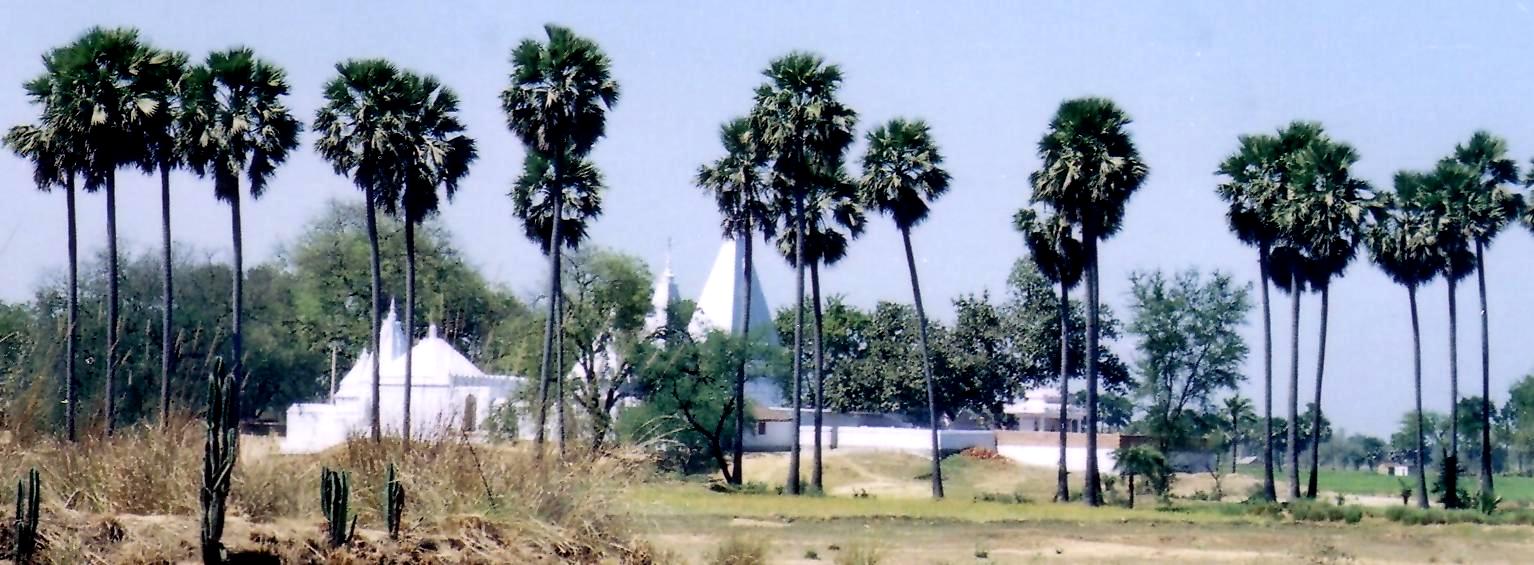
Hindu temples on the edge of Sujata Village.

IMG

Fields in Sujata Village. In the vast majority of Indian villages, fields are still worked by hand or with animal labour. here is no exception.

IMG_0016.jpg

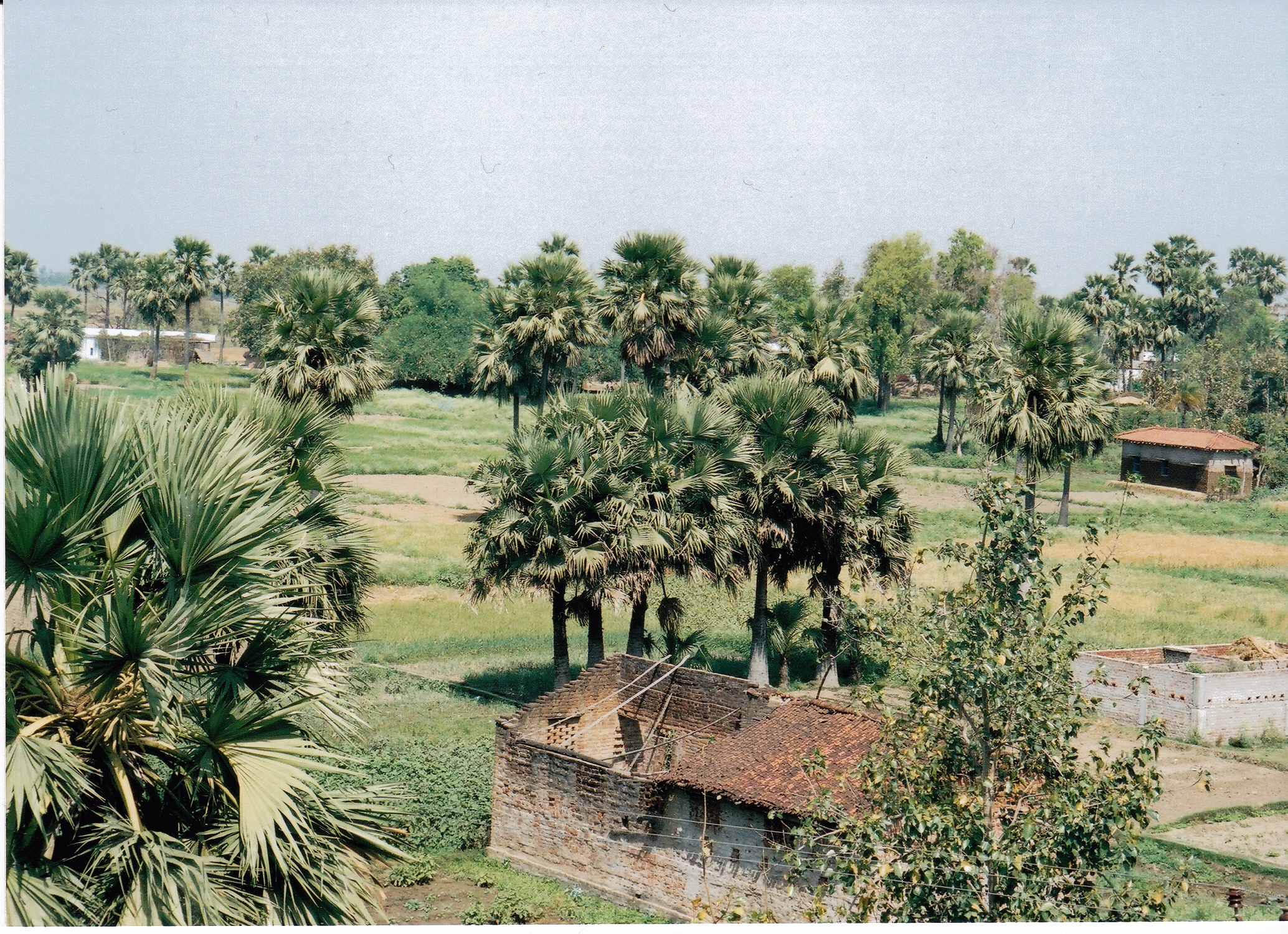
Farms at the edge of Bodhgaya. Although Bihar is the most corrupt, poverty-ridden state in India, sitting at the bottom of the table in almost any set of statistics that you may care to consult, the land appears lush and fertile, supporting a strong agriculture.

img_0026

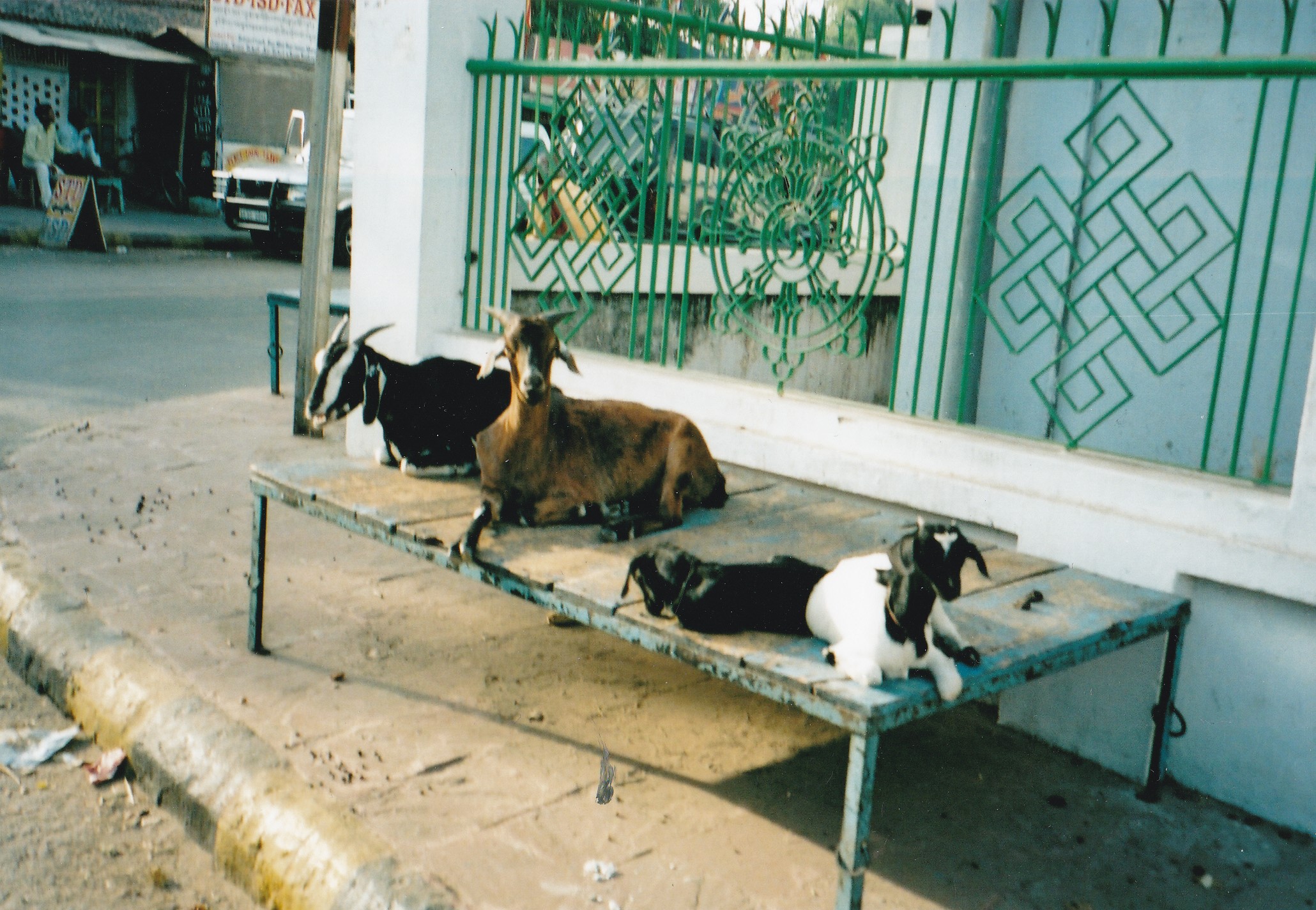
And whilst we’re on a rural theme…a street corner in Bodhgaya.


IMG_0012.jpg

Monks heading for morning puja (ceremony) in Sujata.

temple door bodhgaya.jpg

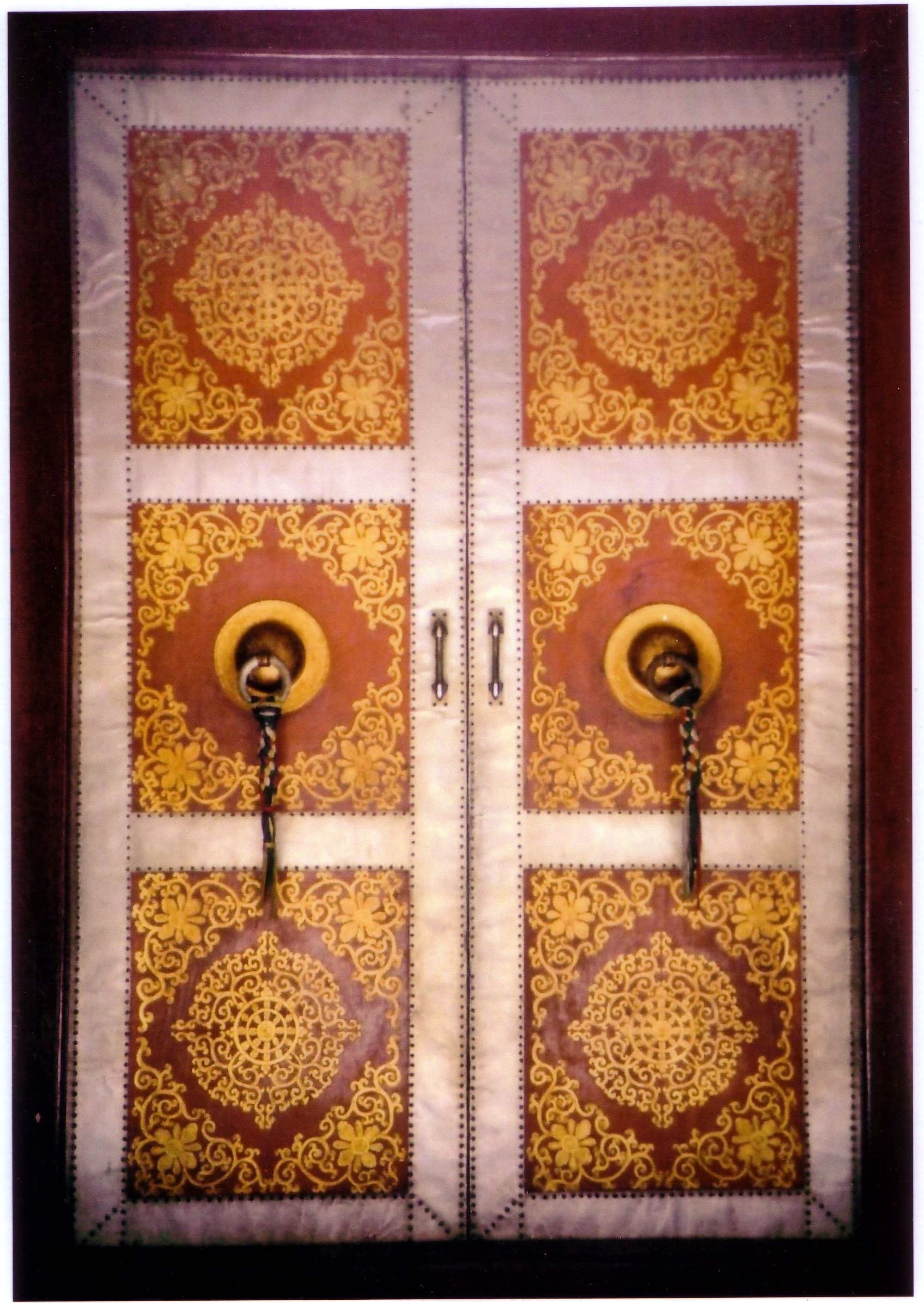
Temple door in Bodhgaya.

img_0027

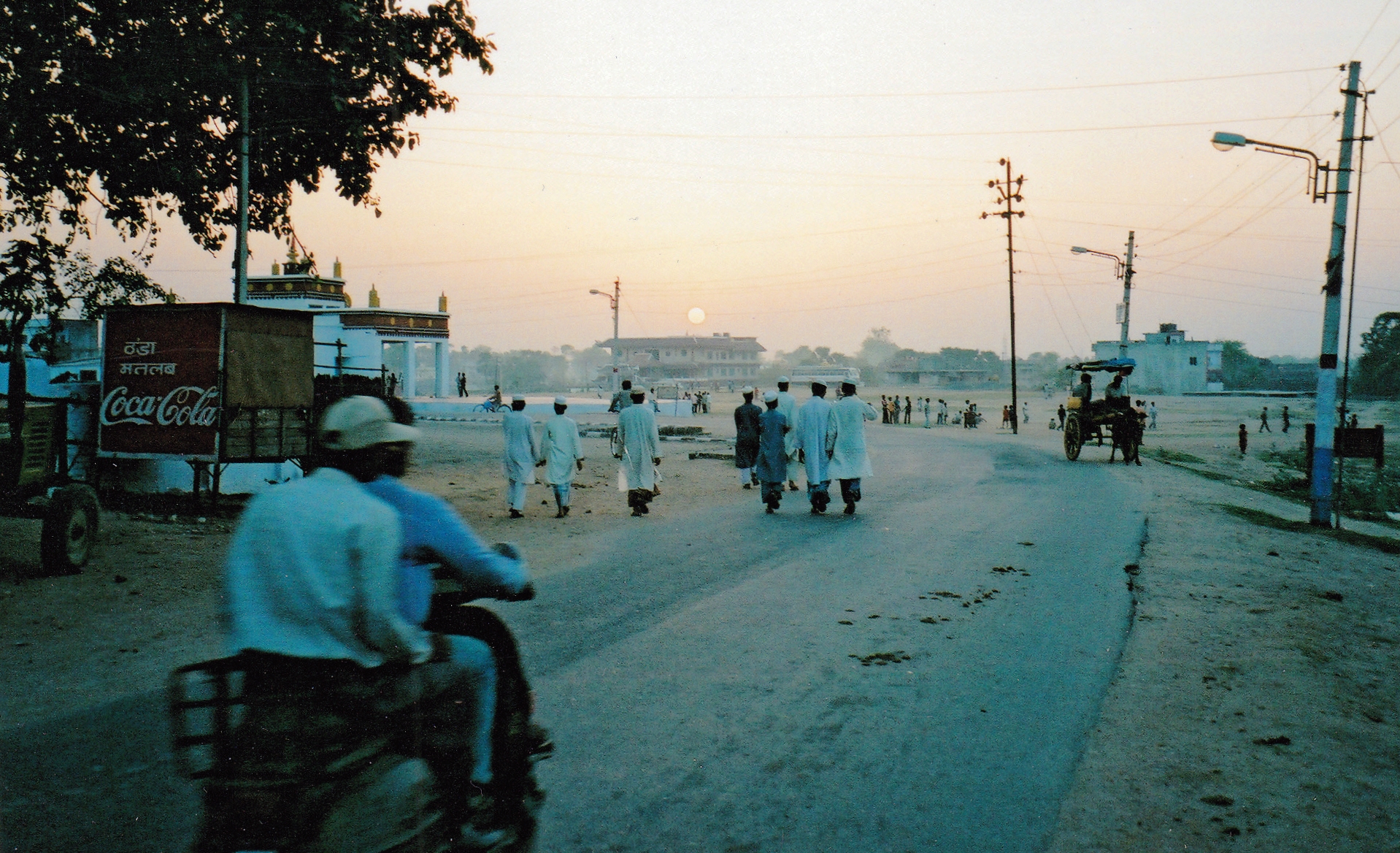
Dawn in Bodhgaya. The moslems are heading for the mosque, whilst most of the others are heading for work, for puja at Hindu or Buddhist temples, or to find breakfast.

I was after breakfast.