A Bit of Digging

Well, they arrived yesterday.

I have finally got my family history book formatted and printed, and I reckon it looks quite decent. So all I need to do now is to get it posted out to family members.

While researching all this, I naturally made a lot of discoveries. Some were certainly more unexpected than others, though. From previous research my father had done, we already suspected that my great grandfather had changed his name, possibly on a whim, from Prater to Canning. I was able to confirm this by, amongst other things, a comparison of various dates of birth in his family. This immediately removes the possibility of my searching back to see whether my name has any noble / famous / important roots. This is something that matters a lot to some people, although obviously only along the male line, which is why it seems to matter much more to men.

Although I turned it up too recently for the book, I have learned details about my father’s life in WWII which I would otherwise never have come to know. I had no idea – and seemingly nor had anyone else in the family – that from 1940 until joining the regular army in 1943 and being posted to India and Burma, he had been part of what had been dubbed ‘Churchill’s Secret Army’, soldiers trained to operate behind enemy lines in the event of a German invasion of Britain. Fulfilling the same role as the French Resistance, they would have carried out acts of sabotage and hit-and-run attacks to slow the enemy advance. it was only after that threat had receded that he joined the ‘Regulars’.

And then, less unexpectedly, there were the stories of extreme hardship: the early deaths, the poverty, the workhouse, tuberculosis and pleurisy…

Of course, if it was possible to search back far enough, we would all find we had a common early human ancestor, which gives the lie to the importance of race.

Does any of this research really matter? Well, in some ways, no. Does it sound crazy if I say that despite all my work, it does not matter that much to me? I’m very much in two minds over this. A lot of this felt more like an intellectual exercise than a personal quest. It was interesting to find out where my great grandparents and their parents had lived, for this felt just close enough to be a part of me. But before them? And especially when I could discover nothing more than their names and some vague dates? No, not really. Throughout this project I have been especially keen to be able to put names to old photographs, for this seemed the only way to make these people come alive again, or at least begin to. That I’ve been able to positively identify some of them feels more satisfying than pushing a line back another hundred years, although I do have nearly every branch back at least to the 1700’s, but in every case it is the stories I’ve found out about these people that matter.

But back to my question. Does any of this research matter? I do think it has the potential to bring us a little closer to our families by emphasising our shared history, and I’ve greatly enjoyed long discussions with cousins about our various researches and discoveries. But beyond that? Well, I’ve enjoyed learning the social history involved with my family, the realities of how people actually lived in the towns and countryside over the last few hundred years. And as well as emphasising my connection to my extended family it has also, as I wrote a few month ago, given me a greater sense of connection to the land where I live.

I have enjoyed exploring the past, but I’m not going to live there.
My Father in India

They didn’t talk about it.

It wasn’t as bad as the First World War, when men who had nervous breakdowns were frequently shot for cowardice, but the men of the generation who fought in the Second World War were still reluctant to talk about the hardships they had faced and the horrors they had seen.

When my father did talk to me about it, and it was very rare that he would, it was generally to joke about the fun that he’d had on leave, or, after my first visit to India, to ask about places that he remembered from Delhi.

He had seen fighting in Burma, and stayed in India right up to the time of Partition. He certainly wasn’t going to talk about either of those. When pushed, he’d clam up about Burma, and would only say that what he’d seen in India at the time of Partition was horrible.

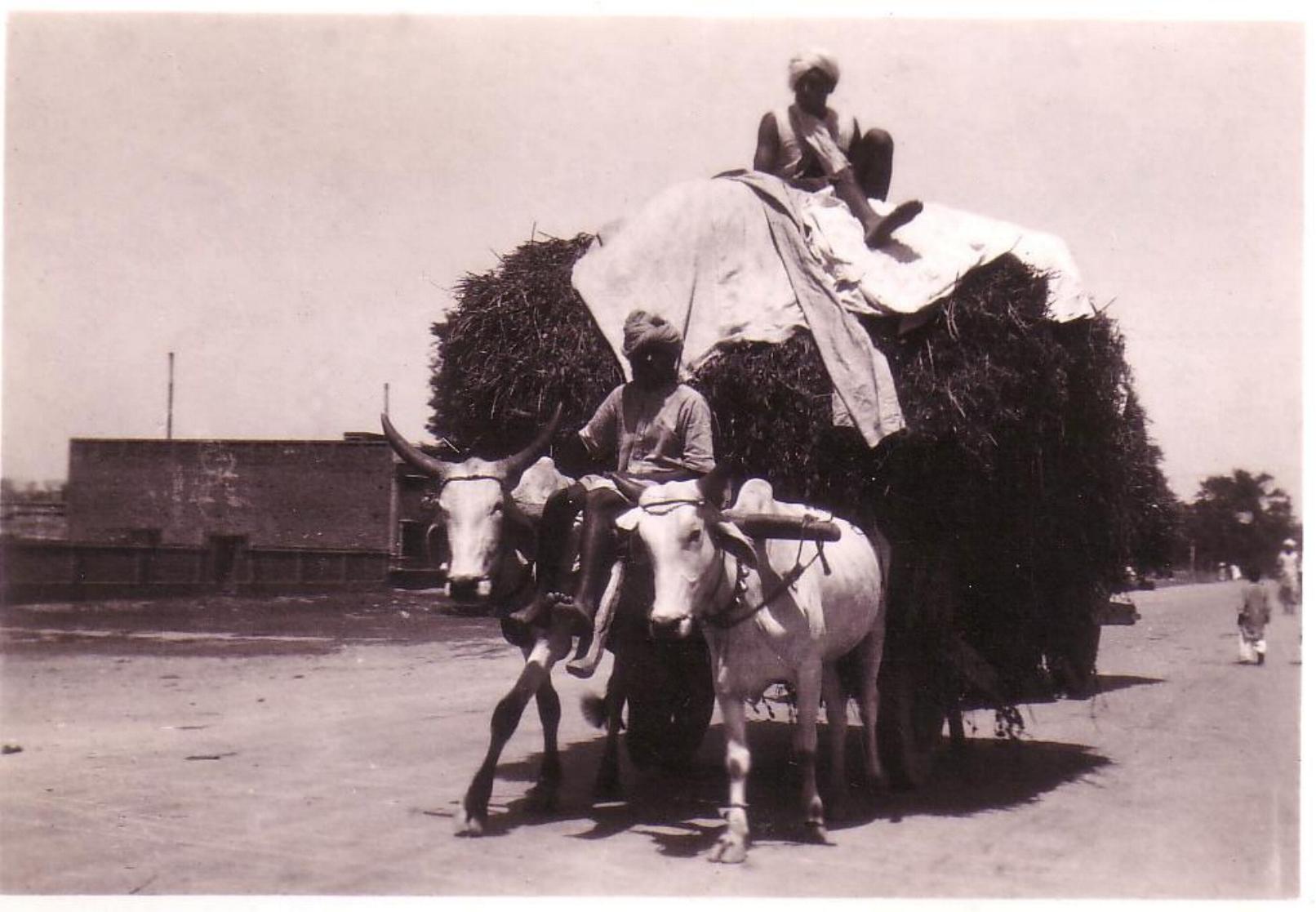
bullock cart

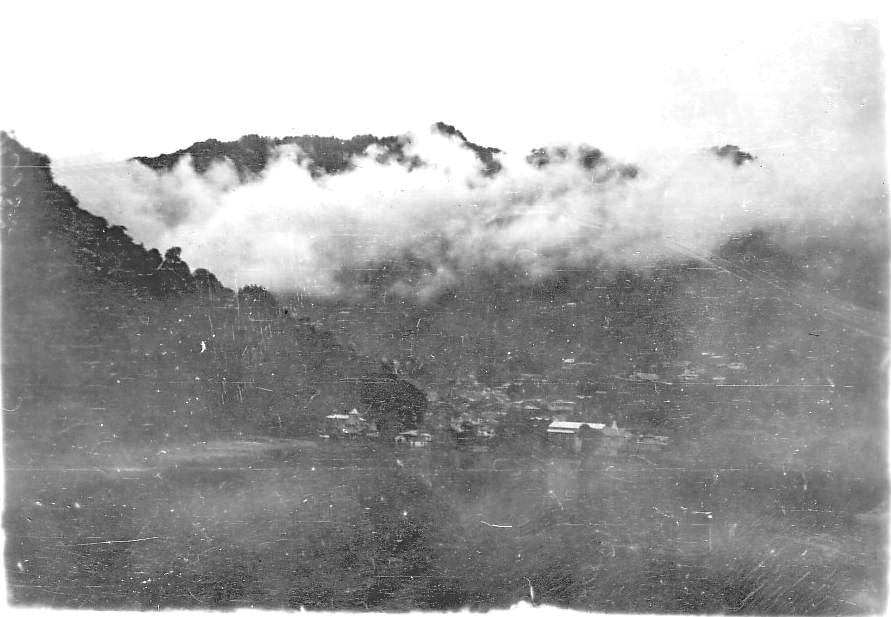
I daresay he told me one or two things that I have forgotten; things that didn’t mean much to me at the time. Perhaps he told me where he had been when he was on leave and was photographed rowing a boat on a lake in the hills; almost certainly in the North of India. Nainital, perhaps? I have been there myself, now, and I’m not certain. If he had told me before I’d been out there, the name would have meant nothing to me, and so I wouldn’t have remembered it.

And by then it was too late to ask him, because he died before I returned for my second visit.

dad 1

Once he had returned to England, he never went back to India, and I certainly never had the impression that he wanted to. I guess that the bad memories must have outweighed the good ones.

I have a dictionary that he bought in Delhi, stamped inside the cover ‘Cambridge Book Depot, New Delhi’ with the price scribbled in pencil; Rs 3/12, and his signature. I also had some old Indian coins, once, that he had given me, but I’m not sure where they are now. Other than the photographs, I’m not aware that he brought anything else back. Certainly, there were never any ‘curios’. Although a part of me wonders whether there might have been once, and whether my mother, a staunch Christian, might have thrown them out after they married. But that is pure conjecture.

hill station 4

And he was interested enough to read books on India’s history. I was surprised, occasionally, on the depth of his knowledge on the subject. He was, though, always interested in history, so I suppose that I shouldn’t have been really, and if he hadn’t have been born working class, I daresay that he might have had a university education, because he excelled at school.

Most of the photos are in fairly poor condition, although I have attempted to improve a couple of the ones that were particularly bad.

It seems strange to think of soldiers as tourists, but whilst they were on leave in India, that is, of course, exactly what they were. There are one or two photos in his collection that were taken of places I have been. One of them is of a view inside the Red Fort of Delhi that differs only in the size of the tree in the picture from one that I took in 1989.

He must have stood in exactly the same spot to take that picture, some 45 years before.

What does this small slice of family history mean for me?

mainstreet poona

It does mean that there is a slight family connection to India, if not in the way that usually comes to mind. He had no family there, and had no responsibilities beyond his army duties, but just the fact of his living out there for a number of years, gives me this connection. Or so I like to think of it.

In the end, India wove its magic over me – nothing much to do with Dad, I suppose, although I expect that was in the mix somewhere. I think that part of why I may have gone out there the first time, was to follow in his footsteps. And now my family can say that they have a connection to India through the time that I have spent out there as well.