Kent’s Standing Stones

Although not perhaps the first county one would think of when discussing ancient standing stones, Kent does have its share. There are two main sites approximately equidistant on either side of the river Medway in north Kent. The eastern site consists of the remains of two burial chambers (Kit’s Coty House and Little Kit’s Coty House) and the White Horse Stone, all within a kilometre of each other, while the western site consists of the Coldrum Stones (burial chamber) and Addington Long Barrow and Addington Burial Chamber.
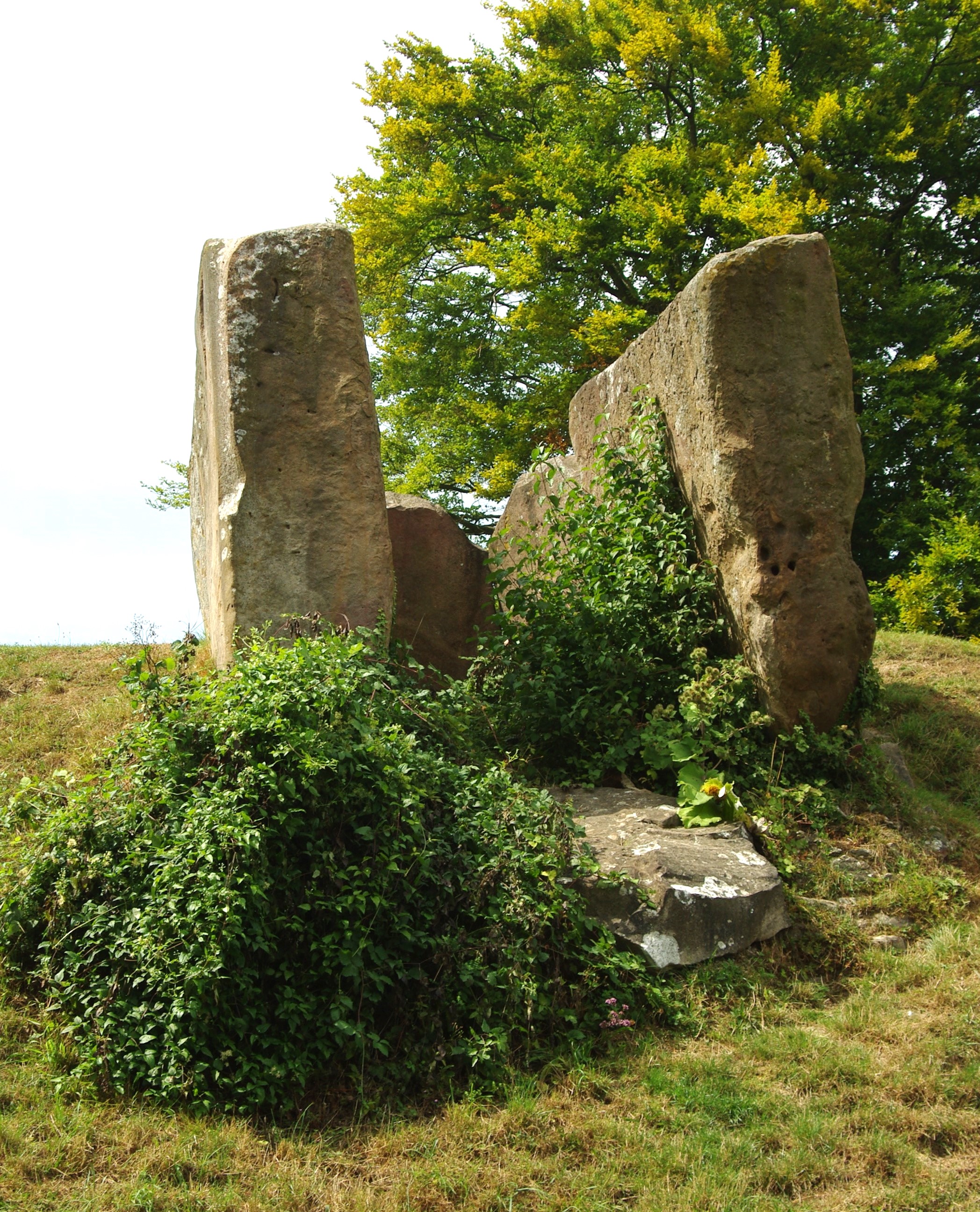
The Coldrum Stones

At Little Kit’s Coty House in a light drizzle, I counted seventeen stones, although Donald Maxwell writing in The Pilgrim’s Way in Kent, a short guide published in 1932, claims twelve to fourteen. Various other authorities suggest between nineteen and twenty-one. This is one of those sets of remains that comprise such a jumble of stones it is supposedly impossible to accurately count them – and just to make it harder, they are also supposed to move around (presumably when no one is looking). Thus they are also known by the name The Countless Stones. The largest ones I reckoned were about four meters by two and about three and a half meters by three. The shapes are very irregular, and since they are in a collapsed state there might have been serious damage to some of them. I immediately wondered whether it had originally been the same shape as Kit’s Coty House, a Neolithic chambered long barrow, just a few hundred meters to the north, where the stones are in the form of a dolmen, which would have been a burial chamber at one end of an eighty-four meter mound.

The Countless Stones, or Little Kit’s Coty House

William Stukeley, writing in 1722, recorded that he was told local people remembered a chamber at Little Kit’s Coty House. It had had a covering stone and was pulled down in about 1690.

Both Kit’s Coty House and Little Kit’s Coty House are reckoned to be just under six thousand years old.
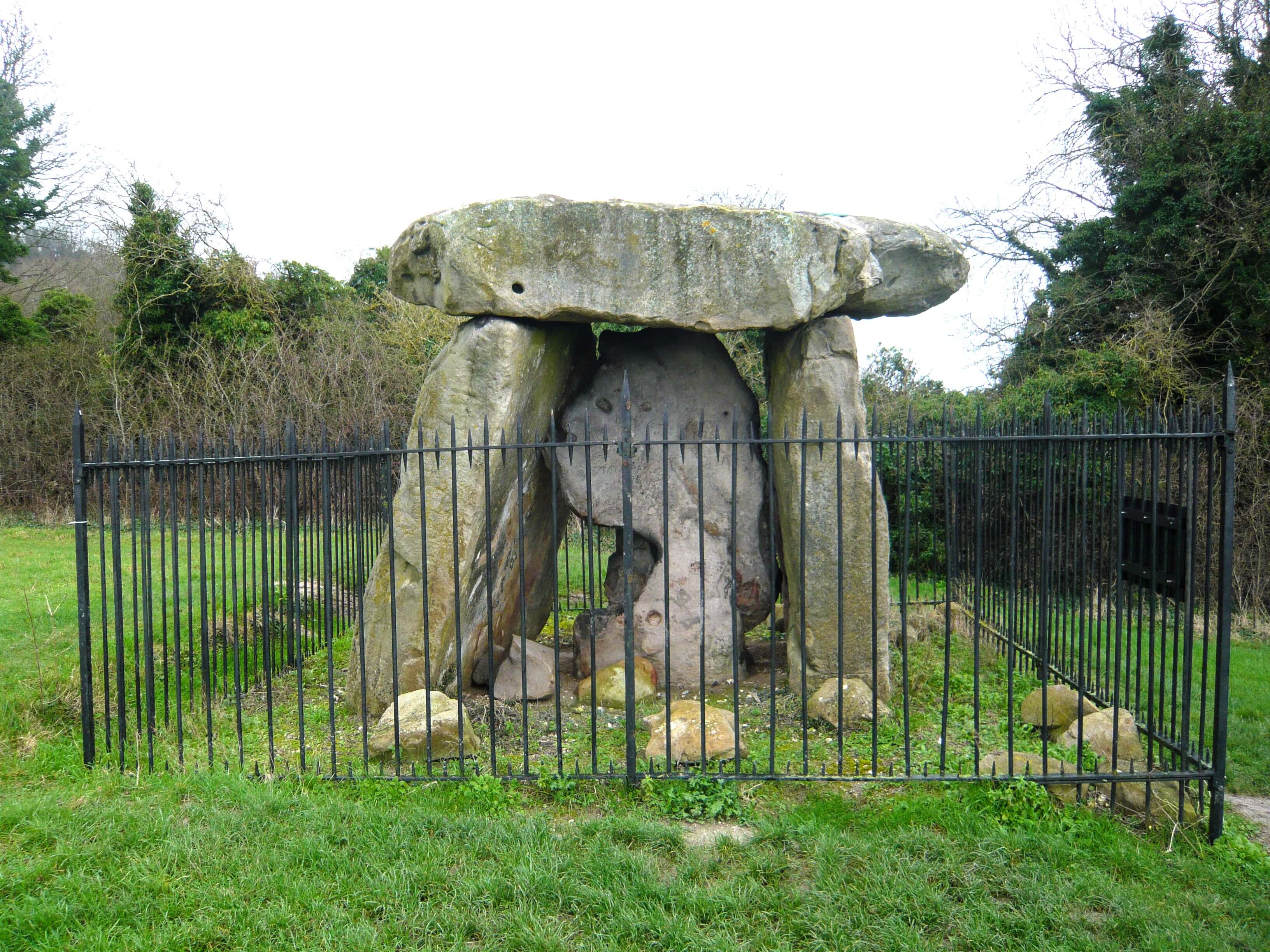
Kit’s Coty House

Some nine or ten kilometres away across the Medway Valley are the Coldrum Stones, or Coldrum Long Barrow, dated to between 3985 and 3855 BC. These ones, looked after by the National Trust, are also a burial chamber. Donald Maxwell claimed that there were forty-one stones and that a further fifteen were broken up at an unspecified date during quarrying work. Maxwell also reported a tradition ‘amongst the country people’ that an avenue of stones stretched across the valley from Coldrum to Kit’s Coty, although there is no evidence it ever existed. But coincidence or not, both of these chambers are situated at the same height, about eighty five meters above sea level.

All three burial chambers, then, have been dated to the same period, a thousand years before Stonehenge was built. It seems reasonable, then, to assume they were produced by the same society.

Coldrum has been proved to be a family tomb, the remains of at least 22 people being interred there, with DNA analysis proving their likely close family relationship. Yet amongst these kinsfolk, recent isotopic analysis has shown that maybe the chamber also contained the remains of individuals interred in the fifth to seventh centuries AD.

The White Horse Stone

I say maybe, as there is a very strong caveat connected to this research, and that is that when the human remains were removed in the early twentieth century they were not only not labelled very thoroughly, but they were also passed around several museums and the possibility exists that some bones ended up mis-accredited. Yet it has been proven that some neolithic burial chambers were re-used for burials in the early Anglo-Saxon period.*

The land here has been sculpted by man. Of course, we sculpt the land more and more violently and obviously in the twenty first century, but here, from all these thousands of years ago, are these simple shapes built by ancient folk to inter and celebrate their dead. And these were interactive places. Evidence from other sites shows that some of the bones of these ancestors would be removed at times, although whether as a simple reminder of their elders, or whether for magic or sacred purposes, can only be conjecture. But I like the thought that these bones might be invested with power, that they could be brought into the everyday for protective or ritual purpose.

Now, we view them in a different light, and their sacredness has evaporated. Like a deconsecrated church, but without ever having been formally deconsecrated. It is possible our ancestors would view our visits there as desecration.

But I’m never sure whether you can take any arrangement of stones for granted; they’ve been dismantled in the past, could they have been reassembled?

Incidentally, for those who enjoy Ley Lines, it is worth mentioning that the Ley Line hunter Paul Devereux has described a line passing through The Coldrum Stones and aligning with six nearby churches. Although just to put a dampener on that, perhaps it is also worth mentioning that students at Cambridge University investigated this particular line using computer simulations based on the Ordnance Survey details and concluded that it wasn’t statistically significant – that it was almost certainly just a chance alignment. You takes your pick.

*Research carried out by members of Durham University, Oxford University School of Archaeology and British Geological Survey (Isotope Facility) 2022
What’s In A Name?

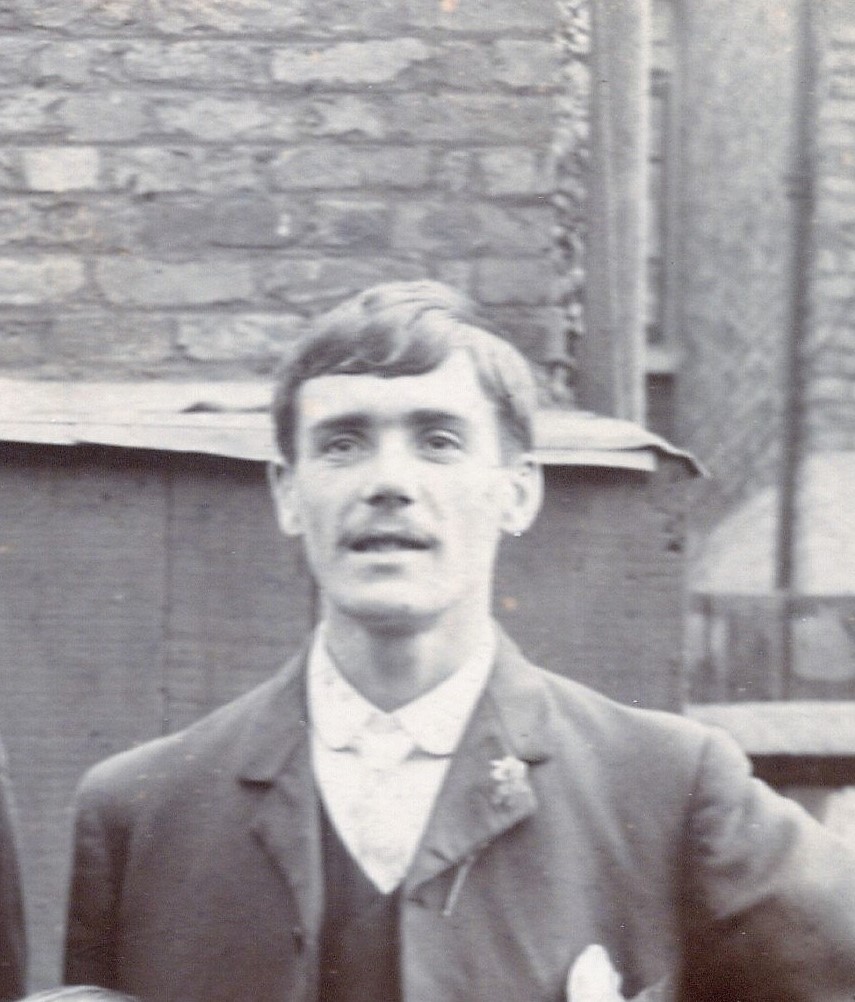
My Great Grandfather moved from rural Hampshire to London sometime in the late 1870’s, during the course of which he changed his surname first from Prater to Cannon, and then to Canning. We don’t know the reason why, but I suspect a family rift of some sort. Whatever the reason, from that point onwards our family were Cannings, rather than Praters.

Great Grandad pictured in 1904 in East Ham, London.

So really, my name should be Mick Prater.

But it isn’t.

Does it matter? In any way at all?

Of course it doesn’t.

And this, I think, illustrates the absurdity of those – primarily men – who think it is of paramount importance that the family name is continued. I know this supposedly gives a kind of spurious immortality to family members but, really, it’s a nonsense.

In Another Lifetime I Could Have Been…(3)

…a tramp.

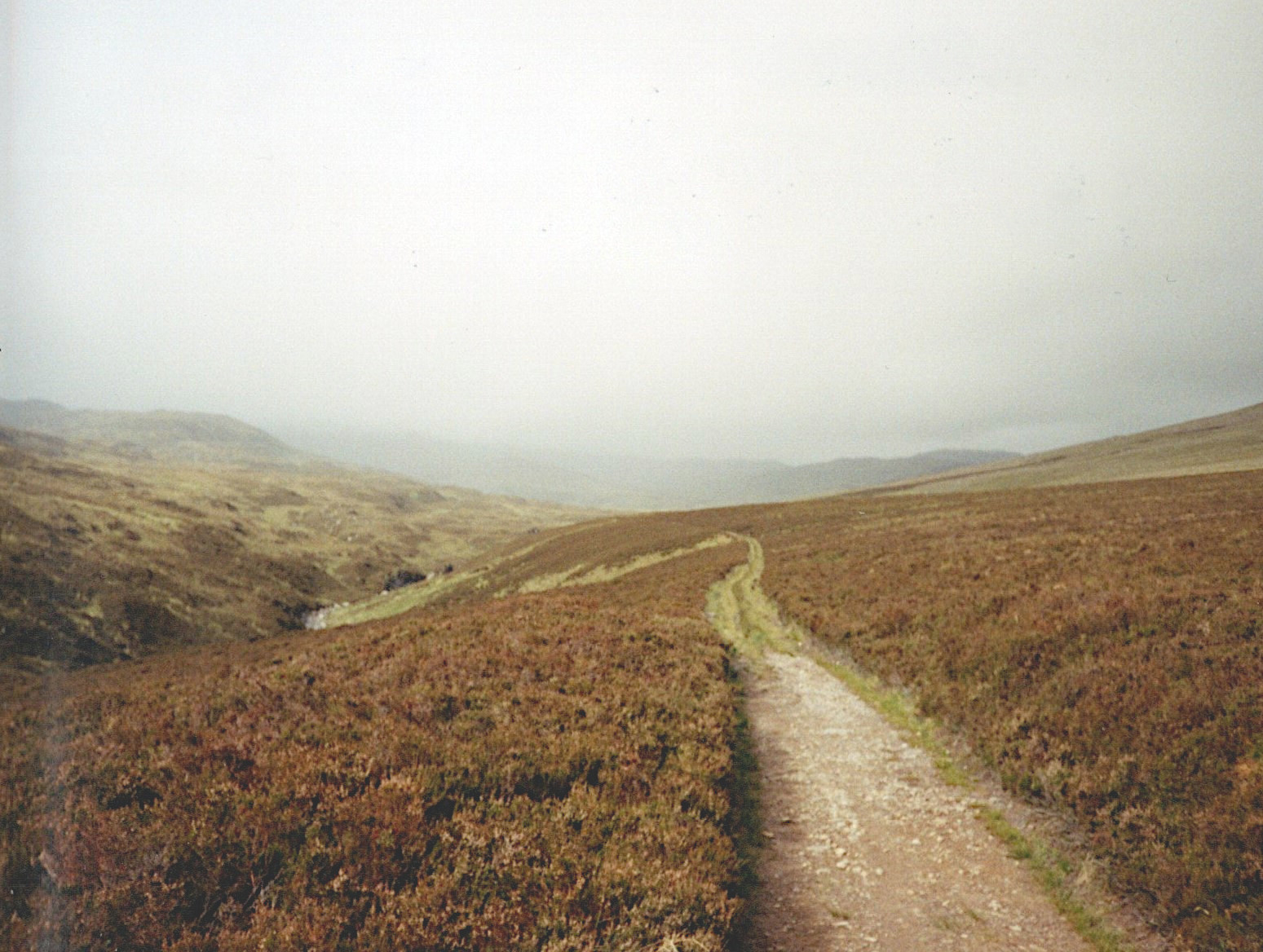
My wife often says I’m in touch with my inner vagabond. I’m taking that to mean that I enjoy walking, unless she’s referring to something else. My dress sense, for example. But yes, I love walking, especially long distance walking, but most of all I like to simply wander. There is a tremendous pleasure to be had by just setting off for a long walk without any particular destination in mind. Taking the more interesting-looking path as we go.

Of course, it’s not always possible to travel this way. We need to have some sort of destination in mind unless we’re prepared to just settle down to sleep wherever we find ourselves at nightfall. Usually we don’t have the time and the freedom to travel like this. Some people may also find it unnerving not to have board and lodging all planned in advance.

I’ve only done it occasionally, I must admit, but found it remarkably liberating when I did. There was no pressure to reach a particular destination by nightfall, I just had the freedom to wander along at my own pace until I felt I’d had enough for the day.

Even then, of course, some planning had to be done. Would I carry food or rely on reaching somewhere I could get a meal of some sorts? Would I carry shelter? Extra clothes?

But that is not exactly tramping, of course. It is just an exercise to be enjoyed (or otherwise) for a short period. It’s not a permanent lifestyle.

I’m sure that very few folk have deliberately chosen tramping as a lifestyle, but I’m aware there are some who have. This leads to the obvious question – why? I suppose all of us, at some time, wonder what is really important in life? Riches and property are, indeed, a burden in many ways, as well as conferring the obvious advantages in life. Some people just didn’t want that lifestyle. Some didn’t want the responsibilities of a settled life, with or without a family. There were always some folk who could just never settle anywhere for long. Most, though, would have ended up tramping through loss of employment and / or home.

Certainly I understand the difficulties of the tramping life, especially when one is no longer young. And I certainly wouldn’t want to be trying to survive as a homeless person in a city – rightly or wrongly, I think of tramping as a rural phenomenon. The whole point of it was to be on the move, rather than staying in one place. I doubt it would be possible today, with so many laws against that kind of lifestyle. There were, of course, laws against it in the past, too, but almost certainly much harder to enforce. I think, too, society is just ordered differently today. We think differently to how we did fifty or a hundred years ago. A tramp turning up at a farm today looking for a couple of hours work in return for a meal would get short shrift, and I can’t imagine any householder regarding one with anything other than hostility.

Again, I can’t imagine anyone choosing that lifestyle through the winter. But tramps used to learn of places they could settle for the winter, often carrying out odd jobs in return for permission to sleep in a shed or a barn and the odd meal. In this post I’m talking specifically about Britain, but I suspect it applies equally to hobos in America, swagmen in Australia, and possibly others I’m not aware of elsewhere.

And it would be unlikely to be a long life. But there were always some who chose it as a way of life rather than being forced into it by circumstances, and in another time I might possibly have been one of those.

Connections

Through researching my family tree, I’ve discovered some new connections to the land.

It’s not just that I’ve found ancestors in new parts of the country, although that certainly has a bearing on things, it’s more that I have a reinforced sense of a long personal connection to the land, this land, where my ancestors spent their entire lives living and working. A connection so many of us seem to have lost these days. I’m following the threads of folk who scraped a living in villages in Norfolk or Essex or Hampshire, frequently living in poverty or at the very least on the very edges of it. A hard life for most of them. Widows with no way of supporting themselves other than plaiting ‘straw dollies’ for a few pence, labourers in their seventies still having to endure hard physical graft to stay out of the workhouse (where they would have had to work even harder, for even less reward). People for whom starvation would have been a very real threat. Even comparatively healthy families would have relied on all the womenfolk trying to bring a few extra pennies into the household.

Some of these connections are selective – I can reject a connection I’m uncomfortable with, such as through industrial work in towns or cities which is something I have little experience of, and no love of in the first place, but I cannot claim a connection that isn’t there in the first place.

And within this experience, there is the time element – both how long ago these events were, but also how long they lasted, which contributes to the intensity of this connection for me.

These folk weren’t just the very poorest, of course. Amongst my ancestors there are also a wide range of craftsmen and women such as weavers, shoemakers, and printers, but also other poor labourers such as shop assistants, launderesses, servants, stokers, coal porters, cable hands…the list goes on and on. Not that there’s anything special about my family tree – everyone has these folk in their past.

I think – I know – some people just look for royalty or knights in armour when they research their trees. They dream of having the right to a coat of arms, or bragging rights to a famous name. None of us come into it completely open to what we find. We all have some expectations – to push our ‘lines’ back as far as we can, for example, or discover connections to the famous. Personally, I’m delighted to find my ancestors were the urban and rural poor. I don’t want to find the rich and privileged in my tree. Is that inverse snobbery? Perhaps.

But it’s the connection to the land I’m referring to here. I’ve always felt a strong personal connection to the land, to the physical world, and every census entry or marriage certificate I come across showing my ancestors earning their living that way seems to strengthen my own connections as well as a sense of continuity with my forebears.

Sickness and Diseases

I’ve mentioned that I’ve been researching my family tree, and a few days ago I was looking for details of one of my ancestors who lived in what was then a small village just outside Norwich. Looking on the parish records not only did I find the entry for his burial, but then noticed that the rector at that time had begun noting down what each person had died of. It was by no means complete, though, because he had added these notes for a year or so and then just stopped. Whether he’d got fed up with it or been told to stop for some reason, I obviously have no idea. But as I glanced through them, I became fascinated by them. I felt they left quite a lot of information about the place and time (rural England in the 1850’s) and thought a bit of it worth sharing.

My ancestor was on page 5 of these records, and the burials had all been conducted by the same rector from the first entry on page one. He added these notes from entry number two, through to twenty nine, then again for number thirty three, and then stopped. This is a summary of the relevant entries:

1   Male     5 weeks   Dec 1851

2   Male       44         Dec 1851      paralysis

3   Male       14         Jan 1852       consumption

4   Male       53         Jan 1852       consumption

5   Male         6         Jan 1852       scarlet fever

6   Male         3         Jan 1852       scarlet fever

7   Female    17         Feb 1852      typhus fever

8   Male        33         Feb 1852      consumption

9   Female    3¾        Jan 1852      scarlet fever

10 Male        53         Feb 1852      liver complaints. Publican.

11 Male        61         Mar 1852      paralysis, consumption

12 Male        19         Mar 1852      consumption 2½ years

13 Female    62         Apr 1852       cancer

14 Female    78         May 1852      old age

15 Male        33         Apr 1852      consumption

16 Male        55         May 1852     decline and heart disease

17 Female    69         Aug 1852      old age

18 Female      5         Aug 1852      inflammation of bowels

19 Female    13         Aug 1852      typhus fever

20 female     21         Aug 1852     consumption

21 Female    76         Aug 1852     coroner’s inquest. Verdict died by visitation of God

22 Male        63        Sep 1852     coroner’s inquest. Verdict died from injury in the head caused by fall

23 Female     71        Feb 1853      paralytic stroke and old age

24 Male         49        Apr 1853      labourer. Decline

25 Female     71        Feb 1853      coroner’s inquest. died by visitation of God, She dropped down dead when in perfect health

26 Male        85         Apr 1853      labourer. Paralysis

27 Male      infant      May 1853      jaundice

28 Female    64         Jun 1853      drowned herself in 11 inches of water. Morbid religious depression. A dissenter. Verdict temp insanity

29 Female   infant     Jun 1853      thrush

After this there are no further comments from the rector, other than:

33 Male        72        Sep 1853      disease of heart

There is quite a lot that is of interest here, and just from a statistical point of view we can see that nine of the burials were children under sixteen – just under a third of the total. Of those six were five or under. Lots of children died in those days. Yet somewhat surprisingly, fourteen of them – roughly half – were over fifty, with four in their seventies and one of eighty five. A very good age for the time. There doesn’t seem much difference in the average ages males and females lived to, although this is a tiny sample, of course. All the rural poor had tough lives, both male and female, which brings us to the comments added by the rector.

Number twenty six really caught my eye. Male, aged 85, a labourer, died of what the rector calls paralysis. No old age pension for them, they worked until they dropped. Number twenty four is also described as a labourer. Obviously the rector felt it worth mentioning, although why just those two, who knows?

Then we have the common diseases we’ve pretty well consigned to the past, now. Scarlet fever. Typhoid. Consumption – properly called tuberculosis. They killed frequently, especially the young.

And when the cause of death couldn’t be determined, even by inquest? ‘Visitation of God’. Although why those ones weren’t just put down to old age I can’t imagine. Unless somebody saw something…

Two more comments I have to mention, though. Number ten, male, age 53, died of liver complaints. The rector had to mention he was a publican, of course.

And then there is number twenty eight. Female, aged 64, drowned herself in 11 inches of water. Morbid religious depression. A dissenter. Verdict temp insanity. The rector belonged to the Church of England, and I’m sure he relished the suggestion that dissenters were mad. All the different denominations of the church seem to regularly go to war with the others, which, if you fancy a bit of a giggle, I satirised here some while ago.