The First Christmas Present – repackaged

I’ve posted this before, but I’m quite fond of it and it’s, well, seasonally appropriate. I’ve also taken the opportunity to tweak the details a little bit…

The old fellow with the white beard and the red jacket leaned queasily over the side of the sleigh, watching the snow-covered fields passing below. For a while, the moon was peering out between the clouds and he travelled over a scene of sparkling silver, although the sight did nothing to cheer him up.

He hated heights.

He hated elves, now, too. He’d never met one before today, but he knew now that he hated them. The smug little tossers sat right at the back of the sleigh, eating the mince pies that had been left out for him, and tittering whenever he took a wrong turning.

And he hated children. He especially hated children.

But with his pension stretched to breaking point just to cover his rent and what might be described as a minimal diet, the constant threat of having his electricity cut off, and a particularly cold spell of weather forecast, he felt he had no option but to find some work. Not that he was looking forward to long nights at the sorting office, or lugging a bloody great bag of Christmas cards from door to door. But it seemed he’d left it rather late, and there was nothing left. At least, nothing for someone of his age. Eventually, he found himself in a tiny little room on the second floor of a run-down office building in a backstreet, the home of an agency that he’d never heard of and with a staff, it appeared, consisting of one gentleman who he initially took to be a caretaker and who introduced himself as Victor.

‘You’ll do nicely.’ He said. With time-shift, it meant that there was no need to cram all of the deliveries into a single night; they could be spread out over the whole year. In fact, they tended to use two of them, these days.

‘Two of what?’ His mind reeled.

‘Why, Santas, of course. But even then,’ Victor went on, ‘it’s difficult when one goes sick for two weeks. And so this is where you come in. What is a problem,’ he explained, ‘is E.U. Working Time Directive no.735 sub 21 clause 18 tum. This rules out night work for anyone over the age of fifty employed as a mythical being. So you’ll have to do the deliveries during the day. Still, time-shift takes care of that.’

‘But, Brexit…’

‘It makes no difference.’

He still didn’t entirely understand, but he took the job.

The SatNav was crap. It took twice as long. The first time he tried it, he was terrified to find the sleigh suddenly hurtling between buildings that seemed to be no more than a couple of feet apart, at what must have been close on three hundred miles an hour. It then banked and turned in a tiny back garden, subjecting him to a force of about a hundred g, and then shot back down the same terrible alleyway. It then parked itself on the rooftop next to the one that he had just left.

The elves tittered into their hands.

He quickly found it better to just leave it to the reindeer to sort out. They obviously knew what they were doing.

And then it was impossible to tell how much time had gone past. If he noticed the time in any of the houses they visited, it never made any sense. One clock said ten fifteen. Some while later, he noticed one that said nine forty two. The next said four thirty. For a while be began to check the time at each house, but quickly gave up when the times appeared to be completely random. He shrugged. More of this time-shift stuff, he supposed. It made it very hard to decide when he should be on lunch break, and he made a mental note to speak to a union rep. at some point.

Another house. Impossible to know how many he had visited. After the thing with the clocks, he was even wondering whether he still had to visit some of the ones he’d already visited.

No, that was too confusing. He shrugged again, and stepped out of the sleigh. The elves followed him with their sacks, and then they all stepped forward, and next thing they were standing in a hallway, just inside the closed front door. Yes, that was weird, too. The elves obviously knew where they were going; he followed them into a darkened front room where a little glass of liquid stood on the table beside a plate with two mince pies. There was a little note that said ‘For Santa, love Benjy’.

He dropped the mince pies into the bag that he wore around his waist for the purpose, and poured the sherry into the flask. He hated sherry, anyway, so the little tossers were welcome to that. With luck, they’d fall out of the sleigh at some point.

The elves stomped noisily out of the room and up the stairs, reached the landing and opened the first door on the right. Inside, a child was asleep in the bed, a large pillow case draped across the duvet.

‘Greedy little bastard.’ He thought. He picked up the pillow case and held it open, whilst one of the elves seemingly poured in presents randomly from his sack. And then he froze. There was someone coming up the stairs; that wasn’t supposed to happen! All this time-shift stuff was meant to mean that everyone would be asleep from the moment he entered the house until he left again. It all happened in less than a fraction of a nanosecond, in any case.

The footsteps came nearer, and then stopped. A small child appeared at the doorway, but all that he noticed were her sad eyes. She did not seem surprised to see him, nor did she appear overjoyed.

‘You never come to me.’ She said in a quiet, flat voice.

‘I visit all the children!’ He replied, struggling to stay in character. ‘Ho, er, ho ho’.

‘No. You never come to me. You never have.’ He felt himself squirming under her steady gaze.

‘What’s your name?’ He said at last.

‘Mary. I live with my mother. In one of those flats over there.’ She pointed out of the window towards a few yellow lights that seemed to randomly puncture the darkness.

He glanced at the elves, who shrugged unconcernedly, then sighed and pulled a list from his back pocket and put his reading glasses on.

‘I’m sure we, I mean I, do. What’s the address?’ She stepped towards him and gently took the list from his hand, looked at it for a minute and then pointed.

‘There. But you don’t go to our flat; number three.’

He ran his eyes down the list, clicked his tongue irritably, and then looked a second time, certain he must have missed her name. But no, it definitely wasn’t there. He looked up, to meet her gaze again. Oh, hell. He could take one present from, say, three or four others. They would never miss them, and no one would know.

‘We’d know!’ The first elf glowered at him.

‘You can’t do that!’ The other one pouted. He looked from one to the other, and then back to the little girl, and came to a decision. He reached into Benjy’s pillowcase, picked out a couple of presents and held them out to her. She did not move for a moment, but then she gently smiled, reached out, and took the nearest one. Then she turned and left the room, and he heard her footsteps going down the stairs. He darted out to the landing, but already she had vanished.

‘You’ll be in big trouble.’ A spiteful little voice behind him said happily. He said nothing but did the thing with his fingers he had been taught, and they were back in the sleigh again.

It had been their last call. Now he was watching the elves smirking and whispering to each other, as the reindeer ran smoothly through the clouds. Casually, his hand strayed towards the SatNav, and he pressed the ‘over-ride’ button. The sleigh stopped immediately, and spun round a hundred and eighty degrees, catching the elves completely by surprise and throwing them out of the sleigh and into the night sky.

He hated elves.
‘Information’ Overload

I’ve had this post in mind for a while without actually getting around to writing any of it. But I felt it would fit in well here, following on from my last post.

We are supposedly better informed today than we were twenty, fifty, a hundred years ago. I’m not sure I agree, though. Certainly, there is no lack of information available, and access to it couldn’t be any easier. In fact whatever you want to know, you can find it online. Anything. Whether it be true or false, it’s there online. And because all this information is easily available, and because billions of people have access to the internet, it can be spread incredibly far and wide in a tiny amount of time. It is certainly not just AI that has led to this. The internet was full of misinformation long before AI was an issue.

I heard a few years ago that university students were forbidden to use Wikipedia as a source for essays and research. The people who add information to Wikipedia do not have to be any kind of expert. There is a certain amount of checking, but I don’t know how rigorous it is. Certainly, it is not unknown for mistakes and deliberate falsehoods to be added. This is why I have never used it as an information source. At best I have found what I might be looking for on there, but then gone to a reliable site to check it. For medical information, for example, I would use the UK’s NHS site. For historical information, I might use a top university website, or a large museum’s. A site where the information will have been uploaded by experts and specialists.

YouTube seems to be ridiculously popular with huge numbers of people as an information source. There are, of course, YouTube channels by very reputable people and institutions, but also a huge number of ones which exist solely to spread misinformation and total lies. And while it may be easy to tell some of the bad ones from the good, that still leaves large numbers that might or might not be reputable.

The same is true of social media. Countless sites run by Holocaust deniers, Nazi sympathisers, and every sort of conspiracy theorist from Flat Earthers to those who believe the world is run by paedophile alien lizard people. Again, while most of these are obviously what they are, many are less so.

Why so many sites spreading disinformation? The first reason is that there are many people who believe the crazy conspiracy theories. I’m not getting into the hows and whys of this, but the psychology is interesting. But the second reason is money. Many of these sites are monetised, so that the more clicks they get, the more views, the more money the site owner ‘earns’. Probably a feeling of power, too.

And to return to AI briefly, if anyone is in any doubt that it will make things up or provide misinformation, should you ask an AI program for examples of misinformation from an AI program, it will provide them. Whichever way you look at that, it is proof.

The advent of physical self-publishing, too, has contributed to this, albeit less seriously. The vast majority of self-published books are fiction, but who is there to check the accuracy of the supposedly factual ones?

As difficult as it is to separate fact from fiction now, how will it be in five, ten, or twenty years down the line? Or a hundred? We already treat historical records with a certain amount of suspicion, aware that many of them will be biased or fabricated. I suspect that generations to come will decide it is impossible to be certain of anything that happened in these times.

In a way, they will be the new Dark Ages.

Writing Update

I haven’t done one of these for a long time. For anyone wondering what has happened to my novel in progress, it’s finished. Hurrah! I know there were two earlier versions which got discarded as soon as I had finished them, but I’m really pleased with this one – it’s the book I had visualised when I began it nine years ago. Only better. When I had finished the earlier versions, I felt relief they were finished, but no joy. This time, I’m really happy with what I’ve written. I know it’s what I want to say.

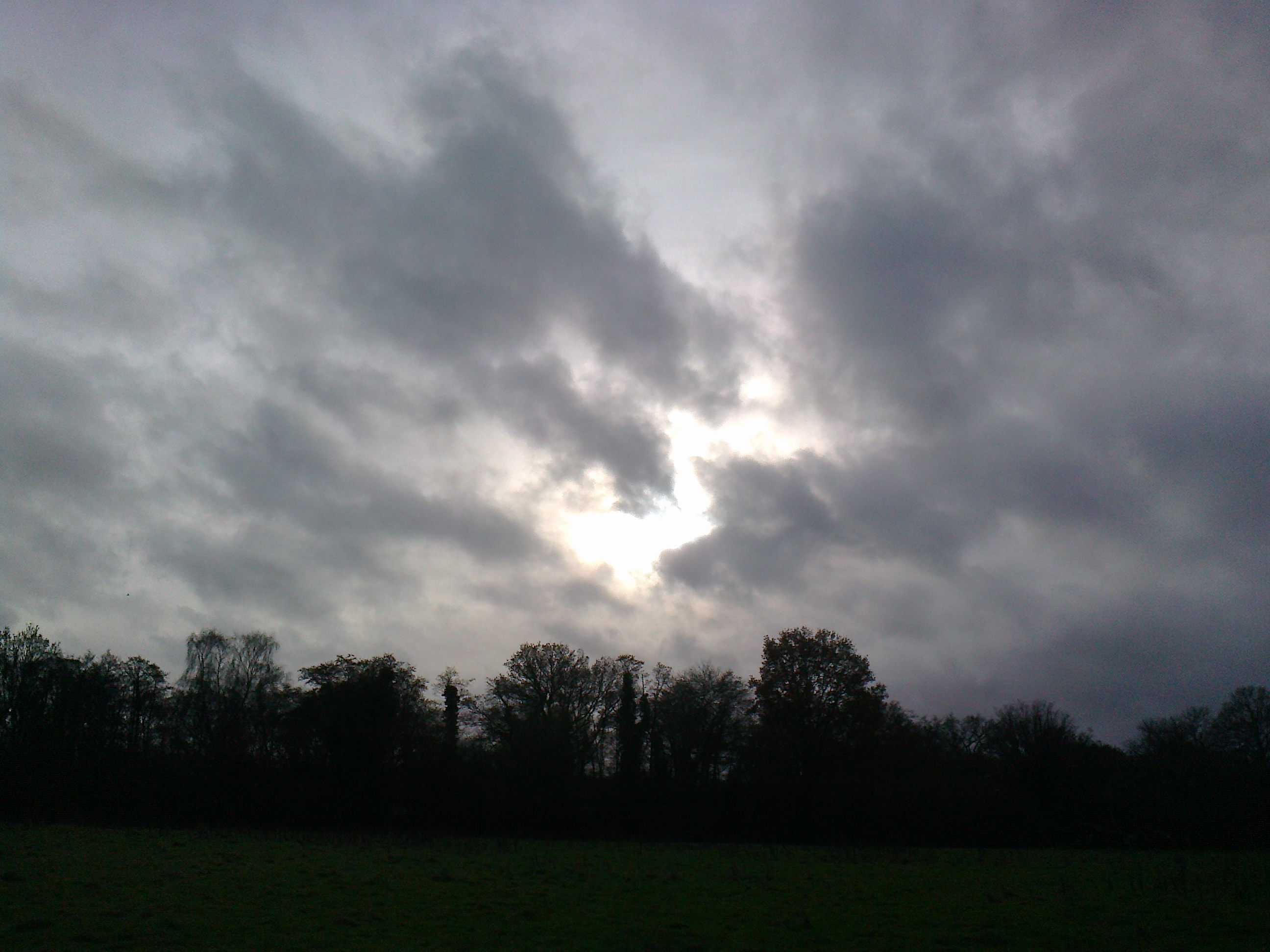
Irrelevant photo. Because.

It has had the attention of several beta readers and is now all the better for their suggestions. It has also had what I hope will be the final edit, and I am beginning the process of looking for a publisher or an agent. This means a lot of research and writing both long and short synopses. And then, I suppose, months of waiting to see whether I have any luck.

There is also poetry and zine-making going on sporadically, plus some currently vague ideas for another novel.

It’s all go, I tell you.

100 Word Stories

I know one hundred word stories are a thing on here, or ninety nine word stories, someone supplying a prompt – either a word or a phrase or perhaps a photo – but I was just playing around and came up with this. So no prompts, just a bit of fun.

Those of you of a certain age and musical heritage may identify with it…

‘This was a particularly brutal murder, sergeant.’

‘Yes, sir. With around three hundred people watching. Open and shut case, fortunately.’

‘And he was the keyboard player?’

‘Yes. He was about fifteen minutes into the Hammond Organ solo when he was killed.’

‘Who did it? A member of the audience?’

‘No, the vocalist. She bludgeoned him with the microphone stand. Really vicious. All she’s saying is this was the eighteenth night of the tour and there were still twenty seven to go.’

‘Didn’t any of the other band members attempt to stop her?’

‘No, sir. Apparently, they were egging her on.’

My Top Books of 2022

Well, my favourite twelve, anyway. One a month, if you like, although that wasn’t how I read them. Or perhaps the twelve book reviews of Christmas – oops, no. Missed that one. Anyway…these are some of the books I read in 2022, not books that were first published this year. But I seem to have read so many good books in 2022, it’s difficult to make a choice and this has ended up being a little arbitrary.

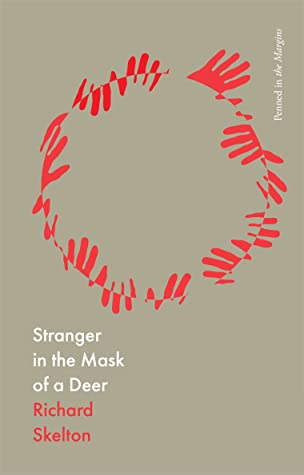
Stranger in the Mask of a Deer by Richard Skelton. It has been a long time since I last read something new and immediately put it into my top ten reads, but this remarkable work is straight in there. A few weeks later I had to re-read it, captivated by its dream-like quality.

It is essentially a poetic narrative ranging between the present day and Palaeolithic Britain, told by humans both ancient and modern, and by non-human voices. Its essence is life and ritual, the connection between humans and animals, between humans and the land they occupy, and the elements surrounding them.

The remains of deer skulls complete with antlers, but with eye holes punched into the skull so they might be worn as masks, have been found at Star Carr in Yorkshire, dating to approximately eleven thousand years ago. It is presumed these masks would have been used in rituals…

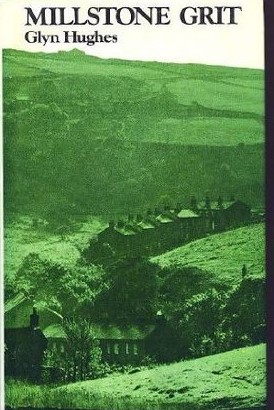
Millstone Grit by Glyn Hughes. This very readable book was originally published in 1975, describing a fifty mile walk the author took through East Lancashire and the West Riding of Yorkshire; an exploration of the moorlands and villages alongside the industrial towns, all of them suffering in their own ways from the effects of the loss of traditional industries in that area. It is about Hughes’ attachment to this area he came to live in, the clash between human and non-human landscapes, and about working class history in these places, but above all else about some most remarkable people he meets along the way.

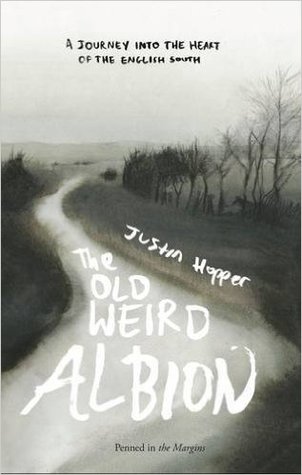
I re-read The Old Weird Albion by Justin Hopper. This is a book about tracing a mystery in his family’s past, beginning with a woman preparing to throw herself off Beachy Head, a notorious spot for suicides, but also about the effects the landscape of the South Downs has had upon people.

This is a book I reviewed on this blog when I first read it three years ago – the link is here – and I’ll just put an extract of that review here: ‘He has a gift for sifting and selecting the weird in these relationships, not just at sites that might be naturally expected to encourage the weird, such as Chanctonbury Ring, high on the Downs above Steyning or in old ruined buildings, but also in humdrum blocks of flats in modern developments. He references modern phenomena like crop circles and throughout there is the presence of ‘magic’, in the sense of a natural force. Many of the people he meets are an eccentric mix of the weird, too, although I choose this description carefully, largely in the old, original meaning of the word of ‘fate’ or ‘destiny’.’

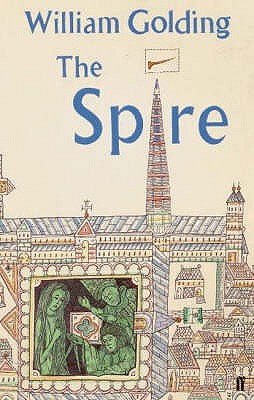
Another re-read, this time of a book I first read some forty years ago. The Spire by William Golding is a novel set in medieval England, in an unspecified city somewhere in the south. It is a story essentially about pride and hubris, about the Dean of a church determined to have built a great spire on his church, despite warnings that the foundations will not be able to support such a colossal structure. The ending seems predictable and yet that is not really where the story is going, being more concerned with the characters inhabiting that space.

The setting is the church and environs, and it evokes the feel of the ecclesiastic medieval as successfully as The Name of the Rose does. One test of how good a novel set in historical times is, is whether it transports the reader easily to that setting. I certainly found it did.

I bought Hemisphere by Pete Green at an event where poets read excerpts from their work. It is effectively a poetic journey around the northern hemisphere, beginning in Scotland, the journey approximating to the latitude of the arctic circle. The writing conveys a tremendous sense of place and feels very right for the cold edgelands described.

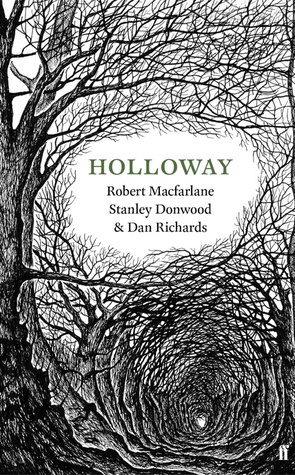
Holloway by Robert MacFarlane and Dan Richards, with illustrations by Stanley Donwood is a short book, describing a journey MacFarlane, Donwood, and Richards made in Dorset, essentially a revisit of a trip MacFarlane made previously with Roger Deakin for an earlier book, exploring holloways. Holloways, often known as sunken tracks or paths, are old – frequently very old – paths made over the centuries by the passage of feet, both human and animal, and perhaps by the wheels of wagons and carts. It is a short journey – perhaps ‘experience’ would be a better word – describing wild camps and walking, cycling and visiting old buildings; in some ways, perhaps it is really no more than a short camping trip, undertaken by a group of men acting out a boyhood adventure. The writing, though, by both MacFarlane and Richards is exquisitely poetic and Donwood’s illustrations never less than beautiful.

Notes on the Sonnets by Luke Kennard.

‘Luke Kennard recasts Shakespeare’s 154 sonnets as a series of anarchic prose poems set in the same joyless house party.

A physicist explains dark matter in the kitchen. A crying man is consoled by a Sigmund Freud action figure. An out-of-hours doctor sells phials of dark red liquid from a briefcase. Someone takes out a guitar.

Wry, insolent and self-eviscerating, Notes on the Sonnets riddles the Bard with the anxieties of the modern age, bringing Kennard’s affectionate critique to subjects as various as love, marriage, God, metaphysics and a sad horse.’

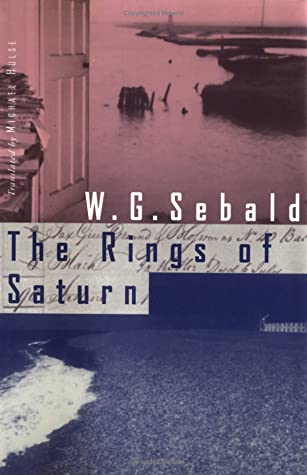
The Rings of Saturn by W. G. Sebald had been on my ‘to-read’ list for a long time, but I finally got around to picking up a copy this year. On one level, this is a walking journey taken by the author along the Suffolk coast in the early 1990’s, describing both places and people he comes across, but really, it is much deeper than that and is a psychogeographical work par excellence. Throughout the journey, we are never quite certain whether events are happening to the author, or have happened in the past, or perhaps to someone else at some other time. He goes off in unexpected directions, literary, historical, and physical, exploring a wide and eclectic range of subjects yet throughout there is a cohesion to the narrative.

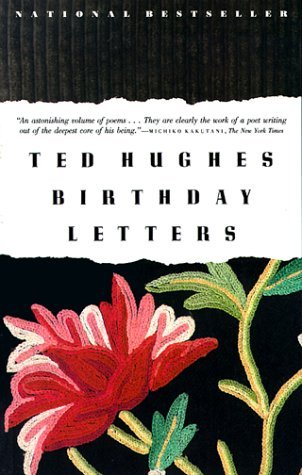
The Birthday Letters are a not-quite-series of poems Ted Hughes wrote to his wife the American poet Sylvia Plath after her death. Personally, I find them to be probably his most accessible poems and wonder whether that says something about me, although this isn’t the time to go into that. Theirs was a difficult relationship, and her suicide (as well as that of a later lover of his) frequently colours people’s opinions of Hughes. Inevitably, these are often extremely personal poems, so much so that at times I feel a slight discomfort reading them, as if I’d opened someone’s private correspondence by accident, but Hughes wrote them as an attempt to restore her to him, and published them almost for the public to read as his own account of her life and death.

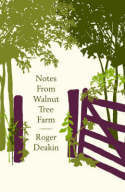
Sadly, Roger Deakin only wrote three books, of which Notes From Walnut Tree Farm is compiled from diary entries he kept during the last six years of his life. In these notes, he recorded his day to day life on the farm, walks on nearby Mellis Common, the yearly cycle of the natural world all around him, and his thoughts on literature, the importance of nature, and musings on the past.

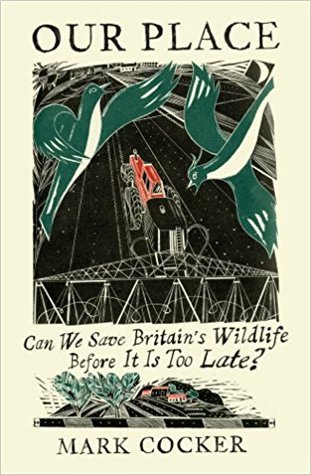
Our Place by Mark Cocker is an exploration of the history of environmental thought and politics in Great Britain and, especially, the way forward. It asks pertinent questions like who owns the land and why? And who benefits from green policies? Not afraid to be radical in its suggestions, it asks why there is such a disconnect between the British public’s sympathy for and championing of the countryside and the reality of its current condition.

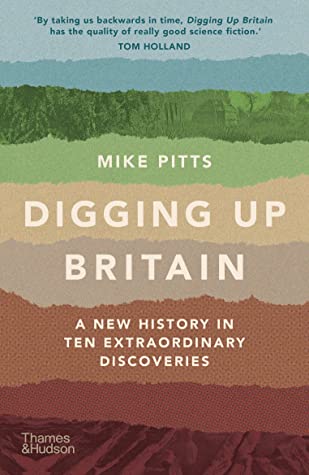
Digging up Britain by Mike Pitts tells the story of Britain’s history and prehistory in ten astonishing excavations. As someone who has always had an interest in history and pre-history, I found this book a timely reminder of the huge strides taken forward in our understanding of the past over the last ten years or so, due to such important tools as DNA analysis as well as the painstaking work of those who excavate and interpret these sites. There are some remarkable tales in this book.

A Warning To Other Writers

Oh, this sodding book.

I…no, first, a little bit of context.

Those of us who call ourselves creatives, why do we create? Why do we have this need to make things? I know the usual answer is we write / paint / carve / whatever it is we do, because we have to, because there is something inside of us that needs to find an outlet. But what is that something? In my case, as well as a storyline it is frequently a place where I have spent some enjoyable time. It provides me with a comfortable setting in which to tell a story.

Most of what I do, certainly the work I feel is my best, my most successful (in the sense of expressing what I want to express), falls into that category. My long poem The Night Bus, for example, was the result of a thirty year (admittedly intermittent) search for a way to record my experience of a long bus ride across Northern India into Nepal. I attempted prose and paintings without success, although through this I did develop a style of painting I went on to successfully use on many Indian paintings, and had long given up on the project when chance showed me a way into the poem. The poem I completed succeeds in conjuring up (for me) the impressions and feelings I had on that journey; I can relive the journey again by re-reading the poem. Whether it conveys anything of that to other readers, I naturally cannot know.

And my stories, too. I look through Making Friends With The Crocodile, and I am in rural Northern India again. I re-read The Last Viking and can easily feel myself on an island off the west coast of Scotland. This is not to imply any intrinsic merit to my writing, other than its ability to transport myself, at least, into the setting I am attempting to describe.

These stories are a composite of three basics: a setting, as mentioned already, a storyline – and again this needs to be something important to me, or I find it pretty well impossible to put my heart into it, and strong, convincing, characters.

It is useful, then, to know where lots of my writing comes from, and what shapes it, what drives it. I have long suspected that this is frequently nostalgia and, recognising that, have wondered whether this might be a bad thing. Nostalgia, after all, has a rather bad press…does it just mean I am living in the past because I am viewing it through rose-tinted spectacles? As a way of not addressing issues of today I should be tackling?

This yearning for nostalgia, though, is a desire for something we see as better than what we have now. To write passionately about something it needs to be something I feel strongly about. Obviously this can also be something we find frightening or abhorrent – dystopian warnings about the future or anger about injustices, for example – but even in those cases the familiar provides a cornerstone of safety, even if only by way of comparison.

This is also true when I paint. I am not someone who can paint to order – if I’m not inspired, it does not work. A number of difficult commissions have proved that point to me. I paint what I like, what moves me. After all, whatever I am creating, it should be foremost for myself.

That book, then…

I began writing it about five years ago for all the wrong reasons. I had self-published Making Friends With The Crocodile and decided my next story should also be set in India, and as a contrast decided to write about British ex-pats living in a hill station in the foothills of the Himalaya. I wanted to write about India again. The trouble was, I had no idea what story I was going to tell. I had no stories that might slot into that setting I felt in any way driven to write; it just seemed to feel appropriate at the time. I was pleased by the reception the first book had and felt I ‘should’ write this one.

What could possibly go wrong?

I spent time putting together a plot, with which I was never wholly satisfied, and began writing. Really, I should have seen the obvious at that point and bailed out. But I carried on, and twice reached a point where I thought I had the final draft.

My beta reader then proceeded to point out all the very glaring faults.

So twice I ripped out a third of it and chucked it away, then re-plotted the second half of the book and got stuck into the re-write. I’m sure you can see part of the problem at this point – I wanted to hang onto as much of the story as I could, instead of just starting completely afresh. And now here I am trying to finish the final draft for the third time, as my February project for this year. And it’s just not working for me. But at this point, after well over a hundred and fifty thousand words (half of which I’ve discarded) I just feel I’ve invested too much time and effort in it to abandon it now. Somehow, it has to get finished. I do have an idea for a couple of quite drastic changes which I’ll try this week, but unless I feel I’m making some real progress I’ll then happily put it aside for a while and concentrate on next month’s project: painting and drawing.

And, to be honest, if it eventually ended up as a story of less than ten thousand words, and if I felt satisfied with it, then I’d take that as a result, now.

And the moral of all this? I’m sure there was a point after a couple of months when I knew I shouldn’t have been writing this book. I should have binned it there and then and saved myself a lot of fruitless trouble, but stubbornly ignored the warning signs.

The Christmas Post

For my Christmas Post this year I’m going to do the environmentally correct thing and recycle a post from a four years ago.

The First Christmas Present

The old fellow with the white beard and the red jacket leaned queasily over the side of the sleigh, watching the snow-covered fields passing below. For a while, the moon was peering out between the clouds and he travelled over a scene of sparkling silver, although the sight did nothing to cheer him up.

He hated heights.

He hated elves, now, too. He’d never met one before today, but he knew now that he hated them. The smug little tossers sat right at the back of the sleigh, eating the mince pies that had been left out for him, and tittering whenever he took a wrong turning.

And he hated children. He especially hated children.

Ever since they took away his benefits and told him he would now be better off, he had struggled for money. Now it was November, and he had decided he had to get a Christmas job. Not that he was looking forward to long nights at the sorting office, or lugging a bloody great bag of Christmas cards from door to door. But it seemed he’d left it rather late, and there was nothing left. At least, nothing for someone of his age. Eventually, he found himself in a tiny little room on the second floor of a run-down office building in a backstreet, the home of an agency that he’d never heard of and with a staff, it appeared, consisting of one gentleman who he initially took to be a caretaker and who introduced himself as Mr Nicol.

‘You’ll do nicely,’ he said. With time-shift, it meant that there was no need to cram all the deliveries into a single night; they could be spread out over the whole year. In fact, they tended to use two of them, these days.

‘Two of what?’ His mind reeled.

‘Why, Santas, of course. But even then,’ Mr Nicol went on, ‘it’s difficult when one goes sick for two weeks. And so this is where you come in. What is a problem,’ he explained, ‘is E.U. Working Time Directive number seven. This rules out night work for anyone over the age of fifty. So you’ll have to do the deliveries during the day. Still, time-shift takes care of that.’

He still didn’t entirely understand, but he took the job.

The SatNav was crap. It took twice as long. The first time he tried it, he was terrified to find the sleigh suddenly hurtling between buildings that seemed to be no more than a couple of feet apart, at what must have been close on three hundred miles an hour. It then banked and turned in a tiny back garden, subjecting him to a force of about a hundred g, and then shot back down the same terrible alleyway. It then parked itself on the rooftop next to the one that he had just left.

The elves tittered into their hands.

He quickly found it better to just leave it to the reindeer to sort out. They obviously knew what they were doing.

And then it was impossible to tell how much time had gone past. If he noticed the time in any of the houses they visited, it never made any sense. One clock said ten fifteen. Some while later, he noticed one that said nine forty two. The next said four thirty. For a while, be began to check the time at each house, but quickly gave up when the times appeared to be completely random. He shrugged. More of this time-shift stuff, he supposed. It made it very hard to decide when he should be on lunch break, and he made a mental note to speak to a union rep. at some point.

Another house. Impossible to know how many he had visited. After the thing with the clocks, he was even wondering whether he still had to visit some of the ones he’d already visited.

No, that was too confusing. He shrugged again, and stepped out of the sleigh. The elves followed him with their sacks, and then they all stepped forward, and next thing they were standing in a hallway, just inside the closed front door. Yes, that was weird, too. The elves obviously knew where they were going; he followed them into a darkened front room where a little glass of liquid stood on the table beside a plate with two mince pies. There was a little note that said ‘For Santa, love Benjy’.

He dropped the mince pies into the bag that he wore around his waist for the purpose, and poured the sherry into the flask. He hated sherry, anyway, so the little tossers were welcome to that. With luck, they’d fall out of the sleigh at some point.

The elves trooped noisily out of the room and up the stairs, reached the landing and opened the first door on the right. Inside, a child was asleep in the bed, a large pillow case draped across the duvet.

‘Greedy little bastard,’ he thought. He picked up the pillow case and held it open, while one of the elves seemingly poured in presents randomly from his sack. And then he froze. There was someone coming up the stairs; that wasn’t supposed to happen! All this time-shift stuff was meant to mean that everyone would be asleep from the moment he entered the house until he left again. It all happened in less than a fraction of a nanosecond, in any case.

The footsteps came nearer, and then stopped. A small child appeared at the doorway, but all that he noticed were her sad eyes. She did not seem surprised to see him, nor did she appear overjoyed.

‘You never come to me,’ she said in a quiet, flat voice.

‘I visit all the children!’ he replied, struggling to sound jovial.

‘No. You never come to me. You never have.’ He felt himself squirming under her steady gaze.

‘What’s your name?’ he said at last.

‘Mary. I live with my mother. In one of those flats over there.’ She pointed out of the window towards a few yellow lights that seemed to randomly puncture the darkness.

He glanced at the elves, who shrugged unconcernedly, then sighed and pulled a list from his back pocket and put his reading glasses on.

‘I’m sure we, I mean I, do. What’s the address?’ She stepped towards him and gently took the list from his hand, looked at it for a minute and then pointed.

‘There. But you don’t go to our flat; number three.’

He ran his eyes down the list, clicked his tongue irritably, and then looked a second time, certain he must have missed her name. But no, it definitely wasn’t there. He looked up, to meet her gaze again. Oh, hell. He could take one present from, say, three or four others. They would never miss them, and no one would know.

‘We’d know!’ The first elf glowered at him.

‘You can’t do that!’ the other one pouted. He looked from one to the other, and then back to the little girl, and came to a decision. He reached into Benjy’s pillowcase, picked out a couple of presents and held them out to her. She did not move for a moment, but then she gently smiled, reached out, and took the nearest one. Then she turned and left the room, and he heard her footsteps going down the stairs. He darted out to the landing, but already she had vanished.

‘You’ll be in big trouble,’ a spiteful little voice behind him said happily. He said nothing but did the thing with his fingers he had been taught, and they were back in the sleigh again.

It had been their last call. Now he was watching the elves smirking and whispering to each other, as the reindeer ran smoothly through the clouds. Casually, his hand strayed towards the SatNav, and he pressed the ‘over-ride’ button. The sleigh stopped immediately, and spun round a hundred and eighty degrees, catching the elves completely by surprise and throwing them out of the sleigh and into the night sky.

He hated elves.
The Sussex Downs Murder – Not Really A Review

24958623

For anyone who loves the English South Downs – and whodunnits – this book makes an interesting read.

On the one hand, it is a fairly average 1930’s detective murder mystery, although I have certainly read much worse, but on the other it provides some marvellous insights into the South Downs in the area specifically around Chanctonbury Ring in that time, which is really what took my interest.

Personally, I prefer murder mysteries involving ‘normal’ people, rather than the typical country house full of assorted Colonels and ladies and royalty and such-like, so popular at the time – other than the thought of bumping off the Upper Classes, of course! But this book delivers in that it is set on a downland farm, where the farmer goes missing, believed murdered. It even has, as a cover, an adaptation of one of the fabulous Leslie Carr railway posters of the 1930’s – what’s not to like?

The introduction mentions its ‘sense of place’, and the writing seems to me especially good at conveying an accurate feel of the landscape. One thing that comes over very strongly is the emptiness of the countryside at that time. The Downs have been sparsely inhabited since Roman times; before then, much of the population chose to live on the higher, drier, lands of the chalklands of South and South East England, away from the forested and frequently marshy lower areas where travel was difficult and clearance very hard work. After the arrival of the Romans, however, all this changed, and since then the chalklands have been left largely to a small population living mainly by farming sheep.

We now have many people visiting for leisure purposes and on fine days popular routes such as the walk to Birling Gap from Eastbourne (or from convenient car parks much closer!) may easily see hundreds of visitors striding along the footpaths and hanging off the edge of the cliffs taking selfies (other stupid ways to kill oneself are available). On the same day, though, nearby footpaths may see no visitors at all. It is still a sparsely populated area.

John Bude evokes this sense of emptiness well. His descriptions of the roads and paths on and around the area really allow the reader to feel this. His characters walk the lanes and roads of the downs frequently without meeting anyone else on their journeys. Farms and houses are ‘isolated’, and even at a time when most people would travel by public transport to cover any distance, the population is so small that when questioned by the detective on the case, a bus conductor can remember who was on his bus several weeks before.

There are four lime kilns near Washington, on the edge of the area described in the story, which I suspect were the inspiration for the lime kiln featured on the farm in the book. No spoilers, but you might well guess their relevance to a murder mystery.

But it is the descriptions of the roads and paths that particularly take my interest, roads and paths virtually empty of footfall or traffic even during the day, emphasising how lightly populated the area was, and still is today, to a degree. Other than popular footpaths such as the long distance South Downs Way, and those footpaths running between popular tourist spots, it is still easy to find solitude in this quiet area of the otherwise heavily populated South East England.

The Night Bus

After a day of faffing and kerfuffle (and a little bad language, but not too much) yesterday, I have posted my new book up on Amazon.

312EjL1fieL._SY346_

The Kindle e-book will be released on 30th November and is available to pre-order now. It will take a few days yet for the paperback edition to be ready, as I need to check through a printed proof first. I’ll post when that is done.

The book is in two parts. A collection of seven short – and not so short – stories, which make up the bulk of the book, followed by a selection of recent poems.

I have always enjoyed travel and, one way or another, nearly every piece in here is to do with travel. The only exceptions are a couple of the poems that seemed to fit in among the others for aesthetic reasons.

Some of the stories are quite dark, but the majority of the poems have a lighter touch. In these, especially, I hope that my love of the natural world comes through.

Two of the longer stories are set in India; in one, a young man goes in search of a mysterious destiny, while in the other a travelling Englishman becomes embroiled in a chilling disappearance. One story speaks of the support and comradeship of a close-knit island community while another tells of jealous intelligences far older than mankind.

Of the poems, there is one long piece, which gives the title to this collection and tells of a long journey across India and into the mountains and, among others, one short series of poems about the ancient paths and tracks of Britain.

An early piece of writing advice I was given, and for which I am eternally grateful, was ‘Write the stories and poems you want to read’. This I have done, and I hope you will want to read them too.

Irregular Stories

I had quite forgotten to post this. Whatever was I thinking of?

41t44jv6w8l._ac_us218_

If you look on the sidebar, you will espy a link to this book. It is a collection of short stories by members of my local writing group, The Irregular Writers Collective, including one by me.

As the blurb on the back says, From intrigue in Colombia to bizarre adventures in Italy, from an unusual protest to a prison break in 19th century Chile. Get ready for an exciting journey with the Irregulars…

I was reminded of its existence at our meeting last night, when mention was made of a follow-up book this year. I’ve already submitted my story for this, and am looking forward to reading stories from the others.

But in the meantime, Irregular Stories awaits your perusal!

It is available in paperback on Amazon.

And the link, again? It’s also here.