Pilgrimage

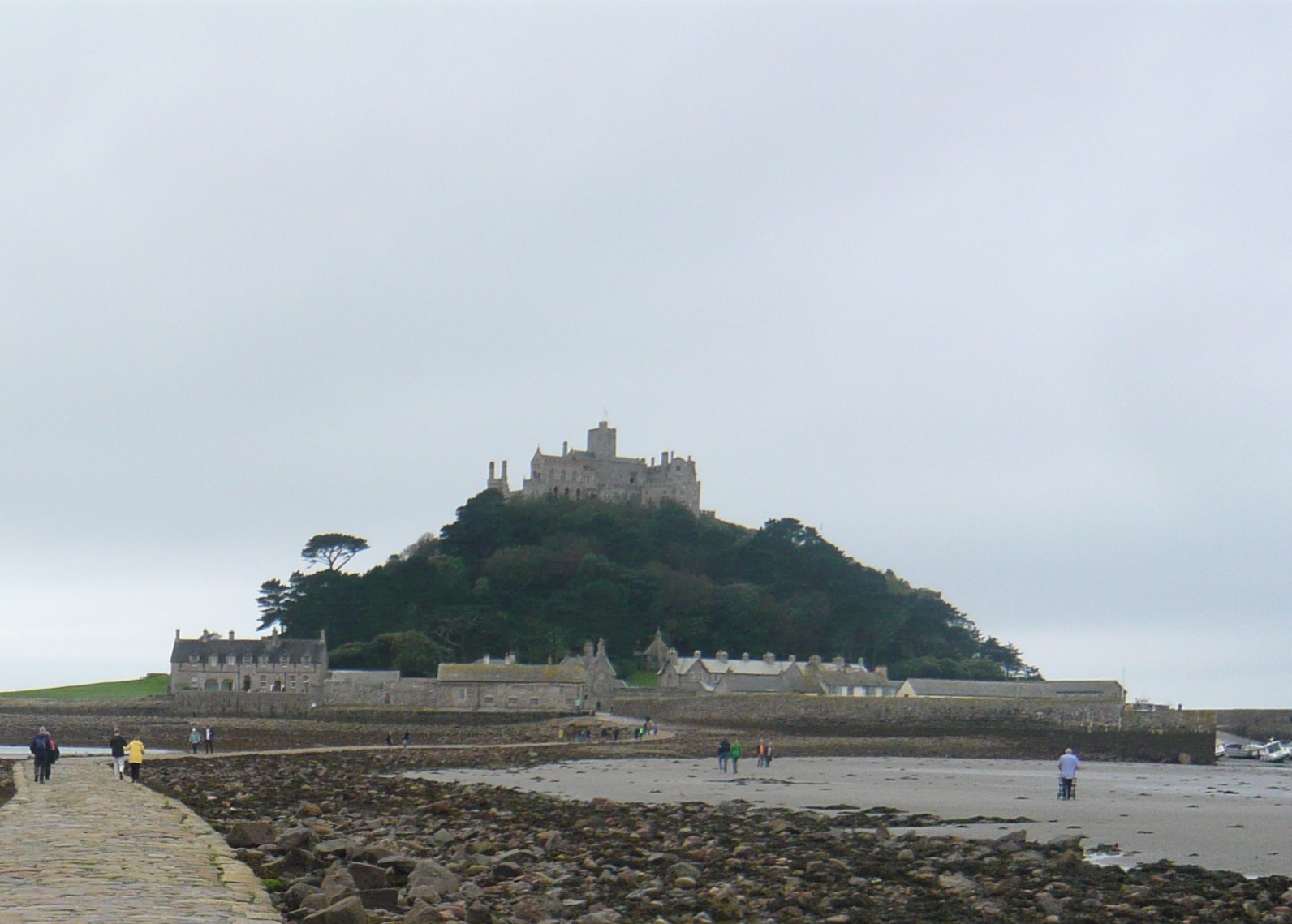
We recently returned from a week in Cornwall, and where we stayed was close to the end of a pilgrim route, St Michael’s Way. This is a short twelve and a half mile walk from the North Cornish coast to St Michael’s Mount, in Mount’s Bay on the South coast. Although the route is such a short one – a day’s walk for most people – it still apparently qualifies for a pilgrim ‘stamp’ on the official pilgrim passport for the very much longer long-distance Camino pilgrimage, since in the Middle Ages many pilgrims walked this route to the Benedictine monastery on the island, then took a boat to France to continue on towards Santiago de Compostela.
I am interested in learning – as far as it is possible for the staunchly non-religious person to learn – what the religious get out of pilgrimages. In the past, they were generally viewed as a way of gaining merit, of putting a few points in the bank when it came to whether you were headed for heaven or hell in the afterlife. Frequently, they were also undertaken in the hope of cures from diseases; various remnants of saints such as bones or clothing were held to have miraculous properties, and the touch of these might cure whichever disease ailed you.

Personally, I view pilgrimage as a spiritual thing, rather than a religious one. Something that puts the pilgrim in touch with their ‘finer’ feelings – a way of understanding what is important in life; relationships, simplicity, art maybe, minimal possessions – we will all have a different interpretation of this. In the past I have considered attempting one of the Camino routes – through France and Northern Spain to Santiago de Compostela. These are long, serious, routes, hundreds of miles long. Had I done so, I would have walked these for pleasure, as well as a personal challenge, rather than as a pilgrimage. Now, though, I am curious to see how much of the ‘religious’ experience I might have.

Whether visiting a church or a standing stone, a ‘holy’ well or a Sufi shrine, all are invested with spirituality. All are invested with meaning to many people and although I know I will never be able to experience the feelings of, say, a Christian at a site they consider holy, I might experience something akin to it. I’m not suggesting I might feel awe at the shrine of a saint, more that I might get an impression of the feelings of the visitors who do. And because I cannot quite find the words to express what I might hope to find, I reckon that’s an indication it’s an experiment worth making.
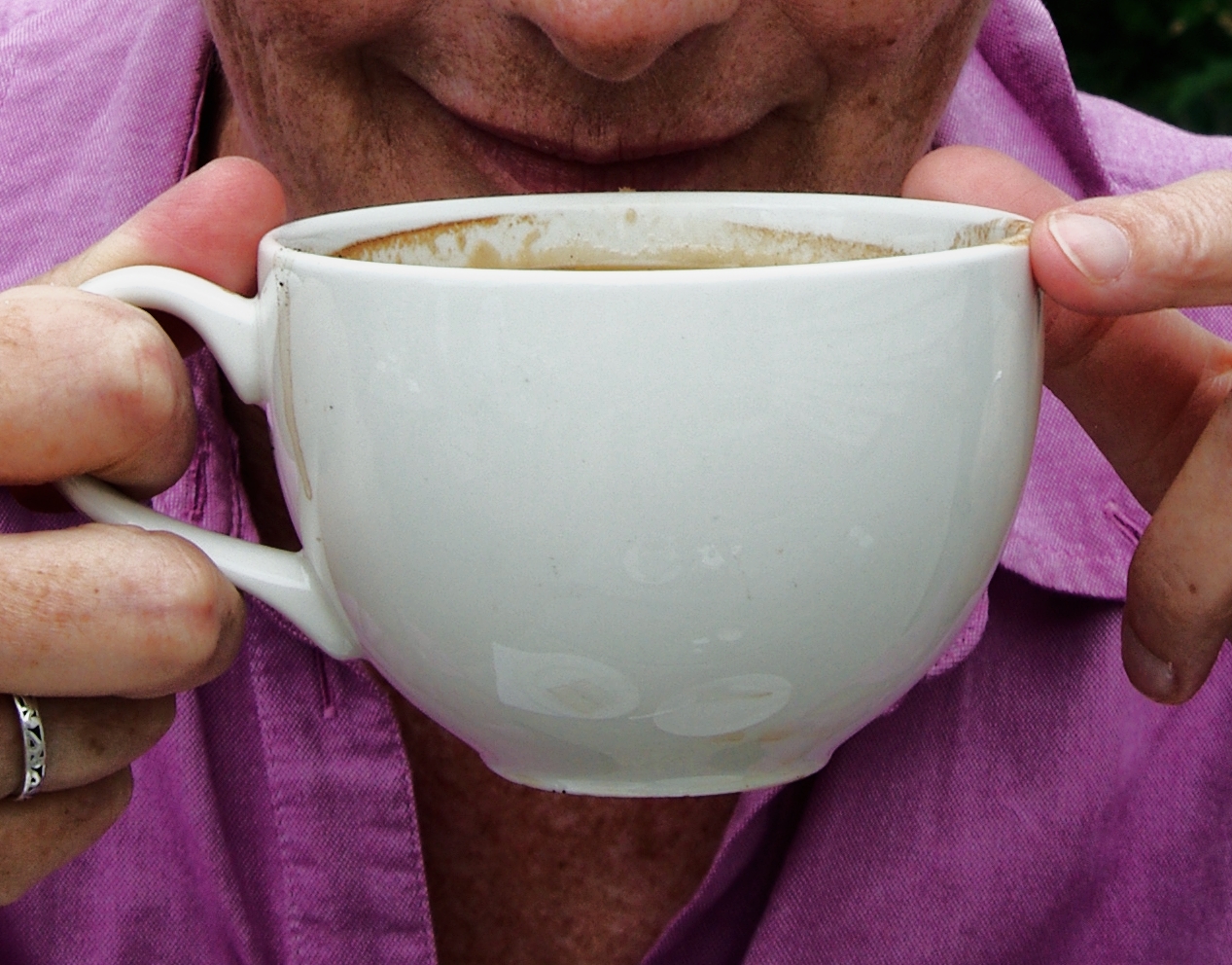
Coffee; my drug of choice!

At least, the first thing in the morning, it is.

061a

I just don’t understand why it is that having a perfectly average 7 or 8 hours of sleep each night should turn me from a (relatively) normal and functioning human being, into an extra from ‘Return of the Neanderthal’ – and a non-speaking extra at that, other than the occasional ‘ug’ or snarl.

Of course, if I get less than 7 or 8 hours, then I resemble something that hasn’t even made it as far up the evolutionary ladder as the Neanderthals; some sort of fairly large and irritable beast with too many pointed teeth and a lamentable lack of patience, perhaps.

Just left to my own devices, this would not auger well for my marriage, my blood pressure, or even for the local society and environment.

But if modern medicine can work wonders in curing all sorts of previously fatal diseases, then caffeine of just the right dose seems to be the medicinal panacea for morning.

And being just a layman when it comes to the world of caffeine, I have a childlike wonder at its effects.

I am especially impressed by the strength of the espresso that you get served in cafes in Spain or France, and hence at its effectiveness. The customer crawls in and somehow climbs up onto a bar stool, using their final reserves of energy, croaks out a request for ‘espresso!’, then uses the last of their strength to lift the tiny cup to their lips…they drink…and Bingo! They leap suddenly into the air as if energised by a bolt of electricity, and then rush out of the cafe, singing lustily, to do a 16 hour day’s work.

And proper Turkish coffee, an extremely effective if much tastier substitute for asphalt, just has me in awe. Are there really people who are able to drink this each day? Every day?

Superhuman.

I doff my cap to them.

I take mine a little weaker than that, I admit, but I do like it relatively strong, and without milk or sugar – exactly the way that nature intended it.

Naturally, instant coffee just does not cut it, although I do admit than it can be effective at combating fatigue; many years ago when I worked in the Middle East, I noticed that one or two of the men who worked shifts at our company would eat the occasional mouthful of instant coffee powder when they were tired, presumably to help them get through the following few hours.

But despite that, I just have not found an instant coffee that seems drinkable. Nothing can match the real thing, for me.

And lest you fear that I am doing myself irreparable damage by flooding my system with strong coffee throughout the day, let me just say here that for me it is an early morning ritual only, and after that I drink tea (a good Darjeeling, naturally!).

But now it is lunchtime. I have got through another morning.

Thank you, coffee. Thank you.

Where’s that damned kettle?