May Day Mayhem

The May Day festival, Beltane, is a survival, or revival, from the Iron Age, celebrated in Celtic communities – Scotland and Ireland particularly – and revived as a full festival in Scotland in the 1980’s by the Beltane Fire Society. Beltane was a fire festival, although nothing of that remains in the festivities carried out in England. Beltane was first mentioned by name in Irish writings from the late 800’s / early 900’s.

The English version of this festival involves cutting flowers and greenery and dancing around a maypole, which things are also carried out during Beltane, celebrating the beginning of Summer which begins on May 1st. When I was a child, dancing around the maypole was the chief, possibly only, activity carried out on May Day. I have a photograph of my brother, my cousin, and myself, dressed up for the May Day Fair at which there was maypole dancing, but no obvious indication of surplus greenery. Past generations in England celebrated May Day with a day of celebrations which while including maypole dancing as an important manifestation of encouraging the fertility of the soil (and the festival-goers!) would also have included plenty of food and drink and general gaiety.

Mayhem, if you like.

This year, I managed two May Day days out.

On Saturday, two days before May Day, I visited Kingston near Lewes, in Sussex, for the Caught by the River Mayday event. Caught by the River describe themselves as an arts/nature/culture clash and you can read all about them here. I have followed them now for several years, and this seems as good a time as any to mention that their coverage of arts, nature, and culture are second to none and if you’re not yet following them, well, you should be.

There was mask-making to begin with, especially to involve the children, the makers encouraged to incorporate flowers and greenery into their masks, and almost inevitably a certain amount of folk-horror found its way into some of these.

Nice, Richard.

This was followed by a promenade around the maypole, after which the activity moved indoors.
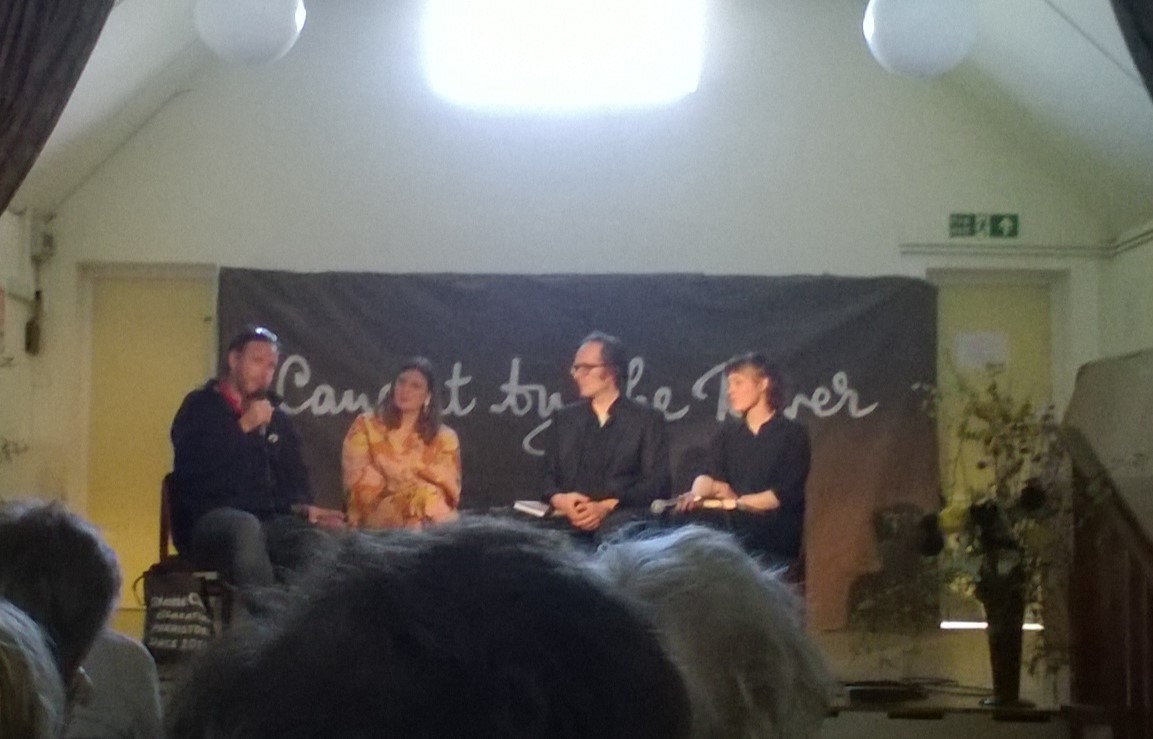
There were films, talks, and discussions, subjects including rivers, village life in the early eighteenth century, art, standing stones and the like, and the environment. After which, in the late afternoon, we all promenaded up the hillside to the Gurdy Stone.

This is the Gurdy Stone, a modern standing stone on a hillside overlooking Kingston. Here, Local Psycho (Jem Finer and Jimmy Cauty), held a gathering to encode the music of their Hurdy Gurdy song into the stone “To mark the 50,000 year return of the Green Comet and release of The Hurdy-Gurdy song on Heavenly Recordings.”

Throughout the day, naturally, we all had access to the pub.

And then on Monday, which was May Day, we went down to Hastings. It rather felt as though everyone in South East England must be in the town, either at the Jack in the Green festivities or watching blokes on motorbikes roaring up and down the seafront for no discernible reason. I don’t much like crowds, and some of this was very difficult. But away from the huge horsepower and testosterone nonsense, amongst the Jack in the Green celebrations the atmosphere was brilliant and the large numbers of people perfectly acceptable. Jack in the Green is a manifestation of the spirit of spring, related to the Green Man, a dancing figure covered in greenery.

The festival in Hastings has grown over the years into a large event involving musicians, dancers, Morris sides, huge figures in addition to Jack in the Green such as the Queen of the May, a witch, and others, plus any number of people joining in the procession around the town, all decorated with as much, or as little, greenery and/or flowers as they feel suitable.
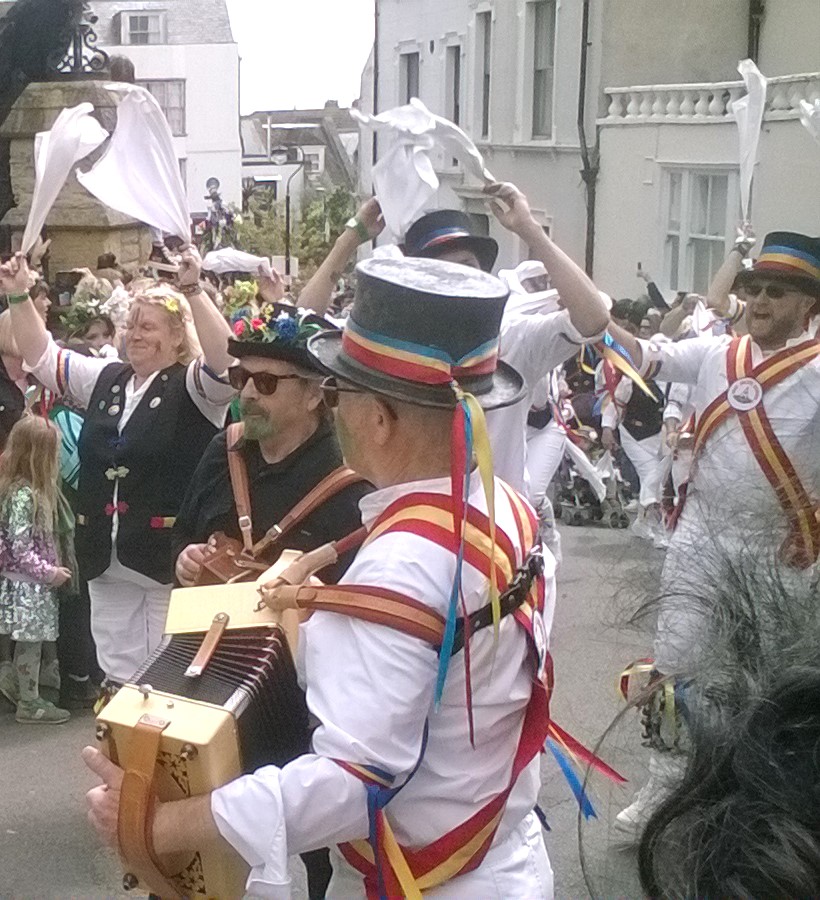
There you go, a Morris side.

Followed by a large witch with a cat. Why the witch? I’ve no idea. Why not? I suppose.
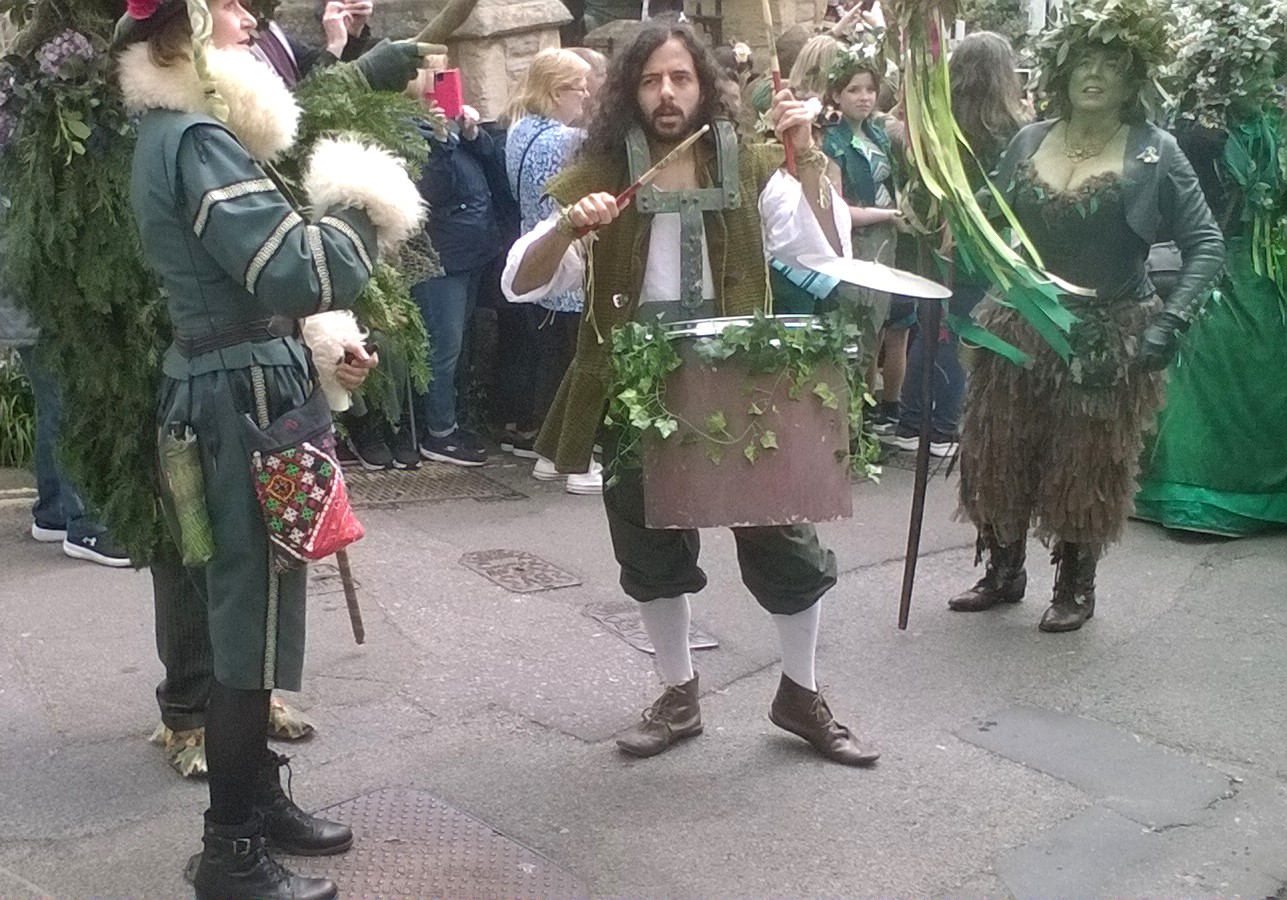
And there you have it. Music. Drumming. Greenery. Crowd involvement. Summer is icumen in and winter’s gone away-o.

And there was beer again, of course.
Shorelarking at Rye

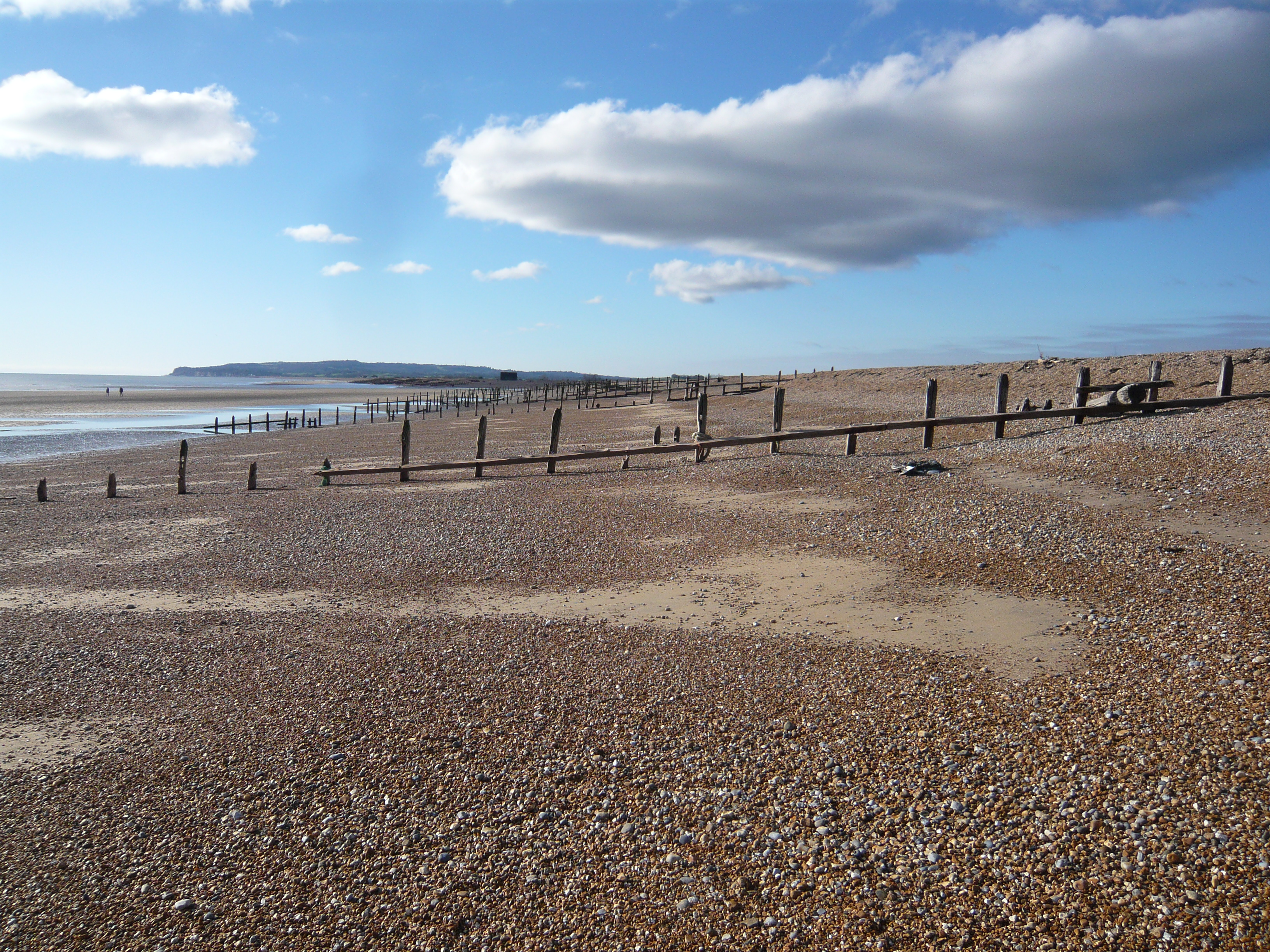
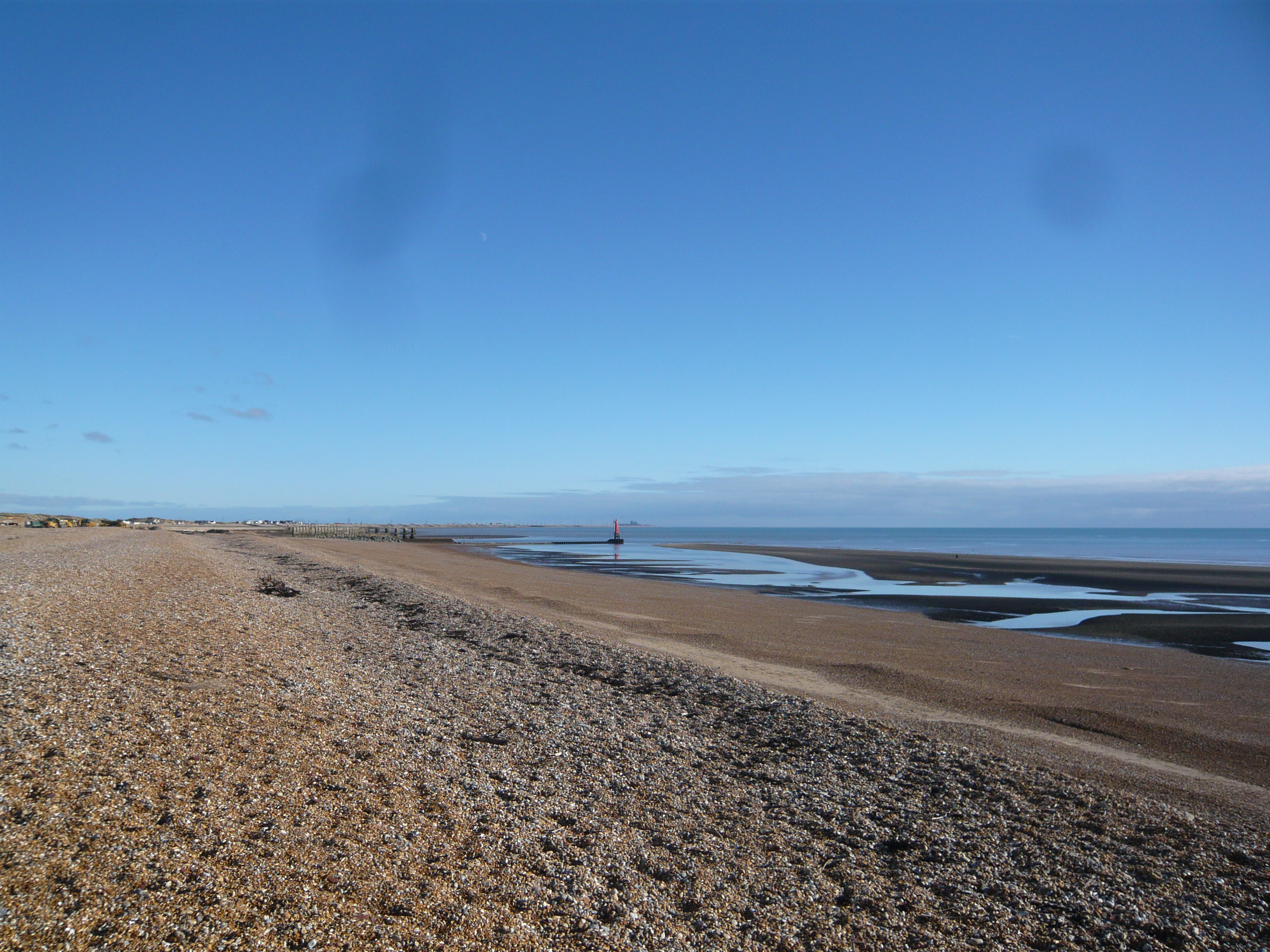
We went down to Rye harbour in Sussex, a few weeks ago, on a beautifully sunny but bitingly cold day. The actual harbour entrance is in the middle distance of the above photo with Dungeness Power Station just visible on the horizon in the distance.

This red-roofed hut sits on the shingle on the approach to the harbour and has become the iconic image that everyone photographs. I resisted the temptation this time, but took this one a few years ago. No one seems certain when it was built, but it was certainly in use from the early 1900’s onwards and was used to store fishing equipment.

The salt marshes behind the harbour constitute a nature reserve and are an important place especially for migrating birds. We walked around the marshes for an hour or so and did see quite a few birds, especially when we spent some while in a hide with the binoculars we’d brought. No close-up photos, because we were too far from the birds and I only had my pocket camera that day, but especially noticeable was was a group of some forty to fifty cormorants.

One of the tasks of the Environment Agency here is to continually move shingle in trucks westwards along the coast to shore up (pun intended) the sea defences. Due to the prevailing winds, longshore drift continually moves shingle eastwards along the coast and without this intervention it would choke the harbour mouth and undermine the sea wall at Pett (to the west). They load up the trucks with shingle from the shore, the trucks drive west and tip it out on the shore. The sea washes it eastwards along the coast again. The trucks load up with shingle from the shore…It almost feels a pointless exercise, but I suppose there’s no real alternative.

But longshore drift means that the shorelark on the South coast of England has a chance of finding rocks and stones (and all sorts of other things) that originated further to the west, and we spent some while searching among the stones here to see what we might turn up.

Shorelarking? It’s like mudlarking, but on the seashore. ‘Larking’ in this sense means looking for…well, anything. Coins, interesting rocks, anything lost or old or, preferably, both. Not that we found much, not that we ever find much, but we don’t do it as seriously as some folk. And as nice as it would be to turn up the sort of finds some people find in the mud of the Thames, we’re not that dedicated. But in the past I have found bits of flint tool while fieldlarking, and usually come home from a walk with an interesting stone or two.

We did find a couple of interesting things that day – they don’t look much, do they? But the grey stone in the centre is possibly a Mesolithic hammer stone, used for shaping flint tools while the nail had a tiny piece of wood still attached, but this crumbled away as soon as I picked it up. How old is it? I’ve no idea. Nails like that were in use from the 1800’s through into the 1900’s but it’s impossible to pin it down further. My immediate thought was it could be part of the beach groyne, but when I looked they seem to be constructed entirely with rivets. Maybe it is from an old shipwreck. The rock at the bottom is simply a lump of sandstone from further west along the coast, a piece of what was called Hastings Sandstone when I studied geology, but now known as the Ashdown beds. Nothing special, again.

Just an interesting few finds on the beach on a cold sunny day before we headed off for a warm drink.

I have some news!

I have some news.

I’m sure some of you (especially the writers) will remember that I reported here a week or two back the disturbing news that fictitious characters now have the legal right to sue their creators for defamation of character, or any other hurt (real or perceived) caused through those said creators’ thoughtless and heartless actions.

imgp2288

In case you want to have a look, the link is below.

Sue me and I’ll have you killed!

Well, news reaches me this morning of a new grouping of characters, namely sidekicks in detective stories, who have come together under the name of Sidekicks Of Detectives (or ‘Sods’) to challenge their positions as The Most Stupid Person In A Detective Story.

Initially, the group was to have been organised by Captain Hastings, sidekick to the famous Poirot, but after some heated discussion it was agreed that, actually, he couldn’t organise his way out of his own front door without help, and the task was then delegated to Doctor Watson, who arranged a meeting at a coffee shop, one of a well-known chain, in Central London. Unfortunately, he forgot to mention either which branch it was, or the time of the meeting, and so there has only been limited progress on that front, so far.

But, further cases have already come to court.

A number of characters from ‘Three men in a boat’, by Jerome K Jerome, Bertie Wooster and others created by P G Wodehouse, and various characters from books by Spike Milligan began a collective case, but were laughed out of court.

Dan Brown is being sued by every single character he invented.

And there is some confusion in America, where Donald Trump has apparently filed a case against himself on the grounds that he has irreversibly blackened his own character.

I’m told he is confident of winning the case, since the stories he has spread about himself are scarcely believable, and that it is generally held that he must be a fictitious character, since the majority of observers and commentators say they ‘can’t believe this guy is for real!’

The trouble is, all this is symptomatic of our legislative culture. It was the retrospective case brought by Big Ears and Mr Plod against the estate of Enid Blyton that, I think, I found most distressing. By all accounts, they cooked it up over an evening of heavy drinking, after being taunted by the Tubby Bear family, and it is strongly suspected (although it cannot be proved) that much of the impetus came from a third character – possibly one of the Fluffy Cats, since they are known to be bad through and through (it’s okay, I can say that. It was proved in a recent court case of character assassination that the Fluffy Cats brought, and lost, against the estate).

But Big Ears and Mr Plod did win their case, and now not only is it a legal requirement that in future they both be referred to as intelligent, but Big Ears must henceforth be renamed as ‘Graham’. And his ears are officially ‘of normal dimensions’. Or else.

Which brings me to my own characters.

I have decided that I am not going to be dictated to, or browbeaten by, some miserable little…hang on, there’s someone at the door. I’d better just get that. Hello? What? A writ? about what? Oh…

I’m sorry, I have to stop there.