Bodhgaya (2) – A Special Place

About six months ago, I put up a post on Bodhgaya (which you can find here if you wish to read it again), and promised I would find a few more photos to post another time.

This is another time.

img_0018

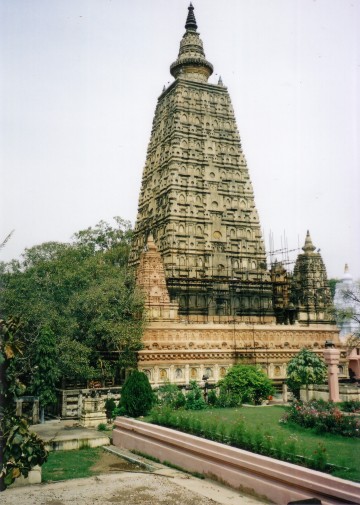
My first picture is of the entrance to the Mahabodhi Temple, which is built on the site where the Buddha achieved enlightenment. The first temple was built by Emperor Ashoka, in the third century BC, and the present one was erected in the fifth or sixth century AD. Visitors remove their shoes (or face a one hundred rupee fine) and descend the steps from the garden that surrounds the temple.

img_0020

Just before reaching the entrance itself, they will pass this small chorten – one of dozens surrounding the temple – garlanded with marigolds.

img_0019

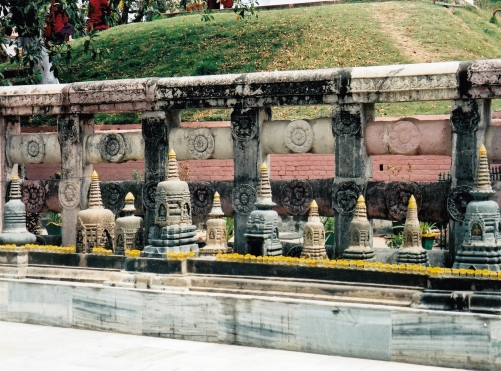
Many more chortens surround the temple and can be found around the gardens themselves, these ones beside a carved sandstone balustrade.

img_0024

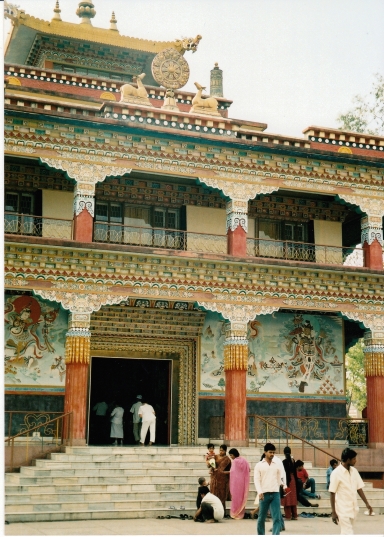
But the Mahabodhi Temple is by no means the only Buddhist temple in Bodhgaya. As the place where the Buddha attained enlightenment, it has naturally been the focus for many Buddhists from around the world, and there are many other temples built by those from the various different branches of Buddhism. This one is one of two Tibetan temples.

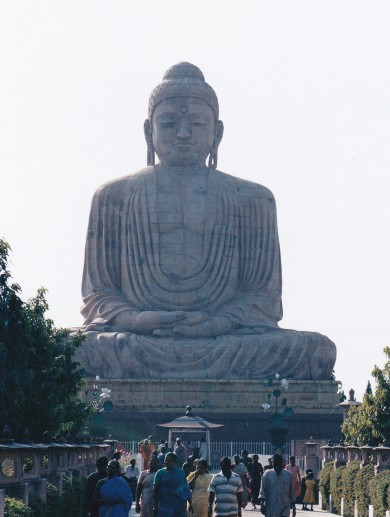
img_0017

On the edge of Bodhgaya, this twenty five metre tall statue of the Buddha was erected in the grounds of the Japanese Daijokyo temple in 1989.

But Bodhgaya, naturally, is more than simply its temples. Although it is quite naturally a major tourist attraction, it is also home to many people, and daily life is not much different from other towns in Northern India.

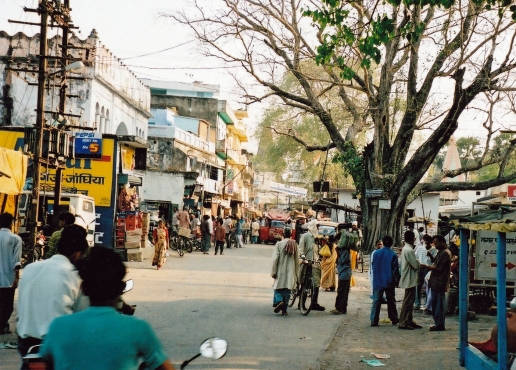
img_0023

As you approach the temple areas from the northern side of the town, this is a fairly typical scene. In the distance, the share auto that plies between Bodhgaya and Gaya is filling up with passengers, and men and women shop for essentials.

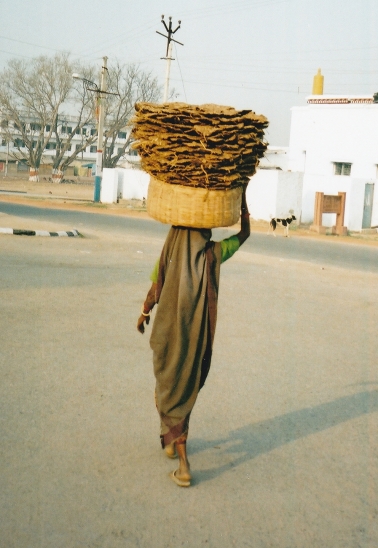
img_0021

A woman carries a basket of dried cattle dung, which will be used to fuel the cooking fire.

img_0022

And on the edge of the town, the scene quickly becomes rural once again.

From Thursday I shall be away for a few days, but will catch up with comments and other blog posts once I am back.

Varanasi and Sarnath

The city of Varanasi is probably the most important place in India to Hindus, whilst the ruins of Sarnath, some 10km away, mark the remains of a site of great importance to Buddhists. I stayed there for three days, some 8 years ago.
039
Dasaswamedh Ghat, Varanasi. Taken from the top of the steps (ghats). The River Ganges is the holiest river to Hindus, and Varanasi is the one of the holiest cities. Previously named Benares (and often so still called) and Kashi (City of Life), it is visited by Hindus in their millions who come to bathe in the Ganges to purify their souls. In a final journey, many are cremated here and their ashes cast into the river, believing that this will help to achieve liberation from rebirth.

040

The river Ganges from Dasaswamedh Ghat, Varanasi.

038

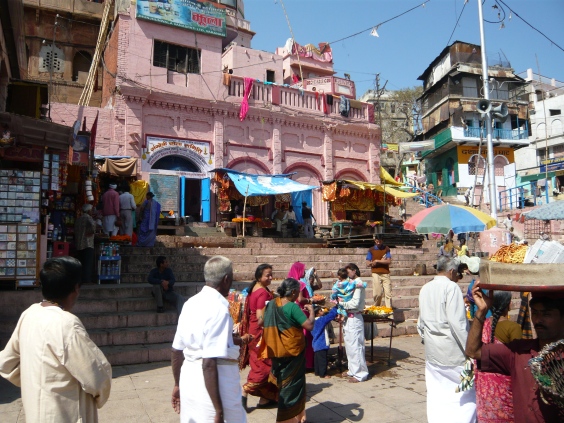
Stalls on the ghats at Varanasi. Varanasi never seems less than vibrant and colourful.

055

And another stall near the ghats.

049

Down at the ghats I was trailed by this cheerful young rogue demanding money to have his photo taken or to show me the sights or sell me souvenirs or lead me to stalls where I could purchase to my heart’s content or…whatever.

037

Street scene in Varanasi. The church in the middle distance is Saint Thomas’. This was taken quite early in the morning when I was on my way to the ghats. Early afternoon as I was returning, it was packed solid, traffic completely unable to move.

004

10km outside Varanasi lie the ruins of Sarnath. After the Buddha had achieved enlightenment at Bodhgaya, he came to Sarnarth – a walk of some 250kms or so, through what would have been highly dangerous country then – to seek out his former companions and in the Deer Park there he gave his first sermon, on the turning of the wheel of law. This comprises the Buddha’s path to Enlightenment: the Four Noble Truths, the Eightfold path and the Middle Way. In the 3rd century BC, the emperor Ashoka, a convert to Buddhism after witnessing the terrible carnage of a war he had unleashed, built stupas and monasteries here as well as an engraved pillar. These survived until the end of the 12th century when they were destroyed during the Muslim invasions and not rediscovered until 1834 by a British archaeological team.

008


This altar stone in the ruins of Sarnath) is still being used by pilgrims for pujas.

013.JPG

Dhamekh Stupa at Sarnath . This solid cylindrical tower, 33m in height, supposedly marks the place where the Buddha gave his first sermon. The base is stone, covered in delicate carvings, and the upper part brick.

016.JPG

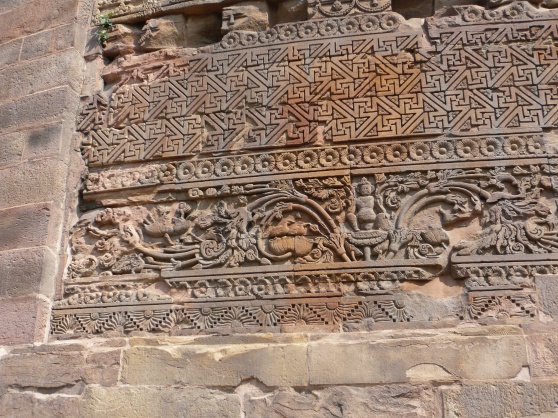
Carvings adorning the base of the Dhamekh Stupa.

A Shared Humanity

‘The world knows nothing of its greatest men’ goes the old saying. Or women, of course, since it is men who tend to write these things. I may have alluded to this before.

017

I was reading a blog post by Rajiv earlier today, on the partition of India and Pakistan in 1947, and we swapped a couple of comments, the result of which decided me to write this short post. You can read Rajiv’s post here: Partition in the Punjab

Those of us who did not live through that time, cannot really imagine the full horror of it all. The figures alone are dreadful.

14 million people were displaced, forced to move from their homes to either what remained India or became East or West Pakistan, by any means of transport available, frequently on foot. Those that survived the journey, frequently one of tremendous hardship, carried memories that were often too dreadful to relate.

Most lost their possessions.

Families were split apart and separated, many of them never to meet again.

Millions of refugees.

Up to 1 million were killed in what were effectively religious killings – the actual figure is unknown. Trains were set on fire, men and women, adults and children, lost their lives in what became a frenzy of killing.

Much, of course, has been written of this over the years, and the blame placed on many shoulders. The British were extremely culpable in this case, mainly through neglect and thoughtlessness. Those that assumed power in India and Pakistan need to take their share of the blame, too.

But the world, as I remarked at the start of this post, knows nothing of its greatest men. Or, in this case, its greatest men and women, or at least very little of them.

On both sides of the new borders, whilst most people succumbed to fear and many to hatred, whilst innocent lives were taken and dreadful acts carried out, there were many, many people who sheltered and saved those of other religions who had been their friends and neighbours before, often at great personal risk.

They gained nothing from it, but simply displayed their common humanity.

I have read of a few examples of this, a few stories from both sides of that border, and I have seen it mentioned briefly in documentaries.

But now, before the last players in that tragedy finally pass away, it would be marvellous if there could be a concerted effort to collect these stories and record them, as an inspiring example of people reaching out to each other across what is, once again, becoming a depressingly familiar religious divide, and, most importantly, remembering and commemorating their bravery.

Pitfalls for Writers – no.6: Historical Accuracy


‘Dear Mr. Author.

Whilst reading your book ‘Oh what fun and laughter we had during the time the Black Death wiped out our village’ the other day, I was disappointed to notice that you mentioned July 23rd 1449 as having been a sunny day in your fictitious village. From the descriptions you provide, you have clearly located said village a little to the south of present day Norwich, and my extensive researches prove that July 23rd 1449 would have been a rainy day there.

Yours disgruntledly,

A Pedant.’

How accurate do you need to be, as a writer, with historical facts?

If you are writing a non-fiction book, you have to be scrupulously accurate, no matter what subject it is.

End of.

On the other hand, if you are writing fiction, you have a certain amount of leeway. First of all, though, it is worth saying that if you sell enough copies of your book you will eventually attract correspondents like the fellow above. Is that something to worry about? Only if they get to know where you live, perhaps. Otherwise, send them a nice reply, thanking them for their diligence, and assuring them that you will correct your dreadful fault in the next edition. On the other hand:

‘Dear Mr Author.

The Black Death was actually sweeping the country in 1349, not 1449.

Yours smugly,

A Historian.’

This time, you’ve screwed up.

And yes, it matters.

Very minor inaccuracies are bound to slip through, and very few people will notice them. And if they do, they will not think anything of them.

Except for Arthur Pedant, of course.

The big things are another matter. Imagine reading a novel set in the days around the Russian Revolution, and then the author tells you that the Bolsheviks rose up against the state in 1927 instead of 1917. Or that they were led in the beginning by Stalin. Immediately, the author’s credibility has evaporated, as has their story.

Because the reader no longer believes the author, and they no longer accept their story.

The moral here, then, is don’t skimp on the research!

It is possible to radically change the facts of history, but the difference is that to do this the author must present it as the whole point of the story. In steampunk novels, the whole history of Victorian Britain is altered, but the reader accepts this as it is the premise behind the genre. It is seen not as a mistake, but as a narrative invention.

In many science fiction novels, the premise is a future that is the result of a different history than that which actually happened. For example, the Germans won the Second World War, or of different worlds or dimensions in which history diverges from the accepted version. Again, this is accepted by the reader, as it is the premise that the story is set on.

It is possible to break this rule, but to do so the author has to break it in such a way that it is quickly obvious that they have done it deliberately, and not by mistake.

One might, for example, set a novel in Victorian England that is not steampunk – a detective story, perhaps – but in which Queen Victoria is assassinated in 1860. As this is something that no one could possibly put in by accident, it will be seen as part of the invented narrative and accepted.

Well, probably. Where is Arthur Pedant?

Libya – Leptis Magna

Libya certainly seems to have suffered more than its fair share of misfortune over the years.

I was there in 1988 for six months – not that I’m suggesting that was one of their misfortunes – which should have been a good opportunity to get to know one of those countries that chose to be rather secretive and closed off to the outside world. It didn’t work out that way, of course.

As Westerners, we found it very hard to penetrate Libyan society and, to be honest, we really didn’t try that hard. There were almost no opportunities for socialising with local people, we were regarded with great suspicion by the authorities (although so were most of the general population, of course), and so we ended up in our enclaves even more than is usual in most ex-patriot societies.

But despite that, I discovered that the majority of the Libyans I did meet were wonderful, warm-hearted people. A few were slimeballs, but the same goes for the Westerners – many were great folk, but a few of them were also slimeballs, including the so-called friend who amused himself one evening by spiking my drinks with near-neat alcohol, knowing I was driving home afterwards. If by any freak of chance you ever read this, Shaun, you really are a shit.

It was always said that, as unpleasant and bad as Gaddafi undoubtedly was, there were others around him who were even more seriously dangerous and unhinged. Unfortunately, it seems that a number of them and their colleagues are still wreaking havoc in the country, along with the twisted followers of Isis and various other militias.

But the purpose of this post is to put up some photos that I took in Leptis Magna, which was a huge Roman city a couple of thousand years ago, and is located on the Mediterranean coast near the town of al Khums, some 125 km east of Tripoli. It is the largest extant Roman city outside of Turkey, and is a Unesco designated World Heritage site. I had visited Rome in the past, and I was astonished to see the extent of the remains at this site, which easily dwarfed those in the Roman capital.

Libya was certainly a place where I generally felt uncomfortable taking photos, and so I took very few other than these ones. The quality of the photographs, though, are generally very poor, I’m afraid, since all I took with me was an incredibly cheap camera. I was warned that there was a good chance that anything you took into Libya might get confiscated or simply stolen. The prints have also faded badly over time, and so these are presented purely for general interest.

I do have some more photos of Leptis Magna somewhere, which might be in better condition, so I will try to hunt them out for another time.

Leptis Magna is another one of those ancient sites that is under threat of destruction by the fanatics of Isis, and although I have followed quite a few threads on the internet, I am unable to find out whether there has been any actual destruction there yet. What I do know is that a group of very brave Libyans have formed a kind of militia to protect the ruins. I can only hope that they, and the ruins, are all well.

IMG_0004

Roman  Amphitheatre

IMG_0001

Roman basilica – converted to a church in the fourth century AD

IMG

Roman baths

IMG_0002

Along a Roman street…

IMG_0003

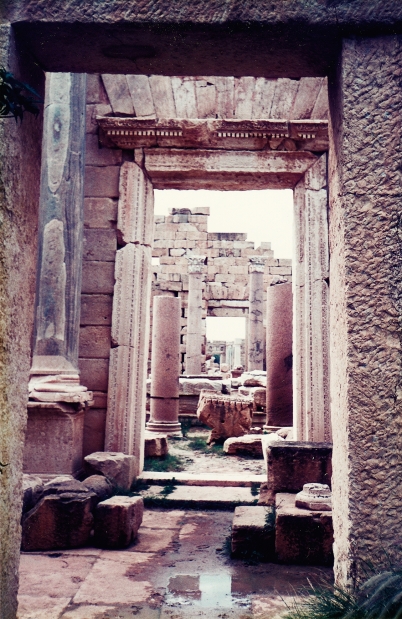
Through doorways and buildings…

IMG_0005

…and along another Roman street.

Bodhgaya (1)

I spent a total of 2 months in Bodhgaya, Bihar, but I seemed to end up with surprisingly few photographs of the town and surrounding countryside. Here are a selection of them, though, and I may put a few more up sometime soon. Hence the somewhat tentative ‘part one’ in the title.

mahabodhi temple


 Bodhgaya is a world heritage site, because the Mahabodhi Temple was built at the site where the Buddha is supposed to have achieved enlightenment, some 2500 years ago. The original temple was built by the emperor Ashoka in the 3rd century BC. The current temple dates from the 11th century AD, and was restored in 1882 by the Burmese. Surrounded by the usual frenetic Northern Indian crowds, and visited by a huge number of pilgrims and visitors, the temple and grounds still manage to somehow achieve an unbelievably peaceful ambience.


IMG_0002

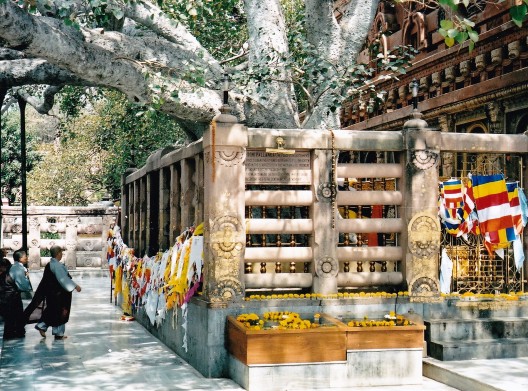
The Bhodi tree at the Mahabodhi Temple. It is a third generation descendant of the tree under which the Buddha is supposed to have achieved enlightenment.


img_0025

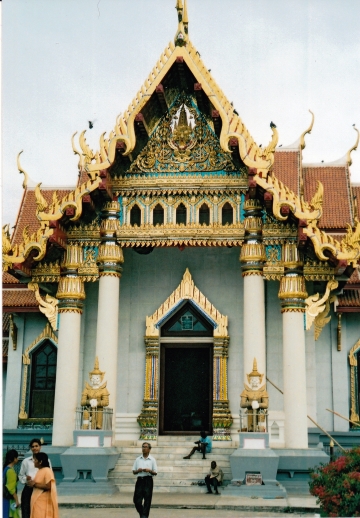
Thai temple, Bodhgaya. As well as the Mahabodhi Temple, Bodhgaya also has temples built by virtually every country with a sizeable Buddhist population. As befits the place where the Buddha originally achieved enlightenment, it is an active Buddhist centre with many charitable projects set up and running.


dawn-panorama
Dawn over Sujata Village, Bodhgaya. This was often the view that greeted me when I walked across the dry bed of the River Phalgu from Bodhgaya to the village of Sujata, in the cool of the morning. A rich reward for getting up early!


hindu-temples-panorama

Hindu temples on the edge of Sujata Village.

IMG

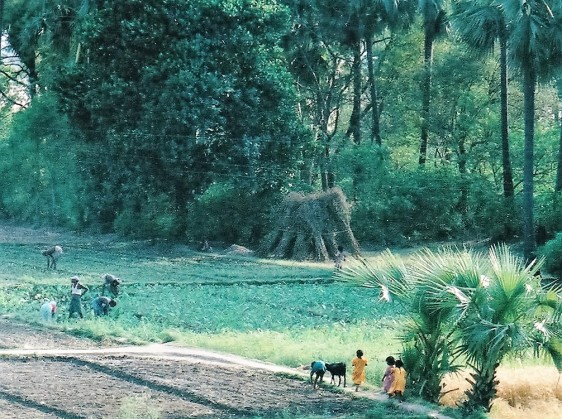
Fields in Sujata Village. In the vast majority of Indian villages, fields are still worked by hand or with animal labour. here is no exception.

IMG_0016.jpg

Farms at the edge of Bodhgaya. Although Bihar is the most corrupt, poverty-ridden state in India, sitting at the bottom of the table in almost any set of statistics that you may care to consult, the land appears lush and fertile, supporting a strong agriculture.

img_0026

And whilst we’re on a rural theme…a street corner in Bodhgaya.


IMG_0012.jpg

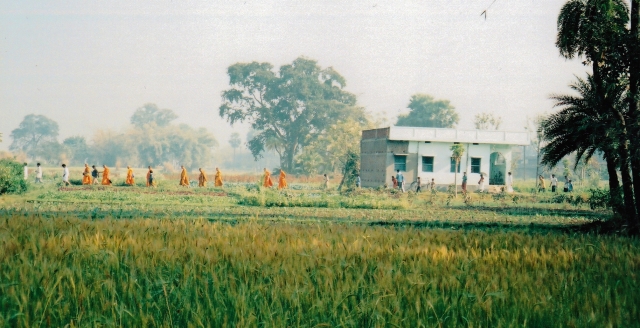
Monks heading for morning puja (ceremony) in Sujata.

temple door bodhgaya.jpg

Temple door in Bodhgaya.

img_0027

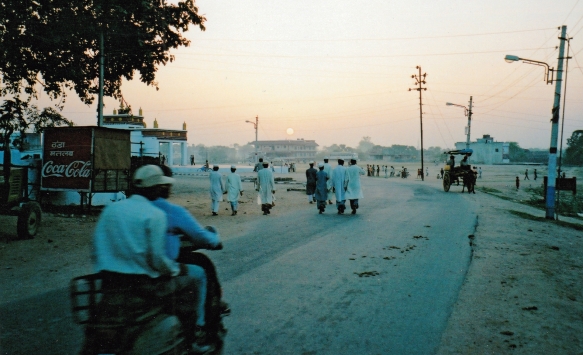
Dawn in Bodhgaya. The moslems are heading for the mosque, whilst most of the others are heading for work, for puja at Hindu or Buddhist temples, or to find breakfast.

I was after breakfast.

The Past is Another Country…

…they do things differently there (L.P.Hartley )

Almost 20 years ago I was a care-worker, paying visits to support elderly folk who were, for various reasons, unable to cope on their own. I would provide support in a number of ways – cooking, washing and dressing,and cleaning, for example.

One man I visited quite often would talk a lot about his younger days – as is natural. He had a wealth of stories, and I always told him he should get someone to write them down. It is the ordinary person’s stories that are frequently the most interesting, and the ones that we usually don’t hear. Famous politicians, sports stars, movie stars…well, they write autobiographies, or have them written for them, and we hear all about the other famous people they knew and the hotels they stayed in…yawn, yawn, yawn.

But we hear far less about the family in the village 80 years ago, their day to day life and how the outside world impacted upon them.

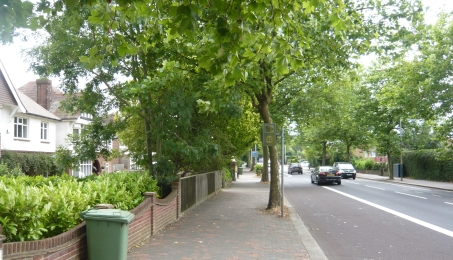
Below, there is a photo of London Road, just outside of Tunbridge Wells, taken earlier today.
005

My client told me that during his youth, he would walk back along this road after an evening out in town, describing how there was nothing but open fields on both sides for much of the walk. Looking at it now, it is hard to picture that, since I have never known it any way other than how it looks now.

But prior to this, in his childhood, he lived in the village of Groombridge, on the other side of Tunbridge Wells, and he told me how, as a schoolboy during the First World War, he and his classmates ran out of the class one day and across a field, to see a German Zeppelin airship that had just been shot down.

It is stories like this, that are the genuinely interesting stories that come out of the past.

And for my large Work In Progress, the past really is a foreign country. Much of it is set in Persia and India, in a time frame that covers some 300 years up until the late 19th century.

Now, I was about to write that if it is difficult for me to picture the main road near where I live as it was some 50 to 75 years ago, then it is far more difficult for me to picture the places in India and Persia where and when I have set my novel, but then I realised that this is not actually true.

And so this post is now taking a turn that I had not expected when I sat down to write it.

The Indian capital at the time was at Fatehpur Sikri, which today is just the remains of those buildings – it was only occupied for some 22 years, and then abandoned. I have visited the site and walked around it, and it is quite easy to imagine it occupied by Akhbar, his court, and the general population.

I have never been to Persia (modern day Iran), so my impressions are formed only at second hand. And much of what I have read consists of works about the 1500’s, and I am familiar with many of the paintings of the period, so again it seems almost natural to imagine it as it was then.

And then when I have travelled in India, as well as in the Middle East, I have spent a lot of time visiting the old parts of the towns and cities, and many rural areas where life follows the same patterns that it has for hundreds of years, and so, again, it seems more natural to picture the settings for my book in those time periods that concern me.

Finally, researching these areas, I often come across old black and white photos of places of interest to me, and since I have not been there, they are the only impression of these places that I have.

Of course, Tunbridge Wells in the Victorian era is much harder for me to visualise. All of the modern buildings get in the way of my imagination. All of the roads are surfaced with tarmac, the open spaces have largely gone, and many parts of the common that used to be open and windswept are now covered in trees.

On a slightly different note….

As a project, I occasionally take photos in sepia of the area around where I live, as though they might have been taken about 80 years ago – around the time that my elderly client was walking along the London Road, winds blowing across the fields either side of him, and the only light from the moon. Each photo that I take has something in it to show that it was taken recently though, rather than a long time ago, such as a modern vehicle, a modern street lamp, road markings, or modern windows. The shot below is an example.

Holden Pond

Easy to feel that it might be taken in 1930.

Kathmandu, Nepal

How on earth have I managed to blog for almost a year, now, and still not put up a single post on Nepal? I think I’d better put that right immediately.
I’m going to start with a selection of pictures from Kathmandu, capital of Nepal.
All of these pictures were taken before the dreadful earthquakes of last year, and I do know that some of the buildings in these pictures (especially in Durbar Square) were sadly destroyed.

015a.jpg

The entrance to Swayambunath. Swayambunath is the main Tibetan Buddhist site of Kathmandu. Sitting on top of a hill overlooking Kathmandu, it comprises temples, stupas and various other buildings, including a couple of Hindu shrines. Here, a Hindu holy man lurks in ambush, ready to dab a tikka mark on the forehead of (especially) western tourists and demand rupees for the privilege.


038.JPG

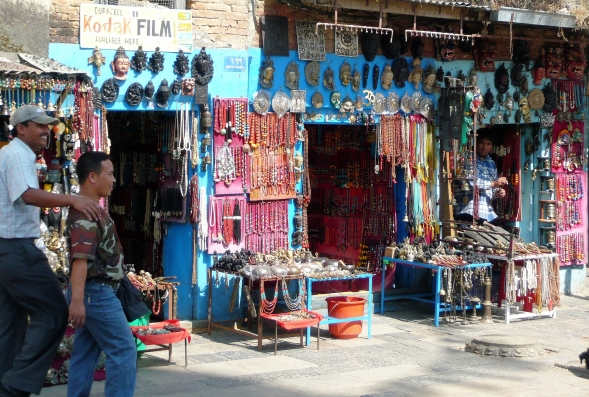
The sacred and the secular at Swayambunath. In Nepal, as in India, it is almost impossible to visit a religious site without Mammon getting a good look in. Here, in the main Buddhist site of Kathmandu, everything from yak bells to masks.


034a
‘One day, my boy, all this will be yours’ – just as long as you have enough money and all the time in the world to bargain hard. More shops – seriously colourful, seriously prepared to sell you anything. And having said that, the hard sell is a world removed from India. It almost feels as though there is no pressure at all. In Nepal, you feel you can relax again, especially if you have just travelled there from India.
056.JPG

Nuns lighting butter lamps beneath a row of prayer wheels at Swayambunath.

030a

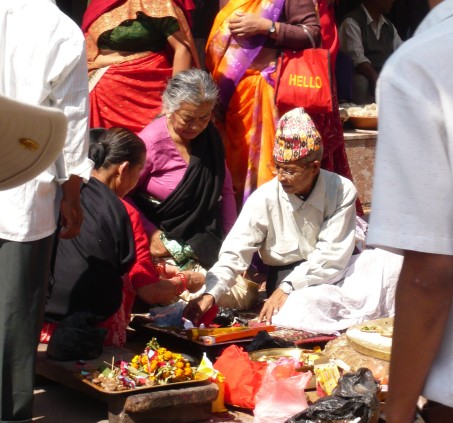
Hindu puja at Swayambunath. Probably a private ceremony at the request of the beneficiary, either for good luck in general or with a particular goal in mind (e.g. birth of a son, successful business venture.)


031b
Portrait of a Hindu lady.
057

Tourist shop in the Swayambunath complex.
100

Buildings in Durbar Square. Durbar (or ‘Palace’) Square is the heart of the old town and the area where the Kings used to live in the 18th and 19th centuries. In contrast to Swayambunath, this area is entirely Hindu, reflecting the vast majority of the lowland Nepali population.

102a

Side street in Thamel, Kathmandu. The lovely old buildings…beautiful wood carvings…collapsing brickwork…wiring all over the place…speed…calm…old and new…………the only things I can’t bring you are the sounds and smells…you must imagine them for yourselves. Coming soon, scratch and sniff websites!!!


098

Bicycle rickshaws awaiting customers in Durbar Square.


067b

Balloon seller and hopeful customer, Durbar Square.


070

Kala Bhairab – an image of Shiva in his most fearsome aspect. Wearing a garland of skulls, the six armed Kala Bhairab tramples a corpse, symbolic of ignorance. Carved originally from a single stone, it was set up by Pratap Malla, king in the 17th century. He was a pious Hindu, but interested in the arts and tolerant of other religions. He even restored much of Buddhist Swayambunath. It is said that telling a lie while standing before Kala Bhariab will bring instant death. It was once used as a form of trial by ordeal.


img
Pashupatinath, on the Eastern side of Kathmandu, is the holiest of the Hindu sites in the city. It is the temple of Shiva, on the Bagmati river and hence it includes the ghats, the most widely used place of cremation for Hindus in Kathmandu, indeed, in Nepal.

Sri Lanka (2)

Sra Lanka – Ancient Cities

Today, a return to Sri Lanka, and a few of the photographs that I took at some of the ancient sites.

Dambula – Rock Temple – reclining Buddha. There are 5 caves in all, each one more splendid than the last (assuming, of course, that you visit them in the correct order!), containing some 150 Buddha images.

SRPanorama 1thumb

SR250athumb

Dambula – Rock Temple -feet of reclining Buddha statue.

BELOW: A further selection of images from the caves at Dambulla.

SR247thumb

SR241thumb

SR238athumb

SR227thumb

SR243thumb

SR283thumb

Anuradhapura – Red brick Jetavanarama Dagoba.

SR261thumb

Anuradhapura – moonstone. Moonstones were not merely designed to be decorative, the patterns and figures are all relevant to Buddhist cosmic symbology.

SR288thumb

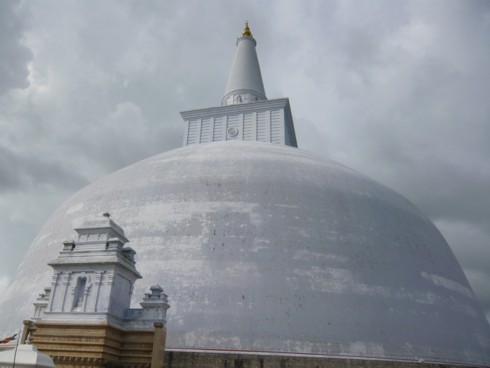
Anuradhapura. The Ruvanvelisaya Dagoba.

SR289athumb
Anuradhapura. Elephant carvings at the Ruvanvelisaya Dagoba.

SR265athumb
Buffaloes at Anuradhapura doing what they do best!

An Alien Culture?

More people travel for leisure purposes today than have ever done so in the past. And many work abroad on short- or long-term contracts, often with a certain amount of leisure time available to experience the culture that surrounds them there.

And this will result in these travellers meeting the people that make up the indigenous society where, for a while, they find themselves. Will there then be a meeting of minds?

Having lived in an ex-pat society, as I have referred to on here before, I am familiar with the laager mentality that often pervades it. I won’t go into all the permutations, but there is frequently a combination of arrogance and fear that leads to a strong feeling of ‘us and them’.

Many travel with the firm conviction that their own society is superior to any other, and are unwilling to see any good at all in any others. Some who go away to work resent being uprooted, and arrive with that resentment packed in their baggage. Some find the experience to be fearful, if they do not understand the language being spoken around them or assume that this alien society has values that somehow threaten them.

And they can either lock themselves away and peer over the barricades, or they can embrace the experience and learn from it.

137 (2)

Travel broadens the mind, it is said, but sometimes it seems to just cement prejudices more firmly in place.

And how easy it is to travel around just looking for things to justify prejudices!

One of the more infuriating things that I come across occasionally is a bigoted and ignorant letter or article in a local newspaper (it often tends to be the local ones) where someone’s idiot views are justified by the phrase ‘I know; I was there’. I imagine them living their entire time in a foreign country in a compound that they rarely leave, yet thinking that they now know exactly how the society functions beyond their walls.

I’ve met one or two of them, over the years.

I spent three years in Oman, working, and I’ve travelled fairly extensively in India, but I do not imagine or pretend that I really have much more than a superficial experience of these places. I knew little of the local culture in Oman beyond what I could see in the streets and villages and markets that I visited. I didn’t know anyone well enough to spend time at their homes or in their social circles. I went with groups of other westerners to places of interest. I did spend a lot of time exploring the desert and the nearby towns on my own, but I was effectively still inside my own little bubble. It is a huge regret that I never got deeper under the surface.

I have, perhaps, managed to learn a little more about the real India, especially through spending time on a project in a village, although I cannot pretend, even to myself, that I really have any idea of what it is like to actually live in an Indian village.

During the later days of the British Raj, the rulers took the approach that their civilisation was naturally superior, and that there was nothing in Indian civilisation worthy of their consideration. The irony of this is that around the end of the eighteenth century, and the first years of the nineteenth, many of the British in India had taken a keen interest in Indian history and culture, themselves doing a tremendous amount to unearth much of the history that had been lost and forgotten. For that comparatively brief period, it would seem that many of the British treated Indians and their culture with a deep respect.

The reasons that this changed are probably deeper than my understanding, but two things stand out. Firstly, that from the beginning of the nineteenth century, many British women came to India in search of husbands, bringing with them what we tend to think of as Victorian attitudes, and secondly, there was an upsurge of evangelism in Britain, which translated itself in India as a movement to convert the ‘heathens’ to Christianity. These combined as a new feeling of superiority, and contempt for a society that was now seen as inferior, especially when much of it resisted their overtures.

With this, the British as a whole seemed to become more intolerant and arrogant, and less respectful of sensibilities. This culminated in the horrors of 1857, which could be said to be caused directly by these attitudes.

To return to the present day, it seems that many travellers have attitudes no better than their Victorian predecessors’. I wrote a post a few months back that mentioned a number of westerners I came across in a Himalayan hill resort, https://mickcanning.co/2015/10/25/the-mad-woman-of-the-hill-station/  should you wish to view it, whose behaviour and attitudes were just downright arrogant and disrespectful. They were doing no more than confirming their prejudices as they travelled, and at the same time I daresay they were confirming many people’s views of western travellers.

Yet there are many people who travel with open ears, open eyes and an open mind, and their rewards are far greater than those of the blinkered traveller. They have the wonderful opportunity to experience and learn about different cultures at first hand, speak to people who hold different beliefs and ideals to them, and perhaps learn a little of what drives them. In return, they have an opportunity to enlighten others, perhaps, to things in their own society that might not be understood by those others. In a small way, each and every one of them can choose to contribute either to different societies coming to understand and become more tolerant, or to the further spread of tensions, mistrust, and misunderstandings.

And all of these little interactions, added together, are as important and influential as the contacts between politicians and diplomats.