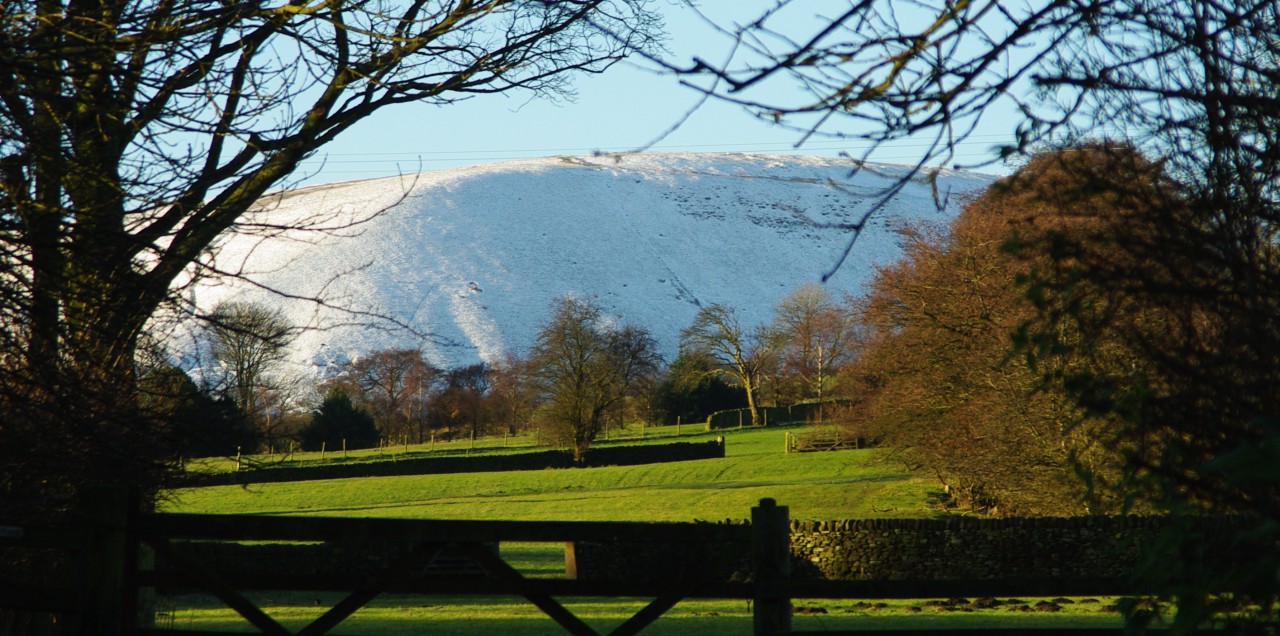
Go On A Journey!

Everyone should go on a journey; a journey of discovery.

Even if they only do it once.

The journey will be different for everyone. No two journeys will be the same. But what they will have in common is that they will all be journeys where the traveller discovers something about themselves, as well as the environment where they have chosen to journey. The essence of the journey is that it gives the traveller both time and space to think; that on the journey they allow themselves to be open to new sights and thoughts and people.
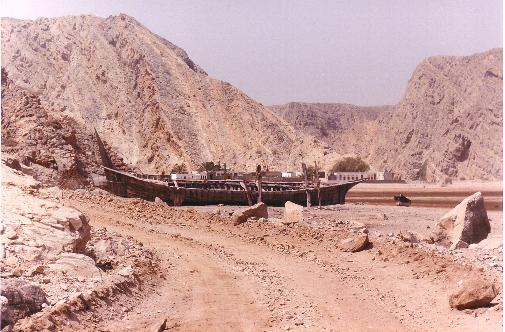
boat

For some, it will be a carefully curated tour to a country with a different culture to their own. Perhaps a Westerner travelling to Nepal or Cambodia, or an Indian visiting Spain or Iceland, with a carefully prepared itinerary designed to help them get the most out of their journey.

For some, it could be much the same, but as an independent traveller. They would have the flexibility to either keep to a strict itinerary, or to go off somewhere new as the whim takes them. Because everyone’s sense of adventure is different.

For some, it will be a long, long trek through difficult terrain, pushing themselves physically and mentally every step of the way.

img_0010

For some, it might also be a long journey, but under easier conditions, where the aim is more one of contemplation, perhaps a pilgrimage of sorts.

For others, the difficult terrain might be that of their prejudices and fears – the terrain of the mind.
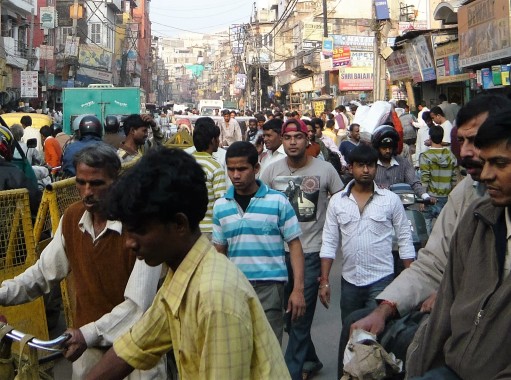
006-2

What starts as a pilgrimage might end up in your discovering that you do not believe in God; well, that is fine. Remember, it is perfectly possible to be a spiritual person without believing in any god.

Although what ‘spiritual’ actually means is not so easy to nail down. I think of it as pertaining to the spirit, rather than to material things. In that sense, I would associate altruism with the spiritual, and greed with the material. A sense of calm and peace with the spiritual, a rowdy hedonism with the material.

For some, the journey might be from their house to a town or village a few miles away, and the journey might take no longer than a day.

034a

It is essential, though, that the journey is undertaken for the sake of the journey. The destination is, in some ways, unimportant. It is what happens on that journey that matters.

Many, perhaps, will journey without realising that they have done so, or arrive at their destination not realising that is what it is. They might only realise later.

Some will arrive at a totally unexpected destination, and perhaps that is the best destination of all.

Go on, then, off you go!

The Kashmir Issue

I posted a little while back that I had prepared a rather contentious post.

This is it.

Of course, I realise I risk being shot down in flames over this post. An Englishman blogging on what he thinks might be the solution to an incredibly difficult problem in the Sub-continent. So I will put on my tin hat, duck behind the sandbags, and press ‘Publish’.

As always, I welcome your comments. In fact, it is probably pointless my posting this unless there is a conversation. But, please, keep it polite.

Obviously, I am not the only person to have thought of this idea. Indeed, I read about it a long time ago, when these various options were being discussed to the backdrop of bombs and bullets.

Plus ca change.

twenty eight

I fear there is only one solution that is practical in the long term, but I strongly doubt that the governments of India or Pakistan would have the courage to implement it. For the whole of Kashmir to remain in Indian hands will mean a continuation of the devastating armed conflict in progress at present, with no prospect of it ever ending, plus the ever-present prospect of it escalating into something much more serious. But for it to pass entirely into Pakistani hands would be considered out of the question by the huge majority of the Indian population, and certainly by the whole of the political class.

No, the only prospect of peace that I see is for the state of Kashmir to be partitioned in much the same way as India herself was in 1947. The areas of Muslim majority such as the Vale of Kashmir would need to be ceded to Pakistan, and the remaining ones would remain part of India. Pakistan and the insurgents would need to agree to give up all claims to these areas. This would need to be achieved by negotiation in good faith with goodwill on both sides, both conscious of the risks and the monumental steps they are taking to finally establish permanent peace, and to restore prosperity to a troubled part of the sub-continent. And upon resolution, all parties would need to declare very publicly that this was a solution agreeable to all, and give it their blessing.

It is not as though there is no precedent to that arrangement. After all, both the Punjab and Bengal were divided this way at independence, and although it was strongly resented by some, it was also generally viewed as the only practical solution. And it is what should have happened to Kashmir, then.

If the difficulties in the way of this solution are huge, then so too are the incentives for success. It goes without saying that the loss of life and the devastation caused by the troubles are highly undesirable in the first place, and then there is the massive drain in resources to both sides by keeping huge forces established on either side of the border. With the prospect of peace, then agriculture, industry and tourism could return to normal with major benefits for everyone involved. Lastly, with the removal of the ‘Kashmir Issue’ as a friction between them, it is possible that both sides might finally come to the sort of mutual respect, collaboration, and friendship envisioned back in 1947. Even if the attempt were to end in failure, then the goodwill generated by the attempt could be a positive that might spill over into other areas of India / Pakistan relations.

The alternative solution, sometimes mooted, of an independent Kashmir under UN jurisdiction, appears an unworkable ideal. The state itself is too divided for this to work, and both Indian and Pakistani players would still covert the whole country. It is unlikely that conflict would cease under these conditions; it would be more likely to simply escalate. The small state would forever be reliant on the UN for security, leading to a constant financial drain on the organisation. The peacekeepers, too, would inevitably become military targets raising the risk of  new frictions arising.

I believe that the option of doing nothing is one that must be finally put aside. At present the situation is one where a resented and hated military presence governs within its own borders through fear and the threat of violence, That is not a situation that is likely to ever change to trust. The population are never going to learn to love their rulers that way. The only option in that situation is the eternal continuation of the status quo.

But it lies within the power of the regional players to solve this crisis once and for all, and it is essential that the attempt is made.