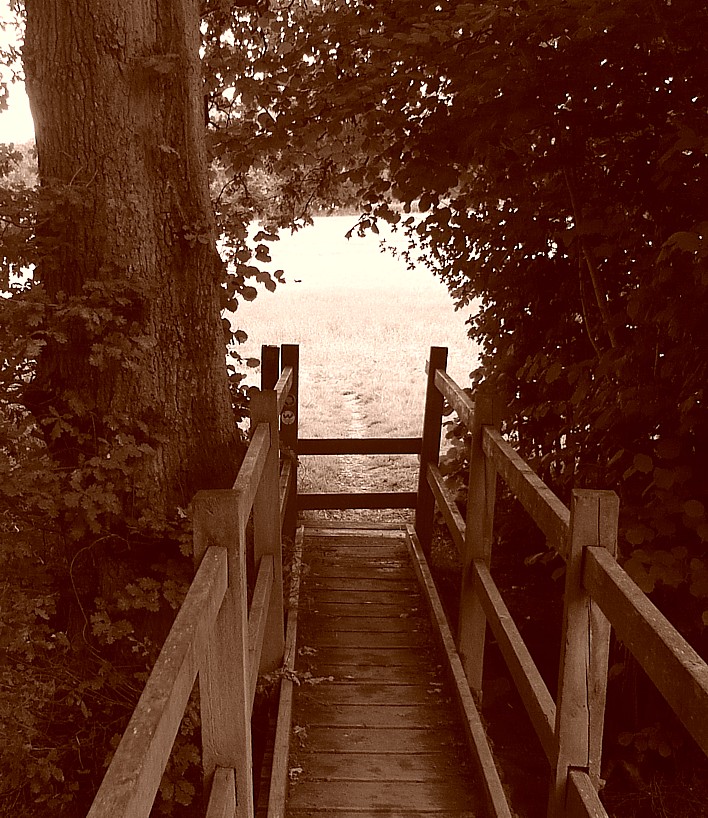
A Bit of Digging

Well, they arrived yesterday.

I have finally got my family history book formatted and printed, and I reckon it looks quite decent. So all I need to do now is to get it posted out to family members.

While researching all this, I naturally made a lot of discoveries. Some were certainly more unexpected than others, though. From previous research my father had done, we already suspected that my great grandfather had changed his name, possibly on a whim, from Prater to Canning. I was able to confirm this by, amongst other things, a comparison of various dates of birth in his family. This immediately removes the possibility of my searching back to see whether my name has any noble / famous / important roots. This is something that matters a lot to some people, although obviously only along the male line, which is why it seems to matter much more to men.

Although I turned it up too recently for the book, I have learned details about my father’s life in WWII which I would otherwise never have come to know. I had no idea – and seemingly nor had anyone else in the family – that from 1940 until joining the regular army in 1943 and being posted to India and Burma, he had been part of what had been dubbed ‘Churchill’s Secret Army’, soldiers trained to operate behind enemy lines in the event of a German invasion of Britain. Fulfilling the same role as the French Resistance, they would have carried out acts of sabotage and hit-and-run attacks to slow the enemy advance. it was only after that threat had receded that he joined the ‘Regulars’.

And then, less unexpectedly, there were the stories of extreme hardship: the early deaths, the poverty, the workhouse, tuberculosis and pleurisy…

Of course, if it was possible to search back far enough, we would all find we had a common early human ancestor, which gives the lie to the importance of race.

Does any of this research really matter? Well, in some ways, no. Does it sound crazy if I say that despite all my work, it does not matter that much to me? I’m very much in two minds over this. A lot of this felt more like an intellectual exercise than a personal quest. It was interesting to find out where my great grandparents and their parents had lived, for this felt just close enough to be a part of me. But before them? And especially when I could discover nothing more than their names and some vague dates? No, not really. Throughout this project I have been especially keen to be able to put names to old photographs, for this seemed the only way to make these people come alive again, or at least begin to. That I’ve been able to positively identify some of them feels more satisfying than pushing a line back another hundred years, although I do have nearly every branch back at least to the 1700’s, but in every case it is the stories I’ve found out about these people that matter.

But back to my question. Does any of this research matter? I do think it has the potential to bring us a little closer to our families by emphasising our shared history, and I’ve greatly enjoyed long discussions with cousins about our various researches and discoveries. But beyond that? Well, I’ve enjoyed learning the social history involved with my family, the realities of how people actually lived in the towns and countryside over the last few hundred years. And as well as emphasising my connection to my extended family it has also, as I wrote a few month ago, given me a greater sense of connection to the land where I live.

I have enjoyed exploring the past, but I’m not going to live there.

The Oddness of Time – 2

I was eleven, and it was my first year in secondary school.

I don’t remember the day or the date, which in a way surprises me, since everything else was so vivid. But I was walking with Chas, a sometime friend, and we had just finished a maths lesson and were on morning break. The day was overcast, and I suspect it was early summer.

003a

We had just walked down the half dozen steps that ran down to the Lower Quad from the strip of asphalt beside the cloisters which connected the two main school buildings, and separated the Upper Quad from its lower cousin. At that point, I know I had not yet realised that ‘Quad’ was short for ‘Quadrangle’ – why would I? I was in my first year there, all was relatively new and there were more than enough new things to get my head around and cope with, without adding any unnecessary ones into that particular stew.

At the bottom of the steps I looked to my right at the large building that housed the dining hall and the geometry room, among others. There was nothing unusual or special about it that day, I just looked at it and had a powerful realisation – an understanding – that I would never again experience exactly what I was experiencing in that moment.

I might view the same view again, and perhaps the weather would be the same. Maybe even every boy in the school might occupy exactly the same place as they occupied at that moment, either outside where I could see them or elsewhere, unlikely though that might be. But it could never actually be the same again.

The universe would have changed; in one year we would occupy the same position relative to the sun, but not to all the other bodies in space. That would never be repeated. The Virginia Creeper on the dining hall wall would have changed – grown larger, grown new new leaves and lost many of the older ones. So too the other trees and plants.

We would never occupy the same point in time again.

I did not discover anything new that day. I did not add anything to the sum of human knowledge. But what I did was actually experience my existence in a way I had never done before, and have done only a few times since.

It is tempting to look back across that huge gulf – over fifty years, more than half a century – and fill my eleven year old head with profound thoughts that were not there at the time. But I knew I would never experience that moment again, yet I understood instinctively that I would forever be able to recall it. In a way like a snapshot, but a snapshot that included physical feelings and a strange sense of wonder.

Time is sometimes described as an infinite series of moments – because only the present exists – much like an old-fashioned cine film where the perception of movement is supplied by viewing a rapid sequence of still images, each one a gradual progression between the previous ones and the following ones, yet in a way this idea negates the whole concept of motion, since if that really was our experience, we should lose the consequences of motion; just think of the effects of a car crash, or a punch to the jaw, for example.

This was a snapshot in time, but it was anything but frozen. I felt it not only as a moment, but as part of continuous stream. I could still feel the rest of the world flowing past me as I stood there.

Buddhists speak of ‘Little Enlightenments’, which are moments when one has an almost overpowering feeling of existence, a strong sense of being connected to the whole world, during which that person experiences a heightened awareness – they seem to hear what is around them more clearly, see unusual detail and find that even colours appear more vivid than usual. At the same time thought seems unusually profound. This only lasts a short time, perhaps a couple of seconds, but leaves behind a powerful impression. I have twice experienced this, and each time I was somehow reminded of my experience that day at school.

And I wonder if the connection there is that I had an unexpected understanding of time for a few moments at the foot of the steps below the cloister.