The last couple of weeks have seen a real mix of weather – typically autumnal. At times it’s been absolutely hammering it down here. After what feels like an impossibly long spell of parched heat, in the last week we’ve had some marvellous rainstorms.
These rains have freshened the tired summer greens as though they’ve suddenly been woken up and sparked into life again. As summer drifts into autumn, we’re suddenly presented with the lusciousness of spring.
The heat had left me both mentally and physically exhausted, but I’m finally reviving a little. Autumn, like spring, is a season of change and I’m feeling the effects.
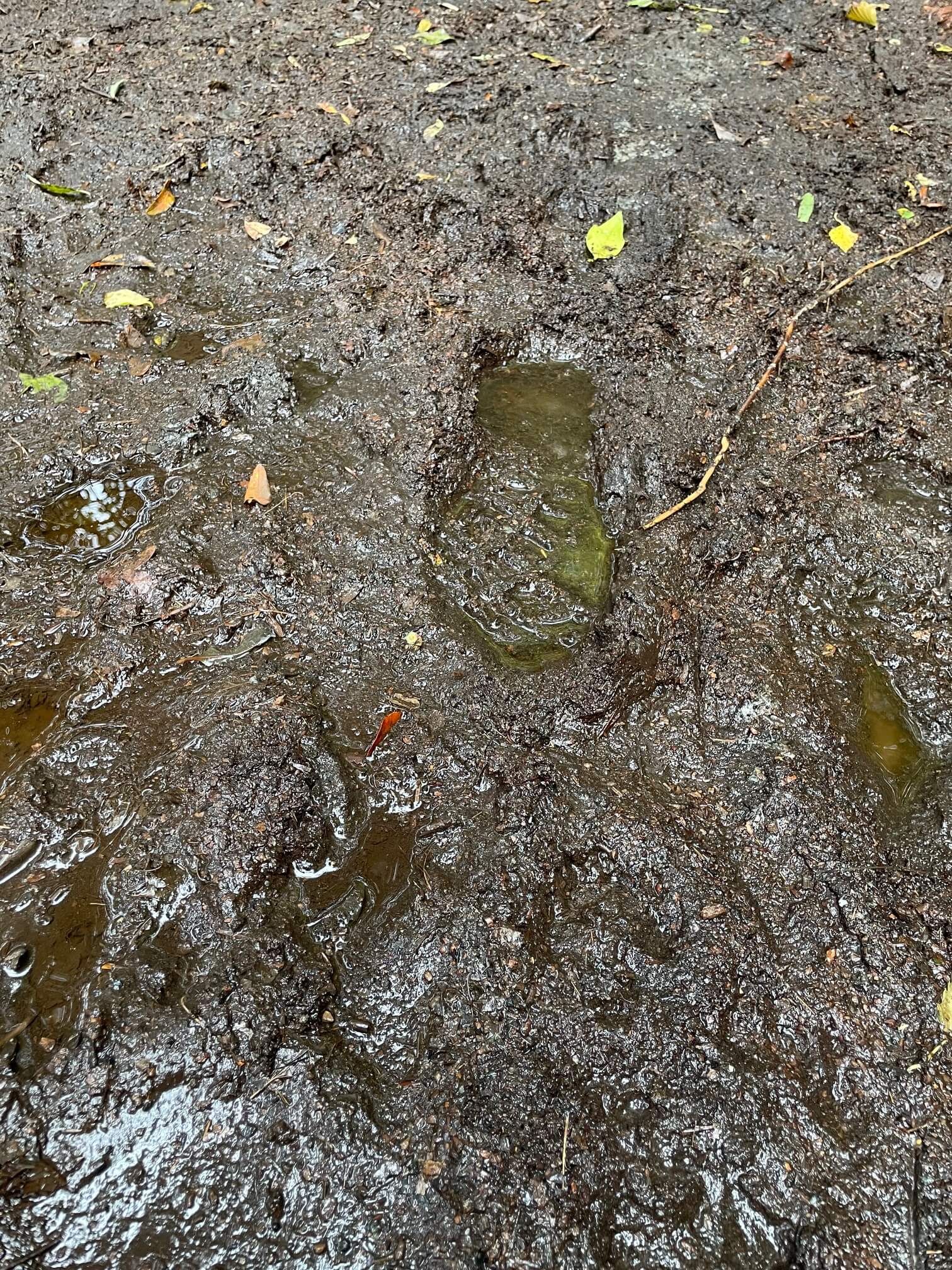
I’m also celebrating the return of mud. No doubt in the depths of Winter I’ll be sick of the stuff, but right now it appears like a magical substance. To walk upon ground that gives, ground that reacts other than by producing a puff of dust, is magical.
The third Monday in January – Blue Monday – is supposedly the worst day of the year for those who suffer from depression. So here we are on the 20th, Blue Monday. But there is no scientific reason for this date to be singled out, it is just a modern myth invented, apparently, by a UK travel company who presumably intended it to prompt people to take foreign holidays to cheer themselves up. However, I can see some justification for the claim, while also seeing a certain hope. Justification, because I tend to feel depressed and miserable at this time of the year. Tired. Lacking in energy or, indeed, motivation.
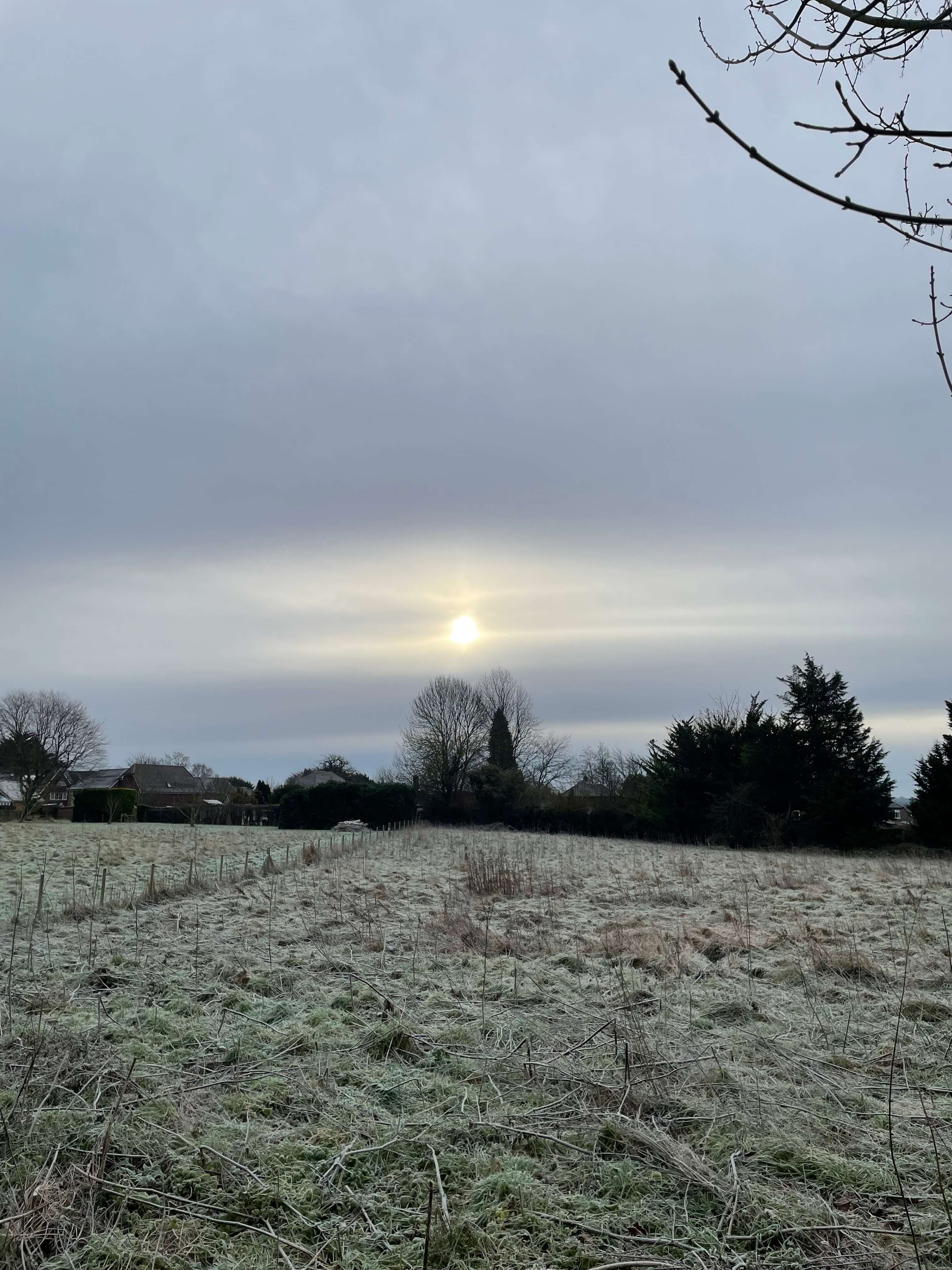
But also a certain hope; by now the daylight hours are lengthening, which becomes apparent when we are fortunate enough to have clear skies around sunrise or sunset. New growth is apparent, with new shoots finding their way up through the earth and leaf or blossom buds swelling on trees and bushes.
I feel so tired at this time of the year. I just feel I need to survive this winter, just get through it. I shall light a fire, wrap up warm, pour a beer and read a pile of books. I am in touch with my inner dormouse and intend to essentially hibernate until Spring.
Today is the shortest day of the year. Where I live, we will get approximately half the daylight hours that we will get during the Summer Solstice. Actually, slightly less. We get up in the dark and it is dark again long before supper time. The weather is cold and predominantly miserable.
But from today the daylight hours lengthen – at first imperceptibly, but gradually it becomes noticeable the hours of daylight are increasing. Finally, there is an end to the relentless lengthening of darkness, and within a few weeks it will become obvious that the world is, indeed, moving towards a time of warmth again.
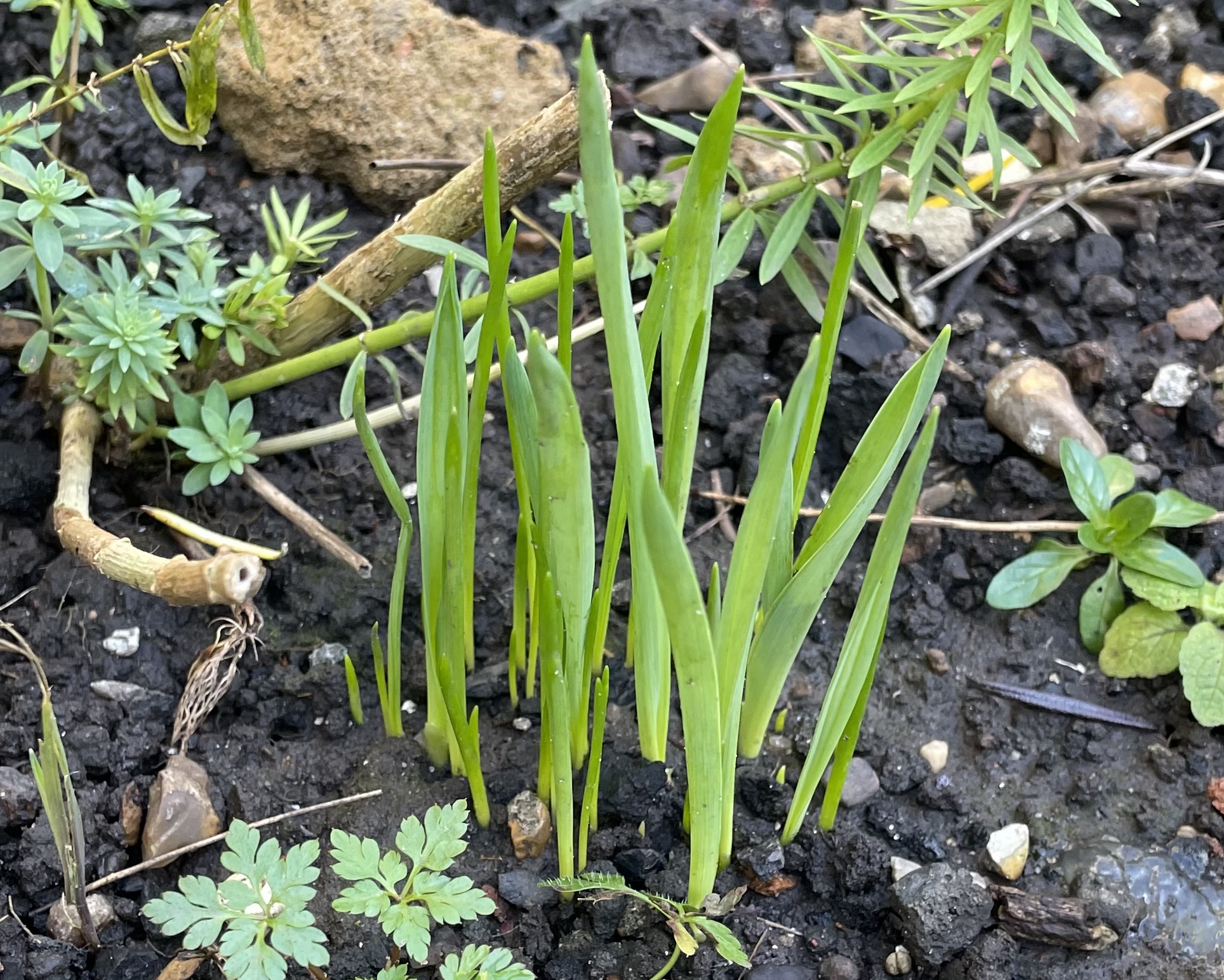
Yet there are already new plants coming up; new growth that has been prompted by…what? When they broke the surface of the ground a few weeks ago the days were still getting shorter and certainly no warmer. Nature is strong and determined. Winter is never a lifeless time of death and decay. There is dormancy and rest, but also a lot of growth if one takes the trouble to look for it.
I’m thinking longingly of Spring, of renewal and growth. In a couple of hours I’m off to see a mumming play – perhaps I’ll leave you to Google that one – down on the Kent coast. Beer will be involved, of course, in line with the best folk traditions. Old – possibly ancient – celebrations of the turning of the year and the approach of Spring.
Yesterday was Imbolc, February 1st. Imbolc is a pagan festival marking the halfway point between the Winter Solstice and Spring Equinox. Honouring the goddess Brigid, goddess of fertility, it celebrates the beginning of Spring.
And so I went looking for signs of Spring. It was a real Spring-like day. Blue skies. Sunshine that felt almost warm. Birds singing. Stuff growing. There was a Red Admiral, but I didn’t get a picture. I did get a few pictures of other stuff, though.
Four years ago it was also a lovely day – we were walking on the South Downs – perhaps Imbolc is often nice. I’d look it up if I could, but it seems very difficult to find detailed weather records on the internet; I’ve been looking as I’d like to check a few things. Anyone know of any sites?
Sunny and Spring-like.
Primroses are out.
There were some wild daffodils coming up in the woods. Not in flower yet, but it shouldn’t be long.
The cultivated varieties are already in flower.
As are the Camelias.
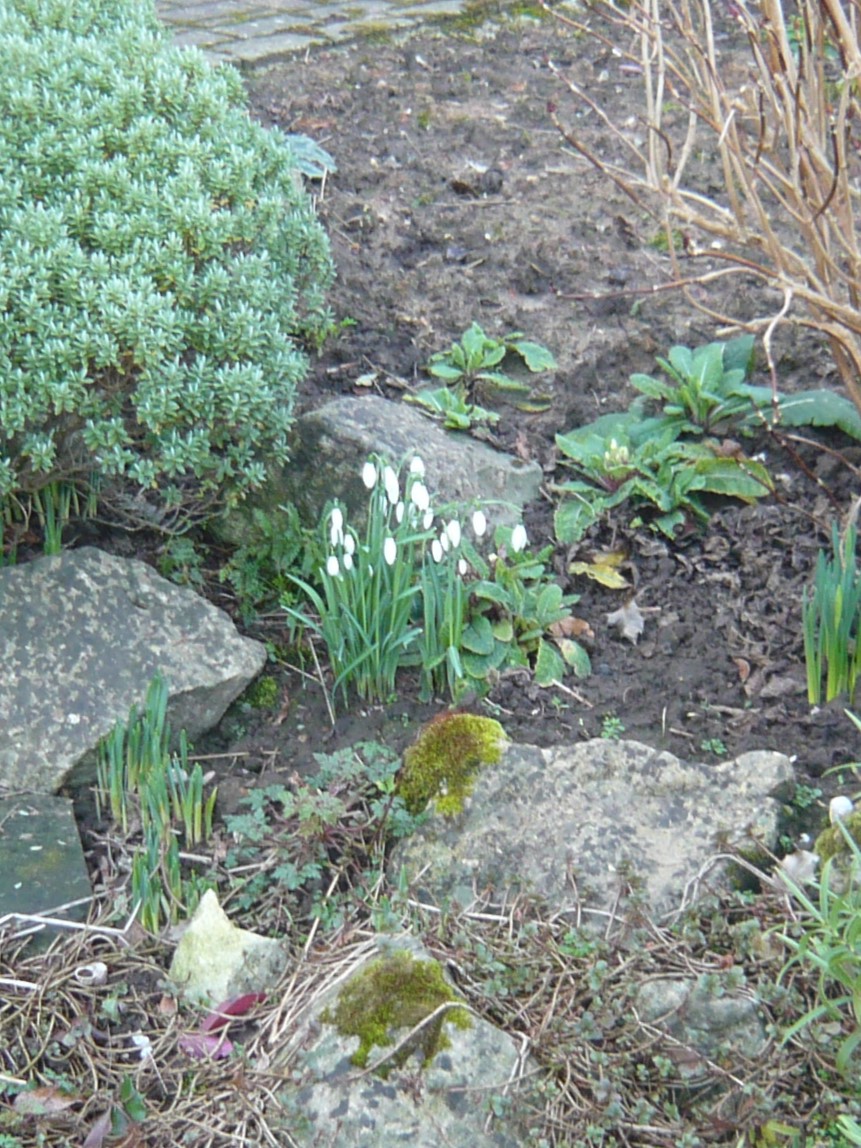
And the snowdrops are still around, although past their best.
At ten past four, the sun was still out. This might not sound a big deal, but after the real Winter months it feels like a definite progression. Later, because of the clear sky, predictably it quickly became much colder.
The May Day festival, Beltane, is a survival, or revival, from the Iron Age, celebrated in Celtic communities – Scotland and Ireland particularly – and revived as a full festival in Scotland in the 1980’s by the Beltane Fire Society. Beltane was a fire festival, although nothing of that remains in the festivities carried out in England. Beltane was first mentioned by name in Irish writings from the late 800’s / early 900’s.
The English version of this festival involves cutting flowers and greenery and dancing around a maypole, which things are also carried out during Beltane, celebrating the beginning of Summer which begins on May 1st. When I was a child, dancing around the maypole was the chief, possibly only, activity carried out on May Day. I have a photograph of my brother, my cousin, and myself, dressed up for the May Day Fair at which there was maypole dancing, but no obvious indication of surplus greenery. Past generations in England celebrated May Day with a day of celebrations which while including maypole dancing as an important manifestation of encouraging the fertility of the soil (and the festival-goers!) would also have included plenty of food and drink and general gaiety.
Mayhem, if you like.
This year, I managed two May Day days out.
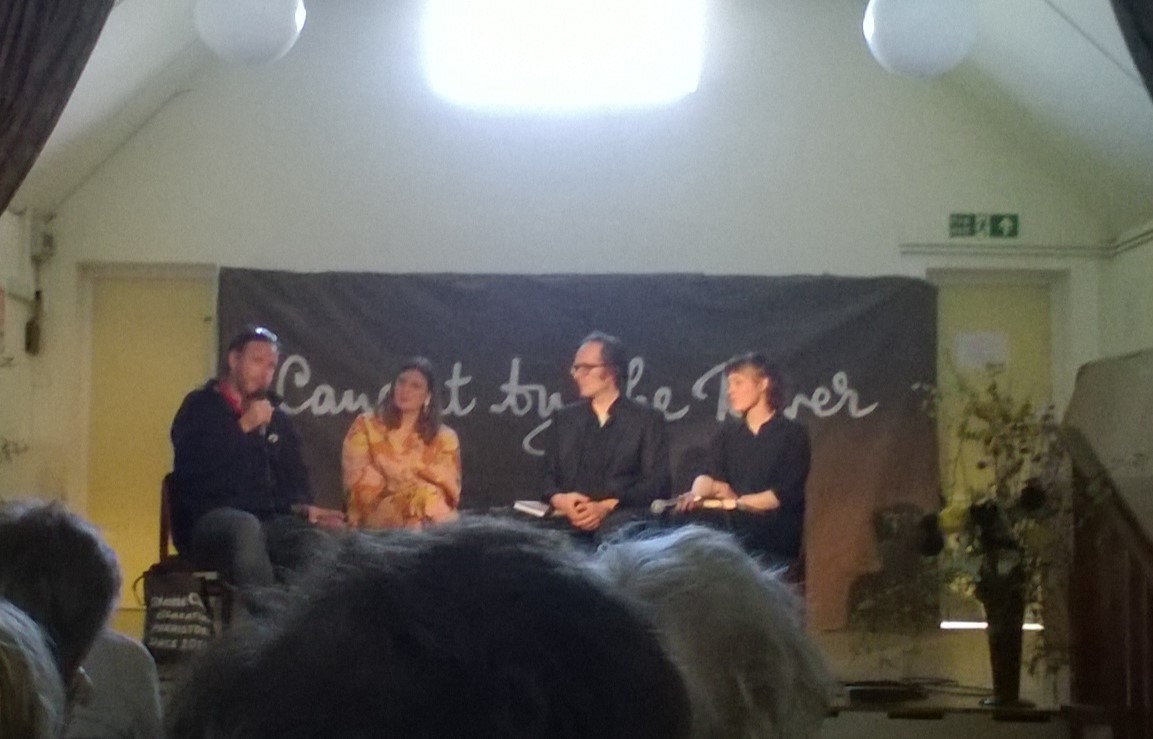
On Saturday, two days before May Day, I visited Kingston near Lewes, in Sussex, for the Caught by the River Mayday event. Caught by the River describe themselves as an arts/nature/culture clash and you can read all about them here. I have followed them now for several years, and this seems as good a time as any to mention that their coverage of arts, nature, and culture are second to none and if you’re not yet following them, well, you should be.
There was mask-making to begin with, especially to involve the children, the makers encouraged to incorporate flowers and greenery into their masks, and almost inevitably a certain amount of folk-horror found its way into some of these.
Nice, Richard.
This was followed by a promenade around the maypole, after which the activity moved indoors.
There were films, talks, and discussions, subjects including rivers, village life in the early eighteenth century, art, standing stones and the like, and the environment. After which, in the late afternoon, we all promenaded up the hillside to the Gurdy Stone.
This is the Gurdy Stone, a modern standing stone on a hillside overlooking Kingston. Here, Local Psycho (Jem Finer and Jimmy Cauty), held a gathering to encode the music of their Hurdy Gurdy song into the stone “To mark the 50,000 year return of the Green Comet and release of The Hurdy-Gurdy song on Heavenly Recordings.”
Throughout the day, naturally, we all had access to the pub.
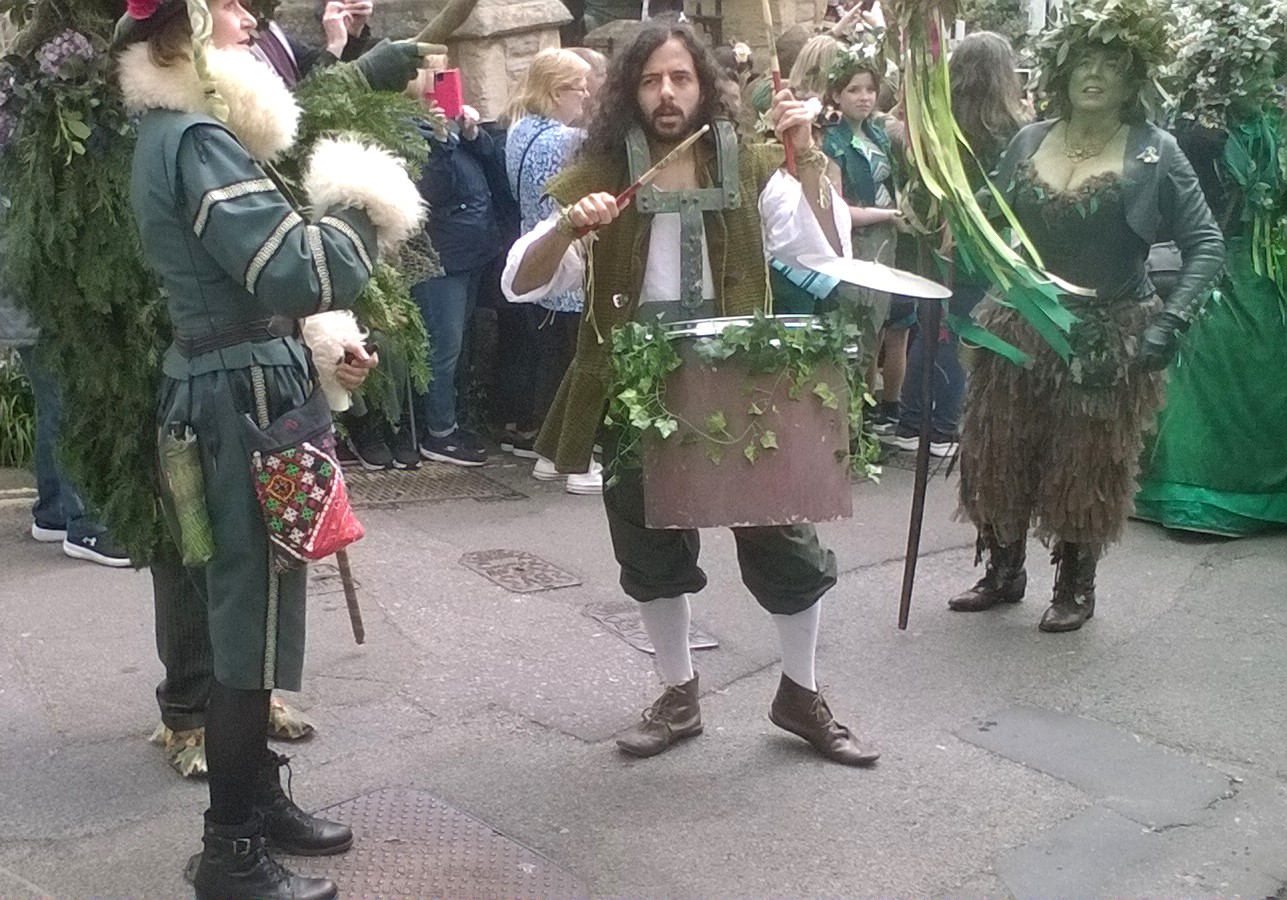
And then on Monday, which was May Day, we went down to Hastings. It rather felt as though everyone in South East England must be in the town, either at the Jack in the Green festivities or watching blokes on motorbikes roaring up and down the seafront for no discernible reason. I don’t much like crowds, and some of this was very difficult. But away from the huge horsepower and testosterone nonsense, amongst the Jack in the Green celebrations the atmosphere was brilliant and the large numbers of people perfectly acceptable. Jack in the Green is a manifestation of the spirit of spring, related to the Green Man, a dancing figure covered in greenery.
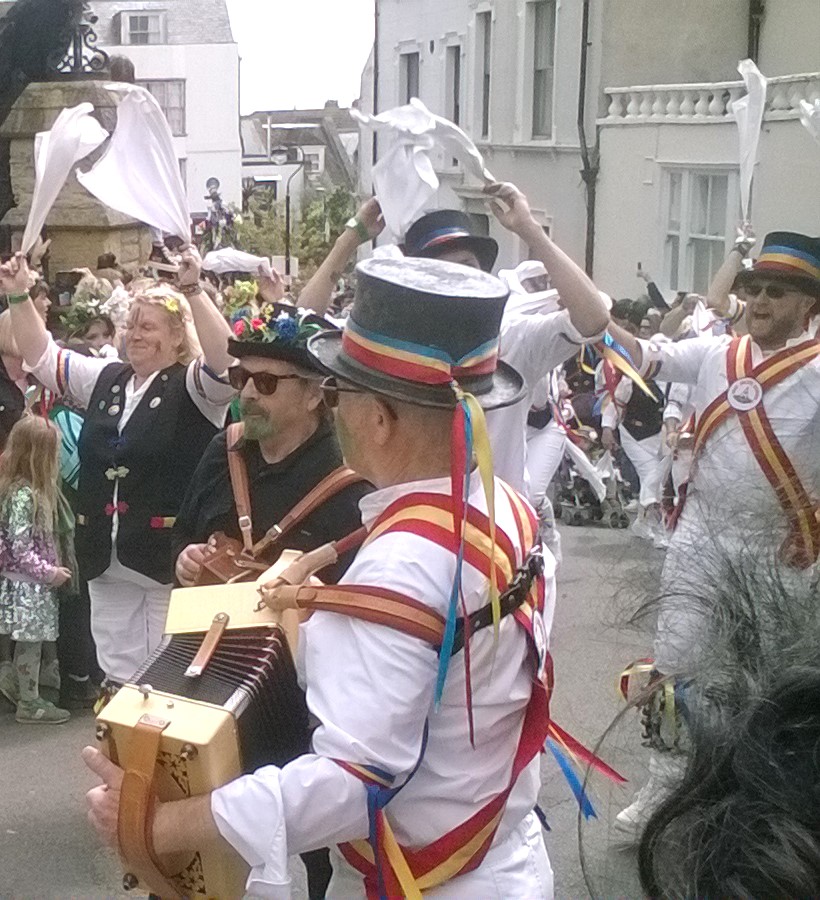
The festival in Hastings has grown over the years into a large event involving musicians, dancers, Morris sides, huge figures in addition to Jack in the Green such as the Queen of the May, a witch, and others, plus any number of people joining in the procession around the town, all decorated with as much, or as little, greenery and/or flowers as they feel suitable.
There you go, a Morris side.
Followed by a large witch with a cat. Why the witch? I’ve no idea. Why not? I suppose.
And there you have it. Music. Drumming. Greenery. Crowd involvement. Summer is icumen in and winter’s gone away-o.
Often, it still feels like summer at this time of year, but I feel autumn has truly arrived now. This morning I walked a path I haven’t walked for a week or more to find the sun was that much lower than it had been and I was constantly having to shade my eyes. It’s all about colours, now. Colours and the cooling of the world. Russet. Browns. Fading drab greens. Yellows and orange. Autumn can be beautiful, although it can also be dull and dreary and occasionally fierce. But mornings often arrive with an added sparkle, with heavy dews on cobwebs and leaves glinting in the low sun, hedgerows of thistledown, rosehips, and hawthorn. There is usually a freshness in the air, especially in the mornings, which has been absent for most of the summer, that invariably lifts my spirits.
I like summer, of course I do, but the arrival of autumn reminds me in some ways of the arrival of spring. In spring we have the stirring of life after a long period of hibernation, whereas the beginning of autumn always feels to me like the start of a new, second, outburst of life. Many plants have a sudden growth spurt, fruits and nuts and berries swell and glow and are plundered by birds and beasts. It is still warm, warm enough to bask in the sun and to feel hot walking up even quite gentle hills.
The Equinox occurs on Friday (at 2.03am in the UK, to be precise) and after this the hours of darkness outnumber the hours of daylight until the end of next March (counting dusk and pre-dawn as night time). After this, the year always feels to me quite different, even if the weather from the one day to the next is much the same. I can already feel myself slipping into a different place; the logs for the burner have arrived and have been stacked ready for use. The apples have been picked, shortly to be wrapped and stored away. Much in the garden is in the process of being cut back for winter. When the days are short and the nights are long, there will be many books to read, lots of music to listen to, a few beers to drink, and many long conversations to be had.
But also many long walks as well, I hope. I love winter too.
Nature dies down in winter. Certainly, at those latitudes where the days become much shorter and the temperatures plummet. Both wind and rain seem to become more frequent. Snow. It is a period of rest and renewal after autumn has put on a final glorious display of colour. Animals adapt to this in one of three ways: some will eat and eat of the autumn bounty of, especially, fruit, putting on large fat reserves and surviving the winter in a state of hibernation, their heart-rates dropping to a scarcely believable one or two beats a minute, their bodies slowly using these fat reserves for the little energy required to maintain a flickering life through those months. Some migrate, seeking a warmer climate until spring returns. These animals are, due to the obvious logistics required to travel hundreds of miles to reach those more hospitable climes, the larger animals and many of the birds. Travel over those kinds of distances would be out of the question for the smaller ones. Others stay put and, in the case of the plant eaters, scratch out a meagre living on whatever leaves and grasses survive through the winter. The carnivores, of course, stay and try to catch them.
Our Neolithic ancestors’ life cycles would be attuned to this pattern too. Autumn must have been lived fast and furiously. In the same way our medieval ancestors worked long hours to bring in the harvests, Neolithic man and woman must have used all the dwindling daylight to bring in as much food and fuel and dry bedding as possible before the winter period. Then by the end of autumn gathering would have largely ceased and they would have moved into a winter rhythm of life.
But how did they get through winter? What of the food they had gathered? Presumably, they had no way of storing fruit – could any of it be dried? Was it fermented for drink? Or was it all eaten as soon as it was gathered, as though they were all so many dormice seeking to build up their reserves? And could this, in fact, have been a part of their strategy to get through those months? To eat and eat until the perishable foods were all gone, and then to stop all but the most essential activities. To expend as little energy as possible and stay as warm as they could. Spending as much time as possible asleep.
And yet, they would still need to eat, and so with dwindling food reserves they would slaughter any beasts kept for that purpose, possibly smoking the meat to enable it to keep for as long as possible. Hunting would continue and might, in some ways, become a little easier. With less vegetation around, there would be less cover for their prey, and in snow there would be clear tracks to follow. But presumably this prey would still need to be pursued, and this would use precious energy, unless they relied more upon pits and snares.
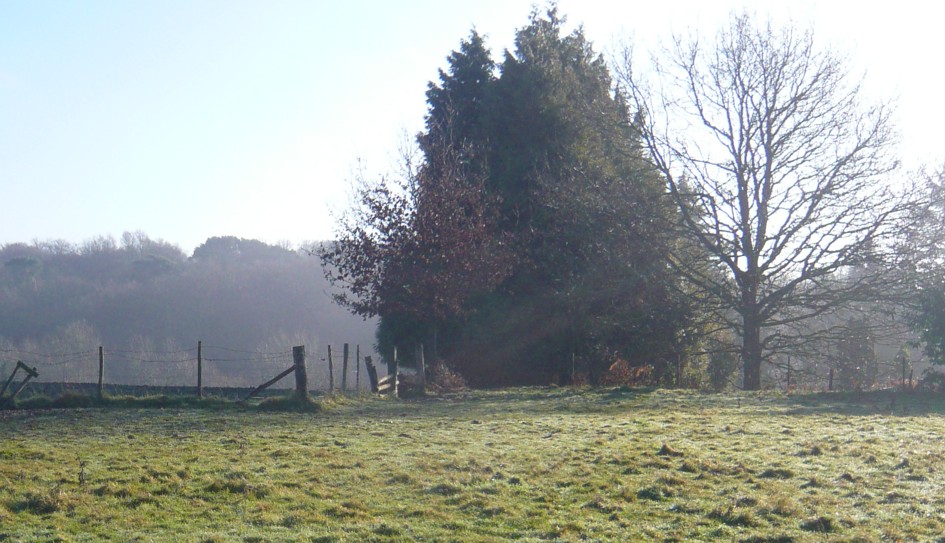
I went out for a walk in the morning as the overnight mist was lifting, and the air was cool but not cold, under a sunny, clear sky filled with birdsong. I felt a powerful sense of renewal in the world.
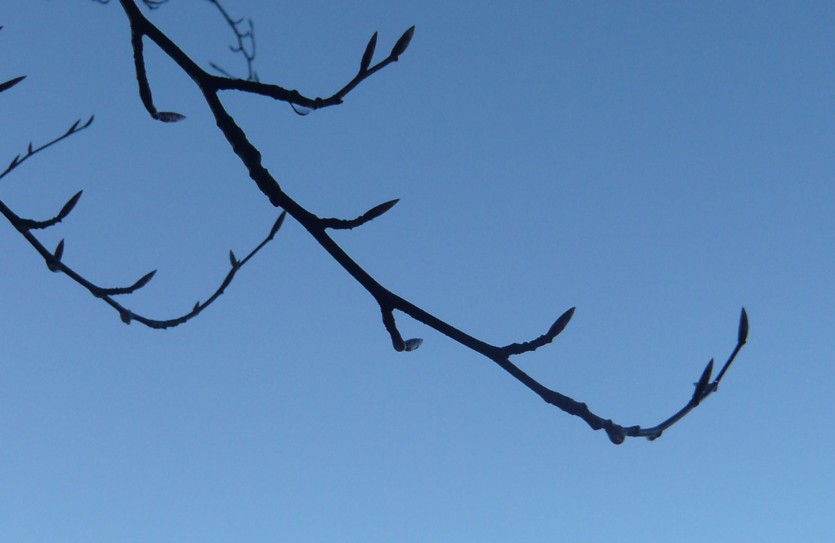
There is little new growth yet, but the trees were covered in buds. Although we are not long past the shortest day of the year, the ridiculously mild temperature and the sun which felt warm on my face, reminded me that there is one more minute of daylight today than there was yesterday, and tomorrow there will be one more than that. And it will not be long before each day gains an extra two minutes, then three, then four…
The air smelt clearer and cleaner than it had for months, and I felt like beginning a long journey. I yearned to be walking on the Downs, or heading through fields and woods with my destination nothing more elaborate than a bed in a basic bunkhouse or hostel, and somewhere to get a meal, preferably in a tiny village surrounded by hills and streams and woods. This is a feeling I get every Spring, that it is a time to explore more of the world.
Everything seems to be fresh. I need to do something new, something positive. To plant some trees, perhaps (always a good idea).
I thought of Christmas. This year, we had a string of lights in one room, with handfuls of greenery as the only other decorations. This, for me, is a way to make sense of the season. It has nothing to do with religion, unless it be the ancient religions that worshipped the sun and the moon and celebrated the turn of the year at the Winter Solstice when the seasons begin their long, slow journey back towards the promise of Spring and the harvests of Autumn. A simple wisdom, in tune with the natural world.
I do not, I cannot – I will not – associate it with any other form of mythical gods. For me, it is all about the natural cycle of the seasons, simple and uncomplicated.
And I particularly like the period when Christmas is definitely over, and we’re only just getting into the new year. Everything seems to have this feeling of renewal, which was the whole point of the Yule festival. A time to look forward and plan for the coming year. This will be where the tradition of New Year Resolutions comes from, no doubt.
This year, I shall resolve to try and simplify my life further, and to live more in tune with the natural world.
I was writing a haiku yesterday, and decided to go the extra mile with it. Traditionally in Japan these poems were sometimes written in the form of tanka, which are essentially poems of five lines rather than three, with a syllable count of 5/7/5/7/7.
They could also be written as linked verse, with one or two poets writing haiku, and others supplying the two remaining lines between each haiku.
I’ve gone down the linked verse route, and also given myself the remit that each verse (of two or three lines) must contain a word or sentiment linking it to those either side – something that was also commonly done.
Yesterday was cold and miserable, hence the results.
It’s my first attempt – please don’t be too harsh!
Meteorologically, it is the first day of spring. So, that virtually guarantees what weather we will have today; the sky is overcast and grey, there is a bitterly chill wind blowing and a spiteful, thin drizzle.
Spring! Oh, humour!
Arf!
Admittedly, the astronomical calendar tells us spring doesn’t arrive until around the 20th March, so winter still has cate blanchett to do whatever it will.
So that’s fine; it sort of reflects my mood at the moment, anyway. But at least going out for a walk always lifts my mood a little, and today is no exception. I’ve been working on my new novel quite intensely for a while, and I suddenly need to step back from it for a week or two.
Come up for air, as it were.
Not this one!
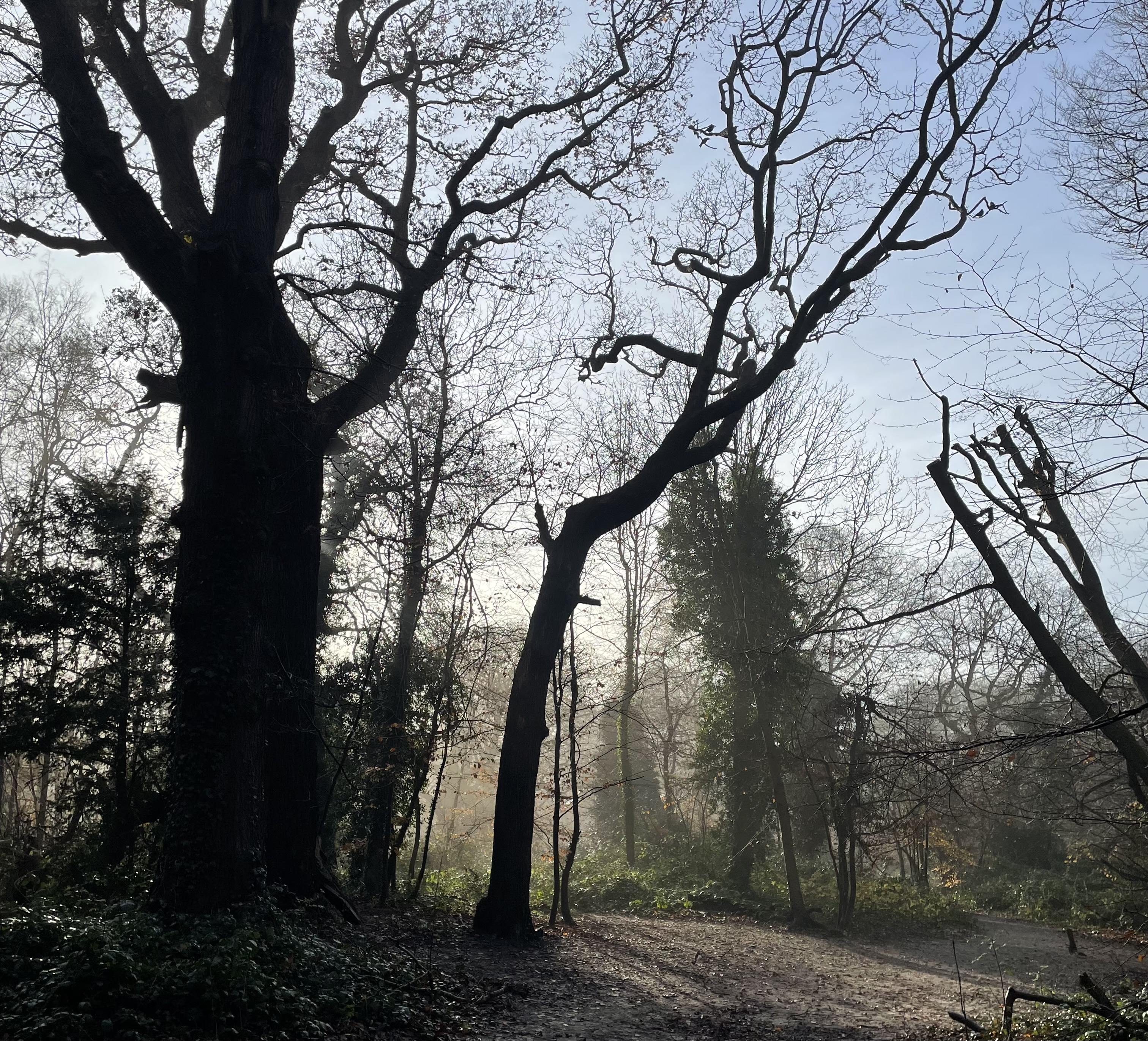
And so I go for a walk in the miserably wintery springy weather. Ten minutes or so through the streets brings me to the common – a wooded area on the edge of the town which, on good days, is a pleasant enough place to walk, even if it doesn’t have any convenient mountains or long distance trails.
On bad days, though, it is full of dog walkers.
That sounds a bit mean, you may say. And, okay, you’re right. It is. But in my defence, when I say full of dog walkers (and dogs), I mean full!
This one!
It is not unusual to be surrounded by dozens of dogs running madly around, the air filled with strident shouts of ‘Gawain! Guinevere! Come here at once!’ ‘Will you come here!’ ‘Put that down!’ ‘Keep still and he won’t hurt you!’ and then some wretched little tyke suddenly tugging at your trouser leg with a mouthful of razor-sharp teeth, to be followed by another shout of ‘Keep still, I said!’ from a voice that could etch glass.
But not today, fortunately.
And having had my walk, I can sort out a couple of other things on my writing list.
Once I got back, I edited a short story I promised for a project for our writing group. Job done – tick.
Next, I’ll begin the edit of a very long short story that has been hanging around for ages. So long, in fact, that I mentioned it in the ‘My Writing’ section on this blog when I first set it up, a year and a half ago. Tut. It’ll be good to get that finished, anyway. It’s my first attempt at a traditional murder mystery, and I rather got lost in my own convolutions.
If I get it to the point where I’m happy with it, I might put it out as an e-book, just to see what people think of it.
Ahem…if anyone buys it, of course.
And, as a bonus, I had an idea for another short story while I was out walking, so hooray!
Now to barricade the door against all the angry dog walkers.















 Mick Canning