Writer’s Notebooks (2) – The Purge

I’ve been doing some clearing out.

I must have had around twenty notebooks on my shelves. However, once they’re filled up, they are almost never opened again. Once finished, they’re put in a drawer, or on a shelf, and then pretty well forgotten.

Taking up space.

Occasionally I might be writing something and vaguely remember noting down something that might be relevant, but I’d never be able to find it again, so I usually didn’t bother. Anything worthwhile I might have written down while out for a walk or on a journey someplace, never seen again.

Yet when I actually come to sit down and read through them again, there tends to be nothing I want to use. Nothing that seems relevant. Either superseded by other ideas, or simply not any good.

Then there are the notebooks I used to develop novels, short stories, etc. No longer needed when the work is finished. Why hang onto those?

So they’ve all gone. It feels very cathartic.

Lost – One Muse

Last seen…well, never seen clearly, actually, Over all these years merely glimpsed occasionally on the borders of sleep, or somewhere in the shadows while I’ve been out walking. But even so, it must be a good few months since they were about.

I did think I heard her (for my muse is a her; most muses seem to be, for some reason) say that if I wouldn’t listen to her, there was no point in her hanging around. All nonsense, of course, since I do my very best to jot down her every word. But those words just haven’t been uttered recently. I’ve had no official muse input whatsoever.

Oh, woe is me.

A Pig In A Pocket

Most people know the meaning of the saying to buy a pig in a poke, of course. It means to buy something without first checking you’re getting what you think you’re paying for. And where does the saying originate? Again, most people can tell you it comes from a few hundred years ago – actually the Middle Ages – when a buyer at a market might be offered a piglet in a sack and if they were foolish enough to buy it without first checking the contents, were likely to find later that the sack contained only a cat, although why it didn’t make a fuss and let people know it was a cat, and a cat that really didn’t want to be in this dratted sack, no one is saying.

(And was it actually a live cat or a dead one? Over to schrodinger for that one…)

If the buyer was wise enough to check, and opened the bag to see what was within, they would then be letting the cat out of the bag.

So, what is a ‘poke’, then? Let’s take the long route to this one, the scenic route… Go back a couple of hundred years when pockets weren’t something let into our clothes, but were more like cloth bags tied around the waist. A kind of medieval bumbag, if you will. Or just a bag on a piece of string tied around the waist if you won’t. This is why in the nursery rhyme we learn that:

‘Lucy Lockett lost her pocket,

Kitty Fisher found it;

Nothing in it, nothing in it,

But the binding round it.

which sounds very odd if you think only of what we understand as pockets nowadays and must confuse huge numbers of children when they hear it.

But the point is that the pocket was a bag, which in French is ‘poche‘ and from which comes the old English word for a large bag, a sack, which is ‘poke‘, with pocket being a diminutive of that: poke-et.

So, let’s back up there. A poke is a large bag, a sack. As mentioned above, I’ve seen dictionaries citing ‘poche‘ as the origin of the word, but a favourite source of mine, a Victorian dictionary of Sussex dialect, when discussing the saying cites the original Anglo Saxon word Pocca, meaning a pouch.

They’re probably both right.

But just to add a little more weight to all this, when hops are picked (at least in Kent and Sussex) they are first measured by the tallyman into a poke (yes, a large sack), then taken to an oast house where they are dried, after which they are shovelled into a hop pocket (a different sized sack) before being taken off for sale to the brewer.

To make lots of lovely beer!

Driven

I’ve written elsewhere how, like many others, I feel I write because I have to; ideas come into my head and I need to set them out and explore them, to bring them to a conclusion. Because I feel driven by these ideas.

I’ve also written of how the muse sometimes just ups and leaves and hightails out of town. Then I just dry up. But all that time, the ideas will still pop up, perhaps in broken form or just as hints – the odd phrase, a line or two, but refuse to meld with others to make a whole.

That, I would venture, is when you understand the artist within you. You don’t just say Oh, forget it! I’ll take up trainspotting instead! and ignore the tiny sparks that continue to force their way into your consciousness. You note down those ideas, and struggle to tease something – anything – out of them that you can use, knowing that sooner or later they will lead to something.

Yes, that’s when you know you’re driven.

We Do Violence

Yay! Day seven of my Poem-A-Day-For-A-Week-Or-So project. I’m jolly impressed I got this far, although I say so myself. And I’m quite pleased with this one. Although, like all the others, it’ll benefit from some work on it later.

We Do Violence

We all occupy two places simultaneously:

Wherever we happen to be in the physical world,

And wherever we currently inhabit in our heads.

The trick is to get the two to coincide.

.

We interpret our landscape as we walk,

Inflicting our thoughts upon it, changing it,

Or at the very least changing our perceptions of it,

Rather than being truly open to the experience.

.

To achieve that, like a meditation

We need to let go of our thoughts.

.

And the worst of these interpretations,

Is this absurd need to name everything.

We begin to only look for particular things.

And filter out those we cannot name.

.

We do violence to the landscape in this way,

Subverting it from what it is, to what we wish it to be.

.

We need to listen to the landscape in silence,

undistracted by thoughts or by words.

Words are, at best, a poor substitute for things.

As soon as we name a thing, we claim it as our own.

.

We limit it to our own understanding, and we dilute it,

By placing it in the company of other things

That we name the same. It is akin to taking away the

Individual names of people and referring to them all as person.

Wordy Wednesday 5

Words.

land

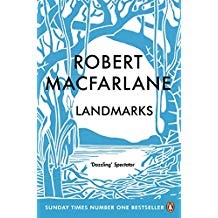
On World Book day I blogged about the wonderful collaboration between Robert Macfarlane and Jackie Morris, The Lost Words, and in this I suggested that perhaps it grew out of Robert Macfarlane’s book Landmarks.

But Landmarks is a marvellous book in its own right, and has much the the same aim as The Lost Words, in that it introduces the reader to scores of words it is unlikely they will have come across before.

These are almost exclusively words from Britain used to describe objects and phenomena in the natural world, be it a word peculiar to East Anglia for a small stream (a currel, since you ask), a word from Sussex for a heap of dung (a maxon), or, from Suffolk, a measure of herrings or sprats (a cade).

Most of these are obscure because they are words in local dialect, and therefore only used in a small number of places, or have fallen into disuse and been virtually lost over the years, or are very specialised words that it is unlikely the majority of people would ever come across.

The book is filled with background stories by the author, either of his own experiences or those of other writers and scholars with a deep love and understanding of words and the natural world, which makes the whole book far more than simply a glossary of lost words.

The reader is introduced to a wealth of knowledge and experience on all aspects of the subject, from seas and rivers to woodlands and mountains, farmed land, the strange no-man’s land at the edge of settlements, and even deep underground.

Personally, I have been trying to drop the word smeuse into conversations since reading the book. It is a Sussex word, and so was / is in use fairly locally to me and means…well, read the book and find out what it means.

Oh, and maxon. Naturally.

Certainly a five star read.

Wordy Wednesday 3

trichy temple 2

Arv’s comments on last week’s Wordy Wednesday post reminded me of some of what stirred my interest in the history of language. Reading about the unexpected discovery in the nineteenth century of the great similarities between words in Sanskrit, the ancient written language of much of the Indian Subcontinent, and words in Ancient Greek and Latin which were a starting point for the study of Linguistics, was something that fascinated me.

The word for ‘father‘, for example, is ‘pita‘ in Sanskrit, and ‘pater‘ in Latin and Greek.

The word for ‘mother‘ is ‘mata‘ in Sanskrit, ‘mater‘ in Latin and ‘meter‘ in Greek.

The word ‘Aryan‘, actually has the meaning of noble or honourable in Sanskrit (arya), which in Latin becomes ‘ariana‘ (holy) and in Ancient Greek ‘areia‘.

And there are other, seemingly more unlikely, connections.

The word for ‘horse‘ is ‘aswa‘ in Sanskrit, and ‘asva‘ in Lithuanian!

Whether the implications behind this are that there was a great mixing of peoples in those days and that different civilisations adopted words from the others, or that all these languages descended from one single, now lost, language in the distant past, can never be known for certain, but the evidence for the latter is extremely strong, especially as the world population was so much smaller then.

Modern research suggests that Sanskrit, spoken by the ancient tribes of India who called themselves ‘Aryans’, entered the Indian subcontinent from the north west, an area both closer to modern day Europe (and its languages) and to the source of the original migration of peoples out of Africa.

Of course, the theory of a single original language puts me in mind of the myth of the Tower of Babel…

My interest was also stirred by a number of similarities I came across when I was travelling or working overseas. One example will suffice:

Cat‘ is ‘chat‘ in French, ‘gato‘ in Spanish and Portuguese ‘katz‘ in German, ‘kot‘ in Polish, ‘kot‘ in Russian and ‘kitta‘ in Arabic.

I think the real significance of these similarities is that when you consider it logically, I don’t suppose that the speakers of all these languages were just waiting for someone to come along and give them a useful word for the furry mouse-catchers they had hanging around their villages and towns. It seems entirely probable that they all contain similar words because all those languages descended from one common source.

And this all leads me to one final thought (deep breath!)…in this ancient, lost, original language of our distant ancestors, we can be fairly certain, for example, that the word for ‘father‘ was something similar to most of its derivatives in use today. As well as the Latin, Greek and Sanskrit examples above, it is ‘padre‘ in Spanish, ‘pere‘ in French, and ‘vater‘ in German.

We may not be able to reconstruct this language (although in the future, who knows?), but we can certainly make a good guess at what a number of its words were, and they were words that most of us are familiar with today.

Wordy Wednesday 2

Coolie – now there is a word that is remarkably offensive; offensive not so much because of what it is, but the implications behind it.

coolie 1

The Oxford Dictionary defines the word thus: unskilled native labourer in eastern countries and gives the word’s origin as perhaps from Kuli, an aboriginal tribe of Gujarat, India.

Hobson-Jobson, the 1886 Anglo-Indian Dictionary, has rather more to say upon the matter.

It gives the spelling as ‘cooly’ and the definition as follows: a hired labourer, or burden-carrier; and, in modern days especially, a labourer induced to emigrate from India, or from China, to labour in the plantations of Mauritius, Reunion, or the West Indies, sometimes under circumstances, especially in French colonies, which have brought the cooly’s condition very near to slavery.

It goes on to give further definitions and details of the word, and then makes several suggestions for its origin. One possibility, agreeing with the Oxford Dictionary, is that it derives from Koli, the name of a caste or race in Western India who frequently carried out these tasks and who, the dictionary reports, had long held a reputation for ‘savagery, filth and general degredation.’ This would make its origin analogous to that of slave, which is presumed to come from the racial term Slav.

But it suggests the waters are rather muddied by a couple of similar words in the Sub-continent: In Southern India a Tamil word Kuli signifying ‘hire’, and Khol is a Tibetan word for slave.

And then there is also a Turkish word kol meaning a slave while, more specifically, kuleh  means ‘a male slave, a bondsman’.

But back to the implication. It is impossible to get away from the colonial undercurrents with this word, as brought out in the Hobson-Jobson definition above. So to use the word to describe a person or persons today, is to call them a servant or slave of a foreign overlord.

Wordy Wednesday 1

Many bloggers post photographs on Wednesday under the heading ‘Wordless Wednesday’. Me? I’m going to write a few posts about words – specifically words in English borrowed from languages of the Indian Subcontinent.

I’m just plain awkward, but you knew that, didn’t you?

I am currently editing the first draft of my novel A Good Place, which is set in a hill station in Northern India. And in that hill station live a number of English who remained behind after Partition.

‘I’m sitting on the veranda of the bungalow in my pyjamas.’ Well, no, no one says that in my book. But if they had, what is the significance of that sentence?

The significance is the number of words borrowed from Indian languages.

Untitled-Grayscale-03

Veranda is an Indian word, but coming originally, perhaps, from Persian. The Oxford Dictionary suggests two derivatives, either from the Hindi (varanda) or from the Portuguese (varanda). Digging a little deeper, if I refer to Hobson-Jobson, the Anglo-Indian Dictionary that was published in 1886 and traces pretty well every word or phrase borrowed from the Sub-Continent, I discover a very long entry on this word. It begins by dismissing the possibility of it being derived from the Persian beramada, and goes on to state that it appears to exist independently in both Hindi, and in Portuguese (and Spanish). It then traces the possible routes the word might have taken to reach the English language, before then saying, surprisingly, that it could have its roots in the Persian after all. This seems quite likely to me, since many Persian words made their way to India especially with the Mughals, and it suggests a possible route to the Spanish peninsular when the Islamic armies arrived in the early eighth century.

I tried typing it into Ngram Viewer. This is an online tool that searches through the entire database of books that Google can access online (including ones still under copyright) published since 1800. Looking at the results for all books in English, it tells me it was barely used in 1800, although it does exist, rises steadily to a peak about 1910, and then falls away slowly, although it is still in common usage. Unfortunately Ngram has not been set up to search books in Indian languages, or even Portuguese. I tried Spanish and the pattern was similar, except that after peaking just before 1910 , it dropped sharply, but since then the trend has been upwards. I then noticed something. I had actually looked at the trend in American English. So I then tried British English, and this gave me a rather different pattern; The curve rose gradually until it peaked in the 1950’s and then fell away sharply. Why? I think it must be due to a surge of historical / biographical / nostalgic writing, both fiction and non-fiction, after the British left India.

Don’t worry, I’m not going to try to go into that sort of detail with other words.

Next, bungalow actually refers to a ‘Bengal style’ house (often with a veranda!) that the British frequently chose to live in.

And pyjamas are loose cotton trousers worn in India which were ‘adapted’ for night wear by Europeans.

Okay, class, lesson over. Be sure to wash your hands before eating your snacks (samosas and pakoras today, of course).

The Praising Purple Prose Poem

My humble, grovelling apologies for my lamentable lack of activity recently. Busy, busy, busy…and so little time. And at my age, too. Shouldn’t be allowed. So I’ll just pop up one of my dubious poems (that’s dubious as in merit, rather than taste) as a peace offering, and I’ll try and catch up with a few of the blogs I follow…tomorrow.

I’m a bit tired now…

043a

The Praising Purple Prose Poem

Purple prose that nobody wants,

Can find a home

In my poem.


These offcuts and discarded words,

Too rich for others to use,

Are just what I need for my poem.


Here on the dusty floor,

This is Just what I was looking for,

For my poem.


I’m collecting it up,

If you’re throwing it out,

And I’m slotting it into

My poem.


Give it to me,

I can put it just there

Between those two lines,

Of my poem.


Too rich for their taste?

Well, it won’t go to waste,

In my poem.


Since that flowery tone,

Is just like my own,

In my poem.


Alliterative, flowery, rollicking lines,

The sort that Dylan Thomas would write;


I’ll give them a home,

In my poem.

Be gentle with me, dear reader.