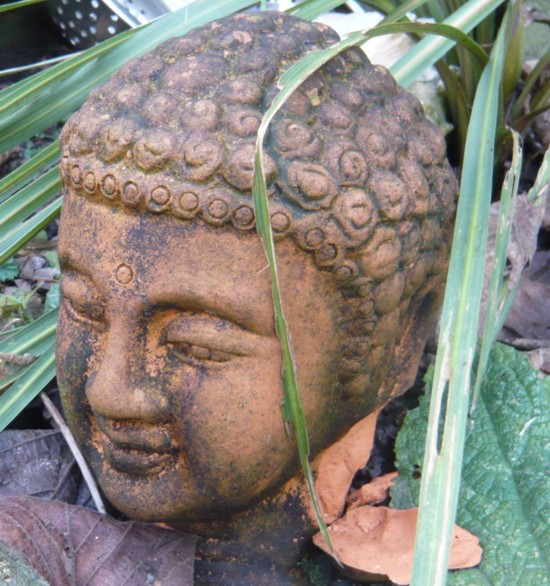
A Thought

Without Compassion I am Nothing

001a

Without compassion I am nothing.

For pity is not compassion,

It is no more than a patronising aloofness

That demeans the recipient.

But compassion encourages action.


Without compassion I am nothing, yet

Without anger I have one hand tied behind my back.

I must not lose my sense of indignation

At injustice, for without anger,

Nothing will be changed.


Without compassion I am nothing,

Yet without wisdom my anger will be directionless,

Blindly striking out to hurt both enemy and friend.

And doing more damage than any original wound.


Without compassion,

I am nothing.


Fritillaries

022

The Snake’s Head Fritillary – also known as the Frog Cup, the Guinea Hen Flower, the Chess Flower, due to the remarkable patterns on its petals:

022a

The name Fritillary, in fact, derives from the Latin fritillus, meaning dice box (which were formerly chequered). Also known as the Chequered Daffodil, the Chequered Lily, and the Leper Lily, since the flower shape resembles the bell once carried by lepers.

We saw and photographed these beautiful but scarce wild flowers exactly five years ago today at Iffley Meadows in Oxford, which is a well-known spot for viewing them.

Review of Devil in the Wind by Frank Prem

44440062

Like Frank’s previous book, Small Town Kid, this collection of poems tells a story of rural and small town Australia. But the similarities between the two books end there.

Whereas the previous collection was a celebration of boyhood in Frank’s hometown, this is an account of the dreadful bushfires of February 2009 that swept through parts of Southern Australia, the area that is home to the author, killing 173 people and leaving a huge area a fire-blackened moonscape.

The poems are a mixture of first-hand accounts, from those who ran desperately from the flames, saving what they could and suddenly terrified at the unbelievable size of the fire and the terrible speed the flames moved at, from firefighters who fought the flames like small companies of soldiers attempting to halt the progress of an overwhelmingly large army, until they literally dropped from exhaustion, from the fire-spotters, and from the frightened friends and relatives trying to raise loved ones down unresponsive phonelines.

In many ways, this is a very difficult book to read, although it is important to do so, especially for those of us fortunate enough to have never had to live through events as terrifying as those described in its poems. It is full of raw emotion and naked detail, traumatised victims and quiet heroes.

At times, I found it essential to look away and take a breather, much as the firefighters had to do, as the emotion became just too much for me.

Poetry is an immensely personal art form. Even when the subject is neither the poet nor the reader, intense emotions come through. Presented in this form, these accounts are shocking. I cannot tell whether they would have felt as shocking had they been prose, but the sparse brevity of the language confronts you almost aggressively, defying you to ignore what they say. Each one seems to scream ‘Listen to me! Don’t you dare turn away until I have finished!’

It is extremely rarely that I would suggest a book should be required reading, but I genuinely think Devil in the Wind should be and is unquestionably a five star read.

Aggie

Aggie sits smile-chuckling at nothing much on TV today.

She’s made her shopping list,

And tidied her room.

She cried a little when Patrick called her stupid,

But she seems to forget him when children’s TV comes on.


It’s on the television screen that life makes sense to her.


Aggie, did you put that food in the waste?

No! Aggie is a good girl! Large-eyed-scared.

I smile easily. Soothingly. Of course you are, Aggie.

The same ritual every evening. But I wonder

Just what happened in that huge, rambling institution

She called home.


It’s then I think, for the hundredth time,

Of the pages in her file, the report from the hospital,

By the doctors and the clinicians,

With their tests and scans and

‘I can find no evidence…’


By all accounts a normal child,

Who, just after the war


Got into trouble.

She was sent away for her own good!


A cousin, sharp-spiteful,

But who refuses to say any more.

None of my business, or of yours!


‘There is evidence of a number of fractures,

The upper left radius, several ribs,

The right fibula, particularly poorly healed…’


Have you seen my baby? Asks Aggie, suddenly.

What baby’s that, Aggie?

Distracted-distant.

I have to do the medication, right now.

I’ll talk to you later.


‘There appears to be no reason for her disability,

No birth trauma, no accident,

No diagnosis…’


It’s Aggie’s seventieth birthday, tomorrow.

What would you like to do, Aggie?

Do you want to go somewhere?


Aggie nods.

There is something she’d like to do,

But the words won’t come and the more she tries,

The harder it seems to get, and so

She gets distressed, and cries and runs off

Slipper-slapping to her room.

The door slams.


‘Aggie spends a lot of time crying…’