Sigh

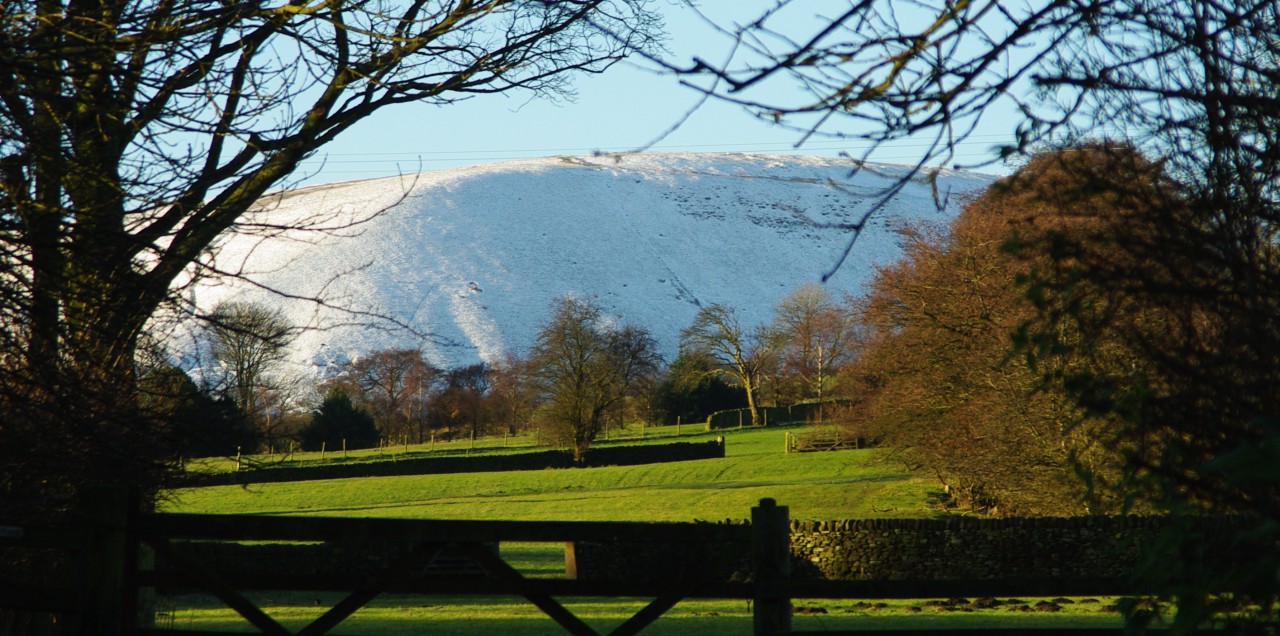
Poem number five in my Poem-A-Day-For-A-Week-Or-So series. Snow outside, test cricket on the TV, beer in the cupboard. That’s my day sorted, then.

The sea sighs for you tonight.

It sucks at the shingle

And smears your footprints

Like a wet thumb rubbed across writing.

Where once you walked and left your

Prints, it gently wipes the land clean.

Lovingly it lays its cheek to the ground

And nuzzles your memory.

.

We are more than specks

In the infinity of time and space

Yet somehow we need to

Make sense of our lives.

Rock endures

But so does the wind and the rain.

More so, in fact, since in the end

Mountains are levelled

And the wind and rain remain.

.

In the end the passage of many feet

May be more durable than

Dwellings of stone.

I Made A Vow

Day four of the Poem-A-Day-For-A-Week-Or-So project and a bit of a rush, today, as I’ve been assembling a shed (as you do). Another one, therefore, which will benefit from a revision when I have more time.

In Tripoli I made a vow to travel light, my eyes wide open,

Travel all the time I could, to take my chances when they happened,

Planned to seek out strange new places, take some risks see new horizons,

One thing alone I wanted now, the promise of the unexplored.

.

And I remember where I was, the time of day, the type of weather,

Early morning, early March, this was a time of change for me,

A time for taking big decisions, time to turn my life around,

Time to leave things in the past, the time to turn another page.

.

At the time I made that vow, I yearned to go along the Silk Road,

Travelling any way I could, and though that sadly never happened,

Other projects came and went, journeys all filled with adventure,

Baking deserts, frozen mountains, close to home and far away.

.

I knew the world would not be kind, it would not make my journeys easy,

Whatever it might offer me, I’d leave myself completely open,

Embrace the rain, embrace the wind, embrace the temple and the hillside.

This was my private pact with life and to this day I’ve not yet finished.

Dragon

A Poem a Day For a Week Or So number three. I had fun with this one.

Dragon

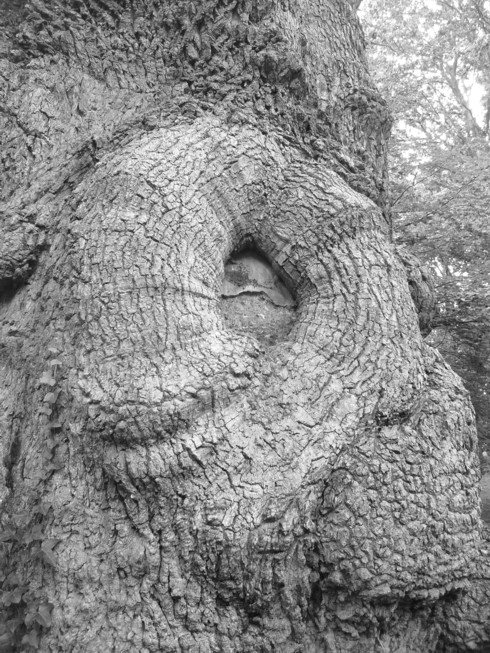
This serpentine and massive body,

Tough dark brown scales about its girth,

With emerald green draped carelessly

Lies sinuously upon the earth.

.

One huge, long, foot, so saurian,

With wrinkled toes, long tapering claws,

Sweet scented earth clings yet to them and

Rain drips in the shocking maw.

.

Cowards’ blades have cruelly felled it

Here, of all enchanted places!

Huge and sad and impotent

Lies still amongst its golden pieces.

Mud

The second of my ‘Poem a Day’ poems. Just getting this far is a bit of an achievement, I suppose, although I’m not particularly happy with either the meter or the rhythm. It feels as sloppy as the day itself was. But I think it has potential if I do a bit of work on it sometime later.

Mud

Today, the sun has been sent into exile,

Leaving just a weary daylight.

It has gone, and we shall never see its like again.

.

In the steady rain,

Climbing this hill is an act of defiance

A far more daunting prospect than usual.

It is like a resistance.

One step forwards and two steps back

I slide and slither upon the track,

Barely keeping my footing at times.

.

In places, mist curls beneath the trees

Where the birds voice their own defiance

Loud and clear.

.

Beneath the endless grey,

Still lower clouds like smoke from gunfire,

From shell bursts or industrial disaster

The earth torn up and churned

From countless toiling feet.

But other than the birds,

I have the world to myself.

Clutch

I thought I would write a poem a day for a week or so. Here is yesterday’s. Of course, if this goes like most of my projects, I’ll probably give up tomorrow. We’ll see.

Clutch

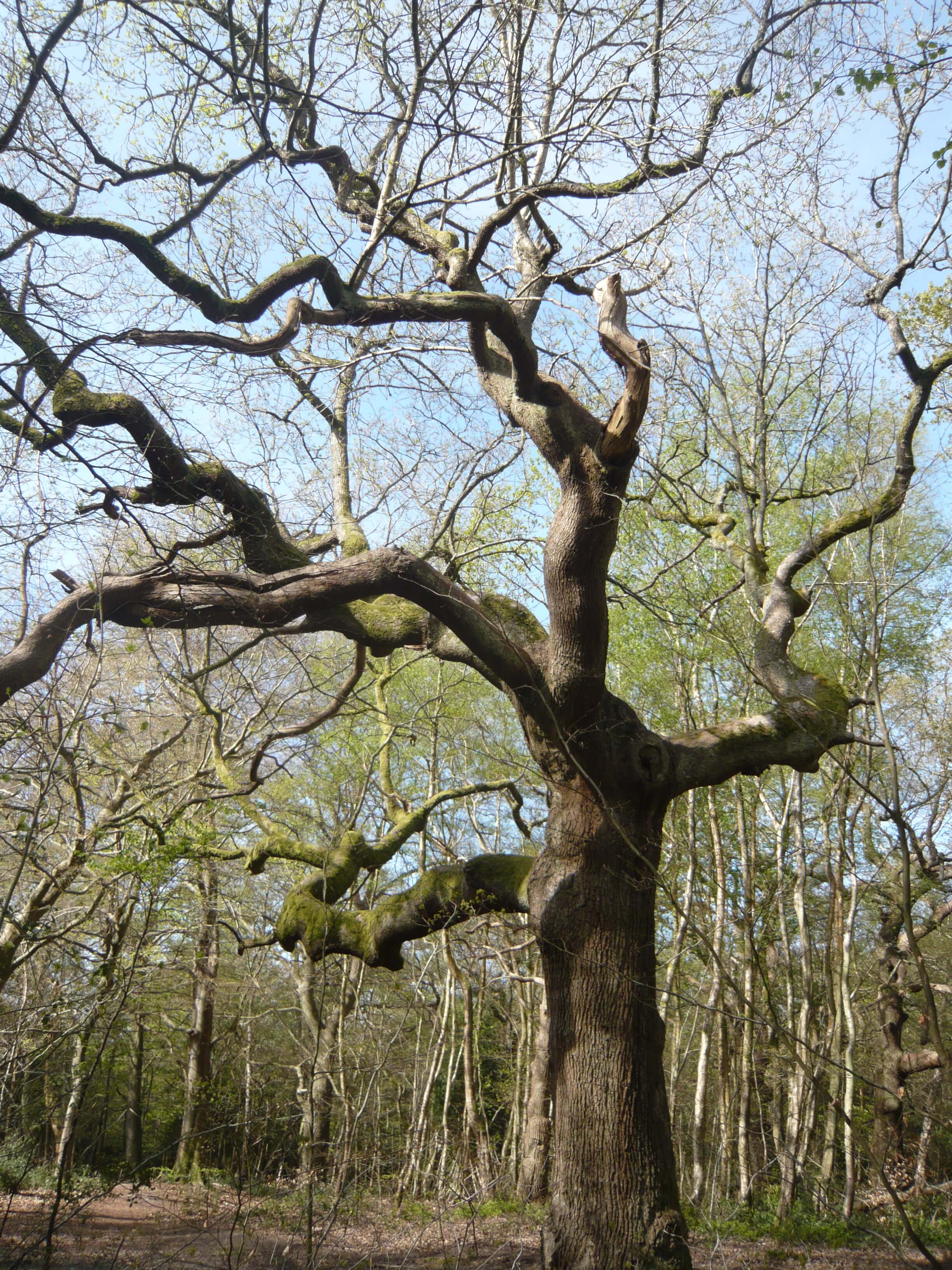
Crook-backed

Misshapen

Bent and jug-eared

Skeletal spindle-shanked and

Shaggy ancient

.

Like troll

The rising sun leaves it forever

Frozen on this hillside

.

Mid-clutch

.

Ice coursed through crippled limbs

Wedged and clinging

Four hundred years too much

In the end

Sunday Supplement – 4

I’ve been playing this album for much of the last week. the first I had heard of Sharron Kraus was on Chanctonbury Ring, the album she worked on with Justin Hopper, based on Justin’s book The Old Weird Albion. Joy’s Reflection is Sorrow is filled with beautiful haunting songs in the folk tradition, with more than a touch of otherworldliness about them.

My world is full of paths that are too well trodden at the moment. I suppose everyone’s is, really. All the paths nearby on the common and through the woods are overflowing with dog walkers and families out for exercise and relaxation, and without going further afield it is difficult to find anywhere to walk in solitude. So a longer walk is demanded this week, out to fields and woods and rivers where I know I shall meet hardly a soul.

I think I shall resist posting progress reports on my writing in future, since I jump from project to project and no sooner do I say I’m doing a final edit of x, than I am working on y and have shelved x for the foreseeable future. I have, for example, found great difficulty in finishing A Good Place, revising the plot and the ending for the third time now…

It’s downright embarrassing, really.

I’m finding writing very difficult at present, though, which is one reason I’m not posting on here very often. Like everyone else, I just need to hang in there.

And I’m reading An Indifference of Birds by Robert Smyth.

This is another book about birds, but in this case it looks at how birds see us and how we affect them. And by extension, it looks at how we affect the whole of the natural world, and the enormous damage we are doing to it. But if that sounds horribly gloomy, the book is a delight to read – beautifully written, and filled with observation and information. Do buy it.

And look after yourselves.

And…breathe.

Well, that was a bit of a bumpy ride. Rather a roller coaster in fact, but we’ve touched down safely enough in 2021. Is everyone okay? There was a lot of screaming and puking going on as we flew through 2020, and a few more empty seats now than we would have liked, but perhaps we can collect our thoughts and take a breather.

Not that the next leg is likely to be all plain sailing, of course.

Strap yourselves in.

Well, here comes 2021…

It’s not been a good year, has it? I’ve found myself retreating more and more into myself and struggling just to speak to people, or even to write or paint. So, what do we need for the new year? Strength and peace, I think.

So I’m wishing you all strength and peace.

Winter – 4

Mid-winter is the nadir of the year, and although winter does not ease its grip on the land for several months yet, at least the long, slow, lengthening of the days begins.

I have no idea how arbitrary the date of 25th December is for our celebration of Christmas day (Orthodox Christians celebrate it on January 7th, due to the difference between the Julian (old) calendar and the Gregorian (new)), but it seems to equate well to the winter solstice on 21st December, in that by the 25th it would be apparent to observers that the days were just beginning to lengthen. Is that when our ancestors celebrated? Did they all collectively hold their breath until the priests could confirm the days were getting longer again? Or did they just work on the basis of ‘it’s the Solstice today. Let’s go for it!’? I’m inclined to think it would be more the latter, with the priests declaring ‘It’s today! Time for excessive eating, drinking and unbridled sex!’

Or perhaps a bit of chanting and a sacrifice or two. Who knows?

Would our Neolithic ancestors have kept a calendar in the sense of checking off every day the way we do? I suspect not. Tools such as aligned stones would have done the job for them, confirming it was now the shortest day or the longest one. I don’t suppose there would have been any need for more refined measurements – it would be obvious to them when fruit or nuts or grain were available to be gathered. Obvious when they would need to slaughter livestock. And for that reason, I think points in time such as the solstices would be marked purely by ritual and / or celebration.

We don’t really know how they marked it, of course. We know a lot about how the Victorian writers supposed it was marked – the sacrifices, the wild dances, the bacchanalia, (and it is curious how many of their illustrations seemed to include young maidens dancing wildly in flimsy shifts) – and there is more than enough written about variations on this theme by those who see themselves today as druids, as followers of the old religion. What this old religion is, though, is a somewhat hazy and fluid animal, dragging in everything and anything from ley lines and animist gods through to Morris dancing, via witchcraft, mind-enhancing drugs, depending on who you speak to. Again, we don’t know.

In many ways, it drops comfortably into the melange of New Age beliefs, essentially being whatever the believer wants it to be…although that is something most of us could also plead guilty to, no matter what religion, if any, we follow.

It may well have been marked differently in different parts of the country (I’m really just thinking of Britain, at the moment) – different rituals in the much milder climate of the south west than in the far harsher one of the north, for example. And over the millennia they probably will have changed, being influenced by both outside factors (contact with others who did things differently, perhaps the slow change of climate) and inner ones (changing ideas about gods, relationships to ancestors, size of population).

But when Christianity came along, it substituted its own story of hope and celebration for what was there before, which is why we have it then rather than around March, which is when the internal evidence of that particular Bible story would place it. As the followers of every new religion always do, they found it impossible to prevent an old festival taking place, so instead they usurped it for their own ends.

Winter – 3

Winter would have brought a period of enforced leisure for our ancestors. Their days would have become shorter with the increasing hours of darkness, until in midwinter the daylight hours would make up only one third of the time.

All outdoor activities would effectively cease in the darkness, and even during the day the worsening weather would limit what could be achieved outdoors. But other than those tasks that could be carried out, what did they do in these times? how did they pass those long hours?

At times, no doubt, there would have been feasting and merry-making because they would have required some cheer and a sense of well-being to help them get through the winter. But they must also have been mindful of husbanding scarce food resources through those long barren months.

it may be that they played games. Although archaeology hasn’t furnished us with evidence of board games or dice or variations on these, it is still possible they would scratch, perhaps, some form of grid into the beaten soil of the floor and play games of skill or chance. It is not beyond possibility that some flat rocks with strange scorings and lines on them were used for that purpose.

With no TVs or books or computers, it might seem to us that time would have weighed heavily on their hands. But you are used to what you are used to, and they would have seen things differently. They may have looked forward to a period of relative inactivity; long hours of no talk, sitting or lying down, the mind slowing down until hours were passed in no thought. Did they then also pass unusually long hours in sleep? A kind of semi-hibernation as a way of conserving energy?

But long hours also, of talking. They must have talked: of daily life and plans and past disasters and glories, of gossip, and told stories both new and handed down from previous generations. These stories would have been incredibly powerful tools for the preservation of the tribe. With no written word, the spoken word becomes the only way knowledge is transmitted. And thus it has to be memorised, both for use and also to transmit in the future. As aids to memorising, powerful tools are repetition, rhyme and rhythm. We cannot know exactly how this was utilised, but it cannot have been long before poetry and song evolved.

It can be no coincidence, but in all the early societies we know of who had no written records, those of which we know about through records left by others – such as the Romans writing of the Britons – it is clear that poetry and song were important, and the bard a highly valued member of that society. Indeed, the writings left by Romans, who tended to denigrate anyone not Roman as barbarian and primitive, violent, and uncultured, still make it clear these ‘barbarian’ tribes valued poetry and song highly. Partly, this must have been for educational purposes, but they seem also to have been valued for themselves, for their beauty. It is taking things too far to suggest this proves the same would have applied in Neolithic times, but it is certainly possible. At some point, there would have been music. I imagine this developed out of ritual, perhaps through repetitive chanting and the beat of drums…

And so, I can imagine this at first being perhaps the preserve of the shaman, until becoming a specialised ‘post’ – that of the bard – and acquiring the value of entertainment, as well as instruction.