A Little Piece Of Wilderness

I went for a walk yesterday, in search of wilderness.

Although we live on the edge of a small town, surrounded by gentle countryside, I still contrive to find some wilderness. It takes me about ten minutes to leave the streets and houses behind, and then I slow my pace and feel myself relax. Tensions drop away as soon as I am surrounded by trees.

There is little wilderness to be had where I walk, yet that does not mean there is none.

Hedgerows can be corridors of wilderness. Perhaps a transient wilderness, but a wilderness all the same. Many hedgerows in the British Isles are hundreds of years old, and although each individual one may be comparatively small, places within them may have been undisturbed for most of that time and during that time many species of plants have flourished there and smaller creatures made their homes.

My path goes through a thin belt of woodland, too open to be classed as a hedgerow and too open to have private, wild, places, but once I emerge into the daylight again, there is a hedgerow alongside the path. And for a short distance, the hedgerow widens several feet, and becomes a true wilderness.

002

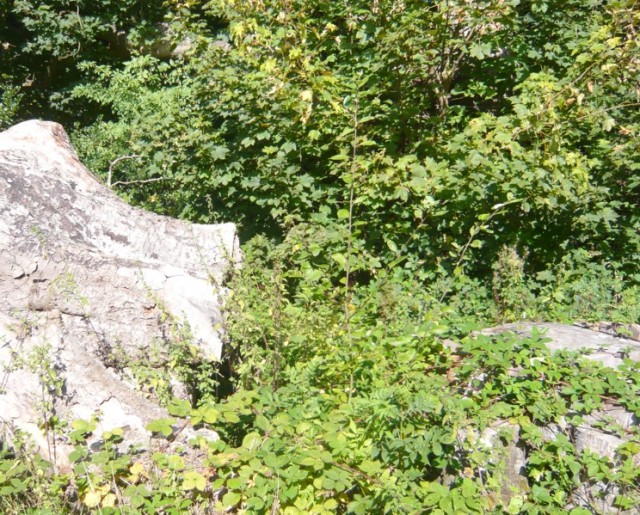
Here, a patch of elder, sycamore and ash trees are surrounded by a dense undergrowth of brambles, interspersed with patches of nettles, a couple of holly bushes, and a few smaller plants squeezing into the daylight where they can.

It is the home of flies and spiders and beetles, visited while I am there by blue tits, magpies and some smaller birds I cannot identify.

Deep within it, there will be mice and shrews, and very likely larger mammals making their homes.

It is impenetrable by anyone without hacking their way in, and fortunately there is no incentive for anyone to do that.

It is wild, and I love that it is there.

Of Caterpillars And Philosophy

The life cycles of butterflies and moths really are an example of how utterly bizarre life can be.

As a child, I was always outdoors playing in the woods and fields and keenly interested in wildlife. I had an especial interest in butterflies for a long while, and I’m quite confident that as a ten year old I could have named every single British species, and told you a reasonable amount about their life cycles. I knew, for example, that every butterfly or moth started out as an egg, hatched into a caterpillar which ate like there was no tomorrow, and then turned into a chrysalis.

And as that child, I assumed that inside this chrysalis the caterpillar just grew a pair of wings, lengthened its legs, and made a couple of other adjustments too minor for me to worry about and then hatched out into whatever butterfly or moth it happened to be.

It is not quite like that, of course.

When it turns into that chrysalis, the caterpillar essentially ingests itself, so that its insides turn into a kind of organic soup (which makes me think of the so-called ‘Primeval Soup’ of amino acids out of which life supposedly first arose on Earth about two billion years ago, which is actually not a bad analogy). From this soup a completely new creature forms.

So, let me now introduce you all to Trevor.

016a

Trevor has been living in our back garden for the last few weeks. He is the caterpillar stage of an Elephant Hawk Moth (probably – some of the hawk moth caterpillars not only resemble each other fairly closely, but may also have variations within the species). In that time he has been doing his best to eat a small tree.

You’ll excuse him if he doesn’t say hello, I’m sure, as he is much too busy eating at the moment. It’s what he does. It’s pretty well all he does.

Eventually, he will reach a stage when he stops eating, finds a handy spot to attach himself, and then turn into a chrysalis (or pupa) and will eventually hatch out into a moth – an Elephant hawk Moth, if I’ve identified him correctly, although I’m sure he won’t care in the slightest what I think.

You may be familiar with the Zen koan (essential a riddle that cannot be solved by pure logic) that asks ‘if you light one candle from the flame of another candle, is the new flame the same as the old one, or an entirely new one?’

Which brings me, rather neatly if I might say so, to today’s riddle. Bearing in mind all of the above, is the newly hatched butterfly or moth the same creature as the caterpillar that preceded it, or a new being entirely?

I think we should be told.

The Great Disconnect

There is a huge disconnect between the human race and the natural world. This is nothing new, of course, it is something that has gradually been developing ever since man first discovered farming and began to live in settled communities rather than living a nomadic existence. But it has accelerated rapidly since the onset of the Industrial Revolution, until we passed the point where for the first time there were more people living in urban areas than in rural ones. That may seem an obvious fact to many in the Western World, but that statistic is a worldwide one. 55% of the population today is urban, but the spread is very uneven. In North America, for example, 82% of the population today are urban, whereas across Africa as a whole it is only 43%.

This creeping urbanisation has had many obvious consequences, such as the growth of villages into towns, and thence into cities and finally into super-sized metropolises covering hundreds of square kilometres with hardly a tree or a bird to be found in some parts. Such as whole villages being abandoned as the population move to towns to find work, partly due to the growing mechanisation of farming and the demise of traditional rural industries. Such as a rapidly shrinking amount of land that can be thought of as wilderness. Even those areas that are not now covered with an urban sprawl may well be covered with farmlands or plantations, or large areas devoted to leisure activities such as golf courses which as far as wildlife and plant diversity are concerned, are little better than deserts.

And such as a growing and deepening disconnect between humans and the natural world.

037a

In small part, this is natural and necessary; it is a process that is inevitable as we evolve from a species indistinguishable from the other great apes in behaviour and purpose, into a species able to pursue activities unrelated to simple survival.

Of course, we have also become a species capable of wiping out our species and all other species, too.

But this trend seems to have accelerated at an alarming rate over the last thirty to fifty years. Of course, urbanisation continues to be a growing trend, the growth of technology continues to feed into areas such as farming, where we now have huge farms that can be operated by a couple of people alone, which might have required a labour force of maybe a hundred once, and we have social media and computers and gaming and thousands of on-demand TV stations.

050a

This last phenomenon I think is mainly the cause of what appears to be an especially severe disconnect between the natural world and the younger generations.

Now before everyone rushes to tell me of wonderful younger folk who love the natural world and who actively fight to protect it citing, perhaps, the incredible people who make up Extinction Rebellion, obviously there are many exceptions to this. But it is a trend. Before I retired, my job was teaching outdoor activities such as climbing or navigating, and I worked with many children and young adults. The environment in which I worked, of course, was the natural world. And although many of the youngsters who came along lived in towns or cities, there were also many who lived nearby, in a more rural environment. And what shocked me, was that so many of them had no better understanding of that environment than those that lived in inner cities.

034a

I met country children that couldn’t recognise an oak tree or knew what an acorn was. Country children who couldn’t recognise a kestrel. Country children who had no idea what wild garlic was.

As a kid, I lived on the edge of London. I don’t think I was in any way exceptional, but I would spend as much time as I could playing with friends in the woods and fields I could walk to or get to on my bike. We splashed around in streams and climbed trees, learned what different butterflies looked like, 037bfound stag beetles and slow-worms, caught minnows and sticklebacks, and absorbed a lot of knowledge about trees and birds and insects and mammals from books and TV programs and just being out in the country.

I assumed it was what all kids did.

But this seems to be no longer the case. I have already written about The Lost Words (here), the book written by Robert Macfarlane and Jackie Morris as a response to learning that supposedly common words such as conkerlost words and kingfisher and acorn are words that the majority of children today are unfamiliar with – something that would once have been unthinkable. And this disconnect seems to me the saddest thing. So much of our very rich heritage has a rural background, be it music or literature, architecture, leisure activities, or traditional crafts. And the same is naturally true for most countries and societies.

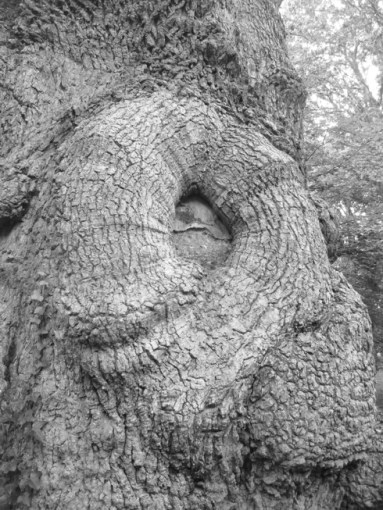
But to return to the reasons for this, I feel the rise of social media and on-demand electronic entertainment has been the largest single influence on the younger generation, especially, to the point where to the majority of them, pretty well all their leisure time is taken up with these things and there is no desire to explore the natural world at all.

Sometimes I think the electronic world is more real to many of them than the real world is, anyway.

057

Sigh. I’m off to check the vegetable garden.

An Abundance of Greyness

It is a grey, overcast, cool and drizzly August day, and I am feeling particularly flat and uninspired, and disinclined to human company. So in the absence of mountains, what else would I rather do than go for a walk in the woods?

046a

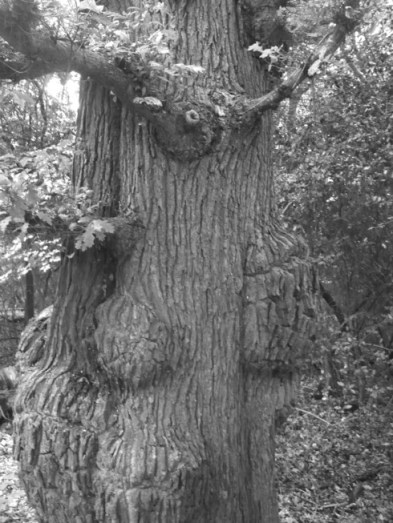
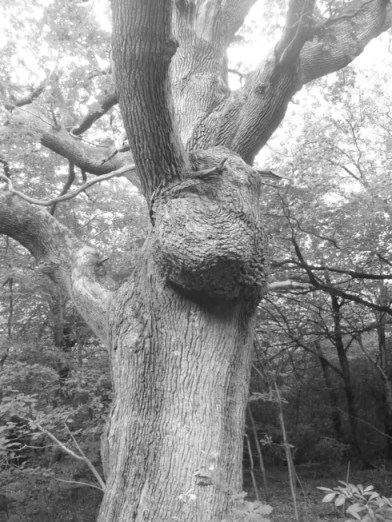
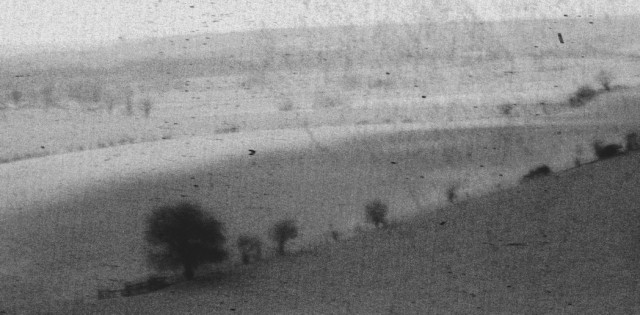
Taking black and white photographs to reflect my mood, naturally…

015a

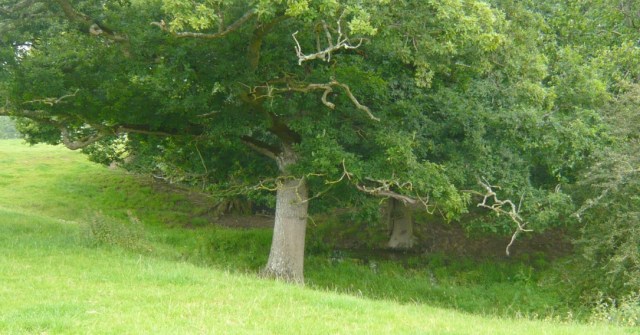
Loving the Oak trees that seem to somehow look as awkward and as out of sorts as I feel…

010a


018a


027a


036a

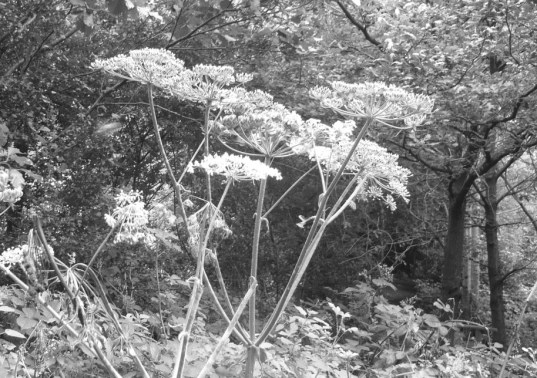
Relishing the lushness of the plants that still seem comparatively fresh…

040a

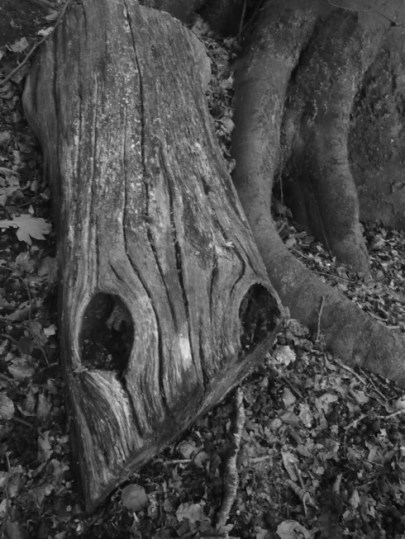
The fantastic shapes of old wood…

050a

The roots that look as though they might attempt to encircle the earth like Yggdrasil, the mighty tree of Norse legend…

061

The paths…

044a

And the umbels.


All The Lost Words

Untitled-Grayscale-03

Last night I dreamed I sank into the depths of some great ocean.

I went down, right down to the bottom of the sea and

There I saw a wooden chest.

And then a mermaid appeared and smiled, and indicated

That I should open it.


But having done as she had asked,

I thought at first I had made a mistake,

For I beheld countless stars shining in the depths of the chest,

Which appeared to be as large and as wide as the sky.

And even as I thought this, those stars rose up and surrounded me

And then, dismayed, I saw them floating up until they reached

The surface of the sea,

Where they were taken by the tides and currents

And swept away to every corner of the Earth.


***


When I awoke, I felt sad for the loss of those stars.

But then I realised it had been a dream, and

I fell asleep again and dreamed I laboured down a mine.

And I was hot and weary and grimy as I crawled

Through low passages, searching for precious stones.

It was tiresome work but finally,

Rounding a corner, I saw a distant glow and

As I drew near, I saw a gem that shone amidst the darkness.

I found then I carried pick and hammer, and

Any number of chisels, so I set to work.


After much labour I held the gemstone in my palm and

The light from this treasure seemed to flow out from my hand,

And illuminate every corner of the mine.

This gladdened my heart, but one appeared who I had been dreading,

Although I had not known it until that very moment,

And they took the jewel from my hand and disappeared,

I knew not where.


***


And so again I awoke and then

I slept a third time – troubled sleep! – this time

I dreamed I walked on crowded streets

And watched the many who surrounded me

And listened to their talk.

These were the conversations carried on

By every man and woman who had ever lived,

Or ever would.


But after time their speech became confusing;

I could no longer distinguish any words, and then

The world fell silent, although they still spoke,

And still I watched and found that I could see their speech,

And all their conversations floated on the breeze

Before me,

For their speech was made of stars and gemstones,

Mingled now with flowers and with ash.

Mingled now with night soil and with butterflies.


And I was content with that, and now slept deeply.


In Praise Of Trees

It has been mind-buggeringly hot and humid for most of the last week, breaking records for mind-buggeringly hot heat here in the UK. But now, with heavy rain and gloom and a delicious green light filling the kitchen from the trees and bushes outside in the garden, it not only feels refreshingly cooler but looks it, too.

During this last week, almost the only way I could bear to be outside at all, was sitting on our lawn in the shade of the gorgeous hazel tree that dominates the garden.

005a

In so many countries, trees are planted to provide shade whether it be for travellers, or for residents in towns and villages or city squares.

They understand the value of the shade the trees provide in hotter climates, but in the UK we, and by that I mean governments and entrepreneurs and business people, we seem to be obsessed with cutting down trees, almost for the sake of it.

012a

Yet we can no longer pretend we have no idea how vital trees are; for us, for the ecosystem, for the planet. We need them to remove the carbon from the air and to replenish oxygen. They are habitats for huge numbers of wildlife. Their roots help bind and provide stability to the soil, preventing erosion, landslides, and the spread of deserts. Where they exist in sufficiently large numbers the water vapour they give off helps to bring down local temperatures and increase rainfall.

067a

They are sources of food for animals and for people, and for thousands of years their wood has been used for building dwellings, making furniture and utensils, fencing, tools, boats and wagons, and as a beautiful raw material for artworks.

And they soothe the soul!

Used intelligently and sustainably, they will continue to perform this role for as long as we wish.

001a

Yet despite all we now know, we continue to cut down trees at a ridiculous rate. In Brazil, we are losing rainforest now the size of three football fields per minute! The rainforest in Indonesia is also being cut down at a rapid rate. The HS2 rail link planned for the UK will cost a stupid amount of money and destroy massive amounts of woodland, just to take a little time off rail journeys that already happen.

IMG_0018a

Yet there are many smaller – petty – instances of trees being cut down that amount to official vandalism, no less. I feel particularly strongly that in many towns in the UK it has long been the policy that when trees planted along streets have become larger than the council thinks appropriate, they cut them down but rarely if ever replace them with new, younger, ones.

The call to re-wild areas of the UK is growing, and I feel we should now be devoting as much land as possible to the creation of new woodland, as well as re-planting hedgerows to replace fences, and individual trees in gardens and parks and along roads.

And stop cutting them down!

The Joy of Unknowing (2)

As soon as I had written my last blog post, I thought of this piece I wrote quite a long time ago which offers a similar take on travel and navigation. I am tempted to tidy it up a bit and perhaps update it to mention GPS, but instead I’ll leave it as it is.

Untitled-Grayscale-01

When I was a teenager, I began to use maps, although in rather an ad hoc, hit and miss manner. They were there for me when I was really stuck, or just wanted to know which general direction something lay. It would be a very long time before I began to use them in a careful, detailed way, able to predict the exact lie of the land, navigate in the fog or the dark, find my way through complicated landscapes with the map and compass. And, do you know, since I’ve learned to do that, I feel as though I’ve lost something rather magical, although I don’t suppose that I can blame it all on that. The maps that I was using as a teenager would tend to be the Bartholomew’s touring maps, small scale with little detail. I would feel, as I headed along a Cornish footpath, that I only knew roughly where I was going. It felt like an adventure, an exploration.

Untitled-Grayscale-02

Now, I need to be more and more remote to get that feeling, and even then it does not always work. Having just spent some time in Ladakh, in the Himalaya in the far north of India, I was surprised at just how easy all of my walking was. Setting off with map and compass, I always knew exactly where I was, only confused at times by the multiplicity of tracks criss-crossing the landscape. Even then, reference to mountains and villages with map and compass would invariably allow me to set my position. It doesn’t mean that I wanted to get lost, just that there was a small part of me that said ‘even this is all tame!’ Equally, I can be put off, by using the map, by the knowledge that over the interesting looking ridge that I was heading for, lies a motorway or building estate, and so I spend ages trying to plot a route that I try to get perfect, rather than simply heading off in the direction that I want to go and exploring as I go, correcting my course as I travel.

Nothing can tempt me more than a track leading tantalisingly into the distance, perhaps meandering through Mediterranean scrub towards a notch in the skyline, perhaps leading through a glowing archway of trees. Even now, when using map and compass to navigate, I often have to resist the temptation to ignore the map and head off to follow an interesting looking track. I think that this must be a part of my ‘I wonder what’s over the other side of the hill?’ nature. It is another reason why I’ve never been able to lie on a beach – apart from the fact that it seems a particularly pointless pastime in any case. Any time that I’ve tried it, it never seems to be more than a couple of minutes before I begin to think ‘What’s round the cliff?’ or ‘If I head back up the river, I think I might find a way through those hills.’ And then I just have to go to find out.

The Joy of Unknowing (1)

We have just returned from a few days away in Shropshire, which is one reason you haven’t heard from me recently.

We were incredibly lucky with the weather, and spent the time walking and reading and mooching around towns and villages. And finding time for the occasional meal and cold beer, of course.

Yes, we did some lovely walks. And I find it a natural thing to be constantly identifying and photographing whatever I see when out for a walk. I have always been interested in all aspects of the environment, be it the plants and animals, the geography and geology, the weather, or the historical impact of people on the environment in forms such as old trackways, deserted buildings, or ancient boundaries.

006a

And we have spent several fantastic days surrounded by an environment rich in all these things, as we have walked through woods, fields, and open hillsides, seen ancient settlements, butterflies, birds, and many wildflowers, and all this in an area of some of the most complex geology in the UK.

But sometimes I feel myself tiring of the constant need to identify and record everything; it is really a way of trying to own them.

And when you post on social media too, it can feel at times a little like a competition to put up the best pictures of this or that wildflower or bird or mountain, which naturally need to be identified and named. Especially on Twatter, whose format seems to encourage this.

017a

So, on our first morning away, as we walk up a track heading into the hills above Church Stretton, under early morning blue skies with the air crystal clear and beautifully cool, I decide that for now I am just going to exist in the moment.

Because by doing this, I am relieved of the constant necessity of deciding whether this bird is a rook or a crow, or whether that flower is greater stitchwort or lesser stitchwort.

018a

Because it doesn’t really matter.

And for now, instead of having to always know whether it is this or that bird singing, I can allow myself to simply think there is singing. There is birdsong.

Or, even better, there is a sound I find melodic, and it pleases me.

By doing this, I can relax and centre myself, which is something I feel has been badly lacking in my life recently. I have struggled with social media in any case, feeling a huge pressure to post new material and to read the many I follow, even when I don’t feel up to it.

It feels like a return to a much simpler time in my life. I can enjoy the views of the hills, the sounds of the streams and birds, and just concentrate on being.

This must have been part of the pleasure I felt as a child on every occasion when I could roam outdoors. Certainly, I was curious about what I saw, but since I knew so little about them, there was always an openness to the experience and the excitement of discovery. I would see butterflies I had not seen before, and I would just get the thrill of seeing them without having to know anything more about them. I would see wildflowers I didn’t recognise and just enjoy the shapes and colours.

Naturally, you cannot really unknow things in that way, just as you cannot really return to that point in your childhood, but it is possible, even if for only a short while, to let go of the need to identify and quantify (and therefore own) everything, and simply exist in the here and now.

Strolling in Sussex (1)

Yesterday, I went for a bit of a walk. The oppressive humidity of the previous day had lessened, fortunately, and it was an overcast morning with a cool breeze.

Just the way I like it.

I decided to take the train a few stops down the line, where I could get out at one of those stations that bears the name of a village a mile or so away but stands on its own in the middle of the countryside. The nearest building (other than the station itself) is a farm. Hopefully I could have a day’s gentle walking with nothing more demanding around me than birds, insects, trees and wildflowers.

I really, really, needed to do that.

It seemed a good start at the station. A good omen. While waiting for my train to draw in, my eye was drawn to a single large, white, bindweed flower in the tangle of brambles and vines and bushes, trees and garden plants escaped and gone native that serves as a barrier behind the platform.

Most gardeners hate bindweed. I suppose we do, really. Once it gets into the garden it grows at a ridiculously rapid rate and strangles any other plants in its way. And even pulling it up doesn’t get rid of it. It just regenerates. I tell you, come the end of days it will just be scorpions, cockroaches and bindweed left.

But this flower looked lovely. The largest, pure white, bindweed flowers often remind me of the calla lily, only a calla lily that is not so…let’s say…excited. One of my favourite artists is Georgia O’Keeffe. I’ve probably told you that before. But O’Keeffe was particularly known for painting large flower paintings, many of them more than a little ‘suggestive’. And the calla lily was one of her favourites. I’d show you one of hers but, you know, copyright and all that. I’ll leave you to look it up if you wish to.

040a

So, here’s the bindweed flower.

Anyway, I got on my train and later I got off at the correct station and began walking along the footpath and got shouted at by some sheep.

Really, there’s no other way to describe it. On one side of the footpath were a couple of dozen sheep in a field where the grass had been cropped very short and there seemed to be very little left for them to eat. As soon as they saw me, they came rushing over to the fence bleating loudly. Obviously demanding to be re-housed in the field on the other side of the footpath.

In that field, thick lush grass was being munched by a couple of dozen quite contented sheep. I didn’t hear a (Bo) peep out of them.

‘Really sorry,’ I told them. ‘I can’t help you.’ I walked on feeling oddly guilty.

But I got over it.


023a

For the rest of the morning I walked slowly through fields and along lanes, stopping frequently to look at flowers and insects and, really, just enjoying being where I was.

021a

011a

Bridge over the railway

016a

024a

010a

I was just beginning to think it must be lunchtime when my path took me through a field of long grass.

This field lay between a stream I had just crossed, and a wood where I was heading. The wood stood a little higher than the surrounding fields, and the long grass of the field I was to cross was thick and green. The breeze caught the top of the grass, so it waved like the sea or a large lake and as I began to wade through it, it really did feel as though I waded through water.

027a

And there was the drag of the grass against my legs, and the top of the grass sparkled a little in the breeze, just as wavelets would. And there was also the sense that I was not quite sure what I might suddenly step upon. Just to complete the illusion, there were also some lovely blue damselflies darting around.

Then I finally stepped ashore at the edge of the wood, walked up a slight sandy slope that might have been a beach, and sat down to eat my sandwich.

Now, I have to tell you that this was the best sandwich in the world, and I won’t brook any disagreement. Thick wholemeal bread, cheese, several large slices of raw onion, and several thick slices of tomato. Perhaps it was my mood, and the setting, but it was damned good.

And then it was time to explore the wood.

A Thought

Without Compassion I am Nothing

001a

Without compassion I am nothing.

For pity is not compassion,

It is no more than a patronising aloofness

That demeans the recipient.

But compassion encourages action.


Without compassion I am nothing, yet

Without anger I have one hand tied behind my back.

I must not lose my sense of indignation

At injustice, for without anger,

Nothing will be changed.


Without compassion I am nothing,

Yet without wisdom my anger will be directionless,

Blindly striking out to hurt both enemy and friend.

And doing more damage than any original wound.


Without compassion,

I am nothing.