Wednesday December 27th

It is windy this morning and the forecast is for rain and high winds later in the day. Consequently, I go out for a walk straight after breakfast, heading for the woods beside the common where I know I will be sheltered from the worst of it, should the winds get up soon. Above, the clouds are thick and dark and what light does make it through the mirk is thin and silvery, glittering coldly on leaves and puddles, the latter wrinkled with tiny wavelets scurrying in bursts across their surfaces.

A couple of rooks are calling irritably overhead, buffeted by the breeze, as I reach the edge of the wood. A few paces in, I pass along the edge of a shallow, long-disused sandstone quarry, its banks perforated with badger holes, and with other entrances deeper into the woods. The whole of the sett appears to occupy upwards of a fifth of an acre, although there may well be entrances I have not yet found.

Moving on, I find I am walking to the rhythm of a tune in my head, something that happens to me frequently. This time, it is a track from an album by Stick in the Wheel, a kind of punk-folk group, the track being the Abbots Bromley Horn Dance. Stick in the Wheel are a group I have only recently discovered, and the only album I have of theirs (so far!) gets played rather a lot. This particular tune has a very pronounced beat and I wonder, as I often do, whether the tune has come into my head as the beat matches my pace, or whether I have unconsciously altered my pace to fit the tune.

I also decide it doesn’t matter which it is.

It is still early enough in the day for there to be very few other people about. In about an hour’s time the air will be filled with barking and shouting as the regular dog walkers invade, but for now I have the place almost to myself.

I have just begun to re-read Robert MacFarlane’s The Old Ways, and in this he tells us that at the time of writing (2012) he reckoned he had walked perhaps 7,000 or 8,000 miles along footpaths in his lifetime. Does this mean each mile is a unique mile, in that he means he has walked this distance all along different routes, or does it include the day to day walks along local routes, routes such as the one I repeat day after day? He doesn’t make that clear, and I would guess it includes all repetitions. He then goes on to quote De Quincy saying that Wordsworth walked a total of 175,000 – 180,000 miles in his lifetime (although how did he know?), which would clearly include his repeated local walks, if true. I wonder how many I have done and make a vague stab at guessing a figure. At various times I have worked out I tend to walk an average of 20 miles a week, allowing for good and bad periods of walking, of which probably one half would be on footpaths. There were times when I did much less, and times when I did much more, but it seems a reasonable estimate. That would give me a figure of between 25,000 and 27,000 miles in my adult life so far, which is probably wildly out but is quite similar to Robert Macfarlane’s.

I’ve no idea what to conclude from that.

But I know I would probably walk quite a bit further if I didn’t tend to stop so frequently just to stand and stare at my surroundings. I do it often enough to sometimes irritate those I walk with, although they’re usually kind enough to say nothing about it. But there are also those who just get their heads down and walk, walk, walk, seemingly on some mission to cover as many miles as possible in the shortest possible time, barely able to glance around them as they go. What is that about, unless it’s some sort of charity event and they’re raising money by the mile? Where is the pleasure?

The Welsh poet W H Davies wrote ‘What is this life if, full of care, we have no time to stand and stare?’

What indeed?

I’ve been doing it quite a lot again this morning. It seems so important. Surely everyone must do it to a degree?

Pilgrimage

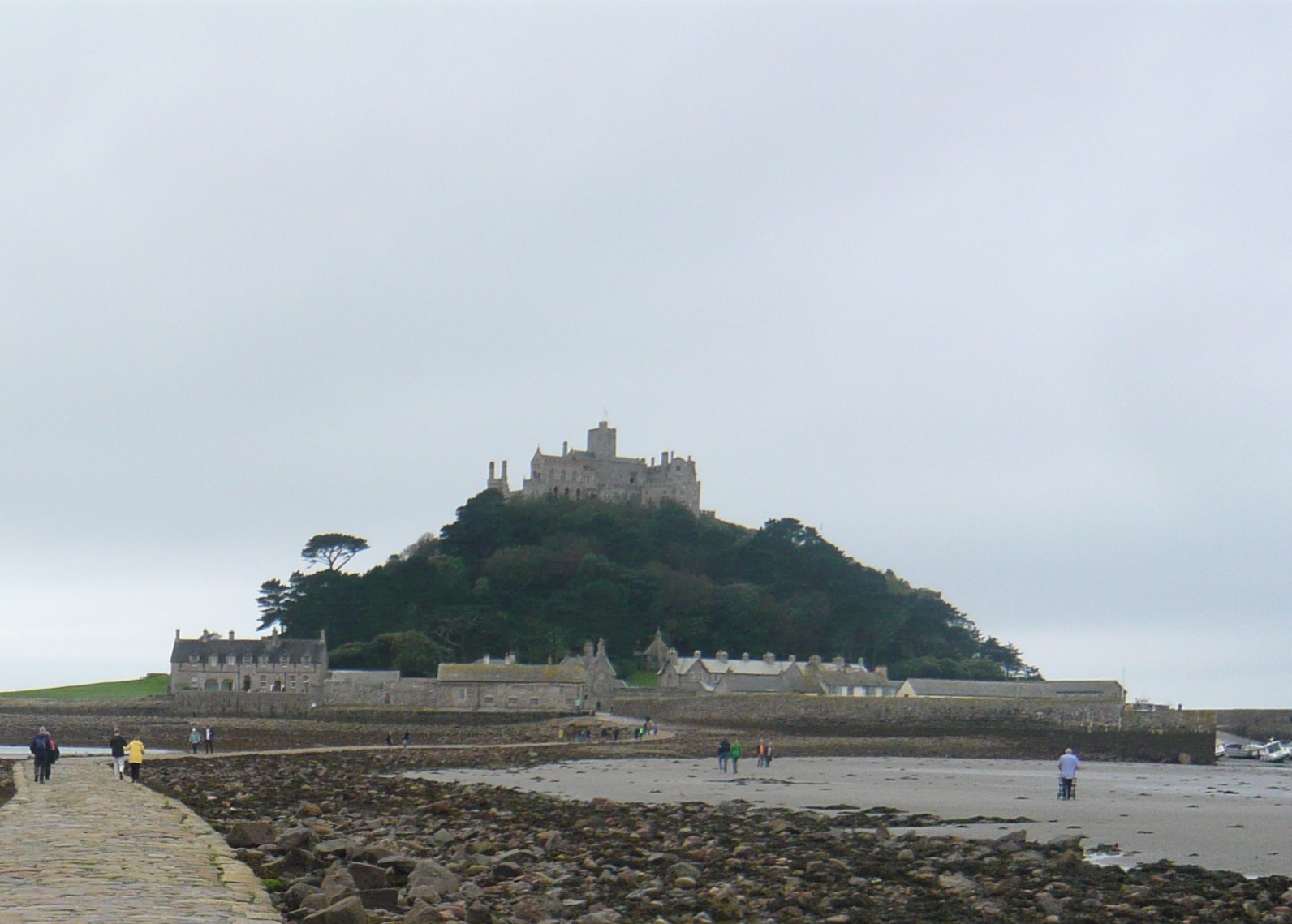
We recently returned from a week in Cornwall, and where we stayed was close to the end of a pilgrim route, St Michael’s Way. This is a short twelve and a half mile walk from the North Cornish coast to St Michael’s Mount, in Mount’s Bay on the South coast. Although the route is such a short one – a day’s walk for most people – it still apparently qualifies for a pilgrim ‘stamp’ on the official pilgrim passport for the very much longer long-distance Camino pilgrimage, since in the Middle Ages many pilgrims walked this route to the Benedictine monastery on the island, then took a boat to France to continue on towards Santiago de Compostela.

I am interested in learning – as far as it is possible for the staunchly non-religious person to learn – what the religious get out of pilgrimages. In the past, they were generally viewed as a way of gaining merit, of putting a few points in the bank when it came to whether you were headed for heaven or hell in the afterlife. Frequently, they were also undertaken in the hope of cures from diseases; various remnants of saints such as bones or clothing were held to have miraculous properties, and the touch of these might cure whichever disease ailed you.

Personally, I view pilgrimage as a spiritual thing, rather than a religious one. Something that puts the pilgrim in touch with their ‘finer’ feelings – a way of understanding what is important in life; relationships, simplicity, art maybe, minimal possessions – we will all have a different interpretation of this. In the past I have considered attempting one of the Camino routes – through France and Northern Spain to Santiago de Compostela. These are long, serious, routes, hundreds of miles long. Had I done so, I would have walked these for pleasure, as well as a personal challenge, rather than as a pilgrimage. Now, though, I am curious to see how much of the ‘religious’ experience I might have.

Whether visiting a church or a standing stone, a ‘holy’ well or a Sufi shrine, all are invested with spirituality. All are invested with meaning to many people and although I know I will never be able to experience the feelings of, say, a Christian at a site they consider holy, I might experience something akin to it. I’m not suggesting I might feel awe at the shrine of a saint, more that I might get an impression of the feelings of the visitors who do. And because I cannot quite find the words to express what I might hope to find, I reckon that’s an indication it’s an experiment worth making.

100 Word Stories

I know one hundred word stories are a thing on here, or ninety nine word stories, someone supplying a prompt – either a word or a phrase or perhaps a photo – but I was just playing around and came up with this. So no prompts, just a bit of fun.

Those of you of a certain age and musical heritage may identify with it…

‘This was a particularly brutal murder, sergeant.’

‘Yes, sir. With around three hundred people watching. Open and shut case, fortunately.’

‘And he was the keyboard player?’

‘Yes. He was about fifteen minutes into the Hammond Organ solo when he was killed.’

‘Who did it? A member of the audience?’

‘No, the vocalist. She bludgeoned him with the microphone stand. Really vicious. All she’s saying is this was the eighteenth night of the tour and there were still twenty seven to go.’

‘Didn’t any of the other band members attempt to stop her?’

‘No, sir. Apparently, they were egging her on.’

Afternoon Light

Late summer afternoon light on the South Downs near Lewes, Sussex. A walk after the rain.

(Click on photograph to see enlargement.)

A Bit Of Art From The Archives

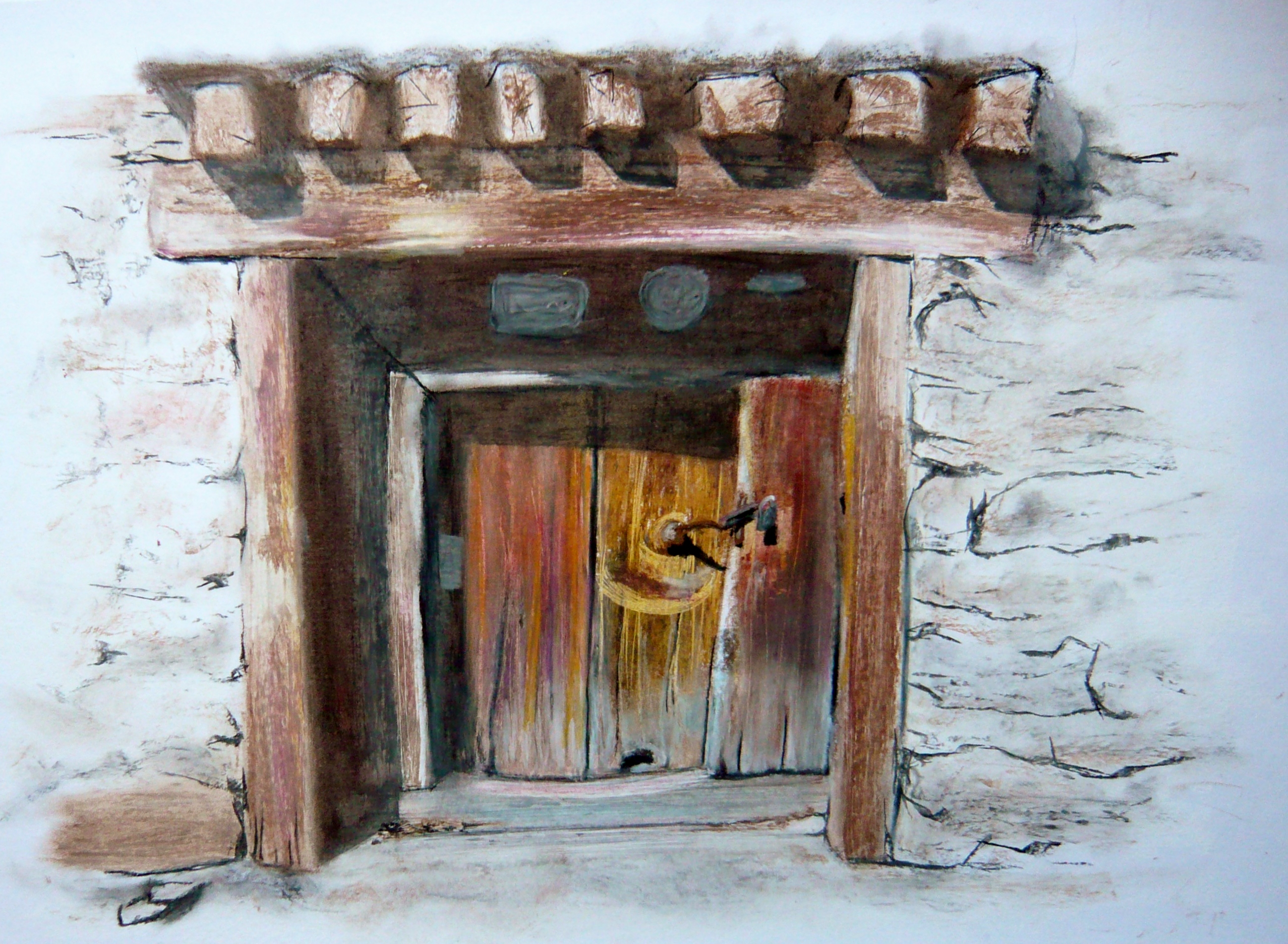
Nepalese Village Door 22ins x 15ins Oil Pastels on paper 2014

My interpretation of the door to a house in the village of Khumjung, Nepal, high in the Himalaya on the Everest Trail. I was pleased with how this turned out and I’m thinking I should try one or two more similar paintings.

Found – One Muse

‘Oh, you’re back.’

‘Well, not really. I’ve been here all the time. I just didn’t have anything to say to you, that’s all.’

‘Why on earth not?’

‘For a start, you don’t listen to me. You keep fannying around with that novel that your heart’s not in, anyway. What is it that you actually want to write? Not that one, at least at the moment.’

‘I’d love to finish it, actually, just get it out of the way.’

‘It’ll still be there when you’re ready to finish it – if you ever are. And if you’re not, it doesn’t matter. Surely you’ve got other stuff you’d rather be working on?’

‘I…’

‘Like, your poetry’s pretty crap, but you enjoy writing it.’

‘Hey! I…’

‘Then there’s the other novel, the one you’ve been faffing around with for years.’

‘Yes…’

‘So work on that one, since you actually do like it, and do a few paintings, for God’s sake. You’ve been saying you’re going to, well get on with it.’

‘I thought a muse was meant to be an inspiration, not a nag.’

‘A muse,’ she replied tersely, ‘will say whatever she thinks necessary to get her author off his lazy butt! Now, what about this pamphlet or brochure you’re meant to be doing at the moment?’

‘The zine?’

She visibly cringed.

‘Yes…that. As far as I can see you’ve been tinkering with it for months but you’ve nothing to show for it.’

‘I…’

‘You seem to have decided on a few of the poems you want to put in it, and a short story, but you haven’t rewritten the essays you wanted to use, haven’t sorted out the photographs and done nothing towards the artwork. You’ve not even decided on a title for the thing yet!’

‘I’ve…’

‘Yes, and that’s another thing. You keep jumping from one thing to another, and never completing anything.’

‘I’ve always thought it’s good to have a couple of projects on the go. When I get stuck on one I can go and work on another.’

‘Yeeessss….a couple you say. Exactly how many have you got on the go at the moment?’

‘Ah, er, I’m not sure…’

‘No? Well roughly how many?’

‘Er…’

‘Very roughly? You don’t actually know, do you? Just finish something! What about the short poem’ -*cringe* – ‘zine you’ve got in bits? As far as I can tell it’s nearer completion than the other one.’

‘Um, I suppose I could…’

‘And I’m not some lifestyle guru, but get out and go for more walks. And listen to more music and read some more books. You’re not reading very much at the moment, are you? And read something you want to read and listen to something you want to listen to. Not because you think you ‘ought’ to, whatever the hell that means. And stay off fricking social media, too. It’s poisonous.’

‘That’s certainly true.’

‘So just see that you do, or I really will be off. I’ll be checking up on you more regularly, now. I can see it’s the only way.’

She’s a tough, unforgiving, so-and-so, my muse.

Lost – One Muse

Last seen…well, never seen clearly, actually, Over all these years merely glimpsed occasionally on the borders of sleep, or somewhere in the shadows while I’ve been out walking. But even so, it must be a good few months since they were about.

I did think I heard her (for my muse is a her; most muses seem to be, for some reason) say that if I wouldn’t listen to her, there was no point in her hanging around. All nonsense, of course, since I do my very best to jot down her every word. But those words just haven’t been uttered recently. I’ve had no official muse input whatsoever.

Oh, woe is me.

26th August 2023

I tested one of the few apples on our tree in the middle of the month to see how ripe it was, and it came away from the branch easily. We shouldn’t be picking apples in mid-August, surely? But it’s a poor year, too. There are barely a dozen apples on the tree, whereas last year we must have had at least five times as many. And our crab apple, usually weighed down with fruit which we leave in situ for the birds over winter, is almost equally bare. Our neighbour’s Rowan tree looks beautiful, although Rowan trees always do, but it definitely has fewer berries on it than usual. Our Hazel tree also seems to have far fewer nuts than last year.

And in the wild?

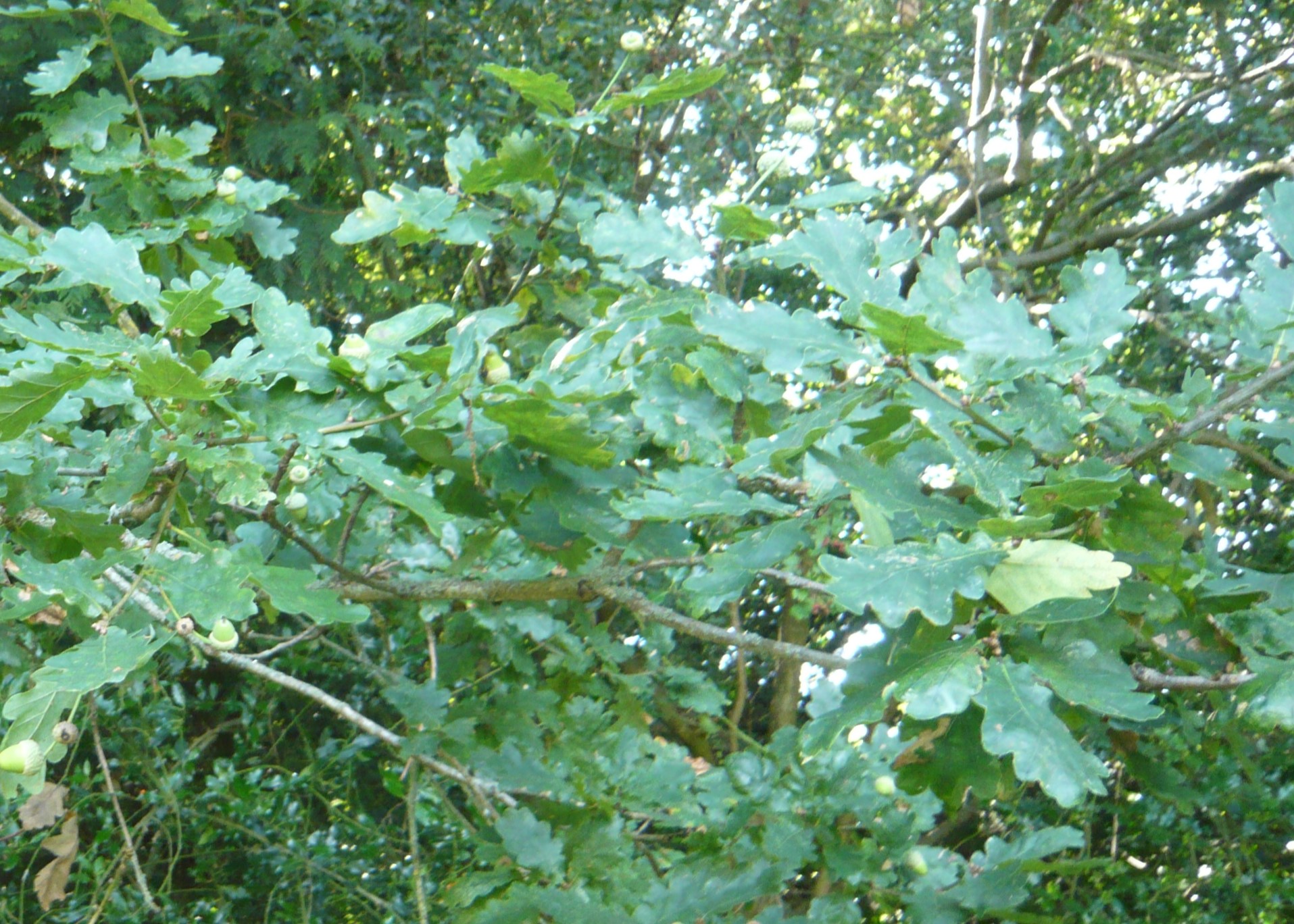
Bit of a mixed bag, really. Some of the hazel trees near us are fairly heaving with nuts, while others have very few. The oaks have a good crop of acorns, but nothing on last year when the woodland floor was covered an inch or two deep. But last year was a spectacularly good mast year. This year the hawthorns have a decent amount of berries but nothing special, much like the elders, while the hollies seem to be loading up with a whole mass of them. That, at least, is the picture in my little corner of South East England. Last winter was quite mild. But even should we have a harsh winter this year, the outlook for wildlife seems not too bad from the nuts and berries perspective.

These things do often seem to follow a cycle of alternate years, although I don’t know why that should be. I had thought the apple blossom was a little late this year, but I really don’t know whether that’s just my imagination.

On Tuesday evening I went for a short walk. It had been a hot day and earlier I had seen three tiger moths, which was rather a treat. By the time I left the house, though, a little before eight, the air was cool, the birdsong seemed a little louder than usual, and there was a magical light in the sky as the sun disappeared below the horizon. The church clock struck eight as it did so. In the woods, there were now patches of sudden night where the trees grew close together, through which the path could be seen like a pale wisp of misty light. By the time the church clock chimed the quarter hour it was quite dark, although patches of daylight still showed in the clearings. Soon there was so little light I headed out of the woods and homeward.

A few minutes before half past, a mixed flock of jackdaws and rooks flew over, the jackdaws chuckling and gossiping noisily as usual as they headed east towards their gathering place on the edge of the town. There, they will be joined by other flocks and once all are there, just before dark, they will all fly off together to their night’s roost.

Although it is still August, the air already seems to have an autumnal feel to it.

What’s In A Name?

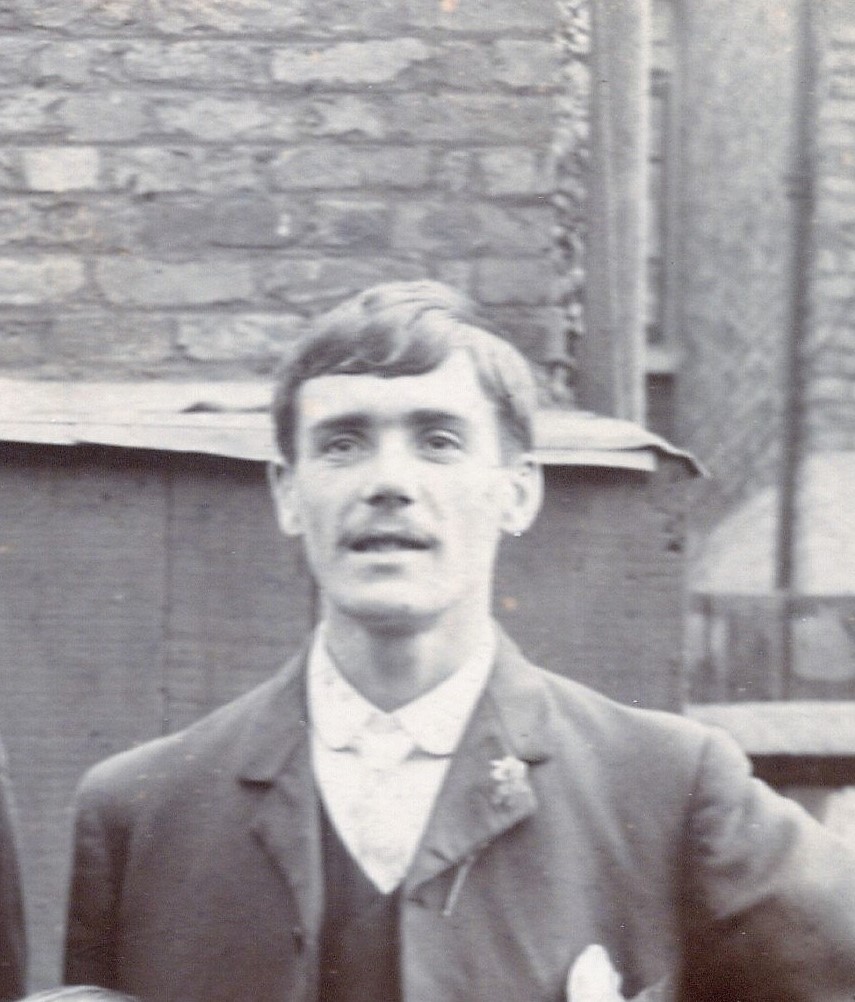
My Great Grandfather moved from rural Hampshire to London sometime in the late 1870’s, during the course of which he changed his surname first from Prater to Cannon, and then to Canning. We don’t know the reason why, but I suspect a family rift of some sort. Whatever the reason, from that point onwards our family were Cannings, rather than Praters.

Great Grandad pictured in 1904 in East Ham, London.

So really, my name should be Mick Prater.

But it isn’t.

Does it matter? In any way at all?

Of course it doesn’t.

And this, I think, illustrates the absurdity of those – primarily men – who think it is of paramount importance that the family name is continued. I know this supposedly gives a kind of spurious immortality to family members but, really, it’s a nonsense.

Silbury Hill

Silbury Hill, located a few miles from Avebury in Wiltshire, is the largest artificial mound in Europe, roughly the same size as the contemporaneous Egyptian pyramids, although it puts me more in mind of the Mexican pyramids. At 39m high and 160m wide and built of chalk, it was a colossal undertaking for the time – it was completed approximately four thousand four hundred years ago. Yet its purpose remains unknown; apparently it contains no burial, although folklore ascribes to it the final resting place of King Sil. Other theories connect it with the Goddess, and others yet suggest it as an observatory or sundial, although since Stonehenge was already in existence at the time of its construction, albeit in an earlier form as a henge monument, it seems highly unlikely that so much effort would have been put into the building of a mere mound, no matter how huge, if that was intended as its sole purpose.

Archaeological evidence suggests it was constructed over around a hundred years and there was probably a track spiralling around the hill to the top – used both in its construction and then afterwards to access the top of the hill which appeared to originally be flat. And that there was a constant tweaking of the shape over the following years, as though succeeding generations each felt the need to make their mark on the site.

Allowing for the fact it would have been a little higher due to the effects of weathering over the last four thousand years, it would have been as high as the nearby hills, Waden Hill and Knoll Down, but the difference would have been striking, since this perfectly shaped mound would have been dazzlingly white. The effect of the hill on anyone approaching would have been remarkable. Imagine it gleaming like a snow-covered mountain in the sunshine, or glowing mysteriously at night in a thin moonlight.

This isn’t something a tribe decided to do because they had some time on their hands – they’d had a good day’s hunting and the roof had been fixed, so why not? And not something just done on a whim – ‘You know, I like this place, but I really rather fancy putting a large hill just over there.’ This was a long term project, literally a lifetime’s work. And it was intended as one heck of a statement. Like a Medieval cathedral or Trump Tower, it was intended to be seen from a long way away and admired and talked about, although which of those two did it resemble? Was it the narcissistic project of an egotistical power-hungry madman or was it intended to glorify something greater than them?

On balance, I suspect the latter. Even if the project was begun by one strong-minded individual intent on somehow making a name for himself, it wouldn’t have been completed until long after his (or her) death, suggesting there was still a strong driving-force to complete the project.

But this is an area absolutely heaving with ancient monuments. Although Stonehenge is some twenty miles to the south, West Kennet long barrow is less than a mile away, Avebury Henge and stone circles only slightly further, and within the immediate landscape there are any number of burial mounds and standing stones. By any standard, this is a prehistoric landscape, and the visitor here must be looking at the evidence of ancient societies for whom memory and ritual were of great importance and significance.

I said earlier that there is no evidence of burials in the hill, yet all that means is that surveys have not revealed any chambers within the mound, or back-filled tunnels that might have been used to access the same. Yet I do wonder whether the entire structure might have been raised over the burial of an important personage. Perhaps future generations will find out.