Do It Tomorrow

IMGP2317

We have all been encouraged to think

That our time is so important.

Yet it is only when we become old,

And we have so much less of it left,

That we realise this is not the case.


We’ve been told we must save time,

Instead of using it and moving on.

How precious time is,

As if it were a commodity we might hoard

And use when we need it most.


Instead of squandering it on what makes us happy,

And filling it with unimportant things.


But I say, let what you’re doing fill your time.

If you’re washing up,

Then let your plates be the cleanest.

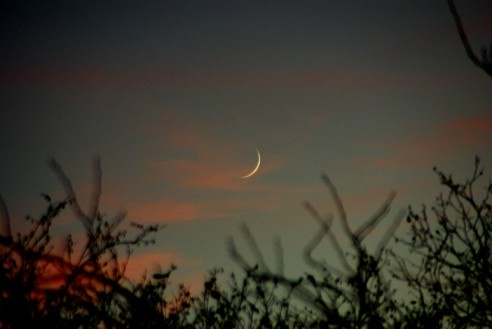
And if you’re looking at the winter sun on frosty leaves,

Well, let that be the best experience you have ever had.


Sometimes I have these flashes,

When I think I’ve understood something deep and profound.

And usually it means an evening drinking wine,

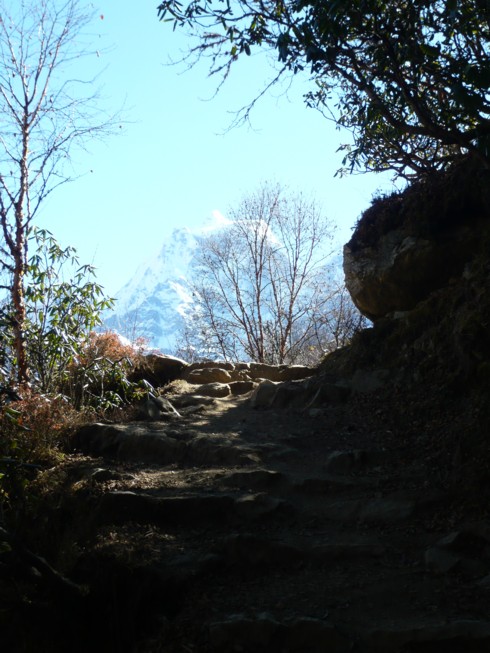
Or half an hour sitting on a sunlit hillside.

But I do wonder what we’re all so busy chasing.


And if you think this lesson worth remembering,

There’s no better time than now.


Oi, That’s My Content!

Again, a disclaimer. I am not a legal expert, and you may feel it necessary to use authoritative sources to check the information I am presenting here.

085

In my last post I talked about the potential issues around using someone else’s art on the cover of your book.

Equally, you can fall foul of copyright law very easily when blogging. Or Twittering or Instagramming or anything else like that. I am truly astonished by the number of bloggers who appear to be unaware that copying a photograph off the internet and putting it on their blog leaves them open to legal action. And putting a note under the photograph reading ‘copied from x or y’ merely makes it easier for people to notice. There are many sites where you can download free images to use this way, but taking them from others is asking for trouble.

If it comes to the attention of the copyright owner, the least of your problems could be a ‘Cease and desist’ email from a lawyer, warning you to remove the image immediately. It is also possible that a fine is demanded, with the threat of legal action. Don’t ignore this or treat it lightly. It means Trouble.

This is one reason I don’t re-blog posts as often as I might. If I re-blog one with a dodgy image, I am also leaving myself open to legal action.

But what if it comes to your attention that your work has been taken this way? Let’s say someone steals your pictures and content, and puts them up on their site without permission or accreditation. I don’t mean a re-blog, which is a different thing altogether (as long as you follow the rules!) but Intellectual Property Theft, which is what I’ve been talking about all along.

What can you do about this?

Firstly, you might prefer just to grin and bear it, annoying though it is. After all, it’s just a blog post and is it worth the fuss? Although if it was a site making money from your work, that might be another thing altogether.

Obviously, you might want to take legal action, in which case you will check carefully what it might cost you and the chances of success. There are many reasons it could be a costly and difficult process.

(Of course, this is no reason to think you can break the law with impunity. You may well come up against a determined copyright owner)

Personally, I’m inclined to send a message to the infringer along the lines of: ‘I’ll put up a link to your blog from mine. The bad news is it will include key words such as ‘property theft’ and ‘(the infringer’s name)’ which will be found by search engines for as long as the page exists’ which might well deter them. After all, it is common knowledge that potential employers, for example, tend to have a good look on the internet for information on potential employees.

It might work, I suppose. Has anyone had this problem and had to deal with it?

Hey, That’s My Picture on Your Book!

Boy, are you in trouble!

005

But first, a disclaimer. I am not a legal expert, and if you are in any doubt about the subjects I’m talking about, you should consult an authoritative source.

In general, as most writers are aware, the maker of an artistic work (e.g. painting, novel, photograph, concerto) automatically owns the copyright to said work. Selling the work does not constitute selling the copyright. This is an issue that occasionally confuses writers, for example, but it is worth remembering that even if a publisher agrees to publish your new novel, you retain the ownership and copyright to that novel, unless you specifically sign them away.

This means that the painter of a picture may sell the picture, but the new owner has no right to make any copy of this work for any purpose, and the artist retains the right to do so. Again, if the new owner is to have the right to make a copy of the picture and publish it, the artist must specifically assign the new owner the right to do so. After all, purchasing a novel or a music CD does not confer the right to copy and sell either of those.

But it’s not all as straightforward as that, and it’s more complicated if an artist has been specifically paid to create it for a purpose, or creates it as part of their duties for an employer. In this case, the employer / commissioner may hold the copyright.

As an example of this, my novel Making Friends with the Crocodile features an image from one of my paintings on the cover (see picture on the right). I sold the painting many years ago, but the image still belongs to me as I did not sign it away.

Therefore if you wish to use an image on the cover of your book that does not belong to you, you must obtain written permission from the copyright holder to do so. If so, then what you will almost certainly get / buy are reproduction rights and NOT the copyright. That would give you the right to use the image for certain purposes (e.g. book cover) but the artist retains the right to sell the reproduction rights to others, too.

Unless they are exclusive reproduction rights. See? I told you this could get complicated.

It is possible to take (another) artist’s work and sufficiently transform it so that it becomes a new work, but again the devil is in the detail (quite literally). There have been a number of cases where artists have taken others to court to argue the point – and the point is whether the new work is sufficient transformative to be considered a new work. As an example, a photograph downloaded from the internet and then either just being subject to colour changes, or having another image added to it, was considered to be infringing the original copyright.

But there have been other cases where the original image has been altered sufficiently to be considered a new work. If you are intending to go down this route, you would be wise to acquaint yourself with the ins and outs of this. To get a more detailed analysis, you might find this link useful: February 13th Creative

And if you have paid someone for an image for your cover? It might be someone you know, or it might be over the internet (perhaps one of these ‘get a service for five dollars’ sites), but the law doesn’t change. Ensure you have the appropriate permission, preferably signed, before pressing the ‘publish’ button with their image on your cover.

It could save you an awful lot of hassle.

Winter – a Tanka

I was writing a haiku yesterday, and decided to go the extra mile with it. Traditionally in Japan these poems were sometimes written in the form of tanka, which are essentially poems of five lines rather than three, with a syllable count of 5/7/5/7/7.

They could also be written as linked verse, with one or two poets writing haiku, and others supplying the two remaining lines between each haiku.

I’ve gone down the linked verse route, and also given myself the remit that each verse (of two or three lines) must contain a word or sentiment linking it to those either side – something that was also commonly done.

Yesterday was cold and miserable, hence the results.

It’s my first attempt – please don’t be too harsh!

029

The flowers have gone.

Crumbling stems standing askew,

In waterlogged soil.


Outlined against the grey sky,

Old willows by the stream.


Ten thousand leaves are

All that remain of autumn.

Wistful nostalgia.


Memories of warmer days,

Are all but forgotten now.


Wrapped up warm and snug,

Watching the grey willows weep.

Hands in my pockets.


Leaves fall slowly through the air,

Onto silent black waters.


Now a gust of wind

Swirls leaves around and around.

Racing each other.


Shifting clouds race overhead,

Sudden drizzle on the breeze.


Spiteful winter day,

Grasses shiver in the wind.

Low sunlight dazzles.


Walking in meditation,

Clouds unexpectedly clear.


Sudden bright sunshine

Reminds me the cold Winter,

Will change into Spring.

010a

If I Could Just Wave A Wand…

337a

Pandering to my Inner Vagabond, here…

If I could just wave a wand,

I would wander the world.

With my notebook in hand,

And a bag on my back.


I would sleep under hedges,

In hotels and haylofts.

Drink beers under trees,

And eat cheese on the moor.


I’d watch clouds over hilltops,

And boats on the ocean.

Shapes and shadows at sunset,

A moon with a view.


And I’d write trivial poems

Of snowfall and sunlight,

Birds singing at dawn

And the sounds of a stream.


There’s the lure of a skyline,

And skylarks above me,

Wine and wood smoke my welcome

At the end of the day.


To travel, to journey,

There’s magic in wandering

Over moorland and downland,

Through woods and through fields.


The world’s full of wonders

All waiting for wanderers.

Let me follow these paths

For as long as I can.


The Stranger

022

While tweaking some stuff around on my site today I slightly updated my Gravatar profile to include my personal mantra, which is ‘Be Kind’.

Having done that it seems a good idea to post this poem, The Stranger

img20181209_10503343

Five o’clock

I’ve been away from the computer for most of the last week, but now I’m back with a slightly longer poem than I usually write.

072a

At five o’clock the fire is lit.

Around the table we all sit,

With buttered bread and eggs and ham,

With cups of tea and cake and jam.

The idle talk is of the day,

The work now done, the latest play,

And ‘Anything to watch tonight?’

Or in the warmth and soft lamplight,

Perhaps we’ll read and play a hand,

Of whist, or bridge, you understand.

And ‘Don’t forget, at half past nine,

The radio – it’s music time.’

Then bank the fire, put out the lights,

The household settles for the night.


The heat blasts out in every room,

And lights and games and TVs soon

Take over so completely that

It’s pointless even trying to chat.

The sounds of gunfire, screaming cars,

Exploding buildings, and on Mars

The aliens armed with laser beams,

Are killed on several different screens

In different rooms by different boys,

With highly deadly killing toys.

The evening mealtime’s such a treat,

With pizza, chocolate, crisps and sweets.

Although it seems they all are eating

Different things at different sittings.


‘A cup of cocoa? I don’t think

That that will do, an energy drink

Is what I need, the evening’s young,

And there’s still much that’s to be done.

And if I cannot concentrate,

Upon this game, it’ll be too late,

The zombies will have won and then

I’ll go back down to level ten.’

It’s one o’clock, they still can’t sleep.

There’s not much point in counting sheep,

‘cause they’re all battery-powered toys,

Just so much electronic noise

And moving parts all running round,

And round and round and round and round.


I’m standing now beneath night skies,

Pale silver light from fresh moonrise.

I’ve walked for almost half a day,

It takes that long to get away

now, searching for a quiet place

Where I can pause and have some space.

I’m thinking how it used to be,

At five o’clock, the time for tea.

It seems to me that what we’ve gained,

Is not worth any of the pain.

And even more what we have lost,

We should have saved at any cost.

But anyway, now it’s just me

I have my flask, I’ll pour my tea.
 

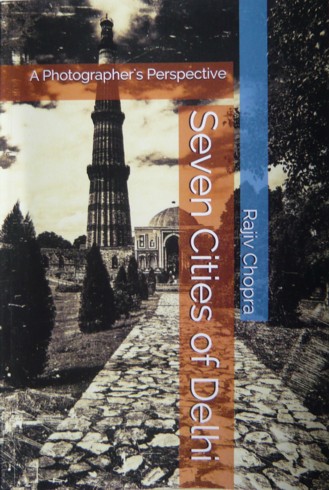
Seven Cities of Delhi by Rajiv Chopra


001

On my first visit to Delhi, almost thirty years ago, I was overwhelmed by the huge numbers of monuments there, such as the Red Fort and Purana Qila. I found the area around Paharganj to be chaotic and exciting and everything an inquisitive Westerner could wish for – a mixture of smells of food and incense and, yes, sewage. A mixture of ugly concrete buildings and beautiful dilapidated buildings left over from the British Raj and often much earlier. Milling crowds of people and cows and rickshaws and bicycles and autos, and history, history, history.

Chadni Chowk was incredibly crowded, the Lodi Gardens completely deserted. The Jama Masjid crowded by tourists and worshippers alike, the Janta Manta often almost empty.

There is so much history everywhere you turn in Delhi.

Other Westerners I met tended to be highly disparaging of Delhi, which was something I couldn’t completely understand since many of these same Westerners seemed to praise Mumbai and Kolkata for the very reasons they hated Delhi.

Yet Delhi is, I think, one of the most exciting and interesting cities I have ever visited. From a historical viewpoint alone, it has over ten thousand listed monuments.

Ten thousand!

Rajiv Chopra is a Delhi based photographer with a passion for recording both the historical Delhi and the street life he comes across from day to day. In this book, he has combined his photographs with a little of the history of the seven historical cities that constitute Delhi, and also a perspective of the differing processes that photography has passed through from its invention up to the present day.

To illustrate all these factors, his book is split into seven sections – one for each of the historical periods – and in each section he has outlined one of these photographic processes so that, for example, in the section covering the first city, Mehrauli, he speaks of daguerrotypes. And then his own photographs he processes through Photoshop to simulate the effects of these processes.

This is not a long book, but it does not pretend to do more than act as an introduction to the history of Delhi. And in this it certainly whets the appetite for more, and then for anyone with even a passing interest in photography it gives a concise and potted description of these photographic processes. Finally the photographs themselves complement the text perfectly.

I unhesitatingly recommend this book for anyone who wants to know a little of the history of Delhi, and who enjoys photographs that give a real flavour of the history of that magnificent city.

Five stars out of five.

You can find Rajiv’s website and blog here

Keep Watch at the Window

It’s October.

021a

That must mean it’s autumn. It certainly feels like it, now. So here’s a little poem for when the days are drawing in and it’s becoming colder and darker outside.

Keep watch at the window in the Westering light,

On the distant hill in the approaching night,

Under darkling clouds, over dew-touched heath,

Where the flowers of summer are now touched by death,

I’ll be coming home in the fading light.


Keep watch at the window in the fading light,

You’ll see me walking when the moon is bright,

My shadow before me coming down the hill,

My breath opaque in the air now chill,

I’ll be coming home in the last of the light.


Keep watch at the window in the last of the light,

When I’m weary you’ll see me come into sight,

Drawn by the firelight and the thought of wine,

By the thought of you; so glad you’re mine!

I’m home now, let’s shut out the night.


Salt

salt-workers

I should feel like an Egyptian pharaoh,

But I never had all that splendour.

Mine was such a short life,

And then I was mummified for the Hereafter.


There was never anyone to wait on me,

To bring me delicacies or fan away the flies.

You could not imagine Liz Taylor

Wanting to play my part in a film.


But I want you to take a moment or two,

To imagine that your feet and hands

Are permanently covered in cracks and crevices.

And to imagine the constant burning pain.


And contemplate now, the virtual blindness

That comes from seeing – day in and day out –

The bright sun reflected from the brilliant white

Of salt, from horizon to horizon.


And breathing, such a natural thing!

But even breathing was slowly killing me.

Coughing, spitting, rasping breath and breathlessness

And worse…


And when I died, they could not burn me.

Not properly, for the years of salt had seeped

Into my skin and as a final indignity,

Ensured that even death was not a true escape.


Sprinkle, sprinkle on your dish,

Shut your eyes and make a wish,

Up above the world so high,

If there’s a watcher in the sky,

Pray they somehow can arrange

For this indignity to change.

A couple of years ago I wrote about the extremely difficult conditions endured by Indian salt workers – and many others all over the world (the link is here should you care to read it) – which I don’t think have eased since then.

As you add salt to your meal today, think of them.