My First Long Trip to India (1)

Fifteen years after my first trip to India, I was back again in Delhi.

On the first morning I had breakfast, and then had a bit of a walk around being hassled. It proved very difficult, as an obvious westerner, to walk around on my own. One or two beggars approached me, although they were neither numerous, nor persistent, at this point. The strangers offering ‘good advice’ made me more circumspect. They may have been simply being helpful, or they may have been touts. I was advised to go to a nearby ‘Tourist Office’ or ‘Travel Bureau’ – usually a private enterprise in India – for maps and information on what to see. I was advised to carry my bag differently to thwart thieves – no doubt kindly meant. Every step that I took deeper into Paharganj I was accompanied by one or two chaps unobtrusively wandering along at my side, until I began to feel that I had had enough of it. A number of people were out to sell me things – anything from hashish to bus tickets. In the end I dived into a café for a cup of tea to give myself some space and to formulate a strategy for dealing with all this. I was, after all, going to be in India for another three months.

006 (2)

Yes, three months. How came this to pass? The reason was simply that I had become pretty fed up with all of my routines in England. I might say that I was bored; I might say that I felt as though I was stuck in a rut. I might also say that I had come to loathe the work that I was doing. Clearly, some sort of change was required, even if only a temporary one so that I might feel refreshed. Sitting in a pub garden in the sunshine, in a village a few miles from where I lived, drinking a pint of Mr Harvey’s splendid ale, I decided that I would walk around the U.K. As you do. The fact that I now clearly wasn’t walking around the U.K. may require further explanation.

I spent some months working out an itinerary; poring over maps and drawing felt tip lines here and there on them, reading up on places I had never been to, and reading accounts of people who had done this sort of thing before. After rejecting a coastal walk (I’m not mad keen on the coast; I prefer hills and mountains and woods and really don’t like seaside towns) I eventually decided upon a rough route linking up long distance paths and places of interest that ran haphazardly around the island, and decided that I was permitted to take buses and trains to avoid cities and the suchlike. Friends I spoke to said they’d accompany me along the way for a few days here and there, so I didn’t have to put up with my own company all of the time (they generously offered to put up with it instead). I estimated that the project would take four or five months.

I got quite excited about it. And then I decided to walk Offa’s Dyke Footpath (which very roughly follows the border between England and Wales) as a sort of training run (well, walk), and things rapidly began to go wrong.

I couldn’t believe how much stuff I’d crammed into my rucksack. This certainly wasn’t the first time that I had gone long distance walking; carrying everything that I needed to camp along the way, but it seemed that I had about twice as much stuff as I’d ever taken before. How on earth had that happened? I crammed and jammed the last of it in and forced the zips closed. Then I tried to lift the thing; it was ridiculously heavy. I unpacked it and discarded clothes, until I felt that I really had the bare minimum necessary. I got rid of one of my two cooking pans. One of my two books. One or two other odds and ends were jettisoned. I could shut the bag a bit more easily, now, but it still weighed a ton. Should I chuck out the tent and just take a bivvy bag? In the end I didn’t, since it was a lightweight tent that was only fractionally heavier and bulkier than the bivvy bag would have been. Did I really need to take photos? Did I really need to wash? I was still dithering when the time came to leave the house and catch my bus.

The following day I walked out of Chepstow on the first leg of the footpath, with what still seemed like half a ton of stuff on my back. I kept thinking that I’d be carrying even more with me for the four or five months that it was going to take me to do the real thing. But the first day went okay, and I reached the place that I had decided to spend the night after a very pleasant walk. It was the next day that I first twisted my ankle. I’ve always been a bit prone to this; it seems that my left ankle has some sort of weakness, which is probably the legacy of an older injury.

I went down in agony. Eventually the pain subsided enough for me to get carefully to my feet, get my rucksack back on and hobble painfully on my way. It took some while, but after perhaps an hour or two, I was moving fairly well again. Then, towards the end of the afternoon, I began to walk down a hillside towards my campsite, when my foot twisted under me and I went down again with a great yelp of pain and a torrent of bad language.

After that, things just went from bad to worse.

The following day I cut myself a strong walking stick from a wild briar, just outside of Monmouth. But even so, I twisted my ankle a further two or three times that day. The scenery became lovelier and lovelier, but I only had eyes for wherever I was next going to place my foot.

All the joy had gone out of the trip.

On day four, I managed to walk through the best scenery so far without further mishap, and then walked the last few hundred yards into Hay on Wye where, you guessed it, I twisted my ankle. I stayed two nights in Hay, enjoying the bookshops but especially enjoying not carrying my bag around, and the next day I took a bus home, defeated.

I still needed a journey, though, and after a while I thought of India. I had spent a couple of weeks out there some fifteen year’s previously, and had yearned to return and explore it further. And so I began to draw up a new itinerary.

An Alien Culture?

More people travel for leisure purposes today than have ever done so in the past. And many work abroad on short- or long-term contracts, often with a certain amount of leisure time available to experience the culture that surrounds them there.

And this will result in these travellers meeting the people that make up the indigenous society where, for a while, they find themselves. Will there then be a meeting of minds?

Having lived in an ex-pat society, as I have referred to on here before, I am familiar with the laager mentality that often pervades it. I won’t go into all the permutations, but there is frequently a combination of arrogance and fear that leads to a strong feeling of ‘us and them’.

Many travel with the firm conviction that their own society is superior to any other, and are unwilling to see any good at all in any others. Some who go away to work resent being uprooted, and arrive with that resentment packed in their baggage. Some find the experience to be fearful, if they do not understand the language being spoken around them or assume that this alien society has values that somehow threaten them.

And they can either lock themselves away and peer over the barricades, or they can embrace the experience and learn from it.

137 (2)

Travel broadens the mind, it is said, but sometimes it seems to just cement prejudices more firmly in place.

And how easy it is to travel around just looking for things to justify prejudices!

One of the more infuriating things that I come across occasionally is a bigoted and ignorant letter or article in a local newspaper (it often tends to be the local ones) where someone’s idiot views are justified by the phrase ‘I know; I was there’. I imagine them living their entire time in a foreign country in a compound that they rarely leave, yet thinking that they now know exactly how the society functions beyond their walls.

I’ve met one or two of them, over the years.

I spent three years in Oman, working, and I’ve travelled fairly extensively in India, but I do not imagine or pretend that I really have much more than a superficial experience of these places. I knew little of the local culture in Oman beyond what I could see in the streets and villages and markets that I visited. I didn’t know anyone well enough to spend time at their homes or in their social circles. I went with groups of other westerners to places of interest. I did spend a lot of time exploring the desert and the nearby towns on my own, but I was effectively still inside my own little bubble. It is a huge regret that I never got deeper under the surface.

I have, perhaps, managed to learn a little more about the real India, especially through spending time on a project in a village, although I cannot pretend, even to myself, that I really have any idea of what it is like to actually live in an Indian village.

During the later days of the British Raj, the rulers took the approach that their civilisation was naturally superior, and that there was nothing in Indian civilisation worthy of their consideration. The irony of this is that around the end of the eighteenth century, and the first years of the nineteenth, many of the British in India had taken a keen interest in Indian history and culture, themselves doing a tremendous amount to unearth much of the history that had been lost and forgotten. For that comparatively brief period, it would seem that many of the British treated Indians and their culture with a deep respect.

The reasons that this changed are probably deeper than my understanding, but two things stand out. Firstly, that from the beginning of the nineteenth century, many British women came to India in search of husbands, bringing with them what we tend to think of as Victorian attitudes, and secondly, there was an upsurge of evangelism in Britain, which translated itself in India as a movement to convert the ‘heathens’ to Christianity. These combined as a new feeling of superiority, and contempt for a society that was now seen as inferior, especially when much of it resisted their overtures.

With this, the British as a whole seemed to become more intolerant and arrogant, and less respectful of sensibilities. This culminated in the horrors of 1857, which could be said to be caused directly by these attitudes.

To return to the present day, it seems that many travellers have attitudes no better than their Victorian predecessors’. I wrote a post a few months back that mentioned a number of westerners I came across in a Himalayan hill resort, https://mickcanning.co/2015/10/25/the-mad-woman-of-the-hill-station/  should you wish to view it, whose behaviour and attitudes were just downright arrogant and disrespectful. They were doing no more than confirming their prejudices as they travelled, and at the same time I daresay they were confirming many people’s views of western travellers.

Yet there are many people who travel with open ears, open eyes and an open mind, and their rewards are far greater than those of the blinkered traveller. They have the wonderful opportunity to experience and learn about different cultures at first hand, speak to people who hold different beliefs and ideals to them, and perhaps learn a little of what drives them. In return, they have an opportunity to enlighten others, perhaps, to things in their own society that might not be understood by those others. In a small way, each and every one of them can choose to contribute either to different societies coming to understand and become more tolerant, or to the further spread of tensions, mistrust, and misunderstandings.

And all of these little interactions, added together, are as important and influential as the contacts between politicians and diplomats.

My Father in India

They didn’t talk about it.

It wasn’t as bad as the First World War, when men who had nervous breakdowns were frequently shot for cowardice, but the men of the generation who fought in the Second World War were still reluctant to talk about the hardships they had faced and the horrors they had seen.

When my father did talk to me about it, and it was very rare that he would, it was generally to joke about the fun that he’d had on leave, or, after my first visit to India, to ask about places that he remembered from Delhi.

He had seen fighting in Burma, and stayed in India right up to the time of Partition. He certainly wasn’t going to talk about either of those. When pushed, he’d clam up about Burma, and would only say that what he’d seen in India at the time of Partition was horrible.

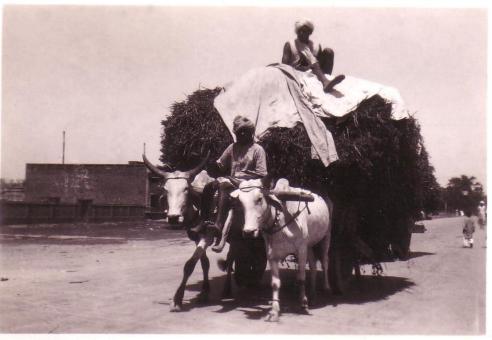
bullock cart

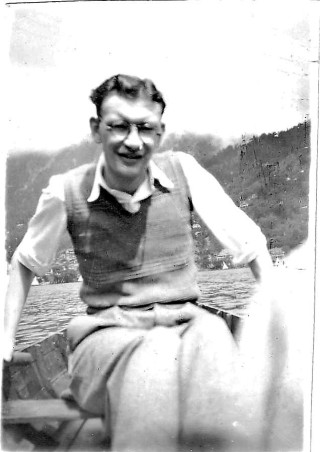
I daresay he told me one or two things that I have forgotten; things that didn’t mean much to me at the time. Perhaps he told me where he had been when he was on leave and was photographed rowing a boat on a lake in the hills; almost certainly in the North of India. Nainital, perhaps? I have been there myself, now, and I’m not certain. If he had told me before I’d been out there, the name would have meant nothing to me, and so I wouldn’t have remembered it.

And by then it was too late to ask him, because he died before I returned for my second visit.

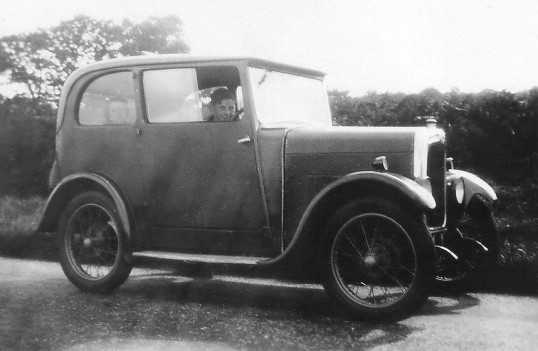
dad 1

Once he had returned to England, he never went back to India, and I certainly never had the impression that he wanted to. I guess that the bad memories must have outweighed the good ones.

I have a dictionary that he bought in Delhi, stamped inside the cover ‘Cambridge Book Depot, New Delhi’ with the price scribbled in pencil; Rs 3/12, and his signature. I also had some old Indian coins, once, that he had given me, but I’m not sure where they are now. Other than the photographs, I’m not aware that he brought anything else back. Certainly, there were never any ‘curios’. Although a part of me wonders whether there might have been once, and whether my mother, a staunch Christian, might have thrown them out after they married. But that is pure conjecture.

hill station 4

And he was interested enough to read books on India’s history. I was surprised, occasionally, on the depth of his knowledge on the subject. He was, though, always interested in history, so I suppose that I shouldn’t have been really, and if he hadn’t have been born working class, I daresay that he might have had a university education, because he excelled at school.

Most of the photos are in fairly poor condition, although I have attempted to improve a couple of the ones that were particularly bad.

It seems strange to think of soldiers as tourists, but whilst they were on leave in India, that is, of course, exactly what they were. There are one or two photos in his collection that were taken of places I have been. One of them is of a view inside the Red Fort of Delhi that differs only in the size of the tree in the picture from one that I took in 1989.

He must have stood in exactly the same spot to take that picture, some 45 years before.

What does this small slice of family history mean for me?

mainstreet poona

It does mean that there is a slight family connection to India, if not in the way that usually comes to mind. He had no family there, and had no responsibilities beyond his army duties, but just the fact of his living out there for a number of years, gives me this connection. Or so I like to think of it.

In the end, India wove its magic over me – nothing much to do with Dad, I suppose, although I expect that was in the mix somewhere. I think that part of why I may have gone out there the first time, was to follow in his footsteps. And now my family can say that they have a connection to India through the time that I have spent out there as well.

By Popular Request (2)

First of all, a huge ‘thank you’ to all of you who contributed to the comments thread on my post earlier this week, ‘Religion or Philosophy.’

I thought it made it the most interesting so far, and all of your comments certainly given me much food for thought about what I had written and my feelings around the subject.

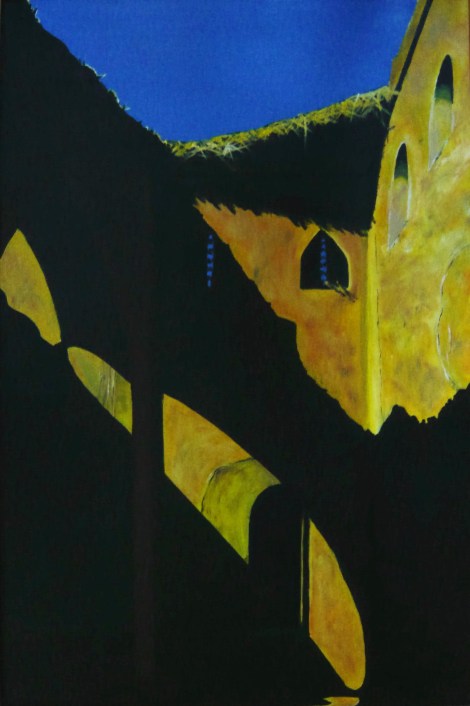
So, today, a couple more paintings. I didn’t paint much when I was in Oman, apart from a few sketches and watercolours, so these ones were worked much later, from some of the photographs I took.

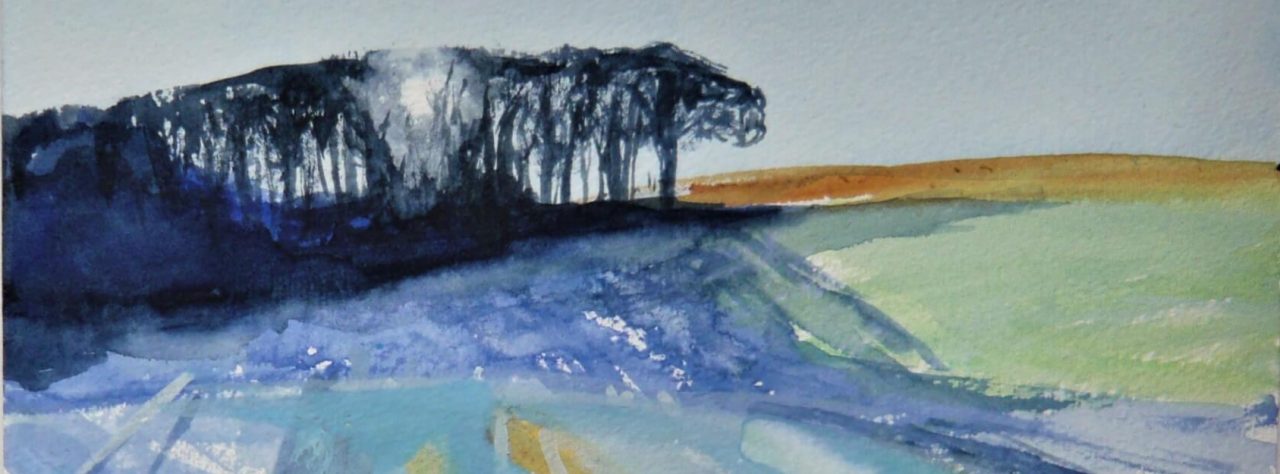
It is in the desert that I have been most aware of the contrast between light and dark, and that is something that I wanted to bring out in these paintings.

P1050093

Oman #1 Acrylic on board. 24 ins x 36 ins

There is something about ruins, by their very nature, that is stark. They have been shaped by human hand, but are now broken. Designed and built for a purpose, but now with that purpose gone. There is a sadness, or at least a feeling of melancholy.

There is a sense of emptiness, which is frequently a feeling that comes upon the traveller in the desert.

And in the desert, there is not that softening growth of ivy, for example, to soften the harsh and fractured edges of ruins.

P1050094

Oman #2 Acrylic on board 37 ins x 23 ins

The second painting, Oman #2, was also an exercise in the use of triangles in composition.

Religion or Philosophy?

Now, here’s a thing.

It is rather a fashion nowadays to declare that religions are all wrong and should be banned, because science and reason have somehow proved that there is no god (they haven’t).

But I would like to consider every religion in the world as a school of philosophy, and consider what I might take from each that would be useful to my life and my development.

Whether there might actually be a god or not then becomes unimportant.

Most Buddhists, for example, would seem a little unsure of whether there is a god or not, but if asked, the majority of them would reply that it does not matter. The argument being that it is impossible to prove either way, and therefore it is impossible to know either way. So why not just live your life as well as you can?

SR312thumb

Traditionally, religions have provided society with a set of moral rules. It may be that these rules were the first imperatives that human beings treat other with decency. Since none of us were around in the long years when our race was evolving speech and higher thought, and learning how to co-operate with fellow members of the tribe and – who knows – perhaps their neighbours, this must of necessity be pure speculation. Yet I find it highly likely these moral codes were the first suggestions that human beings might treat an enemy, for example, with mercy, rather than simply killing them, which might otherwise be the obvious course of action. Morality over expediency, if you like.

Some examples:

Islam forbids charging interest on loans. How many who have fallen victim to the money-grubbing lowlife that run these ‘payday’ loan companies charging astronomical rates of interest might have sympathy with this view? It teaches also that it is a moral duty to give alms; to help those in need.

112 (2)

Christianity is big on love and mercy; at least in the New Testament. It teaches tolerance and forgiveness.

Buddhism teaches that to want things is to become enslaved to those desires that can never be satisfied. How much better to live simply and to be content with what we have? It teaches also compassion for all living beings.

Hinduism teaches that all life is sacred, and that we should all refrain from injuring others.

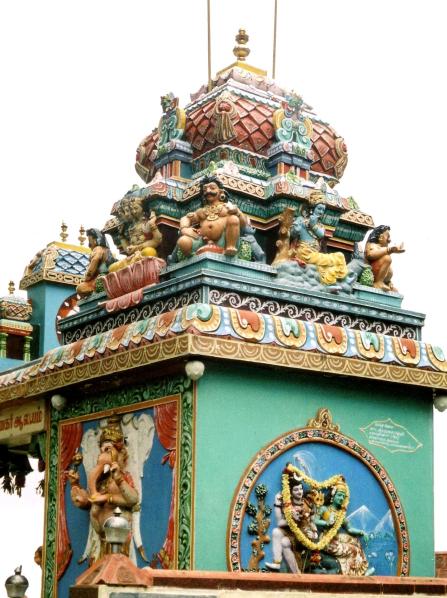
ganesh shrine kodai

These are only the main four faiths in the world today, but every other religion that I have read about also teaches a code of moral imperatives.

And in a world run by huge multi-national companies with no moral compass whatsoever and politicians who only look after their own, where we are continually and aggressively informed that we must worship money and consume more and more pointless trash, and that it does not matter if we destroy the environment just as long as companies make bigger profits, anything that can make us pause to consider what is actually important in life should be encouraged rather than denigrated.

343

It would therefore be ridiculous to simply dismiss out of hand entire canons of work, solely on the grounds that the writers of these philosophies believed in a god whom the reader might not (or does not want to) believe in. Everybody has a spiritual side, whether or not they believe in some sort of god. The spiritual side of a person champions beauty over money, generosity over selfishness, kindness over cruelty. These are values that most of us still claim to value today.

Rich Beyond my Wildest Dreams

The other day, a friend of mine jokingly asked me whether I would be moving into a big mansion and getting a chauffeur driven car, once my novel is published and I have made a fortune.

For a few minutes we invented a whole new life for me; where my riches enabled me to buy whatever I desired and to do whatever I wished. Then we got tired of that, and the conversation moved on to more mundane things.

But let us say this came to pass, because, you know, things happen. Unexpectedly. What would I want?

old car one (2)

I can only listen to one piece of music at a time, no matter how much I may love music.

I can only read one book at a time and, God knows, I have a pile as high as, ooh, this to get through already. I continually try not to buy any more books when I go out. And I continually fail.

I don’t want a flash car. I don’t actually want a car at all, as it happens. I’m stuck with one at the moment, because the work that actually provides me with a tenuous living requires it. If I no longer did that work, I would probably get rid of the car.

A bigger house? No, not really. Perhaps one further out of town, though.

There is travel, of course. More trips to India and Nepal, for a start. But again, time is not infinite, and there would be a limit to how many different places I could go. Would I stay in luxury hotels, then? No. I have no desire to do that. Fly first class? That is probably the one thing I would do. I am tall, and the leg-room on most flights is a little mean even for children. And then my back causes me so much pain at the best of times that any long-haul flight is extremely uncomfortable.

We all use language carelessly at times. What do I mean by rich? Well, possibly something different to what you would mean, then again, possibly not. For some people, the idea of being rich means having virtually unlimited money so that they can buy every conceivable luxury. For others, it simply means not having to worry about whether they can make ends meet in day to day life, and that is the category that I fall into.

I have known people who earn heady amounts of money yet do not consider themselves rich, because they find it too easy to spend it almost as fast as they earn it. I have known others who would consider themselves rich if they came into a very modest windfall.

Today, in the affluent western world at least, the vast majority of us are rich, although we don’t recognise it. Why? Modern advertising is insidious and relentless and companies spend billions of pounds each year persuading us all that we cannot live without their products, that we all have a right to them and that we want (and deserve) them.

And that we want them now.

This has meant that luxury fripperies have come to be seen as necessities.

Audiences watching TV programs, or walking down their high streets, or opening magazines, are constantly bombarded with an unending stream of images of luxury goods that they are told are rightfully theirs, and which are paraded by their football or ‘reality’ TV heroes.

What these advertisers don’t want us to see is that the trash they are pushing is unnecessary and does nothing to enrich our lives.

Now, where was I?

Oh yes, I just have to nip out for a loaf of bread.

Of course, it has to be an artisan-crafted Estonian cob loaf made with organic Bulgar wheat flour milled under a full moon and leavened with yeasts descended from the very yeasts used by the court baker of Peter the Great of Russia and baked for thirty seven and a quarter minutes in a bread oven fired with birch logs and scented with juniper and a teaspoonful of fuller’s earth.

It will be damned expensive, but I DESERVE IT AND I WANT IT NOW.

Oman (1)

Prior to 1970, Oman was, in many ways, still a medieval country. There were no more than 3 miles of tarmac road in the whole country, the gates of the capital, Muscat, were still closed between the hours of sunset and sunrise, and it’s exports were largely confined to dates, limes and frankincense. Oil had first been discovered as far back as 1956, and then in commercial quantities in 1962. Production began in 1964 and led irrevocably to massive changes, although these would not come about until 1970.

boat

This launch (Omanis never use the word Dhow) was on the shore at Yiti, just east of Muscat. It would most likely have been used for trading and was probably still seaworthy when I took this photo.

Mindful of these changes that had happened virtually overnight to other Middle Eastern states when oil had been discovered, the then Sultan, Said, was determined that Oman would not go the same way. Unfortunately for everyone concerned, his solution was to stash the proceeds in the royal coffers, whilst the country and its people remained poor. It was a situation that could not last for long, and in 1970 his son, Qaboos, overthrew the old Sultan.

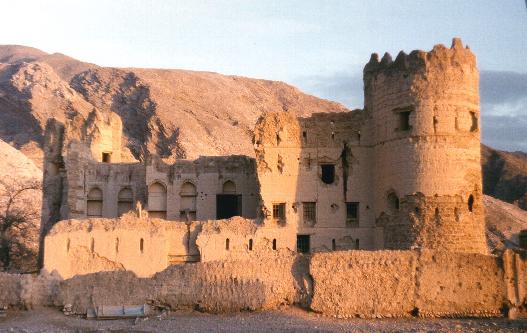
Baushar Fort

Old fort at the village of Baushar, near Muscat.
baushar door
Carved wooden door in Baushar Fort

I lived there between 1985 and 1988, during which time the country was making large strides towards being a modern state, although many parts of the country still felt as though they belonged in another century. Around Muscat and along the Northern coast, there were new towns springing up, modern shops and hotels, main roads, and much of the development that might be expected. There did appear to be an emphasis on the building of facilities such as schools and hospitals, however, along with a good deal of restraint, which was a refreshing change from the way that many other states used their oil wealth.

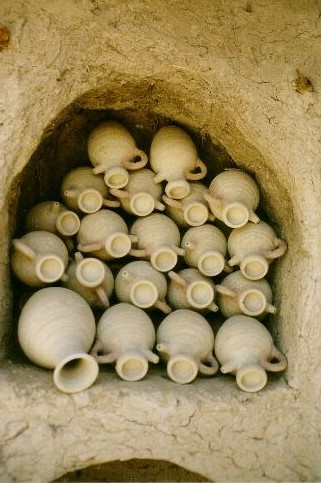
pottery kiln 1

Pottery kiln at Bahla.

Bahla has good quality clay and produces large numbers of pots, which are thrown on simple foot-operated slow wheels and fired in large mud-brick kilns, which are fueled with brushwood.

Pots at bala

Newly-fired pots

Away from the towns, to visit most of the villages was like stepping back in time. Buildings were often still mud brick and palm thatch, and many of the traditional cottage industries were still followed.

falaj

Falaj.

The Falaj system of irrigation originated in Persia and was spread throughout the Arab world. I have even seen examples in Spain. The system consists of a series of underwater channels bringing water from where it arises, usually in the mountains, to where it is needed, where it is distributed by overground channels. These channels, both underground and overground, have been built on a very gentle gradient and show astounding technical skill, being built only with primitive tools, often very deep underground. Many of the Omani Falajes are reckoned to have been built by 500 BC.

dates

Dates spread out to dry near the town of Quriyat.

Dates are an important crop in Oman and were the main export until the discovery of oil there. They are still dried in the traditional way – in the sun.

shark boy crop

Boy on a donkey with sharks. The sea has also traditionally been a major source of food for Omanis. I passed this boy just outside Quriyat.

deserty desert

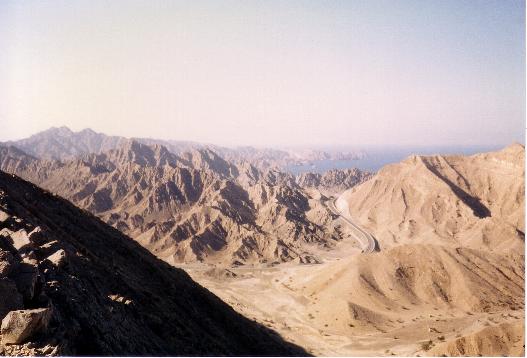
Coastal mountains, SE of Muscat.

For a long time after I finally left Oman, I harboured a strong wish to go back there. But recently I watched several videos on YouTube, which have cured me. Many of the places that I knew as small settlements with dirt roads and small houses, have become places of great wealth with wide boulevards, modern houses and cars, and tourist hotels. It is, no doubt, a development that is welcomed by the majority of the population, but it is not the Oman that I knew.

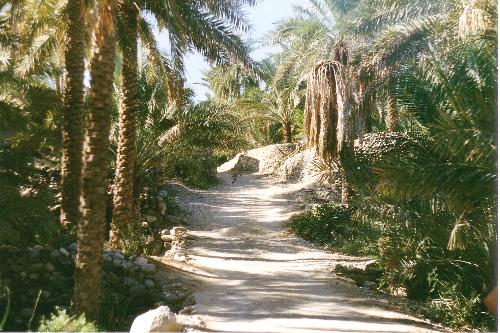
Oasis

There you go. A picture of an oasis.

Pitfalls for Writers – 4) Language; a bit of a follow-up

Back somewhere deep in the mists of time, I published ‘Pitfalls for Writers 1’. In this, I discussed some of the potential problems of language in a novel.

If I am to write a story of medieval Persia, for example, I will write it in English. No one who reads it is going to be fooled into thinking that my characters were really speaking in English. But this on its own is not enough. There must be something in the language I use that reminds the reader that the story setting really is medieval Persia.

P1050055

And so I suggested using a flavour of the speech. I might sprinkle the conversation with words such as ‘dirham’ (a unit of currency), or ‘djinns’ (genies). The characters might smoke a ‘qalyan’, which is how they would have referred to what we generally call a hookah. A greeting might be ‘Salām ʿalaykom’.

In the comment stream that followed, I concluded that I might employ a glossary, but certainly not footnotes.

This has now become most relevant to me.

About a month ago, I finished reading Anuradha Roy’s ‘The Folded Earth’. It is a novel that is set in India, written by an Indian writer, yet it uses a glossary, although she is presumably writing in the first instance for an Indian audience. This glossary explains a few words and phrases that many western readers would be unfamiliar with, although I would expect the majority of Indian readers to know them all.

My own novel is being read now by generous beta readers, and some of the discussion is over the use of the appropriate Hindi / Urdu words in the text.

And so, with ‘The Folded Earth’ as an example, I shall definitely use a glossary.

Next, it is important to employ the correct voice.

Speech:

Clearly, if the protagonists of a story are sitting down to a meal, they might complain about the amount of fat on the meat, but they would be most unlikely to refer to it as ‘adipose tissue’. Unless one or both were, for example, surgeons.

Very few people would be likely to refer to two items as being ‘in casual juxtaposition’. They would be far more likely to say something along the lines of ‘oh, they look a bit odd next to each other.’ As tempting as it might be for the author to show off their vocabulary, it is something that should be used most carefully.

Narrator:

If the story actually has a narrator, then this becomes even more important. The country bumpkin relating an everyday tale of rustic shenanigans should not be employing sophisticated and subtle wordplay. He or she should only be employing language that they would naturally use.

Author’s voice:

Even if there is no actual narrator, it remains important to use only language that would be natural to the situation. For example, it sounds plain wrong to describe a group of Vikings ‘computing’ an answer to a problem, even if it is only the author describing it that way.

Generally, of course, and I know that some will disagree with this, it is usually better to avoid all flowery and showy language in novels, and use simple language well.

Finally, a jarring note found in a few modern novels set in older times, is that the characters often think like modern folk. Reading these books as against books written, perhaps, 150 years ago, it is not just the style and language of the writing that are different, but also the prejudices. The hero of a novel set in 1840 is going to have casual prejudices against, perhaps, people of another race, women, etc etc. We tend to be reluctant to set these down in print, nowadays, perhaps as if by doing so we are almost admitting to having these prejudices ourselves.

However, if we want to depict our characters realistically, we need to do so ‘warts and all’. And if the writer is going to depict them otherwise, then he or she needs to have a good reason why they do.


Chinese New Year

Well, a couple of days late, but that is just typical me, I’m afraid. So, Gong Xi Fa Cai, everyone!

Of course, It’s a good excuse for me to show off a couple more of my paintings.

chinese new year 1

Chinese New Year #1

Chinese New Year 2

Chinese New Year #2

Both paintings are 24 inches by 18 inches, and are acrylic on board.

The last time that I took part in Chinese New Year celebrations, was when I was staying in Kolkata in 2013. Until then, I had not realised that there was such a large Chinese population there. I was staying in a small guest house some way away from the main streets, and heard the sounds of drumming from outside. When I went to investigate, I found a group of almost 100 young Chinese, all dressed in red T-shirts with their names on the back, a number of dragon and lion costumes, and a good supply of cabbages and coins. I wandered around with them for about an hour or so, as they went from house to house, dispensing good luck.

I think it is fair to say that it was an unexpected treat.

India – My First Time (2)

A few more photographs from 1989 (my apologies for the quality of some of them – all I had with me was a very cheap camera):

After a few days in Delhi, I went to Srinagar, in Kashmir. I took the bus that went through Jammu, and 24 hours after leaving I was deposited in Srinagar.

On the way, I did one of the most stupid things I have ever done in India.

The bus was packed. I think that I was the only westerner on the bus, but I liked it that way. On a 24 hour bus trip, it is pretty well impossible to ignore your neighbours for the entire journey, and so I spent much of the time chatting with the chap sitting next to me, and the ones across the aisle. When the bus halted to allow us to get some food, we sat at the side of the road together munching on the samosas, pakoras and newspaper twists full of nuts that we had bought.

When it started up again, we chatted long into the night before falling asleep.

And at the first stop just after dawn, at another cluster of roadside stalls for breakfast, I joined them at the broken water pipe beside the road where we all brushed our teeth.

Maybe if I had spent longer than just a few days in India by then, the consequences would not have been so violent. But as it was, my stomach had clearly not yet adjusted to Indian bacteria.

And maybe if I had spent longer in India I would have realised that it was not a clever thing to do in the first place.

IMG

In Srinagar, I stayed on a houseboat on Lake Dal. I no longer remember what it was called, but I was the only guest, and I had the place to myself. These wonderful floating mini-palaces are a relic of the days of British India, when the local Prince refused to allow the British to purchase land to build houses. They got around this by causing the construction of houseboats to stay on, instead. Made from wood, beautifully carved, and furnished opulently throughout, they seemed to me to be unspeakable luxury after my 24 hour bus journey.

The rapidly multiplying bacteria in my stomach, though, were clearly in a hurry to join all of their friends in the Lake. But for someone feeling poorly and reluctant to stray too far from a bathroom for a few days, the houseboat could not have been better. I had my meals cooked for me, and any little treats I fancied I could buy from one of the many shikaras that continually paddled up to the houseboat. These little boats, which also acted as water taxis, sold chocolate, flowers, fruit and vegetables, cigarettes, snacks, flowers, newspapers and yet more flowers.

I passed much of that time on the deck or on the roof reading, or chatting with the folks around me on the nearby boats or on the shikaras.

After a few days I recovered enough to explore the area a little. I walked many of the paths around the lake, which is a more complex shape than the visitor first realises. I would frequently find myself on causeways or small spurs of land sticking far out into the lake. I wandered around the Shalimar and Nishat gardens, and I walked up the long, winding path to the Shankaracharya Temple, on the hill of the same name.

This was March, 1989, and even someone as unobservant as me could not fail to spot the signs of unrest. Once or twice in the evenings I heard what might be shots or small explosions in the distance, which my host casually dismissed as ‘bandits’. On one occasion, walking through Srinagar I found the road blocked outside a mosque, where there was lots of shouting and a large police presence; although on reflection, I have seen much the same thing outside the rail ticket reservation office in Kolkata, and perhaps I should not make too much of it as an incident.

It was only a few short weeks later, however, that the insurgency began in earnest. For a long time there would be very few further visitors to the lovely Vale of Kashmir.

After a week, I returned to Delhi and then headed immediately to Agra, to see the Taj Mahal. I chartered a car and driver, because I wanted to also visit Fatehpur Sikri on the way.

IMG_0002

Fatehpur Sikri was built by the emperor Akbar in the sixteenth century. His intention was to create a new capital city that honoured a Sufi Saint whose blessing the emperor believed had given him a male heir. This site was chosen, as it was close to the dwelling of the saint. Unfortunately, the area suffered from water shortages, and the city was abandoned shortly after the emperor died, after only 13 years occupation.

There remains the magnificent, well preserved, fortified city that I wanted to wander around for a few hours. Inside, there were a few stalls selling souvenirs and drinks, and a number of other visitors looking around, but generally there was an impression of peace and emptiness. I have not been back since, but I believe that it is now far more crowded, and that there are far more touts and hawkers on the site.

IMG_0003 (2)

Performing bears at the side of the road. The cruel practice of dancing bears was made illegal in India in 1972, but was certainly still common in 1989. These ones were at the side of the road not far from Fatehpur Sikri, on my way to Agra.

In Agra itself, I visited the Taj Mahal.

the_classic

There are plenty of people who will tell you that it is over-hyped, and that there are many greater buildings in the world. It is possible, also, that some of these people have actually been to Agra.

It may be that there are some buildings that are more impressive, but how can you measure such things?

My first sight of it, as I walked through the gateway, made me catch my breath and stop still. For a moment, I could not believe how lovely it was. I then spent a long time wandering around the site, and I still think it one of the most beautiful and magnificent buildings that I have ever seen. I watched the afternoon light fade and die, and the sun go down, and the building seemed to glow and shimmer and almost float before me.

I left when they threw us all out at dusk, knowing that I had just seen something very special.