Kent’s Standing Stones

Although not perhaps the first county one would think of when discussing ancient standing stones, Kent does have its share. There are two main sites approximately equidistant on either side of the river Medway in north Kent. The eastern site consists of the remains of two burial chambers (Kit’s Coty House and Little Kit’s Coty House) and the White Horse Stone, all within a kilometre of each other, while the western site consists of the Coldrum Stones (burial chamber) and Addington Long Barrow and Addington Burial Chamber.
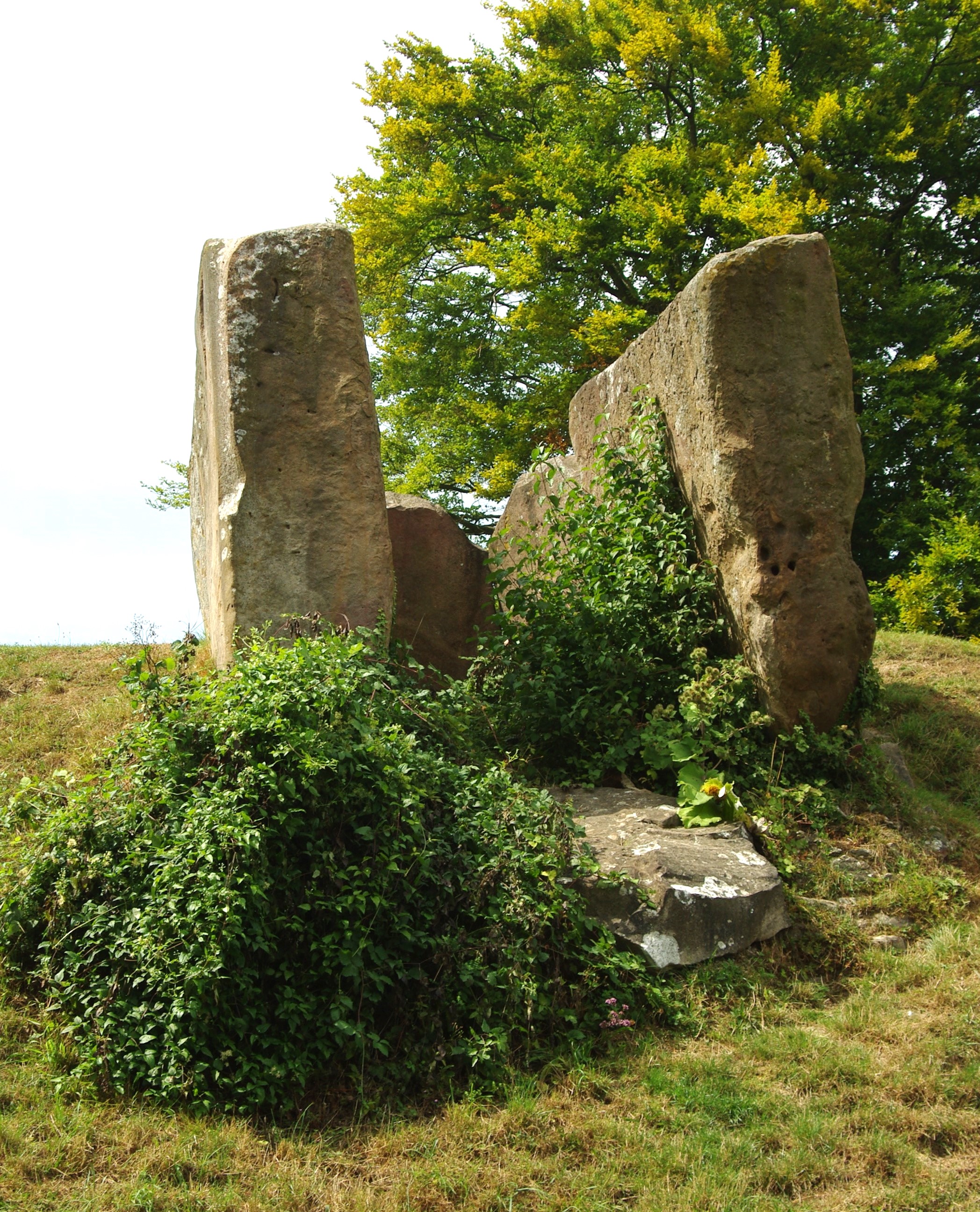
The Coldrum Stones

At Little Kit’s Coty House in a light drizzle, I counted seventeen stones, although Donald Maxwell writing in The Pilgrim’s Way in Kent, a short guide published in 1932, claims twelve to fourteen. Various other authorities suggest between nineteen and twenty-one. This is one of those sets of remains that comprise such a jumble of stones it is supposedly impossible to accurately count them – and just to make it harder, they are also supposed to move around (presumably when no one is looking). Thus they are also known by the name The Countless Stones. The largest ones I reckoned were about four meters by two and about three and a half meters by three. The shapes are very irregular, and since they are in a collapsed state there might have been serious damage to some of them. I immediately wondered whether it had originally been the same shape as Kit’s Coty House, a Neolithic chambered long barrow, just a few hundred meters to the north, where the stones are in the form of a dolmen, which would have been a burial chamber at one end of an eighty-four meter mound.

The Countless Stones, or Little Kit’s Coty House

William Stukeley, writing in 1722, recorded that he was told local people remembered a chamber at Little Kit’s Coty House. It had had a covering stone and was pulled down in about 1690.

Both Kit’s Coty House and Little Kit’s Coty House are reckoned to be just under six thousand years old.
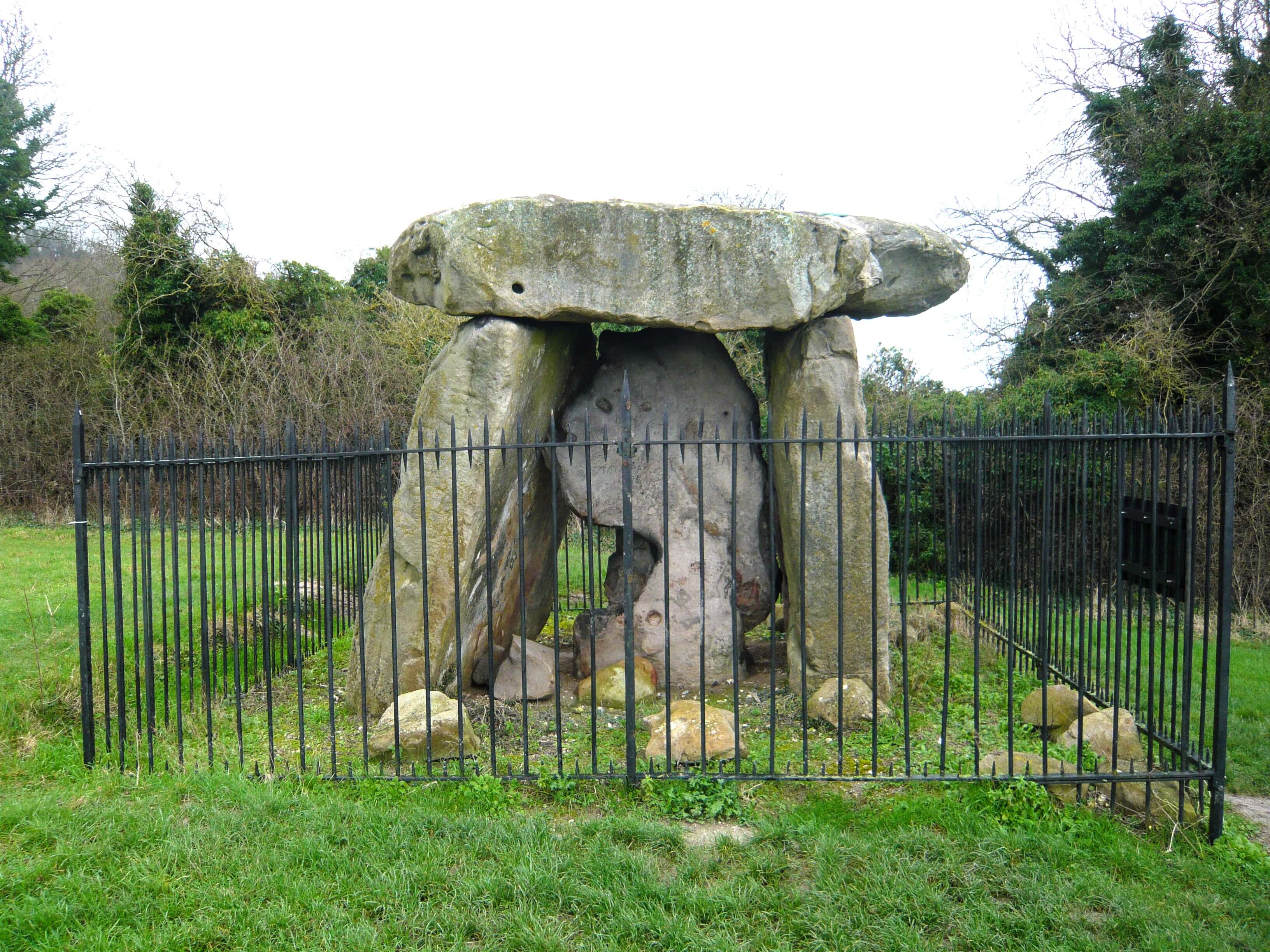
Kit’s Coty House

Some nine or ten kilometres away across the Medway Valley are the Coldrum Stones, or Coldrum Long Barrow, dated to between 3985 and 3855 BC. These ones, looked after by the National Trust, are also a burial chamber. Donald Maxwell claimed that there were forty-one stones and that a further fifteen were broken up at an unspecified date during quarrying work. Maxwell also reported a tradition ‘amongst the country people’ that an avenue of stones stretched across the valley from Coldrum to Kit’s Coty, although there is no evidence it ever existed. But coincidence or not, both of these chambers are situated at the same height, about eighty five meters above sea level.

All three burial chambers, then, have been dated to the same period, a thousand years before Stonehenge was built. It seems reasonable, then, to assume they were produced by the same society.

Coldrum has been proved to be a family tomb, the remains of at least 22 people being interred there, with DNA analysis proving their likely close family relationship. Yet amongst these kinsfolk, recent isotopic analysis has shown that maybe the chamber also contained the remains of individuals interred in the fifth to seventh centuries AD.

The White Horse Stone

I say maybe, as there is a very strong caveat connected to this research, and that is that when the human remains were removed in the early twentieth century they were not only not labelled very thoroughly, but they were also passed around several museums and the possibility exists that some bones ended up mis-accredited. Yet it has been proven that some neolithic burial chambers were re-used for burials in the early Anglo-Saxon period.*

The land here has been sculpted by man. Of course, we sculpt the land more and more violently and obviously in the twenty first century, but here, from all these thousands of years ago, are these simple shapes built by ancient folk to inter and celebrate their dead. And these were interactive places. Evidence from other sites shows that some of the bones of these ancestors would be removed at times, although whether as a simple reminder of their elders, or whether for magic or sacred purposes, can only be conjecture. But I like the thought that these bones might be invested with power, that they could be brought into the everyday for protective or ritual purpose.

Now, we view them in a different light, and their sacredness has evaporated. Like a deconsecrated church, but without ever having been formally deconsecrated. It is possible our ancestors would view our visits there as desecration.

But I’m never sure whether you can take any arrangement of stones for granted; they’ve been dismantled in the past, could they have been reassembled?

Incidentally, for those who enjoy Ley Lines, it is worth mentioning that the Ley Line hunter Paul Devereux has described a line passing through The Coldrum Stones and aligning with six nearby churches. Although just to put a dampener on that, perhaps it is also worth mentioning that students at Cambridge University investigated this particular line using computer simulations based on the Ordnance Survey details and concluded that it wasn’t statistically significant – that it was almost certainly just a chance alignment. You takes your pick.

*Research carried out by members of Durham University, Oxford University School of Archaeology and British Geological Survey (Isotope Facility) 2022
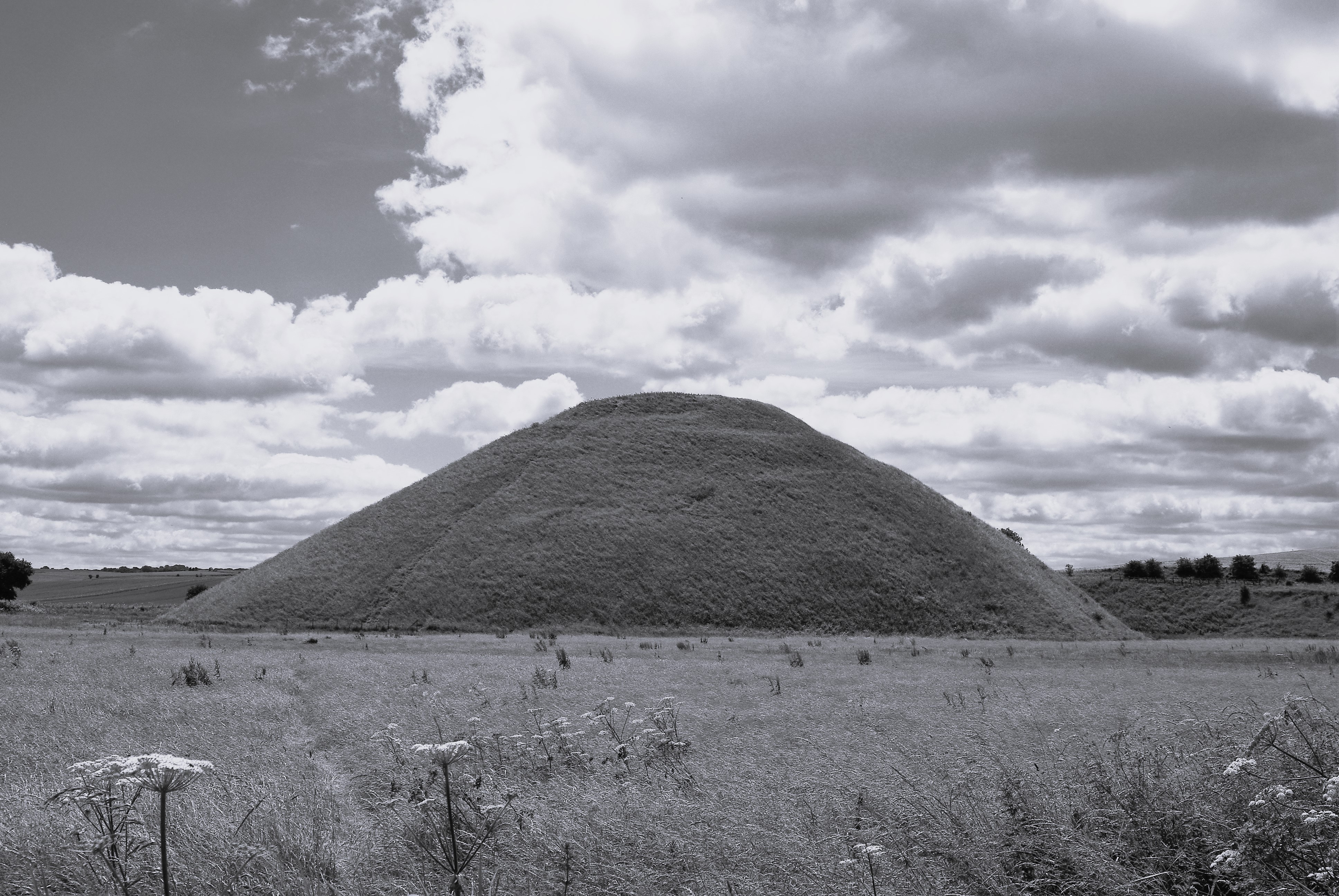
Silbury Hill

Silbury Hill, located a few miles from Avebury in Wiltshire, is the largest artificial mound in Europe, roughly the same size as the contemporaneous Egyptian pyramids, although it puts me more in mind of the Mexican pyramids. At 39m high and 160m wide and built of chalk, it was a colossal undertaking for the time – it was completed approximately four thousand four hundred years ago. Yet its purpose remains unknown; apparently it contains no burial, although folklore ascribes to it the final resting place of King Sil. Other theories connect it with the Goddess, and others yet suggest it as an observatory or sundial, although since Stonehenge was already in existence at the time of its construction, albeit in an earlier form as a henge monument, it seems highly unlikely that so much effort would have been put into the building of a mere mound, no matter how huge, if that was intended as its sole purpose.

Archaeological evidence suggests it was constructed over around a hundred years and there was probably a track spiralling around the hill to the top – used both in its construction and then afterwards to access the top of the hill which appeared to originally be flat. And that there was a constant tweaking of the shape over the following years, as though succeeding generations each felt the need to make their mark on the site.

Allowing for the fact it would have been a little higher due to the effects of weathering over the last four thousand years, it would have been as high as the nearby hills, Waden Hill and Knoll Down, but the difference would have been striking, since this perfectly shaped mound would have been dazzlingly white. The effect of the hill on anyone approaching would have been remarkable. Imagine it gleaming like a snow-covered mountain in the sunshine, or glowing mysteriously at night in a thin moonlight.

This isn’t something a tribe decided to do because they had some time on their hands – they’d had a good day’s hunting and the roof had been fixed, so why not? And not something just done on a whim – ‘You know, I like this place, but I really rather fancy putting a large hill just over there.’ This was a long term project, literally a lifetime’s work. And it was intended as one heck of a statement. Like a Medieval cathedral or Trump Tower, it was intended to be seen from a long way away and admired and talked about, although which of those two did it resemble? Was it the narcissistic project of an egotistical power-hungry madman or was it intended to glorify something greater than them?

On balance, I suspect the latter. Even if the project was begun by one strong-minded individual intent on somehow making a name for himself, it wouldn’t have been completed until long after his (or her) death, suggesting there was still a strong driving-force to complete the project.

But this is an area absolutely heaving with ancient monuments. Although Stonehenge is some twenty miles to the south, West Kennet long barrow is less than a mile away, Avebury Henge and stone circles only slightly further, and within the immediate landscape there are any number of burial mounds and standing stones. By any standard, this is a prehistoric landscape, and the visitor here must be looking at the evidence of ancient societies for whom memory and ritual were of great importance and significance.

I said earlier that there is no evidence of burials in the hill, yet all that means is that surveys have not revealed any chambers within the mound, or back-filled tunnels that might have been used to access the same. Yet I do wonder whether the entire structure might have been raised over the burial of an important personage. Perhaps future generations will find out.

Review of Shadowlands by Matthew Green

In this book Matthew Green charts the decline and eventual abandonment of eight British settlements; a diverse selection ranging from the Stone Age settlement of Skara Brae in the Orkneys, through several Medieval villages and cities and up to the twentieth century, to an area emptied of its inhabitants during the Second World War and a village that was abandoned when the valley it inhabited was flooded to create a reservoir – although in that case ‘abandoned’ is the wrong word, since that particular story is a harrowing tale of folk driven from their homes at the diktat of decision makers far away, not even of their own country.

In each chapter he tells the story of the decline of the settlement drawing upon written records for all but the oldest, Skara Brae, for which he relies upon archaeological evidence, and some of the more recent, for which he uses a mixture of eye-witness accounts and the testimonies of those who had heard their stories at first hand. Of all the stories here, that of Dunwich is probably the most famous, with its myths of bells from long-drowned churches being heard far out under the waves, although the popular description of Dunwich as a ‘drowned city’ is inaccurate, as it fell away into the sea as the cliffs beneath it were eroded away. But much is known of Dunwich, with many extant records and maps of the city, enabling Matthew to chart its decline and eventual end in some detail.

Hirta is the biggest island of the St Kilda archipelago and was occupied for at least two thousand years until 1930, when the final thirty six islanders voted to leave. By then, most of the families and younger residents had left for the mainland, and their traditional way of life had become unsustainable. Until a couple of hundred years ago the islanders were virtually cut off from the rest of Scotland, due to the distance and the difficulty of making a landing at the island. Existing almost exclusively on a diet of seabirds (remarkably, they were apparently lousy fishermen!), the islanders lived a remarkably difficult life and it is no surprise that as they were exposed more and more to the outside world, more and more of the islanders opted to leave for a better life.

I found I was drawn deep into these stories not just because I found them so fascinating, but also because of Matthew’s skilful and easy style. A very well researched and beautifully presented book, I’d definitely give it five stars out of five.

My Top Books of 2022
Well, my favourite twelve, anyway. One a month, if you like, although that wasn’t how I read them. Or perhaps the twelve book reviews of Christmas – oops, no. Missed that one. Anyway…these are some of the books I read in 2022, not books that were first published this year. But I seem to have read so many good books in 2022, it’s difficult to make a choice and this has ended up being a little arbitrary.

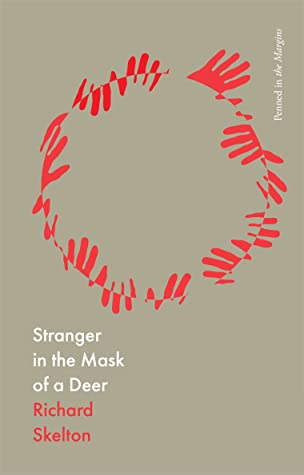
Stranger in the Mask of a Deer by Richard Skelton. It has been a long time since I last read something new and immediately put it into my top ten reads, but this remarkable work is straight in there. A few weeks later I had to re-read it, captivated by its dream-like quality.

It is essentially a poetic narrative ranging between the present day and Palaeolithic Britain, told by humans both ancient and modern, and by non-human voices. Its essence is life and ritual, the connection between humans and animals, between humans and the land they occupy, and the elements surrounding them.

The remains of deer skulls complete with antlers, but with eye holes punched into the skull so they might be worn as masks, have been found at Star Carr in Yorkshire, dating to approximately eleven thousand years ago. It is presumed these masks would have been used in rituals…

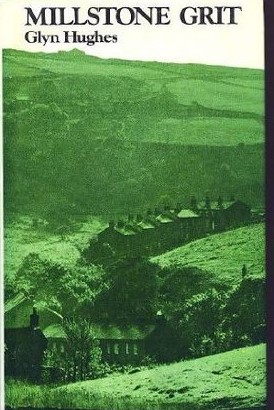
Millstone Grit by Glyn Hughes. This very readable book was originally published in 1975, describing a fifty mile walk the author took through East Lancashire and the West Riding of Yorkshire; an exploration of the moorlands and villages alongside the industrial towns, all of them suffering in their own ways from the effects of the loss of traditional industries in that area. It is about Hughes’ attachment to this area he came to live in, the clash between human and non-human landscapes, and about working class history in these places, but above all else about some most remarkable people he meets along the way.

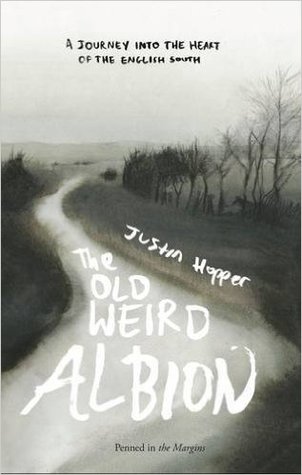
I re-read The Old Weird Albion by Justin Hopper. This is a book about tracing a mystery in his family’s past, beginning with a woman preparing to throw herself off Beachy Head, a notorious spot for suicides, but also about the effects the landscape of the South Downs has had upon people.

This is a book I reviewed on this blog when I first read it three years ago – the link is here – and I’ll just put an extract of that review here: ‘He has a gift for sifting and selecting the weird in these relationships, not just at sites that might be naturally expected to encourage the weird, such as Chanctonbury Ring, high on the Downs above Steyning or in old ruined buildings, but also in humdrum blocks of flats in modern developments. He references modern phenomena like crop circles and throughout there is the presence of ‘magic’, in the sense of a natural force. Many of the people he meets are an eccentric mix of the weird, too, although I choose this description carefully, largely in the old, original meaning of the word of ‘fate’ or ‘destiny’.’

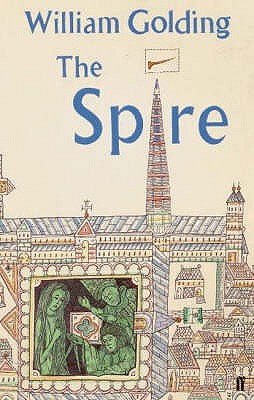
Another re-read, this time of a book I first read some forty years ago. The Spire by William Golding is a novel set in medieval England, in an unspecified city somewhere in the south. It is a story essentially about pride and hubris, about the Dean of a church determined to have built a great spire on his church, despite warnings that the foundations will not be able to support such a colossal structure. The ending seems predictable and yet that is not really where the story is going, being more concerned with the characters inhabiting that space.

The setting is the church and environs, and it evokes the feel of the ecclesiastic medieval as successfully as The Name of the Rose does. One test of how good a novel set in historical times is, is whether it transports the reader easily to that setting. I certainly found it did.

I bought Hemisphere by Pete Green at an event where poets read excerpts from their work. It is effectively a poetic journey around the northern hemisphere, beginning in Scotland, the journey approximating to the latitude of the arctic circle. The writing conveys a tremendous sense of place and feels very right for the cold edgelands described.

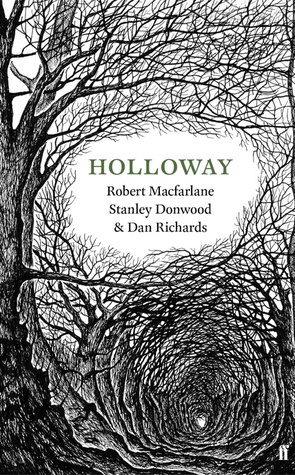
Holloway by Robert MacFarlane and Dan Richards, with illustrations by Stanley Donwood is a short book, describing a journey MacFarlane, Donwood, and Richards made in Dorset, essentially a revisit of a trip MacFarlane made previously with Roger Deakin for an earlier book, exploring holloways. Holloways, often known as sunken tracks or paths, are old – frequently very old – paths made over the centuries by the passage of feet, both human and animal, and perhaps by the wheels of wagons and carts. It is a short journey – perhaps ‘experience’ would be a better word – describing wild camps and walking, cycling and visiting old buildings; in some ways, perhaps it is really no more than a short camping trip, undertaken by a group of men acting out a boyhood adventure. The writing, though, by both MacFarlane and Richards is exquisitely poetic and Donwood’s illustrations never less than beautiful.

Notes on the Sonnets by Luke Kennard.

‘Luke Kennard recasts Shakespeare’s 154 sonnets as a series of anarchic prose poems set in the same joyless house party.

A physicist explains dark matter in the kitchen. A crying man is consoled by a Sigmund Freud action figure. An out-of-hours doctor sells phials of dark red liquid from a briefcase. Someone takes out a guitar.

Wry, insolent and self-eviscerating, Notes on the Sonnets riddles the Bard with the anxieties of the modern age, bringing Kennard’s affectionate critique to subjects as various as love, marriage, God, metaphysics and a sad horse.’

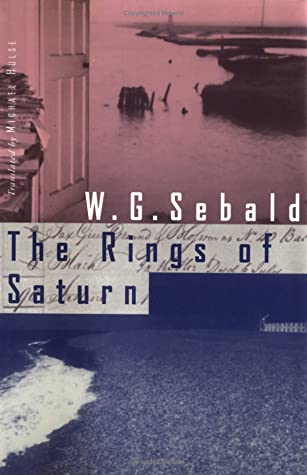
The Rings of Saturn by W. G. Sebald had been on my ‘to-read’ list for a long time, but I finally got around to picking up a copy this year. On one level, this is a walking journey taken by the author along the Suffolk coast in the early 1990’s, describing both places and people he comes across, but really, it is much deeper than that and is a psychogeographical work par excellence. Throughout the journey, we are never quite certain whether events are happening to the author, or have happened in the past, or perhaps to someone else at some other time. He goes off in unexpected directions, literary, historical, and physical, exploring a wide and eclectic range of subjects yet throughout there is a cohesion to the narrative.

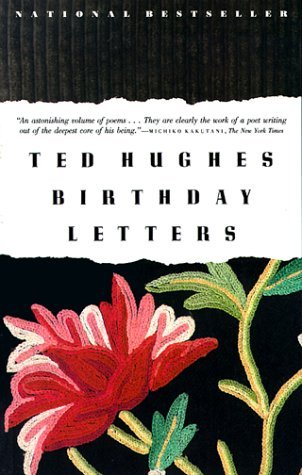
The Birthday Letters are a not-quite-series of poems Ted Hughes wrote to his wife the American poet Sylvia Plath after her death. Personally, I find them to be probably his most accessible poems and wonder whether that says something about me, although this isn’t the time to go into that. Theirs was a difficult relationship, and her suicide (as well as that of a later lover of his) frequently colours people’s opinions of Hughes. Inevitably, these are often extremely personal poems, so much so that at times I feel a slight discomfort reading them, as if I’d opened someone’s private correspondence by accident, but Hughes wrote them as an attempt to restore her to him, and published them almost for the public to read as his own account of her life and death.

Sadly, Roger Deakin only wrote three books, of which Notes From Walnut Tree Farm is compiled from diary entries he kept during the last six years of his life. In these notes, he recorded his day to day life on the farm, walks on nearby Mellis Common, the yearly cycle of the natural world all around him, and his thoughts on literature, the importance of nature, and musings on the past.

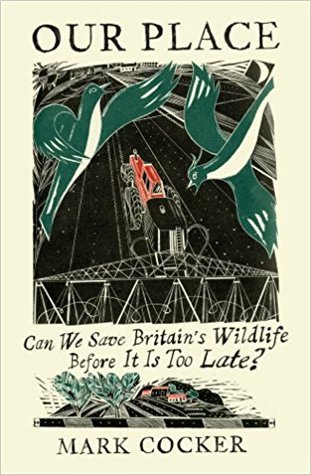
Our Place by Mark Cocker is an exploration of the history of environmental thought and politics in Great Britain and, especially, the way forward. It asks pertinent questions like who owns the land and why? And who benefits from green policies? Not afraid to be radical in its suggestions, it asks why there is such a disconnect between the British public’s sympathy for and championing of the countryside and the reality of its current condition.

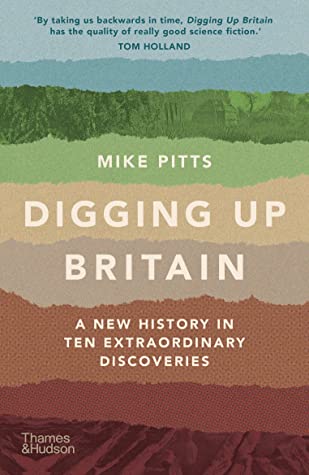
Digging up Britain by Mike Pitts tells the story of Britain’s history and prehistory in ten astonishing excavations. As someone who has always had an interest in history and pre-history, I found this book a timely reminder of the huge strides taken forward in our understanding of the past over the last ten years or so, due to such important tools as DNA analysis as well as the painstaking work of those who excavate and interpret these sites. There are some remarkable tales in this book.

Sarnath

It’s mid February 2008, and I am in Sarnath.

Formerly a deer park, Sarnath lies 10km outside Varanasi and is the place where the Buddha came after his enlightenment at Bodhgaya, to seek out his former companions who were living there in huts and give his first sermon, on the turning of the Wheel of Dharma. This comprises the Buddha’s path to Enlightenment: the Four Noble Truths, the Eightfold path and the Middle Way.

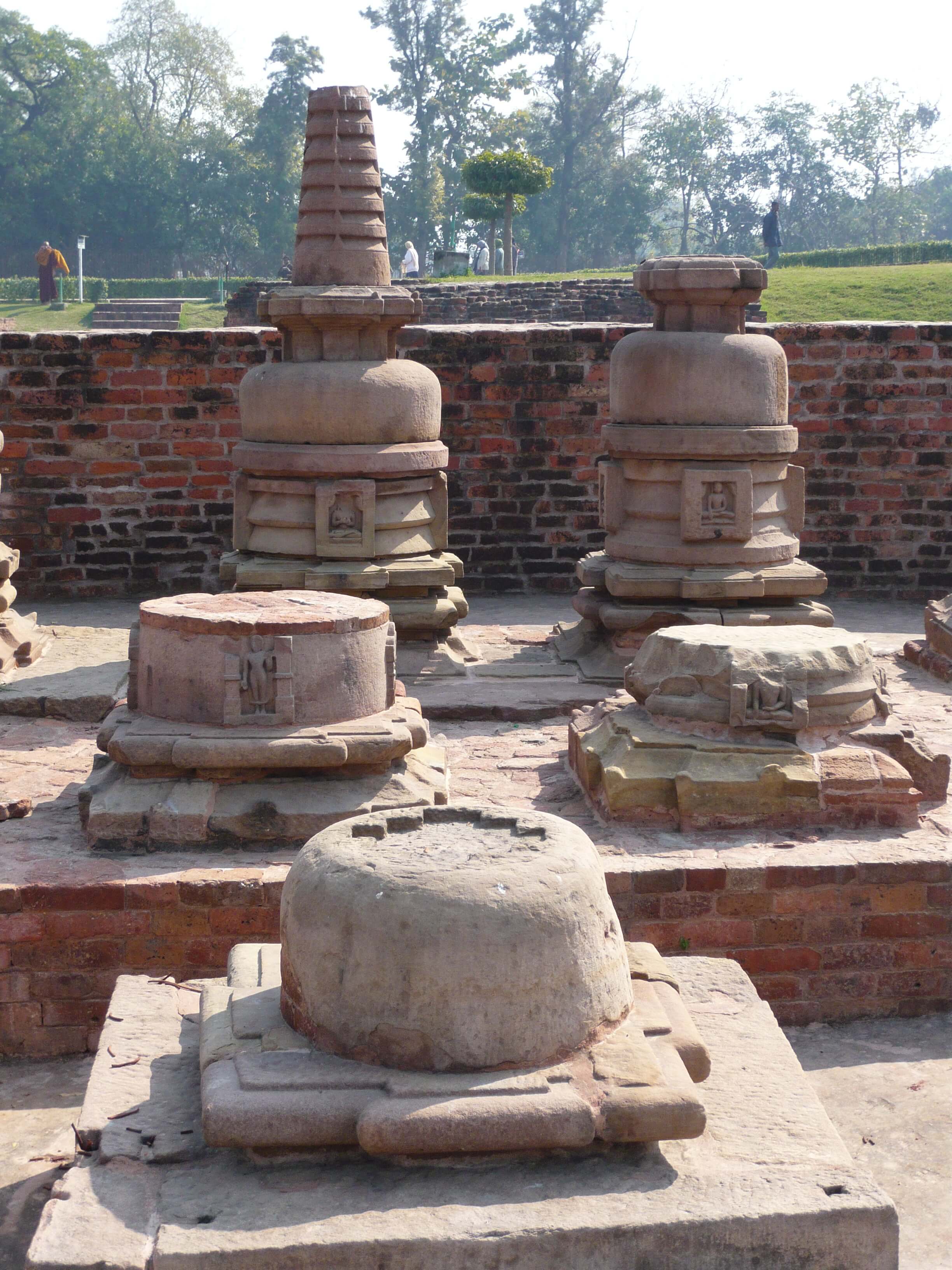
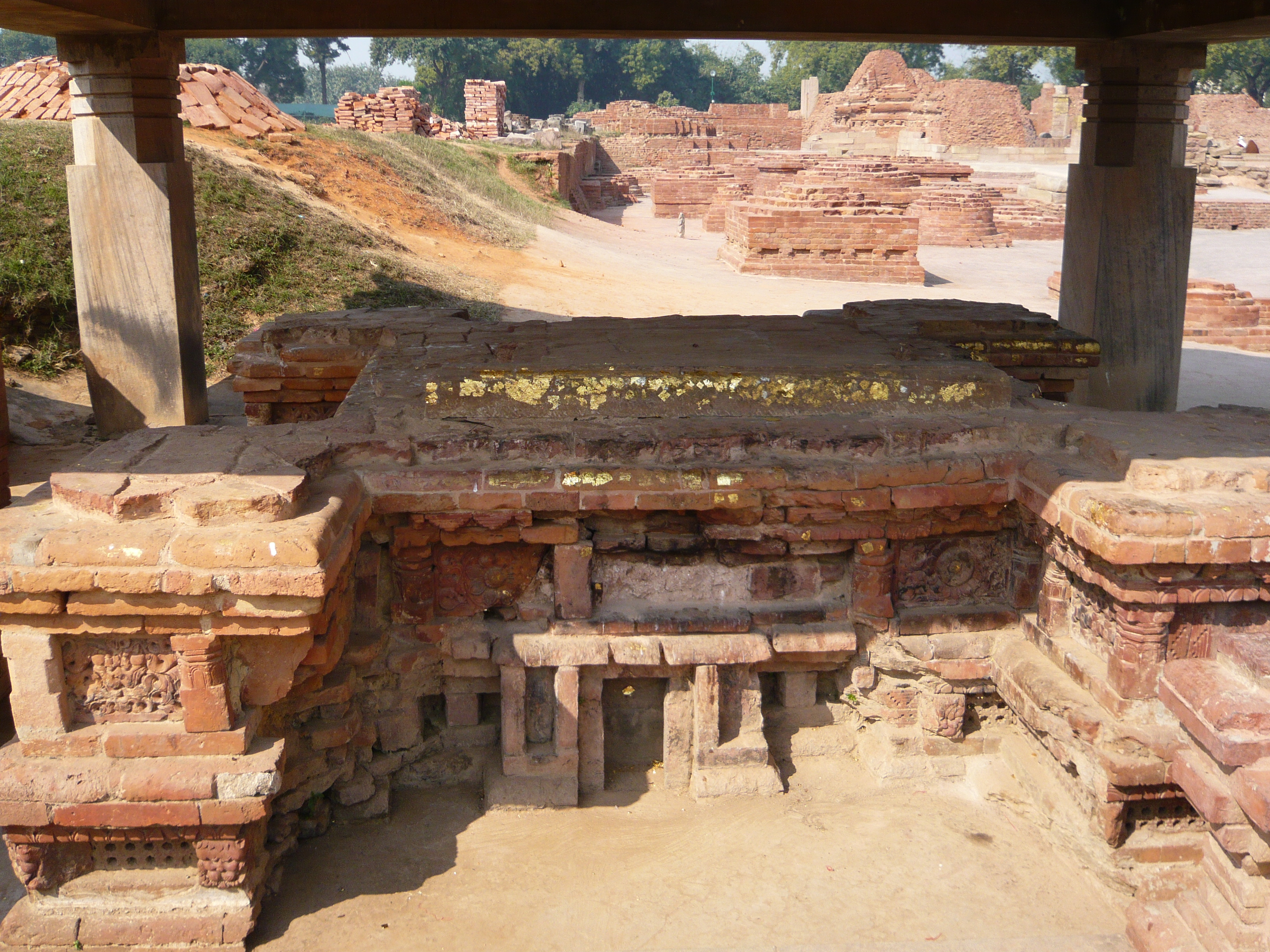
This altar is still used by pilgrims for pujas – not just Buddhists, but also Jains, for whom Sarnath is also sacred.

A monastic tradition flourished at Sarnath for over 1500 years after the Buddha. Many monasteries and two great stupas were built, which survived until the end of the 12th century when they were destroyed during the Muslim invasions and not rediscovered until 1834 by a British archaeological team. Amongst these ruins were a stone column 15.25m high with four lions as its capital, erected by the emperor Ashoka, a convert to Buddhism after witnessing the terrible carnage of a war he had unleashed in the 3rd century BC. This capital was adopted as the symbol of the modern Indian republic.

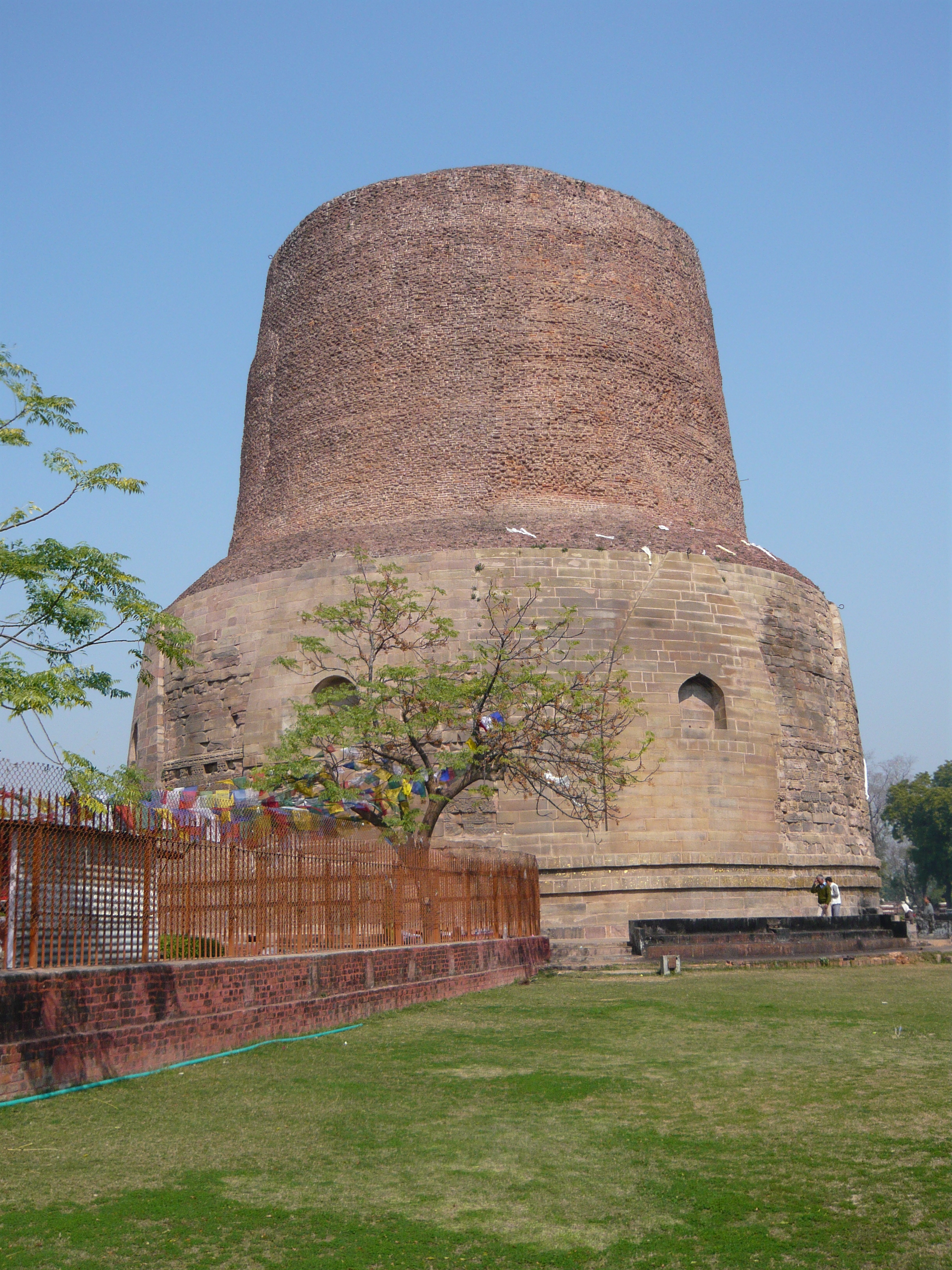
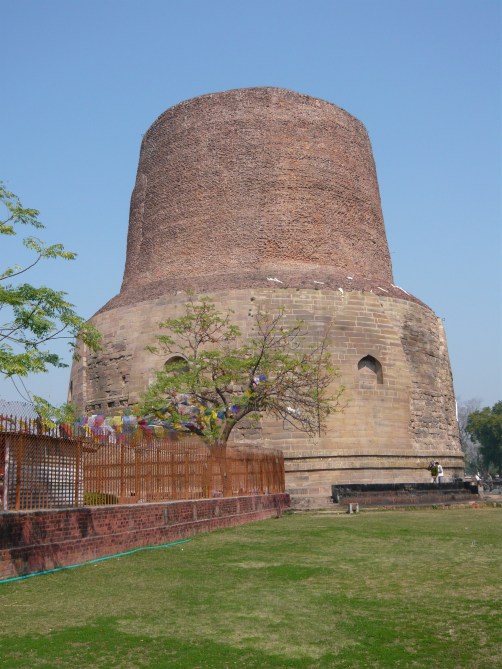
The Dhamekh Stupa. Built in the sixth century, this solid cylindrical tower, 33m high, consists of a stone base with the upper part made of brick, and was virtually the only building to survive the Islamic destruction, perhaps because of its sheer size and bulk. It marks the spot where the Buddha supposedly gave his first sermon. The five former companions, who became his first disciples on hearing him speak, had deserted him when he gave up his ascetic vows. On achieving enlightenment, he determined to follow the ‘Middle Way’, avoiding both luxuries and asceticism. This is the basis of its appeal to me personally – nothing to do with religion, but a sensible lifestyle avoiding extremes, with kindness at its heart. A philosophy of life.

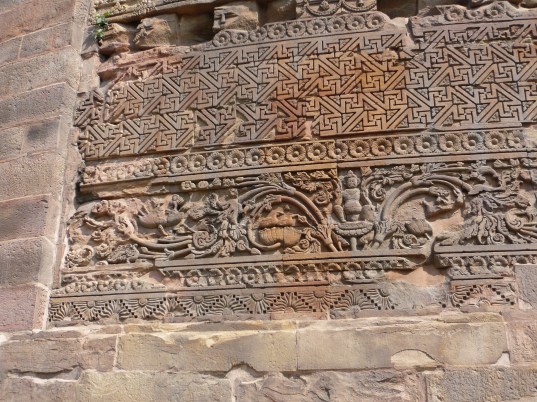
Delicate carvings on the base of the Damekh Stupa.

Just outside the Deer park, there are a number of modern Buddhist monasteries, attracted to the site because of its history. This particular spot was a beautiful peaceful place, but I can’t remember exactly where it was! I think it was outside the Japanese Temple…

Inside the Dharmachakra Japanese monastery

Mulagandhakuti Vihara built by the Mahabodhi Society in 1931

Winter – 3

Winter would have brought a period of enforced leisure for our ancestors. Their days would have become shorter with the increasing hours of darkness, until in midwinter the daylight hours would make up only one third of the time.

All outdoor activities would effectively cease in the darkness, and even during the day the worsening weather would limit what could be achieved outdoors. But other than those tasks that could be carried out, what did they do in these times? how did they pass those long hours?

At times, no doubt, there would have been feasting and merry-making because they would have required some cheer and a sense of well-being to help them get through the winter. But they must also have been mindful of husbanding scarce food resources through those long barren months.

it may be that they played games. Although archaeology hasn’t furnished us with evidence of board games or dice or variations on these, it is still possible they would scratch, perhaps, some form of grid into the beaten soil of the floor and play games of skill or chance. It is not beyond possibility that some flat rocks with strange scorings and lines on them were used for that purpose.

With no TVs or books or computers, it might seem to us that time would have weighed heavily on their hands. But you are used to what you are used to, and they would have seen things differently. They may have looked forward to a period of relative inactivity; long hours of no talk, sitting or lying down, the mind slowing down until hours were passed in no thought. Did they then also pass unusually long hours in sleep? A kind of semi-hibernation as a way of conserving energy?

But long hours also, of talking. They must have talked: of daily life and plans and past disasters and glories, of gossip, and told stories both new and handed down from previous generations. These stories would have been incredibly powerful tools for the preservation of the tribe. With no written word, the spoken word becomes the only way knowledge is transmitted. And thus it has to be memorised, both for use and also to transmit in the future. As aids to memorising, powerful tools are repetition, rhyme and rhythm. We cannot know exactly how this was utilised, but it cannot have been long before poetry and song evolved.

It can be no coincidence, but in all the early societies we know of who had no written records, those of which we know about through records left by others – such as the Romans writing of the Britons – it is clear that poetry and song were important, and the bard a highly valued member of that society. Indeed, the writings left by Romans, who tended to denigrate anyone not Roman as barbarian and primitive, violent, and uncultured, still make it clear these ‘barbarian’ tribes valued poetry and song highly. Partly, this must have been for educational purposes, but they seem also to have been valued for themselves, for their beauty. It is taking things too far to suggest this proves the same would have applied in Neolithic times, but it is certainly possible. At some point, there would have been music. I imagine this developed out of ritual, perhaps through repetitive chanting and the beat of drums…

And so, I can imagine this at first being perhaps the preserve of the shaman, until becoming a specialised ‘post’ – that of the bard – and acquiring the value of entertainment, as well as instruction.

Myth, Science and Religion

Religion begins as science, as an attempt to make sense of the world. The birth of religion marked the dawn of humans as rational, analytical beings. This was humans moving beyond the worries of simply surviving from day to day, and reaching that point in evolution where they looked with wonder upon the world around them and asked: How did this come into existence? What is it that controls the weather and other variables? By observing the natural world around them, the cycles of day and night, the seasons, the migrations of the animals, they would have concluded that these patterns suggested a grand design and order.

003a

An assumption would probably be made that all this was controlled by benevolent beings, but beings who might need propitiating occasionally to keep them sweet; the odd ritual here, perhaps a sacrifice of some sort there.

And if that was so, perhaps they could be propitiated in a somewhat greater way, to grant other boons?

It would not be long before someone claimed a channel to the gods to relay their desires and instructions, and so the priestly class would be born. Self-interest? Quite likely. After all, we see that in most religions today, so why not?

Religions then, over the years, spawned new religions, the spark being reinterpretation rather than inspiration.

We think we see echoes of old religions in myths. Myths are the fragments of history we know, combined with assumptions about how our ancestors acted and thought, frequently combined with scarce written evidence, which may or may not be biased or wholly inaccurate. When our written sources include stories of monsters and miracles, we should probably be advised to treat them cautiously.

Myth-makers frequently come with an agenda, although depending upon your point of view that is not necessarily a bad thing. If you are looking for a scientific analysis of the lives of our ancestors, it’s probably best to give myth a wide berth. Or at least to be very, very, careful what you take from it. But in a way, it does provide an alternative world view that many find preferable to both the stark realities of day to day life, as well as the cold dead hand of religion. After all, if you’re using your imagination, it’s easy to plan your myth-world much the way you’d like it.

And perhaps myth does offer us a way of getting inside the heads of those people, at least superficially.

One assumption we can make is that there would be similarities in the thought processes of those people, with the thought processes of us today. It is perfectly reasonable to assume they would react in similar ways to us, to pain and fear, to pleasure, warmth and cold. Our reaction to the unknown tends to be to populate it with characters or situations based on our experiences, and they probably did the same.

Stonehenge is aligned with the solar calendar. This we know. It’s science. And we know a considerable amount about the geography of the area around Stonehenge at the time it was built, through archaeology and science.

What we don’t know is how it was used. Just because it was aligned with the rising sun at summer solstice and the setting sun at winter solstice, does not mean we know what took place at those times. We assume our ancestors worshipped or venerated the sun there, especially at the time of the solstices, but we do not know that. Were there sacrifices? Did they hold special ceremonies connected with fertility or birth or death? Was it perhaps just like a club where they turned up now and again and got drunk and held orgies? It could be, since there is no hard evidence for anything.

Believers in ley lines also claim it is at the centre of an intricate system of lines connecting natural (‘holy’) locations with important (‘holy’) sites such as churches, wells and crossroads. Pseudoscience? Coincidence?

Our assumptions, though, lead us to think that because of the immense effort required to build the structure, it must have been an incredibly important site, and we are surely justified in concluding important ceremonies were enacted there.

Whatever they were.

Varanasi and Sarnath

The city of Varanasi is probably the most important place in India to Hindus, whilst the ruins of Sarnath, some 10km away, mark the remains of a site of great importance to Buddhists. I stayed there for three days, some 8 years ago.
039
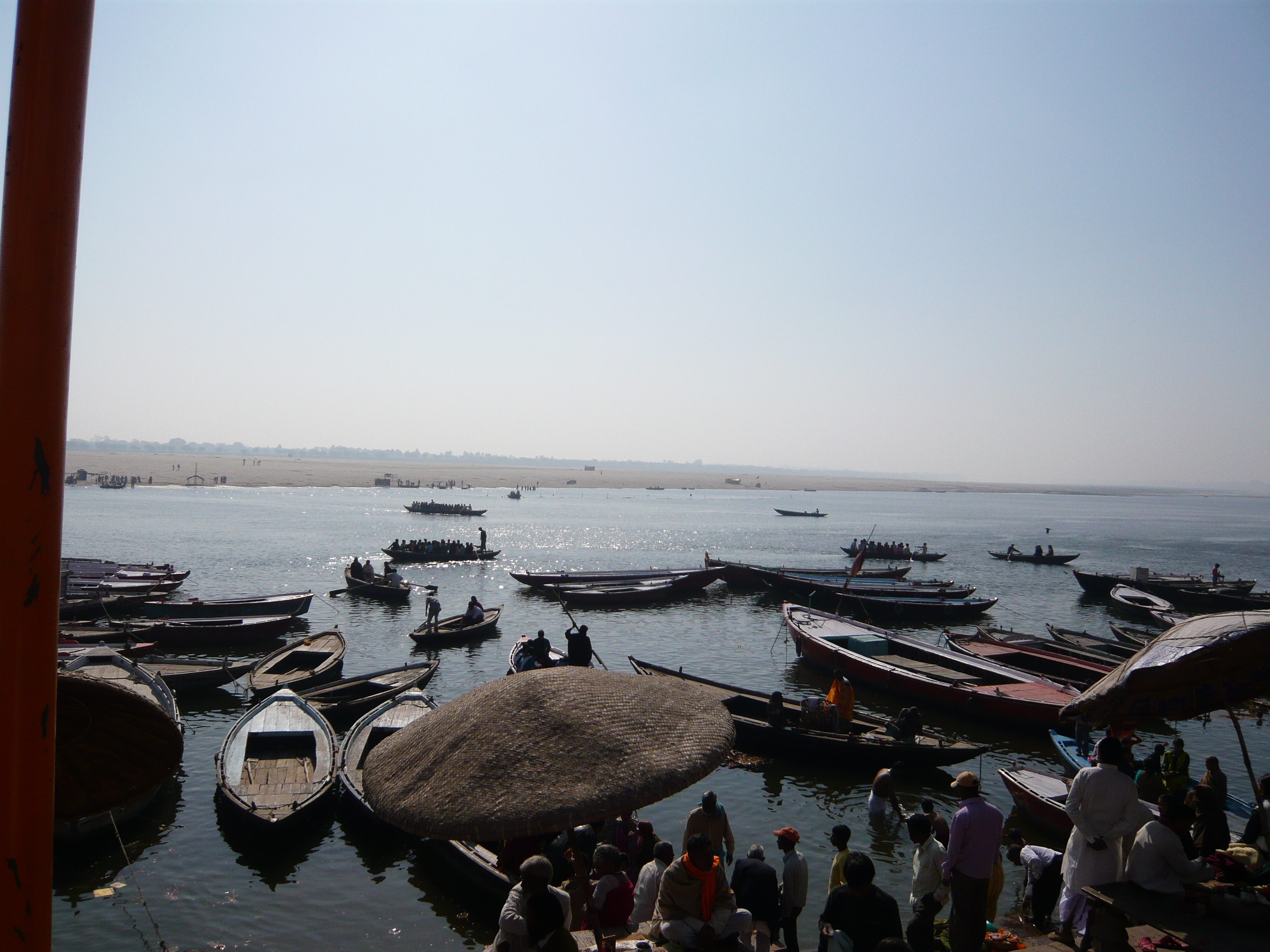
Dasaswamedh Ghat, Varanasi. Taken from the top of the steps (ghats). The River Ganges is the holiest river to Hindus, and Varanasi is the one of the holiest cities. Previously named Benares (and often so still called) and Kashi (City of Life), it is visited by Hindus in their millions who come to bathe in the Ganges to purify their souls. In a final journey, many are cremated here and their ashes cast into the river, believing that this will help to achieve liberation from rebirth.

040

The river Ganges from Dasaswamedh Ghat, Varanasi.

038

Stalls on the ghats at Varanasi. Varanasi never seems less than vibrant and colourful.

055

And another stall near the ghats.

049

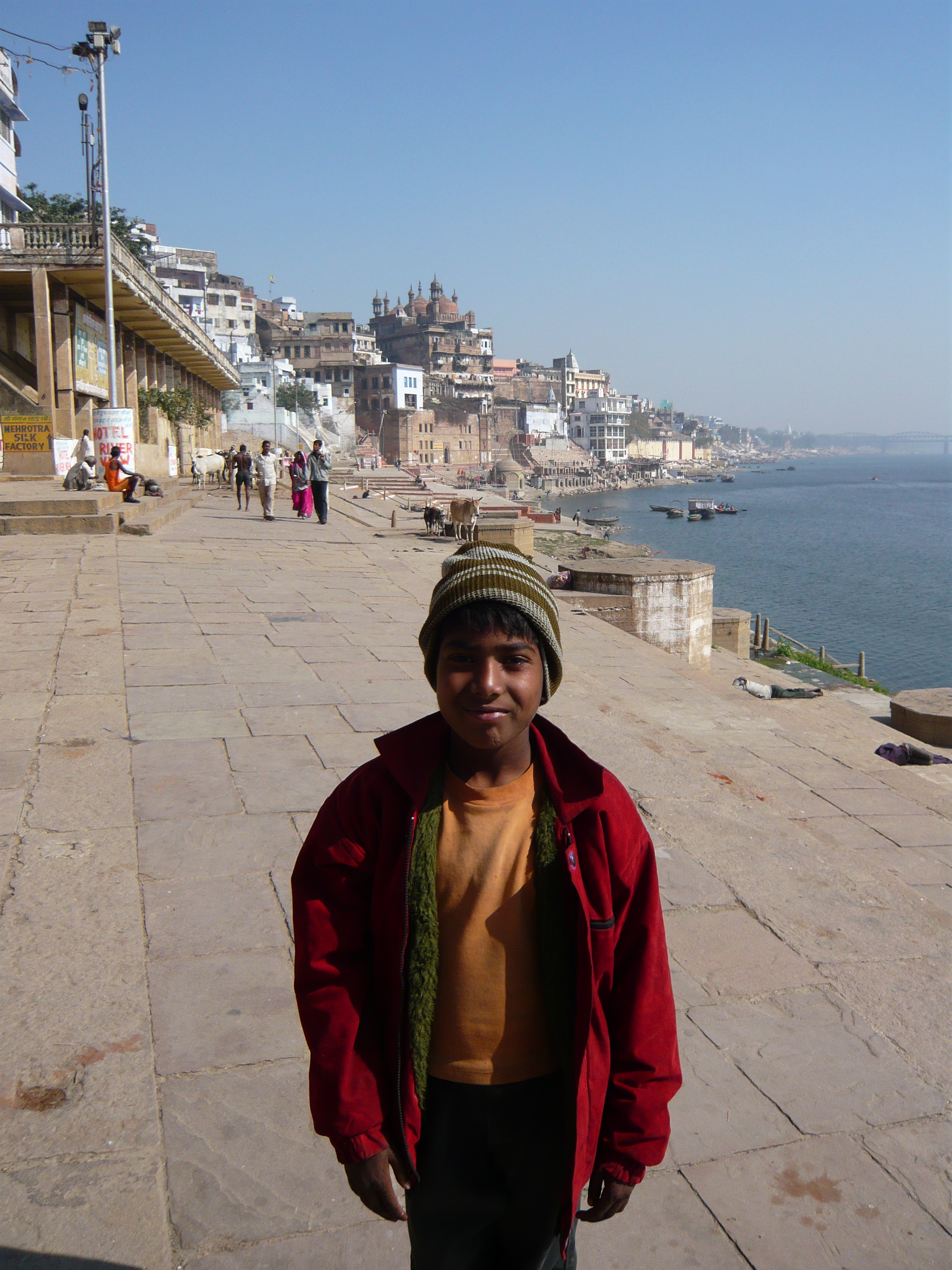
Down at the ghats I was trailed by this cheerful young rogue demanding money to have his photo taken or to show me the sights or sell me souvenirs or lead me to stalls where I could purchase to my heart’s content or…whatever.

037

Street scene in Varanasi. The church in the middle distance is Saint Thomas’. This was taken quite early in the morning when I was on my way to the ghats. Early afternoon as I was returning, it was packed solid, traffic completely unable to move.

004

10km outside Varanasi lie the ruins of Sarnath. After the Buddha had achieved enlightenment at Bodhgaya, he came to Sarnarth – a walk of some 250kms or so, through what would have been highly dangerous country then – to seek out his former companions and in the Deer Park there he gave his first sermon, on the turning of the wheel of law. This comprises the Buddha’s path to Enlightenment: the Four Noble Truths, the Eightfold path and the Middle Way. In the 3rd century BC, the emperor Ashoka, a convert to Buddhism after witnessing the terrible carnage of a war he had unleashed, built stupas and monasteries here as well as an engraved pillar. These survived until the end of the 12th century when they were destroyed during the Muslim invasions and not rediscovered until 1834 by a British archaeological team.

008


This altar stone in the ruins of Sarnath) is still being used by pilgrims for pujas.

013.JPG

Dhamekh Stupa at Sarnath . This solid cylindrical tower, 33m in height, supposedly marks the place where the Buddha gave his first sermon. The base is stone, covered in delicate carvings, and the upper part brick.

016.JPG

Carvings adorning the base of the Dhamekh Stupa.

Libya – Leptis Magna

Libya certainly seems to have suffered more than its fair share of misfortune over the years.

I was there in 1988 for six months – not that I’m suggesting that was one of their misfortunes – which should have been a good opportunity to get to know one of those countries that chose to be rather secretive and closed off to the outside world. It didn’t work out that way, of course.

As Westerners, we found it very hard to penetrate Libyan society and, to be honest, we really didn’t try that hard. There were almost no opportunities for socialising with local people, we were regarded with great suspicion by the authorities (although so were most of the general population, of course), and so we ended up in our enclaves even more than is usual in most ex-patriot societies.

But despite that, I discovered that the majority of the Libyans I did meet were wonderful, warm-hearted people. A few were slimeballs, but the same goes for the Westerners – many were great folk, but a few of them were also slimeballs, including the so-called friend who amused himself one evening by spiking my drinks with near-neat alcohol, knowing I was driving home afterwards. If by any freak of chance you ever read this, Shaun, you really are a shit.

It was always said that, as unpleasant and bad as Gaddafi undoubtedly was, there were others around him who were even more seriously dangerous and unhinged. Unfortunately, it seems that a number of them and their colleagues are still wreaking havoc in the country, along with the twisted followers of Isis and various other militias.

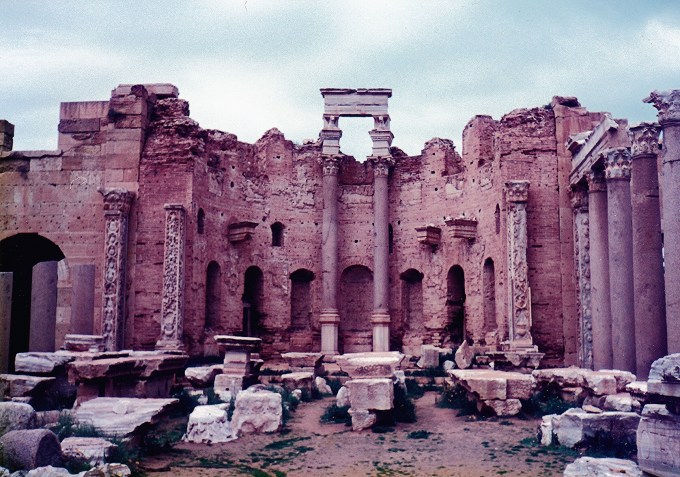
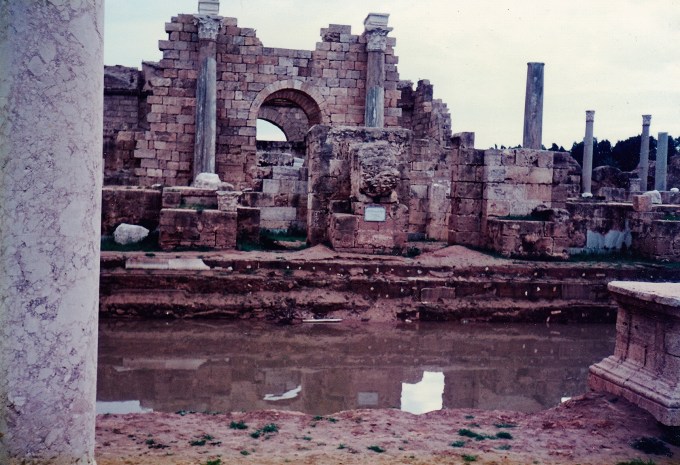
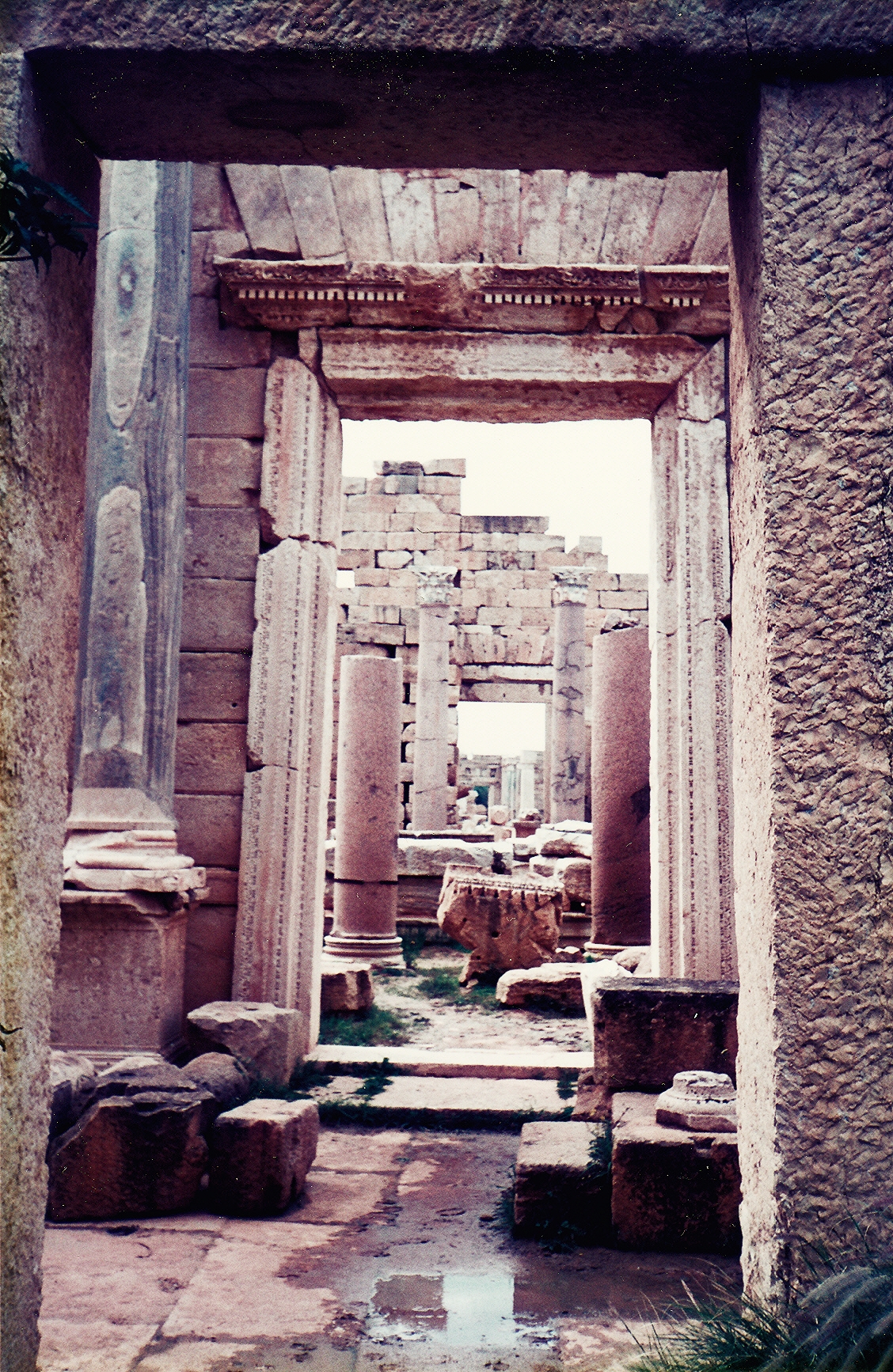
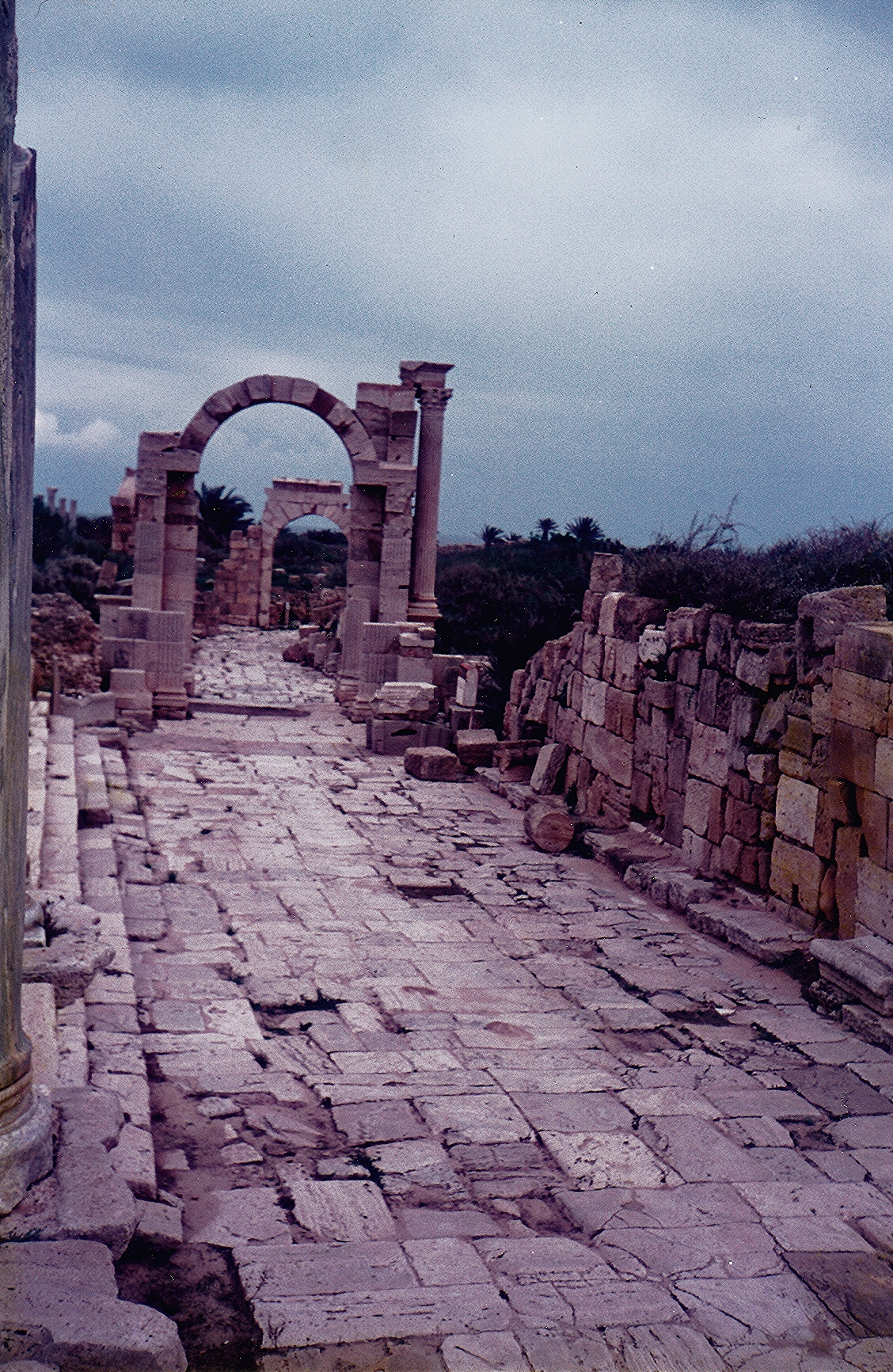
But the purpose of this post is to put up some photos that I took in Leptis Magna, which was a huge Roman city a couple of thousand years ago, and is located on the Mediterranean coast near the town of al Khums, some 125 km east of Tripoli. It is the largest extant Roman city outside of Turkey, and is a Unesco designated World Heritage site. I had visited Rome in the past, and I was astonished to see the extent of the remains at this site, which easily dwarfed those in the Roman capital.

Libya was certainly a place where I generally felt uncomfortable taking photos, and so I took very few other than these ones. The quality of the photographs, though, are generally very poor, I’m afraid, since all I took with me was an incredibly cheap camera. I was warned that there was a good chance that anything you took into Libya might get confiscated or simply stolen. The prints have also faded badly over time, and so these are presented purely for general interest.

I do have some more photos of Leptis Magna somewhere, which might be in better condition, so I will try to hunt them out for another time.

Leptis Magna is another one of those ancient sites that is under threat of destruction by the fanatics of Isis, and although I have followed quite a few threads on the internet, I am unable to find out whether there has been any actual destruction there yet. What I do know is that a group of very brave Libyans have formed a kind of militia to protect the ruins. I can only hope that they, and the ruins, are all well.

IMG_0004

Roman  Amphitheatre

IMG_0001

Roman basilica – converted to a church in the fourth century AD

IMG

Roman baths

IMG_0002
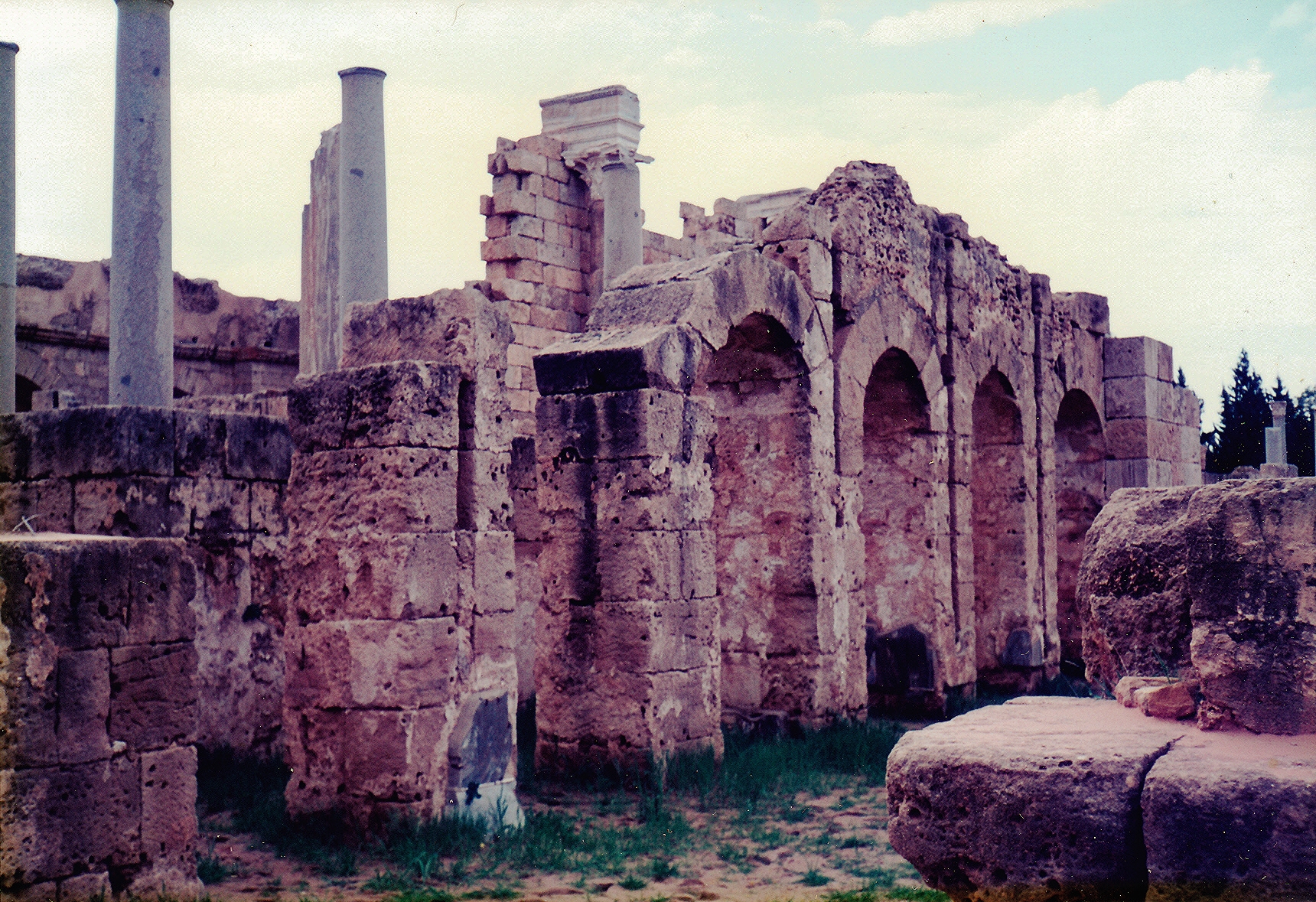
Along a Roman street…

IMG_0003

Through doorways and buildings…

IMG_0005

…and along another Roman street.