A Bit of Digging

Well, they arrived yesterday.

I have finally got my family history book formatted and printed, and I reckon it looks quite decent. So all I need to do now is to get it posted out to family members.

While researching all this, I naturally made a lot of discoveries. Some were certainly more unexpected than others, though. From previous research my father had done, we already suspected that my great grandfather had changed his name, possibly on a whim, from Prater to Canning. I was able to confirm this by, amongst other things, a comparison of various dates of birth in his family. This immediately removes the possibility of my searching back to see whether my name has any noble / famous / important roots. This is something that matters a lot to some people, although obviously only along the male line, which is why it seems to matter much more to men.

Although I turned it up too recently for the book, I have learned details about my father’s life in WWII which I would otherwise never have come to know. I had no idea – and seemingly nor had anyone else in the family – that from 1940 until joining the regular army in 1943 and being posted to India and Burma, he had been part of what had been dubbed ‘Churchill’s Secret Army’, soldiers trained to operate behind enemy lines in the event of a German invasion of Britain. Fulfilling the same role as the French Resistance, they would have carried out acts of sabotage and hit-and-run attacks to slow the enemy advance. it was only after that threat had receded that he joined the ‘Regulars’.

And then, less unexpectedly, there were the stories of extreme hardship: the early deaths, the poverty, the workhouse, tuberculosis and pleurisy…

Of course, if it was possible to search back far enough, we would all find we had a common early human ancestor, which gives the lie to the importance of race.

Does any of this research really matter? Well, in some ways, no. Does it sound crazy if I say that despite all my work, it does not matter that much to me? I’m very much in two minds over this. A lot of this felt more like an intellectual exercise than a personal quest. It was interesting to find out where my great grandparents and their parents had lived, for this felt just close enough to be a part of me. But before them? And especially when I could discover nothing more than their names and some vague dates? No, not really. Throughout this project I have been especially keen to be able to put names to old photographs, for this seemed the only way to make these people come alive again, or at least begin to. That I’ve been able to positively identify some of them feels more satisfying than pushing a line back another hundred years, although I do have nearly every branch back at least to the 1700’s, but in every case it is the stories I’ve found out about these people that matter.

But back to my question. Does any of this research matter? I do think it has the potential to bring us a little closer to our families by emphasising our shared history, and I’ve greatly enjoyed long discussions with cousins about our various researches and discoveries. But beyond that? Well, I’ve enjoyed learning the social history involved with my family, the realities of how people actually lived in the towns and countryside over the last few hundred years. And as well as emphasising my connection to my extended family it has also, as I wrote a few month ago, given me a greater sense of connection to the land where I live.

I have enjoyed exploring the past, but I’m not going to live there.
Wordy Wednesday 5

Words.

land

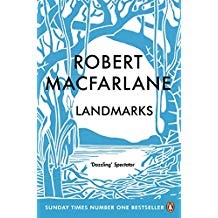
On World Book day I blogged about the wonderful collaboration between Robert Macfarlane and Jackie Morris, The Lost Words, and in this I suggested that perhaps it grew out of Robert Macfarlane’s book Landmarks.

But Landmarks is a marvellous book in its own right, and has much the the same aim as The Lost Words, in that it introduces the reader to scores of words it is unlikely they will have come across before.

These are almost exclusively words from Britain used to describe objects and phenomena in the natural world, be it a word peculiar to East Anglia for a small stream (a currel, since you ask), a word from Sussex for a heap of dung (a maxon), or, from Suffolk, a measure of herrings or sprats (a cade).

Most of these are obscure because they are words in local dialect, and therefore only used in a small number of places, or have fallen into disuse and been virtually lost over the years, or are very specialised words that it is unlikely the majority of people would ever come across.

The book is filled with background stories by the author, either of his own experiences or those of other writers and scholars with a deep love and understanding of words and the natural world, which makes the whole book far more than simply a glossary of lost words.

The reader is introduced to a wealth of knowledge and experience on all aspects of the subject, from seas and rivers to woodlands and mountains, farmed land, the strange no-man’s land at the edge of settlements, and even deep underground.

Personally, I have been trying to drop the word smeuse into conversations since reading the book. It is a Sussex word, and so was / is in use fairly locally to me and means…well, read the book and find out what it means.

Oh, and maxon. Naturally.

Certainly a five star read.

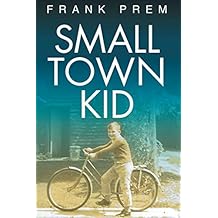
Review of Small Town Kid by Frank Prem

Small Town Kid (Frank Prem Memoir Book 1)

I have enjoyed Frank’s poetry ever since I discovered it a couple of years ago.

Small Town Kid is a book of poems about growing up in a small town in Australia during the 1960’s and 1970’s. The town is provincial, the way that small towns invariably are, where everyone knows everyone else, and everyone else’s business.

In those days, a small town was very different to a small town today, now the internet and social media have changed even the slow-paced life of these places forever. And so those of a certain age will recognise many of the situations and much of subject matter of these poems, while to those much younger they may well seem almost alien.

Rich in emotions, as well as in visual detail, we listen to Frank describe experiences such as hunting rabbits, letting off fireworks, and going on picnics, turning his nose up at his mother’s cooking and enjoying his grandmother’s cakes, suffering school and returning home at the end of the day. We find ourselves both observing and participating in the day to day life of his town.

This could be any small town, and any child. If you could extract the peculiarly Australian nuances and replace them with others, the poems might be about a small town anywhere and any child who grew up in it.

The poems are presented in an order showing the boy growing up from his earliest years through to reaching young adulthood, taking the reader on a journey alongside him.

And they have that power, that they transport you there.

Frank writes sparingly, knowing like an artist when to stop. But everything is there, and the writing invariably has beauty no matter what its subject matter.

Unhesitatingly, I give this book five stars.

You can find more of Frank’s poetry on his blogsites:

Welcome

About and Welcome

Hey, That’s My Picture on Your Book!

Boy, are you in trouble!

005

But first, a disclaimer. I am not a legal expert, and if you are in any doubt about the subjects I’m talking about, you should consult an authoritative source.

In general, as most writers are aware, the maker of an artistic work (e.g. painting, novel, photograph, concerto) automatically owns the copyright to said work. Selling the work does not constitute selling the copyright. This is an issue that occasionally confuses writers, for example, but it is worth remembering that even if a publisher agrees to publish your new novel, you retain the ownership and copyright to that novel, unless you specifically sign them away.

This means that the painter of a picture may sell the picture, but the new owner has no right to make any copy of this work for any purpose, and the artist retains the right to do so. Again, if the new owner is to have the right to make a copy of the picture and publish it, the artist must specifically assign the new owner the right to do so. After all, purchasing a novel or a music CD does not confer the right to copy and sell either of those.

But it’s not all as straightforward as that, and it’s more complicated if an artist has been specifically paid to create it for a purpose, or creates it as part of their duties for an employer. In this case, the employer / commissioner may hold the copyright.

As an example of this, my novel Making Friends with the Crocodile features an image from one of my paintings on the cover (see picture on the right). I sold the painting many years ago, but the image still belongs to me as I did not sign it away.

Therefore if you wish to use an image on the cover of your book that does not belong to you, you must obtain written permission from the copyright holder to do so. If so, then what you will almost certainly get / buy are reproduction rights and NOT the copyright. That would give you the right to use the image for certain purposes (e.g. book cover) but the artist retains the right to sell the reproduction rights to others, too.

Unless they are exclusive reproduction rights. See? I told you this could get complicated.

It is possible to take (another) artist’s work and sufficiently transform it so that it becomes a new work, but again the devil is in the detail (quite literally). There have been a number of cases where artists have taken others to court to argue the point – and the point is whether the new work is sufficient transformative to be considered a new work. As an example, a photograph downloaded from the internet and then either just being subject to colour changes, or having another image added to it, was considered to be infringing the original copyright.

But there have been other cases where the original image has been altered sufficiently to be considered a new work. If you are intending to go down this route, you would be wise to acquaint yourself with the ins and outs of this. To get a more detailed analysis, you might find this link useful: February 13th Creative

And if you have paid someone for an image for your cover? It might be someone you know, or it might be over the internet (perhaps one of these ‘get a service for five dollars’ sites), but the law doesn’t change. Ensure you have the appropriate permission, preferably signed, before pressing the ‘publish’ button with their image on your cover.

It could save you an awful lot of hassle.

Wow, What a book #2

To continue with the 10 books that have most influenced my life.

My second choice is The Lord of the Rings, by J R R Tolkien.

Image result for the lord of the rings book cover

I suspect that very few readers are unaware of the story of The Lord of the Rings, having either read the book, seen the film, or both. And at this point, it might be a good idea to just make it clear that I am talking about the book here, and not the Peter Jackson films, or even the ill-fated attempt at animating the entire book in 1978, an attempt that got as far as the first book, and was, to be honest, rather dreadful. Let me content myself by just saying it was a bit ‘Disney’. I’m not that mad on the Peter Jackson films either, to be honest, but back to the book.

So, I’m not going into any great detail about the story, but, in a nutshell, it involves a quest to destroy a ring that gives great power to the wearer, but inevitably corrupts and destroys them. It’s maker, Sauron, is attempting to find it, and the free peoples of the world must not only keep it from him, for if he recovers it it he will then have power to enslave the entire world, but also take it to the fiery mountain, Mount Doom, where it had been forged, to cast it into the flames and destroy it.

Mount Doom is, inconveniently, inside Sauron’s heavily fortified and guarded kingdom.

Elves, dwarves, men, wizards, hobbits, orcs…you all know it, don’t you?

As readers, we are all different. Some of us like a plot that gallops along so fast that we can barely keep up, with writing that limits itself to the action and no more than the minimum descriptions necessary.

Others, like me, enjoy the scenery and the atmosphere of the described world almost as much as the plot itself – join the Slow Book Movement now! Just send a completed application form to…sorry, wrong place. Where was I? Oh yes, most readers like a mixture of the two, of course.

But as one of these Slow Readers, there is a massive amount in this book that appeals to me. When I read descriptions of the hobbits setting off to walk through woods and fields as the sun comes up through early autumn mists, I might have been reading a description of a morning when I had done just that whilst wild camping in the countryside in my part of England. I have always loved walking on footpaths and through fields and woods, and disliked roads and towns.

The countryside Tolkien described around the Shire – the home of the hobbits – might have been my countryside. there were chalk downs and woods and streams, even one or two names (for example Michel Delving) that could have been local.

There were other woodlands in the book, and if they were described as magical, then that was little more than I naturally felt about woodlands anyway. Aren’t they all magical?

And, on top of all that, there were mountains. Today, I love mountains! But I had never seen one at this point, and suddenly I wanted to go and climb one. There were inns and beer, adventure and song, friendship and dangers. What was not to like?

The whole book is really made up of three books, and the first book, which has always been my favourite, is the one which is mainly set in this land that I could almost identify. This was not the first fantasy book that I had read, but it was, and still is, the one whose descriptions have the greatest power to draw me in. It is the one that, to me, seems the most real.

All of this, with the themes of courage and friendship, self sacrifice and loyalty, and the message that good will eventually triumph over evil, come together in a mixture that is in just the right proportions to appeal to me.

But how has it actually influenced me?

For a start, when I began to write, everything that I wrote seemed to be influenced by that book. This was not actually a good thing, because other than The Lord of the Rings, I don’t really enjoy fantasy! But I wrote that way for a long while.

Today, though, what remains is the descriptive writing. I wonder whether I might otherwise have been a very different reader and writer, since before I read LOTR, I read mainly detective stories and adventure novels.

And I explored a lot of the Middle English literature that influenced Tolkien, from Beowulf to Sir Gawain and the Green Knight, which I suppose not too many people do today.

I visited mountains because of that book.

And a measure of how strong this appeal was (and remains) is that I have probably read the book about twenty times. The last but one time, though, was around twenty years ago. When I decided to re-read it last year, I did wonder whether I would be disappointed. I strongly suspected that I might have ‘grown out of it’.

I needn’t have worried.

I enjoyed it just as much as I ever had; I noticed one or two details I had either forgotten or never really noticed in the first place, and I found myself drawn in every bit as strongly as I had been before.

I loved it.