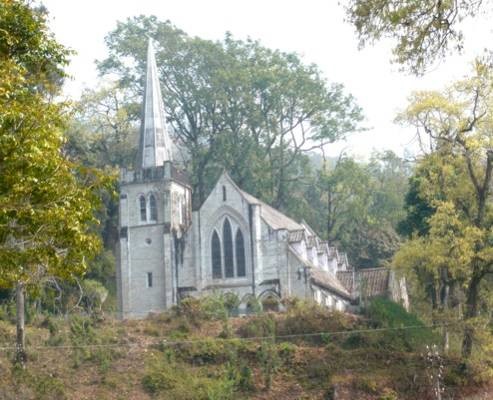
Remnant #1 – The Indian Mutiny

I recently did a deep dive into the burrows of my hard drive. I’m not sure whether I will write another novel at the moment, but whether I do or not there are several part completed ones that will not actually be completed because I ran out of steam…

One such was a set of preliminary drafts for a story set during the so-called Indian Mutiny of 1857. This piece is part of a chapter setting out the background to what happened. It hasn’t been vigorously checked, but I think the facts are all correct. It’s obviously incomplete, but I think it does stand alone.

And should I post a few more of these remnants occasionally?

9th May 1857, and a dreadful heat sits on the Northern Indian plain like breathless death. The air is full of dust and the land is parched, cracked and waterless, eight months or so since the last rains came, yet the suffocating debilitation of the temperature, well over a hundred degrees Fahrenheit for most of the day and a goodly portion of the night, is made more unbearable still by the effects of the high humidity. One felt that one could almost wring water out of the surrounding air, yet the only moisture visible was the sweat covering anyone foolish enough to attempt to move around in this climate.

In Meerut, less than forty miles northeast of Delhi, eighty-five sepoys have just been sentenced by Court Martial to ten years imprisonment. Muslim and Hindu, they are imprisoned for refusing to bite cartridges that have been smeared both with cow fat that was sacred to some and pig fat which defiled them all. In a move of breath-taking stupidity, the British have decided that this concoction is a suitable one for their native troops to have smeared onto cartridges that work by having the top bitten off, before pouring and ramming the contents down the barrel of the new Lee Enfield rifle. To be fair, after the mistake was realised, moves were made to ensure that the grease was made from different ingredients, but the damage by then was done. The belief was widespread that the grease was still composed of these taboo ingredients and, worse still, that it was a deliberate attempt by the British to contaminate and weaken their religions. The crassly insensitive handling of the issue did nothing to improve matters.

Nor is this an entirely new development. For maybe a quarter of a century things have been going rapidly downhill. There have been a number of ‘minor’ mutinies in the past, but these seem to be on the increase. For High Caste Hindus, ‘crossing the black water’ is prohibited, so attempts to force serving soldiers to sail abroad have been invariably interpreted as caste breaking and resulted both in mutinies and draconian punishments. Both this and the foolishness with the new cartridges have acquired added importance, though, due to the increased activity of Christian missionaries in India. It is possible that the British never fully realised quite how important religion was to the Indians. There never had been an Indian nation. India’s history was one of various states, Hindu and Moslem, shifting empires, conquests and absorptions. The idea of Indian nationhood had not yet arisen. Nor did there exist a universal shared culture. As well as the beliefs and traditions surrounding the different religions – Sikh, Parsi and tribal as well as the predominant two – the massive size of India had meant that most regions knew little about the others, even of their existence.

What mattered most to the average Indian, other than the struggle to survive, was his religion. It was what defined his life. And by 1857 it must have appeared to many that the British were determined to defile and break these religions, and then to impose their own. This was hardly helped by the general change in attitude exhibited by the British towards their subjects.

Much had altered over this time. In the late 1700’s, many of the British who came out to India acquired a huge respect, and frequently love, for the country and its people. Scholars such as James Princep and William Jones immersed themselves in the study of the languages and history of India, carrying out research and making huge discoveries. They treated the educated Indians in their circle as equals, treated others with respect and frequently married Indian wives. More than a few also converted to Islam. All this gradually changed in the 1800’s, however. A major factor in this was a steady increase in the number of women who came out to India from Britain. Debutants became aware of the existence of a pool of marriageable young men who were supposedly earning large sums of money and living in style with servants at their beck and call. They only lacked wives to make their lives complete. What could be more natural than to go to their assistance? Thus the ‘Fishing Fleet’ came into existence.

The impact that this had upon the British way of life in India was dramatic. As more of the British men married within their own, the growing community rapidly came to look down with disgust and contempt on those that cohabited with Indian women. And it was a short step from that to frowning upon those who changed their religion, wore native clothes, or even fraternised with the ‘natives’. Attitudes, too, were changing back in Britain. An increase of Christian evangelical zeal coincided with more information finding its way back from India about the country the British were ransacking, most shockingly that the majority were heathens who worshipped idols.

Within the army itself, the Indian troops noticed a change in their officer’s attitudes. Previously, British officers would happily mix with their men, socially as well as on duty and spoke their languages well. They were now more reluctant to learn these languages, found it irksome to talk for long to their men and no longer went hunting or to social events with them. This, the troops tended to put down to the influence of the church – the ‘Padre Sahibs’.  

The British have always referred to the uprising that exploded in 1857 as The Indian Mutiny. The Indians prefer to give it the title of the First War of Independence, yet there had already been a number of mutinies throughout the time that the British had been in India, even within the Bengal army. In 1765, on the eve of the Battle of Baksar, Company sepoys had rebelled and been executed. Then in 1806 an attempt was made to force sepoys in Tamil Nadu to wear a leather badge, anathema to Hindus, which had resulted in rebellion. And throughout the eighteenth and nineteenth centuries there had regularly been mutinies when the British had forced sepoys to serve ‘abroad’, often prohibited by their caste, which was frequently viewed as a deliberate attempt to weaken said castes. And viewed as a prelude to attempting to convert them to Christianity.

There were, of course, many other factors contributing to this outbreak of violence. Over the previous twenty five years or so, the British had steadily been displaying a greater intolerance towards all facets of Indian society than they had done before. The respect that they had previously shown towards India’s long and rich history had all but disappeared, to be replaced by an attitude that they were governing ‘ignorant savages’ who were ripe for conversion to Christianity. And indeed, the company encouraged further Evangelical and Unitarian missionary activity; frequently this consisted simply of setting up schools and medical facilities for the poorer Indians, but this did nothing to allay Indian suspicions. In another insensitive gesture, English also replaced Persian as the official language of both government and education.

So, simmering just beneath the surface of all walks of Indian society was this fear, this suspicion, that the English were determined to break the native religions and to force Christianity upon India. And it only needed a spark like the Meerut incident to ignite a conflagration that would rapidly sweep across Northern India.

Move forward twenty-four hours and dreadful deeds have been done in the Indian heat. In the morning, the remainder of the Indian regiment at Meerut rose up to free their comrades, broke into the armoury, and then began to systematically slaughter the European community.

Even then, it was possible that the revolt might have petered out, if the sepoys had not decided to ride through the night to Delhi, to seek out the aged Mughal Emperor Bahadur Shah Zafar, who ‘ruled’ as no more than a puppet of the English, and to declare themselves as his army of liberation. As they rode, they gathered supporters from the disaffected population and, around dawn, poured into Delhi.

It was the middle of Ramadan, so most of Delhi had been awake for some while, since for all Muslims it is forbidden to eat or drink during the daylight hours of Ramadan, and so across the city meals had been prepared, cooked and eaten before sunrise. At this time of year, too, because of the intense heat, much of the other activity of the city happened around dawn and dusk, whence it was a little cooler. And so, the streets were busy with worshippers making their way to and from mosques and temples, traders and shoppers busy at markets, beggars and hawkers, businessmen and palanquin bearers, soldiers and magistrates, all out and about in the labyrinth of streets and alleys that criss-crossed Delhi between the city gates.

Rumours of rebellion had been abroad for some months before, and so much of the native population of Delhi was in a state of keen anticipation. The rebels immediately found that they had sympathisers who rose in revolt as soon as they entered the city, especially many of the native soldiers stationed there. The British soldiers were mainly barracked outside the city walls and although a few Europeans quickly realised the severity of the situation, in the main events unfolded faster than could be dealt with and the city was largely overrun before the army could effectively intervene.

By nightfall the majority of the European population of Delhi – men, women and children – had either fled the city or been hacked to pieces. The only ones spared during the initial massacre were those few that had converted to Islam.

The next four months saw much bitter fighting across the north, as the rebels tried desperately to widen the rebellion and hold onto areas they had taken, while the British, with any hope of reinforcements many long weeks away, attempted, equally desperately, to break sieges and retake towns and garrisons that had fallen to the rebels. On both sides, tremendous cruelties and massacres were carried out, few more infamous than that at Cawnpore…


Unhalfbricking

I’ve never written an album review on here before, although I have reviewed a couple of concerts I’ve been to, so this is a first.

And if you have absolutely no interest in folk or folk-rock feel free to give this post a miss.

So, probably just one of you left. Let’s go.

Actually, now I’ve written the thing, it’s not really a review at all. It’s a bit of musical history, if anything. That wasn’t exactly what I’d planned.

Oh well…

Unhalfbricking is not my favourite Fairport Convention album, but it is an extremely important one. Which is not to say I don’t like it, because I do. It was released in 1969 and is their third album.

It is the following album, though, Liege and lief, which is rightly regarded as their most important, and an album that has had a huge influence on the direction folk and folk rock music has taken since its release, but Liege and lief came about as a result both of a tragedy and a new direction partly forced on the band by musical events way over the other side of the Atlantic. After the release of Unhalfbricking, most of the band were involved in a serious road accident (singer Sandy Denny was in a separate vehicle) which led to the hospitalisation of some members and, sadly, the death of both drummer Martin Lamble and the girlfriend of guitarist Richard Thompson.

After discussing whether they would continue as a group or just disband, the decision was made to continue and they hired a new drummer, the amazingly talented Dave Mattacks, and persuaded fiddle player Dave Swarbrick, who had guested on Unhalfbricking, to join the band on a permanent basis. And the decision was also made to change musical direction. Much of the material on their previous albums had been either American in origin – there were Three Bob Dylan covers on Unhalfbricking alone, for example – or country-tinged.

There is one track in particular on Unhalfbricking that helped to lead the band into their new direction, the traditional song A Sailor’s Life, which breaks new musical ground in this recording. What makes the track most memorable is that it is the first time a drumkit had ever been used on a traditional English folk song. It was also the first time Dave Swarbrick had used electric amplification, coming from a background with traditional folk groups. And then the whole track was apparently improvised on the first take, the first time the band had played it together, and listening to it, it is remarkable how you can hear them growing in confidence throughout the performance. And it is a long track, which I suspect has more than a little to do with the musicians getting the feel of working together and seeing what could be done with the material. Experimenting as they go along. Nothing like it had been released before.

Over in America, The Band, who had supported Bob Dylan on tour, had recorded Music from Big Pink in what has been called a reconnection with rural Americana, and listening to this there was a realisation both that by covering American standards Fairport would never be more than just one more wannabe Byrds cover band, but also that they wanted to take a similar direction with traditional British music. Bass player Ashley Hutchings had become deeply interested in the genre and Swarbrick came from a folk heritage. Thus A Sailor’s Life became a bit of a template for what was to come.

Finally, here’s a link to the song on YouTube.

A Warning To Other Writers

Oh, this sodding book.

I…no, first, a little bit of context.

Those of us who call ourselves creatives, why do we create? Why do we have this need to make things? I know the usual answer is we write / paint / carve / whatever it is we do, because we have to, because there is something inside of us that needs to find an outlet. But what is that something? In my case, as well as a storyline it is frequently a place where I have spent some enjoyable time. It provides me with a comfortable setting in which to tell a story.

Most of what I do, certainly the work I feel is my best, my most successful (in the sense of expressing what I want to express), falls into that category. My long poem The Night Bus, for example, was the result of a thirty year (admittedly intermittent) search for a way to record my experience of a long bus ride across Northern India into Nepal. I attempted prose and paintings without success, although through this I did develop a style of painting I went on to successfully use on many Indian paintings, and had long given up on the project when chance showed me a way into the poem. The poem I completed succeeds in conjuring up (for me) the impressions and feelings I had on that journey; I can relive the journey again by re-reading the poem. Whether it conveys anything of that to other readers, I naturally cannot know.

And my stories, too. I look through Making Friends With The Crocodile, and I am in rural Northern India again. I re-read The Last Viking and can easily feel myself on an island off the west coast of Scotland. This is not to imply any intrinsic merit to my writing, other than its ability to transport myself, at least, into the setting I am attempting to describe.

These stories are a composite of three basics: a setting, as mentioned already, a storyline – and again this needs to be something important to me, or I find it pretty well impossible to put my heart into it, and strong, convincing, characters.

It is useful, then, to know where lots of my writing comes from, and what shapes it, what drives it. I have long suspected that this is frequently nostalgia and, recognising that, have wondered whether this might be a bad thing. Nostalgia, after all, has a rather bad press…does it just mean I am living in the past because I am viewing it through rose-tinted spectacles? As a way of not addressing issues of today I should be tackling?

This yearning for nostalgia, though, is a desire for something we see as better than what we have now. To write passionately about something it needs to be something I feel strongly about. Obviously this can also be something we find frightening or abhorrent – dystopian warnings about the future or anger about injustices, for example – but even in those cases the familiar provides a cornerstone of safety, even if only by way of comparison.

This is also true when I paint. I am not someone who can paint to order – if I’m not inspired, it does not work. A number of difficult commissions have proved that point to me. I paint what I like, what moves me. After all, whatever I am creating, it should be foremost for myself.

That book, then…

I began writing it about five years ago for all the wrong reasons. I had self-published Making Friends With The Crocodile and decided my next story should also be set in India, and as a contrast decided to write about British ex-pats living in a hill station in the foothills of the Himalaya. I wanted to write about India again. The trouble was, I had no idea what story I was going to tell. I had no stories that might slot into that setting I felt in any way driven to write; it just seemed to feel appropriate at the time. I was pleased by the reception the first book had and felt I ‘should’ write this one.

What could possibly go wrong?

I spent time putting together a plot, with which I was never wholly satisfied, and began writing. Really, I should have seen the obvious at that point and bailed out. But I carried on, and twice reached a point where I thought I had the final draft.

My beta reader then proceeded to point out all the very glaring faults.

So twice I ripped out a third of it and chucked it away, then re-plotted the second half of the book and got stuck into the re-write. I’m sure you can see part of the problem at this point – I wanted to hang onto as much of the story as I could, instead of just starting completely afresh. And now here I am trying to finish the final draft for the third time, as my February project for this year. And it’s just not working for me. But at this point, after well over a hundred and fifty thousand words (half of which I’ve discarded) I just feel I’ve invested too much time and effort in it to abandon it now. Somehow, it has to get finished. I do have an idea for a couple of quite drastic changes which I’ll try this week, but unless I feel I’m making some real progress I’ll then happily put it aside for a while and concentrate on next month’s project: painting and drawing.

And, to be honest, if it eventually ended up as a story of less than ten thousand words, and if I felt satisfied with it, then I’d take that as a result, now.

And the moral of all this? I’m sure there was a point after a couple of months when I knew I shouldn’t have been writing this book. I should have binned it there and then and saved myself a lot of fruitless trouble, but stubbornly ignored the warning signs.

A Busy Time in West Bengal

For the last couple of months, during Lockdown and its easing, I have spent an awful lot of time up in the Himalayan foothills of West Bengal.

bookshop (2)

Okay, that’s not strictly true, but for most of that time I have spent my working day revising, re-writing, and editing A Good Place, my novel set in a fictitious hill station there. I have some new characters to weave in, some old ones to remove, and the story line to alter in several major ways, including a different ending.

I finished the first draft some nine months ago, but there were parts I didn’t feel entirely satisfied with then, and my beta reader unerringly picked those out for major revision. I then spent a while thinking about the story line and took out nearly all the final third of the book and chucked it.

That left me with a lot to rewrite.

Much of the problem stemmed from the fact that after I published Making Friends With the Crocodile, which is set in an Indian village with peopled with all Indian characters, I wanted to write a novel dealing with the British who remained behind in India after partition. A kind of balance to my writing. That was all well and good, but I began writing the novel before I was completely satisfied with the story line, and the more I wrote of it the less I liked it. So I kept changing the story line as I wrote rather than doing what I really should have done, which was delete the whole thing and go away and write something completely different, waiting until I knew what I really wanted to write. But I’m now content that I have the story I want to tell, rather than Just A Story.

Consequently, I have been virtually living in West Bengal during these days, inevitably leading to yearnings to be there in person. Which does nothing to ease the feelings of frustration at enduring the travel restrictions of Lockdown.

050a

However, one of the advantages of having several projects on the go at once, which I always have, is that I can switch to another for a while when I need to. Last week, then, I spent one day giving a final edit to a short story which gave me the opportunity to spend the day (in my head!) in rural Sussex, which was very welcome. Especially as that is somewhere we can get to now, with a minimum of hassle.

And A Good Place? I’m glad you asked. I think I’m close to finishing the second draft, which will be a blessed relief.

Just so long as my beta reader doesn’t throw her hands up in horror when she reads it…

Ghost Roads

I love old roads that have fallen into disuse, or been relegated to the role of footpath.

There is one a few miles away on the edge of the next town. It used to be part of the road running from London to Hastings, but when the ‘A’ road that now serves that purpose was built, it not only rendered it redundant for the purposes of long distance travel, but the new cutting actually sliced through it, so it now ends at the top of a hill. From that point, there are only a couple of footpaths leading away in different directions.

Almost fifty years ago (really? Ye Gods!) I cycled along there on my way to the coast from the London suburb in which I lived as a teenager. Many of the roads I used that day are now very much wider, and all are much busier, save the one on the edge of that town. When I walk there from my house, it feels that for that part of the walk I am on a ghost road. I can still think myself onto my cycle, into that year, and the absence of traffic feels weird. If I think hard, I can almost feel spectral traffic going past. What adds to that effect, is that I often walk that way in the evening and the light – or lack of it – only encourages those feelings.

I think of it as a Ghost Road, but that definition really refers to a road that is haunted. Such a road is the B3212 that crosses Dartmoor, and on the stretch between Postbridge and Two Bridges it passes the cluster of buildings known as Powdermills. Powdermills is so-called because most of it was built for the manufacture of gunpowder. The buildings are spaced far apart in case of accidents (translation: the gunpowder blowing them to Kingdom Come), and for the same reason the roof of each building was of tarred paper. This allowed the blast of an accident to disperse upwards, hopefully giving the occupants of the building a slight chance of survival.

Anyway, there were many such accidents and many deaths. The B3212 is supposedly haunted at the bend nearest Powder Mills, just where it passes over the Cherry Brook, by a pair of hairy hands that try to wrench the steering wheel of unwary drivers that pass that way, causing them to crash. I admit to occasionally slowing down at that point and taking my hands off the wheel to see if anything happened.

It didn’t.

But I still like to think a Ghost Road is one that has fallen into partial or complete disuse. Perhaps old Roman roads that survive as footpaths are ghost roads; there are certainly stories around the country of spectral Roman legions marching along them at the dead of night.

046a

I think there is something magical about any road falling into disuse and gradually becoming overgrown. A road constructed for wheeled traffic used only by foot traffic. It has a special feel when you walk it, different to the feel of other footpaths.

A country lane at night can feel like a Ghost Road, especially in the light of a full moon.

Another type of Ghost Road is the ancient trackway. These paths criss-cross the British countryside and are often of great antiquity. Formed originally by the passage of feet, both human and animal, but used later by carts and other four-wheeled vehicles. These also seem to have that magical feel, although in this case I feel I’m sharing the passage with the ghosts of countless other travellers over thousands of years.

And in the midst of the lockdown during the Covid-19 pandemic we seemed to acquire a few more of these Ghost Roads – an unexpected benefit of the pandemic, in my opinion. It seems a real shame they have become busy again.

Wordy Wednesday 1

Many bloggers post photographs on Wednesday under the heading ‘Wordless Wednesday’. Me? I’m going to write a few posts about words – specifically words in English borrowed from languages of the Indian Subcontinent.

I’m just plain awkward, but you knew that, didn’t you?

I am currently editing the first draft of my novel A Good Place, which is set in a hill station in Northern India. And in that hill station live a number of English who remained behind after Partition.

‘I’m sitting on the veranda of the bungalow in my pyjamas.’ Well, no, no one says that in my book. But if they had, what is the significance of that sentence?

The significance is the number of words borrowed from Indian languages.

Untitled-Grayscale-03

Veranda is an Indian word, but coming originally, perhaps, from Persian. The Oxford Dictionary suggests two derivatives, either from the Hindi (varanda) or from the Portuguese (varanda). Digging a little deeper, if I refer to Hobson-Jobson, the Anglo-Indian Dictionary that was published in 1886 and traces pretty well every word or phrase borrowed from the Sub-Continent, I discover a very long entry on this word. It begins by dismissing the possibility of it being derived from the Persian beramada, and goes on to state that it appears to exist independently in both Hindi, and in Portuguese (and Spanish). It then traces the possible routes the word might have taken to reach the English language, before then saying, surprisingly, that it could have its roots in the Persian after all. This seems quite likely to me, since many Persian words made their way to India especially with the Mughals, and it suggests a possible route to the Spanish peninsular when the Islamic armies arrived in the early eighth century.

I tried typing it into Ngram Viewer. This is an online tool that searches through the entire database of books that Google can access online (including ones still under copyright) published since 1800. Looking at the results for all books in English, it tells me it was barely used in 1800, although it does exist, rises steadily to a peak about 1910, and then falls away slowly, although it is still in common usage. Unfortunately Ngram has not been set up to search books in Indian languages, or even Portuguese. I tried Spanish and the pattern was similar, except that after peaking just before 1910 , it dropped sharply, but since then the trend has been upwards. I then noticed something. I had actually looked at the trend in American English. So I then tried British English, and this gave me a rather different pattern; The curve rose gradually until it peaked in the 1950’s and then fell away sharply. Why? I think it must be due to a surge of historical / biographical / nostalgic writing, both fiction and non-fiction, after the British left India.

Don’t worry, I’m not going to try to go into that sort of detail with other words.

Next, bungalow actually refers to a ‘Bengal style’ house (often with a veranda!) that the British frequently chose to live in.

And pyjamas are loose cotton trousers worn in India which were ‘adapted’ for night wear by Europeans.

Okay, class, lesson over. Be sure to wash your hands before eating your snacks (samosas and pakoras today, of course).

A Walk And Other Things

It was bitterly cold but sunny first thing yesterday morning, but after a couple of hours the air had warmed up enough to tempt me out. I was due a walk anyway, having not even left the house the previous day.

Every year there is a point somewhere around the middle of February when I feel the warmth of the sun for the first time that year, but yesterday morning there was already a hint of that.

It wasn’t cold enough to freeze the ground, except in a few particularly exposed places, and so it was very muddy underfoot. Therefore it was a delight to occasionally walk through drifts of last years leaves.

And there was so much birdsong. So much so that it became a background noise that was easy to filter out after a while, except when a particularly loud or unusual song caught my attention. Not that I do that deliberately, since birdsong is one of the delights of the countryside. At some point or another when I’m out, I can usually hear the rooks, but maybe because of the sun and the noise from the other birds they seemed to be silent. I’ve always associated them with cloudy skies for some reason, perhaps because I’m so used to hearing them on moorland and in the hills and mountains.

But I’m sure they like a sunny day every bit as much as the next bird.

This morning is cloudy again and the rooks are back. Outside I hear crark crark crark, and the occasional cronk. There is rain and sleet forecast for later, so I go into town in the morning. By the time I get home, the sky is already full of dark clouds and threatening to drop some weather soon.

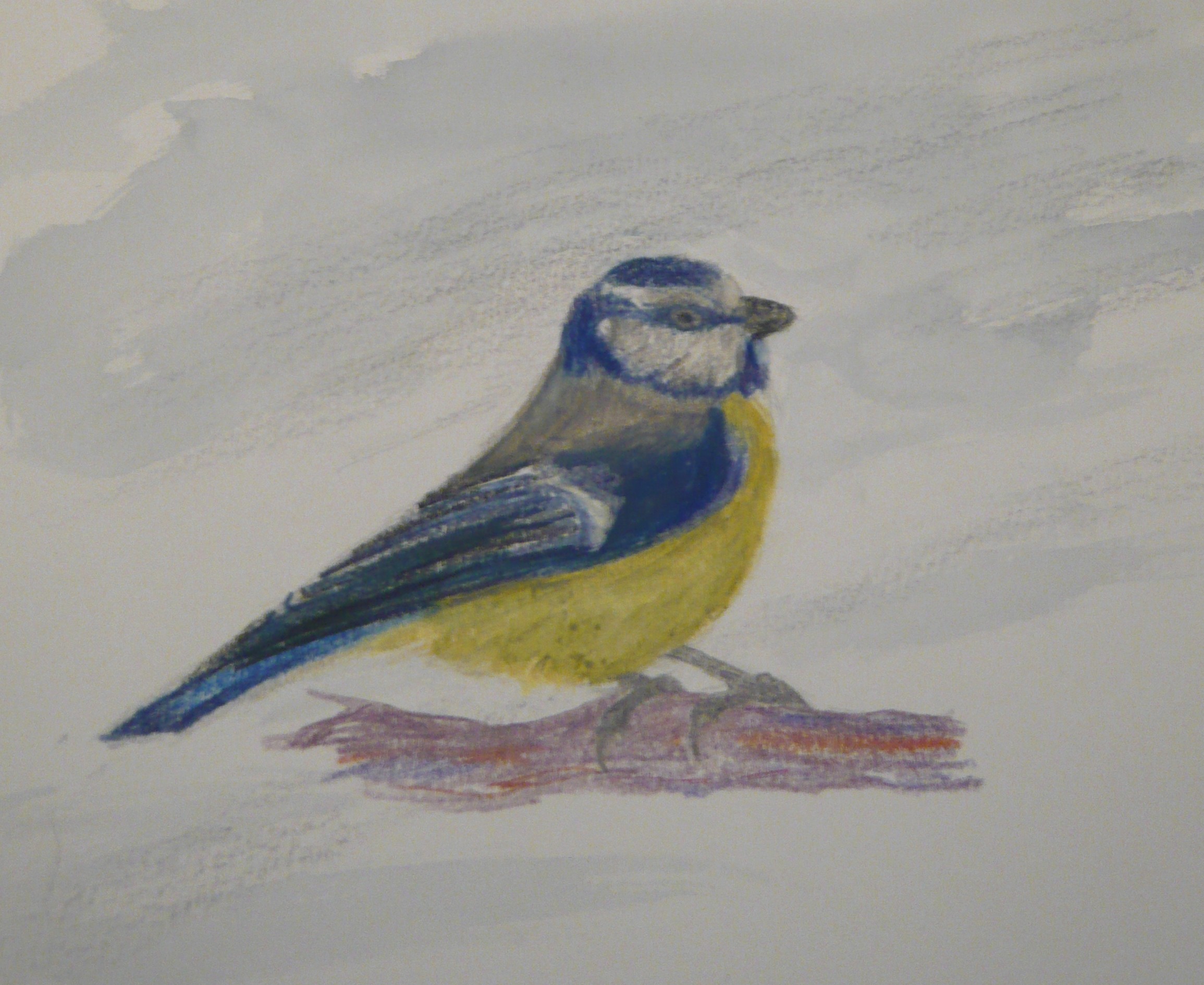
The afternoon, then. I partly spent painting this little fellow:

035

The blue tit is one of the few British birds whose population seems to be increasing slightly at the moment, in contrast to most whose populations have fallen – sometimes dramatically – over the last few years. We seem to be losing lots of the birds I took for granted as a child, which is such a sad thing. As a race, we seem to be so damned good at exterminating other creatures.

Southern India (2)

trichy skyline 2

Another shot of the skyline of Sri Ranganathaswamy Temple in Trichy.

trichy temple door

Decorated door in the Sri Ranganathaswamy Temple.The scorch marks at the foot of the door are from candles and incense sticks, which have been lit and offered to the god in pujas.

shore temple

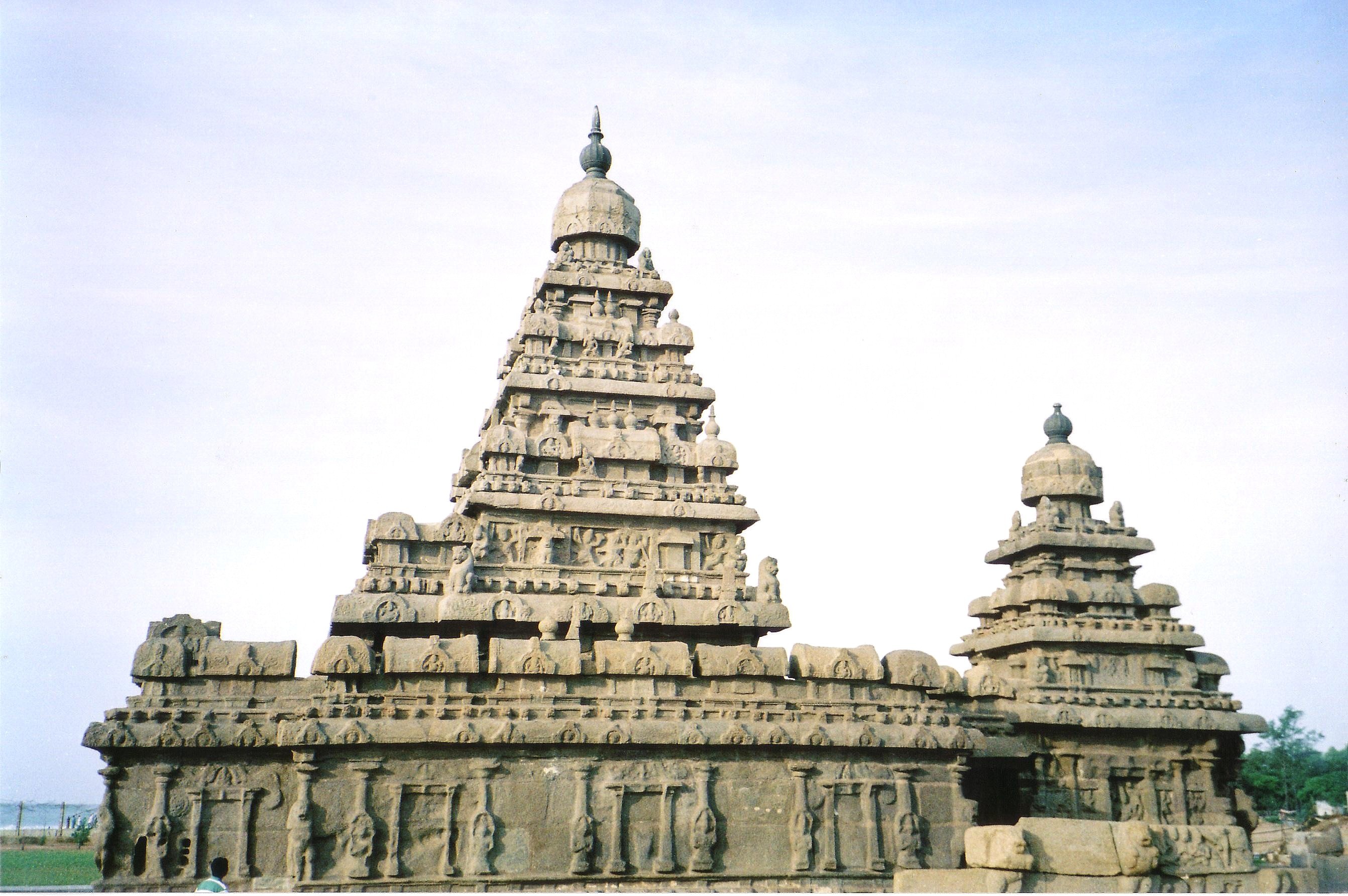
Shore Temple, Mamallapuram. Mamallapuram is a short way South of Chennai (Madras) and is a large village which is home to hundreds of stone sculptors. The village itself has a wealth of old temples and sculptures in the form of friezes and ‘Rathas’ – literally chariots, carved out of solid rock. The Shore Temple shown here has been extensively weathered by wind and sea, but has a remarkable amount of detail still preserved.

5 rathas elephant

Carved Elephant at the 5 Rathas, Mamallapuram. An incredible complex of rock-cut temples from the Pallavan Period, 300m from the shore. They were buried under the sand until rediscovered and excavated by the British some 200 years ago.

side street

Sometimes it seems that there is a temple down every side-street. This one is in a village near the town of Dindigul, Tamil Nadu.

roof shrine

This roof shrine is nearby.

salt-workers

Salt workers pose for a photograph at the salt pans near Marakkanam, just north of Pondicherry (now renamed Puducherry, its original name before the French arrived). The sea is allowed to flow into ‘pans’ (not unlike paddy fields!) and then evaporates over several days under the hot sun, leaving behind a layer of salt which is gathered by hand. Salt has been gathered this way in India from time immemorial, but when the British in India imposed a salt tax, this eventually led to the ‘Salt March’ led by Gandhi, where he symbolically gathered salt at the coast after a 200km march, an action that contributed to the loosening of the hold that the British Raj held on India.

A Shared Humanity

‘The world knows nothing of its greatest men’ goes the old saying. Or women, of course, since it is men who tend to write these things. I may have alluded to this before.

017

I was reading a blog post by Rajiv earlier today, on the partition of India and Pakistan in 1947, and we swapped a couple of comments, the result of which decided me to write this short post. You can read Rajiv’s post here: Partition in the Punjab

Those of us who did not live through that time, cannot really imagine the full horror of it all. The figures alone are dreadful.

14 million people were displaced, forced to move from their homes to either what remained India or became East or West Pakistan, by any means of transport available, frequently on foot. Those that survived the journey, frequently one of tremendous hardship, carried memories that were often too dreadful to relate.

Most lost their possessions.

Families were split apart and separated, many of them never to meet again.

Millions of refugees.

Up to 1 million were killed in what were effectively religious killings – the actual figure is unknown. Trains were set on fire, men and women, adults and children, lost their lives in what became a frenzy of killing.

Much, of course, has been written of this over the years, and the blame placed on many shoulders. The British were extremely culpable in this case, mainly through neglect and thoughtlessness. Those that assumed power in India and Pakistan need to take their share of the blame, too.

But the world, as I remarked at the start of this post, knows nothing of its greatest men. Or, in this case, its greatest men and women, or at least very little of them.

On both sides of the new borders, whilst most people succumbed to fear and many to hatred, whilst innocent lives were taken and dreadful acts carried out, there were many, many people who sheltered and saved those of other religions who had been their friends and neighbours before, often at great personal risk.

They gained nothing from it, but simply displayed their common humanity.

I have read of a few examples of this, a few stories from both sides of that border, and I have seen it mentioned briefly in documentaries.

But now, before the last players in that tragedy finally pass away, it would be marvellous if there could be a concerted effort to collect these stories and record them, as an inspiring example of people reaching out to each other across what is, once again, becoming a depressingly familiar religious divide, and, most importantly, remembering and commemorating their bravery.

Sri Lanka – The Hill Country

I thought I’d bring you a third helping of Sri Lanka today, so to speak. These are a few of the photographs that we took when we went up into the hill country for a few days.

179

First up, a view of Ella Rock taken across the tea gardens.

177

Next, a view of the charming Lizzie Villa, our home for a few days. It is set in beautiful gardens, and run by our equally charming hostess, Mrs Lizzie. For the first day or so, we had good weather – rather humid and a little cloudy, but pleasant enough. But then the heavy rain arrived, and our walk from the road to the villa became an adventure in trying to avoid the leeches that magically appeared from every leaf and twig.

181

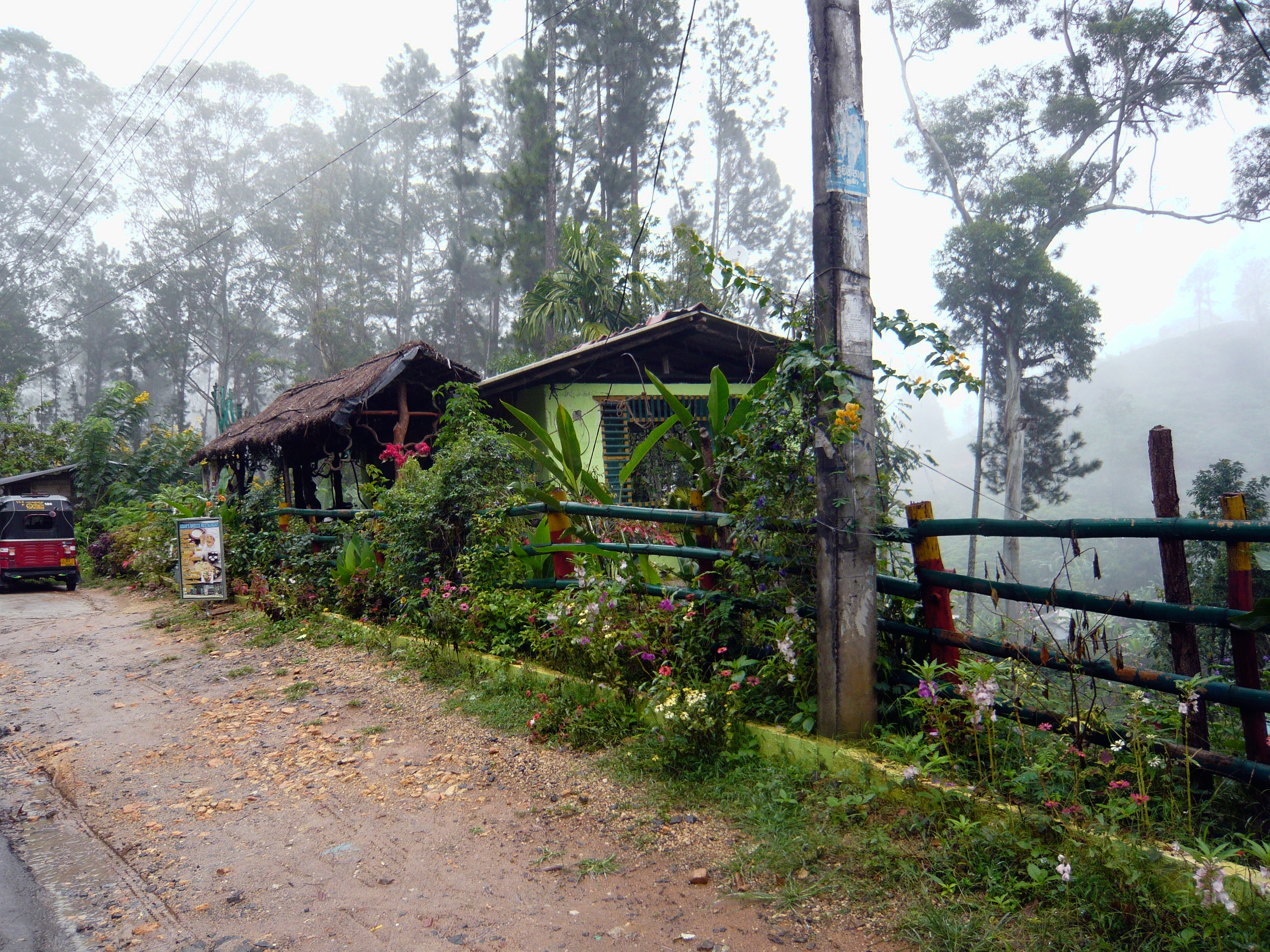
During one of the breaks in the weather, we walked to Little Adam’s Peak which is approximately an hour and a half’s walk from Ella to the top. On the way back, we stopped in this lovely flower-covered cafe for some late refreshments.

167

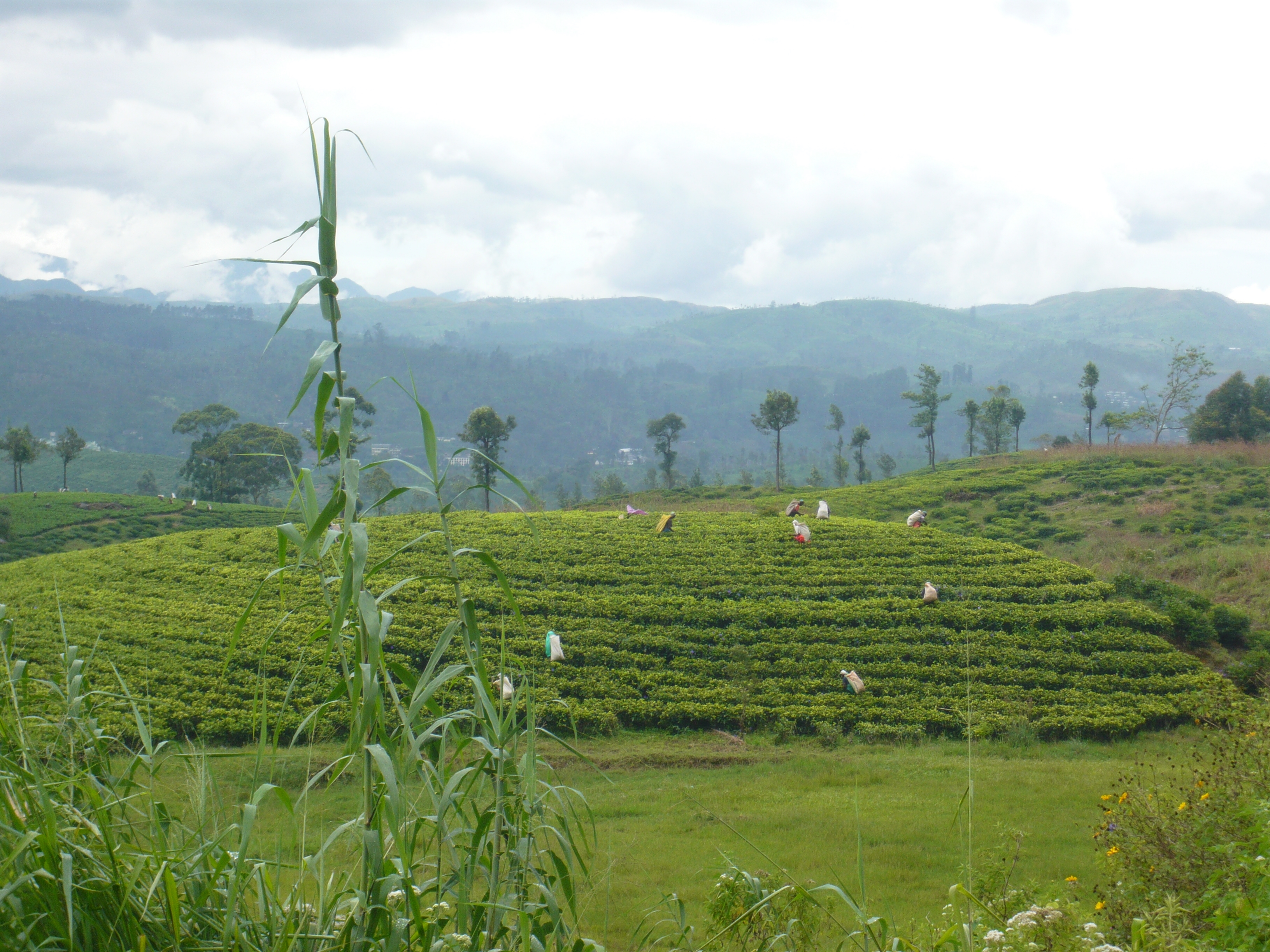
Tamil tea pickers in a tea garden near Nuwara Eliya. Most tea pickers in Sri lanka are still Tamils, descendants of those brought from India by the British over a hundred years ago to work in the tea gardens.

170

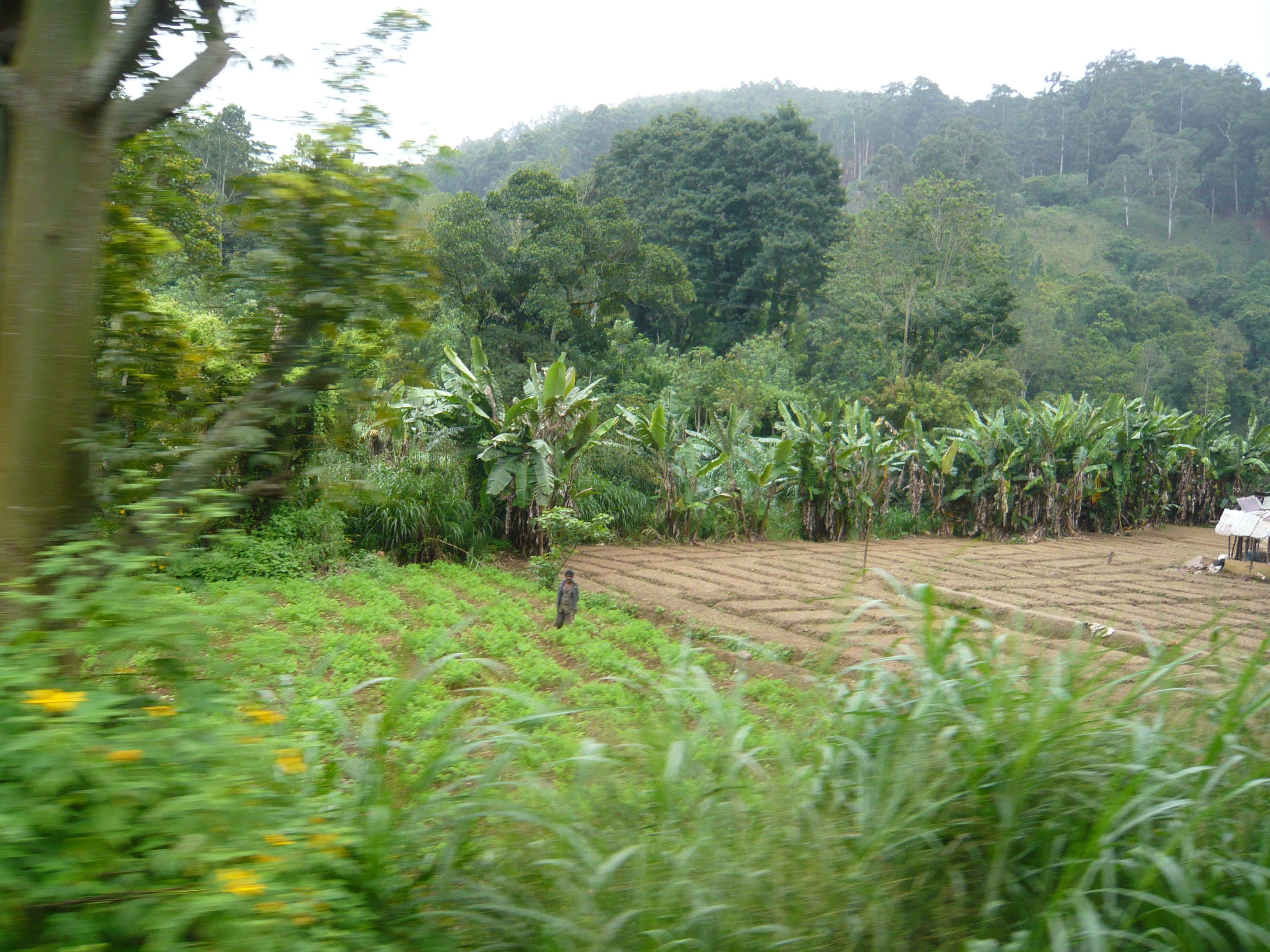
A farmstead in the jungle near Haputale.

172

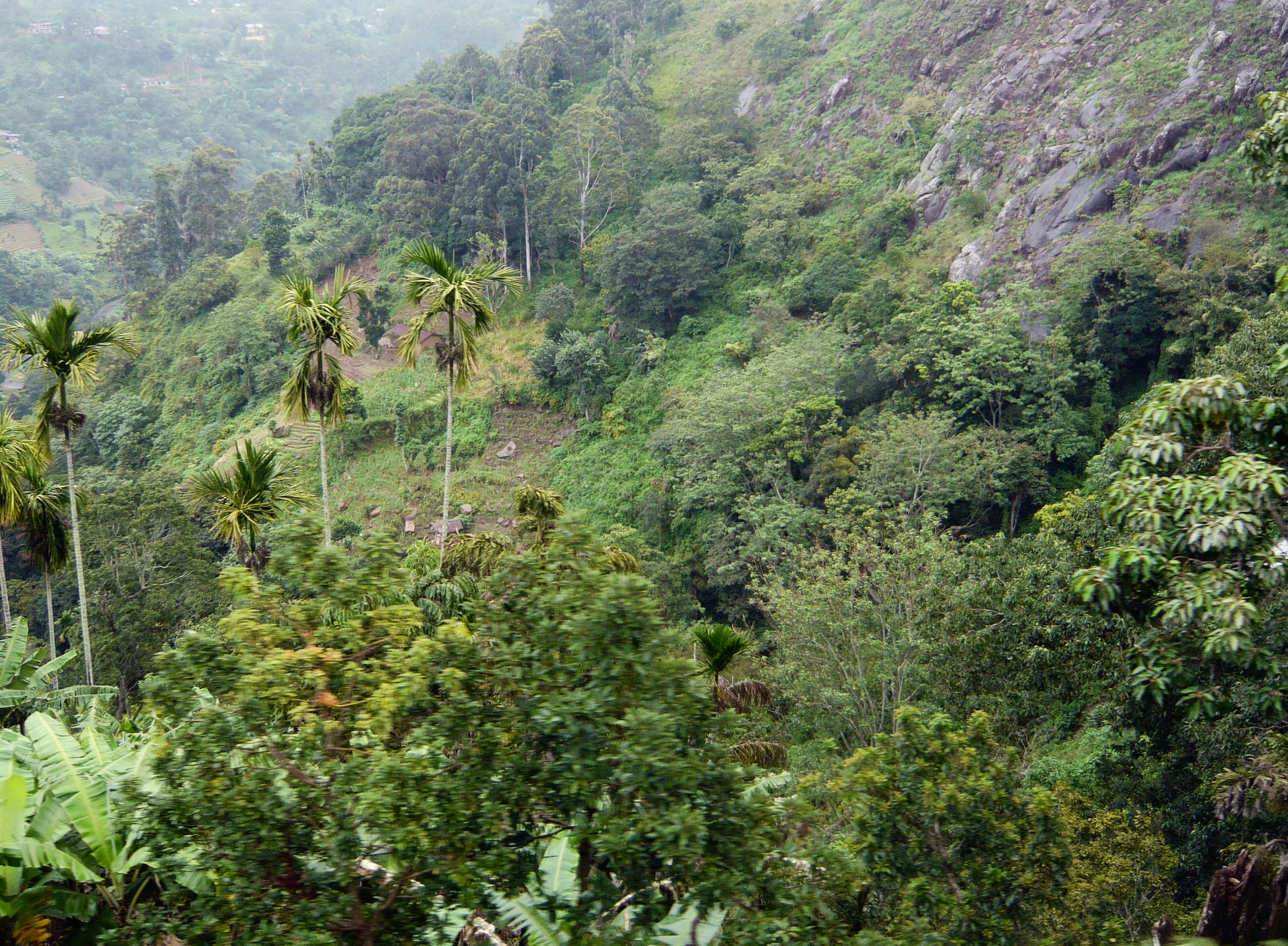
Hillside jungle near Ella.

184

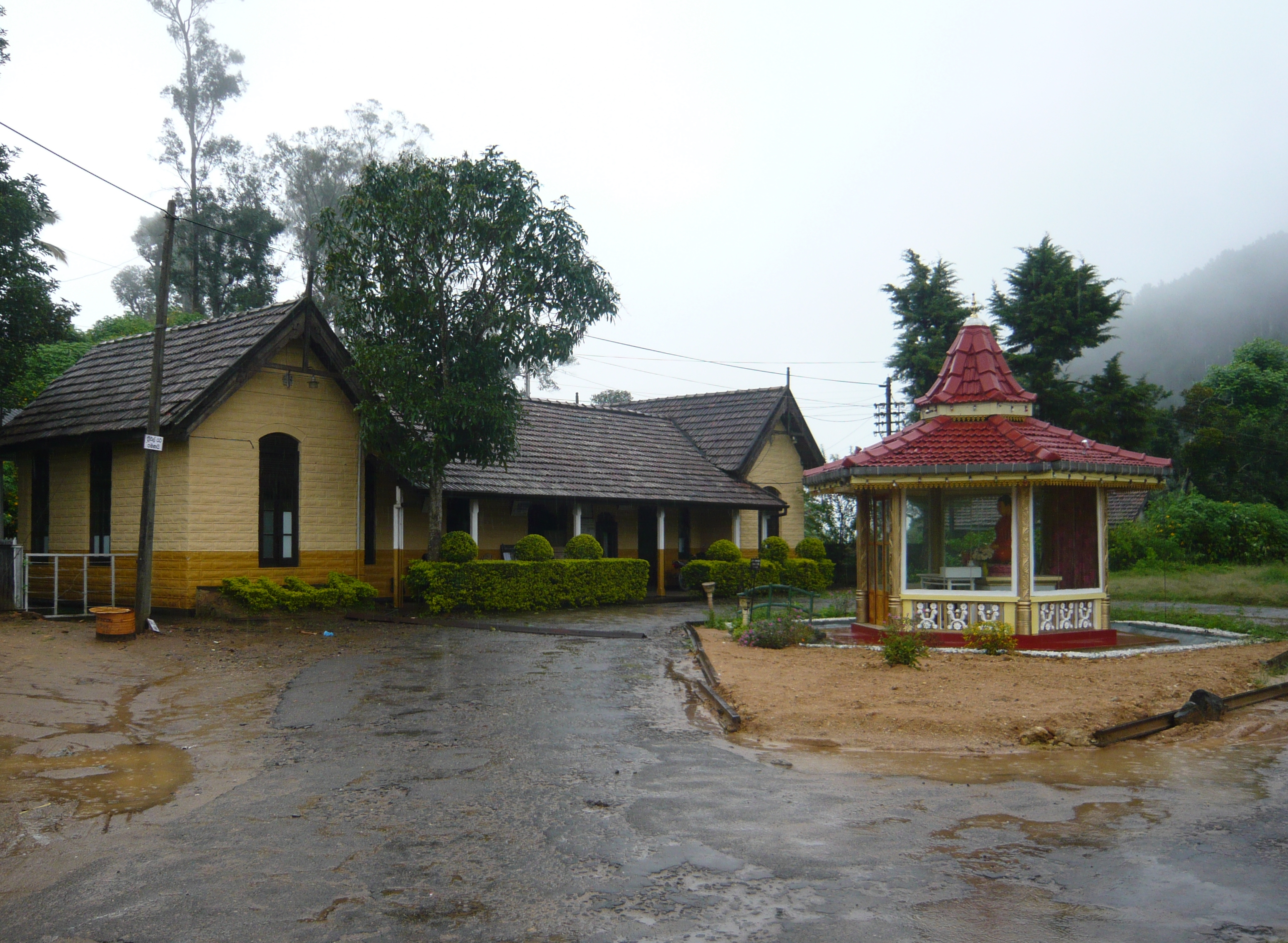
Finally, the rather quaint railway station at Ella, which was unfortunately closed due to landslips on the line when we wanted to get the train back down to Kandy. We had left the cottage early, and a taxi had dropped us off here. But when it was apparent that the line was closed, the taxi driver very kindly loaded us back into his taxi, drove us to a bus stop and explained which bus we should get, where we should go, and what bus to take from there to Kandy. And would he let us pay him? No, he wouldn’t. Small, unexpected, kindnesses again.