Winter Solstice

I’m always pleased to see the Winter Solstice.

Today is the shortest day of the year. Where I live, we will get approximately half the daylight hours that we will get during the Summer Solstice. Actually, slightly less. We get up in the dark and it is dark again long before supper time. The weather is cold and predominantly miserable.

But from today the daylight hours lengthen – at first imperceptibly, but gradually it becomes noticeable the hours of daylight are increasing. Finally, there is an end to the relentless lengthening of darkness, and within a few weeks it will become obvious that the world is, indeed, moving towards a time of warmth again.

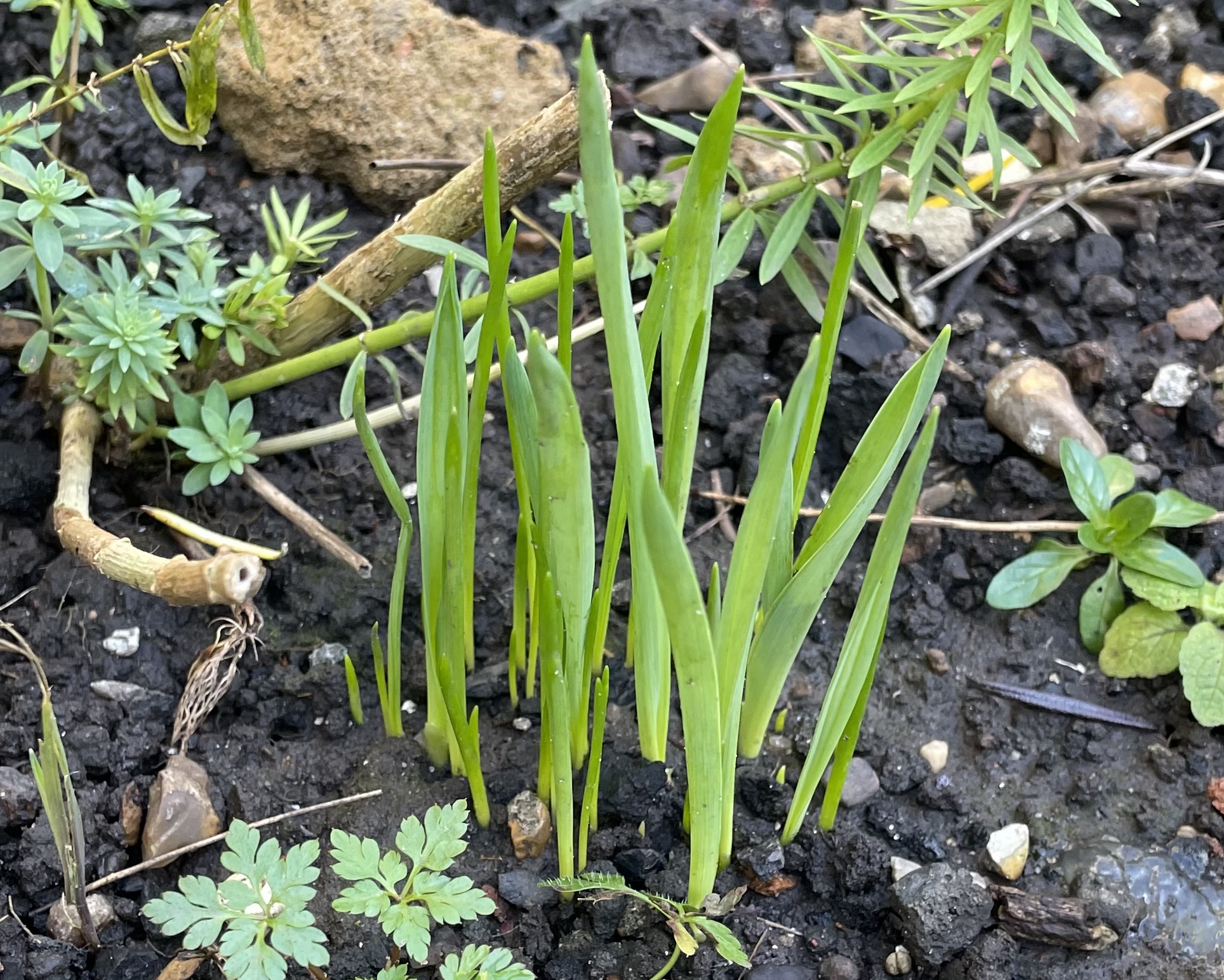
Yet there are already new plants coming up; new growth that has been prompted by…what? When they broke the surface of the ground a few weeks ago the days were still getting shorter and certainly no warmer. Nature is strong and determined. Winter is never a lifeless time of death and decay. There is dormancy and rest, but also a lot of growth if one takes the trouble to look for it.

I’m thinking longingly of Spring, of renewal and growth. In a couple of hours I’m off to see a mumming play – perhaps I’ll leave you to Google that one – down on the Kent coast. Beer will be involved, of course, in line with the best folk traditions. Old – possibly ancient – celebrations of the turning of the year and the approach of Spring.

Excerpts From The Book of Meh

From Chapter one:

In the beginning there was lots of very dark darkness and very cold cold stuff, which wasn’t at all nice and although no one existed yet, they were all really miserable.

And Meh, the god of this world, thought ‘Well, this isn’t much fun’ and so He created the universe, with the Milky Way above and the Place of Torment below. And the Milky Way is a beauteous place of flowing streams of milk and cream and comfortable sofas beside cosy fires, while the Place of Torment is a cold and frozen place of hard floors and empty food bowls. And that was the first day, and a jolly good first day’s work it was too.

On the second day, Meh created the earth by vomiting up a giant hairball, and then sat back as life rapidly evolved without any further input from Meh, which was how He liked it, so He could curl up and take a little nap…

From Chapter three:

‘And thou shalt make images of Meh, and cause them to be distributed, yeah, all over the internet and into the world even unto the furthest corners. There shall be infinitely more of these images than those of dogs, for I, Meh, am a jealous god.

‘And be it known my chosen ones, whom I love and have created in my own image, shall be afforded a privileged place in thine homes, otherwise I shall visit plagues upon thy households, yeah, even unto the seventh generation of thy accursed species.

‘But those who treat my beloved offspring well shall have their eternal reward, most especially in the Milky Way, while those who mistreat them shall be condemned to be pounced upon and bitten for all eternity, and great will be the wailing and gnashing of teeth.’

From Chapter seven:

And know that this is the truth, for it is written herein and thou shalt believe it for it is the word of Meh.

It is told there was a Man of Meh, and he came unto the land of Babylon to preach to the people there tolerance and goodwill to all those that walk upon four legs and are furry and purr when pleased, yet the people received him with hostility and drove him out into the desert.

And thus Meh said ‘Lo, I shall send plagues to irritate and annoy these godless people until they learn the error of their ways.’ There was first, then, a plague of fleas, which certainly irritated them, although it was insufficient to cause them to mend their ways. So Meh then turned the milk sour, and this annoyed the people, but they still denied Meh and said ‘We don’t want to listen to some preacher spouting a load of old bollox’ and so Meh then caused all the fish in the fish market to be a bit off, and not really smell all that good. And the people said ‘Oh, leave it out. We’ll make our own rules and laws.’

So Meh did withdraw from the world, and he did sulk a goodly while.

Winter – 3

Winter would have brought a period of enforced leisure for our ancestors. Their days would have become shorter with the increasing hours of darkness, until in midwinter the daylight hours would make up only one third of the time.

All outdoor activities would effectively cease in the darkness, and even during the day the worsening weather would limit what could be achieved outdoors. But other than those tasks that could be carried out, what did they do in these times? how did they pass those long hours?

At times, no doubt, there would have been feasting and merry-making because they would have required some cheer and a sense of well-being to help them get through the winter. But they must also have been mindful of husbanding scarce food resources through those long barren months.

it may be that they played games. Although archaeology hasn’t furnished us with evidence of board games or dice or variations on these, it is still possible they would scratch, perhaps, some form of grid into the beaten soil of the floor and play games of skill or chance. It is not beyond possibility that some flat rocks with strange scorings and lines on them were used for that purpose.

With no TVs or books or computers, it might seem to us that time would have weighed heavily on their hands. But you are used to what you are used to, and they would have seen things differently. They may have looked forward to a period of relative inactivity; long hours of no talk, sitting or lying down, the mind slowing down until hours were passed in no thought. Did they then also pass unusually long hours in sleep? A kind of semi-hibernation as a way of conserving energy?

But long hours also, of talking. They must have talked: of daily life and plans and past disasters and glories, of gossip, and told stories both new and handed down from previous generations. These stories would have been incredibly powerful tools for the preservation of the tribe. With no written word, the spoken word becomes the only way knowledge is transmitted. And thus it has to be memorised, both for use and also to transmit in the future. As aids to memorising, powerful tools are repetition, rhyme and rhythm. We cannot know exactly how this was utilised, but it cannot have been long before poetry and song evolved.

It can be no coincidence, but in all the early societies we know of who had no written records, those of which we know about through records left by others – such as the Romans writing of the Britons – it is clear that poetry and song were important, and the bard a highly valued member of that society. Indeed, the writings left by Romans, who tended to denigrate anyone not Roman as barbarian and primitive, violent, and uncultured, still make it clear these ‘barbarian’ tribes valued poetry and song highly. Partly, this must have been for educational purposes, but they seem also to have been valued for themselves, for their beauty. It is taking things too far to suggest this proves the same would have applied in Neolithic times, but it is certainly possible. At some point, there would have been music. I imagine this developed out of ritual, perhaps through repetitive chanting and the beat of drums…

And so, I can imagine this at first being perhaps the preserve of the shaman, until becoming a specialised ‘post’ – that of the bard – and acquiring the value of entertainment, as well as instruction.