R. I. P. Winter

It’s beginning to feel both as though autumn has been with us forever, and that it is especially reluctant to leave us, this year.

This year has been a mast year; the trees and bushes have been laden with prodigious quantities of nuts and berries. The hawthorns, especially, seem to be weighed down with berries, and we have gathered large quantities of nuts from the hazel in our garden. There are so many acorns beneath the oaks nearby that there is a thick, continuous, crunchy, carpet of them underfoot. Traditionally, this has been said to indicate a harsh winter ahead, although how the trees and bushes are meant to work this out when we have no idea what the weather will be then, heaven only knows.

What it really indicates, of course, is that the climatic conditions have been such throughout the year that these trees and bushes have successfully produced their large crops. Nothing to do with what will come along later.

On the other hand, the leaves have held onto their greens for longer than usual and only turned late, and still seem most reluctant to fall. It has taken the determined efforts of a few strong winds just to remove about half of them. Certainly, around my part of Britain, anyway.

It is not cold. There are no signs of a proper winter chill approaching, with the long-range weather forecast contenting itself with predictions of the occasional cold spell in the next month, which takes us through to mid-December. In the garden the grass and many of our other plants are still engaged in that crazy autumn growth spurt.

Of course, it was never unusual for November to be wet and mild, and we may yet have a biting cold winter, although I wouldn’t bet on it. It is a long, long time since we have had a winter like that in these parts. In my lifetime, only the winters of 1963 and 1978/79 really stand out as being extremely harsh, although a few others have had shorter periods of cold and snow. The expectation for winter around here now is that it will just be chilly and wet. I think only once in the last six or seven years have we had more than just the odd flurry of snow; that was from the so-called ‘Beast from the East’ a couple of years ago, and even that only lasted a few days.

We seem to have lost winter somewhere along the way, which sounds very careless of us.

In fact, that is quite a good way of describing it.

You don’t need me to tell you we have been careless in the way we have interacted with nature, the result being our world is heating up dangerously. And in our part of the world, this has led to hotter, drier, summers and milder, wetter, winters. There has been a notable increase in destructive flooding events. Downpours are frequently very heavy and long-lasting. Rather than being spread out through the month, we may get an entire month’s worth of rain in less than a day. Summers, conversely, have become very dry.

This is absolutely nothing to the extreme climate conditions suffered by millions of others in other parts of the world, but it helps to bring it home to us that the Climate Emergency is real, and it is happening. With everything else happening in the world at the moment, this seems to have been conveniently ignored by the mainstream media for the last six months.

R. I. P. Winter.
How To Solve The Climate Crisis

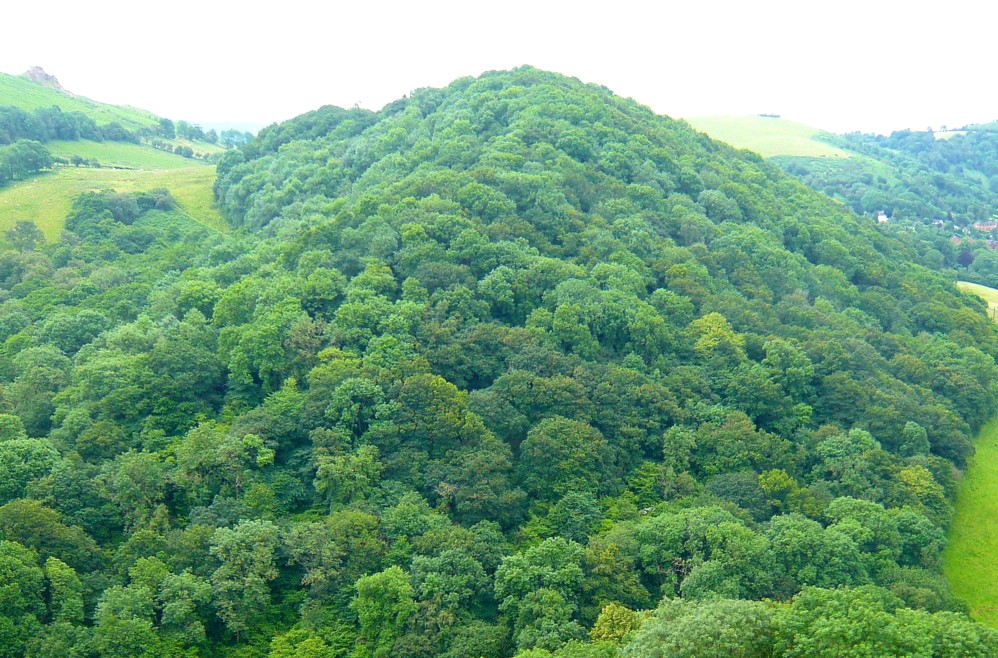
What we need are machines that remove the carbon dioxide from the atmosphere, cost nothing to produce, are made entirely from natural products available worldwide, produce no harmful waste materials, fit into the landscape harmoniously and also provide countless other benefits to us, wildlife and the environment.

030a

We already have them.

They are called trees.

We need to plant them in their millions and to stop cutting down those we already have.

Who Knows Where The Time Goes?

016a

Today’s mood music is early Fairport Convention while I tinker around with a poem about crows and contemplate a painting of the same. Sandy Denny’s wonderful voice should lift my spirits a bit. The climate crisis and the dreaded ‘B’ word just leave me feeling depressed and listless.

Perhaps I’ll read something.

Or go for a walk.

I’ll catch up with everyone sometime soon.

A random bit of Delhi for the weekend

‘Once I leave, I am back out in noisy, smelly, confusing, squalid, hassling, bright Paharganj. When I first came here, it seemed very strange and exotic, had an unusual, exciting feel to it that was difficult to identify but was certainly the strange, unfamiliar sounds, smells, sights and feel of an unknown culture. Even the bits that were new, still seemed dirty and somehow old, as if something about them owed their existence to the distant, Indian past. This has gone and I miss it most keenly, since I keep getting a hint of it, floating unexpectedly on the breeze with sounds and smells that remind me of when I first came out here. This has been replaced, however, by something almost as precious…I feel completely at home.’ 13th November 2009
006 (2).JPG


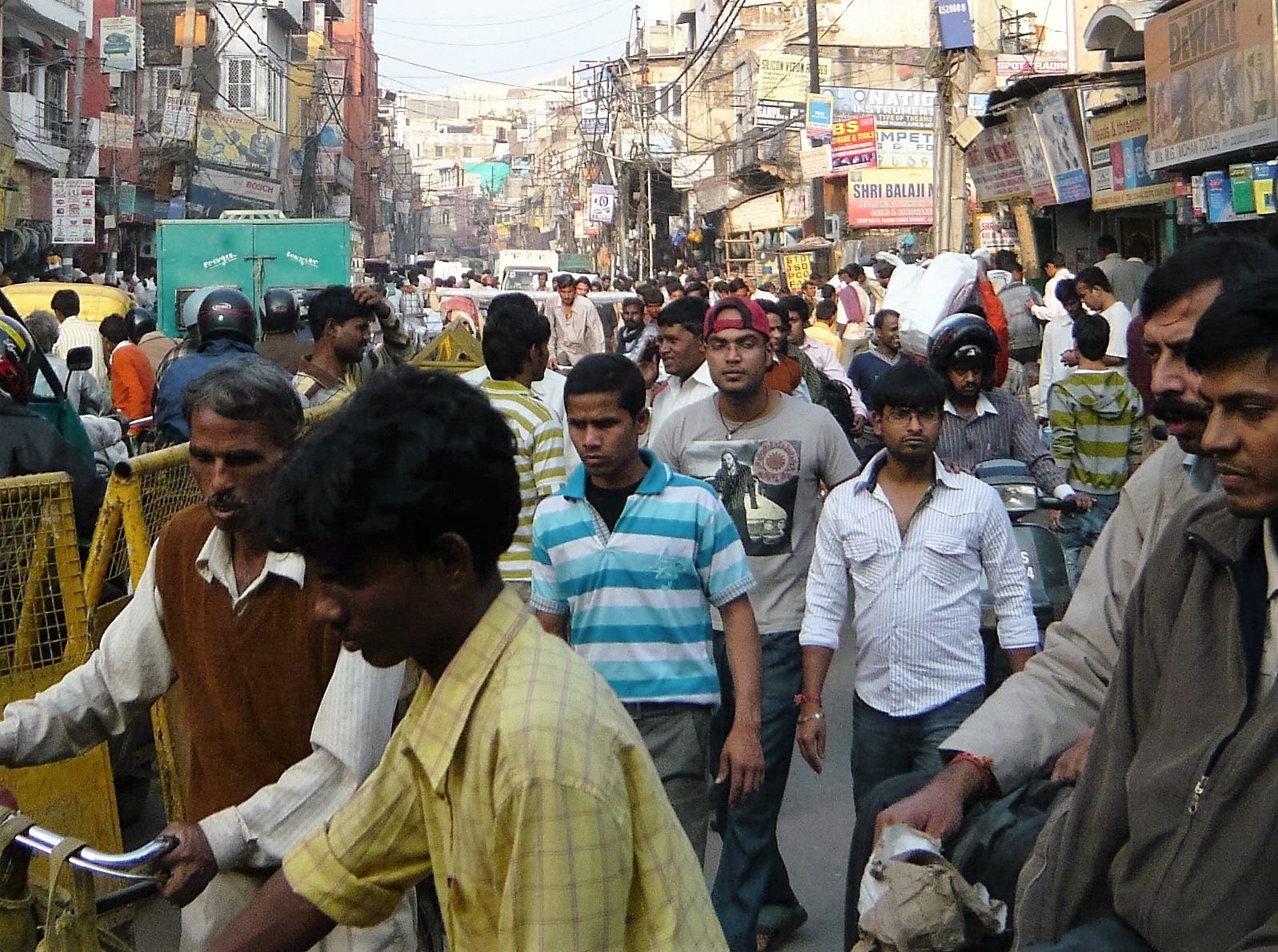
Crowds near the Ajmeri Gate, Old Delhi

010.JPG

Turkman gate, Old Delhi. One of the gates in the city walls at the time of the Indian Mutiny / 1st Indian War of Independence, it dates from the seventh city of Delhi, Shahjehanabad. More recently, in 1976, during the Emergency declared by Indira Gandhi’s government, it was the scene of another infamous episode, when crowds protesting about the bulldozing of their houses in an effort to clear slum areas and force them out of the city were fired upon by the police, killing several of them.

011a

Tenements near the Turkman Gate, Old Delhi


IMG_0023.jpg

Mihrab, or Arch, in a building in the Lodi Gardens, Delhi

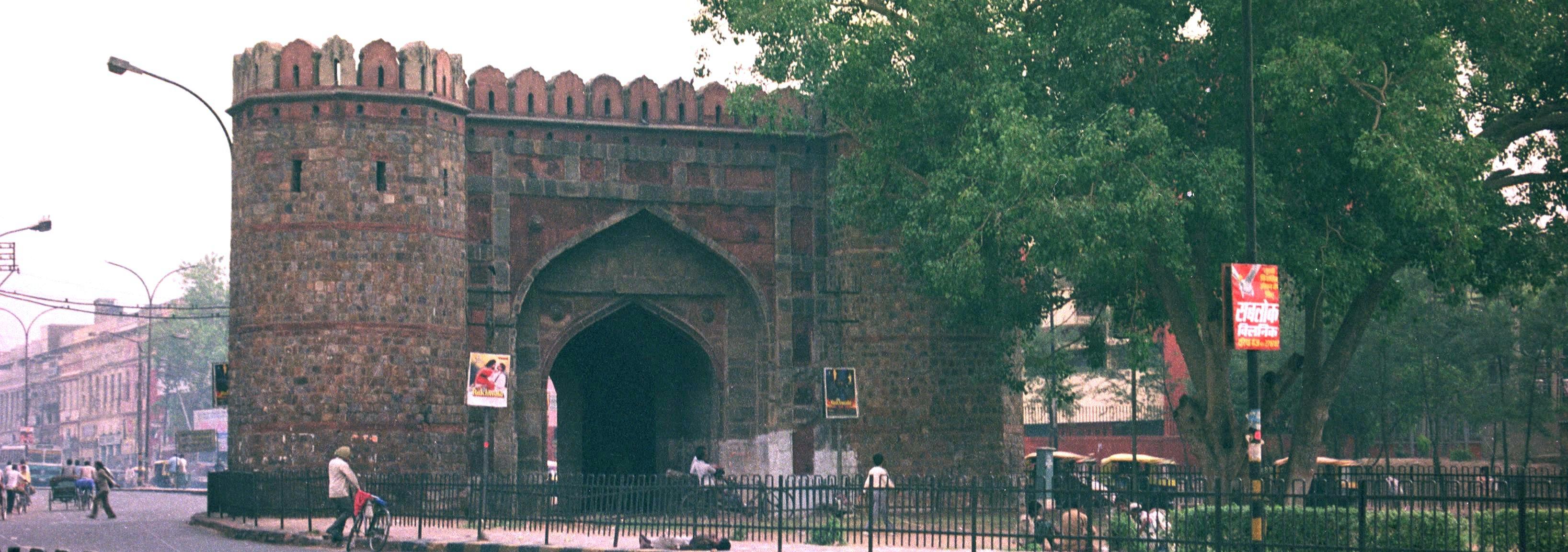
delhi_gate

Delhi Gate, in the old city near Chandni Chowk. This photo was taken in 1989. When I passed the same gate in 2009, the traffic was a whole lot worse!

191.JPG

The great tower of Qutb Minar. The first of the Moslem invasions was by Muhammed, Sultan of Ghur in what is now Afghanistan, in 1192. Having overrun a large part of the Northern Indian plains, he returned to Ghur, leaving his new territory in the hands of his army commander and favourite slave, Qutbuddin Aibak. Qutbuddin decided to leave a monument to his religion that was designed to overawe his new subjects and inspire his own people, and set about building a mosque with a massive tower nearby. The tower itself is almost 73m high and is 15m in diameter at the base, tapering to 2.5m at the top.

183

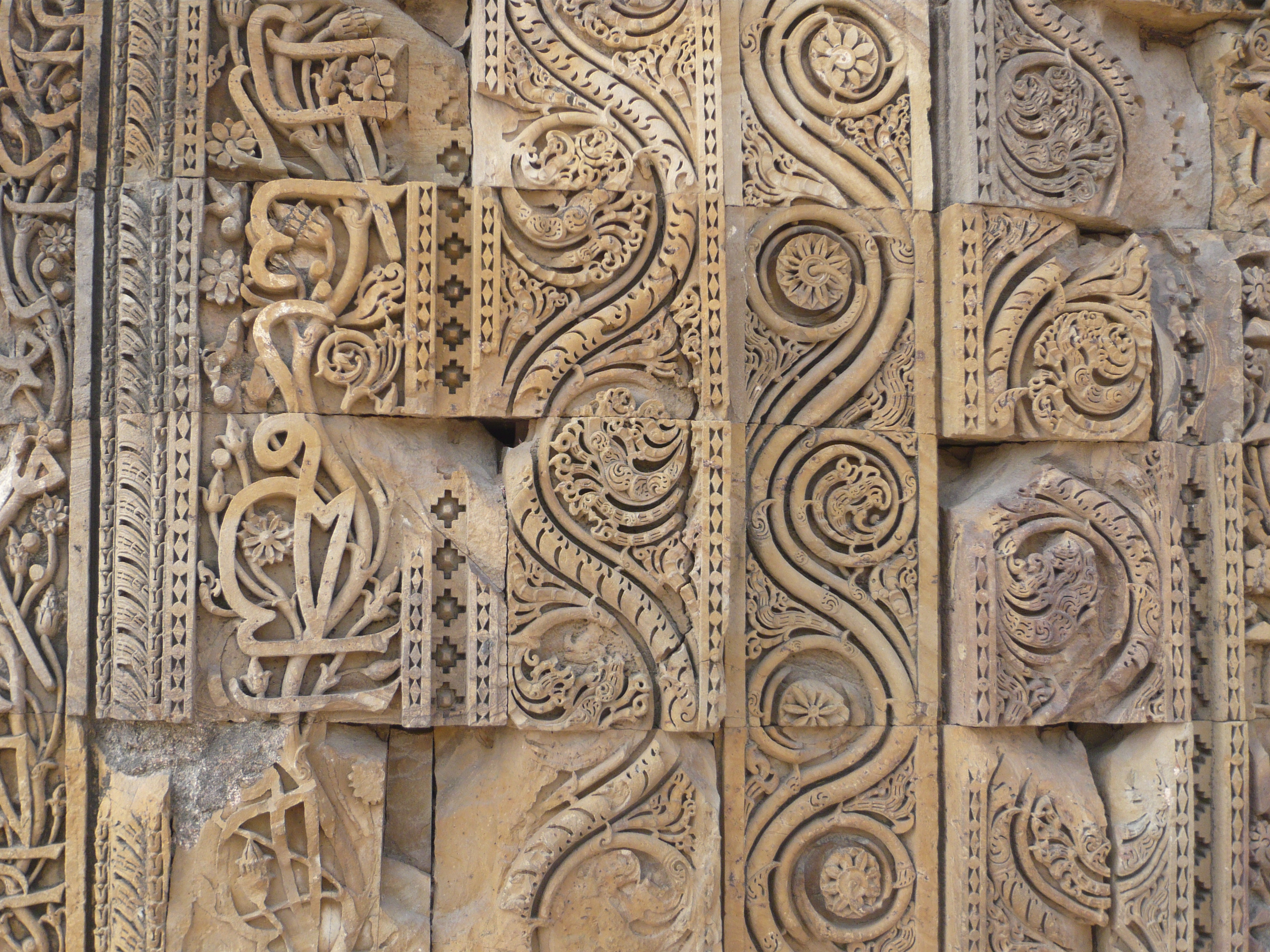
Decorative details of the stonework. Most artistic decoration is, as usual with Islamic craftwork, patterned work and verses from the Koran. At Qutb Minar, there are also plentiful stylised, and sometimes surprisingly realistic, depictions of plants with flowers and buds and long, winding stems and tendrils. To construct the mosque, artisans used stone from Hindu and Jain temples and many stones and panels still depict the original carvings, frequently defaced but still recognisable.

178.JPG

The famous ‘non-rusting’ iron pillar. This stands in the courtyard of the mosque and was here long before the mosque was built. It was made in the reign of Chandragupta II (AD 375-413), is composed of almost pure iron (99.72%) and shows only the slightest sign of rusting. A sanskrit inscription on the pillar indicates that it probably stood originally outside a Vishnu temple, possibly in Bihar, and was moved later to this site. It would probably have had a garuda, the vehicle of Vishna, on the top. 

207.JPG

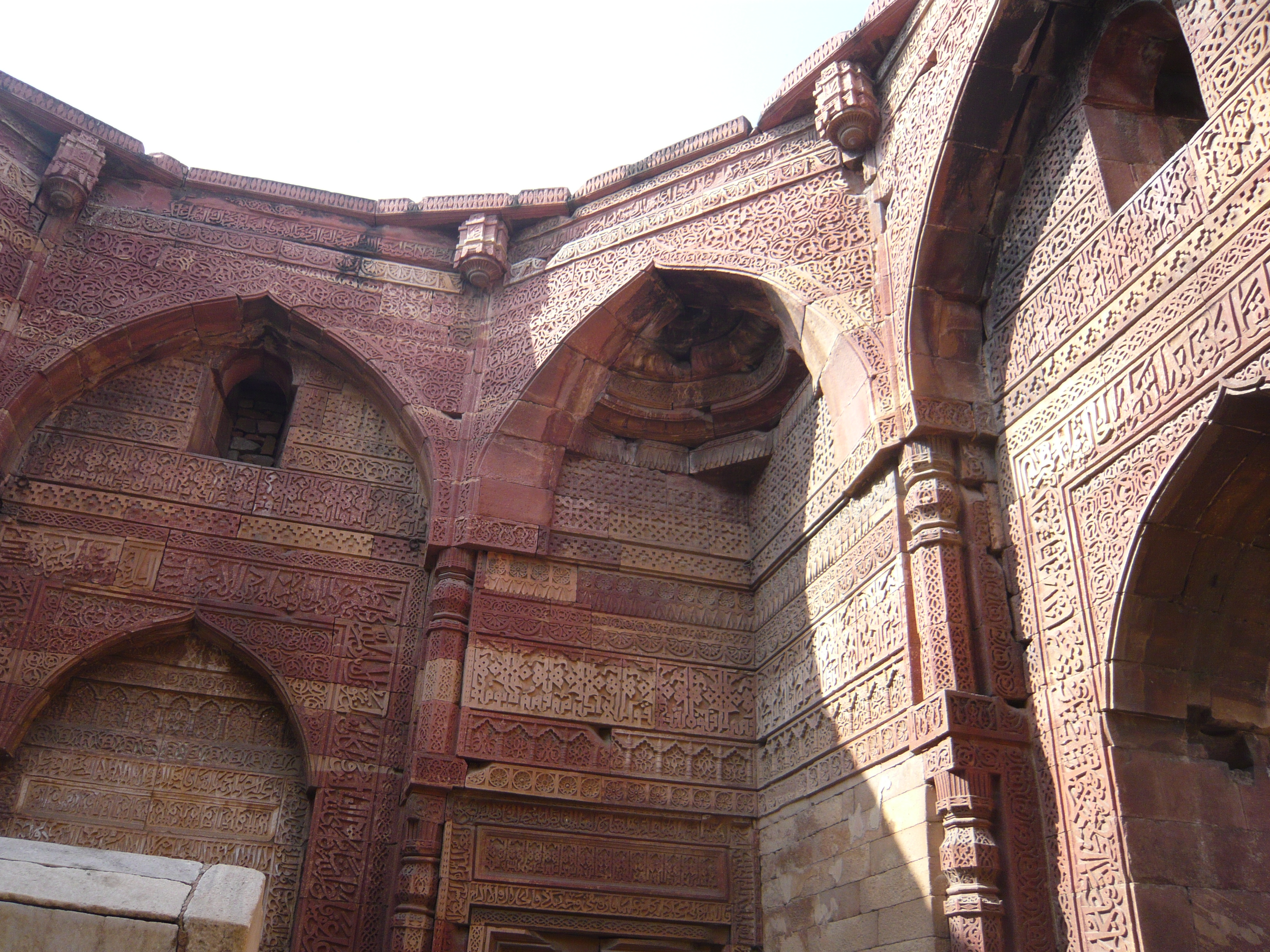
Squinch-arch in Iltutmish’s Tomb. A squinch is a ‘bridging’ structure, used here to support a dome (now gone). Iltutmish was Shamsuddin Iltutmish (ruled 1211-1236), 3rd ruler of Delhi (after Qutbuddin and Aram).

175a

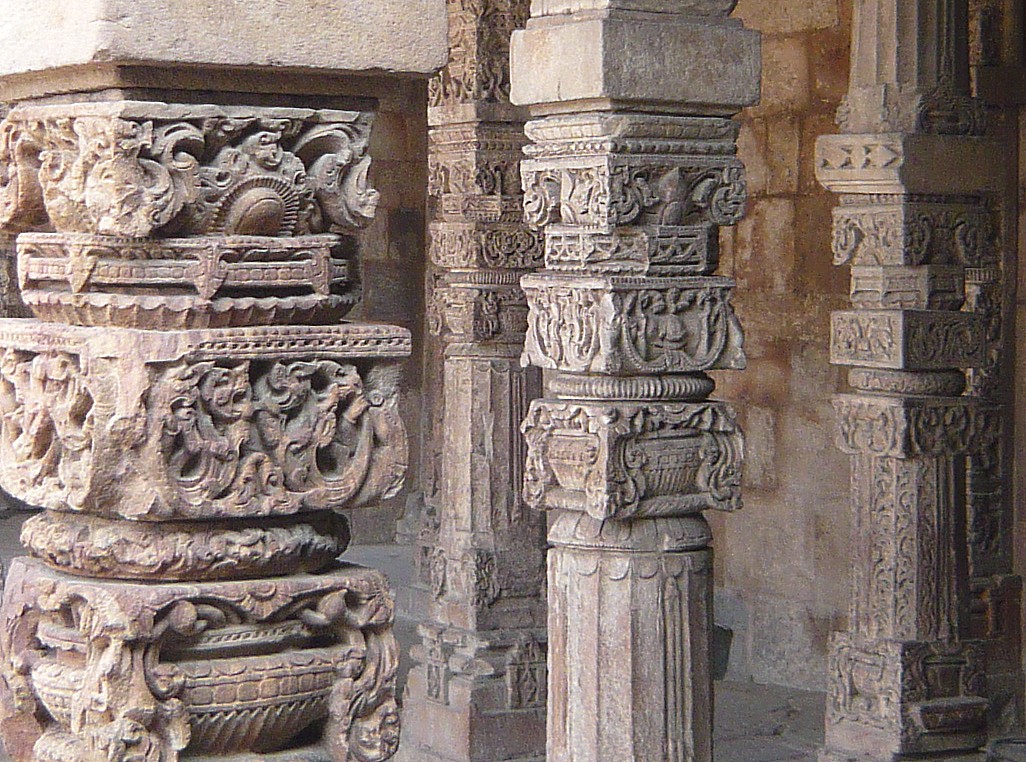
Brahminical motifs on the columns of the Quwwat-ul-Islam Mosque. These pillars were originally part of the Hindu and Jain temples that were razed in the area when Qutbuddin built his capital. It is chronicalled that 27 temples were destroyed. They would have been reassembled by Hindu craftsmen, Qutbuddin using local labour.