Lost and Found in Translation

Untitled-Grayscale-02

I have read many novels, short stories and poems translated into English from other languages, but I wonder how much of what I read is true to the original intentions of the authors?

The Argentinian writer Jorge Luis Borges wrote many short stories and poems, all of them in his native Spanish. Although I did buy one collection in Spanish, my own knowledge of that language has always been too poor for me to do anything other than read it slowly and laboriously and, undoubtedly, to miss many of the nuances in the writing. So for that reason, I’ve had to read them in translation.

And in any case, even if I spoke Spanish well I could do little more than read it as translation in my head. Unless I spoke it like a native speaker, I would still likely miss much that the author intended to convey.

And so I buy translations.

Zima Junction by the Russian poet Yevgeny Yevtushenko is a long poem that tells of the poet’s visit to his home town in Siberia, having left some years before to go to live and work in a city. It is a beautiful depiction of rural life in Russia at the time, seen afresh after a gap of several years away, and describes the poets now ambiguous relationship with it.

Long poems can be good vehicles for describing journeys; my own poem The Night Bus does just that, and was written because in that instance I could not find any other medium that worked as well to convey what I wanted to say.

Another favourite of mine is Dart by Alice Oswald, which describes a journey from the source to the sea along the River Dart in Devon, England. She gives voices to the various people encountered along this journey, and to the animals living there…Since it is written in English, I am not left with any worry I am missing things the poet wanted to say, other than perhaps my own occasional inability to understand her.

I have a book of poems from North East India. It is an anthology that I bought in India, with contributions from a huge number of poets. A few of them wrote in English, but the majority of them wrote in other languages – some in Bengali, but the majority in one or other of the plethora of languages to be found in the North East States. And, sadly, most of the translations appear to have been done as a straightforward translation word for word, with no thought given to the feeling of the poem. Any rhythm the poems may originally have had seems to have been lost. The sentences are often clunky and uncomfortable to read. Their meanings have become lost in translation.

But Zima Junction has a natural and comfortable rhythm

The translator of a poem has, to my mind, a task that is more difficult than the translator of prose. Yet, paradoxically, they also have more freedom. More difficult, because they have to get across to the reader ideas or meanings that may be partly concealed in idiomatic language used by the author that perhaps we have no parallel for in English, and hence they may have to completely alter the structure of that part. This will affect a line of poetry far more than it would a line of prose. Immediately, the rhythm of the poem is disrupted, the word count of the line changed.

Yet the reader of a poem has a right to expect a poem. And so, strangely, the translator has the freedom to re-write the poem. In the need for the end result of their translation to be a poem, they may have to completely alter much of the structure to enable the translated words to reassemble themselves as a poem. And so the translators of poems must, by essence, be poets themselves.

So to return to Borges and Yevtushenko, when I read the poems I do wonder whether I am actually reading their poems, or someone else’s?
Wordy Wednesday 3

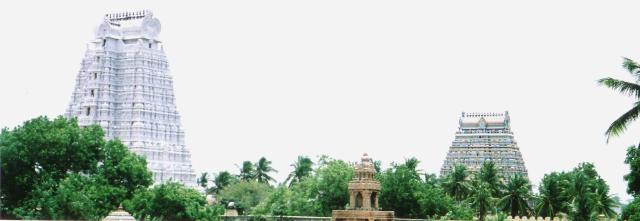
trichy temple 2

Arv’s comments on last week’s Wordy Wednesday post reminded me of some of what stirred my interest in the history of language. Reading about the unexpected discovery in the nineteenth century of the great similarities between words in Sanskrit, the ancient written language of much of the Indian Subcontinent, and words in Ancient Greek and Latin which were a starting point for the study of Linguistics, was something that fascinated me.

The word for ‘father‘, for example, is ‘pita‘ in Sanskrit, and ‘pater‘ in Latin and Greek.

The word for ‘mother‘ is ‘mata‘ in Sanskrit, ‘mater‘ in Latin and ‘meter‘ in Greek.

The word ‘Aryan‘, actually has the meaning of noble or honourable in Sanskrit (arya), which in Latin becomes ‘ariana‘ (holy) and in Ancient Greek ‘areia‘.

And there are other, seemingly more unlikely, connections.

The word for ‘horse‘ is ‘aswa‘ in Sanskrit, and ‘asva‘ in Lithuanian!

Whether the implications behind this are that there was a great mixing of peoples in those days and that different civilisations adopted words from the others, or that all these languages descended from one single, now lost, language in the distant past, can never be known for certain, but the evidence for the latter is extremely strong, especially as the world population was so much smaller then.

Modern research suggests that Sanskrit, spoken by the ancient tribes of India who called themselves ‘Aryans’, entered the Indian subcontinent from the north west, an area both closer to modern day Europe (and its languages) and to the source of the original migration of peoples out of Africa.

Of course, the theory of a single original language puts me in mind of the myth of the Tower of Babel…

My interest was also stirred by a number of similarities I came across when I was travelling or working overseas. One example will suffice:

Cat‘ is ‘chat‘ in French, ‘gato‘ in Spanish and Portuguese ‘katz‘ in German, ‘kot‘ in Polish, ‘kot‘ in Russian and ‘kitta‘ in Arabic.

I think the real significance of these similarities is that when you consider it logically, I don’t suppose that the speakers of all these languages were just waiting for someone to come along and give them a useful word for the furry mouse-catchers they had hanging around their villages and towns. It seems entirely probable that they all contain similar words because all those languages descended from one common source.

And this all leads me to one final thought (deep breath!)…in this ancient, lost, original language of our distant ancestors, we can be fairly certain, for example, that the word for ‘father‘ was something similar to most of its derivatives in use today. As well as the Latin, Greek and Sanskrit examples above, it is ‘padre‘ in Spanish, ‘pere‘ in French, and ‘vater‘ in German.

We may not be able to reconstruct this language (although in the future, who knows?), but we can certainly make a good guess at what a number of its words were, and they were words that most of us are familiar with today.

Starless and Bible-Black – Under Milk Wood by Dylan Thomas

009

After my previous post, it seems entirely apt to post a review, today.

Writers rely upon reviews to sell books. To spread the word. And I am conscious how bad I am at leaving reviews – mainly because I’m not very good at writing them. But I Shall Try To Do Better!

To start with, this is the review I left on Goodreads some time ago for a book that is already very well-known.

This book begins, then, full of rich, playful language as it sets the scene and gradually introduces the players.

To begin at the beginning:

It is spring, moonless night in the small town, starless and bible-black, the cobblestreets silent and the hunched, courters’ -and -rabbits’ wood limping invisible down to the sloeblack, slow, black, crowblack, fishingboat-bobbing sea. The houses are blind as moles (though moles see fine to-night in the snouting, velvet dingles) or blind as Captain Cat there in the muffled middle by the pump and the town clock, the shops in mourning, the Welfare Hall in widows’ weeds. And all the people of the lulled and dumbfounded town are sleeping now.

I have heard poems by Dylan Thomas read by Richard Burton – the actor, not the nineteenth century explorer – and his warm, mesmeric, lilting tone suits the poetry like no other voice I could imagine. Now, I cannot read any Dylan Thomas without hearing it read in his voice.

(I want my work read like that. There is a man I know with a wonderful voice; mellifluous and rich and deep, like Burgundy and dark chocolate. Not Welsh, but very English, who I shall attempt to trick into reading one of my poems or short stories out loud, one day.)

So, to the poem, or play, if you will, for it is a play, first and foremost, told as a prose poem. The play is full of wonderful voices, the voices of a plethora of small-town characters; all of them realistically drawn with their dreams and vices and foibles, and depicted with great humour, but also with sadness. Sadness, for there is resolution for most of the characters, and for some their dreams come true, but others are disappointed.

All of these characters love and hate and desire each other, they reminisce, they have ambitions. In this play, they all have their day. In this place, each one gets to tell their story, or have it told for them.

From the very beginning, the language is rich like double cream and brandy butter; too rich, perhaps, for certainly by the time I had begun to near the end it had become too much. I found myself yearning for more plain, simple language. I wanted a few bread and water phrases.

But the words invite you to savour them slowly – in fact, they demand it. Perhaps the secret, then, is to read this little and often; to dip into it and immerse yourself in the language.

I really wanted to give this masterpiece four and half stars out of five, but without that option, I give it five, although with the caveat above.

How to Swear

Strangely, I was inspired to write this post after my virtual trip to Nepal with Bob, although ever since the unfortunate and divisive events in the US and the UK, I have been inundated with a request from my follower to produce this guide.

This guide, then, is intended for those who find themselves in situations of such extreme frustration that a safety valve needs to be opened before anything useful and practical can be done about the problem. Or, indeed, before a physical injury is sustained unnecessarily.

I feel your pain, I truly do.

And so I humbly offer you, the reader, this handy cut-out-and-keep Guide to Swearing.

Swearing loyalty, swearing allegiance to something, swearing to tell the truth…that’s not what this is about, even though it’s a related subject.

No, this is about swearing!

IMG_0003

The swearing we might indulge in when someone or something irritates us beyond simply acknowledging that fact.

The swearing we might indulge in to demonstrate to others, or even just ourselves, how remarkably annoyed by that situation or person we are.

Something along the lines of ‘Blistering barnacles!’ for readers of a certain age. Or the mutterings of Mutley in ‘Wacky Races’ for other readers of a certain age. I’m afraid these cultural references will be lost on some…you’ll just have to swear at me for using them.

Firstly, and most importantly, one should choose the correct moment. I would not advocate swearing at any random time, for it is unlikely to have the desired restorative effect and, indeed, leaves the unwary user merely looking like a pillock.

Examples of bad moments might be during a marriage proposal, or an important meeting with your boss.

Whereas an example of a good moment might be, for the English cricket supporter, the following. Let us say that after losing an early wicket, in comes number 3, a contentious choice in any case, given his recent form, and promptly gives away his wicket with an ill-advised and airy shot to the first ball he faces. That would be an excellent time.

I used to find that a really good occasion would sometimes arise when I worked night shifts. Being awoken in the middle of the day, when I had just managed to get to sleep, by an insistent caller at the front door who demanded to know whether I had invited Jesus into my life, invariably worked.

A little bit of research might be helpful, here. Since you are unlikely to be the only person indulging in a bit of swearing (unless you live in a convent, or somesuch…and maybe not even then), you could stand out from the crowd by using some of the less-commonly heard swearwords. You might derive a certain amount of satisfaction, for example, by comparing your unfeeling relative to the intimate parts of a mammal, but how much more interesting for both spectators and participants to employ some rarely heard Viking term for the feeling one gets when an unusually cold gust of wind catches one unexpectedly just as one begins to perform on the privy?

That’s class, that is.

A few key words:

Adjectives. A careful use of adjectives will enable the Swearer to not only modify and enhance the power and meaning of the chosen epithets, but also, with a certain amount of skill, extend the outburst for up to a minute without the need to introduce a new noun, keeping those in reserve in case a second assault is required.

Breathing. Remember to breathe while swearing. Running out of breath suggests that not only have you not given due thought to the composition of your swear, but, worse still, perhaps have also lost control of the entire situation.

Cursing. Now, this is another thing entirely, and outside the remit of this post. Rather than simple (or complex) swearing, cursing implies the actual placing of a curse upon another person, with the aim of causing them injury, sickness or death. I shall deal with this more fully in my up-coming post ‘Getting Promotion at Work and Dealing With Troublesome In-laws’. There are those who hold that the two are interchangeable (cursing and swearing, I mean, not promotion and troublesome in-laws), and that the person who, in a moment of great stress and deep personal antipathy shouts something along the lines of ‘Trip over a nasty lump in the ground and hurt yourself, you frightfully horrid person!‘ is merely swearing, yet all they are doing is actually attempting to curse the recipient, albeit in an amateur and rather un-thought out way, and then tacking onto the end something that is technically a mere insult, which should only be used in other, carefully defined, situations (see ‘Using insults in carefully defined situations‘).

Happy ****ing swearing.

Pitfalls for Writers – 4) Language; a bit of a follow-up

Back somewhere deep in the mists of time, I published ‘Pitfalls for Writers 1’. In this, I discussed some of the potential problems of language in a novel.

If I am to write a story of medieval Persia, for example, I will write it in English. No one who reads it is going to be fooled into thinking that my characters were really speaking in English. But this on its own is not enough. There must be something in the language I use that reminds the reader that the story setting really is medieval Persia.

P1050055

And so I suggested using a flavour of the speech. I might sprinkle the conversation with words such as ‘dirham’ (a unit of currency), or ‘djinns’ (genies). The characters might smoke a ‘qalyan’, which is how they would have referred to what we generally call a hookah. A greeting might be ‘Salām ʿalaykom’.

In the comment stream that followed, I concluded that I might employ a glossary, but certainly not footnotes.

This has now become most relevant to me.

About a month ago, I finished reading Anuradha Roy’s ‘The Folded Earth’. It is a novel that is set in India, written by an Indian writer, yet it uses a glossary, although she is presumably writing in the first instance for an Indian audience. This glossary explains a few words and phrases that many western readers would be unfamiliar with, although I would expect the majority of Indian readers to know them all.

My own novel is being read now by generous beta readers, and some of the discussion is over the use of the appropriate Hindi / Urdu words in the text.

And so, with ‘The Folded Earth’ as an example, I shall definitely use a glossary.

Next, it is important to employ the correct voice.

Speech:

Clearly, if the protagonists of a story are sitting down to a meal, they might complain about the amount of fat on the meat, but they would be most unlikely to refer to it as ‘adipose tissue’. Unless one or both were, for example, surgeons.

Very few people would be likely to refer to two items as being ‘in casual juxtaposition’. They would be far more likely to say something along the lines of ‘oh, they look a bit odd next to each other.’ As tempting as it might be for the author to show off their vocabulary, it is something that should be used most carefully.

Narrator:

If the story actually has a narrator, then this becomes even more important. The country bumpkin relating an everyday tale of rustic shenanigans should not be employing sophisticated and subtle wordplay. He or she should only be employing language that they would naturally use.

Author’s voice:

Even if there is no actual narrator, it remains important to use only language that would be natural to the situation. For example, it sounds plain wrong to describe a group of Vikings ‘computing’ an answer to a problem, even if it is only the author describing it that way.

Generally, of course, and I know that some will disagree with this, it is usually better to avoid all flowery and showy language in novels, and use simple language well.

Finally, a jarring note found in a few modern novels set in older times, is that the characters often think like modern folk. Reading these books as against books written, perhaps, 150 years ago, it is not just the style and language of the writing that are different, but also the prejudices. The hero of a novel set in 1840 is going to have casual prejudices against, perhaps, people of another race, women, etc etc. We tend to be reluctant to set these down in print, nowadays, perhaps as if by doing so we are almost admitting to having these prejudices ourselves.

However, if we want to depict our characters realistically, we need to do so ‘warts and all’. And if the writer is going to depict them otherwise, then he or she needs to have a good reason why they do.