Writer’s Notebooks (2) – The Purge

I’ve been doing some clearing out.

I must have had around twenty notebooks on my shelves. However, once they’re filled up, they are almost never opened again. Once finished, they’re put in a drawer, or on a shelf, and then pretty well forgotten.

Taking up space.

Occasionally I might be writing something and vaguely remember noting down something that might be relevant, but I’d never be able to find it again, so I usually didn’t bother. Anything worthwhile I might have written down while out for a walk or on a journey someplace, never seen again.

Yet when I actually come to sit down and read through them again, there tends to be nothing I want to use. Nothing that seems relevant. Either superseded by other ideas, or simply not any good.

Then there are the notebooks I used to develop novels, short stories, etc. No longer needed when the work is finished. Why hang onto those?

So they’ve all gone. It feels very cathartic.

Red Herrings

I had a couple of conversations the other day on detective novels, in which red herrings were mentioned, and it reminded me of something I had been reading a few days before, as well as one verse of an old nursery rhyme, the words recorded in the 1800’s, which goes thus:

The man in the wilderness asked of me
How many strawberries grew in the sea.
I answered him, as I thought good,
As many as red herrings grew in the wood.

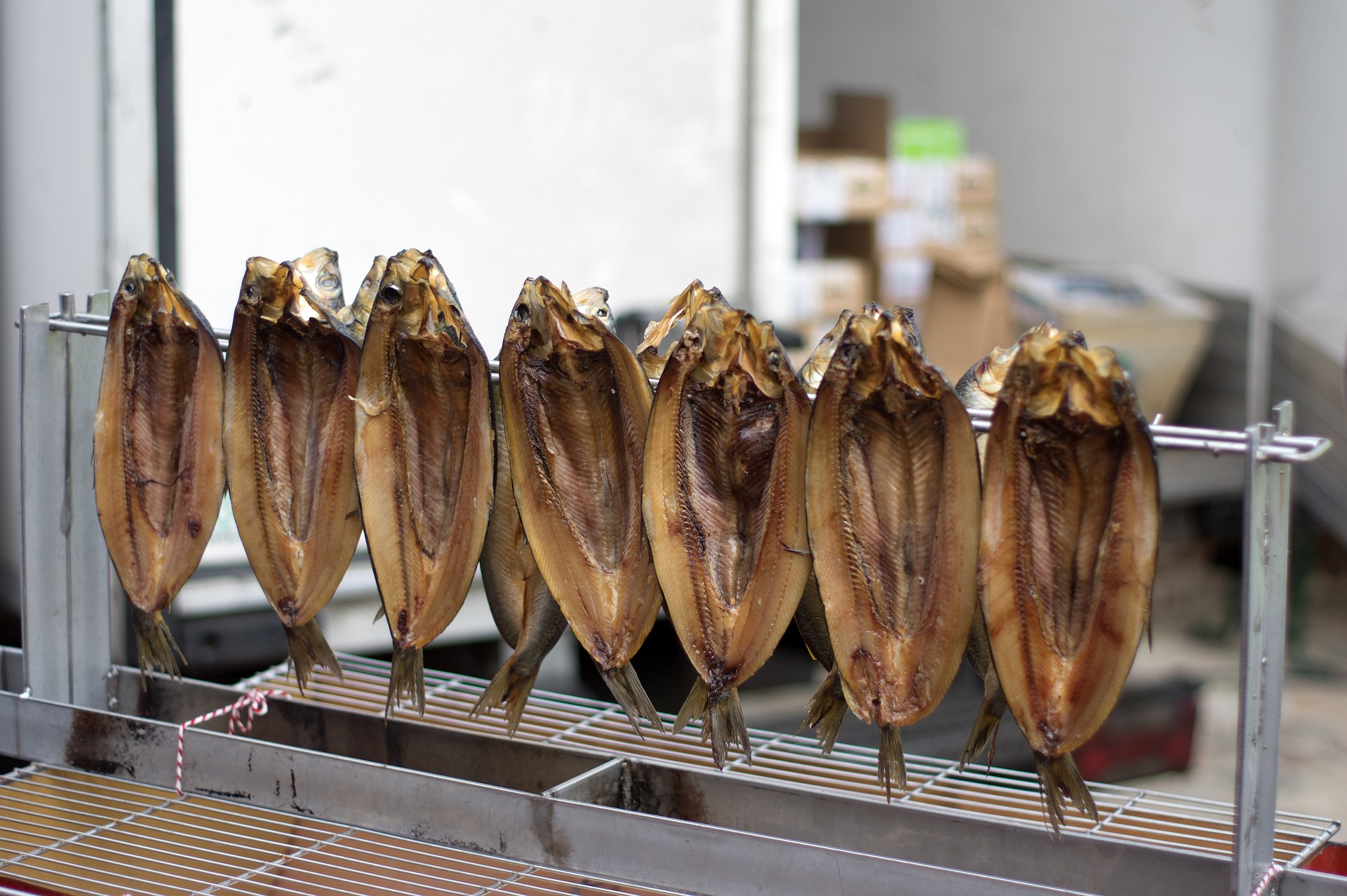
Pixabay image

It is supposedly one of the lesser-known nursery rhymes, but I came across it in one of the books my children had when they were small. Possibly, the Tale of Squirrel Nutkin. Again, there is an old song occurring along the English east coast called the Red Herring, of which these are the first two verses:

1
What shall we do with the red herring’s head?
Oh, we’ll make that into feather beds, and all such things,
We’ve red herrings and heads and feather beds, and all such things.

Chorus
Of all the fish that swim in the sea, red herring it is the fish for me,
And all such things.

2
What shall we do with the red herring’s eyes?
Oh, we’ll make ’em into puddings and pies, and all such things,
We’ve red herrings and eyes and puddings and pies,
Red herrings and heads and feather beds, and all such things.

There seem to be many versions of this, one of which was collected by Cecil Sharp, well-known as one of the first people to travel around England in the early 1900’s collecting and writing down folk songs, afraid they would become lost as, in a rapidly modernising world, fewer and fewer people now sang them.

Unusually (because I never trust it as a source) I looked at Wikipedia which merely defined a red herring as a distraction, or something misleading. It suggests the term came from a strong smelling smoked kipper which could be dragged across a track to put hounds off of a scent.

And what it reminded me of was that a dictionary of the Sussex Dialect, published in 1875 does not have a particular entry for red herring, yet under ‘White-Herring’ is found the definition: A fresh herring, as distinguished from a dried one, which is called a red-herring. Delving a little deeper, we find references to dried, smoked, herrings – named red herrings – in use to mask the scent of trails both literally and figuratively, in a story published by William Cobbett in 1807 and also a couple of references from the 1780’s. There is apparently a bit of disagreement over where the phrase was used first in that context, but that doesn’t seem relevant here, it’s just interesting to find out that red herrings actually exist, and how they came to assume the role they have in literature and everyday conversation.

The Sussex Downs Murder – Not Really A Review

24958623

For anyone who loves the English South Downs – and whodunnits – this book makes an interesting read.

On the one hand, it is a fairly average 1930’s detective murder mystery, although I have certainly read much worse, but on the other it provides some marvellous insights into the South Downs in the area specifically around Chanctonbury Ring in that time, which is really what took my interest.

Personally, I prefer murder mysteries involving ‘normal’ people, rather than the typical country house full of assorted Colonels and ladies and royalty and such-like, so popular at the time – other than the thought of bumping off the Upper Classes, of course! But this book delivers in that it is set on a downland farm, where the farmer goes missing, believed murdered. It even has, as a cover, an adaptation of one of the fabulous Leslie Carr railway posters of the 1930’s – what’s not to like?

The introduction mentions its ‘sense of place’, and the writing seems to me especially good at conveying an accurate feel of the landscape. One thing that comes over very strongly is the emptiness of the countryside at that time. The Downs have been sparsely inhabited since Roman times; before then, much of the population chose to live on the higher, drier, lands of the chalklands of South and South East England, away from the forested and frequently marshy lower areas where travel was difficult and clearance very hard work. After the arrival of the Romans, however, all this changed, and since then the chalklands have been left largely to a small population living mainly by farming sheep.

We now have many people visiting for leisure purposes and on fine days popular routes such as the walk to Birling Gap from Eastbourne (or from convenient car parks much closer!) may easily see hundreds of visitors striding along the footpaths and hanging off the edge of the cliffs taking selfies (other stupid ways to kill oneself are available). On the same day, though, nearby footpaths may see no visitors at all. It is still a sparsely populated area.

John Bude evokes this sense of emptiness well. His descriptions of the roads and paths on and around the area really allow the reader to feel this. His characters walk the lanes and roads of the downs frequently without meeting anyone else on their journeys. Farms and houses are ‘isolated’, and even at a time when most people would travel by public transport to cover any distance, the population is so small that when questioned by the detective on the case, a bus conductor can remember who was on his bus several weeks before.

There are four lime kilns near Washington, on the edge of the area described in the story, which I suspect were the inspiration for the lime kiln featured on the farm in the book. No spoilers, but you might well guess their relevance to a murder mystery.

But it is the descriptions of the roads and paths that particularly take my interest, roads and paths virtually empty of footfall or traffic even during the day, emphasising how lightly populated the area was, and still is today, to a degree. Other than popular footpaths such as the long distance South Downs Way, and those footpaths running between popular tourist spots, it is still easy to find solitude in this quiet area of the otherwise heavily populated South East England.

The Collector

Inspiration, writers’ block, ideas…I could write about all or any of these topics. Instead, I thought I’d simply post another poem – plus, of course, a picture (with far better weather than we’re having here) – and let it do the job instead.

337a

I’m a collector of images long stored in my memory,

A desert inferno of razor-sharp rocks.

A mountain breeze rippling an icy cold puddle,

Thick mists and thin soups, flowers, trains, and old shoes.


I’m a collector of memories, both mine and ones borrowed,

The harrowing journey, the lovers’ first kiss.

There’s betrayal and loyalty, flatulence, hope,

There’s a child being born, and a wolf at the door.


I’m a collector of stories, the stranger the better,

Believable, odd, and ridiculous too.

Close to home or historical, alien, fanciful,

Some to keep secret and some I can tell.


I’m a collector of moonbeams and of chance reflections,

A collector of sadness and bittersweet pain.

A collector of strangely shaped stones in a circle,

And dreams that tell stories I don’t understand.


Let’s Rid the Internet of Kittens

What is it about the internet and kittens, for goodness’ sake? There are far too many pictures of them.

Okay, that’s too provocative. Let’s move on.

005

She Who Dislikes Being Referred To This Way has been away for a few days. I had presumed that I would sleep better without the snoring, and the duvet being constantly pulled off me, but I was wrong.

For some reason, I’ve not slept particularly well at all.

Perhaps it was the wild parties I’ve no idea why not.

I had intended to begin a painting, maybe even get it finished, but although I carefully planned said painting, even finding a few resource pictures to use, once I sat down in front of the paper, it just refused to happen. My mind went completely blank and my enthusiasm kicked the wall sulkily for a few moments and then ran out of the house sobbing.

Oh well, back to the writing.

I did have a few ideas for short stories and, because I know how to use my time both productively and wisely, immediately started writing two of them, as well as continuing with both the novels I’m writing. That’s what you’re meant to do, right? Isn’t it?

Oh, and a poem.

And, of course, I need to do research for all the various Tales In Process. Isn’t it amazing what a little bit of research throws up?

Here are just a couple of little snippets, a few gobbets of curiosity, that I have come across recently while researching topics in medieval Persia and India, for use in my #1 Novel In Progress, The Assassin’s Garden.

All of the prostitutes in Fatephur Sikri, India, during the short time that it was Akhbar’s capital, were kept in an area just outside the city called ‘The Devil’s Quarter’.

You do get sidetracked, of course, but perhaps that will be an integral part of the plot? Possible spoiler alert?

I wouldn’t like to say.

And at one point, there is a long journey undertaken in my book, by caravan.

‘Caravan’ is a Persian word, I discover. That seems appropriate. In some parts of Persia they would travel by day and rest by night.

In others, the reverse was true. Something to do with the temperature, I expect.

In the nineteenth century, there were caravans that existed just to transfer corpses to holy cities for burial. These disappeared in the early twentieth century, largely due to better understanding of how diseases spread!

And, obviously, I mean the caravans that are chock full of camels and traders and an ill-assorted collection of ne’er-do-wells, not the wretched giant metal boxes blocking ninety percent of our roads as soon as the weather shows even the faintest promise of a few hours of sunshine.

But enough of caravans, for now, I’ve got some words to beat into shape.

Oh, and there are still people who would prefer pictures of kittens?