Go On A Journey!

Everyone should go on a journey; a journey of discovery.

Even if they only do it once.

The journey will be different for everyone. No two journeys will be the same. But what they will have in common is that they will all be journeys where the traveller discovers something about themselves, as well as the environment where they have chosen to journey. The essence of the journey is that it gives the traveller both time and space to think; that on the journey they allow themselves to be open to new sights and thoughts and people.

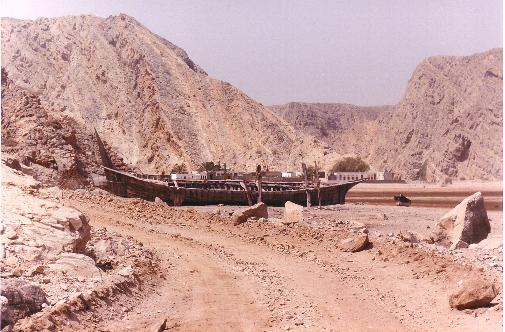
boat

For some, it will be a carefully curated tour to a country with a different culture to their own. Perhaps a Westerner travelling to Nepal or Cambodia, or an Indian visiting Spain or Iceland, with a carefully prepared itinerary designed to help them get the most out of their journey.

For some, it could be much the same, but as an independent traveller. They would have the flexibility to either keep to a strict itinerary, or to go off somewhere new as the whim takes them. Because everyone’s sense of adventure is different.

For some, it will be a long, long trek through difficult terrain, pushing themselves physically and mentally every step of the way.

img_0010

For some, it might also be a long journey, but under easier conditions, where the aim is more one of contemplation, perhaps a pilgrimage of sorts.

For others, the difficult terrain might be that of their prejudices and fears – the terrain of the mind.

006-2

What starts as a pilgrimage might end up in your discovering that you do not believe in God; well, that is fine. Remember, it is perfectly possible to be a spiritual person without believing in any god.

Although what ‘spiritual’ actually means is not so easy to nail down. I think of it as pertaining to the spirit, rather than to material things. In that sense, I would associate altruism with the spiritual, and greed with the material. A sense of calm and peace with the spiritual, a rowdy hedonism with the material.

For some, the journey might be from their house to a town or village a few miles away, and the journey might take no longer than a day.

034a

It is essential, though, that the journey is undertaken for the sake of the journey. The destination is, in some ways, unimportant. It is what happens on that journey that matters.

Many, perhaps, will journey without realising that they have done so, or arrive at their destination not realising that is what it is. They might only realise later.

Some will arrive at a totally unexpected destination, and perhaps that is the best destination of all.

Go on, then, off you go!

A Shared Humanity

‘The world knows nothing of its greatest men’ goes the old saying. Or women, of course, since it is men who tend to write these things. I may have alluded to this before.

017

I was reading a blog post by Rajiv earlier today, on the partition of India and Pakistan in 1947, and we swapped a couple of comments, the result of which decided me to write this short post. You can read Rajiv’s post here: Partition in the Punjab

Those of us who did not live through that time, cannot really imagine the full horror of it all. The figures alone are dreadful.

14 million people were displaced, forced to move from their homes to either what remained India or became East or West Pakistan, by any means of transport available, frequently on foot. Those that survived the journey, frequently one of tremendous hardship, carried memories that were often too dreadful to relate.

Most lost their possessions.

Families were split apart and separated, many of them never to meet again.

Millions of refugees.

Up to 1 million were killed in what were effectively religious killings – the actual figure is unknown. Trains were set on fire, men and women, adults and children, lost their lives in what became a frenzy of killing.

Much, of course, has been written of this over the years, and the blame placed on many shoulders. The British were extremely culpable in this case, mainly through neglect and thoughtlessness. Those that assumed power in India and Pakistan need to take their share of the blame, too.

But the world, as I remarked at the start of this post, knows nothing of its greatest men. Or, in this case, its greatest men and women, or at least very little of them.

On both sides of the new borders, whilst most people succumbed to fear and many to hatred, whilst innocent lives were taken and dreadful acts carried out, there were many, many people who sheltered and saved those of other religions who had been their friends and neighbours before, often at great personal risk.

They gained nothing from it, but simply displayed their common humanity.

I have read of a few examples of this, a few stories from both sides of that border, and I have seen it mentioned briefly in documentaries.

But now, before the last players in that tragedy finally pass away, it would be marvellous if there could be a concerted effort to collect these stories and record them, as an inspiring example of people reaching out to each other across what is, once again, becoming a depressingly familiar religious divide, and, most importantly, remembering and commemorating their bravery.

Oh heavens, why on earth did I follow that blog?

Untitled-TrueColor-02

Every now and again I get unfollowed. And every now and again I unfollow a blog. Is it a big deal? Should it be a big deal?

At first, it can seem hurtful to find that someone has unfollowed you on any sort of social media, but really it shouldn’t be. Somehow, I find that I now follow a huge number of blogs, most of which I love, and I do wish I had more time available to read them more fully and comment on them, but I don’t. This means that every now and again I sacrifice one for the common good.

But, never without good reason.

First up, one thing that does irritate me, is when I visit and read a blog, leave a response – sometimes a quite lengthy one – and never receive any sort of reply. One blog that I initially followed was like this, and when I had left several comments that were never even acknowledged, I went through their comments strings and found that they could not be bothered to reply to anyone.

Instant unfollow. I dislike rudeness.

What other reasons?

Okay, so maybe I was attracted to your blog initially by the posts about cuddly kittens and home baking, but now the focus of your posts has shifted to motor vehicle maintenance and origami, and I feel my interest is waning. It’s time to move on. Don’t take it badly – what we had was good, but we all grow and develop and change over the years, and what was once right for both of us now leaves at least one of us empty. I wish you well, but I’m leaving you for another.

A little like the above, perhaps I found your blog through a particular post that interested me, but since then it seems that every post is on subjects that don’t. I’m sorry, I gave it a few months, I gave it a good try, but it’s just not doing it for me. Bye bye.

I unfollowed one blog because every post was a long moan about other people. Sorry, there was no pleasure to be had in reading that one.

Perhaps I notice that where your blog was originally full of carefully argued points and good language, it has become home now to foul-mouthed polemics and crude language in general. Hmm, perhaps you should take this one personally. I won’t be the only one to leave.

So, every now and again I see that my own number of followers has fallen, and that I’ve been unfollowed. My reaction? I do wonder whether I have written something boring or offensive, and occasionally re-read a few of my posts in that light. That’s okay, it’s constructive and encourages me to think about what I’m doing.

Perhaps we should all hope to get unfollowed every now and again, just to make us focus constructively on our posts.


The Travel Bug bit me – part 1

Travelling! My first inclination to travel to remote regions came from my Grandmother, when I was probably six or seven years old, despite the fact that she had never travelled very far at all in her whole life. In fact, I don’t think that she ever left England.

But she would tell me stories of China, inducing images of Emperors and pig-tailed mandarins, peasants and bandits, and this was coupled with a children’s book; an encyclopaedia I presume, with grainy, black and white pictures of strange scenery. It was extremely evocative, although at the time I did not understand that. I was just excited by the mysterious, the strange and the unknown.  I was hooked, and wanted to go there! Ever since then, the places where I’ve most wanted to travel, other than Britain and Europe, have almost all been in Asia.

The list of places that I have at the moment that I would like to visit, are almost exclusively Asian.

Yes, she has a lot to answer for, that sweet old lady.

hill station 2

When I was a teenager, I began to use maps, although in rather an ad hoc, hit and miss manner.

They were there for me when I was really stuck, or I just wanted to know in which general direction something lay. It would be a very long time before I began to use them in a skillful way, able to predict the exact lie of the land, navigate in the fog or the dark, or find my way through complicated landscapes with the map and compass. And, do you know, since I’ve learned to do that, I often feel as though I’ve actually lost something rather magical, although I don’t suppose that I can blame it all on that. The maps that I was using as a teenager would tend to be the Bartholomew’s Touring Maps, small scale with little detail. I would feel, as I headed along a Cornish footpath, that I only knew roughly where I was going. It always felt like an adventure; an exploration.

Now, I need to be more and more remote before I can get that feeling, and even then it does not always work. Some ten years ago, I spent a couple of weeks in Ladakh, in the Himalaya in the far north of India, and I was surprised at just how easy all of my walking was. Setting off with map and compass, I always knew exactly where I was, only confused at times by the multiplicity of tracks criss-crossing the landscape. Even then, reference to mountains and villages with map and compass would invariably allow me to set my position.

That doesn’t mean that I wanted to get lost, just that there was a small part of me that said ‘even this is all tame!’ Equally, I can be put off, when using a map, by the knowledge that over the interesting looking ridge that I am heading for, there lies a motorway or building estate, and so I then spend ages trying to plot a route that I try to get perfect, rather than simply heading off in the direction that I want to go and exploring as I go, correcting my course as I travel.

Nothing can tempt me more than a track leading tantalisingly into the distance, perhaps meandering through Mediterranean scrub towards a notch in the skyline, perhaps leading through a glowing archway of trees. Even now, when using map and compass to navigate, I often have to resist the temptation to ignore the map and head off to follow an interesting looking track. I think that this must be a part of my ‘I wonder what’s over the other side of the hill?’ nature. It’s another reason why I’ve never been able to lie on a beach – apart from the fact that this seems a particularly pointless pastime in any case. Any time that I’ve tried it, it never seems to be more than a couple of minutes before I begin to think ‘What’s round that cliff, I wonder?’ or ‘If I head back up the river, I think I might find a way through those hills.’ And then I just have to go to find out.

There are plenty of other things that can destroy a sense of adventure in travelling, other than over-familiarity with maps, of course. I remember the shock and the sense of let-down I received in Germany about 35 years ago, when I spent the best part of a morning struggling up an ill-defined track through thick woodland to the top of a berg in the Black Forest (I was using a tiny touring map at the time, which showed main roads at best). My elation at arriving at the top and surveying the panorama of hills and mountains around me was completely destroyed within a minute, as a coach roared up the other side of the hill, came to a halt a few feet away from me, and then disgorged about 30 Japanese tourists. They spent about two minutes firing off photographs of everything in sight, including myself, before leaping back on board the coach, roaring off down the hill and leaving me gob-smacked in the sudden silence and slowly settling dust.


Coffee; my drug of choice!

At least, the first thing in the morning, it is.

061a

I just don’t understand why it is that having a perfectly average 7 or 8 hours of sleep each night should turn me from a (relatively) normal and functioning human being, into an extra from ‘Return of the Neanderthal’ – and a non-speaking extra at that, other than the occasional ‘ug’ or snarl.

Of course, if I get less than 7 or 8 hours, then I resemble something that hasn’t even made it as far up the evolutionary ladder as the Neanderthals; some sort of fairly large and irritable beast with too many pointed teeth and a lamentable lack of patience, perhaps.

Just left to my own devices, this would not auger well for my marriage, my blood pressure, or even for the local society and environment.

But if modern medicine can work wonders in curing all sorts of previously fatal diseases, then caffeine of just the right dose seems to be the medicinal panacea for morning.

And being just a layman when it comes to the world of caffeine, I have a childlike wonder at its effects.

I am especially impressed by the strength of the espresso that you get served in cafes in Spain or France, and hence at its effectiveness. The customer crawls in and somehow climbs up onto a bar stool, using their final reserves of energy, croaks out a request for ‘espresso!’, then uses the last of their strength to lift the tiny cup to their lips…they drink…and Bingo! They leap suddenly into the air as if energised by a bolt of electricity, and then rush out of the cafe, singing lustily, to do a 16 hour day’s work.

And proper Turkish coffee, an extremely effective if much tastier substitute for asphalt, just has me in awe. Are there really people who are able to drink this each day? Every day?

Superhuman.

I doff my cap to them.

I take mine a little weaker than that, I admit, but I do like it relatively strong, and without milk or sugar – exactly the way that nature intended it.

Naturally, instant coffee just does not cut it, although I do admit than it can be effective at combating fatigue; many years ago when I worked in the Middle East, I noticed that one or two of the men who worked shifts at our company would eat the occasional mouthful of instant coffee powder when they were tired, presumably to help them get through the following few hours.

But despite that, I just have not found an instant coffee that seems drinkable. Nothing can match the real thing, for me.

And lest you fear that I am doing myself irreparable damage by flooding my system with strong coffee throughout the day, let me just say here that for me it is an early morning ritual only, and after that I drink tea (a good Darjeeling, naturally!).

But now it is lunchtime. I have got through another morning.

Thank you, coffee. Thank you.

Where’s that damned kettle?

Sri Lanka (2)

Sra Lanka – Ancient Cities

Today, a return to Sri Lanka, and a few of the photographs that I took at some of the ancient sites.

Dambula – Rock Temple – reclining Buddha. There are 5 caves in all, each one more splendid than the last (assuming, of course, that you visit them in the correct order!), containing some 150 Buddha images.

SRPanorama 1thumb

SR250athumb

Dambula – Rock Temple -feet of reclining Buddha statue.

BELOW: A further selection of images from the caves at Dambulla.

SR247thumb

SR241thumb

SR238athumb

SR227thumb

SR243thumb

SR283thumb

Anuradhapura – Red brick Jetavanarama Dagoba.

SR261thumb

Anuradhapura – moonstone. Moonstones were not merely designed to be decorative, the patterns and figures are all relevant to Buddhist cosmic symbology.

SR288thumb

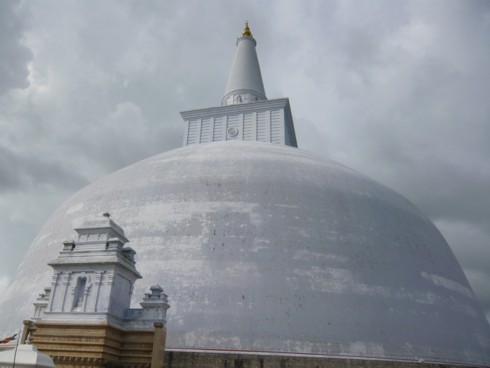
Anuradhapura. The Ruvanvelisaya Dagoba.

SR289athumb
Anuradhapura. Elephant carvings at the Ruvanvelisaya Dagoba.

SR265athumb
Buffaloes at Anuradhapura doing what they do best!

Plastic Bottles of Water

Plastic bottles of water.

We buy plastic bottles of water.

Why the bloody hell, at least in the west, do we buy plastic bottles of water?

And, hang on a minute, before we even start wondering why we pay stupid amounts of money for a commodity that is virtually free, we even pay for those silly little contraptions on the tops of the bottles that you grip with your teeth, pull, and then, if it works, and doesn’t just break off, enables you to squirt the water through this nozzle into your mouth.

All of this just to save you unscrewing the cap and taking it off.

The dreadful labour of having to unscrew the cap.

And taking it off.

Perhaps that is why we buy the bottled water – to save us the bother of turning a tap and holding a glass beneath it to catch the water.

Really?

So why do we do it?

P1050104

It costs…well, tap water is all but free. For example, in California tap water costs one tenth of a cent per gallon.

In the UK my local water company charges £1.248 per cubic meter, which is 220 gallons, for water. This makes it just over half a penny a gallon.

Bottled water? On sale in my local supermarket for £1.50 for 3 litres. On special offer. There are approximately 4.5 litres in a gallon, so this costs out at £2.75 per gallon, which is approximately 550 times more expensive than tap water. Or, if you like, you are paying under half a penny for the water, and almost the entire £2.75 for the plastic bottles.

Feel good about that?

Me neither.

Perhaps the bottled water is far superior to the tap water?

Nope. Sorry about that, it’s not.

First of all, approximately half of it comes from the tap in any case. Yup, that’s right. The company that flogs it to you gets it from out of the tap.

And as for the rest, tap water is subject to more stringent quality and health standards than bottled water is, in any case. In tests on water in the USA last year, tap water came out better.

So are the huge, multinational soft drinks companies who manufacture these things doing it for our benefit?

You bet they’re not. They’re doing it because they can see an easy and gigantic profit.

We could do worse than talk to our old friend, Mr Satan Moneyglutton, the anonymous CEO of a major soft drinks company, at this point.

‘I honestly don’t know what you’re whingeing about. You want convenience, don’t you? What could be more convenient than pouring all of your money into our coffers?

‘Tap water is so yesterday. It’s inconvenient. We have declared war on tap water. When we’re done, tap water will be relegated to irrigation and washing dishes.

‘And we are working hard to persuade restaurants not to give tap water to diners, but force them instead to purchase our bottled drinks.

‘It is helpful, of course, that most towns and cities seem to have stopped building and maintaining public water fountains, thereby forcing the thirsty citizen to purchase a canned or bottled drink.

‘Furthermore, with the spread of those nasty windfarms and tidal power generators, the future for oil as a source of power is, sadly, looking a wee bit unhealthy.

‘Clearly, there’s no point in leaving the oil in the ground where it’s of no use to anyone, so it makes sense to step up the manufacture of plastics which, incidentally, will make me even richer.’

So, there you go.

‘Nice bottle of water, sir? Only £1. And would you like a plastic bag full of air with that? Only £1.50.’

Don’t laugh – it’ll happen soon, I’m certain.

My First Long Trip to India (2)

And so, fifteen years after my first trip to India, I was back again in Delhi.

004 (2)


Eventually I felt brave enough to leave the café and go off to do my tasks. First of all, I had to sort out my train ticket, so I headed off to the Tourist Bureau (The Official One!) at New Delhi Station. But as I headed up the steps towards the office, I was stopped by a friendly chap who told me it was closed. ‘But no bother’ he said. ‘You come with me and I take you to Tourist Office where they sell you ticket’.

Before I realized what I was doing, I turned to follow him. By the time that we were out of the station and threading our way through the taxis and crowds on the concourse I had remembered that this was a common ploy to get people to ‘Tourist Offices’. Nowadays I have no problem with using them – in fact I will often seek them out to buy me tickets, but more of that later. I glanced up at my new best friend, who was a few steps ahead of me, and peeled unobtrusively off and headed back into the station.

I went back up the steps towards the Tourist Bureau. The first thing that struck me was the silence. Downstairs, all was noise and smells, colour and chaos, but up here was a big, gloomy, echoing corridor, empty as far as I could see. After wandering up and down for a while, I found the Bureau which was, naturally enough, open, and fairly crowded. Inside, whilst I awaited my turn at the counter, I chatted to a fellow traveller from England who decided that it was his task to lecture me at length on how to approach getting a ticket out of Indian Railways. Foremost amongst this advice, he said, hectoring me sternly, was keeping your cool amidst all the provocation, bureaucracy and hassle.

Eventually, he was called to the counter. They went through his application form and documents with him, seemingly finding fault with something. He lost his cool with them, and left without a ticket.

I chortled quietly to myself.

When it was my turn, I found the process fairly straightforward, although long-winded. But I left with my ticket to Gaya stashed securely in my wallet.

010a

Why Gaya? Gaya is certainly not a tourist destination, but it is the nearest town of any size to Bodhgaya. When I had decided to come to India, instead of limping around Britain in pain, I had come to the conclusion that instead of just travelling around for three months or so, I should at least spend some time doing something worthwhile.

We all like to think that we’re having an existential crisis at times. Okay, that’s probably not true. But lots of us do. What is an existential crisis, though? Is it simply that we are going through a time in our history when more and more of us question our role, our place in our society? Or could there be more to it than that? It certainly would now seem to be a time when many people in the west have come to doubt whether the values that they are taught are actually of any importance, and indeed whether they really have any value at all.

On the other hand, there are just as many members of that society who feel that the whole subject is just bunkum, and that those who complain about these things are merely whinging, work-shy degenerates. Sod your existential issues, mate, I’ve got a family to feed.

Is it really, then, just so much nonsense? Maybe our situation is such that we can afford to have these crises now; that we now have the opportunity to address them. When life is simply a struggle to keep a roof over one’s head and to put food on the table, then one’s priorities are very different from those with the leisure to ponder ‘life’s imponderables’. In past times, we would have had to just carry on regardless, although there were writers then who recognised and explored them, such as Hermann Hesse and Somerset Maugham. The only other realistic option, other than becoming a vagrant, would have been to completely renounce the world and to join a monastery or become a hermit.

India, though, handles these things rather differently. Hindus have a duty to seek pleasure and success and to accumulate wealth, but also, eventually, to renounce the world and seek moksha; liberation, after the discovery that the other three paths give no lasting satisfaction. This is seen in the persons of the many ascetics who wander the land, or live alone or in ashrams, having given up all worldly possessions.

Bodhgaya is in Bihar, the poorest state in India. It is also the place where the Buddha is said to have achieved enlightenment. For this reason, there are many Buddhist temples there, attracting a goodly number of Buddhist pilgrims, and, naturally, not a few tourists, and also a number of charitable projects.

And a few rogues.

I was attracted to the idea of spending time there, both to experience the temples and atmosphere, but also to work for a while on one of the projects. I did some research whilst in the UK, and arranged to help out at a project that comprised a school and orphanage in a village on the outskirts of Bodhgaya.

Smugly pleased with myself for obtaining my ticket to Gaya, I then went to find an Internet cafe and e-mailed everyone, then meandered back to a café for lunch.

Two days later, I was in Bodhgaya.
My Father in India

They didn’t talk about it.

It wasn’t as bad as the First World War, when men who had nervous breakdowns were frequently shot for cowardice, but the men of the generation who fought in the Second World War were still reluctant to talk about the hardships they had faced and the horrors they had seen.

When my father did talk to me about it, and it was very rare that he would, it was generally to joke about the fun that he’d had on leave, or, after my first visit to India, to ask about places that he remembered from Delhi.

He had seen fighting in Burma, and stayed in India right up to the time of Partition. He certainly wasn’t going to talk about either of those. When pushed, he’d clam up about Burma, and would only say that what he’d seen in India at the time of Partition was horrible.

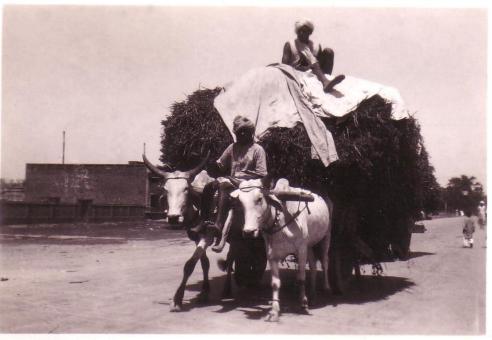
bullock cart

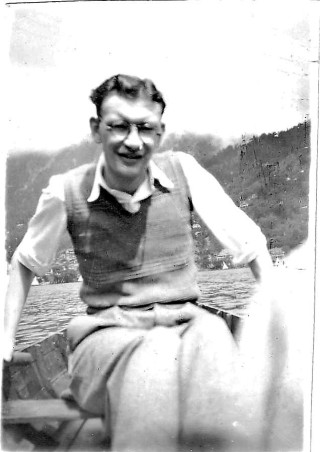
I daresay he told me one or two things that I have forgotten; things that didn’t mean much to me at the time. Perhaps he told me where he had been when he was on leave and was photographed rowing a boat on a lake in the hills; almost certainly in the North of India. Nainital, perhaps? I have been there myself, now, and I’m not certain. If he had told me before I’d been out there, the name would have meant nothing to me, and so I wouldn’t have remembered it.

And by then it was too late to ask him, because he died before I returned for my second visit.

dad 1

Once he had returned to England, he never went back to India, and I certainly never had the impression that he wanted to. I guess that the bad memories must have outweighed the good ones.

I have a dictionary that he bought in Delhi, stamped inside the cover ‘Cambridge Book Depot, New Delhi’ with the price scribbled in pencil; Rs 3/12, and his signature. I also had some old Indian coins, once, that he had given me, but I’m not sure where they are now. Other than the photographs, I’m not aware that he brought anything else back. Certainly, there were never any ‘curios’. Although a part of me wonders whether there might have been once, and whether my mother, a staunch Christian, might have thrown them out after they married. But that is pure conjecture.

hill station 4

And he was interested enough to read books on India’s history. I was surprised, occasionally, on the depth of his knowledge on the subject. He was, though, always interested in history, so I suppose that I shouldn’t have been really, and if he hadn’t have been born working class, I daresay that he might have had a university education, because he excelled at school.

Most of the photos are in fairly poor condition, although I have attempted to improve a couple of the ones that were particularly bad.

It seems strange to think of soldiers as tourists, but whilst they were on leave in India, that is, of course, exactly what they were. There are one or two photos in his collection that were taken of places I have been. One of them is of a view inside the Red Fort of Delhi that differs only in the size of the tree in the picture from one that I took in 1989.

He must have stood in exactly the same spot to take that picture, some 45 years before.

What does this small slice of family history mean for me?

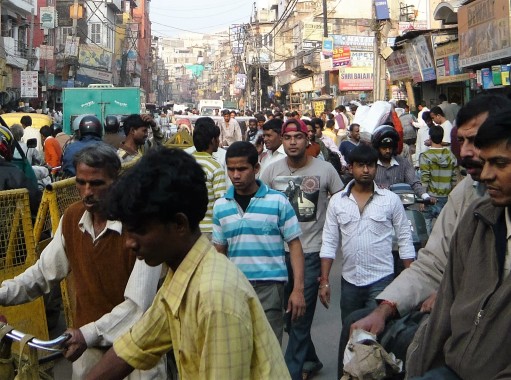
mainstreet poona

It does mean that there is a slight family connection to India, if not in the way that usually comes to mind. He had no family there, and had no responsibilities beyond his army duties, but just the fact of his living out there for a number of years, gives me this connection. Or so I like to think of it.

In the end, India wove its magic over me – nothing much to do with Dad, I suppose, although I expect that was in the mix somewhere. I think that part of why I may have gone out there the first time, was to follow in his footsteps. And now my family can say that they have a connection to India through the time that I have spent out there as well.

Rich Beyond my Wildest Dreams

The other day, a friend of mine jokingly asked me whether I would be moving into a big mansion and getting a chauffeur driven car, once my novel is published and I have made a fortune.

For a few minutes we invented a whole new life for me; where my riches enabled me to buy whatever I desired and to do whatever I wished. Then we got tired of that, and the conversation moved on to more mundane things.

But let us say this came to pass, because, you know, things happen. Unexpectedly. What would I want?

old car one (2)

I can only listen to one piece of music at a time, no matter how much I may love music.

I can only read one book at a time and, God knows, I have a pile as high as, ooh, this to get through already. I continually try not to buy any more books when I go out. And I continually fail.

I don’t want a flash car. I don’t actually want a car at all, as it happens. I’m stuck with one at the moment, because the work that actually provides me with a tenuous living requires it. If I no longer did that work, I would probably get rid of the car.

A bigger house? No, not really. Perhaps one further out of town, though.

There is travel, of course. More trips to India and Nepal, for a start. But again, time is not infinite, and there would be a limit to how many different places I could go. Would I stay in luxury hotels, then? No. I have no desire to do that. Fly first class? That is probably the one thing I would do. I am tall, and the leg-room on most flights is a little mean even for children. And then my back causes me so much pain at the best of times that any long-haul flight is extremely uncomfortable.

We all use language carelessly at times. What do I mean by rich? Well, possibly something different to what you would mean, then again, possibly not. For some people, the idea of being rich means having virtually unlimited money so that they can buy every conceivable luxury. For others, it simply means not having to worry about whether they can make ends meet in day to day life, and that is the category that I fall into.

I have known people who earn heady amounts of money yet do not consider themselves rich, because they find it too easy to spend it almost as fast as they earn it. I have known others who would consider themselves rich if they came into a very modest windfall.

Today, in the affluent western world at least, the vast majority of us are rich, although we don’t recognise it. Why? Modern advertising is insidious and relentless and companies spend billions of pounds each year persuading us all that we cannot live without their products, that we all have a right to them and that we want (and deserve) them.

And that we want them now.

This has meant that luxury fripperies have come to be seen as necessities.

Audiences watching TV programs, or walking down their high streets, or opening magazines, are constantly bombarded with an unending stream of images of luxury goods that they are told are rightfully theirs, and which are paraded by their football or ‘reality’ TV heroes.

What these advertisers don’t want us to see is that the trash they are pushing is unnecessary and does nothing to enrich our lives.

Now, where was I?

Oh yes, I just have to nip out for a loaf of bread.

Of course, it has to be an artisan-crafted Estonian cob loaf made with organic Bulgar wheat flour milled under a full moon and leavened with yeasts descended from the very yeasts used by the court baker of Peter the Great of Russia and baked for thirty seven and a quarter minutes in a bread oven fired with birch logs and scented with juniper and a teaspoonful of fuller’s earth.

It will be damned expensive, but I DESERVE IT AND I WANT IT NOW.