A Jolly Wassail and the Howlers (and not forgetting the Hoodeners!)

Yesterday, we went Wassailing.

If you care to Google (other search engines are available) Wassailing, you will learn it traditionally takes place on the Twelfth Night (after Christmas), i.e. 5th January, and is a British custom. You will also discover that wassailing involves groups (traditionally men) visiting apple orchards, usually after dark, and to encourage the trees to be especially fruitful the following year songs are sung, trees might be beaten with sticks to wake them up, and offerings of bread soaked cider left in the branches of certain trees. Perhaps one particular tree would be selected to represent the whole orchard.

A Dictionary of the Sussex Dialect published in 1875 has something to say on the subject. It defines howlers as ‘boys who in former times went round wassailing the orchards. A custom now nearly obsolete. The custom of wassailing used to be observed on the eve of the Epiphany, when the howlers went to the orchards, and there encircling one of the best bearing trees, drank the following toast,-

‘Here’s a health to thee, old apple tree,

May’st thou bud, may’st thou blow,

May’st thou bear apples enow!

Hats full! Caps full!

Bushel, bushel, sacks full!

And my pockets full, too! Huzza!

The wassailers derived their name from the Anglo-Saxon salutation on pledging one to drink, which was waes hael, be of health; to which the person pledged replied drinc hael, I drink your health.

Epiphany occurs usually on 6th January, or on the first Sunday falling between 2nd and 8th January, which tends to tie in roughly with Twelfth Night, at least as far as 6th January goes.

Groups of wassailers might also take the opportunity to go from door to door singing wassailing songs (like the one above and plentiful variations) to earn a penny or two. It is possible that the tradition of Christmas carolling derived from this. A wassail bowl was often also taken around, which would hold spicy mulled cider. This might perhaps also be offered at houses visited, although my copy of the 1849 Chambers Dictionary suggests a wassail bowl was used to drink in the New Year and does not mention anything about wassailing itself. I suppose this might represent a sort of official disapproval of the tradition. But it does confirm that drinking was involved, and I’ve no doubt the revellers enjoyed their share.

Howlers would appear to be a Sussex tradition, the name deriving from the boys ‘howling’ the orchard.

Away from the south of England, wassailing appears to have been more widespread, in the sense that not just apple orchards, but also bees might be wassailed, to encourage them to be productive, and it might also happen at other times of the year.

It being 6th January, we took a bus and a couple of trains and made our way to the village of Worth, just outside Sandwich, in East Kent, to not only join in with wassailing apple orchards but also watch some Hooden Horse antics. Hooden Horses you shriek in confusion? Look no further than this post, which even explains why we chose to go to East Kent.

Anyway, ale was drunk in the pub where we began the afternoon, with the Hooden Horse company performing their version of the traditional play – this particular company have recently revived the custom in this area – before we set off (horse and all) to wassail a nearby orchard on our way into Sandwich. In this case, the wassailing consisted of making plenty of noise as we passed the orchard – many a shout of waes hael and drinc hael, ringing of hand bells, and clashing of sticks. Personally, I am convinced there will be a bountiful harvest there next autumn. Then on to Sandwich for further Hooden Horse Hi-jinks (and further ale) in a welcoming taproom, before we made our way back home (since we had quite a long journey), although hardier folk than us went on for further malarky elsewhere in town.

Warning! Do not let this ‘doctor’ anywhere near your loved ones!

Gathering in the pub car park before the Wassailing walk

In the taproom, Sandwich

  • several of these photos courtesy of Sabina

We’ll just have to look out for another malarky opportunity soon, I guess.

Afternoon Light

Late summer afternoon light on the South Downs near Lewes, Sussex. A walk after the rain.

(Click on photograph to see enlargement.)

May Day Mayhem

The May Day festival, Beltane, is a survival, or revival, from the Iron Age, celebrated in Celtic communities – Scotland and Ireland particularly – and revived as a full festival in Scotland in the 1980’s by the Beltane Fire Society. Beltane was a fire festival, although nothing of that remains in the festivities carried out in England. Beltane was first mentioned by name in Irish writings from the late 800’s / early 900’s.

The English version of this festival involves cutting flowers and greenery and dancing around a maypole, which things are also carried out during Beltane, celebrating the beginning of Summer which begins on May 1st. When I was a child, dancing around the maypole was the chief, possibly only, activity carried out on May Day. I have a photograph of my brother, my cousin, and myself, dressed up for the May Day Fair at which there was maypole dancing, but no obvious indication of surplus greenery. Past generations in England celebrated May Day with a day of celebrations which while including maypole dancing as an important manifestation of encouraging the fertility of the soil (and the festival-goers!) would also have included plenty of food and drink and general gaiety.

Mayhem, if you like.

This year, I managed two May Day days out.

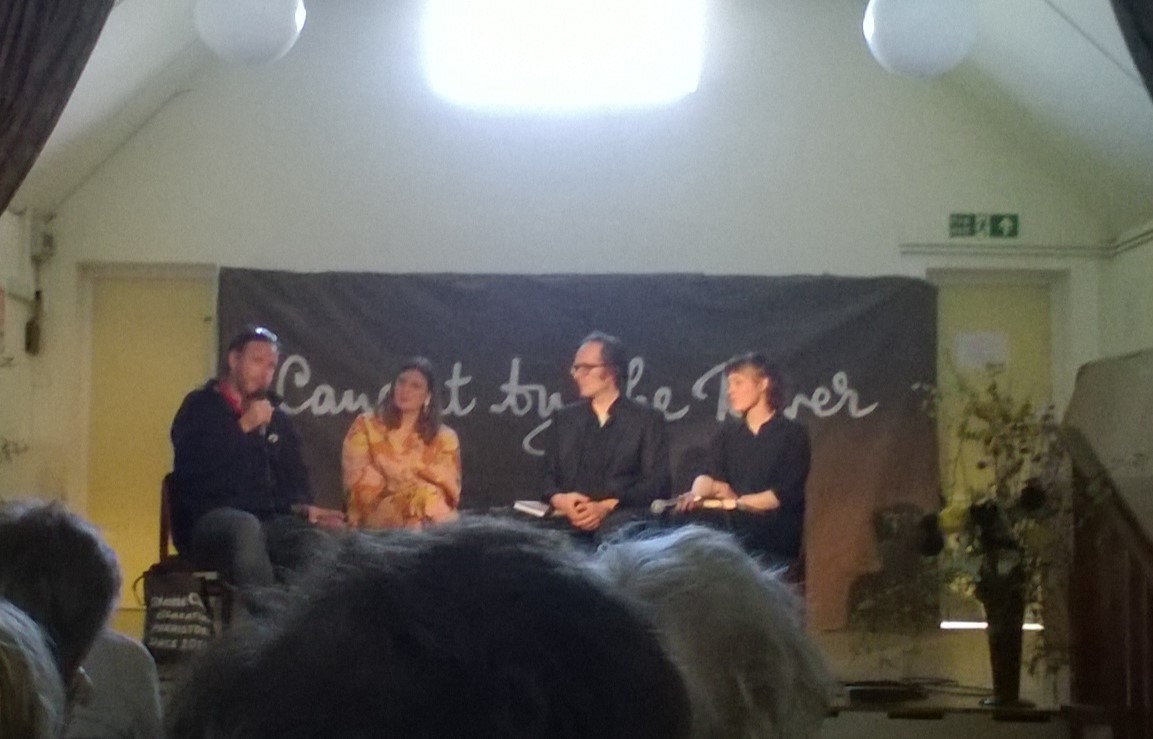
On Saturday, two days before May Day, I visited Kingston near Lewes, in Sussex, for the Caught by the River Mayday event. Caught by the River describe themselves as an arts/nature/culture clash and you can read all about them here. I have followed them now for several years, and this seems as good a time as any to mention that their coverage of arts, nature, and culture are second to none and if you’re not yet following them, well, you should be.

There was mask-making to begin with, especially to involve the children, the makers encouraged to incorporate flowers and greenery into their masks, and almost inevitably a certain amount of folk-horror found its way into some of these.

Nice, Richard.

This was followed by a promenade around the maypole, after which the activity moved indoors.

There were films, talks, and discussions, subjects including rivers, village life in the early eighteenth century, art, standing stones and the like, and the environment. After which, in the late afternoon, we all promenaded up the hillside to the Gurdy Stone.

This is the Gurdy Stone, a modern standing stone on a hillside overlooking Kingston. Here, Local Psycho (Jem Finer and Jimmy Cauty), held a gathering to encode the music of their Hurdy Gurdy song into the stone “To mark the 50,000 year return of the Green Comet and release of The Hurdy-Gurdy song on Heavenly Recordings.”

Throughout the day, naturally, we all had access to the pub.

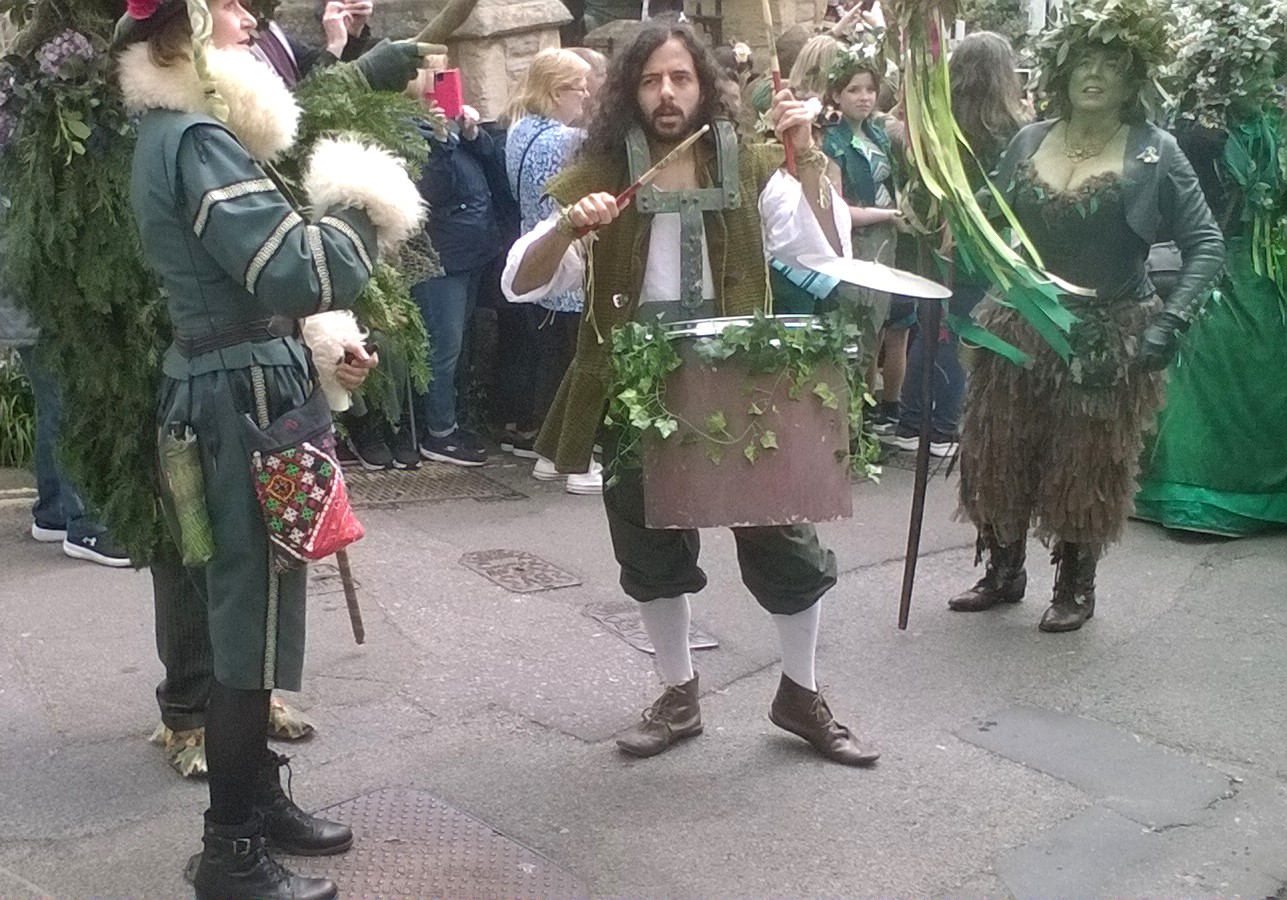
And then on Monday, which was May Day, we went down to Hastings. It rather felt as though everyone in South East England must be in the town, either at the Jack in the Green festivities or watching blokes on motorbikes roaring up and down the seafront for no discernible reason. I don’t much like crowds, and some of this was very difficult. But away from the huge horsepower and testosterone nonsense, amongst the Jack in the Green celebrations the atmosphere was brilliant and the large numbers of people perfectly acceptable. Jack in the Green is a manifestation of the spirit of spring, related to the Green Man, a dancing figure covered in greenery.

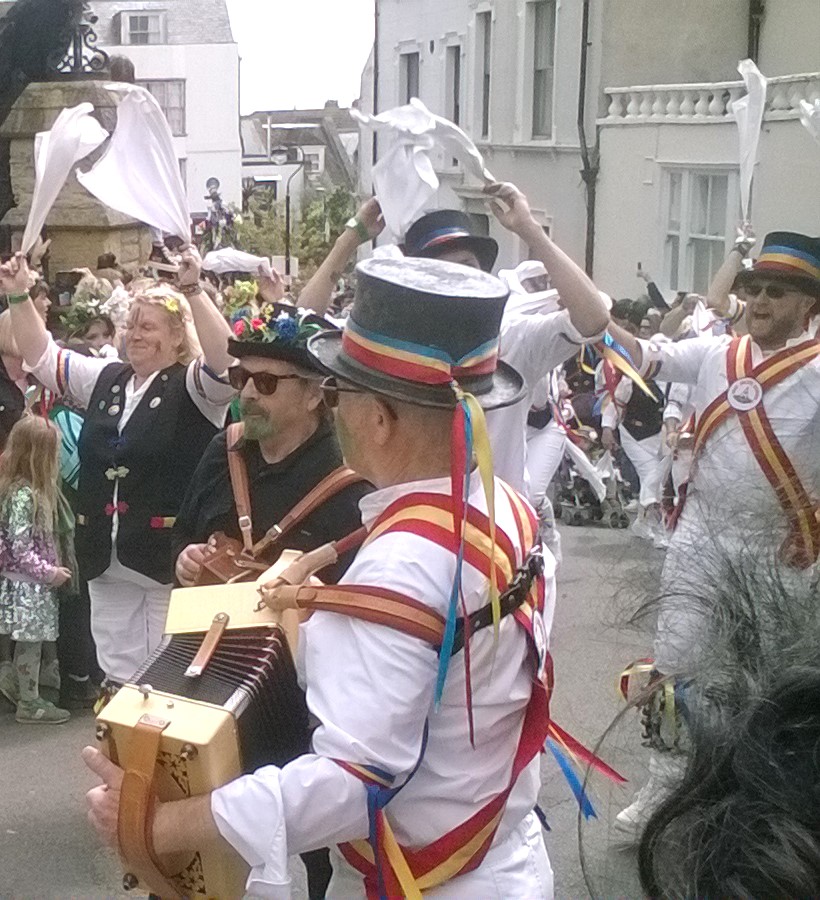
The festival in Hastings has grown over the years into a large event involving musicians, dancers, Morris sides, huge figures in addition to Jack in the Green such as the Queen of the May, a witch, and others, plus any number of people joining in the procession around the town, all decorated with as much, or as little, greenery and/or flowers as they feel suitable.

There you go, a Morris side.

Followed by a large witch with a cat. Why the witch? I’ve no idea. Why not? I suppose.

And there you have it. Music. Drumming. Greenery. Crowd involvement. Summer is icumen in and winter’s gone away-o.

And there was beer again, of course.

In All Weathers

We’ve been on the South Downs again.

That’s why you haven’t heard from me for a while. Here’re a few pictures.

We began walking from Amberley this time, and on the first day the weather was pretty meh. It was either raining or starting to rain or just deciding when to rain. But, as always, the Downs looked fantastic. This view reminded me of a Roland Hilder painting:

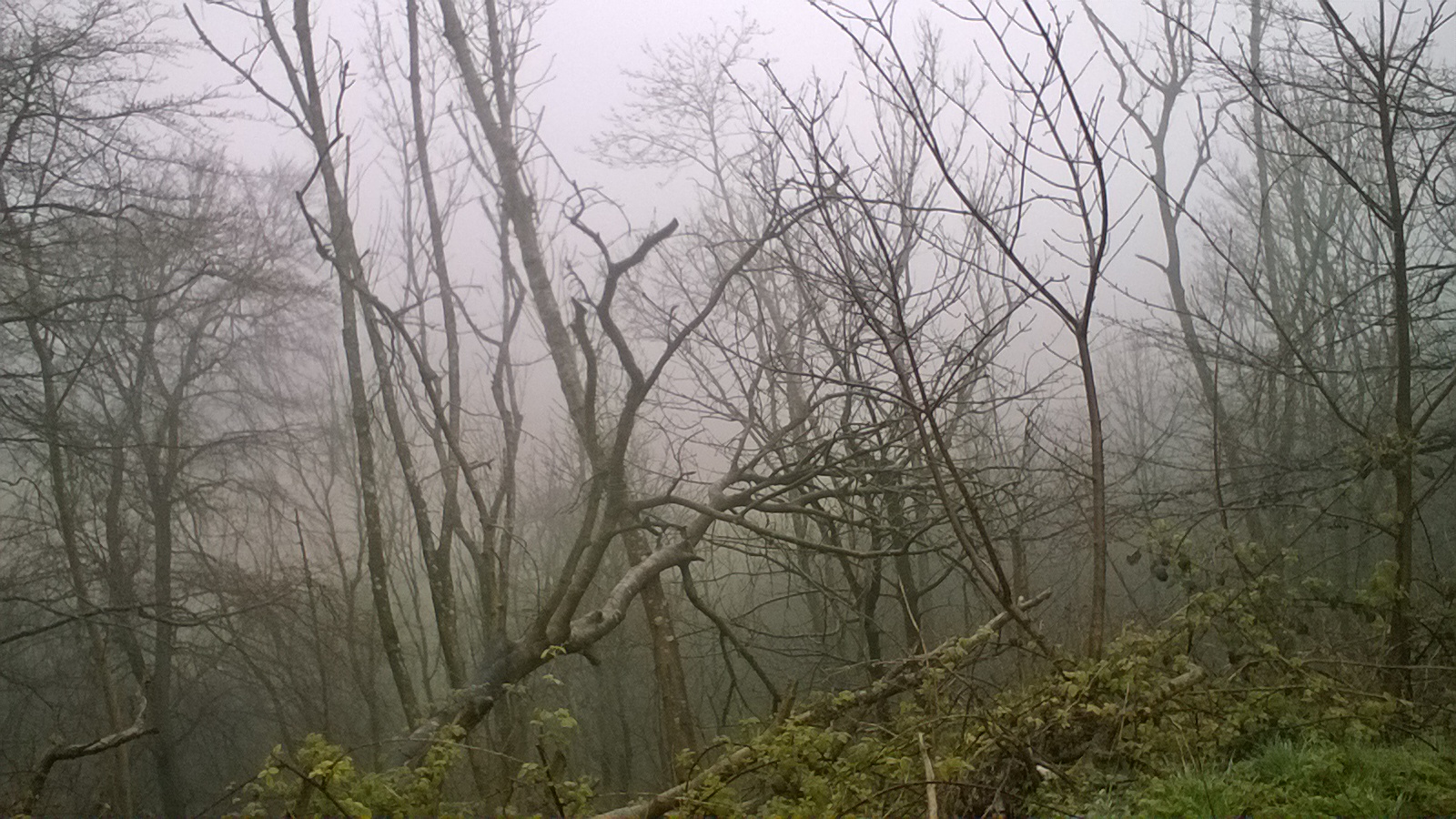
But it got steadily wetter throughout the day. We took a very welcome break in the Frankland Arms in Washington and if I was writing a pub review it would get five stars – especially as it served Harvey’s Old Ale. But I only allowed myself one of those, as we still had some serious mileage to do. And it was, as noted, getting wetter. We approached Chanctonbury Ring:

And as we began the descent from the top, the saddest part of the journey. We walked among a large number of ash trees, all of which were dead or dying from Ash Dieback disease. It looked like a picture of the Somme.

The next day was dull, but at least it was dry. We walked past the Devil’s Dyke which I never seem to be able to get a good picture of, no matter which angle I take it at. The Devil’s Dyke is so-called because for some reason the Devil wanted to destroy Sussex, and got talking to Saint Dunstan and asked him the best way to do it. Why he did that I can’t imagine. Never ask a saint for advice if you’re the Devil. It won’t end well. Anyway, Saint D suggested he dig a channel through the South Downs and flood it. Right, thought Old Nick, and set to work. Saint D let him toil away for a few hours and then caused all the cocks in Sussex to crow. Thinking it was morning, Old Nick threw down his shovel, twirled his moustaches and hissed ‘Curses, foiled again!’

Alternatively, it might have been caused by melt-water during the ice age, but why spoil a good legend?

And the best weather? During our rest day in Lewes. And, oh look! There’s the Harvey’s Brewery! What a good rest day.

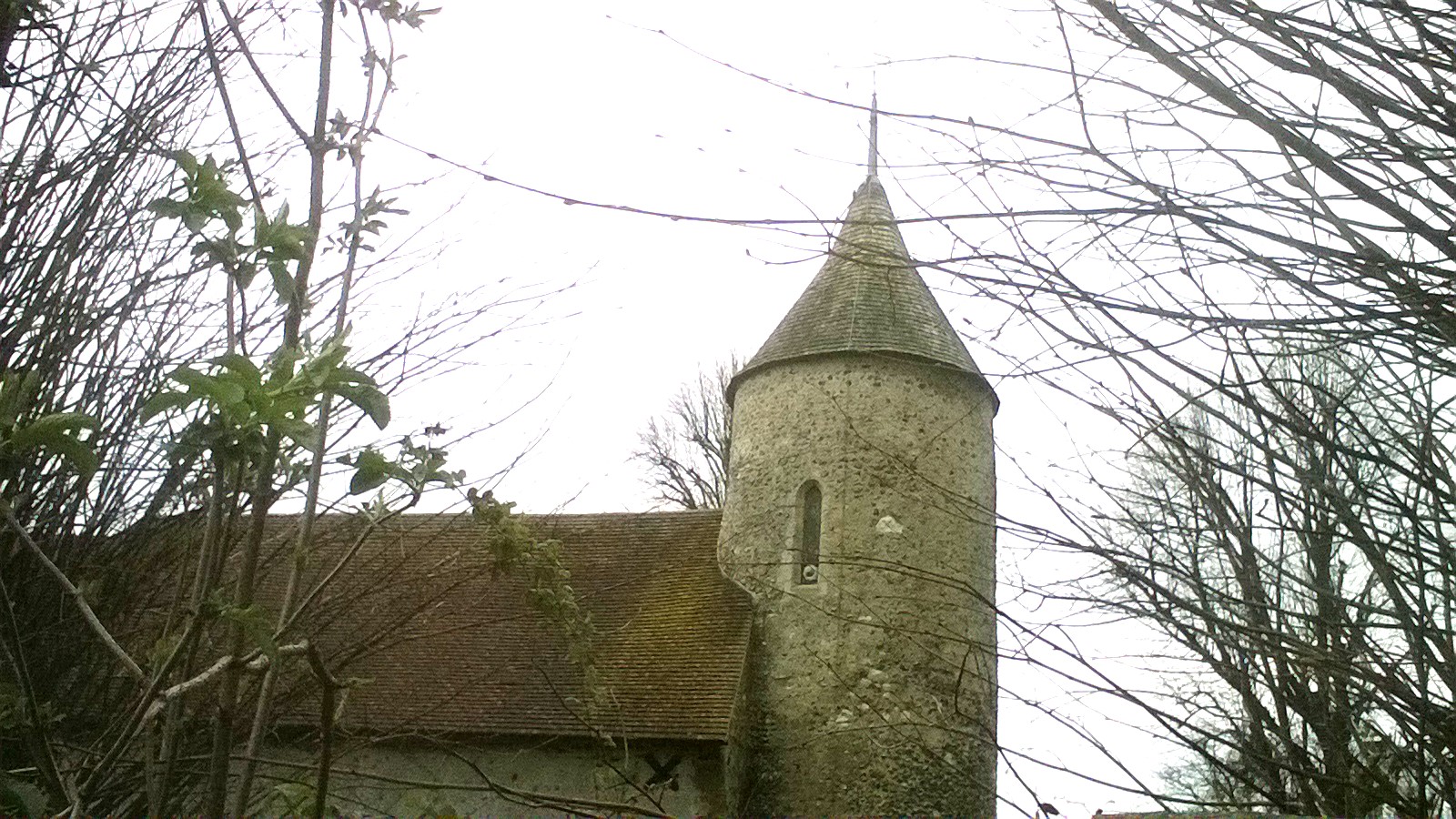
The following day was dull again as we left Lewes, and by now quite a sharp wind was blowing – into our faces too, unfortunately. But we had a pretty decent day and passed this church in Southease, one of only two (I think) in England with a round tower outside of Norfolk. The other is in nearby Lewes.

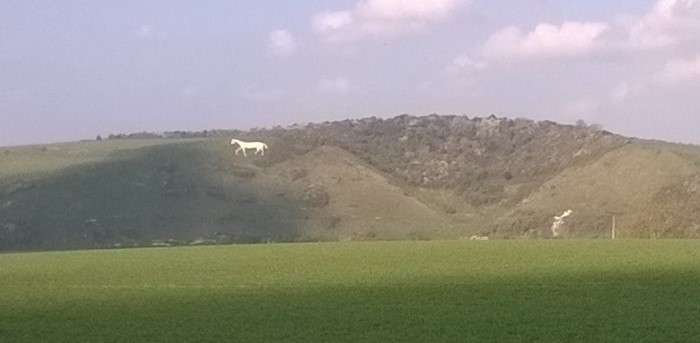
The final day began sunny but again with a sharp and unkind wind. We left Alfriston with its church on the edge of the village by the river and headed towards the coast. On the South Downs away to our right we passed a white horse carved into the chalk.

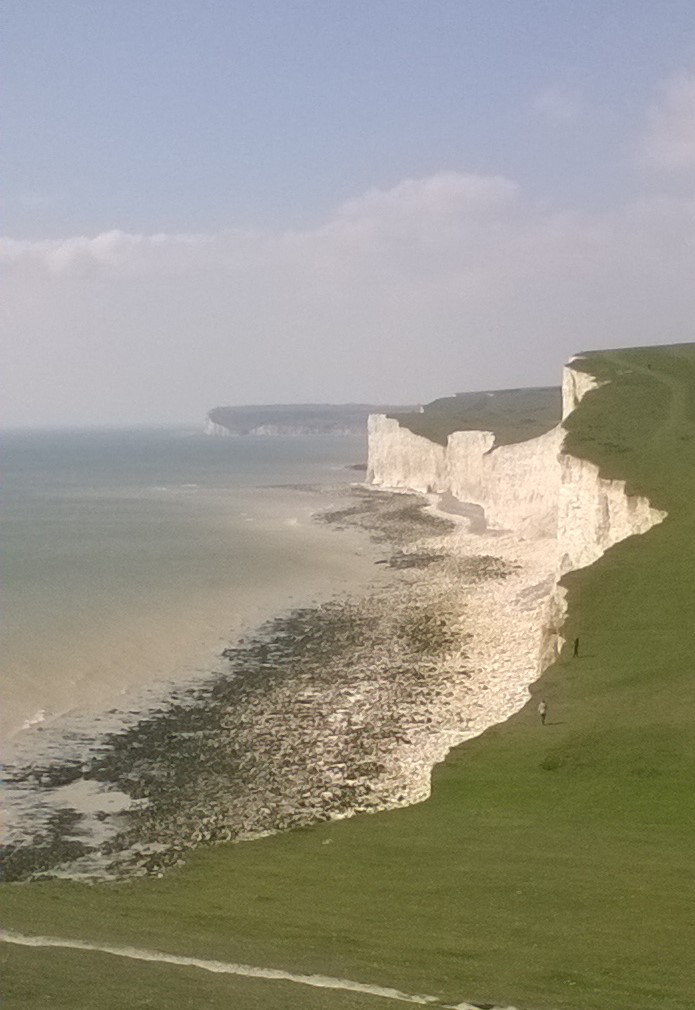
Soon we were up onto the Downs again, for the final walk into Eastbourne over the Seven Sisters and Beachy Head. I tend to forget how tiring this leg can be, going continually uphill then downhill for the best part of six miles. For some reason, although we could see the Belle Tout lighthouse in the distance, it never seemed to get any nearer. Once I could do this leg of the walk easily, but…getting a little older…

An always fantastic view, though. Here we’re looking back across the Seven Sisters towards Seaford Head.

After all that, we could do with a holiday.

Red Herrings

I had a couple of conversations the other day on detective novels, in which red herrings were mentioned, and it reminded me of something I had been reading a few days before, as well as one verse of an old nursery rhyme, the words recorded in the 1800’s, which goes thus:

The man in the wilderness asked of me
How many strawberries grew in the sea.
I answered him, as I thought good,
As many as red herrings grew in the wood.

Pixabay image

It is supposedly one of the lesser-known nursery rhymes, but I came across it in one of the books my children had when they were small. Possibly, the Tale of Squirrel Nutkin. Again, there is an old song occurring along the English east coast called the Red Herring, of which these are the first two verses:

1
What shall we do with the red herring’s head?
Oh, we’ll make that into feather beds, and all such things,
We’ve red herrings and heads and feather beds, and all such things.

Chorus
Of all the fish that swim in the sea, red herring it is the fish for me,
And all such things.

2
What shall we do with the red herring’s eyes?
Oh, we’ll make ’em into puddings and pies, and all such things,
We’ve red herrings and eyes and puddings and pies,
Red herrings and heads and feather beds, and all such things.

There seem to be many versions of this, one of which was collected by Cecil Sharp, well-known as one of the first people to travel around England in the early 1900’s collecting and writing down folk songs, afraid they would become lost as, in a rapidly modernising world, fewer and fewer people now sang them.

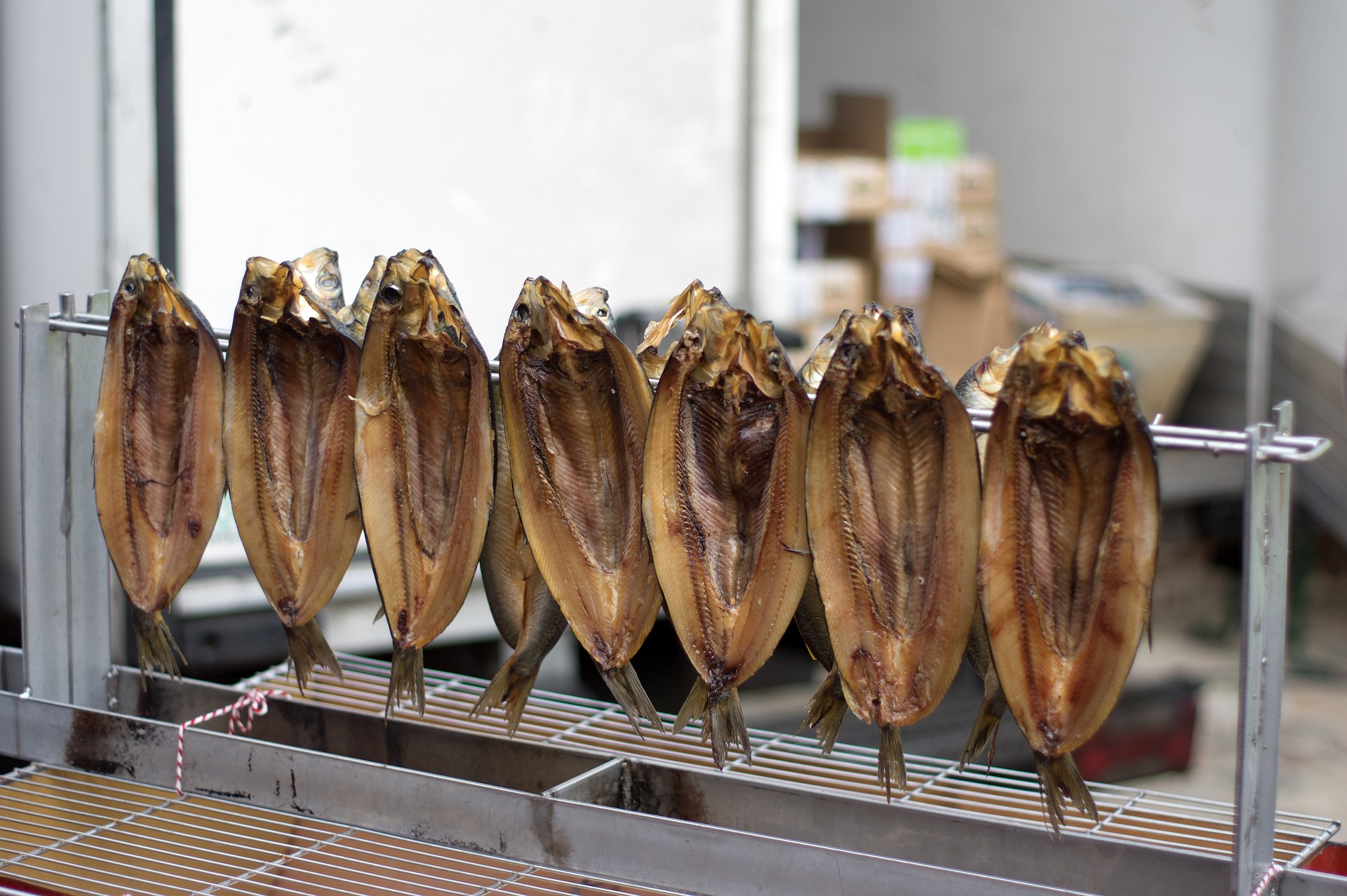
Unusually (because I never trust it as a source) I looked at Wikipedia which merely defined a red herring as a distraction, or something misleading. It suggests the term came from a strong smelling smoked kipper which could be dragged across a track to put hounds off of a scent.

And what it reminded me of was that a dictionary of the Sussex Dialect, published in 1875 does not have a particular entry for red herring, yet under ‘White-Herring’ is found the definition: A fresh herring, as distinguished from a dried one, which is called a red-herring. Delving a little deeper, we find references to dried, smoked, herrings – named red herrings – in use to mask the scent of trails both literally and figuratively, in a story published by William Cobbett in 1807 and also a couple of references from the 1780’s. There is apparently a bit of disagreement over where the phrase was used first in that context, but that doesn’t seem relevant here, it’s just interesting to find out that red herrings actually exist, and how they came to assume the role they have in literature and everyday conversation.

Shorelarking at Rye

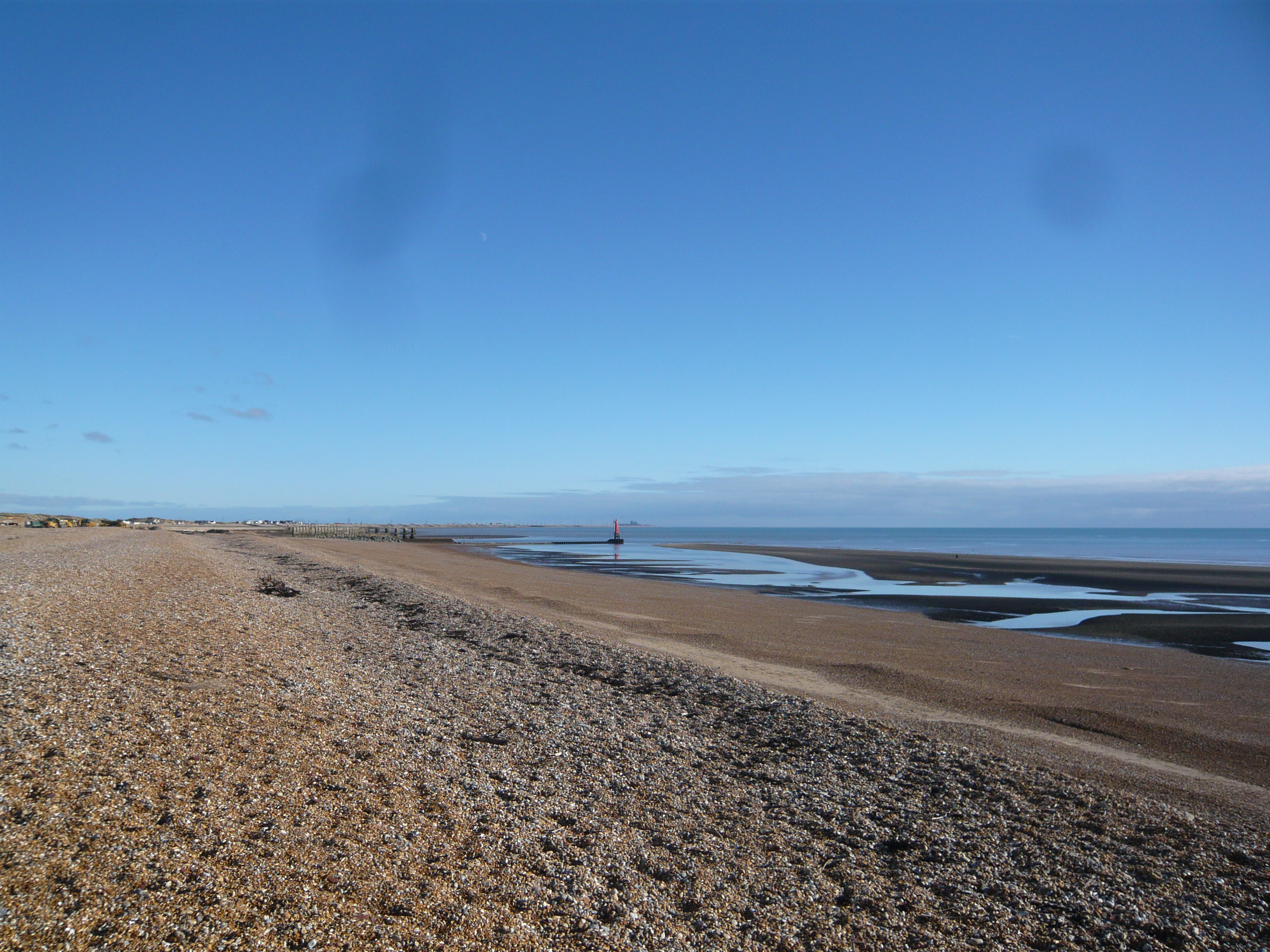
We went down to Rye harbour in Sussex, a few weeks ago, on a beautifully sunny but bitingly cold day. The actual harbour entrance is in the middle distance of the above photo with Dungeness Power Station just visible on the horizon in the distance.

This red-roofed hut sits on the shingle on the approach to the harbour and has become the iconic image that everyone photographs. I resisted the temptation this time, but took this one a few years ago. No one seems certain when it was built, but it was certainly in use from the early 1900’s onwards and was used to store fishing equipment.

The salt marshes behind the harbour constitute a nature reserve and are an important place especially for migrating birds. We walked around the marshes for an hour or so and did see quite a few birds, especially when we spent some while in a hide with the binoculars we’d brought. No close-up photos, because we were too far from the birds and I only had my pocket camera that day, but especially noticeable was was a group of some forty to fifty cormorants.

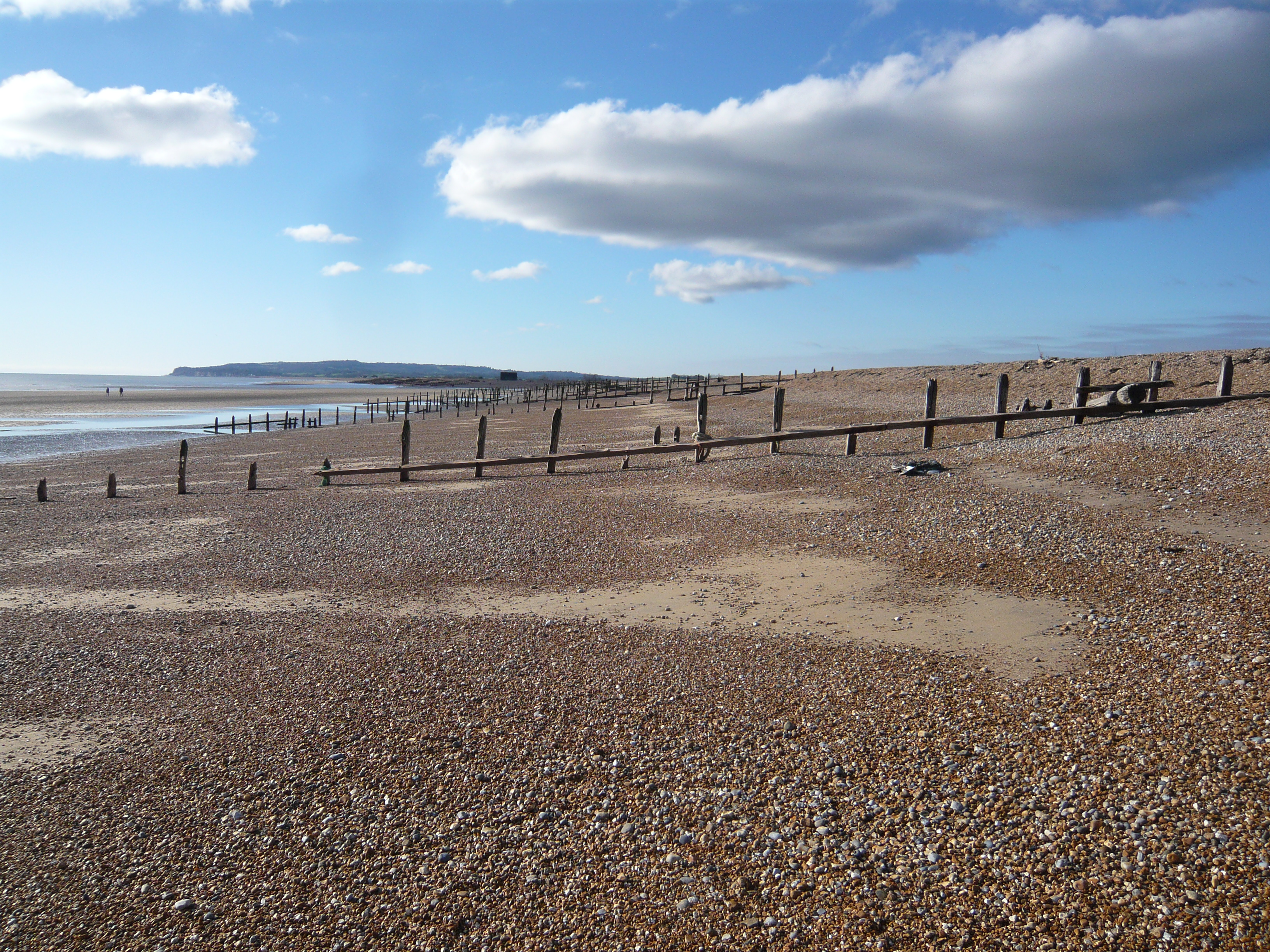
One of the tasks of the Environment Agency here is to continually move shingle in trucks westwards along the coast to shore up (pun intended) the sea defences. Due to the prevailing winds, longshore drift continually moves shingle eastwards along the coast and without this intervention it would choke the harbour mouth and undermine the sea wall at Pett (to the west). They load up the trucks with shingle from the shore, the trucks drive west and tip it out on the shore. The sea washes it eastwards along the coast again. The trucks load up with shingle from the shore…It almost feels a pointless exercise, but I suppose there’s no real alternative.

But longshore drift means that the shorelark on the South coast of England has a chance of finding rocks and stones (and all sorts of other things) that originated further to the west, and we spent some while searching among the stones here to see what we might turn up.

Shorelarking? It’s like mudlarking, but on the seashore. ‘Larking’ in this sense means looking for…well, anything. Coins, interesting rocks, anything lost or old or, preferably, both. Not that we found much, not that we ever find much, but we don’t do it as seriously as some folk. And as nice as it would be to turn up the sort of finds some people find in the mud of the Thames, we’re not that dedicated. But in the past I have found bits of flint tool while fieldlarking, and usually come home from a walk with an interesting stone or two.

We did find a couple of interesting things that day – they don’t look much, do they? But the grey stone in the centre is possibly a Mesolithic hammer stone, used for shaping flint tools while the nail had a tiny piece of wood still attached, but this crumbled away as soon as I picked it up. How old is it? I’ve no idea. Nails like that were in use from the 1800’s through into the 1900’s but it’s impossible to pin it down further. My immediate thought was it could be part of the beach groyne, but when I looked they seem to be constructed entirely with rivets. Maybe it is from an old shipwreck. The rock at the bottom is simply a lump of sandstone from further west along the coast, a piece of what was called Hastings Sandstone when I studied geology, but now known as the Ashdown beds. Nothing special, again.

Just an interesting few finds on the beach on a cold sunny day before we headed off for a warm drink.

Yesterday’s Walk

We’ve had rain recently, and everywhere was muddy again. Much more like I would expect February to be. The ground had dried out quite a lot over January, but the soil was still saturated just beneath the surface and it doesn’t take much for it to turn back to thick, claggy, mud. But the weather was better than had been forecast; and as I set out the sun was glinting on the stubble fields and in the shadows there was just the faintest blue hint of frost. It felt so Spring-like. Everything was suddenly green and growing.

Soon, I was much too warm in all my layers. Mornings like this inevitably remind me of other favourite walks; long walks on sunny, clear days. I walked through a valley which was filled with birdsong – blackbirds, robins, blue tits, the demented cackle of a green woodpecker, and the determined drumming of a greater spotted one. In the future I will probably take walks that remind me of this one.

I must sometimes be a frustrating person to walk with – I like to stop frequently and just look around me. Absorb the landscape. The air smells fresh, now, but without the over-sharp coldness that stings the nostrils. Even though it is too early to smell flowers in the air, there is something on the breeze…Something evocative, much like the scent of woodsmoke causes me to instantly think of trekking in Nepal, or campfires closer to home in Sussex.

Suddenly there is a kestrel overhead…I never seem to get those shots of foxes or buzzards and don’t know whether I’m just too slow or if everyone else just walks along with their cameras in their hands, ready to take that photo.

At least flowers and trees tend to keep still. I do find my camera can be an unwanted distraction, though. If I am walking along looking for something to photograph, I feel I’m not really seeing the landscape around me. I’m just searching for a subject. For that reason, I often don’t take a camera with me on walks.

The first peacock, in fact the first butterfly of any kind I’ve seen this year. But talking of green woodpeckers and kestrels, I think there is a case for replacing all their somewhat dull modern names with the ones they used to have in the past: the green woodpecker was the yaffle, named for its wonderful manic call, the kestrel used to be called the windhover – how wonderful is that? And in the seventeenth century it was actually commonly known as the windf*cker. Perhaps the prudish Victorians banished that name the same as they changed the perfectly named white arse to the bland (and meaningless) wheatear.

I think we should reclaim the names; they add extra interest to a long walk.

January. A New Year, a New Project. Well…projects…

Well, here we are again. A New Year. At least we’ve had a few sunny days, recently:

On Rye Harbour Nature Reserve, Sussex.

Heading up on to the South Downs from Clayton, Sussex.

‘Jill’ windmill, near Clayton, South Downs.

‘Jack’ windmill – no longer working, and now a private dwelling.

And another shot of ‘Jill’ – restored and now working

I don’t miss 2021 at all, although I’m sure I’m not alone in that. But I got off much easier than many people, of course. I’m still here, for a start. But I had a few health issues that I’m now stuck with, and these have slowed me down a bit and have forced me to alter my lifestyle in small (but annoying) ways. And I feel old. I am old. If you’re under twenty one, then I’m incredibly old!

And for various reasons I had a very unproductive year in that I found writing really difficult and just couldn’t get my head around any art. Although I don’t make New Year Resolutions as such, I’m tackling the uninspired non-productivity by setting myself, well, not exactly goals, but projects for each month of the year.

I have been researching my family tree, and instead of nice neat charts and tables, I have reams of scrap paper with partly legible duplicated notes (and a few charts and tables). For January, then, I am sorting all of those out and making those nice neat charts and tables, and trying to fill in some of the many gaps I’m discovering as I do so. It’s only halfway through the month and it’s going well, so that’s a success so far. But the rest of the year will comprise creative projects. For the next one – February – I intend to fill all the gaps left in my work in progress, A Good Place (the novel I’ve been working on for four or five years). I won’t get around to editing it, but I intend to complete what I am determined will be the final draft.

And then for March, I shall…well, I’ll tell you that in February.

Apocalypse Deferred Just A Tiny Little Bit

Yesterday, I went for a walk around parts of Sussex and Kent. The sun shone – Hooray! I managed the whole walk without aching too much afterwards – Hooray again! I said good morning to some sheep and patted a very nice horse. I just knew it was going to be a Good Day.

At one point I went along a footpath I haven’t used for several years, and was delighted to see this:

And then another four miles or so later there was this:

The council have made this area a Designated Roadside Nature Reserve. Established for several years now, it has a rich variety of wildflowers and grasses, and is fairly humming with insect life.

Perhaps there is a little hope for us, after all.

Chanctonbury Rings

This Tuesday evening just gone. Brighton. 7.30pm. I’m here with my friend Mark to see a gig for the first time since the Pandemic began, a gig I had planned to see last year for my birthday, but which was cancelled – due to the Pandemic, of course. Chanctonbury Rings is a collaboration between writer Justin Hopper, musician Sharron Kraus, and visual artist Wendy Pye, based on extracts from Justin’s 2017 book The Old Weird Albion.

Chanctonbury Rings was released (on CD, vinyl and download) by Ghost Box in 2019, and is described on their website as ‘A spoken word and music project by writer Justin Hopper and folk musician Sharron Kraus. It also features Ghost Box’s own Belbury Poly. Based on live performances of Hopper’s 2017 book The Old Weird Albion, it’s a poetical, autobiographical and psychogeographical account of his experiences at Chanctonbury Ring…‘ It goes on to state: ‘The album is a blend of folk, electronic music, poetry, prose and environmental sound. Kraus’s electro-acoustic soundscapes and songs interweave with Hopper’s rich, intimate narration.’

I first learned of The Old Weird Albion a couple of years ago when I was emailed by a reporter writing a review of the book for the Caught By The River website (which I must post about sometime), who had come across one of my blog posts on Chanctonbury Ring, a prehistoric hill fort on Chanctonbury Hill, part of the Sussex South Downs. In conversation, he told me of both the book and the music project. Naturally, I ended up buying both. (My review of The Old Weird Albion is here if you wish to learn more about it. Of course you do.)

When I heard it was being performed live, I decided I would have to go to see it. Then the Pandemic intervened and it would be over a year before I had another chance.

So on Tuesday we are in the Brighton Spiegeltent, part of the Brighton Fringe, awaiting the show. Outside, pouring rain and a lot of rather drunken football-related chanting. (I believe there was a game on somewhere.)

Inside, though, Chanctonbury Rings. The piece is built around the section of the book where Justin visits Chanctonbury Ring one May Day, to watch both the sunrise and the Morris dancers celebrating Beltane, the ancient name for the festival held that day. It combines personal experience with myth and legend, Sharron’s music both punctuating and supporting the narrative, and Wendy’s visuals projected on a screen behind the performers.

Incidentally, Sharron is a musician I had not come across before hearing the album, but I have since been captivated by her own stunning albums. If you have any interest in folk, I’d recommend you give them a listen.

Wendy’s visuals were well-judged photographs and film of Chanctonbury Ring and the surrounding area, at times deliberately grainy and vague and at others lusher, although there was perhaps something ghostly about all of them, each choice inevitably suiting the mood of the narrative at that point.

The spoken words, the music and song, and those visuals weaved around each other and blended happily together, elegantly constructing the world as it appeared to one viewer that May Day morning and projecting the audience, for the duration of the performance, into that world too.

It was magical.