Connections

Through researching my family tree, I’ve discovered some new connections to the land.

It’s not just that I’ve found ancestors in new parts of the country, although that certainly has a bearing on things, it’s more that I have a reinforced sense of a long personal connection to the land, this land, where my ancestors spent their entire lives living and working. A connection so many of us seem to have lost these days. I’m following the threads of folk who scraped a living in villages in Norfolk or Essex or Hampshire, frequently living in poverty or at the very least on the very edges of it. A hard life for most of them. Widows with no way of supporting themselves other than plaiting ‘straw dollies’ for a few pence, labourers in their seventies still having to endure hard physical graft to stay out of the workhouse (where they would have had to work even harder, for even less reward). People for whom starvation would have been a very real threat. Even comparatively healthy families would have relied on all the womenfolk trying to bring a few extra pennies into the household.

Some of these connections are selective – I can reject a connection I’m uncomfortable with, such as through industrial work in towns or cities which is something I have little experience of, and no love of in the first place, but I cannot claim a connection that isn’t there in the first place.

And within this experience, there is the time element – both how long ago these events were, but also how long they lasted, which contributes to the intensity of this connection for me.

These folk weren’t just the very poorest, of course. Amongst my ancestors there are also a wide range of craftsmen and women such as weavers, shoemakers, and printers, but also other poor labourers such as shop assistants, launderesses, servants, stokers, coal porters, cable hands…the list goes on and on. Not that there’s anything special about my family tree – everyone has these folk in their past.

I think – I know – some people just look for royalty or knights in armour when they research their trees. They dream of having the right to a coat of arms, or bragging rights to a famous name. None of us come into it completely open to what we find. We all have some expectations – to push our ‘lines’ back as far as we can, for example, or discover connections to the famous. Personally, I’m delighted to find my ancestors were the urban and rural poor. I don’t want to find the rich and privileged in my tree. Is that inverse snobbery? Perhaps.

But it’s the connection to the land I’m referring to here. I’ve always felt a strong personal connection to the land, to the physical world, and every census entry or marriage certificate I come across showing my ancestors earning their living that way seems to strengthen my own connections as well as a sense of continuity with my forebears.

The Enduring Lie of A Golden Age

It seems that huge numbers of people have an impression that there was a ‘Golden Age’ at some previous point of their, or some other, society.

They may not define it in those words, or even acknowledge it as such, but it seems to be very common for people to yearn for another time. Sometimes, this is nostalgia – for the days of their youth – but frequently it is for some far-off time that they feel to be somehow better than the time they live in.

Untitled-Grayscale-01

Fantasy books frequently encourage this sort of thinking. Regardless of the actual storyline, the heroes and villains and cast of other odd characters tend to run around and fight and go on quests and sit around in quaint thatched inns quaffing head-splitting alcoholic drinks and everyone is jolly and no one ever dies of dysentery or bubonic plague in misery and agony and squalor.

The Lord of the Rings is a fine example of this. It is a favourite of mine, but it is very noticeable how no one dies of disease, but mostly lives to an exceedingly old age unless chopped into pieces by Orcs.

Hollywood, too, plays its part in this. To take a film at (almost) random, an old version of ‘Robin Hood’ (set in medieval England, remember) depicts a group of merry men dressed in very strange attire living in the depths of a forest and merrily ambushing the Bad King’s men, merrily dining at long tables out beneath the spreading branches of merry oak trees under starry skies and everyone looks clean and clean shaven and everyone is merry, and it never rains.

Pah!

This is meant to be medieval England. Life expectancy at the time was around 30 years. Huge numbers of people died of dysentery, mainly because there was no concept of hygiene. Occasional plagues carried off massive numbers of people, emptying entire towns and villages. There were no antibiotics or anaesthetics. Disease was sent by God and the only way to cure it was considered to be prayer. Or witchcraft. Women routinely died in childbirth, in great pain. The majority of children never reached their teens. Every peasant in every village was effectively a slave under the command of the local lord, who held the power of life and death over them, and might exercise this on a whim at any moment. The threat of famine was ever present.

Pain and misery was a given.

The majority of people lived, too, in a very real terror of the Devil and the threat of eternal damnation.

The list of horrors is almost endless. The phrase ‘life was nasty, brutish and short’ is an apt description of those times. Certainly, I would not wish to live under those conditions.

There are plenty of other ‘Golden Ages’, of course. Almost any time in history can exercise a fascination on us, if certain aspects of it appeal to us and there are things we dislike about the society we live in. And it is natural to yearn for something better; something more than we have.

And this is not to suggest that every age was a living hell for everyone in that society, but that life in most of these times was reasonably decent for the very few on top of the pile, and pretty miserable for the rest. In fact, the measure of how ‘Golden’ an age was, tends to be the conditions of the upper echelons of that society, and perhaps those of a middle class, if such existed.

There is much wrong with our world today. But the huge advances seen over the last hundred years or so, especially in medicine, have meant that our lives have been improved out of all recognition. No longer does surgery equate to filling the patient with a quart of whisky and then sawing off a leg or an arm. No longer do those patients routinely die of infections after surgery, thanks to antibiotics. High blood pressure is controlled, rather than routinely killing. Children usually survive all the diseases of childhood, rather than being most likely to die. Women rarely die in childbirth, and the pain can be somewhat controlled.

Women and children are no longer the legal chattels of men.

Work conditions are hugely improved. Children do not go down mines or work at dangerous looms 14 hours a day. Instead, most receive a proper education. Adults, too, work fewer hours and under far better conditions than previously. When they are too old or frail to work, the state provides a certain amount of dignified support. People do not as a rule die these days of starvation. We do not execute children for stealing sixpence, or poaching rabbits on the Lord’s estate.

In most cases, for most people, today is the Golden Age.

A Short Letter

To all the priests, doctors, teachers, politicians, atheists, faith healers, snake oil salesmen, dictators, rebels and rabble rousers who think they have the right to tell people what to think or to believe or to not believe: You Do Not.

To all those who think they have the right to tell a woman what she can or cannot do with her body: You Do Not.

120

To all those men who think they have more rights than women: You Do Not.

To all those who think they have more rights than others of a different race or caste or religion: You Do Not.

To all those who think they have the right to tell people that they cannot change their mind about what they believe: You Do Not.

None of you.

No matter what you believe yourselves.

It’s really very simple.

Indian Salt Miners

salt-workers

Salt workers pose for a photograph at the salt pans near Marakkanam, just north of Pondicherry (now renamed Puducherry, its original name before the French arrived, although everybody continues to refer to it as Pondicherry, or just ‘Pondi’). The sea is allowed to flow into ‘pans’ (not unlike paddy fields) and then it evaporates over several days under the hot sun, leaving behind a layer of salt which is gathered by hand. Salt has been gathered this way in India since time immemorial.

Even when I took this photograph in 2006, on my first visit to South India, it struck me as a harsh environment in which to have to earn a living. Since then, I have learned more.

Salt is, and always has been, an essential commodity, especially for a population living in hot conditions, but when the British in India imposed a salt tax, this eventually led to the ‘Salt March’ led by Gandhi to Dandi, on the Gujarat coast, where he symbolically gathered salt at the coast after a 200km march, an action that contributed to the loosening of the hold that the British Raj held on India.

In Gujarat alone, approximately 112,000 labourers are employed in the industry (Gujarat State Law Commission figures).

In all, there are approximately 1,000,000 people employed across a total of nine states harvesting salt. Typically, women and girls make up most of the workforce.

But the conditions that the salt miners labour under today are little better than they were then.

They suffer eye problems and blindness from constant exposure to the sun reflected off of the brilliant white of the salt pans. Skin lesions from the salt are common. After a while, feet become septic and absorb salt; so much so, that according to some accounts even after death the salt content in their limbs are so high that hands and feet are difficult to burn during cremation (Daily Telegraph 24/2/10).

In addition, the labourers suffer from many of the other problems common across the labour force, such as exploitation by contractors and money lenders, and poor educational opportunities for their children. There is often inadequate housing, drinking water and food, and an absence of primary healthcare (Indian Express 26/4/16).

It is frequently said that saltpan workers have three ways to die: first gangrene, second TB (tuberculosis) or third blindness.

Their life expectancy is 50 – 60 years.

The hardships and problems they face are slowly being brought to the public’s attention, but clearly there is still a very long way to go before they enjoy what most would regard as decent working conditions.

The Book is Released – Hurrah!


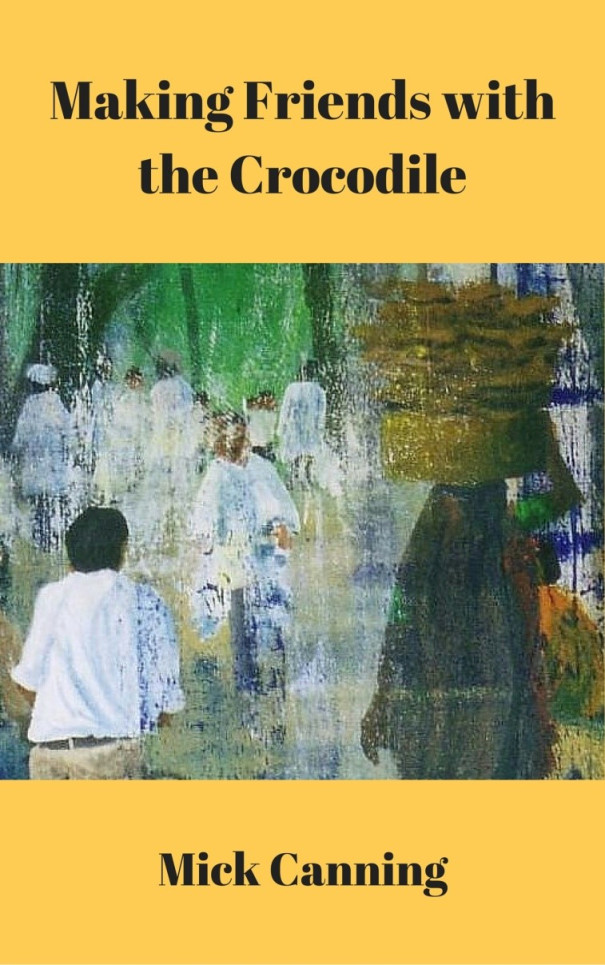
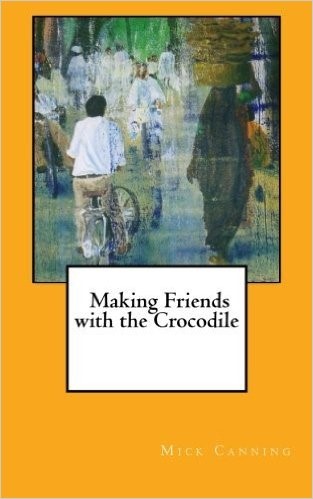
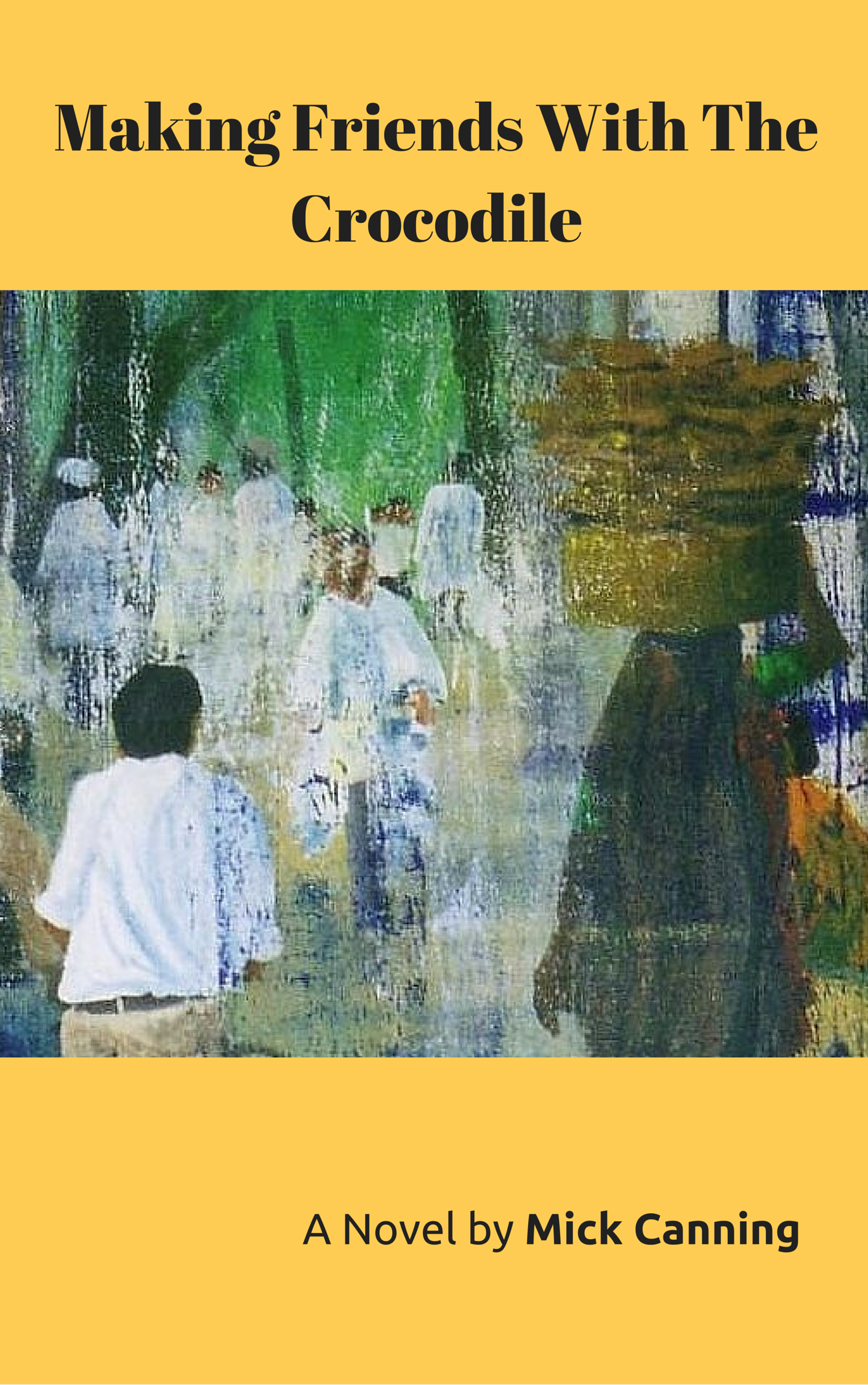
Making Friends with the Crocodile‘ is now released!

Making Friends with the Crocodile cover                             POD cover

Kindle edition                                                     Paperback edition

Anyone who has already pre-ordered it on Kindle / Amazon should have received it by now, and in countries where there is no pre-order facility, such as India, the Kindle edition is also now available to buy.

The paperback is available from the Amazon.com, Amazon.ca, Amazon.co.uk and Amazon.eu sites only – this is a quirk of Amazon – but can also be ordered from the estore at CreateSpace, at the following link:

https://www.createspace.com/6301808

And now, I wait to see what people think of the book, with a considerable amount of nervousness.

If you do buy a copy, please consider leaving a review either at Amazon, or on Goodreads, if you are a member (better still, at both!). Reviews are genuinely the lifeblood of a writer, and do help to sell books.

Finally, the blurb again…

‘Siddiqa was only just into her teens when she was forced to leave her home to live with her new husband and his family in another village. The years have passed, and now Siddiqa has three children of her own. Her grown up son has brought his new wife, Naira, to live with them, so Siddiqa is no longer the lowliest in the household, for she has a daughter-in-law.

Life in rural India is particularly harsh for women. This novel explores themes of female oppression and tradition and asks whether the next generation will find life any easier.’


Ooh, it’s nearly finished!

I’m getting excited, now.

My novel, ‘Making Friends with the Crocodile’ is hopefully ready for its final edit.

This part of the journey seems to be taking a great deal of time, but this might be because it is my first foray into publishing. I know that there is still much to do – formatting, advertising, proof-reading, the publishing itself, amongst a plethora of smaller but no less important tasks – but I am finally beginning to feel that I am getting there.

Curiously, after what I wrote in my last post, I never found any of the characters threatening to hijack the plot in any way. Although I never planned it out in any detail, I had a rough plan in my head, which, remarkably, I kept to. Perhaps it is because the subject matter is strong. I don’t know.

And I think that I have settled upon the cover (the artwork is my own).

Making Friends With The Crocodile cover 1

I may play around with the wording, slightly, for example I might take out the words ‘A Novel’.

For some background; the story is set in a village in Northern India, some fifteen odd years ago. It is about the deteriorating relationship between two women in a family: the mother and her daughter in law. Like this relationship frequently is, it is a strained, fractious one, not helped by that society’s attitudes towards women and their roles in general. And when one of them gets caught up in events beyond her control, these attitudes become dreadfully destructive.

As always, your thoughts would be very much appreciated.

Dull day

It is a particularly dull and miserable day, today, with unbroken thick grey cloud overhead, an unpleasant, damp cold, and a very thin rain in the air. I read bits of my novel, and I yearn at this moment to be in India. That I am looking through a few of the photographs I took in India, at the moment, does not help.

P1050060

I am now at the stage of giving my short novel its first edit. I have written the book from the point of view of an adult female in a rural community in Northern India. It is primarily about both the relationship between the two main characters; a woman and her daughter-in-law, and about the roles and the treatment of women in a male dominated society. The way that I have written it, it is essential for the reader to be able to get inside the head of one of the main protagonists. So, for this reason, I felt that the narrator had to be one of them.

It is a little unusual, of course, but hardly unheard of, for a writer to write with the voice of someone of the opposite sex, although it is more usual for female authors to adopt the voice of a male narrator, rather than the other way round.

(Is that because we are so shallow and easily understood? Don’t answer that, it might be a post for another time, although if I did attempt to write it, I probably wouldn’t have the courage to finish.)

Anyway, whether this voice I have used in my novel sounds authentic or not, might be quite another matter.

I can imagine several areas where I might have succeeded less well than I would have hoped;

a) It might sound like a male voice, especially to female readers.

b) I may have painted a vague, shallow picture of my narrator, subconsciously avoiding difficulties.

c) I may therefore have painted minor characters more brightly than the protagonists.

d) By doing this, I may present as an arrogant westerner, thereby fulfilling images of ex-colonial stereotypes.

On my CV, however, I do have a few months when I was living and working in a small town in Northern India, much of the time spent in rural areas, amongst a dozen or so visits to India in total.

It probably goes without saying that I also have a keen interest in most things Indian, many books about India and, of course, we all have Google.

And writers do, all the time, write about places and situations that are outside their experience, and it is never really possible for anyone to fully understand the thought processes of someone from another time, another culture, or another gender, and so it is a level playing field in that respect.

So, with a glance out of the window at the gloom outside, I’ll get on with it. I do wonder how many male writers have tried to write with a female voice, though, and how successful they felt they were…

…anyone want to come in at this point?