Photographs

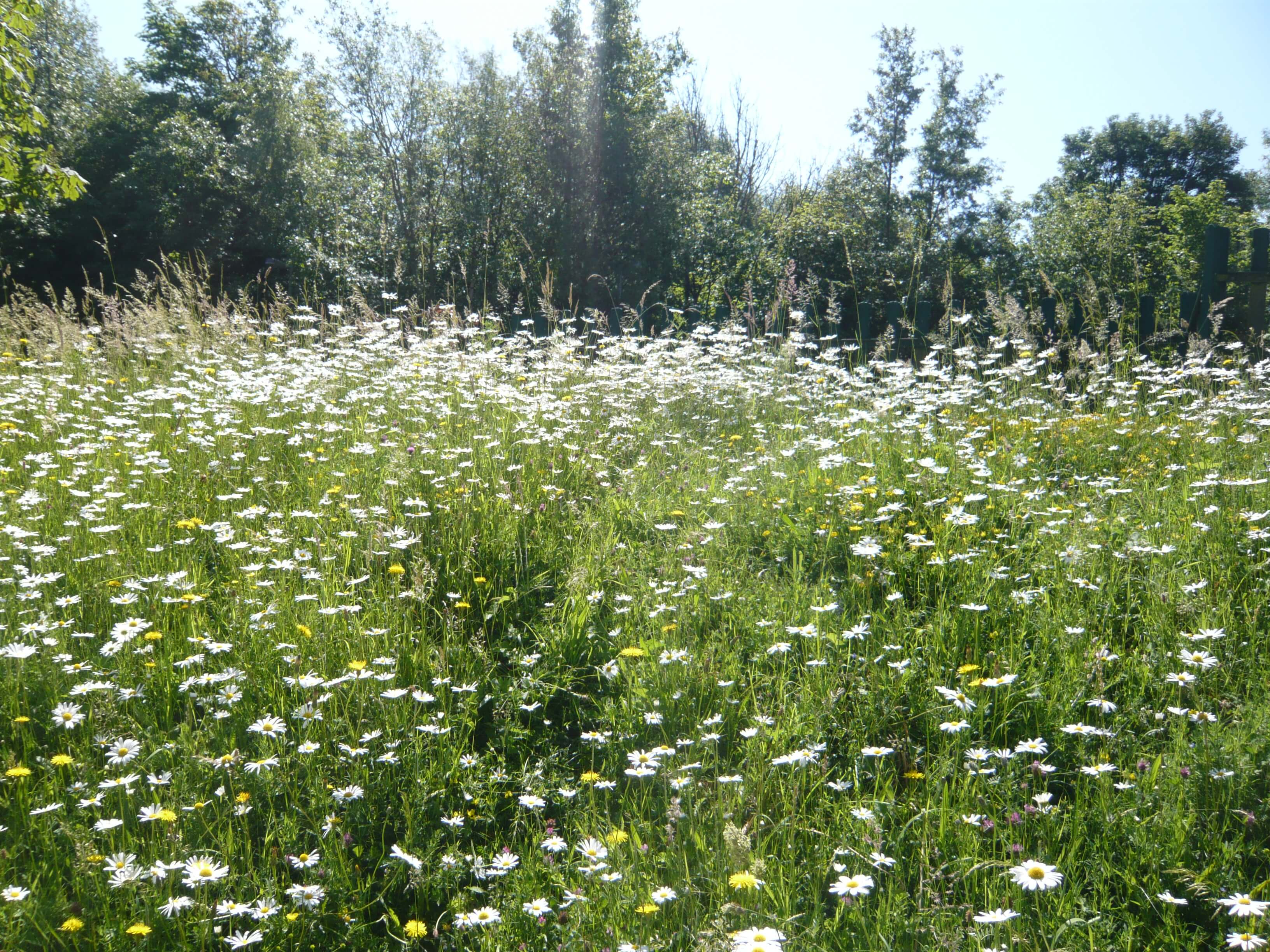
I’ve become very bad at taking photographs. Not exactly lazy, it’s more that my focus is on the world around me. More and more now I find that when I’m out for a walk all my senses are tuned into the world around me – sounds, sights, smells – and I feel I just want to take them all in, rather than try to record them. I just want to be in the moment.

And, incidentally, a photograph is a poor substitute. It can never capture a complete experience – the colour is frequently leached out by bright sunshine, I cannot hear the wind in the trees, or smell the scents of autumn. I cannot feel the nip of the sharp early morning air. The sounds surrounding me would all be lost. The leaves suddenly whirling all around me in the breeze. I would lose the deceptive simplicity and is-ness of all this.

And yet, I enjoy photographs. I use them a lot in my writing. How to square the circle? Must I only take photographs on days I set out to focus on photography? They are good memory joggers. You may not get the sounds or scents (or sharp nips), but a photo may well remind you of them. And they can be things of beauty on their own, of course.

I think I need to find a way of taking photographs without disturbing whatever is my current train of thought at the time. A sort of Zen-like process.

100 Word Stories

I know one hundred word stories are a thing on here, or ninety nine word stories, someone supplying a prompt – either a word or a phrase or perhaps a photo – but I was just playing around and came up with this. So no prompts, just a bit of fun.

Those of you of a certain age and musical heritage may identify with it…

‘This was a particularly brutal murder, sergeant.’

‘Yes, sir. With around three hundred people watching. Open and shut case, fortunately.’

‘And he was the keyboard player?’

‘Yes. He was about fifteen minutes into the Hammond Organ solo when he was killed.’

‘Who did it? A member of the audience?’

‘No, the vocalist. She bludgeoned him with the microphone stand. Really vicious. All she’s saying is this was the eighteenth night of the tour and there were still twenty seven to go.’

‘Didn’t any of the other band members attempt to stop her?’

‘No, sir. Apparently, they were egging her on.’

Found – One Muse

‘Oh, you’re back.’

‘Well, not really. I’ve been here all the time. I just didn’t have anything to say to you, that’s all.’

‘Why on earth not?’

‘For a start, you don’t listen to me. You keep fannying around with that novel that your heart’s not in, anyway. What is it that you actually want to write? Not that one, at least at the moment.’

‘I’d love to finish it, actually, just get it out of the way.’

‘It’ll still be there when you’re ready to finish it – if you ever are. And if you’re not, it doesn’t matter. Surely you’ve got other stuff you’d rather be working on?’

‘I…’

‘Like, your poetry’s pretty crap, but you enjoy writing it.’

‘Hey! I…’

‘Then there’s the other novel, the one you’ve been faffing around with for years.’

‘Yes…’

‘So work on that one, since you actually do like it, and do a few paintings, for God’s sake. You’ve been saying you’re going to, well get on with it.’

‘I thought a muse was meant to be an inspiration, not a nag.’

‘A muse,’ she replied tersely, ‘will say whatever she thinks necessary to get her author off his lazy butt! Now, what about this pamphlet or brochure you’re meant to be doing at the moment?’

‘The zine?’

She visibly cringed.

‘Yes…that. As far as I can see you’ve been tinkering with it for months but you’ve nothing to show for it.’

‘I…’

‘You seem to have decided on a few of the poems you want to put in it, and a short story, but you haven’t rewritten the essays you wanted to use, haven’t sorted out the photographs and done nothing towards the artwork. You’ve not even decided on a title for the thing yet!’

‘I’ve…’

‘Yes, and that’s another thing. You keep jumping from one thing to another, and never completing anything.’

‘I’ve always thought it’s good to have a couple of projects on the go. When I get stuck on one I can go and work on another.’

‘Yeeessss….a couple you say. Exactly how many have you got on the go at the moment?’

‘Ah, er, I’m not sure…’

‘No? Well roughly how many?’

‘Er…’

‘Very roughly? You don’t actually know, do you? Just finish something! What about the short poem’ -*cringe* – ‘zine you’ve got in bits? As far as I can tell it’s nearer completion than the other one.’

‘Um, I suppose I could…’

‘And I’m not some lifestyle guru, but get out and go for more walks. And listen to more music and read some more books. You’re not reading very much at the moment, are you? And read something you want to read and listen to something you want to listen to. Not because you think you ‘ought’ to, whatever the hell that means. And stay off fricking social media, too. It’s poisonous.’

‘That’s certainly true.’

‘So just see that you do, or I really will be off. I’ll be checking up on you more regularly, now. I can see it’s the only way.’

She’s a tough, unforgiving, so-and-so, my muse.
Lost – One Muse

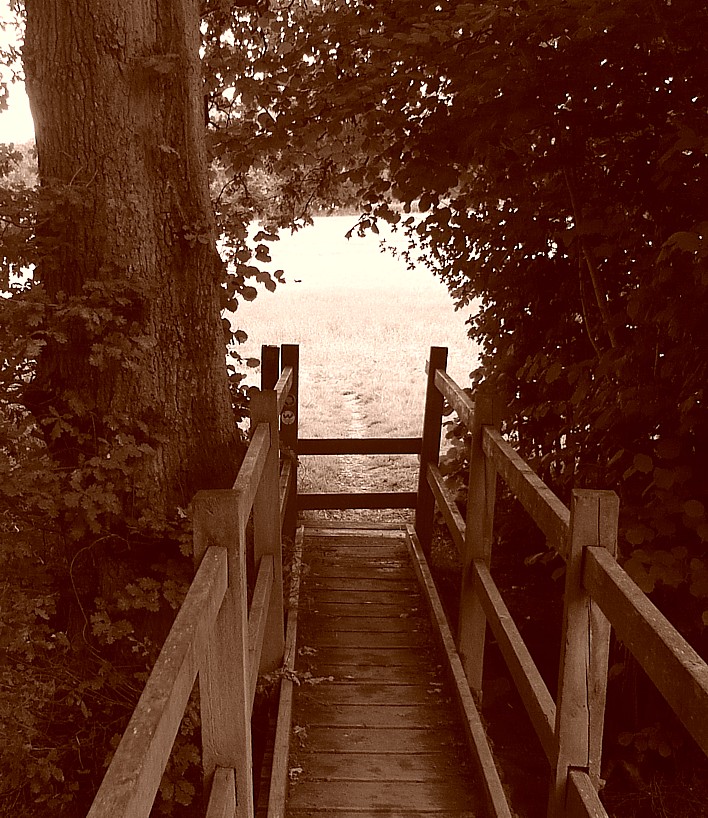
Last seen…well, never seen clearly, actually, Over all these years merely glimpsed occasionally on the borders of sleep, or somewhere in the shadows while I’ve been out walking. But even so, it must be a good few months since they were about.

I did think I heard her (for my muse is a her; most muses seem to be, for some reason) say that if I wouldn’t listen to her, there was no point in her hanging around. All nonsense, of course, since I do my very best to jot down her every word. But those words just haven’t been uttered recently. I’ve had no official muse input whatsoever.

Oh, woe is me.

In Another Lifetime I could Have Been…(2)

…a monk.

Yes, you heard me correctly. a monk. Regular readers of this indulgence will know I pour scorn on organised religion, but also that I have a hankering for the simple life and for solitude. I would love to be disciplined enough to do without fripperies, but I never quite seem to get there. Obviously social media would also have to go if I was a monk. In fact, even if I didn’t become a monk, I think perhaps social media should go. That would be good for me.

But not books, of course. They’re Important.

In another time, a time when belief in the predominant religion was a given, I would have had no problem in becoming a monk. But since I don’t have that belief, it sounds like a contradiction to say that to me the spiritual side of life is extremely important, but the spiritual is, to me, separate from religion. I view the spiritual side of me as being that part that yearns for simplicity, for art, for the minimum possessions required for life, and to be surrounded by nature. Incidentally, I also understand that monks are given a daily ration of beer or wine.

That also sounds good.

And because I was fortunate to have been born in an age of scientific enquiry when most people no longer blindly accept religious dogma, but are generally prepared to question it, I am free to make choices based on my own conscience and on what I consider important.

But I could almost, under certain circumstances, become a Buddhist monk, even in this life. I have said before how I am attracted to Buddhism, although as a philosophy rather than as a religion. I like the way the emphasis is on yourself to make your best life. Gods don’t have to be involved.

I have twice spent a week in that sort of environment – one time a week of Zen meditation, which was very hard work but left me with a great feeling of clear-headed calm, and once on a retreat at a Benedictine monastery where I made a point of attending a simple morning service each day and spending the rest of the day in thought and writing and painting and gently wandering around the extensive grounds. As a panacea for the stresses of modern life it was difficult to beat. I could, as I said, see myself in another life settling into the routine there on a permanent basis. But not in this life.

Old

God’s bones.

Cold stone skin covering

A hewn wooden ribcage that

Conceals a petrified heart.

A fossilised giant wallowing in a garden

Growing nothing but death.

.

We know we will get old

But it takes you by surprise all the same.

Perhaps we refuse to see the signs –

Unexpected offers of assistance,

A sudden inability to run for the bus and

A need to take more frequent breaks.

We become fragile,

And lose confidence in our abilities.

.

Perhaps we lack courage, but

Must we resort to this?

.

Really, only the young want to live forever.

Oh, the tedium of eternity

Where angels yearn for the peace of annihilation!

We have a choice;

At the end we have a chance to be brave.

At Tunbridge Wells Literary Festival

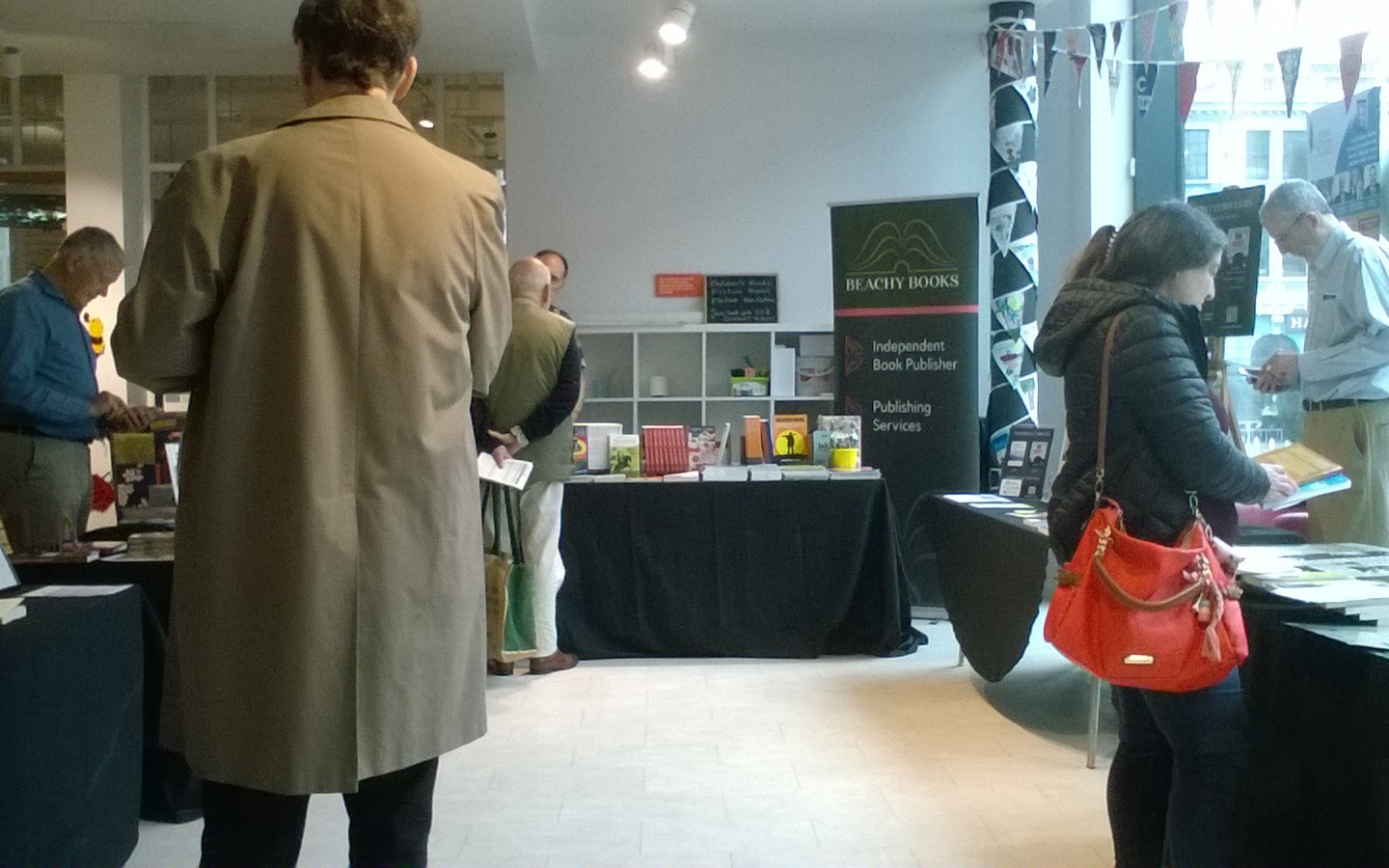
Tunbridge Wells now boasts a literary festival. Over four days this year it hosts talks from well-known writers such as Michael Rosen, Michael Parkinson and Sheila Hancock. But not just the big names.

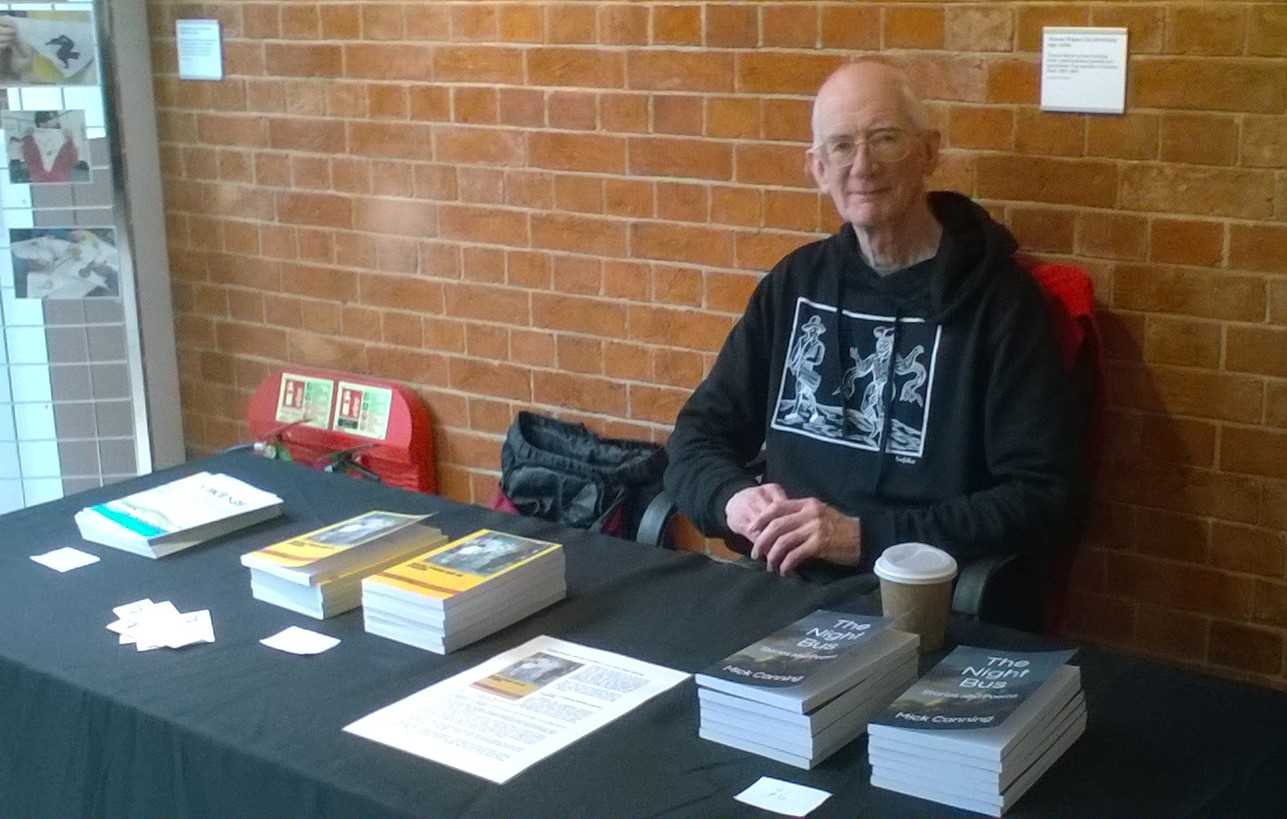
Yesterday was the day local writers could book a table and hawk their wares. It’s been some time since I’ve taken part in one of these, in fact, I’ve only done it once before, I think. When I used to regularly have paintings in exhibitions, I spent a lot of time essentially doing the same thing – chatting to other painters, talking to members of the public who might buy a painting and generally ‘networking’ (I still find that a slightly silly word). Although talking about Making Friends with the Crocodile did have another effect – it reminded me again that I’m beginning to feel I ought to take one final trip to India, sometime.

Anyway, I think I should probably do one of these more often. Did I sell armfuls of books? No, but I sold a few. I had some good conversations with members of the public and other writers, It also seems to have the effect of energising my commitment to writing, which is something that happened to my painting at exhibitions, too. Talking about my books and projects encourages me to focus afresh on them and, basically, get my finger out and get on with it, which can’t be a bad thing.

So, I’d better get on with it.

Review of Shadowlands by Matthew Green

In this book Matthew Green charts the decline and eventual abandonment of eight British settlements; a diverse selection ranging from the Stone Age settlement of Skara Brae in the Orkneys, through several Medieval villages and cities and up to the twentieth century, to an area emptied of its inhabitants during the Second World War and a village that was abandoned when the valley it inhabited was flooded to create a reservoir – although in that case ‘abandoned’ is the wrong word, since that particular story is a harrowing tale of folk driven from their homes at the diktat of decision makers far away, not even of their own country.

In each chapter he tells the story of the decline of the settlement drawing upon written records for all but the oldest, Skara Brae, for which he relies upon archaeological evidence, and some of the more recent, for which he uses a mixture of eye-witness accounts and the testimonies of those who had heard their stories at first hand. Of all the stories here, that of Dunwich is probably the most famous, with its myths of bells from long-drowned churches being heard far out under the waves, although the popular description of Dunwich as a ‘drowned city’ is inaccurate, as it fell away into the sea as the cliffs beneath it were eroded away. But much is known of Dunwich, with many extant records and maps of the city, enabling Matthew to chart its decline and eventual end in some detail.

Hirta is the biggest island of the St Kilda archipelago and was occupied for at least two thousand years until 1930, when the final thirty six islanders voted to leave. By then, most of the families and younger residents had left for the mainland, and their traditional way of life had become unsustainable. Until a couple of hundred years ago the islanders were virtually cut off from the rest of Scotland, due to the distance and the difficulty of making a landing at the island. Existing almost exclusively on a diet of seabirds (remarkably, they were apparently lousy fishermen!), the islanders lived a remarkably difficult life and it is no surprise that as they were exposed more and more to the outside world, more and more of the islanders opted to leave for a better life.

I found I was drawn deep into these stories not just because I found them so fascinating, but also because of Matthew’s skilful and easy style. A very well researched and beautifully presented book, I’d definitely give it five stars out of five.

If…

I’ve been feeling a bit flat recently, although that’s not uncommon at this time of the year.

I know I’m currently craving solitude and simplicity, wanting to spend some time somewhere a little remote. An area of moorland, such as Dartmoor or the Pennines, would do me very nicely. Even better if there were some woodlands nearby, too. Although there would be no people around (ideally), there would be wildlife to watch and hills and valleys and those woods to explore. Maybe some interesting ruins nearby…

Simplicity, that’s what I’d want. Somewhere with no wifi, no TV, no phone signal or even radio. A decent supply of food and a few beers because, as Jerome K Jerome said, thirst is a dangerous thing. A fire to sit beside in the evening. Somewhere small and basic with no luxuries.

I’d take some books. Several sorts, so I could pick one up or swap to another depending upon my mood. At least one book of poetry, perhaps Stranger in the Mask of a Deer which I read for the first time a few months ago, and then re-read recently because it was so damned good. Maybe a Seamus Heaney collection, including the ‘Station Island’ sequence of poems, or a collection by Russian poet Yevgeny Yevtushenko for the marvellous long poem Zima Junction. Maybe I’d just take all of those.

I’d include some sort of detective novel for pure escapism, then one or two books by the likes of Robert Macfarlane – books that would inform me about the landscape I had decided to inhabit for a while.

I wouldn’t just be walking and exploring, or reading. I have a few poems I need to finish off, one about salmon and one about the Winter Solstice. In this environment I think I’d be inspired to finish them, hopefully write some more.

A week would probably do it.

Driven

I’ve written elsewhere how, like many others, I feel I write because I have to; ideas come into my head and I need to set them out and explore them, to bring them to a conclusion. Because I feel driven by these ideas.

I’ve also written of how the muse sometimes just ups and leaves and hightails out of town. Then I just dry up. But all that time, the ideas will still pop up, perhaps in broken form or just as hints – the odd phrase, a line or two, but refuse to meld with others to make a whole.

That, I would venture, is when you understand the artist within you. You don’t just say Oh, forget it! I’ll take up trainspotting instead! and ignore the tiny sparks that continue to force their way into your consciousness. You note down those ideas, and struggle to tease something – anything – out of them that you can use, knowing that sooner or later they will lead to something.

Yes, that’s when you know you’re driven.