My Virtual Reality

One of the things about growing…older, let’s say…and I’m not saying it’s a good thing or a bad thing, is the growing realisation that we’re never going to live in that place that we are convinced is perfect for us, or have the day to day lifestyle that is everything we want.

One consolation for the writer, even if it’s rather a shallow consolation, is the opportunity to write these places and lifestyles for ourselves. For the last year or so, nearly all my creative writing has been rather experimental, which is one reason I’ve not put much up on here. Rather than focusing on writing the complexities of a story arc, I have been very much concerned with the character of the characters I have written, and possibly even more concerned with the environment they occupy.

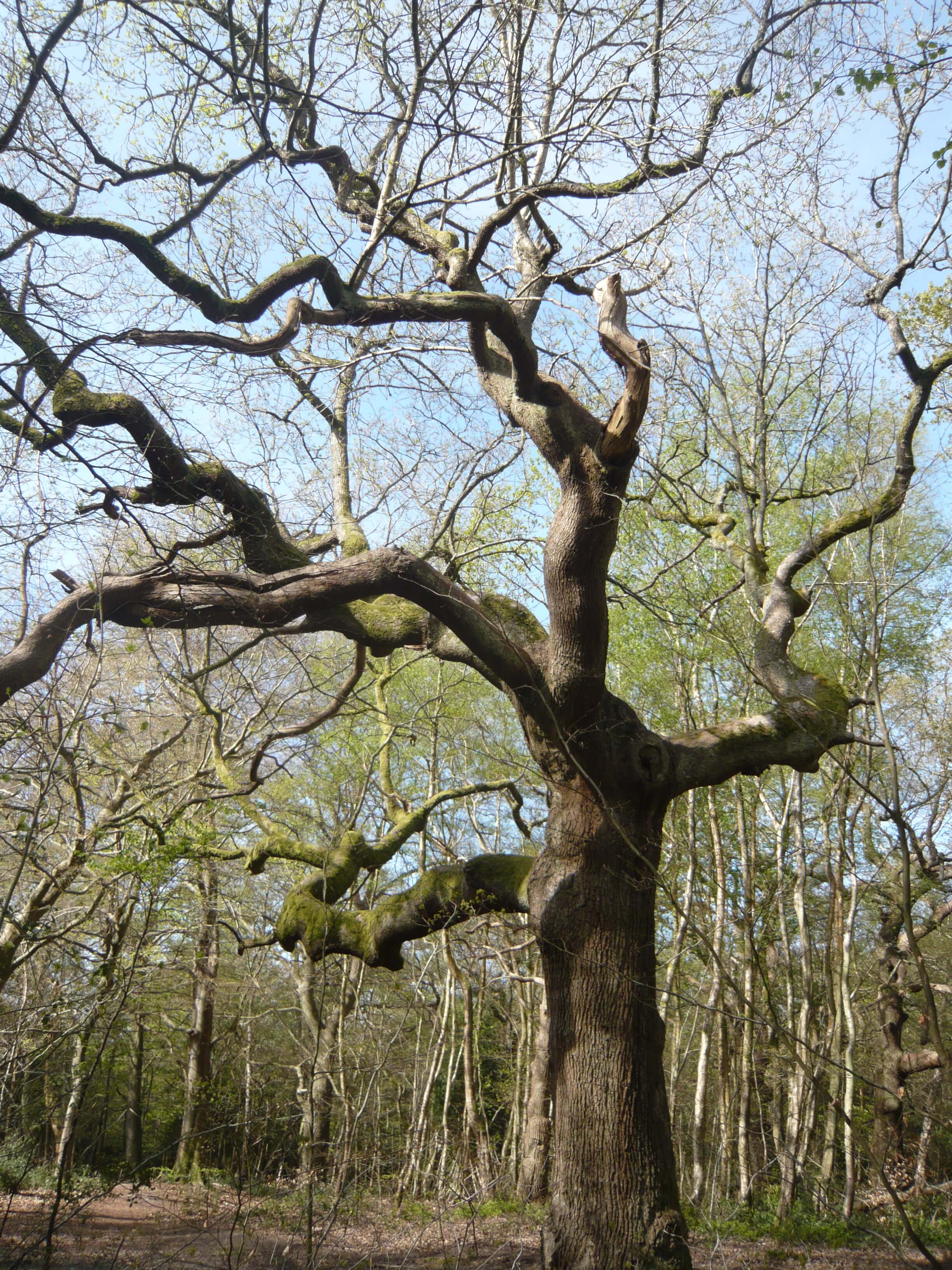
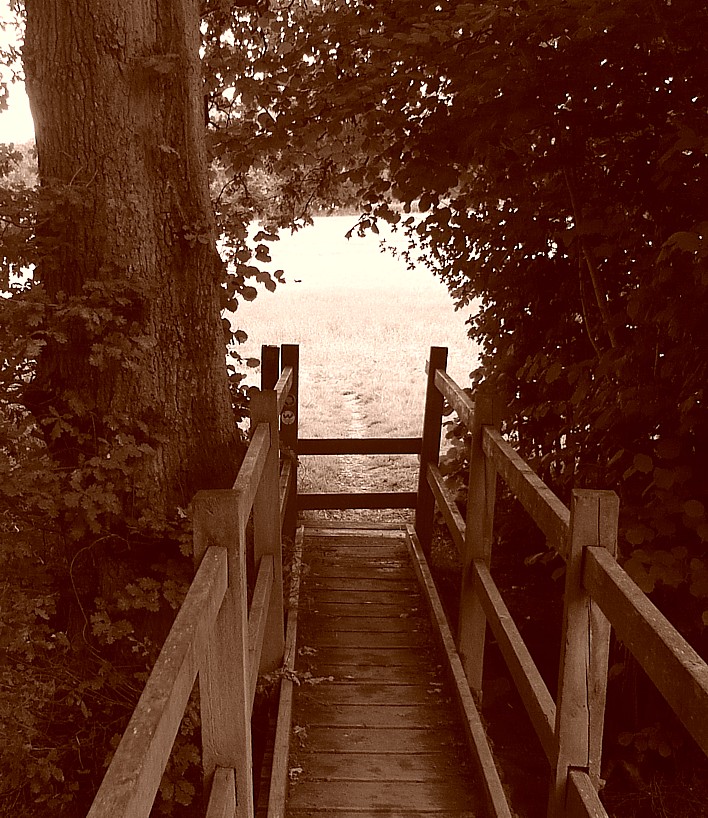
In a way, then, I’m exploring different versions of myself – although that, surely, is what all writers do anyway? – and it is instructive how much all of these versions have in common. For anyone who knows me, the information that these scenes involve almost nothing of town or city should come as little surprise. But it’s a learning process, a personal learning process. And even the photos I’ve chosen to accompany this post serve to reinforce what I already know about myself.

And the other strand that occurred to me as I thought about all this, is how it has brought home to me that the priority in my writing – my absolute, number one priority – is that first and foremost I am writing for myself. Whatever I write has to please a rather demanding reader; myself. And if that means my writing is even less ‘commercial’ than it was before, then so be it.

Strangely, this seems to have removed the pressure of time. I’ve always ended a writing day either pleased with the amount I’ve written or berating myself for not having written more. As if that was the sole measure of how successful or productive my day had been! Now, though, writing just for myself, success can be equated with how good I feel the output is; and by ‘good’ I mean quality (as defined by me, for me). So even a few lines that work well may be a good day’s work. I think this time pressure, this fixation with writing a certain amount each day, is a purely commercial pressure; an I-need-to-finish-another-book thing.

So goodbye to that. It’s not for me.

Twitter Tantrum

It was interesting – or demoralising – to follow a couple of threads on Twitter today where the vast majority of contributors remarked that if someone followed you, you HAD to follow back. If not, you’d be unfollowed instantly. I noticed this because a few times recently I’ve been followed, only to be unfollowed a few hours later, presumably because I hadn’t followed back. This tells me these new followers had NO interest in what I might post, only in boosting their followers total. And if that’s what the majority think, then why on earth bother posting anything if the only reason anyone else is there is to gain followers?

Just go away. We don’t want your sort in here.

Panicking Pigeons and Floundering Pheasants

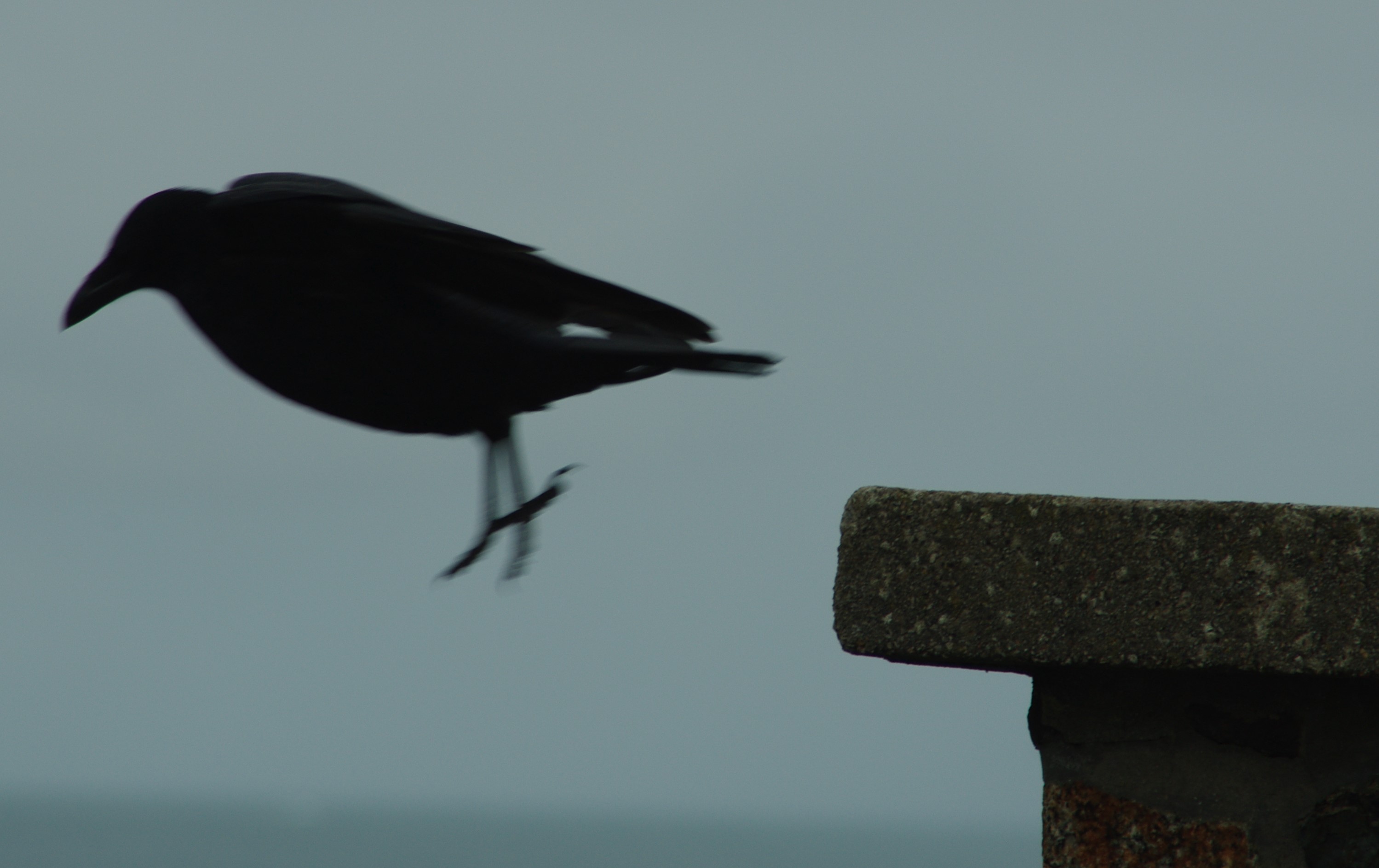
Some birds look particularly elegant and graceful when they fly…

And some don’t…

Panicking pigeons are pitiful things,

Flapping and slapping and clapping their wings,

Each one has only one thing on its brain,

And that’s searching for insects, for seeds, and for grain.

.

Walk-bobbing-walking like chickens on speed,

Or speeded up clockwork or on some doped seed,

Cooing down chimneys and shitting on folks,

A ridiculous call like a ghost being choked.

.

A floundering pheasant’s a physical freak,

With a whirring of wings and a creak from its beak,

You would think they would hide up and shut up all day,

But a clattering rusty noise gives them away.

.

There are plenty of elegant fowl in the sky,

The swift and the swallow, the eagle and kite,

With a breath-taking swoop or a beautiful song,

At times, though, evolution just got it plain wrong.

.

And on the subject of birds, I couldn’t let you go without letting you listen to the blackbird in our garden who I mentioned in the previous post, who has been singing his little heart out every day:

Smallpox, Vaccinations, and my Ancestors in Essex

One branch of my family came from Essex. In the eighteen hundreds they lived in the Ashen area, in Ashen, Ovington, Clare, and, I expect, other nearby villages. Extended families all living within a few minutes walk of each other as was the way then, both in urban and rural areas. They were all farm labourers making more or less of a living and I would imagine they found life quite a struggle. Most did.

Yesterday I made a systematic search through the parish records for the Ashen area, looking at every page between 1800-odd and 1890-odd. The pages up to approximately 1815 are water-stained and virtually indecipherable, and they finish around 1890. This branch of the family were named Hickford and I decided to extract every entry of that name to help me piece together the relationships. These records are of Births and burials and, before 1837, marriages. After this date the marriage records were held in London.

I don’t propose to bore you with any details of the family, but I was particularly struck by the following entry:

Mary Hickford was only thirty five when she died on June 16th, 1839. What is interesting is the note appended to her burial record by the rector. And it was the only such record I noticed, although I might have overlooked one for another family. It reads:

She died of the small-pox between 3 and 4 o’clock on Sunday the 16th and buried a little after midnight. I read the burial service over her grave at 10 o’clock this same morning. L Squire, Rector of Ashen.

So much haste! No sooner is she dead than she is buried – in the small hours of the morning, no less. The gravediggers must have started work almost as soon as she had breathed her last. It illustrates how terrified people would have been of catching the disease.

We have forgotten how virulent and frightening smallpox was, since it was finally eradicated by vaccination in 1979. Up until the 1800’s it killed thousands of people, and disfigured many more than that. Attempts to protect people from it by vaccination go back much further than Edmund Jenner famously inoculating a boy with ‘cow pox’, essential a milder form of the same virus, to produce antibodies that would protect against smallpox. He had learned that country folk had noticed that milkmaids who worked with cattle all the time might develop cowpox, but rarely caught smallpox, and would occasionally inoculate themselves with cowpox to ward of smallpox.

A thousand years ago in China, healthy people inhaled a powder made from smallpox scabs which provided some protection against the disease. Another method was to scratch the surface of the skin and introduce the powder into the body that way. Versions of this circulated around Asia and Africa until stories reached the west in the 1700’s.

Since the disease killed so many, especially children, parents were keen to have their children inoculated. But naturally there were scare stories. There was an anti-vaccine movement ridiculed in this well-known cartoon by the then prominent cartoonist Gilray, in which patients are seen developing cow-like pustules as soon as they are innoculated.

These, of course, were the nineteenth century version of today’s anti-vaxxers protesting with no proof whatsoever that the vaccine is a way of inserting microchips to monitor and control the population, of ignorance rejecting science. And just as true.

Happy Birthday to my Little Brother

Who would have been 62 today.

Grief is a powerful emotion. It can be debilitating and overwhelming. It can consume people, preventing them from living their lives.

Although it sounds a fictional cliché, In some societies ‘professional’ mourners will attend funerals, intentionally provoking powerful outpourings of grief by almost theatrical displays of wailing and crying; perhaps ripping their clothing, throwing themselves to the ground, and thrashing around in distress. This helps to move the bereaved through the process of loss, by bringing feelings and emotions to the surface, rather than allowing them to linger unexpressed for months or years. It helps the mourners to move on – not to forget, but to allow life to continue.

I can understand this, having met people who have been unable to move through grief, seemingly trapped in an ‘I’m okay’ situation, refusing or unable to display their emotions but presumably storing their grief up inside, unexpressed. Refusing help. People who have appeared unable or unwilling to move on. I was fortunate, my grief striking me like a clenched fist and, for periods, I had no choice but to allow myself to weep and rail at fate. But this allowed me to eventually move on, my grief evolved into sadness.

And for anyone struggling with grief themselves, something that helped me at the time was to write a letter to my brother. In my case after remarking it had been a while since I had heard from him, I filled it with humour, using in-jokes we had shared, although other people might have found a different approach beneficial. And the letter sits on my computer still and every once in a while I read it, and it helps me to smile and remember and, of course it makes me feel sad.

But that’s good.

I shall read it again today, and remember.

Happy New Year!

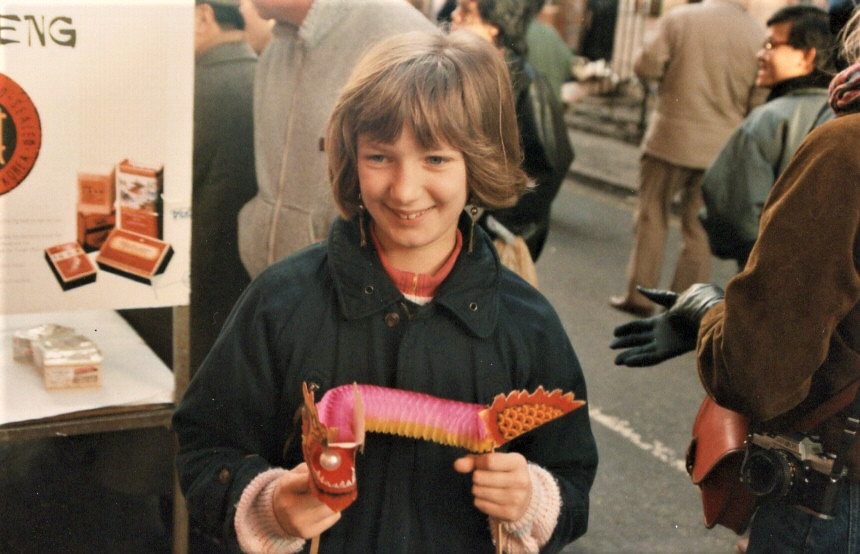
Chinese New Year, that is. The year of the Ox. Here are a few pictures I’ve taken of Chinese New Year celebrations in the past. With Lockdown, I don’t suppose there’ll be too many going on this year, at least outside of China.

First of all, some from London about thirty years ago:

Chinese New Year 2013 in Kolkata:

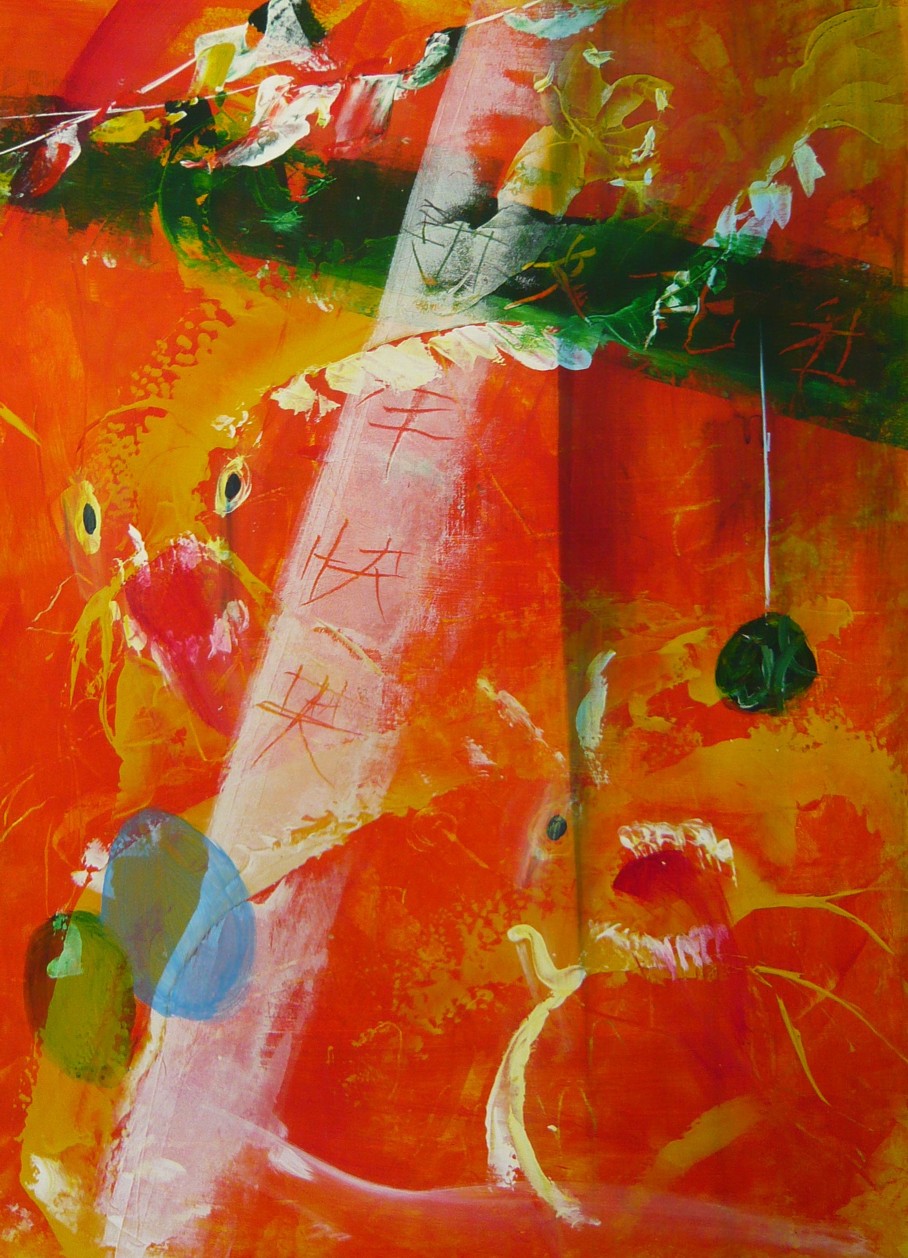
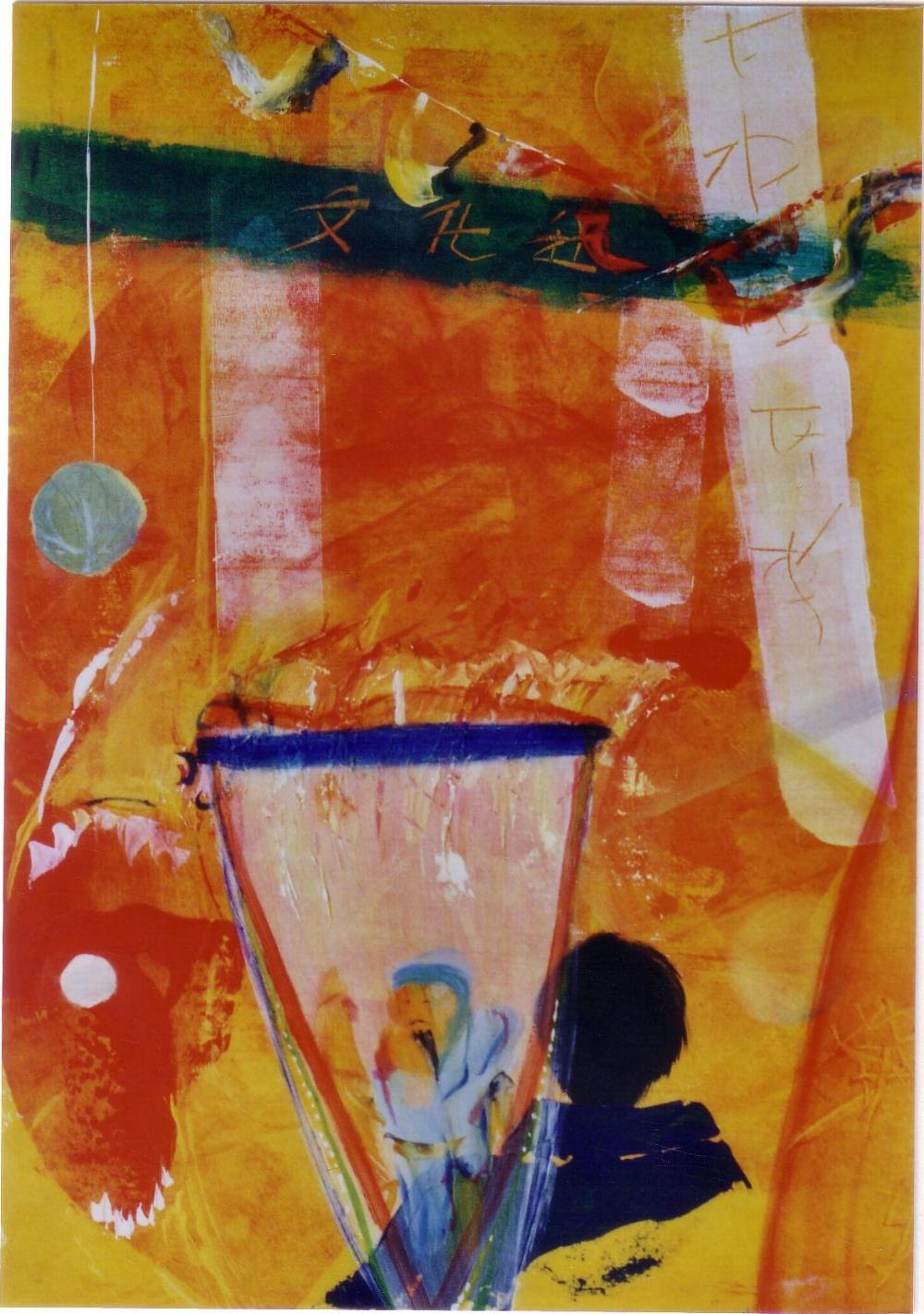
And a couple of my own paintings:

Gong Xi Fa Cai!

We Do Violence

Yay! Day seven of my Poem-A-Day-For-A-Week-Or-So project. I’m jolly impressed I got this far, although I say so myself. And I’m quite pleased with this one. Although, like all the others, it’ll benefit from some work on it later.

We Do Violence

We all occupy two places simultaneously:

Wherever we happen to be in the physical world,

And wherever we currently inhabit in our heads.

The trick is to get the two to coincide.

.

We interpret our landscape as we walk,

Inflicting our thoughts upon it, changing it,

Or at the very least changing our perceptions of it,

Rather than being truly open to the experience.

.

To achieve that, like a meditation

We need to let go of our thoughts.

.

And the worst of these interpretations,

Is this absurd need to name everything.

We begin to only look for particular things.

And filter out those we cannot name.

.

We do violence to the landscape in this way,

Subverting it from what it is, to what we wish it to be.

.

We need to listen to the landscape in silence,

undistracted by thoughts or by words.

Words are, at best, a poor substitute for things.

As soon as we name a thing, we claim it as our own.

.

We limit it to our own understanding, and we dilute it,

By placing it in the company of other things

That we name the same. It is akin to taking away the

Individual names of people and referring to them all as person.

Quick!

Day 6 of my poem a day for a week or so project. Almost there! And this one is a bit of an experiment…

Quick

Quick, the useless and the wistful,

The deceitful and the unwary,

Come now to me, for I must be honest,

For I must write my poem

.

I have things to say which I must first discover,

Although this seems to take so long.

But time is perfectly without fault and

Time alone will determine how long I must take.

.

I am forever reinventing myself

Plunging in to find out what resonates

Immersing myself in this life

Until I understand or tire of it.

Sigh

Poem number five in my Poem-A-Day-For-A-Week-Or-So series. Snow outside, test cricket on the TV, beer in the cupboard. That’s my day sorted, then.

The sea sighs for you tonight.

It sucks at the shingle

And smears your footprints

Like a wet thumb rubbed across writing.

Where once you walked and left your

Prints, it gently wipes the land clean.

Lovingly it lays its cheek to the ground

And nuzzles your memory.

.

We are more than specks

In the infinity of time and space

Yet somehow we need to

Make sense of our lives.

Rock endures

But so does the wind and the rain.

More so, in fact, since in the end

Mountains are levelled

And the wind and rain remain.

.

In the end the passage of many feet

May be more durable than

Dwellings of stone.

I Made A Vow

Day four of the Poem-A-Day-For-A-Week-Or-So project and a bit of a rush, today, as I’ve been assembling a shed (as you do). Another one, therefore, which will benefit from a revision when I have more time.

In Tripoli I made a vow to travel light, my eyes wide open,

Travel all the time I could, to take my chances when they happened,

Planned to seek out strange new places, take some risks see new horizons,

One thing alone I wanted now, the promise of the unexplored.

.

And I remember where I was, the time of day, the type of weather,

Early morning, early March, this was a time of change for me,

A time for taking big decisions, time to turn my life around,

Time to leave things in the past, the time to turn another page.

.

At the time I made that vow, I yearned to go along the Silk Road,

Travelling any way I could, and though that sadly never happened,

Other projects came and went, journeys all filled with adventure,

Baking deserts, frozen mountains, close to home and far away.

.

I knew the world would not be kind, it would not make my journeys easy,

Whatever it might offer me, I’d leave myself completely open,

Embrace the rain, embrace the wind, embrace the temple and the hillside.

This was my private pact with life and to this day I’ve not yet finished.