The First Christmas Present

It’s never too early for the first seasonal short story!

Fat Dude Flying

The First Christmas Present

The old fellow with the white beard and the red jacket leaned queasily over the side of the sleigh, watching the snow covered fields passing below. For a while, the moon was peering out between the clouds and he travelled over a scene of sparkling silver, although the sight did nothing to cheer him up.

He hated heights.

He hated elves, now, too. He’d never met one before today, but he knew now that he hated them. The smug little tossers sat right at the back of the sleigh, eating the mince pies that had been left out for him, and tittering whenever he took a wrong turning.

And he hated children. He especially hated children.


Ever since they took away his benefits and told him he would now be better off, he had struggled for money. Now it was November, and he had decided he had to get a Christmas job. Not that he was looking forward to long nights at the sorting office, or lugging a bloody great bag of Christmas cards from door to door. But it seemed he’d left it rather late, and there was nothing left. At least, nothing for someone of his age. Eventually, he found himself in a tiny little room on the second floor of a run-down office building in a backstreet, the home of an agency that he’d never heard of and with a staff, it appeared, consisting of one gentleman who he initially took to be a caretaker and who introduced himself as Mr Nicol.

‘You’ll do nicely.’ He said. With time-shift, it meant that there was no need to cram all of the deliveries into a single night; they could be spread out over the whole year. In fact, they tended to use two of them, these days.

‘Two of what?’ His mind reeled.

‘Why, Santas, of course. But even then,’ Mr Nicol went on, ‘it’s difficult when one goes sick for two weeks. And so this is where you come in. What is a problem,’ he explained, ‘is E.U. Working Time Directive no.7. This rules out night work for anyone over the age of fifty. So you’ll have to do the deliveries during the day. Still, time-shift takes care of that.’

He still didn’t entirely understand, but he took the job.

The SatNav was crap. It took twice as long. The first time he tried it, he was terrified to find the sleigh suddenly hurtling between buildings that seemed to be no more than a couple of feet apart, at what must have been close on three hundred miles an hour. It then banked and turned in a tiny back garden, subjecting him to a force of about a hundred g, and then shot back down the same terrible alleyway. It then parked itself on the rooftop next to the one that he had just left.

The elves tittered into their hands.

He quickly found it better to just leave it to the reindeer to sort out. They obviously knew what they were doing.

And then it was impossible to tell how much time had gone past. If he noticed the time in any of the houses they visited, it never made any sense. One clock said ten fifteen. Some while later, he noticed one that said nine forty two. The next said four thirty. For a while be began to check the time at each house, but quickly gave up when the times appeared to be completely random. He shrugged. More of this time-shift stuff, he supposed. It made it very hard to decide when he should be on lunch break, and he made a mental note to speak to a union rep. at some point.

Another house. Impossible to know how many he had visited. After the thing with the clocks, he was even wondering whether he still had to visit some of the ones he’d already visited.

No, that was too confusing. He shrugged again, and stepped out of the sleigh. The elves followed him with their sacks, and then they all stepped forward, and next thing they were standing in a hallway, just inside the closed front door. Yes, that was weird, too. The elves obviously knew where they were going; he followed them into a darkened front room where a little glass of liquid stood on the table beside a plate with two mince pies. There was a little note that said ‘For Santa, love Benjy’.

He dropped the mince pies into the bag that he wore around his waist for the purpose, and poured the sherry into the flask. He hated sherry, anyway, so the little tossers were welcome to that. With luck, they’d fall out of the sleigh at some point.

The elves trooped noisily out of the room and up the stairs, reached the landing and opened the first door on the right. Inside, a child was asleep in the bed, a large pillow case draped across the duvet.

‘Greedy little bastard.’ He thought. He picked up the pillow case and held it open, whilst one of the elves seemingly poured in presents randomly from his sack. And then he froze. There was someone coming up the stairs; that wasn’t supposed to happen! All this time-shift stuff was meant to mean that everyone would be asleep from the moment he entered the house until he left again. It all happened in less than a fraction of a nanosecond, in any case.

The footsteps came nearer, and then stopped. A small child appeared at the doorway, but all that he noticed were her sad eyes. She did not seem surprised to see him, nor did she appear overjoyed.

‘You never come to me.’ She said in a quiet, flat voice.

‘I visit all the children!’ He replied, struggling to present himself as jovial.

‘No. You never come to me. You never have.’ He felt himself squirming under her steady gaze.

‘What’s your name?’ He said at last.

‘Mary. I live with my mother. In one of those flats over there.’ She pointed out of the window towards a few yellow lights that seemed to randomly puncture the darkness.

He glanced at the elves, who shrugged unconcernedly, then sighed and pulled a list from his back pocket and put his reading glasses on.

‘I’m sure we, I mean I, do. What’s the address?’ She stepped towards him and gently took the list from his hand, looked at it for a minute and then pointed.

‘There. But you don’t go to our flat; number three.’

He ran his eyes down the list, clicked his tongue irritably, and then looked a second time, certain he must have missed her name. But no, it definitely wasn’t there. He looked up, to meet her gaze again. Oh, hell. He could take one present from, say, three or four others. They would never miss them, and no one would know.

‘We’d know!’ The first elf glowered at him.

‘You can’t do that!’ The other one pouted. He looked from one to the other, and then back to the little girl, and came to a decision. He reached into Benjy’s pillowcase, picked out a couple of presents and held them out to her. She did not move for a moment, but then she gently smiled, reached out, and took the nearest one. Then she turned and left the room, and he heard her footsteps going down the stairs. He darted out to the landing, but already she had vanished.

‘You’ll be in big trouble.’ A spiteful little voice behind him said happily. He said nothing but did the thing with his fingers he had been taught, and they were back in the sleigh again.

It had been their last call. Now he was watching the elves smirking and whispering to each other, as the reindeer ran smoothly through the clouds. Casually, his hand strayed towards the SatNav, and he pressed the ‘over-ride’ button. The sleigh stopped immediately, and spun round a hundred and eighty degrees, catching the elves completely by surprise and throwing them out of the sleigh and into the night sky.

He hated elves.


Photo credit: manmadepants via VisualHunt.com / CC BY-NC-SA
A Day in Ladakh

Wednesday 13th April 2005

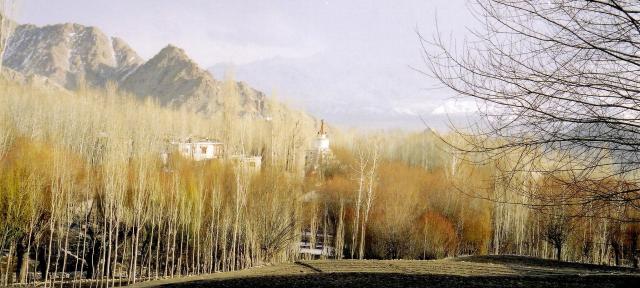
This morning, there is a clear blue sky, with just a couple of clouds sitting on top of the Stok Mountain Range. It doesn’t seem quite as cold in the morning as it has been recently.

I go for breakfast at the Budoshah. I don’t really know why I eat here (I certainly don’t always), unless it’s because the morning sun warms the corner that I’m sitting in. I’m the only person here and when I walk in, the waiter always seems frightened to see customers. When I’m eventually given a menu (and everything is always ‘off’ – it’s a Kashmiri restaurant, so two thirds of their dishes are chicken or mutton. The day before yesterday, people were being told ‘no chicken no mutton’.), I ask for scrambled eggs on toast.

I’m told no, they can’t do it. Fried, boiled or omelette, yes. But the cook obviously can’t scramble them.

And black coffee.

‘Pot?’

How big is the pot? I ask.

‘Ah…I get one’. He disappears back into the kitchen, never to return. I sit back and contemplate the Ladakh Mountains in the sunshine, prayer flags waving lazily beside the temple. With luck, it will be another warm day. I think I’ll catch a bus to Thikse Gompa.

My coffee arrives. In a glass.

The toast arrives with heart-stopping chunks of Ladakhi butter – like everything here that calls for butter. I thought at first that it must be cheese. It seems to be the Ladakhi/Tibetan way. I made a mistake and had a cheese sandwich the other day – the cheese is just like butter, so you can imagine what it was like for my poor western tastebuds. I had to scrape most of it off.

leh street

It’s 12.45, and I’m sitting on a rock in hot sunshine at the foot of Thikse Gompa. The bus ride here was remarkable (and where else in India would you find that the driver would wait a few minutes whilst a passenger nipped off the bus to buy some bread?). All the way here, we passed through this wonderful desert scenery, with fairy-tale castles and palaces and the like clinging precariously to the tops of cliffs.

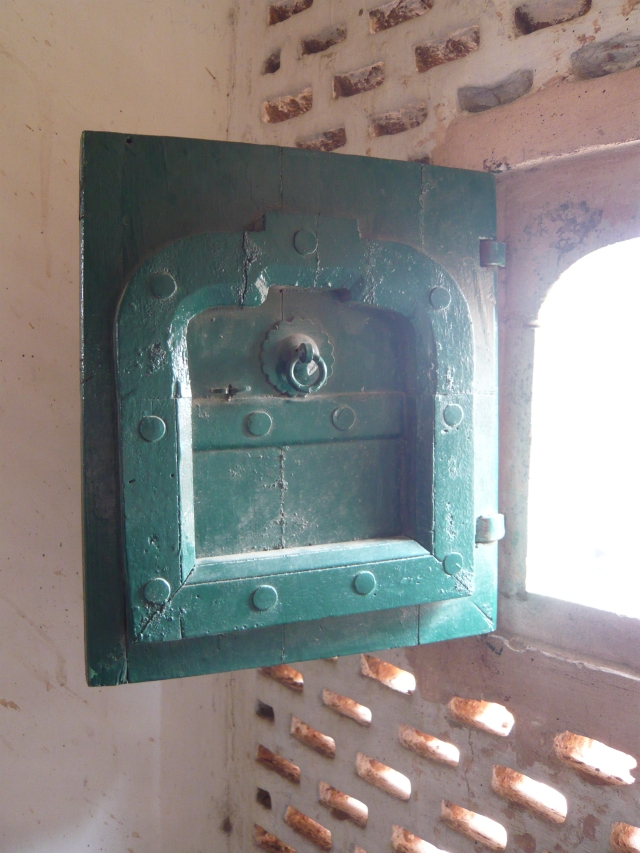
The Ladakhi buses are like all Indian buses, though. Today’s had plenty of pictures inside and on the windscreen (The Dalai Lama, Buddha, etc.), two vases of flowers and a fancy piece of wooden scrollwork on the dashboard, and several drawers incorporated into this.

At the moment I’m having my apricot and water lunch to the accompaniment of drumming in the background; a ritual going on somewhere. There are so many gompas here, and every private house performs their own pujas, that it could be coming from anywhere.

We passed through Shey on the way here. More of this tomorrow, I think. I intend to spend the day there.

I ‘strolled’ up to the gompa, and was shown around by a monk. We chatted in a mixture of Ladakhi, Hindi and English. He is a Ladakhi, in fact all of the monks here are. There are no Tibetans. In fact, despite the large Tibetan population here, he says that there are only two monasteries with Tibetan Lamas.

Untitled-TrueColor-01

We watched a group of young monks kicking around a football, a hundred metres or more below us.

Do families still send one son to be trained as a monk?

No, but there are still many coming.

I was first shown the giant statue of Maitreya Buddha, which is fairly modern, then the fourteenth century gompa, which is very dark and unlit, which made it difficult to properly see the wealth of thankas and statuary. I had to tell him about my family, job and anything else he could think of. That was quite hard going, and I don’t think we totally managed to get through. A pigeon flew into the gompa and started a discussion (not literally, you understand). In Ladakhi, pigeon is (I think) Po-ro, fairly onomatopoeic. In Arabic, I told him, it’s Bulbul, also onomatopoeic. Possibly it is the same in Hindi and Urdu.

Untitled-Scanned-01

Back for tea and a bucket shower.

Later, I’m walking around the market. How strange to go around market stalls and shops in India, not getting pressured and hassled at all. At times it seems almost unreal. You wonder whether suddenly it’s all going to crash around you and normal India will be resumed as soon as possible. The longer that you spend here, the more laid back you become. I don’t think you can help it! Everyone strolls around smiling and Julay-ing you and each other. I know that Ladakhis consider it the height of bad manners ever to lose one’s temper, but it really does seem unreal. I think it would be easy to just sink into the ambience of it all and find you’d suddenly missed your flight out and had overstayed by weeks, or months…

Andrew Harvey said, and I’ll have to paraphrase because I can’t remember the exact quote, ‘The wonder of Leh is that there is absolutely nothing to do. Nothing to do except slow down, switch off and just observe. Just be.’ I understand that, now. I realise that that is what I have been doing the last few days without realising it.

trees

I had Phung Sha and rice for supper at the Amdo -a Tibetan dish. It is a sort of thick vegetable stew, which I shall certainly have again.

I have always wanted to read Rumi, the thirteenth century Persian mystic and poet, and I picked up a copy today from the little bookshop. I am now wrapped up in my blanket reading it by the light of my candles.

Downstairs, my hostess is singing again. Last night, I tiptoed out to the landing to listen to her singing what I was told this morning were Ladakhi folksongs, and I creep out again to listen now.

This time it’s ‘Bob the Builder’.

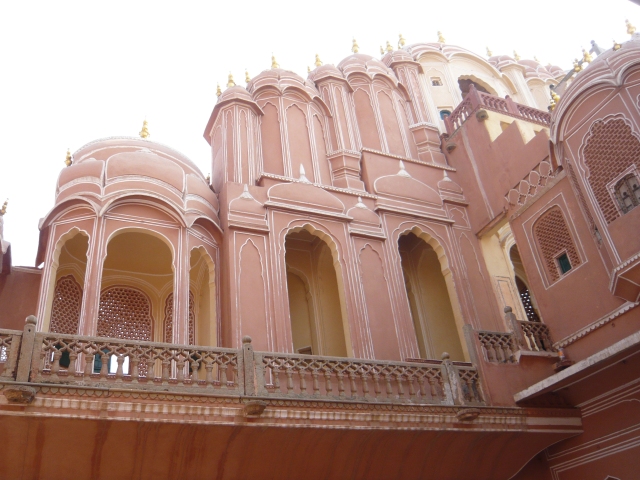
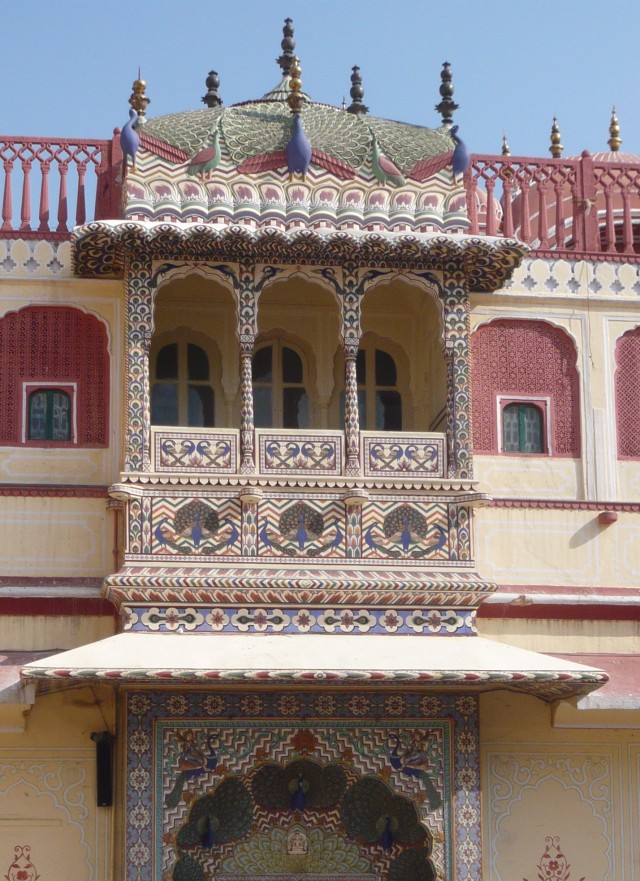
Jaipur

I have recently discovered Arv’s lovely blogsite ‘Jaipur thru my lens’:

https://jaipurthrumylens.wordpress.com/

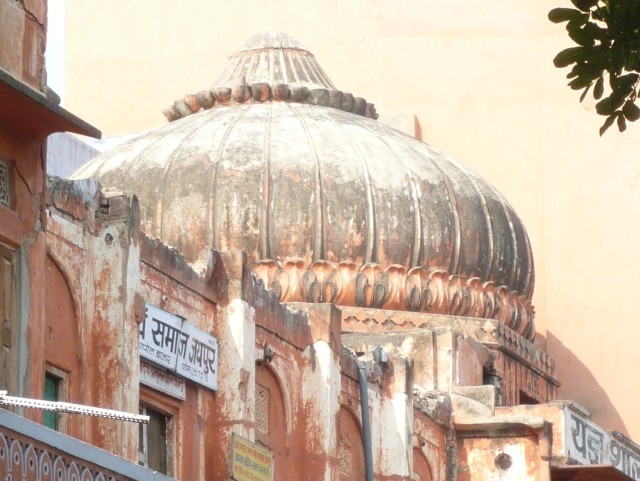
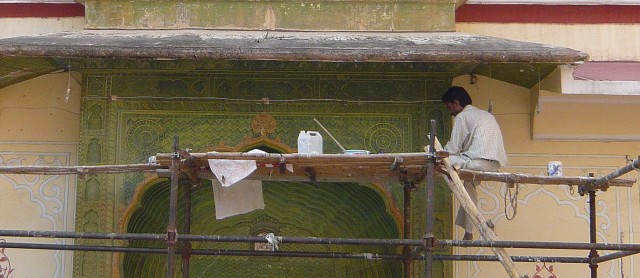
and after reading several posts and enjoying the pictures, I felt that I had to revisit my own photos of Jaipur and share a few of them.

They’re a bit of a mish-mash, but, there you go.

I was there in 2009 for a few days, and probably the thing that I remember most about it is that because I was unwell for much of the time (unusually for me),  I did not get to see many of the places there that I had wanted to see.

I think this is why I enjoyed Arv’s pictures so much.

115


102


089a


091a


092a


157a


109a


132


146a


131


121


156a


123a

The Mad Woman of the Hill Station

A few years ago I was staying in a town in the Indian Himalaya; one of those towns that would have been described as a ‘hill station’ in the days of the British Raj, where the climate is tolerably similar to that found in Britain, and the Colonial masters were able to retreat for that half of the year that the temperatures on the plains became just too hot for them to endure. When that happened, they would load up themselves and their possessions, even down to plants in plant pots, so that native servants could drive them or carry them for weeks on end, on the long journey up into the hills. Nothing would be too much bother…for the servants and ‘coolies’, that is. At that time, the Westerners considered themselves to be utterly superior to the ‘native peoples.’

       coolie 1

Of course, that kind of attitude has been consigned to history, now, hasn’t it?

Anyway, it is a lovely town, this town that I am referring to, full of historical buildings associated not only with the British, but also with Indians (of course), Nepalese, Tibetans, and several other races. For this reason, amongst others, it attracts a goodly number of tourists, Western and otherwise.

hill station 2

One day I sat eating breakfast in a restaurant there, when a group of five other Westerners entered and sat down at a table nearby. Within about half a minute, they had begun to complain bitterly to each other about their travels. They appeared to think that the whole world was a freak show, put on for their benefit as they travelled around viewing it, but everyone that they met in these backward places (‘I don’t miss Western civilisation at all.’ Remarked one of them, whilst playing with his i-phone) were either out to fleece them, or to thwart their plans in some way or another by pretending not to have what they were asking for, or by taking ages to do what was demanded of them.

However, I was distracted from listening to their conversation and wondering how best I could kill them all without being arrested, by the arrival of another Western lady, aged, I would think, about sixty, dressed in a slightly odd mix of Indian and Western dress. She had appeared the previous morning in the restaurant, and had a shouting match with the same group of Westerners, although I had been on the other side of the restaurant that morning and could not understand what it was about.

Today, she popped her bag down on the table next to mine, disappeared for a while, and then returned, with a loaf of sliced bread that she had obviously gone out especially to buy. She took out four slices, turned to me and said ‘Try these; they are much nicer. Are you a priest?’

‘Thank you.’ I replied (I was in t-shirt and trousers, nothing particularly priestly). ‘No, I’m not.’ Our conversation continued for about ten minutes. She was a Plantagenet royal, brought to 2013 by a time machine, which the CIA discovered in 2000. That is why so many people are unhappy; they have been sent away from their proper times. She apologised for not being able to hear very well, although I could see no problem in that respect, but she had been hypnotised. Then she wished me goodbye and went out again.

What a splendid woman. She was a breath of fresh air, and unknowingly saved the lives of five other Westerners that day just by being there.

Unfortunately for me, though, that same evening I chose to eat in a restaurant that was empty when I arrived, so that when a couple of girls came in and sat down two tables away from me, I could hear every word that they said, whether I wanted to or not. There was a Swiss girl, whose role in the conversation was to say ‘yes’ and ‘no’ and very little else, whilst the other girl, who was British, just spouted on and on and on…

It appeared that she was travelling around the world. If I was a relative, I would have given her the money and said ‘go off for a few years. Enjoy yourself.’ And then moved house. She had been to Marrakesh. To Cairo. Thailand, Cambodia, Australia…I forget where else. Almost everywhere, she hated the food. It generally made her sick. She hated the people. They were horrible. Rude. She was excited because someone was shot in a bar in Cambodia whilst she was in the bar. It seemed to have been the highlight of her travels so far. ‘Was he killed?’ ‘Of course!’ she said, excitedly. And on and on and on…

Perhaps we should all be made to stay at home.

Two weeks in Middle Earth

It is so easy to travel, nowadays…

Our holiday began with a couple of day’s home stay in Hobbiton, the only settlement of any note in the Shire. Unfortunately, this rather set the tone for the rest of the trip. Immediately, it proved impossible to pick up a mobile signal of any kind, a problem we were to encounter time and again throughout Middle Earth, which made trying to alter our travel arrangements extremely difficult.

Our host claimed that we had been given what he called ‘the best room in the house’. Hole, more like, in every sense. One could be forgiven for thinking that flush toilets had never been invented. Admittedly, it was pleasant in a rather rustic, bucolic sort of way, and the meals were everything that we could have wished for, but the beds were a nightmare – ours seemed to be made for a child, and Cheryl and I lost count of the number of times we banged our heads on the low doorframes.

Then, looking for entertainment, we visited three of the bars in the village, all of which advertised themselves as gastropubs, and I’m afraid that each was full of tobacco smoke and were quite simply too noisy. Incidentally, it was in the third one that we visited, that this guy we spoke to slipped me some odd ring, and since then a whole lot of strange dudes seem to be following us around.

The courier seemed a little surprised at our complaints, the following day, claiming that for most tourists Hobbiton is one of the highlights of their holiday, but agreed that we should move on a day early, if he could not find better accommodation for us. As a result of this, we went on to Lothlorien, which could not have been a greater contrast. Two days there at least made us appreciate Hobbiton – where that had been rather rough and ready, noisy and dirty, Lothlorien was simply bland, boring and anodyne. Entertainment seemed to consist solely of rather highbrow concerts and book readings, restaurants were all rather expensive and uninteresting and we felt that we should be tip-toeing around the whole time, hardly daring to speak other than in whispers. At least, though, the oddballs that had been tailing us disappeared for the duration.

But forgive me if I say little of the journey from Hobbiton. Several days through a bleak, cold and windswept landscape, with nothing to see and no accommodation other than our tents. The last part was the worst part, though. We travelled through some ghastly, cold tunnel, where we felt threatened by attack from bandits at any moment, and all sorts of dreadful noises kept happening. It was simply awful, but the courier insisted that it was normal and quite safe. I will be putting in a strongly worded complaint about him after we return.

However, I don’t want it to sound as though it has all been bad, and that we have done nothing but complain. Possibly the best part of the trip so far, certainly for Cheryl, was staying in the eco lodge in Rohan. She was delighted that we were so close to horses the whole time, and the lodges reminded her strongly of the yurt that she stayed in on a previous trip away. Our hosts were friendly and happy to indulge us in our whims – mine to sit outside the lodge at sundown with a glass or two of the local (admittedly rather rough) ale, and Cheryl’s to help with the mucking out in the stables.

Personally, I definitely preferred Gondor, a modern, forward looking country with a booming economy. Although some border regions are still occasionally subject to unrest, the capital, Minas Tirith, is considered by the Foreign Office to be safe to visit, although I was less than impressed when our caravan was attacked by a lone Nazgul, which succeeded in killing two of the armed escort that the travel company had provided for us for this stretch of our journey. Our courier, however, assured us that this was an unusual occurrence and that all steps would be taken to ensure that there would be no repeat. It was after this, though, that they suggested we abandon the daytrip to see the ruins at Osgiliath, which was rather a disappointment, and something that we had both been looking forward to.

It was equally disappointing to find that they absolutely refused to take us to Mordor. We met a number of folk in Gondor who assured us that it is completely safe to travel there, now, and so eventually we booked a couple of nights on a houseboat there, through one of them. We did do our research, and after speaking to several of these guys, we are happy that what we are paying is a reasonable sum. After all, it may not seem much to us, but it is a lot to people living in these third world places. This did entail us having to make our own way there, but it proved easy enough to book a place on a caravan leaving tomorrow morning, through a friend of the houseboat guy who we met in a nearby bar.

One great plus here, is that the authorities apparently consider it vitally important that a good signal is available for everyone, which is very welcome after a couple of weeks of mobile coverage that has been, at best, very patchy. I would have been in touch sooner, but that has proved impossible. One consequence of this is that it has taken us some twenty minutes or so just to update our profiles.

Ah, the guy on the front desk has just called to say that these caravan dudes are here to meet us. We are packed ready, and just need to slip away without being seen by the courier. We have left him a note. I’ll keep you updated what happens!

Darren

Sent from my iphone, Minas Morgul.

The Slow Book Movement

The original slow book manifesto (November 2009) declared that the movement:

aims to inspire a reawakening to the act of reading. As we enter an era with more and more people “reading” books on digital screens, getting news headlines online, escaping through the flat screen at home, the time is ripe for people to be reminded, or introduced for the first time, to the joys of reading. 

Then in March 2012, Maura Kelly also called for a slow book movement, arguing that In our leisure moments, whenever we have down time, we should turn to literature—to works that took some time to write and will take some time to read, but will also stay with us longer than anything else. They’ll help us unwind better than any electronic device—and they’ll pleasurably sharpen our minds and identities, too.

And then added: Slow Books will have standards about what kinds of reading materials count towards your daily quota. Blog posts won’t, of course, but neither will newspaper pieces or even magazine articles.

Also excluded: non-literary books.

Why the emphasis on literature? By playing with language, plot structure, and images, it challenges us cognitively even as it entertains. It invites us to see the world in a different way, demands that we interpret unusual descriptions, and pushes our memories to recall characters and plot details. In fact, as Annie Murphy Paul noted in a March 17 New York Times op-ed, neuroscientists have found plenty of proof that reading fiction stimulates all sorts of cognitive areas—not just language regions but also those responsible for coordinating movement and interpreting smells. Because literary books are so mentally invigorating, and require such engagement, they make us smarter than other kinds of reading material, as a 2009 University of Santa Barbara indicated.

Phew!

Then the splendid Writers’ Village Blog discussed the subject at length earlier this year http://www.writers-village.org/writing-award-blog/how-to-fall-in-love-again

An article in the Guardian newspaper in July 2010: http://www.theguardian.com/books/2010/jul/15/slow-reading Suggested that the problem was that with our modern, frenetic, habits, we are losing the ability to concentrate for long enough to read books. Actually, it says a lot more than that; I paraphrase.

I think that we have now come to a sort of consensus on the subject, in that when we refer to something called the Slow Book Movement, we are referring to the idea of reading writing that is leisurely, rich and intelligent. Writing that doesn’t attempt to hustle you, but takes as much time as it needs to adequately describe what it wants to describe. We used to do it all the time, of course. For example:

In the broad old-fashioned window-seat—as capacious as many modern sofas, and cushioned to serve the purpose of a luxurious settee—in the broad old-fashioned window-seat of a roomy chamber, Mr Chester lounged, very much at his ease, over a well-furnished breakfast-table. He had exchanged his riding-coat for a handsome morning-gown, his boots for slippers; had been at great pains to atone for the having been obliged to make his toilet when he rose without the aid of dressing-case and tiring equipage; and, having gradually forgotten through these means the discomforts of an indifferent night and an early ride, was in a state of perfect complacency, indolence, and satisfaction.

From ‘Barnaby Rudge’ by Charles Dickens.

Of course, we weren’t all being driven to distraction by texts and emails and phone calls and all the other demands for our attention that we have to put up with now. And there are still plenty of writers who can write this way:

‘During the hot afternoon the air shimmered with heat, the long white-walled house and the straight ranks of trees swam in an hallucinatory mirage, their wavering images quivering in rainbow-hued waves across which suddenly a parakeet darted. In one of the inner rooms of the house, Sathiah lay asleep on a mat. Outside, in the grove, the palmyrah palms enclosed the restless shadow of the child in his endless games. The house constantly projected itself before his consciousness, his black, leaping shadow imprinted on the white wall as he reared up suddenly against it, an elongated blind shade, as blind as the shadows of close-growing, dark trees.’

From ‘Peacocks and Dreams’ by Jean Arasanayagam, the Sri Lankan writer.

It is a three course meal with carefully chosen wines, brought to the table and served at leisure, rather than burger and fries on the run, which fills but rarely satisfies. It is a string quartet in an intimate space, rather than a strident ringtone next to you on a crowded train. It is a test match rather than a T20 fixture (any one from a non-cricket playing nation, please feel free to request an explanation).

Because a story is far more than its ending. Every author will attempt to pace their story appropriately, and even in a fast-paced thriller they need those slower segments for the reader to draw breath, and to build the tension. And surely in any story the construction of the world of the story is integral, so that the reader can visualise where the drama is taking place.

Writers now are frequently advised to cut out any word, phrase, sentence, paragraph or even chapter which their work can do without. To cut and pare down to the bare minimum. There should be nothing superfluous, otherwise our readers will get bored and put down the book, never to pick it up again. But, when I first read The Lord of the Rings, a lot of the attraction of the book for me was the colourful, and leisurely, descriptions of the journey, as much as the action. I am also an avid reader of travel books, and imagine a travel book where we are not told enough to be able to visualise the journey. Would that work? It seems most unlikely.

All of this is why the majority of my short stories are not, in fact, very short.

What do you think? Do you agree? Please let me know your thoughts.